
Author: Imrul Hasan

This is Imrul Hasan's profile, and this is a bit of copy about him. He grew up in Dhaka, Bangladesh. Imrul is a Wordpress developer, Linux Server Expert, Software Tester, Blogger, and Cyclist. He’s known for his love of cats, but is also crazy about movies, dogs, coffee, sea and mountains.
The Terran Tribes: A Galactic Anomaly Bound by One Forbidden World
Mystery, Myths

The Terran Tribes: A Galactic Anomaly Bound by One Forbidden World

Among the sprawling civilizations of the galaxy—some forged in nebulae, some grown from crystalline intelligence, others ancient as collapsing stars—there exists a lineage that perplexes even the archivists of the Core Worlds. They call themselves Terrans, a collective ancestry so diverse that newcomers assume the name refers not to a species but to an entire federation of unrelated peoples. Yet the truth is stranger, older, and more improbable: every Terran, from the winged Corvous to the deep-ocean Cetacae, shares a common origin. One single cradle world. One birthplace. One mythic sphere the elders still call Earth. To outsiders, this makes no sense. How could a single planet give rise to such staggering variety—Canids adapted to pack hierarchy and tundra endurance, Felids optimized fo...
Don’t Hide the Tear: The Art and Philosophy of Visible Mending
Fashion, Lifestyle

Don’t Hide the Tear: The Art and Philosophy of Visible Mending

For decades, fashion has been obsessed with perfection—crisp seams, flawless fabrics, and the illusion that clothes should look brand-new from the day you buy them to the day you throw them away. Fast fashion built an empire on the idea that anything slightly torn, faded, or damaged becomes worthless. But a quiet counter-movement has been growing, and it has become one of the most unexpectedly powerful trends of the decade: visible mending. Instead of concealing flaws, people are highlighting them. Instead of hiding the tear, they celebrate it. What began as a niche craft revival has become a full cultural shift—one rooted in sustainability, emotional attachment, and the radical idea that durability can be beautiful. Visible mending is often associated with the Japanese tradition of sashi...
The Backyard Revolution: How ADUs Are Saving the American Family
Lifestyle

The Backyard Revolution: How ADUs Are Saving the American Family

For most of the twentieth century, the American dream was built around separation. Children grew up and moved out. Grandparents retired to another state. Families sprawled across cities, states, and time zones. The ideal household was imagined as a self-contained unit — a single-family home with a white picket fence, a two-car driveway, and a bedroom for every child. Independence was the benchmark of adulthood. Privacy was the measure of success. But today, that model is cracking. Housing prices have soared, wages have stagnated, and an aging population has shifted the needs and economics of daily life. What’s emerging in its place is not a new idea, but a very old one: families returning to the same piece of land, sharing resources, and supporting one another in ways that feel both timele...
From Hot Honey to Chili Crunch: Why We’re Obsessed with “Swicy” Food
Food

From Hot Honey to Chili Crunch: Why We’re Obsessed with “Swicy” Food

If the last decade belonged to salted caramel, cold brew, and sriracha, the current culinary wave belongs to something far more daring, more chaotic, and somehow far more comforting: swicy. Sweet + spicy — a combination once reserved for niche cuisines or experimental chefs — has exploded into mainstream obsession. Hot honey on pizza. Chili-laced chocolate. Spicy margaritas. Mango with Tajín. Gochujang wings dipped in maple. Swicy is everywhere, and it’s not a fad — it’s a sign of something deeper happening to our taste buds, our brains, and our culture. At first glance, sweet and spicy sound contradictory, even oppositional. Sweet is soothing. Spicy is aggressive. Sweet comforts; spice challenges. But together they form a uniquely addictive experience — one where the brain is pulled in t...
The “White Lotus” Effect: How TV Shows Are Dictating Our Vacation Spots
Travel, TV Shows

The “White Lotus” Effect: How TV Shows Are Dictating Our Vacation Spots

Not long ago, travelers planned their vacations with guidebooks, brochures, and advice from friends. Today, they plan them by clicking “Next Episode.” Welcome to the era of Set-Jetting—the cultural phenomenon where people book their holidays not based on geography or budget, but on whichever TV show or streaming series currently lives rent-free in their imagination. And if one show has defined this trend more powerfully than any other, it is The White Lotus. Its sun-bleached beaches, marble-lined lobbies, infinity pools, and intoxicating locations have turned entire tourism economies upside down. Sicily saw a surge in bookings. Hawaii recorded a boom. And now Thailand—the setting of the upcoming season—is bracing for an influx of travelers whose itineraries have been inspired not by guideb...
Forget Roses: Why “Micro-Mancing” Is the New Foreplay
Lifestyle, Relationships

Forget Roses: Why “Micro-Mancing” Is the New Foreplay

For generations, romance was defined by grand gestures: bouquets big enough to hide behind, handwritten letters dripping with sentiment, surprise dates planned with elaborate precision. Today? One perfectly timed meme can do more damage to a heart than a dozen roses ever could. Welcome to the era of Micro-Mancing—the subtle, strategic, addictive art of flirting in tiny, near-invisible doses. It’s modern love boiled down to micro-doses of attention, delivered just frequently enough to keep someone thinking about you long after the conversation ends. Micro-Mancing isn’t about seduction through intensity. It’s about seduction through precision. It is the slow drip of dopamine—the playlist you quietly assemble for one person, the “I saw this and thought of you” TikTok, the subtle Instagram st...
FINAL PART: The Future They Are Designing — And the One Humanity Must Prevent
World

FINAL PART: The Future They Are Designing — And the One Humanity Must Prevent

By now, the pattern is unmistakable: the TRIPS Agreement was never just a legal framework. It was the keystone in a global restructuring of food power — a restructuring that elevated five corporations above parliaments, above borders, above farmers, and, increasingly, above nature itself. In the final chapter of this investigation, we examine the endgame: What happens when the world’s seeds, soils, and survival are consolidated under a single corporate architecture? What happens when living organisms become intellectual property? What happens when the future of food becomes algorithmic, patented, and artificial? Because the truth is this: The corporations are no longer only modifying seeds. They are modifying destiny. A World Where Food Is No Longer Grown — It Is Licensed Under a ful...
PART 4 — The Seeds of Empire: How Genetic Control Became the New Colonialism
World

PART 4 — The Seeds of Empire: How Genetic Control Became the New Colonialism

If the earlier chapters of this investigation revealed how five corporations consolidated the global seed supply, Part 4 enters the darkest layer of this system — the place where food becomes geopolitics, agriculture becomes surveillance, and the right to plant a seed becomes a licensed privilege rather than a human freedom. For centuries, empires conquered territory with armies, ships, and flags. Today, the most powerful empires conquer with patents. The battlefield is no longer land — it is the genetic code of life itself. Quietly, strategically, almost invisibly, seed monopolies have turned the world’s farms into extensions of their corporate boardrooms. The TRIPS Agreement provides the legal armour, genetically modified traits provide the technological leverage, and global dependence ...
PART 5 — THE GLOBAL FOOD PRISON: HOW FIVE COMPANIES TURNED SEEDS INTO WEAPONS OF CONTROL
World

PART 5 — THE GLOBAL FOOD PRISON: HOW FIVE COMPANIES TURNED SEEDS INTO WEAPONS OF CONTROL

By the time the TRIPS Agreement hardened into international law, the world had unknowingly stepped into a new era — one where food was no longer just a basic need but a patented commodity. Five companies — Monsanto (now Bayer), Syngenta, Corteva, Limagrain, and BASF — had effectively rewritten the rules of agriculture. Their power extended far beyond fields and fertilizers. They were quietly shaping geopolitics, rewriting national laws, and turning entire nations into permanent dependents on their genetically modified technologies. What looked like agricultural progress from the outside was, at its core, a global system of food dependency, designed with chilling precision. THE “SEED TRAP” AS A GEOPOLITICAL STRATEGY These corporations don’t just sell seeds — they sell cycles. Each GMO...
TRIPS + The Seed Cartel: The Global Agricultural Takeover [Part 3 — The Deepest Layer of the Conspiracy]
World

TRIPS + The Seed Cartel: The Global Agricultural Takeover [Part 3 — The Deepest Layer of the Conspiracy]

If Parts 1 and 2 exposed the visible mechanics of the seed monopoly, Part 3 descends into the part no government likes to discuss and no corporation wants published — the hidden infrastructure of control beneath patents, trade deals, and biotechnology. Because once you strip away branding, marketing, and scientific jargon, you discover that the modern seed industry is not merely a business model. It is a global power structure. One that decides who eats, who grows, who survives, and who doesn’t. This is the story governments whisper about. The story whistleblowers mention off-record. The story written in buried clauses, sealed contracts, and quiet meetings behind closed WTO doors. 1. When Seeds Become Software: Locked, Tracked, Controlled Farmers around the world used to save...
PART 2 — The Darker Side: How a Handful of Corporations Quietly Took Control of the World’s Seeds
World

PART 2 — The Darker Side: How a Handful of Corporations Quietly Took Control of the World’s Seeds

If Part 1 exposed the architecture of corporate power inside the global seed market, Part 2 dives into the shadows—the places where governments, trade bodies, and multinational manufacturers work together to turn food itself into intellectual property. What emerges is a picture not just of corporate dominance, but of a silent restructuring of global sovereignty. Because when a handful of companies control seeds, they control farms. When they control farms, they control food. And when they control food, they control nations. This is not conspiracy. This is policy—quiet, legal, and enforceable under international trade law. The TRIPS Trap: How Corporations Turned Seeds Into Patents The Agreement on Trade-Related Aspects of Intellectual Property Rights (TRIPS), introduced through the Wor...
The Seed Oligarchy: How Five Corporations Took Control of the World’s Food Under the TRIPS Agreement
World

The Seed Oligarchy: How Five Corporations Took Control of the World’s Food Under the TRIPS Agreement

For thousands of years, farmers saved seeds from one harvest to the next. Seed was heritage, culture, and survival—passed down through generations like stories or rituals. But in the last three decades, something unprecedented and quietly devastating has happened: a handful of multinational corporations now control more than half of the planet’s seeds. Beneath the world’s food system lies an intellectual property web so powerful that even the simplest act—saving a seed—can be considered a crime. At the center of this shift is the TRIPS Agreement, a global treaty that transformed seeds from a shared resource into patented corporate property. And behind TRIPS stand five dominant agribusiness giants: Bayer-Monsanto, Corteva, Syngenta (ChemChina), BASF, and Limagrain. Together, they form one o...
Paul Thomas Anderson in Context: A Comparative Study with Kubrick, Scorsese, and Tarantino
Hollywood

Paul Thomas Anderson in Context: A Comparative Study with Kubrick, Scorsese, and Tarantino

Paul Thomas Anderson occupies a unique place in the lineage of great American directors. His name inevitably invites comparison to Stanley Kubrick, Martin Scorsese, and Quentin Tarantino — three monumental pillars of modern cinema whose styles have shaped global filmmaking for decades. Yet Anderson is not simply “influenced” by them; he stands as a distinct third-generation auteur whose work synthesizes elements of their approaches while forging a cinematic identity entirely his own. To understand the depth of his artistry, one must analyze how his films intersect with — and diverge from — these giants. This comparative study explores how Anderson’s ten films reflect a lineage of cinematic evolution: Kubrick’s formal precision, Scorsese’s kinetic emotionalism, and Tarantino’s playful movi...
Paul Thomas Anderson: The Filmmaker Who Never Missed — Why All Ten of His Movies Are Modern Masterpieces
Hollywood, Movies

Paul Thomas Anderson: The Filmmaker Who Never Missed — Why All Ten of His Movies Are Modern Masterpieces

In an industry defined by volatility, studio interference, creative compromise, and the unpredictable whims of audiences, very few filmmakers achieve perfection even once. Paul Thomas Anderson has done it ten times. Since the late 1990s, Anderson has crafted a body of work so consistent, so distinctive, and so emotionally intelligent that critics, scholars, and cinephiles routinely refer to him as the greatest American filmmaker of his generation. His movies are not simply well-made — they are layered, mysterious, ambitious, and endlessly rewatchable. They feel like literature committed to film, the work of a director who understands the human soul as deeply as he understands the camera. To watch all ten of his features is to witness an artist refining, expanding, and redefining his voice ...
The Explosion That Linked Two Masterpieces: How an Oil Rig Accident Bound No Country for Old Men and There Will Be Blood Together
Hollywood, Movies

The Explosion That Linked Two Masterpieces: How an Oil Rig Accident Bound No Country for Old Men and There Will Be Blood Together

Hollywood history is full of coincidences, but few are as eerie, as cinematic, and as strangely poetic as the moment an oil rig explosion in the barren deserts of Texas connected two of the most influential films of modern cinema — No Country for Old Men and There Will Be Blood. The two movies, now regarded as masterpieces, are often compared for their tone, themes, and nihilistic portrayal of American darkness. But what is less known is that their productions literally collided, not metaphorically, but through fire — a giant column of smoke coming from one film set that disrupted another. It happened in 2007, deep in the lonely expanse near Marfa, Texas, where Paul Thomas Anderson and the Coen Brothers were filming their respective adaptations: one a Cormac McCarthy thriller about fate a...
Bill Haast: The Snake Man Who Turned Venom Into a Lifelong Obsession
Weird World

Bill Haast: The Snake Man Who Turned Venom Into a Lifelong Obsession

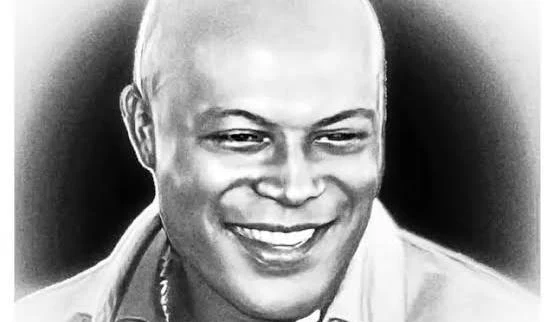
For most people, snakes symbolize danger, mystery, or primal fear. For Bill Haast, they were something entirely different — partners, teachers, and, in many ways, the defining force behind his extraordinary, almost unbelievable life. Known worldwide as “The Snake Man,” Bill Haast spent nearly nine decades handling, milking, studying, and injecting himself with venom from some of the deadliest serpents on Earth. His life straddled the line between science and mythology, earning him a reputation as one of the most fascinating, controversial figures in modern herpetology. Haast didn’t just work with snakes. He lived with them, bled for them, nearly died from them, and ultimately became a living legend because of them. His story remains one of the most unconventional tales in American science...
International Cake Day: A Sweet Celebration of Culture, Creativity, and Comfort
Food, World

International Cake Day: A Sweet Celebration of Culture, Creativity, and Comfort

Every year, International Cake Day arrives quietly, without the grand announcements or viral countdowns that accompany other global holidays. Yet despite its understated presence, the day carries something universally cherished — a celebration of sweetness, nostalgia, craftsmanship, and the simple joy of sharing something delicious. Cake is more than a dessert; it is a cultural symbol, a social connector, and in many ways, a reflection of human history. On International Cake Day, people around the world pause — whether knowingly or instinctively — to appreciate a creation that has appeared in their birthdays, weddings, festivals, heartbreak recoveries, and moments of triumph. It is a day that honors both the artistry and the emotional power behind this beloved confection. A Brief Histo...
Jennifer Lopez Sparks Controversy With Bold Costume at Lavish $6.7M Ceremony
celebrities, Fashion, World News

Jennifer Lopez Sparks Controversy With Bold Costume at Lavish $6.7M Ceremony

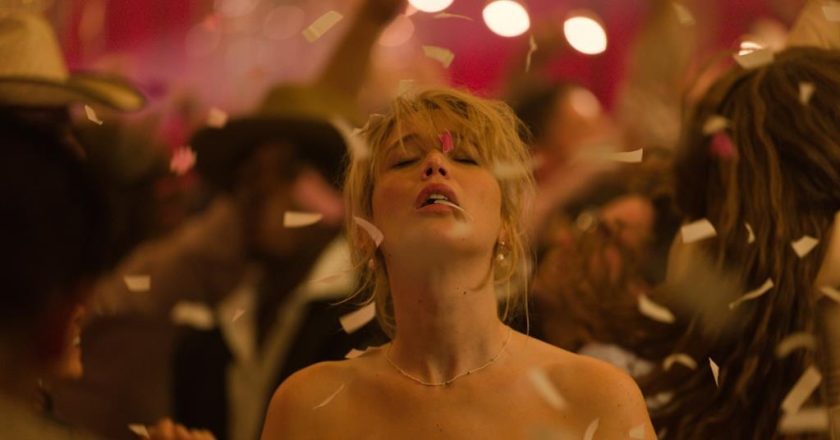
Jennifer Lopez is no stranger to extravagant stages, but her latest high-profile performance in India has unexpectedly thrust her into controversy. The 54-year-old global superstar was invited to headline the wedding festivities of Netra Mantena and Vamsi Gadiraju — a lavish celebration estimated to have cost around $6.7 million, held near the breathtaking Taj Lake Palace, the iconic location featured in the James Bond film Octopussy. Despite the grandeur of her appearance, it was her choice of outfit, rather than her singing, that sparked heated debate online. The wedding, designed and executed by Altair by Janki Desai, brought together an elite guest list that included Bollywood stars and even Donald Trump Jr., reflecting just how high-profile the ceremony was. Bringing Lopez to perform...
I Didn’t Speak for 7 Days: Here Is What Happened to My Brain
Mental Health

I Didn’t Speak for 7 Days: Here Is What Happened to My Brain

The human mind is loud even when the world is quiet. Most of us never notice this because we rarely experience true silence. We fill every second with noise—notifications, conversations, podcasts, music, videos, background chatter, mechanical hums, passing traffic, and the endless internal monologue that never turns off. Silence has become a luxury product, a status symbol, something you must pay for, schedule, or travel far to experience. It is no coincidence that silent hotels, monastery retreats, and Vipassana meditation programs are now booming among exhausted professionals and overstimulated young people. Digital overwhelm has transformed silence into the new premium commodity: not just the absence of sound, but the absence of demands, expectations, and identity. Wanting to understand...
Why Silence Became the New Luxury
Mental Health

Why Silence Became the New Luxury

There was a time when peace and quiet were simply facts of life. Silence belonged to everyone. It lived in the pauses of a day, in the slow hours of a morning, in the soft evenings when the world dimmed and people listened to their own thoughts. But today, silence has become scarce—so scarce that it is now something you must purchase, protect, or escape to find. In a world saturated with noise, silence has emerged as the most coveted luxury of the 21st century. This shift did not happen overnight. It began quietly, ironically enough, as the modern world grew louder in ways we didn’t notice. Our environments changed first: the hum of engines, the drone of air-conditioning, the shrill chorus of traffic lights, generators, alarms, and elevators. Then came digital noise—buzzes, alerts, dings,...