
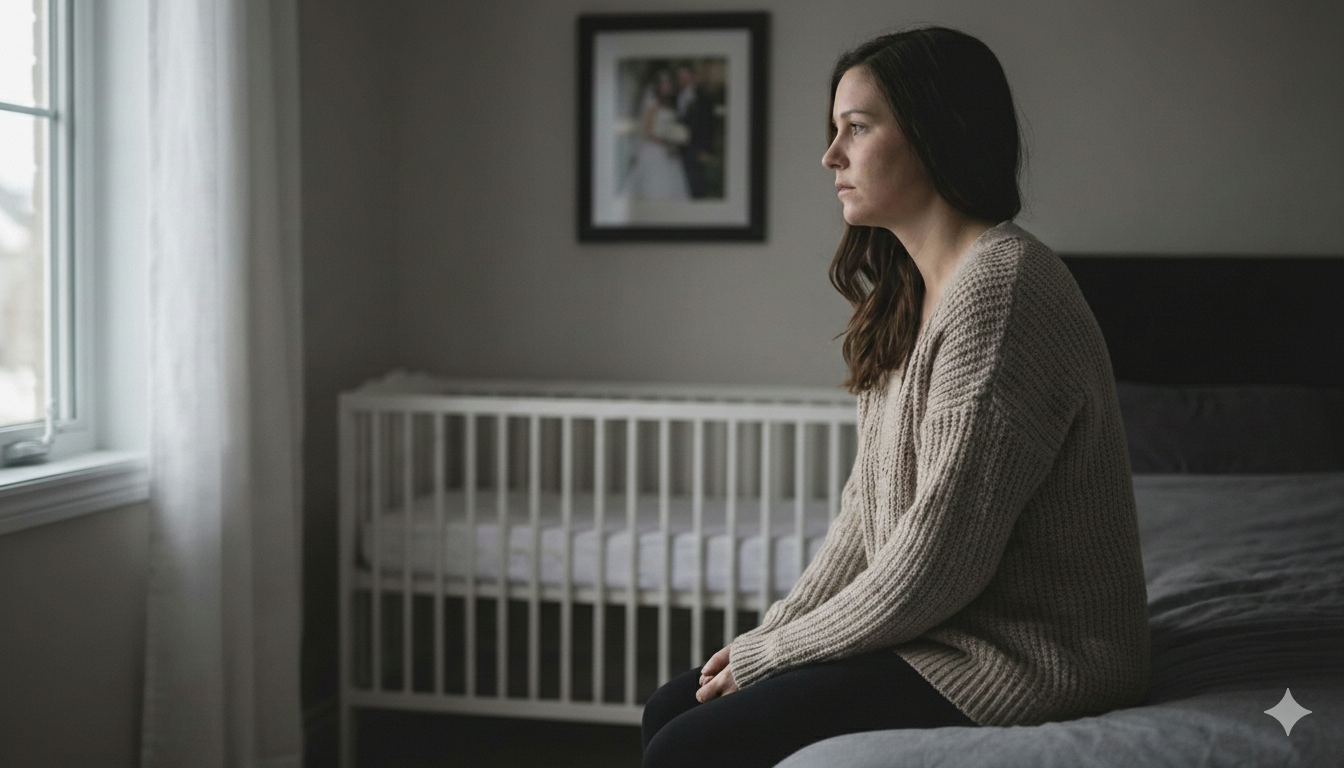
Postpartum Depression: The Silent Crisis That Begins After “Happily Ever After”
Postpartum depression does not arrive loudly. It does not announce itself with dramatic breakdowns or obvious despair. More often, it slips in quietly, wrapped in exhaustion, guilt, numbness, and a sense that something fundamental has gone wrong at the very moment society insists everything should feel complete. For millions of women worldwide, the period following childbirth is not defined by joy or fulfillment, but by an emotional collapse they were never warned about—and often feel ashamed to admit.
Postpartum depression is not rare, and it is not a weakness. It is a serious mental health condition rooted in biology, psychology, and social pressure. Yet it remains one of the most misunderstood and minimized experiences in modern medicine.
When Motherhood Doesn’t Feel Like Motherhood
The dominant cultural narrative around childbirth is deceptively simple: pain is followed by purpose, sacrifice by reward, exhaustion by love. Motherhood is framed as instinctual, immediate, and emotionally fulfilling. When reality deviates from this script, many women assume the failure is personal.
Postpartum depression dismantles that myth.
Instead of connection, some women feel emptiness. Instead of love, they feel distance. Instead of gratitude, they feel resentment or fear. These reactions do not mean a mother does not love her child. They mean her nervous system, hormones, and psyche are under extreme strain.
The most damaging aspect of postpartum depression is not the symptoms themselves—but the expectation that they should not exist.
A Condition Rooted in the Body and the Brain
Postpartum depression is often misunderstood as “sadness after birth.” In reality, it is a complex neurobiological and psychological condition.
After childbirth, estrogen and progesterone levels drop dramatically—faster than at any other time in a woman’s life. These hormones regulate mood, stress response, and emotional stability. Their sudden withdrawal can destabilize brain chemistry, particularly serotonin and dopamine systems.
At the same time, cortisol levels may remain elevated due to sleep deprivation, physical recovery, and constant vigilance. The nervous system remains stuck in survival mode. Over time, this creates emotional dysregulation, anxiety, and depressive symptoms.
The brain is not failing. It is overwhelmed.
More Than Sadness: The Real Symptoms
Postpartum depression is not limited to crying or visible distress. It manifests in many forms, some of which are deeply misunderstood or misinterpreted.
Women may experience persistent numbness, as if emotions have been muted or removed entirely. Others feel intrusive thoughts—violent, sexual, or catastrophic ideas that cause intense shame despite being unwanted and distressing. Anxiety often dominates more than sadness, accompanied by racing thoughts, panic attacks, or obsessive fears about harm.
Sleep disruption becomes both cause and consequence. Even when rest is possible, the mind refuses to shut down. Appetite changes, libido disappears or becomes erratic, and concentration deteriorates. Identity fractures. Many women describe feeling like they have vanished as a person, replaced by a role they no longer recognize themselves inside.
This is not a mood swing. It is a system-wide collapse.
The Role of Isolation and Silence
Postpartum depression does not occur in isolation—but isolation intensifies it.
Modern motherhood is paradoxical. Women are expected to handle early childcare largely alone, while simultaneously being judged by an audience of family, peers, and social media. Support systems that once existed—extended families, shared caregiving, communal living—have eroded in many societies.
The result is a dangerous combination: total responsibility with minimal support.
Silence compounds the damage. Many women do not speak about their symptoms because they fear being labeled ungrateful, unstable, or unfit. Some worry about losing custody of their child. Others simply lack language for what they are experiencing.
The longer postpartum depression remains unspoken, the deeper it embeds itself.
The Myth of the “Good Mother”
One of the most harmful forces surrounding postpartum depression is the moralization of motherhood. Cultural expectations leave little room for complexity. Mothers are supposed to be selfless, nurturing, endlessly patient, and emotionally available.
Postpartum depression violates that image.
When a mother feels anger, detachment, or resentment, she often turns that emotion inward. Guilt becomes chronic. Shame replaces curiosity. The illness is framed as personal failure instead of medical reality.
This internalized pressure delays diagnosis and treatment, turning a treatable condition into prolonged suffering.
Partners, Families, and the Invisible Gap
Postpartum depression does not only affect mothers. It reshapes relationships.
Partners may misinterpret withdrawal as rejection. Families may minimize symptoms as “baby blues” or hormonal overreaction. Well-meaning advice often worsens the situation by focusing on gratitude or perspective instead of care.
This disconnect leaves women feeling unseen at precisely the moment they are most vulnerable.
Support is not about fixing emotions. It is about believing them.
Why Postpartum Depression Is Often Missed
Despite its prevalence, postpartum depression remains underdiagnosed. Many healthcare systems focus primarily on physical recovery and infant health. Mental health screening is brief, inconsistent, or absent altogether.
Appointments are short. Language is clinical. Women are rarely asked open-ended questions about identity, fear, or intrusive thoughts. When symptoms do emerge, they are often reframed as normal adjustment rather than distress requiring intervention.
The problem is not lack of knowledge. It is lack of priority.
The Long-Term Cost of Ignoring It
Untreated postpartum depression can persist for months or years. It increases the risk of chronic depression, anxiety disorders, relationship breakdown, and impaired bonding—not because mothers do not care, but because the illness interferes with emotional regulation and presence.
Children do not need perfect parents. They need emotionally supported ones. Treating postpartum depression is not only maternal care—it is family care.
Early intervention changes outcomes. Delay magnifies damage.
Recovery Is Not Linear—and That’s Normal
Healing from postpartum depression does not follow a clean timeline. Some women improve with therapy alone. Others require medication to stabilize neurochemistry. Many need both. Rest, social support, identity restoration, and permission to exist beyond motherhood all play critical roles.
Recovery does not mean returning to who you were before childbirth. It means integrating who you have become without losing yourself.
Progress often looks uneven. Good days do not cancel bad ones. Improvement does not mean the illness was imaginary.
Postpartum Depression Is Not a Moral Failure
Perhaps the most important truth is this: postpartum depression says nothing about a woman’s character, love, or competence.
It does not mean she regrets her child.
It does not mean she is broken.
It does not mean she has failed.
It means her mind and body are under strain that deserves care, not judgment.
A Condition That Demands Collective Responsibility
Postpartum depression cannot be solved by individual resilience alone. It requires systemic change—better screening, longer postpartum care, mental health integration, workplace flexibility, and cultural honesty about motherhood.
Most of all, it requires listening without correction.
The Quiet Reality
Postpartum depression often unfolds behind closed doors, in the space between feeding schedules and forced smiles. It thrives in silence, shame, and isolation. But it weakens when named, treated, and supported.
Motherhood does not immunize women against suffering. It exposes them to it.
Recognizing postpartum depression for what it is—not a personal failing, not a passing phase, but a real and serious condition—is not just medical progress. It is human decency.
And for every woman who has sat holding a child while feeling utterly alone, that recognition can mean the difference between endurance and healing.