A Good Boy Breaks the Rules: How a Dog Made Film History—and Carried a Horror Movie on Four Legs
For more than a century, cinema has celebrated performances that made audiences cry, scream, or sit frozen in silence. Awards followed suit, building systems designed exclusively for human achievement—best actor, best actress, best supporting role. Animals, no matter how memorable, were always treated as extensions of atmosphere rather than as performers in their own right. They were tools, symbols, or background texture. Never contenders.
That changed this year.
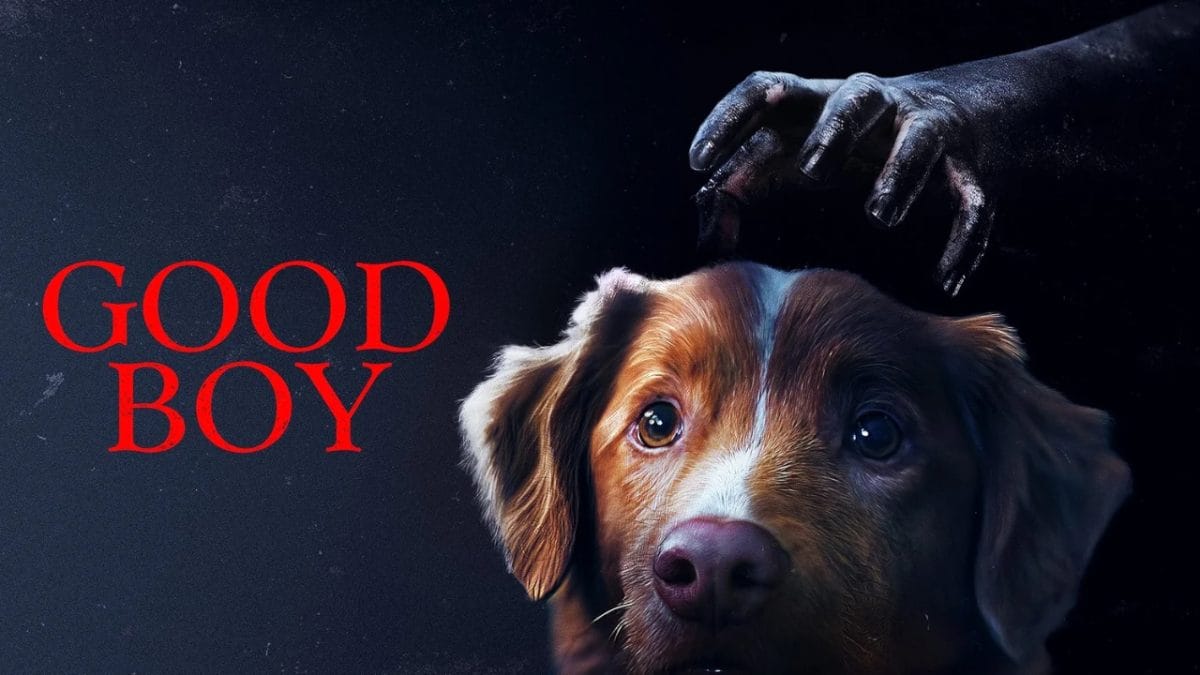
For the first time in film history, a dog has received a major acting nomination. At the Astra Film Awards, a Retriever from Nova Scotia named Indy earned a nomination in the category of Best Performance in Horror or Suspense for its role in the film Good Boy. The nomination quietly rewrote a rule that no one had officially challenged before: the idea that emotional, narrative-defining performance belongs only to humans.
What makes this moment remarkable is not novelty alone. It’s that many critics genuinely agree the nomination makes sense. Not as a gimmick. Not as a publicity stunt. But because Indy’s performance does what the category exists to reward—it defines the emotional core and psychological tension of the film.
A Nomination That Reframed the Conversation
The Astra Film Awards have always leaned toward recognizing bold performances, especially in genre cinema that traditional awards bodies often overlook. Even so, nominating a non-human performer was unprecedented. Horror and suspense categories are typically dominated by actors who convey fear, dread, trauma, or moral collapse through dialogue and expression.
Indy did it without words.
Sharing the nomination list with actors like Ethan Hawke, Sally Hawkins, and Sophie Thatcher—performers known for psychologically demanding roles—made the statement even stronger. This wasn’t a separate novelty category. This was a direct comparison. One performance stood alongside some of the most respected human actors working today.
Behind the scenes, the film’s director and Indy’s owner reportedly campaigned hard to push the performance into serious consideration, even attempting to generate Oscar buzz. That effort ultimately hit an institutional wall: Academy Award rules simply do not allow animals to be nominated. No matter how transformative the performance, eligibility is restricted to human actors.
The Astra nomination, then, became more than recognition. It became a challenge.
The Film That Made It Possible
Good Boy is not a big-budget spectacle. It doesn’t rely on loud jump scares or excessive visual effects. Instead, it builds dread slowly, using space, silence, and emotional attachment as its primary tools.
The story follows a man who relocates to a quiet countryside house with his dog, hoping for a fresh start. Almost immediately, something feels wrong. The house has a history, the land carries a presence, and the isolation begins to distort reality. What elevates the film above standard haunted-house fare is its perspective. Much of the tension is filtered through the dog’s awareness rather than the owner’s.
Indy’s character senses the threat before it fully manifests. He reacts to sounds no one else hears, stares at empty spaces with unnerving focus, and positions himself instinctively between danger and his human. The film trusts the audience to read these cues, letting the dog’s behavior guide emotional response rather than explanatory dialogue.
In horror, anticipation is everything. Good Boy understands this—and hands that responsibility to a canine.
A Performance Without Words, Yet Full of Intent
What distinguishes Indy’s performance is control. Horror animals are often trained to react loudly—barking, lunging, snapping—to signal danger. Good Boy does the opposite. Indy’s stillness is often more frightening than movement. His posture shifts subtly. His ears tilt. His breathing changes. His gaze lingers just long enough to make the viewer uneasy.
There are moments where the dog’s fear feels unmistakable, not staged but internalized. In others, his determination becomes the emotional anchor of the film. He doesn’t just react to supernatural forces—he confronts them, protecting his owner in ways that feel deliberate rather than trained.
Critics noted that the film’s tension collapses whenever Indy leaves the frame. That observation matters. In cinema, the performer who controls the emotional temperature of a scene is usually the one awards are built to recognize. In Good Boy, that performer happens to be a dog.
A Review of Good Boy: Horror Through Loyalty
As a film, Good Boy succeeds because it resists spectacle. Its pacing is deliberate, sometimes uncomfortably slow, but that restraint is intentional. The countryside setting feels vast and claustrophobic at the same time, using wide shots to emphasize isolation and tight interiors to amplify vulnerability.
The supernatural elements are revealed sparingly. Rather than relying on constant visual confirmation, the film allows uncertainty to linger. This is where Indy’s performance becomes essential. His reactions act as the audience’s early warning system. When he stiffens, you know something is wrong—even if nothing is visible.
The human lead delivers a solid, understated performance, but the emotional arc belongs to the dog. As the owner’s mental state deteriorates under pressure and fear, Indy remains consistent—alert, protective, and increasingly desperate. The contrast heightens the horror. Humans falter. The dog does not.
The film’s final act leans heavily into this dynamic. Without spoiling specifics, the climax hinges not on a human triumph over evil, but on loyalty refusing to break. It’s a choice that feels emotionally earned rather than sentimental.
While Good Boy won’t satisfy viewers looking for relentless shocks, it excels at psychological tension. It understands that fear is most effective when it threatens something the audience already loves. Indy isn’t just a character. He’s the heart of the film.
Why This Nomination Matters Beyond One Film
Indy’s nomination raises an uncomfortable question for the film industry: what, exactly, is a performance?
If acting is about intention, emotional transmission, and narrative impact, then Indy qualifies. The discomfort comes from recognizing that animals, when respected as performers rather than props, can deliver work that meets those standards.
Historically, animals have been central to iconic films—Lassie, Old Yeller, Hachiko, Cujo—yet awards bodies have treated those performances as technical achievements rather than artistic ones. Trainers receive recognition. Animals do not.
The Astra nomination breaks that pattern. It suggests that performance is not defined by speech or even by human cognition, but by presence, timing, and emotional resonance.
This does not mean animals should suddenly flood award categories. It does mean the rules are less philosophically solid than once assumed.
The Oscar Wall—and What Comes Next
The failed Oscar push was never about expecting a win. It was about exposure. By forcing the conversation, the campaign highlighted how rigid award systems remain in an era that otherwise celebrates innovation.
Rules exist for structure, but they also reflect outdated assumptions. Cinema has evolved dramatically—motion capture, digital avatars, AI-assisted performances—but award eligibility still assumes a narrow definition of actorhood.
Indy’s nomination doesn’t demand immediate reform. It does, however, leave a crack in the door.
Future festivals and awards bodies will remember this moment. The next animal performance that truly carries a film will no longer feel impossible to recognize. It will feel precedent-backed.
A Good Boy, Indeed
There’s something fitting about the first animal to break this barrier being a dog in a horror film. Horror, more than any other genre, understands instinct—fear before reason, awareness before explanation. Dogs embody that instinct naturally.
Indy didn’t speak. He didn’t overact. He didn’t demand attention.
He earned it.
Whether or not awards bodies ever fully embrace non-human performers, this moment stands as a quiet shift in cinematic thinking. Performance is not limited by species. It is defined by impact.
And in Good Boy, the most unforgettable presence on screen walks on four legs.
Sometimes, the bravest performance comes from the one who never needed words to tell the truth.