
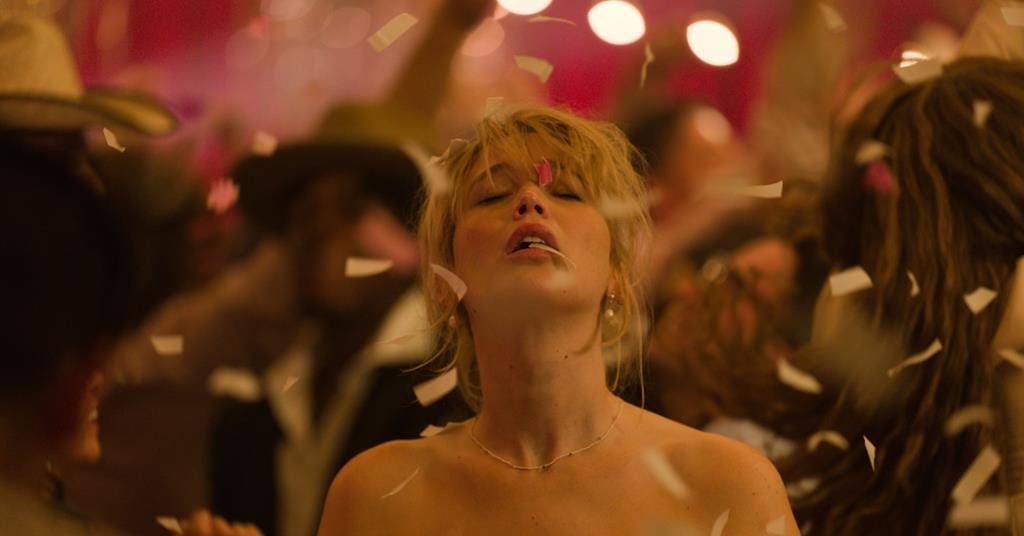
Die, My Love: When Postpartum Depression Becomes a Psychological Landscape
Cinema has long explored madness, grief, and desire, but few films dare to sit inside the quiet, suffocating space that follows childbirth when joy is expected and despair arrives instead. Die, My Love does not approach motherhood as a sentimental transformation. It approaches it as a psychological rupture. Through its raw, unsettling lens, the film turns postpartum depression from a clinical term into a lived environment—one that breathes, isolates, and slowly consumes.
Rather than explaining postpartum depression, Die, My Love immerses the viewer in it. The result is not comfort, but recognition.
Motherhood Without the Myth
The cultural script surrounding motherhood is rigid: fulfillment, bonding, instinctual love. Anything outside that narrative is treated as failure, ingratitude, or moral defect. Die, My Love dismantles this script almost immediately.
The film’s protagonist is not introduced as broken. She is introduced as trapped—geographically, emotionally, and psychologically. Set in a rural environment that amplifies isolation rather than peace, the film frames motherhood not as grounding, but as disorienting. The landscape mirrors the mind: wide, empty, silent, and indifferent.
Postpartum depression is not shown as sadness alone. It is shown as alienation from self.
https://www.revlox.com/mental-health/postpartum-depression-the-silent-crisis-that-begins-after-happily-ever-after/
Postpartum Depression as Identity Collapse
Clinically, postpartum depression involves mood dysregulation, intrusive thoughts, dissociation, anxiety, and a loss of pleasure. Die, My Love captures something deeper: the terror of no longer recognizing yourself.
The protagonist’s inner life fractures. Desire doesn’t disappear—it becomes distorted. Love doesn’t vanish—it becomes inaccessible. The body, once familiar, feels hijacked. The mind oscillates between numbness and overwhelming intensity.
This is one of the film’s most radical choices: it refuses to separate mental illness from sexuality, anger, and identity. Postpartum depression is not sanitized. It is messy, volatile, and deeply human.
The Silence Around Maternal Suffering
One of the film’s most disturbing themes is not the depression itself, but the absence of language around it. The protagonist is surrounded by people, yet profoundly unseen. Her distress does not register as emergency—it registers as inconvenience.
This reflects a real-world truth. Postpartum depression is often minimized, delayed in diagnosis, or framed as a phase women should endure quietly. Emotional pain becomes background noise once the baby is healthy.
Die, My Love exposes this silence as violence.
Isolation as an Amplifier
The rural setting is not incidental. It functions as a psychological amplifier. Distance from social support, limited stimulation, repetitive domestic routines, and lack of escape compound the condition.
The film suggests that postpartum depression does not occur in a vacuum. It is shaped by environment, expectations, and emotional neglect. Isolation is not just physical—it is relational.
The absence of meaningful connection becomes as oppressive as the illness itself.
Desire, Rage, and the Forbidden Emotions of Motherhood
Perhaps the most controversial aspect of Die, My Love is its refusal to portray maternal suffering as passive. The protagonist feels rage. Sexual hunger. Destructive impulses. These emotions are rarely allowed to coexist with motherhood in cinema.
But postpartum depression often includes intrusive thoughts and emotional extremes that feel shameful precisely because they contradict the “good mother” ideal. By allowing these feelings to exist without moral correction, the film tells a dangerous truth: having these thoughts does not make someone monstrous—it makes them ill.
The danger lies not in feeling them, but in being forced to hide them.
A Film That Refuses Catharsis
Unlike traditional dramas, Die, My Love does not offer neat resolution or therapeutic closure. There is no inspirational arc where suffering becomes wisdom. This is intentional.
Postpartum depression is not a lesson. It is a condition.
The film’s discomfort mirrors the real experience: nonlinear, unresolved, and ongoing. Recovery, when it comes, is rarely cinematic. Sometimes survival itself is the achievement.
Why This Film Matters Now
Postpartum depression affects millions globally, yet remains deeply misunderstood. Social media has intensified idealized images of motherhood while erasing its darker realities. In this context, Die, My Love is almost confrontational.
It asks viewers—especially those untouched by the experience—to sit with discomfort rather than explain it away. It challenges partners, families, and systems that expect mothers to disappear into functionality.
And it gives voice to women who have been told their suffering is inappropriate, exaggerated, or selfish.
Not a Horror Film—But Terrifying All the Same
There are no monsters in Die, My Love. No jump scares. No supernatural threats. And yet, it is one of the most unsettling portrayals of mental illness in recent cinema.
Because the horror is internal.
Because it happens after something beautiful.
Because it is supposed to be invisible.
The film reminds us that postpartum depression does not always look like tears. Sometimes it looks like emptiness. Sometimes it looks like rage. Sometimes it looks like wanting to disappear while still standing in the room.
The Courage to Show What Is Usually Hidden
Die, My Love does not try to be comforting. It tries to be honest. In doing so, it offers something rare: representation without apology.
It tells mothers they are not alone in feelings they were never allowed to name.
It tells society that silence is not neutrality—it is neglect.
And it proves that cinema, at its best, does not reassure us.
It reveals us.
In the end, Die, My Love is not just a film about postpartum depression. It is a film about what happens when a woman’s inner life is ignored long enough that it begins to scream.
And about how terrifying—and necessary—it is to finally listen.