Sea Breeze and Land Breeze: Nature’s Daily Wind Cycle
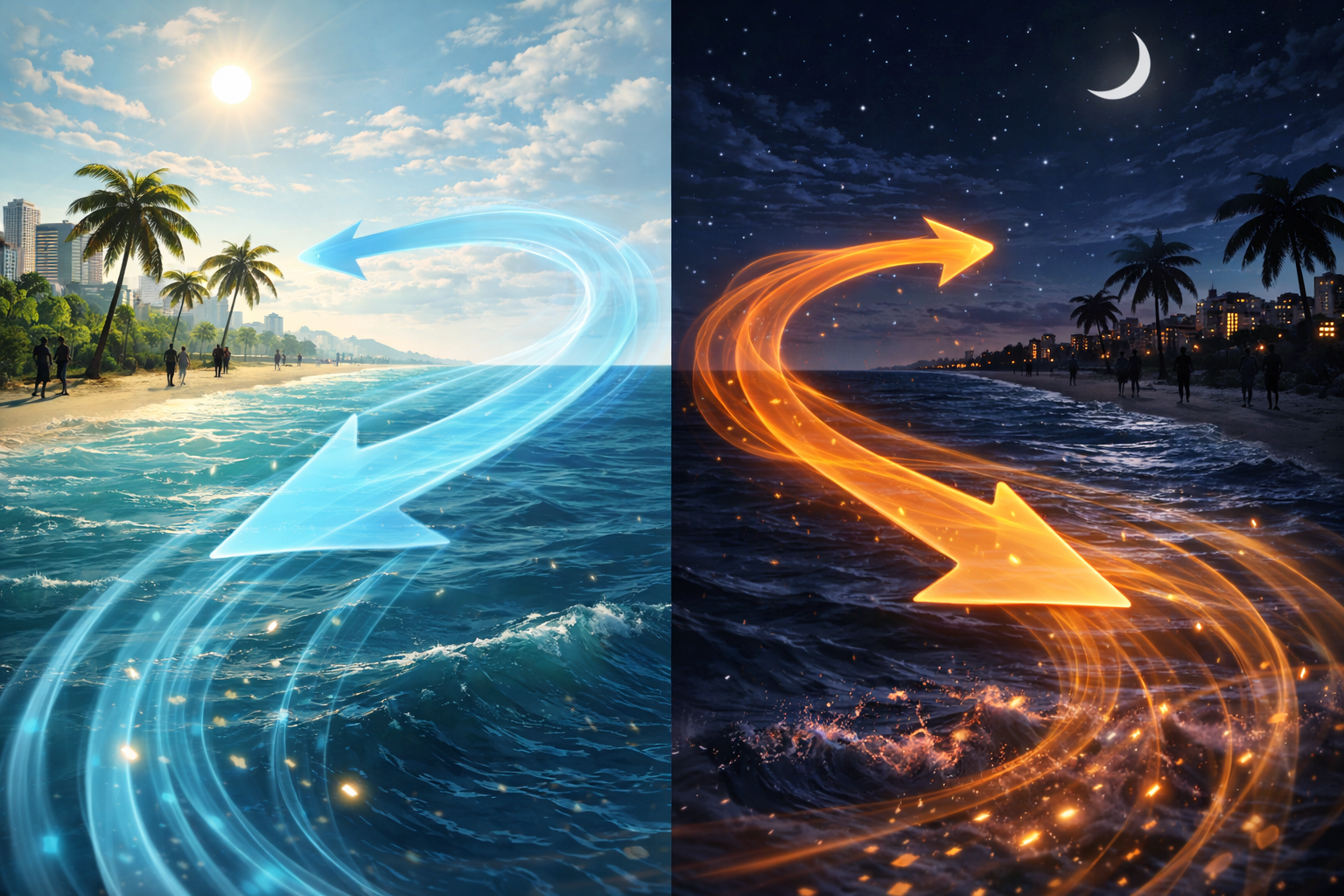
If you have ever stood on a beach, you may have noticed that the wind feels different during the day compared to at night. This regular change in wind direction is a natural phenomenon caused by temperature differences between land and water. Known as sea breeze and land breeze, it is one of the most important local wind systems in coastal areas, influencing weather, climate, and even human comfort.
Why Does It Happen?
The core reason lies in a simple fact: land and water heat and cool at different rates.
Land heats up quickly during the day but also loses heat quickly at night.
Water warms more slowly but retains its heat longer, cooling down gradually.
This difference in heating and cooling creates variations in air temperature and air pressure, which drive the movement of air between land and sea.
The Sea Breeze (Daytime Winds)
During the daytime:
The sun heats the land surface faster than the nearby sea.
The air above the land warms, becomes lighter, and begins to rise.
Over the sea, the air remains cooler and denser, creating a region of higher pressure.
The cooler, high-pressure air from the sea moves inland to replace the rising warm air.
👉 This movement of air from the sea to the land is called a sea breeze.
Effects of Sea Breeze
Brings cooler air inland, moderating daytime temperatures in coastal areas.
Often strongest in the afternoon, when temperature differences between land and sea are greatest.
Can extend several kilometers inland, depending on geography and strength.
The Land Breeze (Nighttime Winds)
During the night:
The land cools down faster than the sea once the sun sets.
The air above the land becomes cooler, denser, and begins to sink.
The sea remains relatively warmer, so the air above it stays warmer and rises.
The cooler, high-pressure air over land moves toward the sea, replacing the rising warm air above the water.
👉 This movement of air from the land to the sea is called a land breeze.
Effects of Land Breeze
Typically weaker than sea breezes because temperature differences at night are smaller.
Helps regulate nighttime temperatures near coasts by transporting cooler air offshore.
Influences coastal fishing, as land breezes can push surface waters away and bring nutrient-rich waters upward (a process known as upwelling).
Importance of Sea and Land Breezes
Climate Regulation: They keep coastal regions cooler during the day and warmer at night compared to inland areas.
Weather Patterns: Local winds can influence cloud formation, rainfall, and storms near the coast.
Human Comfort: Sea breezes provide natural cooling in hot climates, reducing the need for artificial cooling.
Marine Ecosystems: By driving upwelling, these breezes support nutrient circulation that sustains marine life.
A Daily Dance Between Land and Sea
The cycle of sea breeze and land breeze is a beautiful example of Earth’s balance. Driven by nothing more than the sun’s energy and the different thermal properties of land and water, this cycle repeats daily, shaping the climate and ecosystems of coastal zones.
So the next time you’re at the beach, pay attention to the wind on your face. If it’s daytime, the air likely comes from the sea, bringing cool relief. If it’s nighttime, the breeze may be flowing back out toward the ocean—a quiet reminder of the eternal conversation between land and sea.