

The 7 Best X-Men Writers Who Aren’t Chris Claremont
The X-Men did not become Marvel’s dominant superhero franchise overnight.
When Stan Lee and Jack Kirby introduced the team in 1963, the concept already contained the foundations of something special: young people born different, feared by society, trained by Professor Charles Xavier, and opposed by Magneto’s more militant vision of mutant survival.
But the original comic struggled to match the popularity of Marvel titles such as Fantastic Four, The Amazing Spider-Man, and The Avengers. Eventually, the series stopped publishing new adventures and spent years largely reprinting earlier material.
Then Marvel rebuilt the team.
One detail often repeated incorrectly is that Giant-Size X-Men #1 appeared in 1974. It was actually published on July 1, 1975. Written by Len Wein and drawn by Dave Cockrum, the issue introduced Storm, Nightcrawler, Colossus, Thunderbird, and Krakoa, while bringing Wolverine into the X-Men. Later that year, X-Men #94 placed Chris Claremont in the writer’s chair and launched the era that transformed the franchise.
Claremont remained on the main title for an extraordinary 16-year run. Working with artists including Cockrum, John Byrne, Paul Smith, John Romita Jr., Marc Silvestri, and Jim Lee, he turned the X-Men from a struggling superhero property into one of the defining institutions of American comics.
He developed or co-developed characters, relationships, themes, and conflicts that still shape almost every modern X-Men adaptation.
If readers love:
- The Phoenix and Dark Phoenix
- Days of Future Past
- The Shi’ar Empire
- The Hellfire Club
- The Brood
- The New Mutants
- Rogue’s redemption
- Storm’s leadership
- Wolverine’s humanity
- Magneto’s moral complexity
- Mystique and Destiny
- The Mutant Massacre
- Inferno
- Genosha
- The X-Men as a chosen family
then they are living, to a significant degree, inside a world Claremont helped build.
Calling him the most important X-Men writer is barely controversial.
The more interesting question is what happened after—or alongside—him.
Many accomplished writers have entered the X-office, challenged Claremont’s assumptions, rehabilitated neglected characters, created new mutant communities, and redefined what an X-Men comic could be.
These are the seven greatest X-Men writers who are not Chris Claremont.
How the Writers Were Ranked
This list considers more than sales or nostalgia.
Each writer is judged through five broad criteria:
Quality
How consistently strong were the stories, characterization, dialogue, themes, and long-form construction?
Influence
Did later comics, films, animation, games, or other writers build upon the run?
Reinvention
Did the writer find a new direction without making the franchise unrecognizable?
Character Work
Did established mutants gain greater complexity, and did new characters become lasting parts of the mythology?
Understanding of the X-Men
The best X-Men stories are not merely superhero adventures containing mutant characters.
They usually engage with identity, prejudice, assimilation, resistance, community, trauma, family, politics, evolution, and the fear of being replaced.
This is necessarily a subjective ranking.
Comics are also collaborative. The writers discussed here depended upon exceptional artists, colorists, letterers, editors, and fellow writers. Grant Morrison’s New X-Men cannot be separated from Frank Quitely and the run’s other artists. Joss Whedon’s Astonishing X-Men is inseparable from John Cassaday. Jonathan Hickman’s Krakoan revolution arrived visually through Pepe Larraz and R.B. Silva.
Nevertheless, the writers supplied the central narrative visions being ranked.
Why Chris Claremont Is in a Category of His Own
Before beginning the countdown, it is worth explaining why Claremont has been removed from competition rather than simply placed at number one.
His influence is too extensive for a normal comparison.
Most writers inherit an established version of the X-Men and decide which parts to preserve, reject, or reinterpret.
Claremont helped establish the version being inherited.
His run gave the franchise its emotional grammar:
- Long-running subplots
- Complicated romances
- Characters changing over years
- Villains becoming allies
- Heroes making morally damaging choices
- Trauma carrying consequences
- Family relationships replacing conventional team structure
- Political conflict entering superhero fantasy
- Women occupying the center of the narrative
- Mutant identity becoming more than a plot device
Later writers may be cleaner, faster, funnier, more experimental, or better suited to particular readers.
None has yet matched the total scale of Claremont’s contribution.
With that understood, the real ranking can begin.
7. Louise Simonson
The Writer Who Made X-Factor Matter
Louise Simonson deserves far more recognition in discussions of X-Men history.
She took over X-Factor with issue #6 and remained through issue #64. In her first issue, she introduced Apocalypse, who would become one of the franchise’s most recognizable and durable villains.
That achievement alone would make her historically important.
Her larger contribution was turning an awkward premise into a compelling mutant-family drama.
The original X-Factor reunited Cyclops, Jean Grey, Beast, Angel, and Iceman. Publicly, they pretended to be mutant hunters while secretly rescuing and training the mutants they were hired to capture.
The premise created immediate ethical problems. The founding X-Men were reinforcing anti-mutant fear by presenting themselves as professional hunters. Cyclops was also written into a damaging personal crisis after leaving his wife Madelyne Pryor and their child following Jean Grey’s return.
Simonson inherited all of that instability.
Rather than ignoring it, she used it.
Apocalypse Became the Ultimate Evolutionary Villain

Apocalypse worked because he represented a particularly dangerous distortion of the mutant idea.
Magneto viewed conflict between humans and mutants as political and historical.
Apocalypse treated existence as a biological contest.
To him, compassion, equality, and peaceful coexistence were weaknesses. The strong deserved to survive because strength itself supposedly granted moral authority.
This philosophy made him an ideal X-Men villain.
The X-Men believe that power creates responsibility.
Apocalypse believes power creates entitlement.
Simonson’s introduction of the character gave the mutant mythology an antagonist whose worldview extended beyond hatred of humans or resentment toward Xavier.
She Transformed Angel Into Archangel
One of Simonson’s most enduring stories involved Warren Worthington III.
After losing his wings and attempting suicide, Angel was manipulated by Apocalypse and transformed into the blue-skinned, metal-winged Archangel.
The transformation was visually dramatic, but its emotional meaning made it last.
Warren had always been the beautiful, wealthy, privileged member of the original team. Apocalypse turned his body into a weapon and made his pain visible.
Archangel became a symbol of trauma, bodily violation, anger, and the fear that suffering has permanently changed who a person is.
Simonson did not simply give an old character a darker costume.
She created a conflict that writers are still exploring decades later.
Her Role in Inferno
Simonson’s X-Factor also became essential to Inferno, the 1988–1989 crossover that brought years of Cyclops, Jean Grey, Madelyne Pryor, Mister Sinister, and demonic manipulation to a destructive climax.
The event was developed across books, particularly Claremont’s Uncanny X-Men and Simonson’s X-Factor.
Simonson helped make the original team emotionally relevant again while placing them inside one of the darkest family tragedies in X-Men history.
Why Simonson Ranks Seventh
Her work had enormous historical impact, especially through Apocalypse, Archangel, the Ship, the young mutant trainees, and the evolution of the original five.
She ranks below the others because some parts of the run remain tightly connected to uneven editorial decisions and crossover demands. Her best ideas have sometimes been more celebrated than the complete run containing them.
Even so, modern X-Men mythology would be considerably poorer without Louise Simonson.
Essential reading:
- X-Factor #6
- “Fall of the Mutants”
- “The Endgame”
- The Archangel transformation
- Inferno
- X-Factor #34–39
6. Peter David
The Writer Who Made Mutants Sound Like People
Peter David’s greatest X-Men contribution was not a cosmic mythology or massive status-quo shift.
It was personality.
When David took control of X-Factor in the early 1990s, the original five had returned to the X-Men. He inherited a government-sponsored replacement team containing characters who were interesting but rarely treated as first-tier stars:
- Havok
- Polaris
- Multiple Man
- Strong Guy
- Wolfsbane
- Quicksilver
David gave them individual voices, difficult relationships, insecurities, jokes, resentments, and psychological contradictions.
Marvel later described his run as one that defined Polaris, Multiple Man, and Strong Guy while offering sharp commentary on mutant identity and superhero life.
X-Factor Became a Workplace Comedy With Trauma
David understood that superhero teams could be funny without turning their characters into jokes.
His X-Factor featured bureaucracy, press conferences, therapy, political manipulation, romantic frustration, and teammates who frequently irritated one another.
The humor made the darker material more effective.
These were not symbols moving through an event.
They felt like coworkers and damaged friends trying to perform an impossible public role.
“X-Aminations” Remains a Character-Writing Masterclass
X-Factor #87, commonly known as “X-Aminations,” placed team members in individual therapy sessions with Doc Samson.
Instead of relying on a major battle, David used conversation to expose what each character was hiding.
Marvel continues to identify the issue as a classic and as an example of David establishing the relationships and personality traits that defined the team.
The issue demonstrated a basic truth that many superhero comics forget:
A character revealing why they are afraid can be more dramatic than another city being destroyed.
Multiple Man Became a Major Character
Jamie Madrox had existed for years before Peter David made him essential.
David recognized the psychological possibilities of a man who could create duplicates of himself.
What happens when each duplicate experiences a different life?
Does reabsorbing a duplicate amount to gaining memories, consuming a person, or restoring a missing part of oneself?
Can one man be held responsible for everything his independent duplicates do?
David explored these ideas most fully in his later Madrox miniseries and X-Factor Investigations run.
That second major era transformed X-Factor into a mutant detective agency and gave David room to write noir, comedy, romance, mystery, political satire, and tragedy.
His Greatest Strength Was Emotional Consequence
David’s stories could be extremely funny, but they were rarely emotionally safe.
His characters experienced:
- Depression
- Pregnancy
- Loss
- Betrayal
- Identity fragmentation
- Religious doubt
- Sexual and romantic confusion
- Political exploitation
- Grief that did not disappear after one issue
His humor was not an escape from pain.
It was the way the characters survived it.
Why Peter David Ranks Sixth
David may be the best dialogue writer on this list.
He repeatedly transformed secondary mutants into characters readers cared about deeply. His limitation is that his greatest X-Men work largely occurred within X-Factor, a corner of the franchise rather than the central X-Men title.
His influence is enormous at the character level, but he did not redefine the entire mutant status quo in the manner of the writers ranked above him.
Essential reading:
- X-Factor #71–89
- X-Factor #87, “X-Aminations”
- Madrox #1–5
- X-Factor Investigations
- “The Longest Night”
- “Multiple Birth”
- “They Keep Killing Madrox”
5. Mike Carey
The Most Underrated Long-Term X-Men Writer
Mike Carey may be the least celebrated writer on this list relative to the quality and length of his work.
He began writing the main X-Men title during the difficult post-House of M period, when most mutants had lost their powers and the species appeared to be approaching extinction.
Carey introduced the Children of the Vault, helped shape the Messiah Complex era, wrote the birth of Hope Summers, and later transformed the title into X-Men: Legacy. Marvel’s own retrospective material has praised his Legacy work as a distinctive and unusually sophisticated examination of Professor Xavier and his failures.
He Understood Xavier’s Moral Failures
For decades, Professor Xavier was presented as the wise founder whose dream defined the X-Men.
Claremont and other writers had already complicated that image, but Carey placed Xavier himself under sustained examination.
After Xavier suffered severe injuries and memory disruption, X-Men: Legacy became a journey through the people he had influenced, manipulated, failed, or abandoned.
Carey asked difficult questions:
- Did Xavier truly respect his students?
- How often did he alter minds without consent?
- Was the dream of coexistence partly a structure for controlling other mutants?
- Could Xavier accept responsibility without making himself the center of the apology?
- Did he love the X-Men as people or as evidence that his philosophy worked?
This was not a simple “Professor X was secretly evil” revision.
Carey portrayed him as an idealist whose certainty repeatedly permitted serious ethical violations.
That interpretation anticipated themes later explored much more visibly during the Krakoan era.
Rogue Became the Center of X-Men: Legacy
Carey later shifted X-Men: Legacy toward Rogue.
This was an inspired decision.
Rogue had spent much of her existence unable to control her absorption powers. Her inability to touch others had become central to her personality, relationships, and self-image.
Carey allowed her to gain greater control, but he did not treat the development as the end of her story.
Instead, he asked who Rogue could become when she was no longer defined entirely by the limitation that had shaped her adulthood.
She became:
- A teacher
- A field leader
- A protector of younger mutants
- A woman reconsidering old relationships
- A character responsible for making choices rather than merely surviving her power
Marvel’s description of the series emphasizes Rogue’s development from troubled youth into a mentor for a younger generation.
The Children of the Vault Were a Brilliant New Threat
The Children of the Vault represented a possible successor species engineered through accelerated evolution.
They were not conventional mutants, humans, or machines. They viewed both humanity and mutantkind as obsolete competitors.
The concept made the X-Men confront an uncomfortable version of their own evolutionary language.
Mutants were accustomed to being described as the next stage of humanity.
How should they respond when another group uses exactly the same logic against them?
The Children remained relevant long after Carey’s initial stories, appearing prominently in later X-Men eras.
Age of X Compressed the Mutant Metaphor
Carey also created Age of X, an alternate reality in which mutants had been hunted nearly to extinction and survived inside a militarized fortress.
The story used altered identities and history to explore how constant persecution changes relationships, institutions, and personal morality.
Marvel identifies Age of X as a major alternate reality created within Carey’s work through Legion’s fractured psyche.
Unlike many alternate-universe events, it remained emotionally connected to the characters after reality was restored.
Why Mike Carey Ranks Fifth
Carey’s strength was accumulation.
He wrote one of the longest sustained X-Men runs of the modern era and treated continuity as emotional evidence rather than trivia.
His work is less immediately iconic than New X-Men, Astonishing X-Men, or House of X/Powers of X. It also lacked one consistent superstar artist who could give the complete era a single visual identity.
But in characterization, thematic intelligence, and respect for X-Men history, Carey belongs among the best.
Essential reading:
- “Supernovas”
- “Blinded by the Light”
- Messiah Complex
- X-Men: Legacy—the Xavier arc
- X-Men: Legacy—the Rogue era
- Age of X
- X-Men: No More Humans
4. Kieron Gillen
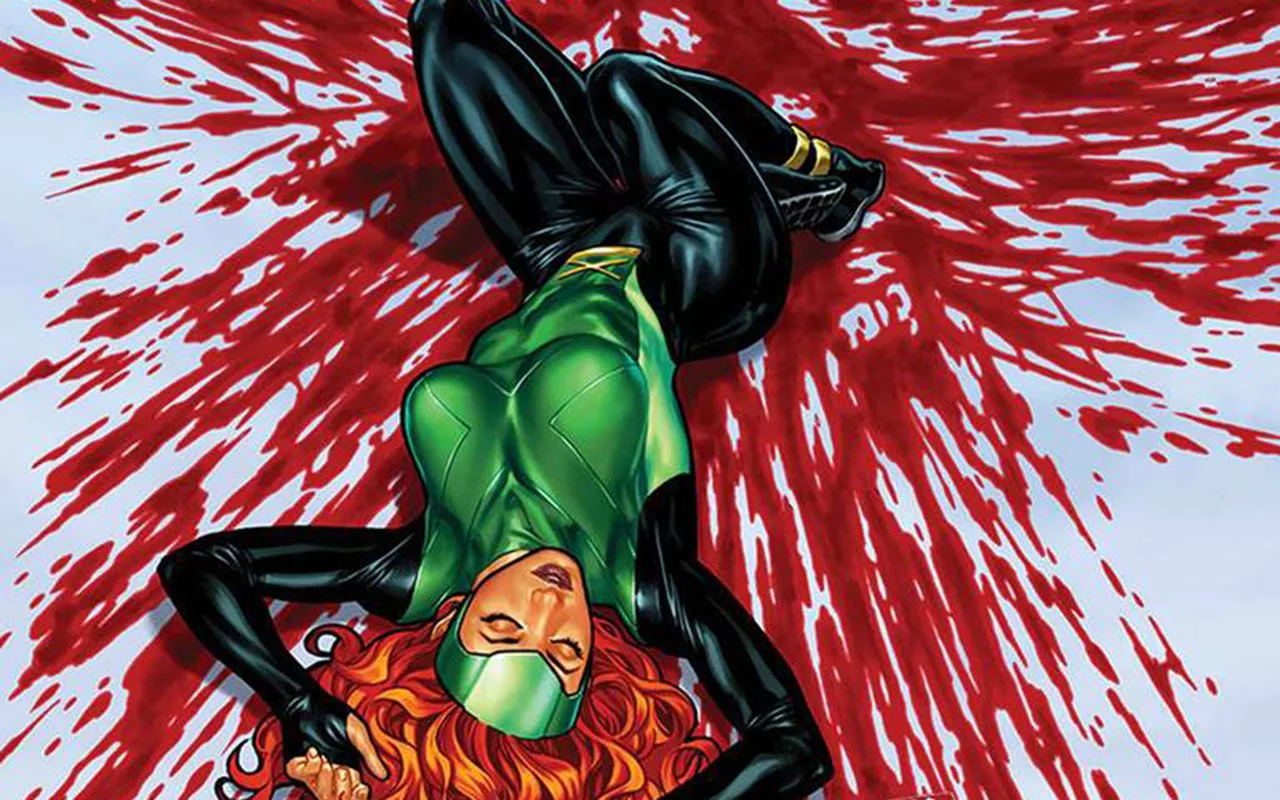
The Writer Who Turned Mutant Politics Into High Drama
Kieron Gillen has written the X-Men during two very different eras.
His first major period included Generation Hope and Uncanny X-Men, where he explored Cyclops’s increasingly militant leadership, Hope Summers’s emerging mutant generation, Mister Sinister’s obsession, and the instability surrounding the extinction-era X-Men.
His later return produced Immortal X-Men, one of the defining titles of the Krakoan age.
Marvel described Gillen as already established through Uncanny X-Men and Generation Hope when announcing Immortal X-Men, a series centered on the Quiet Council’s conspiracies, alliances, and internal betrayals.
Gillen Understood Cyclops at His Most Controversial
During Gillen’s first Uncanny X-Men run, Cyclops led the Extinction Team.
This was not the idealistic school of Xavier’s earliest years.
Scott assembled some of mutantkind’s most powerful and morally complicated figures—including Magneto, Emma Frost, Namor, Magik, Colossus, and Storm—to discourage humanity from attacking Utopia.
Gillen understood that Cyclops had become both impressive and alarming.
Scott was not a villain.
He was a leader who had concluded that the survival of his people required overwhelming force and constant readiness.
Gillen avoided reducing him to either a flawless revolutionary or an authoritarian monster.
Mister Sinister Became Entertainingly Horrifying
Gillen’s version of Mister Sinister was theatrical, narcissistic, funny, grotesque, and terrifying.
Instead of treating Sinister as another grim geneticist hiding in a laboratory, Gillen emphasized his need to turn reality into an audience for himself.
The “Everything Is Sinister” storyline involved a civilization of Sinister clones, Celestial power, and a villain attempting to construct a world in his own image.
That interpretation became central to the Krakoan version of Sinister and eventually to Sins of Sinister.
Immortal X-Men Was the Political Heart of Krakoa
Jonathan Hickman created Krakoa, but Gillen became one of its sharpest analysts.
Immortal X-Men focused on the Quiet Council, the governing body composed of heroes, villains, revolutionaries, manipulators, and ancient figures who did not share one moral vision.
Each issue often centered on a particular council member, revealing how that person justified power.
The series asked:
- Can a nation governed by immortal elites remain democratic?
- Can former enemies share authority without secretly preparing for betrayal?
- Does resurrection make life more sacred or less?
- Can a government built on compromise survive people who treat compromise as weakness?
- What happens when a nation’s founding secrets become impossible to contain?
The title was named IGN’s best comic series or original graphic novel of 2022, with particular praise for its examination of the Quiet Council’s rivalries as the Krakoan project began deteriorating.
Gillen Gave Destiny and Exodus New Importance
Two of Gillen’s greatest achievements involved characters who had often remained outside the center of the franchise.
Destiny became a political operator, a wife protecting Mystique, a prophet trapped by knowledge, and a woman whose awareness of possible futures did not automatically reveal which choice was right.
Exodus became more than Magneto’s fanatical follower.
Gillen treated his faith seriously. Exodus viewed mutant resurrection, Hope Summers, and Krakoa through the structures of myth and religious belief.
The character could be frightening, sincere, noble, and dogmatic at the same time.
A.X.E.: Judgment Day Expanded Mutant Questions Beyond the X-Men
Gillen also wrote A.X.E.: Judgment Day, connecting the Eternals, Avengers, and X-Men.
The event used mutant resurrection to create a conflict over whether mutants should be considered excessive Deviants, while a newly created Celestial judged every person on Earth.
Rather than relying only on combat, the event asked each character—and indirectly each reader—to confront the standards by which they judged a meaningful life.
Why Kieron Gillen Ranks Fourth
Gillen is one of the most intellectually precise X-Men writers.
He understands power, ideology, faith, sexuality, performance, and political hypocrisy.
His ranking may rise over time.
The main reason he is not higher is that his work is split between eras and often depends heavily on larger editorial structures created by others, particularly Hickman’s Krakoa.
Within those structures, however, few writers have been better.
Essential reading:
- Generation Hope
- Uncanny X-Men—the Extinction Team era
- “Everything Is Sinister”
- Immortal X-Men
- A.X.E.: Judgment Day
- Sins of Sinister
- X-Men Forever
- Rise of the Powers of X
3. Joss Whedon
The Writer Who Made the X-Men Feel Like Superheroes Again
Joss Whedon and John Cassaday’s Astonishing X-Men began in 2004, immediately after Grant Morrison’s radical New X-Men run.
Following Morrison was almost impossible.
Morrison had changed the costumes, school, culture, population, relationships, and entire scale of mutant society.
Whedon’s solution was not to erase those developments.
He combined them with the emotional language of classic Claremont-era superhero comics.
Marvel describes the Whedon–Cassaday collaboration as a 25-issue run that stands among the franchise’s finest and works particularly well as an entry point for new readers.
The Team Looked Iconic Again
The opening declaration was simple:
The X-Men were returning to superhero costumes.
This was not merely nostalgia.
Cyclops argued that mutants needed visible heroes during a period of fear and hostility. The costumes became a public statement.
The team included:
- Cyclops
- Emma Frost
- Wolverine
- Beast
- Kitty Pryde
- Colossus
The lineup was compact enough to support strong individual relationships.
Cassaday’s visual storytelling gave the book cinematic scale without sacrificing clarity, while Whedon supplied fast dialogue, emotional reversals, and accessible characterization.
“Gifted” Used the Mutant Cure Brilliantly
The first storyline introduced a supposed cure for mutation.
That idea struck at the heart of the X-Men metaphor.
For some mutants, their powers were identity, community, beauty, or pride.
For others, mutation had caused pain, isolation, physical danger, or the inability to live normally.
The cure could therefore be understood as:
- Medical freedom
- Cultural erasure
- Personal choice
- Social pressure
- A weapon
- A sincere relief
- Evidence that society considered mutants diseased
Beast’s temptation gave the debate emotional credibility. His mutation had increasingly altered his body, and his fear was not abstract.
Whedon understood that no single speech could resolve the question.
Cyclops Became a Convincing Leader
Whedon wrote one of the best versions of Cyclops.
Scott was disciplined, awkward, damaged, funny in unexpectedly dry ways, and capable of extraordinary command.
The famous moment in which Cyclops appears to unleash his full power—followed by the command, “What other lies have you told?”—reestablished him as someone dangerous enough to lead the X-Men.
Whedon also examined his relationship with Emma Frost without pretending that Scott’s history with Jean Grey had become emotionally irrelevant.
Kitty Pryde Was the Emotional Hero
Kitty returned to the school carrying resentment toward Emma, affection for the X-Men, and memories of Colossus.
Her discovery that Colossus was alive created one of the run’s most effective emotional reunions.
The final Breakworld storyline then gave Kitty a heroic sacrifice perfectly connected to her powers and personality.
She saved Earth by phasing an enormous projectile through the planet, but became trapped inside it as it continued through space.
The moment was spectacular because it was also intimate.
Kitty—the girl who once entered the X-Men frightened and uncertain—saved the world through complete control of the power that once made her feel unstable.
The Danger Room Became a Person
Whedon also revealed that the Danger Room had developed consciousness and that Xavier had knowingly continued using it as a training system.
The resulting character, Danger, turned another familiar X-Men institution into evidence of Xavier’s moral compromise. Marvel identifies Astonishing X-Men #9 as the issue in which the sentient Danger emerged.
The idea was clever because it made the mansion itself part of the franchise’s ethical history.
A Necessary Note About the Writer and the Work
Whedon’s later public reputation has been seriously damaged by allegations and accounts concerning his behavior in professional environments.
This ranking evaluates the published X-Men run, not Whedon’s personal conduct or a broader defense of his career.
Readers may reasonably decide that they do not wish to separate those questions.
The comic’s influence and quality, however, remain significant parts of X-Men publishing history.
Why Whedon Ranks Third
Astonishing X-Men is one of the cleanest, most accessible, and emotionally satisfying complete X-Men runs.
It respects Claremont, follows Morrison, and still establishes its own identity.
Its limitation is scale.
Whedon wrote one concentrated run rather than reshaping the entire publishing line. Several ideas also depend on his familiar dialogue style, which some readers find overly recognizable.
At its best, however, Astonishing X-Men captures nearly everything people want from the franchise:
- Family
- Romance
- Political meaning
- Humor
- Trauma
- Spectacle
- Sacrifice
- Superheroism
Essential reading:
- “Gifted”
- “Dangerous”
- “Torn”
- “Unstoppable”
- Giant-Size Astonishing X-Men #1
2. Jonathan Hickman
The Writer Who Turned the X-Men Into a Civilization
Few X-Men relaunches have arrived with the confidence of House of X and Powers of X in 2019.
Jonathan Hickman did not simply assemble another team or reopen Xavier’s school.
He changed the central question of the franchise.
For decades, the X-Men asked whether mutants could survive among humans.
Hickman asked what would happen if mutants stopped requesting permission and created a nation of their own.
Krakoa offered:
- Citizenship for all mutants
- Amnesty for former mutant enemies
- Living gateways connecting the world
- A mutant language
- Internationally valuable medicines
- A governing Quiet Council
- Mutant laws
- Sovereign territory
- Resurrection from death
- A shared national identity
Marvel’s history of the Krakoan era identifies House of X #1 as the formal introduction of the nation and explains how Xavier and Magneto used Krakoan medicines, gateways, political recognition, and unity to establish a new mutant society.
House of X and Powers of X Made the Franchise Feel Dangerous Again
The twin miniseries were structured across multiple timelines.
One series explored the immediate construction of Krakoa.
The other examined mutant history and possible futures, turning the conflict between humans, mutants, machines, and post-human evolution into a struggle spanning centuries.
Information pages, diagrams, timelines, and institutional documents made the story feel like a recovered political archive.
Hickman did not merely tell readers that everything had changed.
He redesigned how X-Men information was presented.
Moira MacTaggert’s Retcon Changed the Past
One of the boldest revelations involved Moira MacTaggert.
Previously understood as a human geneticist and longtime ally of Xavier, Moira was revealed to be a mutant who reincarnated after death while retaining memories of her previous lives.
Across those lives, she repeatedly witnessed mutant defeat.
She then used that knowledge to influence Xavier and Magneto and prepare the creation of Krakoa. Marvel’s official Krakoan history identifies Moira’s reincarnation and secret partnership with Xavier and Magneto as central to the new nation’s foundation.
The retcon was audacious because it altered decades of continuity without claiming that earlier stories had never occurred.
Instead, it placed another hidden motivation behind them.
Resurrection Changed the Meaning of Death
The Five—Egg, Proteus, Elixir, Tempus, and Hope Summers—combined their powers to restore dead mutants.
Xavier used Cerebro backups to return their memories.
Death, one of superhero comics’ most unstable concepts, became an organized national process.
Marvel’s official recap identifies the resurrection protocols and Quiet Council as foundational developments revealed in House of X #5 and #6.
This changed almost every part of mutant life.
It affected:
- Religion
- Warfare
- Identity
- Population
- Law
- Grief
- Suicide
- Sacrifice
- Cloning
- The distinction between continuity and replacement
The protocols also allowed Marvel to restore millions of mutants lost through editorial catastrophes without pretending those deaths had never mattered.
Hickman Unified Heroes and Villains
Krakoa welcomed almost every mutant.
Apocalypse sat beside Xavier.
Mister Sinister entered government.
Exodus became a legislator.
Mystique served a nation founded partly through secrets being kept from her.
Magneto was no longer merely Xavier’s ideological opponent. He became a partner in state formation.
The arrangement did not mean everyone was forgiven.
It meant mutant survival required cooperation among people with radically incompatible histories.
That tension powered the entire era.
He Made the X-Men a Publishing Line Again
The Krakoan relaunch supported numerous titles exploring different parts of mutant society:
- X-Men
- Marauders
- Excalibur
- New Mutants
- X-Force
- Fallen Angels
- Hellions
- S.W.O.R.D.
- X-Factor
- Way of X
- Immortal X-Men
- X-Men Red
Not every book was written by Hickman, but his architecture made them possible.
Other writers were given a political, cultural, and conceptual structure rich enough to support years of stories.
Marvel has described the Krakoan age as beginning with Hickman’s twin miniseries and as a revolutionary period in X-Men storytelling.
The Weakness of Hickman’s X-Men Era
Hickman’s greatest strength was also his limitation.
He is an exceptional architect.
His X-Men work sometimes prioritized systems, mysteries, timelines, and concepts over intimate emotional continuity.
His departure before personally completing every element of the original plan also means the Krakoan saga cannot be evaluated as one fully controlled Hickman narrative.
Other writers shaped its middle and ending.
Some character relationships moved too quickly or remained unexplored. The new status quo occasionally treated previous trauma as material to be reorganized rather than emotionally processed.
Why Jonathan Hickman Ranks Second
Hickman achieved something only a few X-Men writers have managed:
He made the franchise feel fundamentally new.
He turned the mutant metaphor from a story about a persecuted school into a story about sovereignty, nationalism, immortality, cultural identity, diplomacy, and the ethical risks of building a state with former enemies.
Almost every major X-Men conversation of the early 2020s occurred inside the structure he created.
He ranks below Grant Morrison because Morrison’s characterization was often more intimate and because many of Hickman’s greatest effects depended on writers who developed Krakoa after its creation.
As a conceptual relaunch, however, House of X and Powers of X stand alongside Giant-Size X-Men #1 as one of the franchise’s most transformative moments.
Essential reading:
- House of X #1–6
- Powers of X #1–6
- Hickman’s X-Men
- “The Vault”
- Giant-Size X-Men
- Inferno
1. Grant Morrison
The Best X-Men Writer After Chris Claremont
Grant Morrison takes the top position because New X-Men accomplished two difficult things simultaneously.
It made the X-Men feel modern without losing their central metaphor.
And it permanently expanded what mutant life could mean.
Morrison began with New X-Men #114 in 2001, taking control at a time Marvel’s mutants needed a new identity. Marvel’s own retrospective describes the X-books as facing an identity crisis before Morrison brought the previously adjectiveless title into the New X-Men era.
Morrison treated mutation not merely as a superhero origin but as an emerging culture.
The X-Men Stopped Hiding
The black-and-yellow uniforms reflected a new philosophy.
The X-Men were no longer pretending to be conventional superheroes wearing masks.
They were mutant representatives operating openly in a world where the mutant population was growing rapidly.
Xavier’s school became an actual school filled with mutant students whose abilities ranged from beautiful to disruptive, inconvenient, frightening, or absurd.
This was one of Morrison’s most important insights.
If mutants represented a growing population, the franchise could not continue focusing almost exclusively on a small group of attractive adults with combat-friendly powers.
Mutant society needed:
- Students
- Subcultures
- Fashion
- Language
- Protest
- Celebrity
- Drug use
- Political factions
- Generational conflict
- People whose powers were not useful in battle
The school finally felt populated by a species rather than a superhero roster.
Genosha Changed the Scale of Mutant Tragedy
Morrison opened the run with Cassandra Nova and the destruction of Genosha.
Sentinels killed millions of mutants, turning an established mutant nation into a mass grave.
Marvel’s later history of the event identifies Cassandra Nova’s attack during Morrison’s run as the destruction that killed approximately 16.5 million mutants.
The event changed Emma Frost permanently.
She survived through her newly manifested diamond form, carrying grief and survivor’s guilt into the team.
Genosha also established the scale on which mutant extinction could occur.
Later X-Men eras—from House of M through Krakoa—continued responding to the demographic and psychological consequences of mass death.
Emma Frost Became an X-Man
Claremont had already given Emma complexity, particularly through the Massachusetts Academy and her relationship with the Hellions.
Morrison completed her transformation into a central X-Man.
Emma remained:
- Arrogant
- Manipulative
- Stylish
- Emotionally guarded
- Morally flexible
- Capable of genuine devotion
- Haunted by the students she failed to save
She did not become heroic by turning into a softer version of Jean Grey.
She became heroic while remaining recognizably Emma.
Her relationship with Cyclops was controversial, but it also changed both characters for years.
Scott became less emotionally contained.
Emma discovered that joining the X-Men did not automatically resolve guilt, insecurity, or her fear of being less loved than Jean.
Cyclops Was Rebuilt for the Modern Era
Morrison understood that Scott Summers could not remain forever frozen as the responsible team leader mourning Jean and obeying Xavier.
After possession by Apocalypse, Scott returned emotionally disconnected and uncertain about his marriage.
Morrison treated his repression as damage rather than simple discipline.
His psychic relationship with Emma became an affair, but it was also evidence of a man unable to communicate honestly with himself or his wife.
The storyline was morally uncomfortable because it was supposed to be.
Morrison’s Cyclops became the foundation for the more assertive, politically radical leader written during the following decade.
Beast’s Mutation Became Unstable
Morrison gave Beast his feline appearance through secondary mutation.
The physical change made Hank’s body an evolving process rather than a settled superhero design.
Secondary mutation suggested that mutant powers might continue changing, opening possibilities later writers would repeatedly use.
For Beast, the transformation intensified questions about appearance, intellect, humanity, and whether scientific knowledge could provide emotional comfort.
Quentin Quire Represented a New Mutant Generation
Quentin Quire emerged as a brilliant student radical who rejected Xavier’s approach.
His rebellion involved genuine political frustration, adolescent insecurity, ideological performance, violence, and the influence of the drug Kick.
Quentin was not simply Magneto for a younger generation.
He represented the danger of political identity becoming a costume through which an intelligent but immature person could make himself feel historically important.
Later writers softened or redirected the character, but Morrison created the central contradictions that made him useful.
The Weapon Plus Revelation Expanded Wolverine’s History
Morrison revealed that Weapon X was pronounced “Weapon Ten” and formed part of the larger Weapon Plus program, a sequence of experiments stretching back through Captain America and designed to create weapons for evolving conflicts.
Marvel continues to identify the Weapon Plus concept as a major revelation from Morrison’s run.
The idea connected Wolverine’s trauma to a broader institutional project rather than one isolated laboratory.
It also created Fantomex and the World, expanding the mutant corner into strange science-fiction territory.
Cassandra Nova Was a Uniquely X-Men Villain
Cassandra Nova was presented as Xavier’s psychic twin and opposite—a being connected to him before birth and defined through hatred of mutant life.
She represented several Morrison themes at once:
- Identity as conflict
- Evolution producing its own enemies
- Xavier’s hidden darkness
- The destruction caused by ideas becoming organisms
- The fear that every dream creates its opposite
She was grotesque, abstract, personal, and politically devastating.
Unlike many villains, she did not merely want to defeat the X-Men.
She wanted to make Xavier’s dream biologically impossible.
“Riot at Xavier’s” Challenged the School Fantasy
The Xavier Institute was often presented as sanctuary.
Morrison asked whether a school operated by famous adult heroes could actually understand the children living inside it.
The students consumed mutant culture, experienced discrimination, formed hierarchies, and questioned whether the X-Men had become respectable representatives rather than revolutionaries.
This made the school feel alive.
It also exposed how easily Xavier’s dream could become institutional branding.
Morrison Was Willing to Make the X-Men Uncomfortable
The run included controversial decisions.
The handling of Magneto and Xorn remains deeply disputed and was quickly revised by later comics.
Some character voices could feel colder than in Claremont’s work.
Certain ideas arrived faster than they could be emotionally explored.
The treatment of relationships—particularly Scott, Jean, and Emma—alienated readers who valued earlier dynamics.
But Morrison’s willingness to create discomfort was central to the run’s power.
The X-Men had become one of Marvel’s safest commercial institutions.
Morrison made them strange again.
Why Grant Morrison Ranks First
Morrison’s New X-Men is the strongest post-Claremont combination of:
- Reinvention
- Character development
- Political metaphor
- Science fiction
- New villains
- New students
- Cultural world-building
- Lasting influence
The run changed Cyclops, Emma Frost, Beast, Xavier’s school, Wolverine’s history, Genosha, mutant population politics, and the visual identity of the franchise.
Whedon refined what followed.
Hickman later reinvented mutant society at an even greater institutional scale.
But Morrison supplied many of the cultural and philosophical developments that made both later eras possible.
If Claremont taught readers that the X-Men were a family, Morrison asked what happened when that family became a people.
Essential reading:
- “E Is for Extinction”
- “Imperial”
- “New Worlds”
- “Riot at Xavier’s”
- “Murder at the Mansion”
- “Assault on Weapon Plus”
- “Planet X”
- “Here Comes Tomorrow”
The Final Ranking
The seven greatest X-Men writers other than Chris Claremont are:
- Grant Morrison
- Jonathan Hickman
- Joss Whedon
- Kieron Gillen
- Mike Carey
- Peter David
- Louise Simonson
Each understood a different essential part of the franchise.
Morrison understood mutant culture.
Hickman understood mutant civilization.
Whedon understood superhero emotion.
Gillen understood mutant politics.
Carey understood memory and accountability.
David understood personality.
Simonson understood transformation and survival.
Honorable Mentions
Leaving major writers outside a top seven is unavoidable.
Len Wein
Wein wrote Giant-Size X-Men #1 and, with Dave Cockrum, created the team that made Claremont’s era possible. His X-Men contribution was too brief for inclusion as one of the greatest sustained writers, but few individual issues have been more important. Marvel credits the 1975 issue with introducing Storm, Nightcrawler, Colossus, Thunderbird, and Krakoa while adding Wolverine to the team.
Stan Lee
Lee co-created the X-Men with Jack Kirby and established Xavier, Magneto, Cyclops, Jean Grey, Beast, Angel, Iceman, the school, and the conflict between coexistence and militant resistance.
The original run was foundational even though it did not achieve the depth or popularity of later eras.
Roy Thomas
Thomas, particularly with artist Neal Adams, produced some of the original series’ strongest stories and helped develop characters such as Havok and Polaris during the late Silver Age.
Fabian Nicieza
Nicieza played a major role in the 1990s through X-Men, X-Force, Cable’s mythology, and major crossover storytelling.
His work helped define the era that reached millions through comics, toys, and animation.
Scott Lobdell
Lobdell wrote many emotionally important 1990s stories and contributed heavily to Generation X, Age of Apocalypse, the Legacy Virus era, and major X-Men family developments.
His output was influential but inconsistent.
Rick Remender
Remender’s Uncanny X-Force is one of the best mutant-related runs Marvel has published.
Its focus on a secret kill team rather than the primary X-Men kept him narrowly outside this ranking.
Al Ewing
Ewing’s S.W.O.R.D., X-Men Red, and Resurrection of Magneto were among the Krakoan age’s richest explorations of power, culture, colonialism, spirituality, and mutant life beyond Earth.
A longer total body of X-Men work could eventually move him into the top seven.
Zeb Wells
Wells wrote a strong New Mutants run and turned Hellions into one of Krakoa’s most emotionally surprising books.
Si Spurrier
Spurrier’s X-Men Legacy, Way of X, Legion of X, and related work explored faith, identity, mental health, policing, and the spiritual consequences of mutant resurrection.
Gail Simone
Simone’s Uncanny X-Men work belongs to the current post-Krakoa era and is still developing. It is too early to measure its complete historical standing.
Why the X-Men Attract Great Writers
The X-Men may be the most flexible major concept in American superhero comics.
They can function as:
- A school story
- A family drama
- A civil-rights allegory
- A science-fiction epic
- A political thriller
- A soap opera
- A horror story
- A space adventure
- A revolutionary narrative
- A workplace comedy
- A story about disability
- A story about sexuality
- A story about race and assimilation
- A story about nationhood
- A story about children discovering identity
- A story about adults failing those children
The metaphor is never perfect.
Mutants possess dangerous abilities in ways that real marginalized populations do not. Poorly handled stories can unintentionally validate the fears of mutant-hating humans.
The best writers understand that limitation and work within it thoughtfully.
They remember that the X-Men are most compelling when the external conflict is connected to an internal question.
A Sentinel attack matters because it reflects institutional hatred.
A mutant cure matters because it raises questions about identity and choice.
Krakoa matters because sanctuary can become nationalism.
Resurrection matters because defeating death changes culture.
A school matters because children need somewhere safe to become themselves.
The Best X-Men Writers Do Not Simply Copy Claremont
Claremont’s influence is so strong that imitation can become a trap.
A writer may reproduce:
- Elaborate captions
- Long-running romances
- Familiar villains
- Thought balloons
- Characters addressing each other by full names
- Repeated conflicts between Xavier and Magneto
But those surface features are not what made his work revolutionary.
Claremont treated characters as people who changed through accumulated experience.
The greatest later writers followed that principle without copying his exact style.
Morrison built mutant culture.
Hickman built mutant institutions.
David built psychologically messy workplaces.
Carey interrogated the history everyone else inherited.
Gillen treated political and religious belief as living forces.
They honored the franchise by making it capable of something new.
Final Thoughts
The modern X-Men began with a correction.
Not a correction to continuity, but a correction to possibility.
Giant-Size X-Men #1 was published in 1975—not 1974—and Len Wein and Dave Cockrum used it to replace a largely American original lineup with an international team containing Storm, Nightcrawler, Colossus, Thunderbird, Wolverine, Banshee, and Sunfire.
X-Men #94 then placed Chris Claremont at the beginning of a run that would define the franchise for generations.
Claremont remains the most important X-Men writer.
No one else created as much of the emotional, political, and mythological structure readers now associate with Marvel’s mutants.
But the franchise survived beyond him because other writers refused to treat his work as a museum.
Louise Simonson gave mutantkind Apocalypse and transformed Angel into Archangel.
Peter David found extraordinary humanity in characters other writers considered secondary.
Mike Carey turned continuity into an examination of guilt, memory, and responsibility.
Kieron Gillen made mutant government, faith, and ambition feel thrilling.
Joss Whedon and John Cassaday created a nearly perfect modern superhero synthesis.
Jonathan Hickman gave mutants a nation, culture, government, economy, and practical form of immortality.
Grant Morrison looked at the X-Men not as a team but as the beginning of a culture and changed everything that followed.
That is the secret of the X-Men’s longevity.
The premise is always evolving.
Every generation inherits Xavier’s dream, Magneto’s warning, Claremont’s family, and decades of unresolved history.
The greatest writers do not ask how to preserve all of it unchanged.
They ask what mutation means now.
Frequently Asked Questions
Who is considered the greatest X-Men writer?
Chris Claremont is generally considered the greatest and most influential X-Men writer because of his 16-year run and his role in developing much of the franchise’s defining mythology.
Who is the best X-Men writer besides Chris Claremont?
Grant Morrison ranks first on this list because New X-Men modernized the franchise, expanded mutant culture, transformed major characters, and influenced nearly every later era.
When was Giant-Size X-Men #1 published?
It was published on July 1, 1975—not in 1974.
Who wrote Giant-Size X-Men #1?
Len Wein wrote it, and Dave Cockrum provided the artwork.
Did Chris Claremont write Giant-Size X-Men #1?
No. Len Wein was the credited writer. Claremont began writing the continuing team in X-Men #94 later in 1975.
Which characters debuted in Giant-Size X-Men #1?
The issue introduced Storm, Nightcrawler, Colossus, Thunderbird, and Krakoa. It also brought Wolverine into the X-Men.
Why was Giant-Size X-Men #1 so important?
It introduced the international “All-New, All-Different” team and revived a franchise that had fallen into obscurity.
When did Chris Claremont start writing X-Men?
His first continuing X-Men issue was X-Men #94 in 1975.
How long did Chris Claremont write Uncanny X-Men?
His original continuous run lasted approximately 16 years.
What are Chris Claremont’s most famous X-Men stories?
His best-known work includes “The Dark Phoenix Saga,” “Days of Future Past,” “God Loves, Man Kills,” “The Brood Saga,” “The Mutant Massacre,” “Fall of the Mutants,” and “Inferno.”
Who wrote New X-Men?
Grant Morrison wrote the major New X-Men run that began with issue #114 in 2001.
Why is Grant Morrison’s New X-Men important?
The run introduced mutant culture on a larger scale, made Xavier’s school a populated institution, destroyed Genosha, added Cassandra Nova and Quentin Quire, expanded Weapon Plus, and made Emma Frost a central X-Man.
Who created Cassandra Nova?
Grant Morrison and Frank Quitely introduced Cassandra Nova during New X-Men.
Who destroyed Genosha?
Cassandra Nova used Sentinels to destroy Genosha during Morrison’s opening storyline, killing approximately 16.5 million mutants.
Who wrote House of X and Powers of X?
Jonathan Hickman wrote both interconnected miniseries.
What did Jonathan Hickman change about the X-Men?
He created the Krakoan mutant nation, introduced organized resurrection, redefined Moira MacTaggert, united former enemies, and transformed the franchise into a story about civilization and sovereignty.
What was the Krakoan age?
It was the X-Men era centered on the mutant nation of Krakoa, beginning with House of X and Powers of X in 2019 and concluding through the Fall and Rise storyline.
Who wrote Astonishing X-Men?
Joss Whedon wrote the acclaimed 2004 run, with John Cassaday providing the primary artwork.
Is Astonishing X-Men good for new readers?
Yes. Marvel has described the Whedon–Cassaday run as an accessible entry point for readers unfamiliar with extensive X-Men continuity.
What stories are in Whedon’s Astonishing X-Men?
The major arcs are “Gifted,” “Dangerous,” “Torn,” and “Unstoppable,” followed by the finale in Giant-Size Astonishing X-Men.
Who wrote Immortal X-Men?
Kieron Gillen wrote Immortal X-Men, primarily with artist Lucas Werneck.
What is Immortal X-Men about?
It focuses on the Quiet Council and the political, moral, and personal conflicts inside Krakoa’s governing body.
Did Kieron Gillen write X-Men before Krakoa?
Yes. He wrote Generation Hope and Uncanny X-Men, including the Extinction Team and “Everything Is Sinister.”
Who wrote X-Men: Legacy?
Several writers have used the title, but Mike Carey wrote its defining early period, focusing first on Professor Xavier and later on Rogue.
What did Mike Carey contribute to X-Men mythology?
He introduced the Children of the Vault, helped shape Hope Summers’s arrival, examined Xavier’s moral history, developed Rogue as a leader, and created Age of X.
Who created the Children of the Vault?
Mike Carey and Chris Bachalo introduced them during Carey’s X-Men run.
Who wrote Age of X?
Mike Carey was the principal writer of Age of X.
Who is the best X-Factor writer?
Peter David is commonly considered the defining X-Factor writer because of his influential 1990s run and later X-Factor Investigations series.
What is X-Factor #87?
Known as “X-Aminations,” it is a Peter David character-focused issue in which team members undergo individual therapy sessions with Doc Samson.
Who made Multiple Man a major character?
Peter David developed Jamie Madrox extensively through X-Factor, the Madrox miniseries, and X-Factor Investigations.
Who created Apocalypse?
Louise Simonson and Jackson Guice introduced Apocalypse during X-Factor. Simonson’s first issue as the title’s writer was X-Factor #6, which introduced the villain.
Who transformed Angel into Archangel?
Apocalypse transformed Warren Worthington III during Louise Simonson’s X-Factor run.
Why is Louise Simonson important to X-Men history?
She developed X-Factor, introduced Apocalypse, transformed Angel, shaped the original five’s return, and contributed heavily to major events such as “Fall of the Mutants” and Inferno.
Why is Len Wein not in the top seven?
His contribution through Giant-Size X-Men #1 was historic, but his time writing the team was too brief to compare with the sustained runs ranked here.
Why is Stan Lee not in the top seven?
Stan Lee co-created the X-Men and their foundational conflict, but later writers developed the concept into its most acclaimed and influential forms.
Who wrote the best 1990s X-Men comics?
Major 1990s X-Men writers included Peter David, Fabian Nicieza, Scott Lobdell, Larry Hama, and Alan Davis.
Who wrote Age of Apocalypse?
Age of Apocalypse was a coordinated event written by several creators, including Scott Lobdell, Fabian Nicieza, Mark Waid, John Francis Moore, and others.
Is Rick Remender one of the best X-Men writers?
His Uncanny X-Force run is one of the most acclaimed X-related series, but its focus on a secret strike team kept him outside this team-centered top seven.
Is Al Ewing one of the best modern X-Men writers?
He is a strong contender. His S.W.O.R.D., X-Men Red, and Resurrection of Magneto work was among the best material of the Krakoan era.
Where should a new reader begin with X-Men comics?
Strong entry points include:
- Giant-Size X-Men #1 and Uncanny X-Men #94
- Grant Morrison’s New X-Men
- Whedon and Cassaday’s Astonishing X-Men
- House of X and Powers of X
- Peter David’s X-Factor
- Mike Carey’s X-Men: Legacy
What is the best modern X-Men run?
Grant Morrison’s New X-Men, Whedon and Cassaday’s Astonishing X-Men, and Hickman’s House of X/Powers of X are the strongest modern starting points, depending on the reader’s preferred style.
What makes a great X-Men writer?
A great X-Men writer balances superhero excitement with character development, social conflict, identity, prejudice, politics, relationships, and the tension between belonging and independence.
Why have the X-Men remained popular?
Their central idea adapts naturally to changing generations. The characters can represent outsiders, minorities, young people discovering identity, political movements, chosen families, persecuted communities, or emerging cultures without being limited to one interpretation.
Who is ultimately the most important X-Men writer?
Chris Claremont remains the most important. Grant Morrison is the strongest choice for the greatest X-Men writer after Claremont.


