One-Armed Gambino Soldier Accused in $1.7 Million Chanel Flagship Heist
A dramatic luxury retail burglary in Manhattan has placed an alleged Gambino crime family soldier back in the public eye.
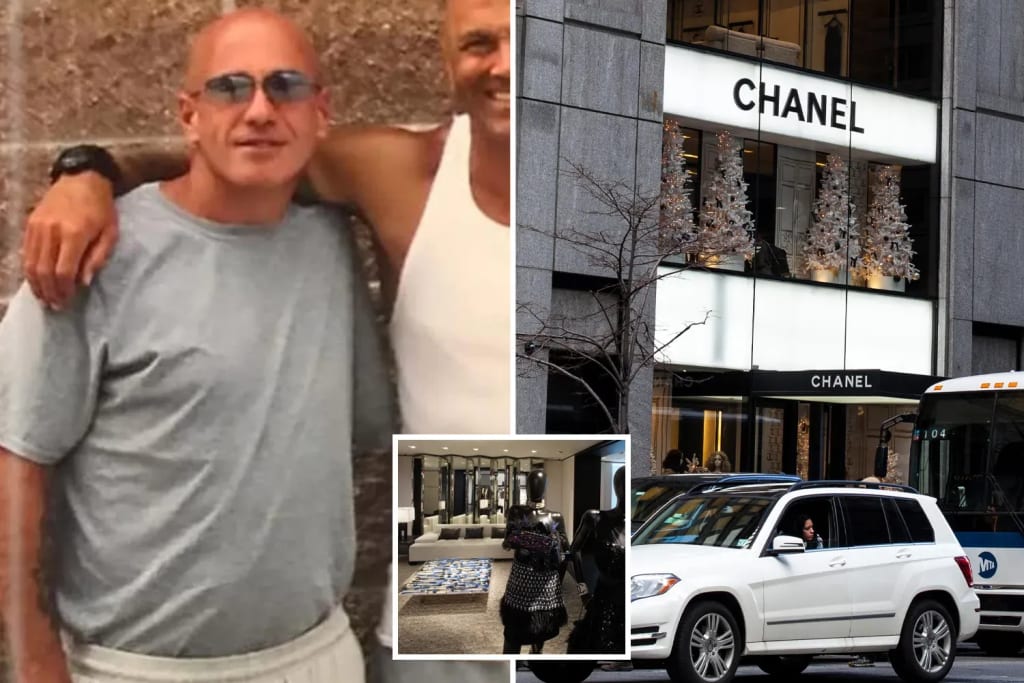
Thomas “Tommy” Dono, a 52-year-old man described by prosecutors and reports as a Gambino crime family soldier, has been accused of helping orchestrate one of the most audacious boutique burglaries in recent New York City history. The target was Chanel’s flagship store on East 57th Street, one of the fashion house’s most important retail locations in the United States.
According to court records and law enforcement accounts cited in media reports, the burglary unfolded over three hours during the night of July 13 into the early morning of July 14, 2024. A crew allegedly entered the Chanel location through a stockroom ceiling hatch, removed hundreds of luxury items, and escaped with merchandise valued at approximately $1,776,700.
The case sounds almost cinematic: burglars dressed as construction workers, a ceiling hatch, fire escape routes, laundry and trash bags filled with designer goods, a nearby construction site, a white Sprinter van, and an alleged mob figure watching from a minivan outside.
But prosecutors say this was not fiction. It was a carefully planned retail theft operation.
Dono has pleaded not guilty. At this stage, the accusations remain allegations, and he is entitled to the presumption of innocence unless proven guilty in court.
The Alleged Chanel Flagship Burglary
The Chanel burglary reportedly took place at the luxury brand’s flagship boutique at 15 East 57th Street in Manhattan.
The store is located in one of New York City’s most valuable retail corridors, close to Fifth Avenue and surrounded by some of the world’s most recognizable luxury brands. A successful burglary at such a location would require planning, timing, surveillance awareness, and knowledge of building access points.
According to prosecutors cited in reports, the operation began around 10:14 p.m. on Saturday, July 13, 2024. It allegedly continued until approximately 1:25 a.m. on Sunday, July 14.
During that time, a crew of about 10 people allegedly removed around 300 Chanel items from the boutique.
The total value of the stolen merchandise was reported at $1,776,700.
None of the stolen goods have been recovered.
How the Crew Allegedly Got Inside
One of the most striking details of the case is the method of entry.
The crew allegedly entered through a stockroom ceiling hatch connected to a rear fire escape area. Reports say several members of the group dressed as construction workers, allowing them to blend into the surroundings near a neighboring building site.
The alleged use of construction clothing was important because the area included an under-construction building nearby. This may have helped the burglars move around with less immediate suspicion.
According to the allegations, members of the crew used the rear fire escape and a nearby construction site to move the stolen goods out of the store area and toward a getaway vehicle.
This was not a simple smash-and-grab robbery. It was allegedly a slow, coordinated burglary that took hours.
The Escape Route
The alleged escape route was one of the reasons the case attracted attention.
The crew reportedly filled about 10 large laundry and trash bags with Chanel merchandise. These bags were then carried down a rear fire escape into an alley behind the store.
From there, the bags were allegedly moved through a building on East 58th Street that was under construction at the time.
After passing through that site, the stolen goods were loaded into a white Sprinter van.
This route suggests planning beyond the store itself. The burglars allegedly used the surrounding urban environment — fire escapes, alleyways, construction access, and vehicle positioning — to complete the operation.
In a dense city like New York, a construction site can become visual cover. People carrying bags, wearing work clothes, or moving around at odd hours may not immediately stand out if the scene looks connected to construction activity.
That detail made the alleged operation especially bold.
Dono’s Alleged Role
Prosecutors allege that Thomas “Tommy” Dono supervised the operation from outside the Chanel store.
Reports say he was allegedly seated in a white minivan parked near the boutique during the burglary. The minivan is described as a lookout or supervision vehicle. The white Sprinter van was allegedly used to transport the stolen merchandise.
Dono allegedly remained outside until around 1:25 a.m., when the burglary was complete and the vehicles left the area.
The allegations suggest Dono was not accused of personally carrying bags through the store. Instead, prosecutors portray him as an organizer or supervisor of the operation.
That distinction matters because organized retail theft often depends on roles: lookouts, drivers, entry specialists, carriers, planners, and fences or resale contacts.
If prosecutors can prove coordination, vehicle tracking, surveillance footage, and communication between participants, they may argue that the burglary was not random but structured.
Why Dono Was Identified Early
One unusual factor reportedly helped investigators identify Dono early.
Dono’s left arm was amputated at the shoulder years ago after a car accident. Because of this distinctive appearance, investigators reportedly recognized him more easily in surveillance footage.
Court filings cited in reports described his physical characteristics as unique.
In criminal investigations, distinctive physical features can become important when footage is unclear or suspects try to cover their faces. Clothing can change. Faces can be hidden. But a highly recognizable body feature may still help investigators connect someone to a scene.
Reports say surveillance footage also placed Dono and the two white vehicles near a Brooklyn home in Bath Beach on the same days the vehicles were allegedly used in the Chanel burglary.
Vehicle Tracking and Surveillance
The investigation reportedly involved extensive surveillance review.
Authorities allegedly tracked the white minivan and white Sprinter van across multiple locations. Reports state that investigators reviewed footage from city cameras, businesses, homes, and other sources across Manhattan, Queens, and Brooklyn.
The vehicles were reportedly traced to a property on Bay 10th Street in Brooklyn.
Footage allegedly showed Dono, other individuals, and vehicles gathering near that location before traveling to Manhattan on the night of the burglary. The same vehicles were allegedly seen returning after the heist.
In modern retail crime investigations, vehicle tracking can be as important as store surveillance. Cameras, license-plate readers, traffic footage, private security cameras, and cell-site records can create a movement timeline.
That timeline can help prosecutors argue coordination before and after the crime.
The Stolen Merchandise
The stolen Chanel goods reportedly included about 300 luxury items.
The exact full inventory has not been publicly detailed in every report, but the merchandise was valued at approximately $1.776 million.
Luxury retail theft is especially attractive to organized crews because designer goods can hold high resale value. Handbags, accessories, and luxury fashion items are portable, recognizable, and expensive.
However, stealing from a flagship boutique also creates major risk. High-end stores usually have extensive surveillance, security procedures, inventory systems, alarms, and insurance records.
The fact that none of the stolen merchandise has been recovered adds another layer of mystery.
Where did the goods go?
Were they moved quickly?
Were they stored?
Were they sold through private networks?
Were they transported outside New York?
These are questions investigators may still be trying to answer.
Why Luxury Retail Theft Is So Serious
Luxury retail theft is not only about stolen products. It affects brands, insurers, employees, landlords, shoppers, and public safety.
When high-value retail burglaries occur, they can lead to:
- Higher security costs
- Insurance claims
- Store disruptions
- Staff safety concerns
- Increased surveillance
- Restricted shopping experiences
- Higher operational costs
- Organized crime investigations
- Broader resale-market scrutiny
Luxury brands are especially concerned about stolen merchandise entering resale channels. Designer goods can move through gray markets, private sellers, online platforms, international networks, or informal buyer chains.
A single major burglary can become part of a wider organized theft economy.
Organized Crime and Retail Theft
The allegation that an organized crime figure was involved makes the Chanel case stand out.
Retail theft is often imagined as shoplifting or small-scale theft, but high-value retail crime can involve coordinated groups. These groups may have drivers, planners, lookouts, resale contacts, and methods for laundering stolen goods into secondary markets.
When organized crime networks are involved, theft becomes more than an isolated incident. It may become part of a broader pattern of profit generation.
Prosecutors reportedly described Dono as connected to the Gambino crime family, one of New York’s historic Five Families. Media reports also reference Dono’s prior criminal history, including federal convictions linked to organized crime activity.
However, in the Chanel case itself, the charges must still be proven in court.
Dono’s Criminal History
Reports describe Dono as having a long history connected to organized crime and burglary.
He was previously sentenced in federal court for his role in a conspiracy connected to the 1998 murder of Frank Hydell, who had been identified in reports as an FBI informant or suspected informant. Dono was released from prison in 2021 after serving a lengthy sentence.
Media reports also connect him to earlier bank burglaries and organized crime activity in the 1990s.
These past allegations and convictions are part of why the Chanel case has drawn attention. The story combines old-school organized crime associations with modern luxury retail theft.
Still, it is important to separate past criminal history from current allegations. A person’s history may shape investigative interest, but the current case must stand or fall on current evidence.
The Charges
Dono reportedly pleaded not guilty to grand larceny in connection with the Chanel burglary.
Reports also state that he was released on $300,000 bond after prosecutors sought a higher amount.
A not guilty plea means the case remains active and unresolved.
The legal process may involve:
- Discovery
- Review of surveillance footage
- Vehicle evidence
- Phone or location records
- Witness testimony
- Forensic evidence
- Motions by defense attorneys
- Possible plea negotiations
- Additional arrests
- Trial preparation
More arrests are expected, according to reports.
That suggests investigators believe other members of the alleged crew have been identified or may be identified as the case develops.
Why No Merchandise Has Been Recovered
The fact that none of the Chanel merchandise has been recovered is significant.
Stolen luxury goods can disappear quickly if a crew has resale channels ready. High-value items may be broken up into smaller batches, moved across jurisdictions, sold privately, stored, or passed through intermediaries.
Recovery becomes harder when merchandise is not immediately intercepted.
Luxury items may also be stripped of packaging, altered, hidden, or moved through informal networks. If serial numbers or product records exist, brands and investigators may use them to track resale attempts, but recovery is not guaranteed.
The unrecovered merchandise may become a major issue in the case because it raises questions about who received the goods and whether additional people helped move or sell them.
The Construction Worker Disguise
The alleged use of construction worker clothing shows how social camouflage can help criminal operations.
People often notice suspicious behavior less when it appears to fit the environment.
In New York City, construction workers moving through building entrances, alleys, sidewalks, and loading areas may not attract immediate attention, especially near an active construction site.
This type of disguise does not necessarily require complex technology. It relies on expectation.
If someone looks like they belong, others may not question them.
That is one reason the alleged Chanel burglary has been described as daring. It reportedly used ordinary urban activity as cover.
Why the Case Feels Cinematic
The details of the alleged burglary make it feel like a scene from a crime film:
- A famous luxury brand
- A flagship Manhattan location
- A late-night operation
- Construction worker disguises
- A ceiling hatch
- A rear fire escape
- Bags of designer goods
- A nearby construction site
- A getaway van
- A minivan lookout
- An alleged mob figure with a distinctive appearance
- Nearly $1.8 million in missing merchandise
But real crime cases are not entertainment.
Behind the dramatic details are real legal consequences, real victims, real employees, real investigators, and a defendant who has pleaded not guilty.
The cinematic quality of the story should not obscure the seriousness of the allegations.
The Presumption of Innocence
It is essential to state clearly: Dono has been accused, not convicted, in the Chanel burglary case.
A criminal accusation is not the same as guilt.
Prosecutors must prove their case through evidence. The defense has the right to challenge that evidence, question identification, dispute timelines, examine surveillance, contest vehicle links, and argue alternative explanations.
In high-profile cases, public attention can create assumptions before a trial happens.
Responsible reporting requires careful language:
- Allegedly
- Prosecutors say
- According to court records
- Investigators claim
- Reports state
- Dono pleaded not guilty
- The case remains active
This matters because the justice system depends on proof, not headlines.
What Happens Next?
The case is expected to continue through the courts, and more arrests may follow.
Key questions remain:
- Who were the other alleged crew members?
- Where is the stolen merchandise?
- Was the theft connected to a larger resale network?
- How much evidence links Dono to command or supervision?
- What role did the vehicles play?
- Did investigators recover communications or location data?
- Will co-defendants be named publicly?
- Will anyone cooperate with prosecutors?
- Will the case go to trial or end in a plea?
The investigation is still active, which means the public story may change as new details emerge.
The Bigger Picture: Retail Theft in Major Cities
The Chanel case fits into a broader conversation about retail theft in major cities.
Luxury stores, pharmacies, department stores, electronics shops, and designer boutiques have all faced theft concerns in recent years. Some incidents involve opportunistic shoplifting. Others involve organized crews targeting high-value merchandise.
Major cities face unique challenges because dense streets, public transit, construction zones, multiple escape routes, and resale markets can make retail theft harder to control.
Businesses respond with:
- More cameras
- Locked displays
- Security guards
- Inventory tracking
- Police coordination
- Private investigations
- Restricted access
- Appointment-only shopping
- Stronger backroom security
- Employee training
But security must balance safety with customer experience. Luxury shopping depends on atmosphere, trust, and ease. Too much visible security can make stores feel tense, while too little security can leave them vulnerable.
Why This Case Matters
The alleged Chanel flagship burglary matters because it combines several important themes:
- High-value retail theft
- Organized crime allegations
- Urban security vulnerabilities
- Luxury resale risks
- Surveillance-driven investigation
- Construction-site access issues
- The persistence of traditional crime networks
- The legal challenge of proving coordination
It also shows that modern crime does not always look high-tech. Sometimes it is built around planning, disguise, timing, and movement through physical space.
A ceiling hatch, a fire escape, and a van can still be enough to create a multimillion-dollar case.
Final Thoughts
The case of Thomas “Tommy” Dono and the alleged $1.7 million Chanel flagship burglary is one of the most unusual retail crime stories to emerge from New York City in recent years.
Prosecutors allege that Dono supervised a crew that spent three hours stealing hundreds of luxury items from Chanel’s East 57th Street boutique. The crew allegedly used construction worker disguises, a stockroom ceiling hatch, a rear fire escape, a nearby construction site, and two white vehicles to carry out the operation.
Dono’s distinctive appearance reportedly helped investigators identify him early. Surveillance footage and vehicle tracking allegedly connected him and the vehicles to a Brooklyn location before and after the burglary.
Still, the case is not over. Dono has pleaded not guilty. None of the stolen Chanel merchandise has been recovered. More arrests may follow. The allegations must still be tested in court.
What makes the story so striking is not only the value of the stolen goods. It is the blend of old and new: an alleged organized crime figure, a luxury fashion target, modern surveillance trails, and a burglary method that relied on physical access, disguise, and patience.
For Chanel, the theft was a major blow.
For prosecutors, it is a serious organized retail crime case.
For New York, it is another reminder that even the most polished storefronts can become scenes of carefully planned criminal ambition.
And for the public, it is a story that reads like a heist movie — except the courtroom ending has not yet been written.