Fugu in Japan: The Deadly Delicacy That Turns Dining Into a Ritual of Trust
Few dishes in the world carry the same dangerous glamour as fugu, Japan’s famous pufferfish delicacy. It is elegant, expensive, delicate, controversial, and quietly terrifying. Served as translucent sashimi arranged like a chrysanthemum, simmered in comforting hot pot, fried until crisp, or paired with warm sake, fugu is not simply food. It is performance. It is tradition. It is risk transformed into refinement.
The fascination comes from one brutal fact: fugu can kill you.
Many species of pufferfish contain tetrodotoxin, a powerful neurotoxin found in certain organs and tissues. The danger is not theoretical. Tokyo’s official food safety guidance warns that improper preparation can cause paralysis, breathing difficulty, and death, and explicitly tells people not to prepare pufferfish unless they are professionals.
And yet, in Japan, fugu is not treated like a reckless dare. It is treated like a disciplined culinary art. The danger is precisely why the dish became surrounded by rules, craftsmanship, history, and cultural symbolism. Eating fugu in Japan is not about being careless with death. It is about trusting skill.
That tension is what makes fugu so seductive as a food story. It sits between pleasure and poison, beauty and fear, tradition and science. Every thin slice on the plate carries a strange drama: this fish can be deadly, but in the hands of a trained expert, it becomes one of Japan’s most iconic delicacies.
What Is Fugu?
Fugu is the Japanese name for pufferfish used in cuisine. Not every pufferfish is eaten, and not every part of an edible species is safe. In Japan, around 22 types of fugu are used for food, while many other pufferfish species remain unsafe or unsuitable for consumption. Web Japan notes that many types are highly poisonous and that the poisonous areas vary depending on the species, which is why qualified handlers need both species knowledge and cutting skill.
The most prestigious variety is often considered torafugu, or tiger pufferfish. It is prized for its clean flavor, firm texture, and luxurious reputation. In high-end Japanese dining, torafugu is treated with the seriousness usually reserved for fine sushi, wagyu beef, or seasonal kaiseki cuisine.
But fugu’s flavor is subtle. People expecting a loud, fatty, intensely rich bite may be surprised. Fugu is more about texture, purity, and atmosphere. Its flesh is firm, slightly chewy, clean, and restrained. The pleasure comes from the thinness of the cut, the freshness of the fish, the dipping sauce, the seasonal setting, and the knowledge that the meal exists only because someone in the kitchen knows exactly what they are doing.
Fugu does not shout.
It whispers from the edge of danger.
Why Is Fugu Poisonous?
The danger in fugu comes mainly from tetrodotoxin, often abbreviated as TTX. This toxin affects nerve signaling and can cause numbness, paralysis, respiratory failure, and death. Nippon.com describes TTX as a deadly neurotoxin found in ovaries and other internal organs, and notes that consuming only 1 or 2 milligrams can be fatal. It also explains that the toxin is heat-stable, meaning cooking does not reliably remove the danger.
That last point is critical. Some food toxins can be reduced by cooking, boiling, or processing. Tetrodotoxin is different. A poisonous piece of fugu is not made safe by frying it, simmering it, grilling it, or turning it into soup. The dangerous parts must be correctly identified and removed before the fish becomes safe to serve.
The toxin does not affect all species or all body parts in the same way. Some species have edible skin; others have poisonous skin. Some parts may be safe in one type of fugu but dangerous in another. Nippon.com gives the example that tiger puffer skin is edible, while the skin of purple puffer is poisonous.
This is why fugu is not just “fish with poison.” It is a complex food-safety challenge. The chef must know the species, the anatomy, the allowed edible parts, the toxic organs, and the correct processing rules. One mistake can turn a luxury meal into a medical emergency.
What Happens During Fugu Poisoning?
Fugu poisoning can progress quickly. Tokyo’s food safety guidance says symptoms may begin between 20 minutes and 3 hours after eating, often starting with numbness of the lips, tongue, and fingertips. It can then progress to vomiting, difficulty walking, sensory paralysis, slurred speech, difficulty breathing, low blood pressure, full-body motor paralysis, and death.
One of the most frightening details is that consciousness may remain clear until shortly before death. This means a severely poisoned person may be aware while paralysis spreads and breathing becomes impossible. Tokyo’s guidance states that death can occur around four to six hours after eating contaminated pufferfish.
The U.S. FDA also emphasizes the seriousness of tetrodotoxin risk. In its exchange of letters with Japan regarding pufferfish import conditions, the FDA stated that there is no adequate sampling scheme that can guarantee a safe lot for unrestricted entry because any single fish may contain a lethal dose. It also noted that there is no known antidote for tetrodotoxin.
That is why emergency treatment focuses on supportive care: keeping the patient breathing and maintaining circulation until the toxin is metabolized and cleared. The danger is not just the poison itself, but the speed with which it can overwhelm the body.
Fugu is beautiful on the plate, but the science behind its danger is merciless.
Why Do People Eat Fugu If It Can Be Deadly?
This is the question everyone asks.
Why eat a fish that can kill you?
The answer is not simply thrill-seeking. For many Japanese diners, fugu is about tradition, seasonality, craftsmanship, status, and trust. Web Japan describes fugu as a luxury fish eaten all year round in Japan, while also explaining that Japan has a government-managed system where qualified fugu handlers remove toxic parts before serving it.
The danger gives fugu its aura, but the culture gives it meaning. A fugu meal is often slow and ceremonial. The sashimi is cut so thin that the pattern of the plate may show through. The presentation can resemble a flower. The dipping sauce, usually ponzu with grated daikon and chili, adds acidity and brightness. A full fugu course may include sashimi, skin, fried pieces, hot pot, rice porridge, and fin sake.
In Yamaguchi Prefecture, especially around Shimonoseki, fugu has deep regional importance. The dish is sometimes called fuku, a lucky wordplay associated with good fortune. This transforms the fish from a symbol of death into a symbol of celebration.
That is the paradox. Fugu is feared because it can kill. It is loved because, when handled correctly, it becomes a refined expression of Japanese culinary discipline.
Fugu in Japanese History
Fugu has been eaten in Japan for centuries. Nippon.com reports that fugu teeth and bones were found at the Ubayama Shell Mound in Chiba Prefecture, dating to the mid-Jōmon period. This suggests that pufferfish consumption has ancient roots in Japan, long before the modern restaurant licensing system existed.
But the history is not simply one of appreciation. It is also a history of fear and prohibition. Toyotomi Hideyoshi, one of Japan’s great unifiers, banned fugu consumption in 1598 after soldiers died from poisoning while awaiting dispatch during military campaigns.
During the Edo period, the prohibition continued in various forms. The danger was taken seriously enough that fugu poisoning could carry social consequences. Over time, however, fugu culture survived, especially in western Japan, where access to the fish and local preparation knowledge remained strong.
By the late nineteenth century, the ban began to lift in parts of Japan. Web Japan notes that the ban on eating fugu was removed in Yamaguchi Prefecture due to the actions of Prime Minister Hirobumi Ito, and then gradually lifted across Japan.
This history matters because it shows that fugu did not become famous simply because it was dangerous. It became famous because Japanese food culture slowly learned to domesticate danger through knowledge, training, and regulation.
The Art of Fugu Preparation
Preparing fugu is not ordinary fish cleaning. It is a specialized craft.
The handler must identify the species correctly, remove toxic parts without contaminating edible flesh, wash the meat thoroughly, and dispose of poisonous organs safely. Web Japan explains that handlers remove poisonous parts, wash away blood with plenty of water, and discard more of the fish than they serve. This labor and waste are part of why fugu is considered a luxury ingredient.
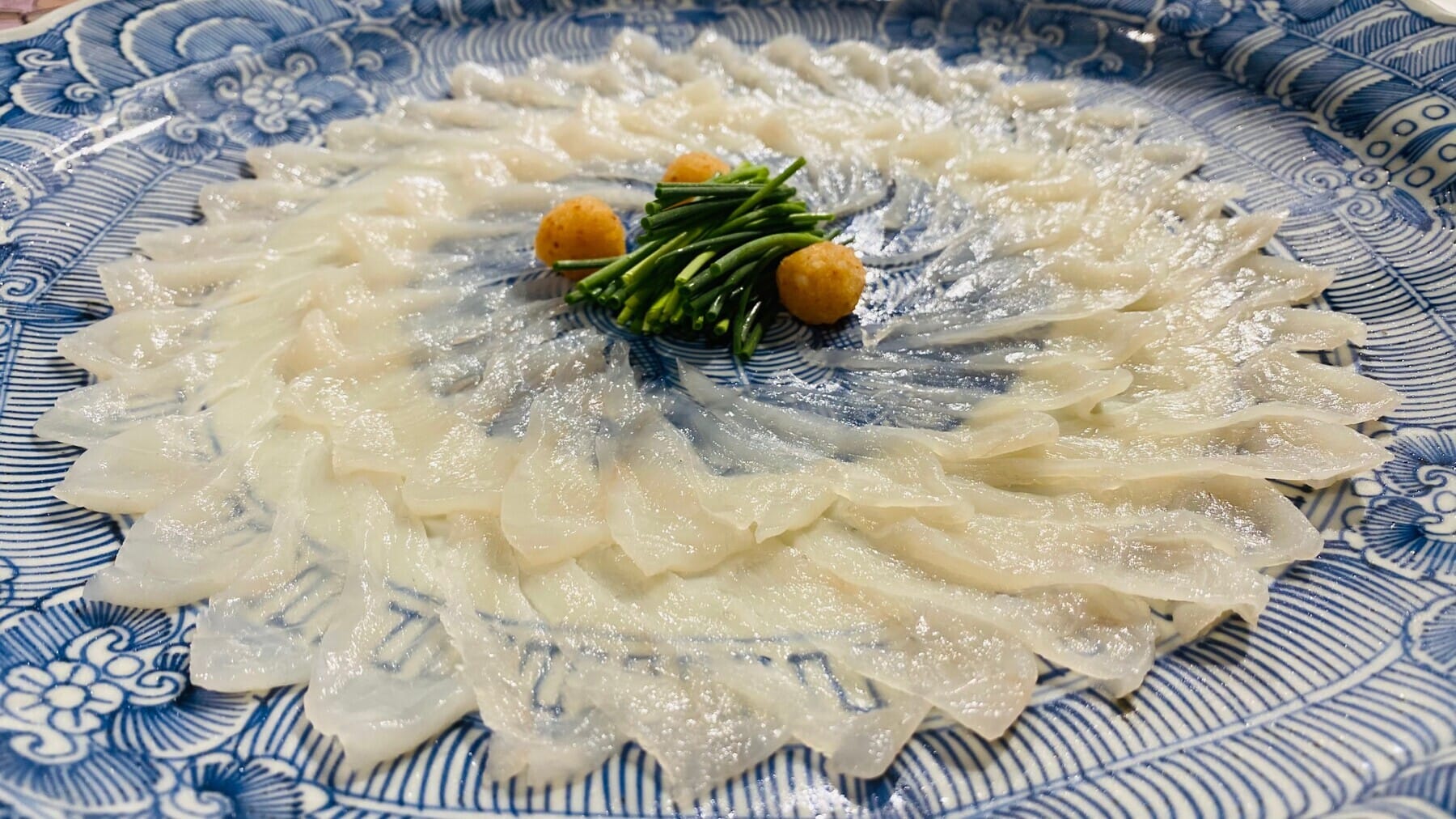
The slicing is also highly skilled. For sashimi, fugu is often cut into extremely thin pieces because the flesh is firm. This creates the famous translucent presentation known as tessa. The slices may be arranged in a circular pattern, sometimes like petals, making the dish visually dramatic before the diner even tastes it.
The knife work has two purposes. First, it makes the texture enjoyable. Second, it displays the chef’s control. With fugu, the cut is not just aesthetics. It is proof of discipline.
A fugu chef is not selling danger.
A fugu chef is selling trust.
Licensing and Safety in Japan
Japan’s modern fugu culture depends on regulation. In Tokyo, a business that processes pufferfish must have a person certified by a prefectural governor or equivalent authority, with the knowledge to distinguish pufferfish types and the skills to remove toxic parts. Tokyo also states that only those with the Tokyo Fugu Handling Supervisor License may handle fugu for business in certified fugu-handling facilities.
This system is why eating fugu at a properly licensed restaurant in Japan is very different from amateur preparation. Most serious poisoning cases are associated with improper handling, home preparation, or unauthorized consumption rather than regulated restaurants.
Tokyo’s food safety page makes the warning blunt: do not attempt to prepare pufferfish unless you are a professional. It also warns people not to let non-professionals attempt it.
This is the most important practical takeaway. The romance of fugu belongs in licensed restaurants, not in home kitchens, fishing trips, or social media experiments.
The Main Fugu Dishes
Fugu is not served in only one way. A full fugu meal may unfold through several courses, each showing a different texture and mood.
Tessa: Fugu Sashimi
Tessa is the iconic fugu dish. The fish is sliced paper-thin and arranged beautifully on a plate. The slices are usually dipped in ponzu sauce with condiments such as grated daikon, chili, scallions, or citrus. Web Japan describes tessa as fugu sashimi made after toxic parts are removed and the meat is sliced thinly.
The taste is subtle, clean, and refined. The texture is the real star: firm, elastic, delicate, and almost architectural.
Tecchiri: Fugu Hot Pot
Tecchiri is fugu hot pot. Pieces of fugu are simmered with vegetables, tofu, mushrooms, and broth. After the fish and vegetables are eaten, rice may be added to the remaining broth to make zosui, a comforting rice porridge.
Tecchiri turns fugu from a dangerous icon into winter comfort food. It is warm, communal, and deeply Japanese.
Fugu Karaage
Fugu can also be fried as karaage. The result is crisp outside and tender inside, with a texture that feels more familiar to diners who may find raw fugu too subtle.
Yubiki: Fugu Skin
In some species, the skin is edible after proper preparation. It may be served as a salad-like dish with ponzu. But because edible parts vary by species, this is exactly the kind of item that depends on expert handling.
Hirezake: Fugu Fin Sake
Hirezake is warm sake infused with roasted fugu fin. It is smoky, aromatic, and strongly associated with winter fugu dining. It turns the meal into something more atmospheric, almost ritualistic.
A full fugu course is not just about tasting fish. It is about moving through textures: translucent, chewy, crisp, hot, smoky, soft, and comforting.
What Does Fugu Taste Like?
Fugu’s taste is often described as mild, clean, and slightly sweet. Its appeal is not loud flavor but texture and precision. The sashimi has a firm chew. The hot pot version becomes warmer and more comforting. Fried fugu feels richer and easier to understand for first-time diners.
For some people, the first bite may be underwhelming. After all the stories about death, danger, poison, and ancient bans, the actual flavor can seem surprisingly quiet. But that quietness is part of the point. Fugu belongs to a Japanese food philosophy that often values subtlety, seasonality, balance, and texture as much as intensity.
The drama is not in the taste alone.
The drama is in the knowledge behind the taste.
You are eating something that required expertise to become safe. You are tasting a fish whose danger has been removed, but whose reputation remains on the plate.
The Psychology of Eating Fugu
Eating fugu is not like eating ordinary sashimi. Even when it is safely prepared, the diner brings the story of poison to the table. That story changes the experience.
The first bite carries anticipation. The second carries curiosity. By the third, the fear often softens into appreciation. A good fugu meal becomes less about danger and more about respect: respect for the chef, the fish, the tradition, and the system that makes the dish possible.
This is why fugu fascinates travelers. It feels like a forbidden door into Japanese culinary culture. But the best fugu experiences are not reckless. They are controlled. The danger is present as memory, not as chaos.
In that sense, fugu is one of the world’s most psychological foods. The flavor may be delicate, but the idea is powerful.
Fugu and the Japanese Idea of Mastery
Japanese cuisine often places enormous value on specialization. Sushi chefs may spend years perfecting rice, knife work, fish handling, and service. Kaiseki chefs build menus around seasonality and balance. Soba makers focus on flour, water, kneading, cutting, and timing.
Fugu fits this world perfectly because it demands mastery.
The chef must respect the ingredient’s beauty and its threat. Too much confidence is dangerous. Too little skill is unacceptable. The ideal fugu handler combines technical precision with humility.
That is why fugu is so often framed as a trust relationship between diner and chef. The diner does not personally inspect the fish. The diner does not test the toxin. The diner places faith in training, licensing, tradition, and professional responsibility.
In many cuisines, trust means believing the food will taste good.
With fugu, trust means believing the food will let you leave alive.
Fugu Outside Japan
Outside Japan, pufferfish is subject to strict controls in many places. In the United States, the FDA has long treated pufferfish as a serious food safety risk. The FDA says pufferfish has been on its Automatic Detention List since 1980 because it appears to contain tetrodotoxin, and the import arrangement for Japanese pufferfish was never intended to allow unrestricted general distribution.
The FDA also notes that any single fish may contain a lethal dose and that there is no adequate sampling scheme to guarantee unrestricted safety.
This explains why fugu is not simply available everywhere like tuna or salmon. Its legal status, import rules, preparation requirements, and safety concerns make it a highly controlled specialty food.
For travelers, the safest and most culturally authentic way to experience fugu is still in Japan at a licensed, reputable restaurant.
Is Farmed Fugu Safer?
Farmed fugu has changed the conversation. Because pufferfish are believed to accumulate tetrodotoxin through diet and environmental exposure, some aquaculture systems aim to raise fugu with controlled feed that reduces or eliminates toxin accumulation. However, this does not mean consumers should assume any pufferfish is safe.
Regulators still treat fugu carefully because toxicity can vary by species, body part, origin, and handling. Nippon.com notes that more than 50 fugu varieties are found in Japanese waters and 22 are eaten, with toxic parts varying between species.
The phrase “farm-raised” should never make a diner careless. Safety still depends on authorized sourcing, correct species identification, legal processing, and qualified preparation.
With fugu, confidence should come from regulation and expertise, not assumptions.
The Myth of the “Tingling” Experience
One popular myth says fugu chefs intentionally leave a tiny amount of toxin in the fish to create a tingling sensation. This idea has circulated for years and adds to the danger fantasy. But it should not be treated as the goal of proper fugu dining.
The safest professional standard is to remove toxic parts and avoid contamination. Tokyo’s official guidance describes numbness of the lips, tongue, and fingertips as an early symptom of poisoning, not as a desirable culinary feature.
That distinction matters. Romanticizing poison can be dangerous. A slight tingle may make a good story, but tetrodotoxin poisoning is not a game. The true artistry of fugu is not in flirting with contamination. It is in eliminating it.
The thrill should come from culture, not toxicity.
Why Fugu Is Expensive
Fugu can be expensive for several reasons. The fish itself, especially high-quality torafugu, may be costly. The preparation wastes a large portion of the animal because toxic or restricted parts must be removed and discarded. The chef requires specialized training and certification. The restaurant must follow strict handling rules. The presentation demands time and skill.
Web Japan notes that more parts are disposed of than the edible parts overall and that the preparation takes time and effort, contributing to fugu’s luxury status.
This makes fugu different from ordinary seafood. You are not only paying for fish. You are paying for safety, precision, tradition, licensing, and performance.
Luxury here is not only taste.
Luxury is control.
Fugu as a Winter Food
Fugu is strongly associated with winter dining in Japan, especially in full-course meals and hot pot. The cold season suits the dish beautifully: thin sashimi at the beginning, hot tecchiri in the middle, warm sake, and rice porridge at the end.
There is something atmospheric about eating fugu in winter. The fish’s pale flesh, the steam of hot pot, the sharp ponzu, the warmth of hirezake, and the quiet danger of the ingredient create a dining mood that feels both elegant and primal.
Fugu is not a casual snack in this context. It becomes an event.
The Cultural Meaning of Risk
The West often frames fugu as “the deadly fish people dare to eat.” That framing is catchy but incomplete. In Japan, fugu is not merely a daredevil dish. It is a food shaped by centuries of experience, legal controls, specialized craftsmanship, and regional pride.
The danger is part of the identity, but the discipline is the real story.
Fugu culture says something fascinating about how humans relate to risk. We do not always avoid danger completely. Sometimes we build systems around it. We train, regulate, ritualize, and refine. We turn hazard into art, not by denying the hazard, but by respecting it.
That is why fugu remains powerful as a cultural symbol.
It represents the thin line between appetite and mortality — and the human desire to master that line with skill.
Should Tourists Eat Fugu in Japan?
Tourists who want to try fugu should approach it with curiosity and caution. The safest option is a reputable, licensed restaurant in Japan. Do not eat pufferfish from informal sources. Do not accept amateur-prepared fugu. Do not try to prepare it yourself. Do not assume that cooking makes it safe.
Tokyo’s official warning is clear that non-professional preparation can lead to food poisoning and death.
For first-time diners, a fugu course can be a memorable cultural experience. Start with a restaurant known for fugu. Ask for a course menu. Try tessa, tecchiri, and fried fugu if available. Focus less on fear and more on craftsmanship.
The best mindset is not “I survived a dangerous meal.”
The best mindset is “I witnessed a culinary tradition built on extraordinary precision.”
The Dark Beauty of Fugu
Part of fugu’s appeal is aesthetic. The fish itself is strange: round, expressive, almost cute when inflated. On the plate, however, it becomes refined and ghostly. The sashimi is pale and translucent, often arranged in patterns so delicate they look like fabric or petals.
That transformation is dramatic. A poisonous fish becomes edible art. A potential killer becomes luxury. A dangerous animal becomes a transparent slice lifted by chopsticks.
There is darkness in that beauty, but also intelligence.
Fugu reminds us that food is never only nutrition. Food can be memory, fear, pleasure, status, ritual, and story. It can connect archaeology to modern regulation, fishermen to chefs, diners to history, and poison to elegance.
Few dishes carry that much meaning in a single bite.
Final Verdict: Fugu Is Not a Dare—It Is a Discipline
Fugu is one of Japan’s most fascinating foods because it lives inside a contradiction. It is delicate but deadly, subtle but dramatic, ancient but tightly regulated, frightening but luxurious. It attracts attention because of poison, but it survives as cuisine because of mastery.
The real story of fugu is not that people eat a dangerous fish. The real story is that Japanese culinary culture created a system where danger is studied, controlled, licensed, and transformed into art.
That does not make fugu harmless. Tetrodotoxin remains one of the most serious food toxins associated with seafood, and there is no known antidote. Improper preparation can kill.
But in the right setting, with qualified professionals, fugu becomes something rare: a meal that makes the diner aware of skill, history, mortality, and beauty at the same time.
It is not food for everyone. It should never be treated casually. But as a cultural phenomenon, fugu is extraordinary.
A thin slice of fish.
A centuries-old appetite.
A toxin that cooking cannot tame.
A chef’s knife between life and death.
That is fugu: Japan’s most dangerous delicacy, and one of its most unforgettable culinary rituals.
FAQ: Eating Fugu Fish in Japan
What is fugu?
Fugu is the Japanese name for pufferfish used in cuisine. It is considered a luxury delicacy in Japan and may be served as sashimi, hot pot, fried fish, skin dishes, or fin sake. Only certain species and body parts are allowed for food.
Why is fugu dangerous?
Fugu can contain tetrodotoxin, a powerful neurotoxin that can cause numbness, paralysis, breathing failure, and death. The toxin may be present in organs such as the ovaries, liver, intestines, skin, or other parts depending on the species.
Can cooking destroy fugu poison?
No. Tetrodotoxin is heat-stable, meaning cooking does not reliably remove the toxin. Dangerous parts must be correctly removed before the fish is served.
Is there an antidote for fugu poisoning?
There is no known specific antidote for tetrodotoxin poisoning. Treatment focuses on supporting breathing and circulation until the toxin clears from the body.
What are the symptoms of fugu poisoning?
Symptoms can include numbness of the lips, tongue, and fingertips, headache, stomach pain, vomiting, difficulty walking, slurred speech, breathing difficulty, low blood pressure, paralysis, and death in severe cases.
Is fugu legal to eat in Japan?
Yes, fugu is legal to eat in Japan when prepared and served according to regulations. In Tokyo, business preparation requires certified handlers with the knowledge and skills to identify pufferfish and remove toxic parts.
Can tourists safely eat fugu in Japan?
Tourists should only eat fugu at reputable, legally authorized restaurants with qualified fugu handlers. Never eat amateur-prepared pufferfish or attempt to prepare it yourself.
What does fugu taste like?
Fugu has a mild, clean flavor and a firm, slightly chewy texture. Its appeal is often more about texture, presentation, seasonality, and craftsmanship than strong flavor.
What is fugu sashimi called?
Fugu sashimi is commonly called tessa. It is sliced very thinly and often arranged in a beautiful circular pattern on a plate. Web Japan describes tessa as thinly sliced fugu sashimi served after poison-containing parts are removed.
Why is fugu expensive?
Fugu is expensive because it requires skilled, licensed preparation, careful handling, removal and disposal of toxic parts, and precise knife work. Web Japan notes that more parts are discarded than eaten, and preparation takes significant time and effort.