Hollywood’s Nepo Paradox: Merit Meets Dynasty
The Hollywood nepotism debate survives for a simple reason: the industry keeps trying to sell two stories at once.
The first story is meritocracy. Hollywood likes to present itself as a marketplace of talent, charisma, risk, and reinvention. The dream is familiar: an unknown actor walks into the right audition, gives the performance of a lifetime, and gets discovered. The mythology of Hollywood depends on this idea because it makes the business feel aspirational, democratic, and emotionally legible.
The second story is dynasty. Hollywood also loves bloodlines, inherited access, recognizable surnames, industry families, and children of famous actors, directors, producers, musicians, and executives. It packages that continuity as romance, legacy, craft, and cultural inheritance. Studios benefit from familiarity. Publicists benefit from built-in narratives. Audiences benefit from easy recognition. Family lineage is not an awkward side effect of the business. It is often part of the product.
That is why the so-called nepo baby discourse never really disappears. It is not just an internet obsession or a seasonal social-media pile-on. It is a recurring argument about how Hollywood works, how it wants to be seen, and how much inequality audiences are willing to tolerate when it arrives dressed as glamour.
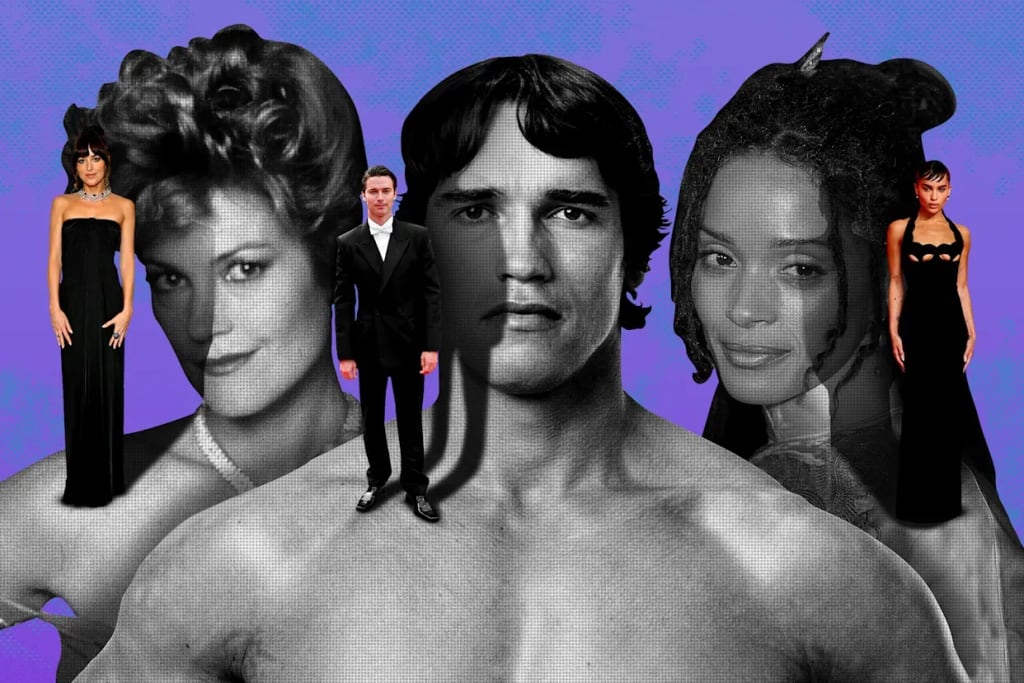
The discourse flared sharply in 2022, when the term “nepo baby” exploded into the mainstream and Vulture’s famous package turned the phrase into a cultural organizing principle. The term then kept expanding, sometimes accurately and sometimes sloppily, until even later commentary started warning that the label had become too broad, often mixing up nepotism with wealth, friendship networks, or generalized privilege.
But the real question is no longer whether Hollywood contains nepotism. It clearly does. The better question is this: why does the debate return even after everyone already knows the answer?
The answer lies in the tension between three things that are all true at once:
- structural access is unequal
- performance quality still matters
- Hollywood’s branding requires both fairness and dynasty to remain visible
That combination keeps the argument alive.
Why the “Nepo Baby” Label Hit So Hard
The phrase “nepo baby” landed because it did something ordinary words like “privilege” did not. It made a structural critique sound pop-cultural, meme-friendly, and emotionally precise. Suddenly people had a short label for a pattern they had noticed for years: children of industry insiders were not just present in Hollywood, they were disproportionately visible in exactly the kinds of creative fields where the business most loudly celebrates self-made talent. The 2022 social-media wave and subsequent magazine packages made that pattern impossible to ignore.
But the label also became unstable almost immediately. Later commentary, including Vanity Fair in early 2026, argued that the term had drifted into a catchall insult, sometimes misapplied to anyone rich, adjacent to fame, or connected by social circles rather than direct family lineage. That distinction matters analytically because not all advantage is the same kind of advantage. Nepotism is not identical to cronyism, inherited wealth, elite schooling, beauty capital, or algorithmic visibility, even though they often overlap.
That slippage is part of why the debate persists. People are not only arguing about fairness. They are also arguing about definitions.
Structural Access: The Part the Debate Gets Right
At its strongest, the nepotism debate is not really about whether a famous person’s child can be talented. Of course they can. It is about starting position.
Structural access in Hollywood is not trivial. It affects who gets introduced, who gets represented early, who knows how to audition on camera, who can afford years of unstable income, who has informal mentorship, who understands set etiquette before the first job, who can survive public rejection, and who gets a second or third chance after a weak first performance.
That is the part defenders of Hollywood legacy often understate. Opportunity in entertainment is scarce, unstable, and reputation-driven. In a labor market like that, even small access advantages compound fast.
A 2024 study discussed by Phys.org found that much of the media framing around “nepo babies” ends up doing something contradictory: it acknowledges nepotism while still defending it through narratives of talent, hard work, and inevitability. According to the study, around 44% of the articles examined defended nepo-baby success, while only about 19% treated Hollywood nepotism as objectionable. The authors argued that this kind of framing pays lip service to meritocracy while quietly legitimizing inequality.
That finding is useful because it captures the exact structure of the debate. Hollywood rarely denies advantage outright. Instead, it reframes advantage as merely the first step, then moves the conversation to effort, craft, or pressure. That rhetorical move is powerful because it sounds reasonable. It is also incomplete.
Getting in the door is not a minor advantage in a field where most people never get near the door.
Access Is More Than a Role
When people hear “nepotism,” they often imagine one obvious thing: a parent handing a child a part. But in practice, structural access is broader and subtler.
It includes:
- introductions to agents, managers, and casting directors
- early exposure to professional environments
- informal career coaching at home
- safety nets that allow prolonged risk-taking
- media attention that arrives faster and sticks longer
- presumption of interest from buyers, producers, and journalists
That does not guarantee stardom. It does mean the runway is longer.
And in Hollywood, runway matters.
Performance Quality: The Part the Discourse Often Flattens
The strongest counterargument to the nepotism critique is also real: access does not automatically produce quality.
Hollywood is full of connected people who did not become stars, and it is also full of legacy performers who are plainly capable, compelling, or even excellent. This is why the discourse gets messy. Audiences are often reacting to two different questions without separating them:
- Did this person have an unfair head start?
- Is this person actually good?
Those are not the same question.
A performer can benefit from lineage and still deliver strong work. In fact, some probably do because they grew up around serious craft, understood the rhythms of production early, and received better informal training than outsiders typically get. Celebrity defenders often make exactly this point, arguing that children raised in artistic households naturally move toward the same professions and still need to perform once they arrive. Gwyneth Paltrow, for example, argued that there is “nothing wrong” with wanting to do what your parents do and compared artistic inheritance to children entering medicine or law like their families.
Analytically, that defense is partly right and partly evasive.
It is right because family transmission of skill is real. In almost every profession, children absorb vocabulary, norms, confidence, and tacit knowledge from their environment. That includes performance arts.
It is evasive because Hollywood is not just like medicine or law. It is a prestige economy built on visibility, scarcity, taste, hype, and narrative. The issue is not merely that children imitate their parents’ vocation. It is that in Hollywood, attention itself is a career asset, and legacy names come preloaded with attention.
So performance quality matters. But it matters after access has already shaped who gets to prove quality at scale.
Why Audiences Keep Coming Back to Fairness
The debate never disappears because audiences still want to believe in discovery.
Hollywood runs on aspiration as much as box office. Even cynical viewers enjoy the fantasy that talent can break through. The industry needs that fantasy because it keeps the pipeline emotionally open. It allows acting schools, film festivals, open calls, breakout stories, and “overnight success” profiles to feel meaningful.
The “nepo baby” label punctures that dream without fully destroying it. It reminds audiences that the game is structured, but it does not prove the game is totally fake. That tension is exactly why the subject is so sticky.
The Guardian’s 2022 explainer captured the emotional center of the backlash with unusual clarity: the debate was not just about famous children on screen, but about the broader suspicion that they were landing “big creative breaks well before anyone else in their age bracket.”
That framing still matters in 2026. The anger is rarely about lineage alone. It is about compressed competition. Viewers intuitively understand that if an industry has only so many prestige roles, launch campaigns, studio bets, magazine covers, and awards-season narratives, then legacy access is not a neutral perk. It affects allocation.
Why Hollywood Keeps Selling Dynasty Anyway
If the backlash is so predictable, why does Hollywood keep producing and promoting family legacy narratives?
Because dynasty sells too.
It sells for several reasons:
Familiarity Is Marketable
A known surname reduces friction. It gives journalists an angle, audiences a reference point, and studios a ready-made story.
Legacy Feels Prestigious
Hollywood loves inheritance when it can be packaged as artistic lineage instead of favoritism. “Daughter of,” “son of,” and “from a family of storytellers” are often framed not as unfair access but as cultural texture.
Family Brands Are Efficient
Entertainment is increasingly crowded. A family connection is metadata. It helps the market sort people quickly.
Continuity Feels Romantic
The industry likes to imagine itself not merely as commerce but as tradition. Dynasty softens capitalism by making it look like heritage.
This is why Hollywood cannot fully reject nepotism discourse even when it dislikes it. The same lineage that invites critique also creates emotional and commercial value.
That is the paradox: merit sells the dream; dynasty sells the package.
The Analytical Core: Access, Quality, and Legitimacy
The most useful way to think about the issue is not morally, but structurally.
Structural Access
This is where the fairness critique is strongest. Entry into elite creative industries is not level, and family legacy is one of the clearest ways inequality reproduces itself.
Performance Quality
This is where simple “they only got in because of family” claims often fail. Some legacy performers are mediocre. Some are excellent. Access and ability can coexist.
Legitimacy Narratives
This is where the debate lives longest. Hollywood needs to persuade audiences that success is earned even when pathways are unequal. That is why media stories so often follow the same script: yes, they had help, but they also worked hard. The University of Alberta-linked study described exactly this normalization mechanism.
The discourse never settles because each side is describing a different layer of the same system.
Critics are usually talking about entry conditions.
Defenders are usually talking about output quality.
The industry is usually talking about public legitimacy.
All three are relevant. None is sufficient alone.
Why the Debate Never Dies
The discourse persists because it sits at the intersection of several unresolved cultural anxieties.
Meritocracy Is a Core Modern Myth
People want to believe elite industries reward excellence. When legacy networks become too visible, they threaten that belief.
Celebrity Culture Magnifies Injustice
Most industries have nepotism, but Hollywood puts its beneficiaries on magazine covers. That makes inherited advantage unusually easy to see and narrate.
The Label Is Socially Flexible
“Nepo baby” can mean a precise structural critique, a joke, a drag, a shorthand for class privilege, or a way to puncture celebrity image management. Its flexibility keeps it alive, even when precision suffers.
The Industry Never Fully Resolves the Contradiction
Hollywood cannot honestly market itself as pure merit, but it also cannot abandon meritocratic language. So it keeps oscillating. Each new wave of legacy casting revives the same fault line.
What a Better Conversation Would Look Like
A more serious conversation would stop asking whether legacy performers can be talented. That is too easy.
The better questions are:
- How much does family access shape who gets early chances?
- How often does public visibility arrive before proof of excellence?
- What gets mislabeled as “merit” when it is really a blend of ability, preparation, class insulation, and networks?
- What kinds of outsiders still break through, and under what conditions?
- What would fairness in casting and development actually mean in a project-based, reputation-driven industry?
Those questions are harder, but they are also more honest.
Final Verdict
The Hollywood nepotism debate survives because the industry still depends on a contradiction it cannot solve.
It must keep selling merit so the dream remains open.
It must keep selling dynasty because lineage is profitable, legible, and culturally glamorous.
That is why the “nepo baby discourse” never really ends. It is not just about envy, hypocrisy, or internet outrage. It is about a structural truth that keeps colliding with a promotional myth. Hollywood wants audiences to believe that talent rises, while also asking them to celebrate the families already closest to the elevator.
The most analytical conclusion is not that every legacy performer is overrated or that every outsider is pure merit. It is that structural access and performance quality are separate variables, and Hollywood’s public language constantly tries to blur them into one.
As long as the business keeps doing that, the debate will keep coming back.
FAQ
1. What does “nepo baby” actually mean in Hollywood?
At its clearest, it refers to someone who benefits professionally from a parent’s or close family member’s status in the same industry. More recent commentary has noted that the term is often stretched too broadly and sometimes confused with general wealth or cronyism.
2. Is the Hollywood nepotism debate really about talent?
Only partly. The deeper issue is usually unequal access to opportunity, not whether legacy performers can ever be talented.
3. Can a “nepo baby” still be genuinely good at acting?
Yes. Structural advantage does not rule out real ability. The analytical point is that talent and access can coexist, and public debate often confuses the two.
4. Why did the discourse explode in 2022?
The phrase gained major traction through social media and then became mainstream through high-profile magazine coverage, turning a long-running complaint into a recognizable cultural framework.
5. Why do celebrities defend family legacy so often?
Because from their perspective, artistic households genuinely do transmit skills, confidence, and interest. Publicly, defending legacy also helps protect the legitimacy of their own careers and their children’s careers.
6. Is Hollywood more nepotistic than other industries?
Not necessarily in pure structural terms, but it is more visible. Entertainment places its beneficiaries in public view, which makes inherited advantage easier to identify and debate.
7. What is the strongest argument critics make?
That in a highly competitive industry with limited opportunities, even modest inherited access has outsized effects on who gets seen, developed, and repeatedly cast.
8. What is the strongest argument defenders make?
That family connection may open a door, but long-term survival still depends on performance, discipline, and audience response.
9. Why does the argument keep resurfacing instead of ending?
Because Hollywood continues to market itself as meritocratic while visibly rewarding lineage. That contradiction produces permanent friction.
10. What would make the discourse less heated?
More precision. Distinguishing nepotism from wealth, social proximity, and general privilege would make the debate less noisy and more useful.