Brain Immune Cells Act Like an Anxiety Accelerator and Brake in Mice, Study Finds
Anxiety is usually explained through neurons, neurotransmitters, hormones, and the brain circuits that process danger. New research in mice adds another important participant to that picture: the brain’s resident immune cells.
Scientists have found evidence that two developmentally distinct populations of microglia can exert opposing effects on anxiety-like behavior and grooming.
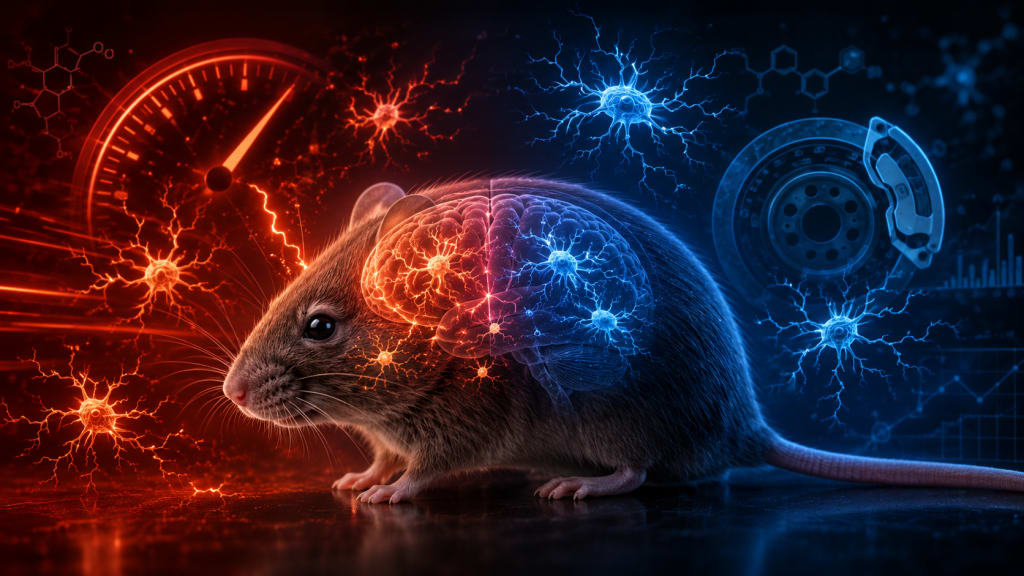
One population, known as canonical or non-Hoxb8 microglia, appears to function like an accelerator. Mice whose brains contained only these cells showed excessive grooming and, particularly among females, stronger avoidance behavior in anxiety tests.
The second population, called Hoxb8 microglia, appears to provide a counterbalancing brake. Mice containing only healthy Hoxb8 microglia, or a normal mixture of both populations, displayed comparatively low levels of grooming and anxiety-like behavior.
The researchers tested this model by transplanting carefully isolated microglial populations into neonatal mice engineered to lack detectable resident microglia. Once the transplanted cells had matured and populated the brain, the animals’ behavior changed according to which microglial population they had received.
The results challenge the idea that immune cells in the brain merely clean debris or respond passively to disease. They suggest that microglia can actively tune neuronal circuits involved in emotional and repetitive behavior.
However, the findings do not show that anxiety is produced by microglia instead of neurons.
The study indicates that microglia regulate behavior through their interactions with neurons and neural circuits. Anxiety remains a complex brain state involving many cell types, signaling molecules, experiences, genes, and environmental influences.
The research was conducted in mice and does not yet establish that humans possess the same functional accelerator-and-brake system. It also does not provide an immediate treatment for anxiety disorders.
What it offers is a striking new framework: normal emotional regulation may depend partly on a balance between distinct populations of brain immune cells.
Research Paper Details
Paper title: Defective Hoxb8 microglia are causative for both chronic anxiety and pathological overgrooming in mice
Journal: Molecular Psychiatry
Published online: September 2, 2025
Issue: Volume 31, pages 915–928, February 2026
DOI: 10.1038/s41380-025-03190-y
Authors: Donn A. Van Deren, Ben Xu, Naveen Nagarajan, Anne M. Boulet, Shuhua Zhang, and Mario R. Capecchi
The paper directly tested whether defective Hoxb8-lineage microglia cause the abnormal anxiety-like behavior and pathological grooming previously observed in mice carrying a disrupted Hoxb8 gene. It also examined the broader hypothesis that Hoxb8 and non-Hoxb8 microglia normally work in opposition to regulate behavior.
What Are Microglia?
Microglia are immune-related cells permanently located within the central nervous system.
They are often described as the brain’s resident macrophages because they can detect damage, remove cellular debris, respond to infection, and participate in inflammatory processes.
That description is accurate but incomplete.
Microglia also contribute to:
- Brain development
- Synapse formation and removal
- Responses to neuronal activity
- Tissue maintenance
- Injury repair
- Communication with neurons
- Regulation of neural circuits
- Behavioral adaptation
Unlike neurons, microglia do not normally transmit rapid electrical impulses through axons. Their influence occurs through slower cellular processes, including calcium signaling, contact with synapses, changes in gene activity, and the release of signaling molecules.
The 2025 study supports the idea that microglia are not merely maintenance cells surrounding the “real” neuronal machinery. Different microglial lineages may actively push neural circuits toward or away from particular behavioral states.
What Is Hoxb8?
Hoxb8 is a transcription-factor gene belonging to the Hox family.
Hox genes are best known for helping organize body development in embryos. They control patterns of gene expression that help cells understand their identities and positions.
The connection between Hoxb8 and behavior emerged when mice with a disrupted Hoxb8 gene developed severe, repetitive grooming. Some animals groomed themselves or their cage mates so intensely that they removed hair and produced skin lesions.
The mice also displayed elevated anxiety-like behavior.
Researchers eventually traced the relevant brain expression of the Hoxb8 lineage to a specific population of microglia rather than neurons. These cells became known as Hoxb8 microglia.
Hoxb8 microglia should not be understood simply as ordinary microglia that temporarily activate the Hoxb8 gene during anxiety.
They represent a developmental lineage with a distinct origin and history.
The Brain Contains at Least Two Microglial Lineages in These Mice
The researchers distinguish between two broad microglial populations.
Canonical Non-Hoxb8 Microglia
These are the more abundant population, accounting for approximately 75 percent of microglia in the adult mouse brain in the latest study’s model.
Their progenitors arise early in embryonic development and enter the developing brain directly from the yolk sac.
Hoxb8 Microglia
These account for approximately 25 percent of adult mouse microglia.
Their progenitors also originate during embryonic development but follow a different route. They pass through areas involved in blood-cell formation, including the aorta-gonad-mesonephros region and fetal liver, before entering the developing brain later.
Despite their different developmental histories, both populations express established microglial markers and function as genuine brain-resident microglia.
Their molecular similarities once made it reasonable to assume that one population could compensate for the other.
The behavioral experiments suggest otherwise.
The Accelerator-and-Brake Model
The researchers propose that the two microglial populations operate as a binary regulatory system.
In this model:
- Non-Hoxb8 microglia increase anxiety and grooming signals.
- Healthy Hoxb8 microglia counterbalance or reduce those signals.
- A normal mixture allows behavior to remain within an adaptive range.
The accelerator is not inherently harmful.
Some anxiety is protective. It encourages an animal to avoid danger, remain alert in exposed environments, and react to potential threats.
Grooming is also a normal and essential behavior. It maintains fur, removes irritants, regulates social interactions, and contributes to routine self-care.
The problem emerges when the accelerator operates without sufficient braking or when the braking population itself becomes defective.
The paper proposes that cooperation between the two populations allows fine control rather than simply switching behavior completely on or off.
Why the Study Is More Complicated Than “Immune Cells Cause Anxiety”
A popular summary of the research might say that anxiety is controlled by immune cells rather than neurons.
That interpretation goes too far.
Earlier work from the same research group showed that stimulating Hoxb8 microglia in selected brain regions activated nearby neurons. The resulting behavior depended on where the stimulated microglia were located.
Stimulation within the dorsomedial striatum or medial prefrontal cortex increased grooming. Stimulation in parts of the amygdala increased anxiety-like behavior. Stimulation in the ventral hippocampus produced grooming, anxiety-like behavior, and freezing.
The microglia therefore appear to influence established neuronal circuits rather than replace them.
A better model is:
- Microglia receive or generate regulatory signals.
- Those signals alter nearby neuronal activity.
- Neuronal circuits produce the observable behavior.
- Opposing microglial populations help determine the intensity of the response.
Microglia may sit upstream of important changes in circuit activity, but the behavior still emerges from a multicellular network.
How Researchers Created Mice With Selected Microglia
Directly testing the accelerator-and-brake theory required more than observing ordinary mice.
The researchers needed animals whose brains contained:
- Only Hoxb8 microglia
- Only non-Hoxb8 microglia
- A controlled mixture of both
- Mutant Hoxb8 microglia
- No detectable resident microglia for comparison
They used the CSF1R system to create recipient mice with greatly reduced or absent microglia.
CSF1R is a receptor required for microglial survival. By altering the gene or one of its essential regulatory elements, the researchers produced neonatal mice whose brains contained empty microglial niches.
Purified donor cells could then be transplanted directly into the recipients’ brains.
As the animals matured, the transplanted cells proliferated, spread through the brain, and acquired mature microglial markers. In older recipients, donor-derived Hoxb8 or non-Hoxb8 microglia occupied the brain extensively.
This approach allowed the researchers to isolate the behavioral contributions of each population in a way that would be impossible in a normal mixed brain.
Were the Mice Completely Free of Microglia?
The study used two related recipient systems.
One conditional approach greatly reduced microglia but allowed a small amount of endogenous repopulation. In adult transplanted animals, residual native microglia could account for up to approximately 17 percent of the population in some groups.
The researchers therefore also used mice carrying deletion of a CSF1R regulatory element known as FIRE.
Homozygous Csf1r ΔFIRE mice had no detectable endogenous microglia in the researchers’ analyses, while preserving certain border-associated macrophages. These animals became the preferred recipients for experiments comparing pure Hoxb8 and non-Hoxb8 populations.
Calling all recipients “microglia-free” is therefore a useful simplification, but the exact degree of depletion depended on the genetic model.
How the Transplantation Experiment Worked
The researchers isolated microglial cells or progenitors using fluorescent lineage markers and cell sorting.
Selected cells were injected into both sides of the brains of newborn recipient mice.
The groups included animals receiving:
- Healthy Hoxb8 microglia
- Healthy non-Hoxb8 microglia
- A mixture containing approximately 25 percent Hoxb8 and 75 percent non-Hoxb8 microglia
- Hoxb8 microglia carrying a disrupted Hoxb8 gene
- Saline or control treatment
The animals were then allowed to mature for several months before their grooming and anxiety-like behaviors were measured.
This waiting period was essential because transplanted progenitors needed time to proliferate, spread through the brain, and mature into functional microglia.
What Happened in Mice With Only Non-Hoxb8 Microglia?
Mice whose brains contained only healthy non-Hoxb8 microglia showed excessive grooming.
Both male and female recipients spent significantly more time grooming than animals containing only Hoxb8 microglia or the normal mixture of both populations.
Some developed visible hair loss on the chest, indicating that the grooming had progressed beyond ordinary self-maintenance into pathological behavior.
Female mice containing only non-Hoxb8 microglia also spent less time in the illuminated section of a light-dark box.
Mice naturally tend to prefer protected, darker areas while also feeling motivated to explore. Greater avoidance of the light area is commonly interpreted as stronger anxiety-like behavior.
The anxiety difference was statistically significant in female recipients but not in males under the test conditions.
These results matched the main prediction of the accelerator-and-brake model.
When the accelerator population occupied the brain without Hoxb8 “brakes,” grooming increased substantially and anxiety-like avoidance became stronger in females.
What Happened in Mice With Only Healthy Hoxb8 Microglia?
Mice containing only healthy Hoxb8 microglia showed low levels of grooming and anxiety-like behavior.
They did not display the visible hair loss seen in animals receiving only non-Hoxb8 cells.
Their behavior was similar to that of mice receiving the normal mixed ratio of both populations.
This does not mean that filling a human brain with Hoxb8 microglia would make someone permanently calm.
The finding applies to a highly controlled developmental mouse model.
It indicates that healthy Hoxb8 microglia were sufficient to prevent the pathological grooming and elevated avoidance produced when non-Hoxb8 microglia acted alone.
What Happened When Both Populations Were Present?
The researchers transplanted approximately the same ratio found naturally in the adult mouse brain:
- 25 percent Hoxb8 microglia
- 75 percent non-Hoxb8 microglia
These mice showed low, normal levels of grooming and anxiety-like behavior.
They did not display the hair loss found in the non-Hoxb8-only group.
The result supports the idea that the brain does not require one population to defeat the other.
Normal regulation appears to depend on balance.
The larger accelerator population may permit appropriate vigilance and grooming, while the smaller braking population prevents those responses from becoming excessive.
What Happened in Mice With No Detectable Microglia?
The Csf1r ΔFIRE recipient mice lacking detectable endogenous microglia did not show abnormal grooming or anxiety-like behavior in the particular assays used by the researchers.
This result may appear surprising, especially because microglia perform many important functions in development and brain maintenance.
It should not be interpreted as evidence that microglia are unnecessary or that removing them would treat anxiety.
The genetically modified animals represent a specialized model, and the study examined specific behaviors rather than every aspect of cognition, development, immunity, brain health, or survival.
The result simply helped establish that the recipient background did not independently produce the grooming and anxiety phenotypes being investigated.
Defective Hoxb8 Microglia Caused the Strongest Pathology
The researchers also transplanted progenitors carrying a disrupted Hoxb8 gene.
Upon maturation, mice receiving mutant Hoxb8 microglia developed severe overgrooming and hair loss resembling the phenotype of conventional Hoxb8-mutant mice.
Female recipients also showed stronger anxiety-like behavior than control animals receiving healthy Hoxb8 cells.
During a two-hour automated observation:
- Female mice receiving mutant Hoxb8 microglia groomed for approximately 1,292 seconds.
- Females receiving healthy Hoxb8 microglia groomed for approximately 562 seconds.
- Control groups groomed for roughly 574 to 579 seconds.
In an elevated-plus-maze test, females with mutant Hoxb8 microglia spent only about 25 percent of the measured time in open arms, compared with approximately 52 to 59 percent among control groups.
The male mice showed elevated grooming, but the anxiety-test differences were not statistically significant under the reported conditions.
These transplantation results provided direct causal evidence that defective Hoxb8-lineage microglia can generate the pathological behaviors.
Loss of the Brake Was Not the Whole Explanation
If Hoxb8 microglia function only as brakes, completely removing them should reproduce the full Hoxb8-mutant phenotype.
That was not what happened.
Mice containing only non-Hoxb8 microglia groomed excessively, but conventional Hoxb8-mutant mice groomed even more.
Female mice with only healthy non-Hoxb8 microglia spent an average of approximately 1,050 seconds grooming during two hours. Female Hoxb8-mutant mice spent approximately 1,490 seconds.
For males, the corresponding averages were approximately 750 and 1,250 seconds.
The researchers interpreted the difference as evidence that Hoxb8 disruption produces two problems:
- Loss of function: the healthy braking activity is absent.
- Gain of harmful function: mutant Hoxb8 microglia actively produce additional pathological signaling.
The mutation therefore appears worse than simply having no Hoxb8 microglia.
Why Healthy Hoxb8 Microglia Are Called Brakes Even Though Activating Them Can Trigger Behavior
The brake metaphor is useful, but it should not be interpreted too literally.
Earlier experiments found that optogenetically stimulating Hoxb8 microglia alone in certain brain regions could temporarily increase grooming, anxiety-like behavior, or both.
When Hoxb8 and non-Hoxb8 microglia were stimulated simultaneously, however, the behavioral effects cancelled each other.
The newer transplantation results showed that brains populated only by healthy Hoxb8 microglia remained at low behavioral levels, while brains populated only by non-Hoxb8 microglia developed excessive behavior.
These findings suggest that the two populations communicate through opposing regulatory programs, but their actions are not equivalent to pressing a mechanical car pedal.
Effects depend on:
- Which cells are activated
- Where they are located
- How strongly they are stimulated
- Whether the other population is present
- Whether Hoxb8 is healthy or mutated
- Which neuronal circuit receives the microglial signal
The accelerator-and-brake language describes the net balance observed across the system rather than every possible result of experimentally stimulating an individual cell.
How Was Grooming Measured?
The researchers used an automated behavioral system called LABORAS to record how long mice spent grooming over a two-hour period.
Grooming is normal in mice, so the presence of grooming alone does not indicate disease.
Researchers looked for:
- Unusually long total grooming time
- Repetitive grooming beyond normal maintenance
- Hair removal
- Skin damage or lesions
- Differences between experimental and control groups
The non-Hoxb8-only and mutant-Hoxb8 groups groomed substantially more than the relevant controls. Visible hair loss provided additional evidence that the behavior was pathological rather than merely a small statistical difference.
How Was Anxiety Measured?
Mice cannot verbally describe fear, worry, intrusive thoughts, or physical tension.
Researchers therefore assess behavior associated with threat avoidance.
The study used tests including the elevated plus maze and the light-dark box.
Elevated Plus Maze
The apparatus has open and enclosed arms raised above the floor.
Mice generally prefer protected areas but also explore unfamiliar environments. Spending less time in the exposed arms is interpreted as greater anxiety-like avoidance.
Light-Dark Box
The apparatus contains one bright compartment and one dark, protected compartment.
Greater avoidance of the illuminated area is used as another indicator of anxiety-like behavior.
These tests are widely used, but they do not reproduce the full experience of human anxiety.
They measure particular patterns of approach, avoidance, and exploration. Movement, vision, motivation, prior stress, and other factors can also influence performance.
The most accurate wording is therefore anxiety-like behavior, not a definitive statement that a mouse feels the same anxiety experienced by a human patient.
Is Mouse Overgrooming the Same as Human Trichotillomania?
No, but it may model selected features.
Hoxb8-mutant mice groom excessively enough to pull out hair and damage skin. This resembles aspects of trichotillomania and related obsessive-compulsive-spectrum conditions.
Human trichotillomania is more complex.
It involves subjective urges, emotional states, learned habits, relief or distress, social consequences, and psychological factors that cannot be fully reproduced in a mouse.
The animal behavior is useful for studying biological mechanisms that may contribute to repetitive self-directed actions.
It should not be treated as a complete replica of the human disorder.
Why Were Female and Male Results Different?
Female Hoxb8-mutant mice have historically shown stronger anxiety and pathological grooming than males.
In the transplantation study, females receiving mutant Hoxb8 microglia or only non-Hoxb8 microglia showed clearer anxiety-related differences than males.
Male recipients still demonstrated excessive grooming, but the anxiety tests did not consistently reach statistical significance.
This could reflect:
- Lower baseline anxiety-like avoidance in the male mice
- Reduced sensitivity of the behavioral tests
- Hormonal influences
- Sex-specific responses to chronic pathology
- Differences in neural or immune signaling
Earlier work from the group linked the stronger female Hoxb8-mutant phenotype partly to ovarian hormones. However, the newer study does not establish a complete explanation for every sex difference.
How Can Microglia Alter Behavior?
The 2025 paper proves a causal relationship in the transplantation model but does not fully identify every molecule carrying the signal from microglia to neurons.
Microglia can potentially influence neural circuits through:
- Secreted signaling molecules
- Changes in extracellular ions
- Cytokines
- Growth factors
- Purinergic signaling
- Direct contact with synapses
- Regulation of neuronal excitability
- Modification of synaptic structure
- Interaction with astrocytes and other immune cells
Earlier optogenetic experiments showed that activating Hoxb8 microglia could increase the immediate-early neuronal marker c-Fos and alter nearby neuronal firing, supporting direct functional communication between microglia and neural circuits.
The exact molecular language of the opposing microglial populations remains one of the most important unanswered questions.
A 2026 Follow-Up Identified Calcium as a Key Signal
A related study published in April 2026 examined calcium signaling within Hoxb8 microglia.
The researchers reported that increasing calcium inside healthy Hoxb8 microglia through optogenetic stimulation could induce anxiety-like behavior or grooming, depending on the brain region.
Normal microglia also produced calcium transients in response to those behaviors.
Mutant Hoxb8 microglia behaved differently. They appeared to contain abnormally high constitutive levels of free calcium, potentially because they could not properly store calcium within the endoplasmic reticulum. The researchers proposed that this persistent calcium elevation acts as a continuous signal driving chronic anxiety and overgrooming.
This follow-up provides a possible explanation for the gain-of-function component identified in the 2025 transplantation paper.
Mutant Hoxb8 cells may not simply fail to apply the brake. They may become a continuous source of behavior-promoting signals.
Does This Mean Anxiety Is an Immune Disease?
Not on the basis of this study.
“Anxiety” includes:
- Normal protective fear
- Temporary stress responses
- Generalized anxiety disorder
- Panic disorder
- Social anxiety
- Trauma-related symptoms
- Phobias
- Anxiety associated with medical conditions
- Anxiety occurring alongside obsessive-compulsive symptoms
These conditions involve different combinations of genetics, experience, learning, hormones, brain circuits, physiology, environment, and immune signaling.
The mouse research shows that microglia can causally regulate selected anxiety-like behaviors under experimental conditions.
It does not establish that every anxiety disorder is primarily caused by microglial imbalance.
A better conclusion is that immune-related brain cells may be part of the regulatory machinery underlying emotion and repetitive behavior.
Why the Findings Challenge Traditional Neuroscience
For much of modern neuroscience, behavior was explained mainly through neurons.
Other brain cells were often described as support systems:
- Astrocytes nourished neurons.
- Oligodendrocytes insulated axons.
- Microglia removed waste and responded to damage.
That distinction has steadily weakened.
Research now shows that non-neuronal cells can influence synaptic activity, circuit development, plasticity, inflammation, and behavior.
The new study is especially provocative because changing the lineage composition of microglia was sufficient to produce large behavioral differences.
The accelerator population did not need to replace or genetically alter the neurons.
By changing the cellular environment around neural circuits, the researchers changed how the animals behaved.
Could the Findings Lead to New Anxiety Treatments?
Possibly, but substantial work is needed.
The accelerator-and-brake model suggests several theoretical strategies:
- Reduce pathological signals from non-Hoxb8 microglia
- Restore healthy Hoxb8 microglial function
- Correct calcium handling in mutant or dysfunctional cells
- Strengthen the signals through which Hoxb8 microglia oppose excessive behavior
- Adjust the ratio or activity of functional microglial populations
- Block specific microglia-to-neuron signaling molecules
These concepts remain experimental.
The study did not test an anti-anxiety drug.
It did not show that transplanting microglia treats an adult anxiety disorder.
It did not identify a safe molecular switch that selectively strengthens the braking population in humans.
The experiments were designed to understand biological causality, not to deliver a clinical intervention.
Why Microglial Transplantation Is Not Yet a Practical Therapy
The experiment involved direct intracerebral transplantation into newborn mice whose resident microglia had been genetically removed.
That is very different from treating an adult person.
A clinically practical intervention would face major challenges:
- Safely reaching the correct brain regions
- Avoiding damage to healthy microglial functions
- Controlling immune reactions
- Achieving long-term engraftment
- Preventing inflammation
- Determining the correct cell ratio
- Ensuring transplanted cells mature normally
- Avoiding developmental side effects
- Proving that the equivalent human microglial populations exist
The value of transplantation in this study is experimental precision.
It allowed researchers to determine what each cell population can do inside a living brain.
Do Humans Have Hoxb8 and Non-Hoxb8 Microglia?
The study does not prove that the human brain contains two populations with the same identities, proportions, and behavioral roles.
The authors argue that distinct microglial lineages have also been reported in zebrafish and consider it likely that humans may possess comparable functional diversity.
That remains a prediction requiring direct evidence.
Human microglia are already known to exist in multiple molecular states influenced by:
- Development
- Age
- Brain region
- Genetics
- Infection
- Injury
- Neurodegeneration
- Stress
- Local neuronal activity
The unanswered question is whether a human microglial population corresponding to mouse Hoxb8 lineage acts as a behavioral brake.
Researchers would need human lineage, genomic, single-cell, tissue, imaging, and functional evidence before making that conclusion.
Why Targeting Hoxb8 Itself Could Be Difficult
Hoxb8 is a transcription factor involved in developmental and blood-cell programs.
Directly increasing or suppressing a developmental transcription factor throughout the body could have effects far beyond anxiety.
A safer therapeutic target might be a downstream pathway specific to mature brain microglia.
Researchers therefore need to identify:
- Which molecules Hoxb8 microglia release
- Which receptors receive those signals
- How non-Hoxb8 cells produce the opposing effect
- How calcium controls the output
- Which neuronal populations respond
- Whether those pathways remain adjustable in adulthood
The most clinically useful discovery may eventually be a signaling molecule downstream of the lineage identity rather than Hoxb8 itself.
Could Strengthening the “Brake” Reduce Too Much Anxiety?
Even a successful therapy would require careful balance.
Anxiety is not entirely harmful.
Appropriate anxiety helps people:
- Recognize threats
- Avoid unsafe situations
- Prepare for challenges
- Learn from danger
- Respond quickly during emergencies
Completely suppressing threat-related behavior could increase risk-taking or reduce protective responses.
The study’s model is valuable precisely because it involves balance rather than total elimination.
A future treatment would ideally correct pathological amplification while preserving adaptive fear and caution.
What the Study Does Not Prove
The research does not prove that:
- Neurons are unimportant for anxiety.
- Human anxiety is caused by the same two microglial populations.
- Every anxiety disorder is an immune disorder.
- Compulsive grooming in mice is identical to human OCD or trichotillomania.
- Removing microglia is safe or beneficial.
- Increasing Hoxb8 microglia would automatically calm a person.
- Microglial transplantation is ready for psychiatric treatment.
- A medication can currently activate the “brake” population.
- The findings explain all sex differences in anxiety.
- Anxiety can be diagnosed through microglial testing.
These distinctions are crucial because promising animal findings are often presented online as though a human treatment has already been discovered.
Key Limitations of the Research
It Was Conducted in Mice
Mouse neural and immune systems share important biology with humans, but behavioral translation is never guaranteed.
Anxiety Was Inferred From Behavior
The tests measured avoidance and exploration rather than subjective thoughts or emotions.
Transplantation Began in Newborn Animals
The cells developed inside the brain for months. This does not show that altering microglia in adulthood would have the same effect.
The Recipient Mice Were Genetically Specialized
The CSF1R-based models do not represent a typical mammalian brain.
Some Effects Were Sex-Specific
Significant anxiety-related differences were clearest in females, limiting broad conclusions.
The Molecular Signals Are Not Fully Identified
The accelerator-and-brake model describes a functional relationship, but much of the communication pathway remains unresolved.
Human Equivalents Have Not Been Demonstrated
No clinical tissue or patient study in this paper confirmed the same binary system in people.
What Researchers Need to Investigate Next
The study creates several important research priorities.
Confirm Comparable Populations in Humans
Scientists need to determine whether human microglia contain lineages or stable states matching the mouse accelerator-and-brake populations.
Identify the Signals Sent to Neurons
The molecules responsible for increasing or suppressing circuit activity must be isolated.
Test Adult Manipulation
Researchers need methods that alter microglial activity after the brain has fully developed.
Examine Additional Anxiety Models
The system should be studied under chronic stress, social threat, trauma, fear learning, and other conditions.
Separate Anxiety From Grooming
The two behaviors overlap in the model but may depend on different brain regions and molecular pathways.
Study Long-Term Safety
Suppressing one microglial population may affect infection responses, synapse maintenance, cognition, or recovery from injury.
Develop Selective Drugs
Any therapy would need to target pathological signaling without broadly disabling microglia.
Explore Sex Differences
Hormonal and cellular mechanisms underlying the stronger female phenotype require further investigation.
Why This Research Matters
The study provides more than another biological association.
Its transplantation design allowed the researchers to change microglial composition and observe predictable changes in behavior.
That supports a causal sequence:
- The brain contains distinct microglial populations.
- Those populations have opposing regulatory roles.
- Removing the Hoxb8 population leaves accelerator signaling unbalanced.
- Introducing mutant Hoxb8 cells produces even stronger pathology.
- Restoring healthy Hoxb8 cells or a balanced mixture maintains lower behavioral levels.
- The microglia communicate with neuronal circuits that execute the behavior.
The research therefore expands the biological framework through which anxiety and repetitive behavior can be studied.
Instead of focusing only on neurons and neurotransmitters, scientists may also need to ask which immune-cell populations are present, what state they occupy, and how they shape the surrounding circuit.
Final Verdict
The study does not show that anxiety comes from microglia rather than neurons.
It shows something more nuanced and potentially more important: neurons do not regulate emotional behavior alone.
In mice, two populations of brain-resident immune cells appear to work in opposition.
Canonical non-Hoxb8 microglia act as a behavioral accelerator, increasing grooming and anxiety-like avoidance when they occupy the brain without the opposing population.
Healthy Hoxb8 microglia act as a functional brake, keeping those behaviors comparatively low when present alone or in a normal mixture.
Defective Hoxb8 microglia are even more disruptive. They do not simply remove the brake; they appear to gain a pathological signaling function that produces chronic anxiety-like behavior and severe overgrooming.
By transplanting selected cells into neonatal mice lacking detectable resident microglia, the researchers demonstrated that changing microglial identity was sufficient to change later behavior.
The findings open a new way of thinking about psychiatric and compulsive behavior.
Anxiety may emerge not only from the activity of neurons but from continuing negotiations between neurons, immune cells, hormones, developmental programs, and the environment.
Whether the mouse accelerator-and-brake system exists in humans remains unknown.
No microglia-targeting anxiety treatment is currently available from this research.
Yet the study provides a compelling reason to investigate the immune architecture of emotion more closely.
The brain’s immune cells may not merely respond after neural circuits become disturbed.
They may help decide how strongly those circuits press the accelerator—and when they apply the brake.
Frequently Asked Questions About Microglia and Anxiety
What did the new microglia study discover?
It found that two microglial populations in mice appear to have opposing effects on grooming and anxiety-like behavior.
What is the study’s DOI?
The DOI is 10.1038/s41380-025-03190-y.
Where was the study published?
It was published online in Molecular Psychiatry on September 2, 2025, and appeared in the journal’s 2026 volume.
What are microglia?
Microglia are resident immune cells of the central nervous system that also influence brain development, synapses, neurons, and behavior.
Are microglia neurons?
No. Microglia are immune-related glial cells and do not normally communicate through neuronal action potentials.
Does the research prove that neurons do not control anxiety?
No. The microglia appear to regulate neurons and neural circuits that produce the behavior.
What are Hoxb8 microglia?
They are a developmentally distinct population of mouse microglia associated with the Hoxb8 lineage.
What are non-Hoxb8 microglia?
They are the canonical and more abundant microglial population that does not belong to the Hoxb8 lineage.
How many mouse microglia are Hoxb8 microglia?
The latest study describes approximately 25 percent as Hoxb8 microglia and approximately 75 percent as non-Hoxb8 microglia.
Why are non-Hoxb8 microglia called accelerators?
Mice containing only these cells displayed excessive grooming and stronger anxiety-like behavior, suggesting that the population increases those responses.
Why are Hoxb8 microglia called brakes?
Healthy Hoxb8 microglia counterbalanced the behavior-promoting effect of non-Hoxb8 microglia in the researchers’ model.
Did mice with only Hoxb8 microglia show no anxiety?
They showed comparatively low or normal levels in the tests used. The study does not prove they were incapable of every fear or stress response.
What happened when mice had only non-Hoxb8 microglia?
They groomed excessively, developed hair loss, and female mice showed greater avoidance in an anxiety-related test.
What happened when both populations were present?
A mixture approximating the normal 25-to-75 ratio produced low, normal behavioral levels.
What happened when Hoxb8 was mutated?
Mutant Hoxb8 microglia caused chronic anxiety-like behavior and severe pathological overgrooming.
Why were mutant Hoxb8 cells worse than having no Hoxb8 cells?
The mutation appeared to cause both loss of normal braking and gain of an abnormal behavior-promoting function.
How did the researchers isolate each population’s effect?
They transplanted purified microglial populations into newborn mice engineered to lack detectable endogenous microglia.
How did transplanted cells enter the brain?
They were injected directly into the brains of neonatal recipient mice.
Did the transplanted microglia remain near the injection site?
No. Over several months, they proliferated, spread through the brain, and acquired mature microglial markers.
What is CSF1R?
CSF1R is a receptor required for microglial survival. Researchers altered its function to produce recipient mice lacking resident microglia.
What is the FIRE element?
FIRE is a regulatory element controlling CSF1R expression. Deleting it produced mice with no detectable endogenous microglia in the study.
Did microglia-free mice become extremely calm?
They showed no detectable abnormalities in the specific grooming and anxiety tests used. This does not mean that removing microglia is healthy or safe.
How was mouse anxiety tested?
Researchers used avoidance-based tests such as the elevated plus maze and the light-dark box.
What does avoidance of open spaces mean in a mouse test?
Mice generally prefer protected areas. Increased avoidance of exposed or bright areas is interpreted as anxiety-like behavior.
Is anxiety-like behavior the same as human anxiety?
No. Human anxiety includes thoughts, emotions, physical symptoms, memories, and social influences that cannot be fully measured in mice.
How was grooming measured?
An automated system recorded how long the mice groomed over a two-hour period, while researchers also assessed hair loss.
Is mouse overgrooming the same as OCD?
No. It models selected repetitive and compulsive-like features but does not reproduce the full human disorder.
Is mouse overgrooming the same as trichotillomania?
It resembles hair-removal behavior but cannot model every psychological aspect of human trichotillomania.
Why were female mice more affected?
The exact reason remains under investigation. Hormones, baseline behavior, test sensitivity, and biological sex differences may contribute.
Did male mice show any effects?
Yes. Males containing only non-Hoxb8 or mutant Hoxb8 microglia showed excessive grooming, although anxiety-test differences were less consistent.
Do Hoxb8 microglia always reduce behavior?
Not under every experimental condition. Direct optogenetic activation in selected brain regions can temporarily trigger grooming or anxiety-like behavior.
Why are they still called brakes?
Across the full two-population system, healthy Hoxb8 microglia counterbalance the behavioral influence of non-Hoxb8 microglia.
How do microglia communicate with neurons?
Possible mechanisms include secreted molecules, calcium-dependent signals, synaptic contact, cytokines, growth factors, and changes in neuronal excitability.
Did the researchers identify calcium involvement?
A related 2026 study reported that calcium signaling within Hoxb8 microglia can induce and respond to anxiety and grooming.
What is abnormal about calcium in mutant Hoxb8 microglia?
The cells appear to maintain unusually high free calcium levels, potentially creating persistent signals that promote pathological behavior.
Does the discovery mean anxiety is caused by inflammation?
Not necessarily. Microglia have many non-inflammatory functions, and the study did not reduce the behavior to conventional brain inflammation.
Do humans have Hoxb8 microglia?
An equivalent human accelerator-and-brake system has not yet been demonstrated.
Could human microglia influence anxiety?
It is biologically plausible, but the specific mouse findings require direct confirmation in human tissue and clinical research.
Can doctors test a person’s Hoxb8 microglia?
No clinically established test currently measures this proposed behavioral balance in humans.
Is there a drug that strengthens brake microglia?
No approved treatment currently targets healthy Hoxb8 microglia for anxiety.
Could scientists suppress accelerator microglia?
That is a theoretical therapeutic strategy, but the relevant selective molecular targets have not yet been identified.
Could microglial transplantation treat anxiety?
The study does not establish transplantation as a human treatment. Its transplantation method was an experimental tool used in newborn mice.
Would eliminating non-Hoxb8 microglia be safe?
That is unknown and could be harmful. Microglia perform essential functions beyond behavioral regulation.
Would adding more Hoxb8 microglia make someone calmer?
The study provides no evidence that this would work or be safe in humans.
Could the research lead to new anxiety medications?
Possibly. The best targets may be signaling molecules used by the two populations rather than the cells themselves.
Would a microglia-targeting treatment replace therapy or existing medication?
There is no such approved treatment, and the study does not support changing current clinical care.
Does normal anxiety have a useful function?
Yes. Appropriate anxiety supports vigilance, caution, preparation, and avoidance of danger.
Why would the brain need both an accelerator and a brake?
Opposing systems could allow anxiety and grooming to increase when useful and return to normal before becoming pathological.
What is the main limitation of the study?
It used highly specialized mouse models, so the results cannot yet be assumed to apply directly to human anxiety disorders.
What is the most important scientific message?
Microglia can causally influence behavioral circuits, and distinct microglial populations may have opposing regulatory roles.
What is the most important medical caution?
This is foundational animal research, not a proven therapy for anxiety, OCD, or trichotillomania.