Jack Nicholson at 89: The Last Great Movie Myth
Happy 89th birthday to Jack Nicholson, one of the rare actors who did not simply become a star, but became a cinematic weather system. There are famous actors, there are great actors, and then there are the very few whose face, voice, smile, and screen energy become part of the culture’s permanent vocabulary. Nicholson belongs in that final category. Born on April 22, 1937, he built a career so distinctive that even a single raised eyebrow could feel like a full performance.
What makes Nicholson so enduring is not only that he was excellent. Plenty of actors are excellent. What made him different was that he fused performance, persona, danger, wit, and American cultural tension into one instantly recognizable presence. He could be funny without softening. He could be seductive without seeming safe. He could be charming while making you feel the floor might give way beneath the scene. In a medium crowded with polished surfaces, Nicholson often looked like he had smuggled in something raw.
That is why a birthday tribute to him is never just a birthday tribute. It becomes a reflection on a whole era of movie stardom that now feels harder to reproduce. Nicholson came out of a period when Hollywood still allowed actors to be complicated, abrasive, adult, and unpredictable. He became a symbol of that freedom, and his greatest performances still carry the electricity of a screen culture willing to trust ambiguity.
Why Jack Nicholson Still Matters
Jack Nicholson’s legacy is unusually secure because it rests on more than awards or nostalgia. He matters for at least three reasons.
He Was a Bridge Between Old Hollywood and New Hollywood
Nicholson began in low-budget films before breaking through more widely with Easy Rider and then solidifying his status in the New Hollywood era, a period when American cinema became riskier, stranger, and psychologically richer. Britannica notes that he worked in lower-budget productions before earning major acclaim for Easy Rider in 1969, followed by defining performances in Five Easy Pieces, Carnal Knowledge, Chinatown, and One Flew Over the Cuckoo’s Nest.
That trajectory matters because it made Nicholson both a product of the old studio ecosystem and a face of the anti-establishment cinematic turn that followed. He did not arrive polished in the classical sense. He arrived with edge.
He Made Volatility a Performance Language
Many actors can play anger. Many can play irony. Very few can make unpredictability feel like an art form. Nicholson’s best work often lives in that exact space. His characters are not simply unstable. They are alert, often dangerously so. Even in quiet scenes, there is the sense that the character is thinking three moves ahead or may suddenly break the rules of the room.
That quality made him ideal for films about institutions, masculinity, corruption, ego, desire, and collapse.
He Became an Icon Without Losing Technique
The trap of icon status is that it can flatten craft. Once a performer becomes “a legend,” people stop discussing the work with precision. Nicholson resisted that problem because the work remains too vivid to reduce to image alone. His line readings, pauses, physical looseness, comic timing, and ability to pivot from warmth to menace still repay close attention.
The Breakthrough Years: When Nicholson Became Essential
Nicholson’s early rise is one of the great American actor origin stories. After years in smaller productions, he broke through in Easy Rider, then followed it with Five Easy Pieces, a performance that announced something major: here was an actor who could make alienation feel intimate instead of abstract. Britannica highlights Five Easy Pieces as one of the roles that firmly established his stature.
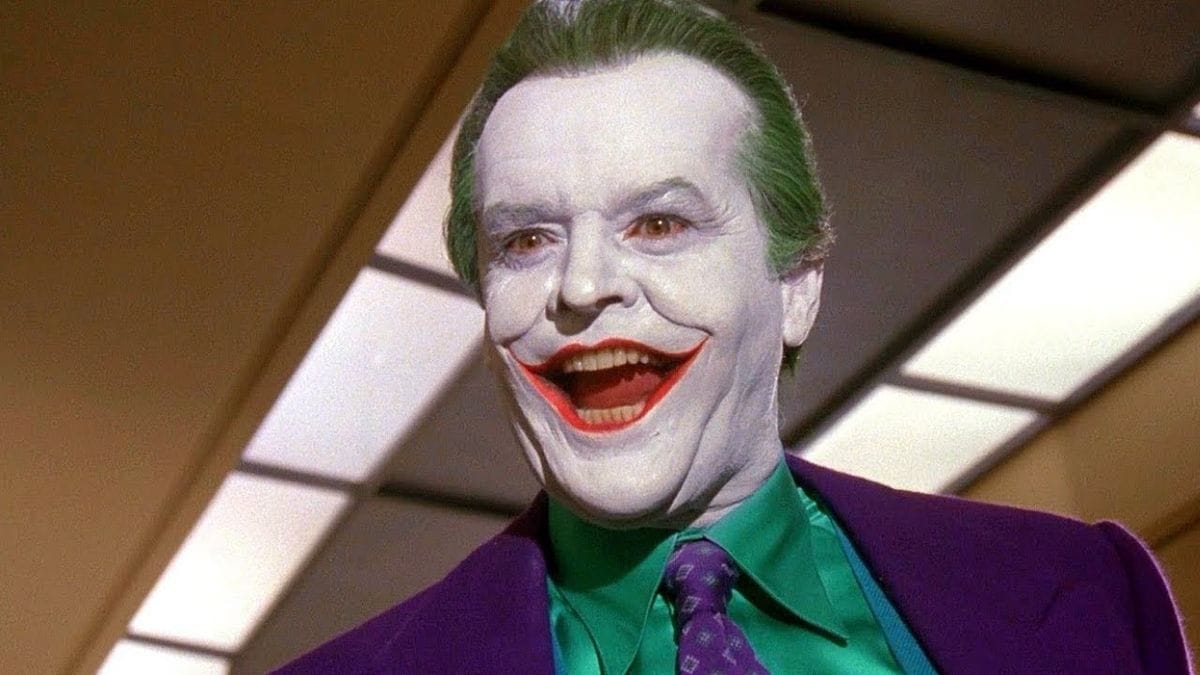
Five Easy Pieces and the New American Male
In the early 1970s, American cinema began producing a different kind of leading man. Less heroic. Less polished. More fractured. Nicholson fit that shift perfectly. He could play intelligence without serenity and sensitivity without innocence. His characters often seemed to be at war with themselves and with the structures surrounding them.
That made him one of the defining faces of the era’s moral and emotional unrest.
The Last Detail and Controlled Rebellion
By the time The Last Detail arrived, Nicholson had become the actor Hollywood increasingly turned to when it needed irreverence with brains behind it. The film earned him another Academy Award nomination, according to the Academy’s 1974 ceremony records.
This was the Nicholson pattern taking shape: he could turn profanity, humor, cynicism, and melancholy into one human texture. He did not merely play rebels. He played men whose rebellion often carried exhaustion beneath it.
The Masterpiece Zone: Chinatown and One Flew Over the Cuckoo’s Nest
There are actors with long careers and there are actors with immortal peaks. Nicholson had both.
Chinatown: Corruption, Cool, and Fatalism
In Chinatown, Nicholson’s performance as Jake Gittes remains one of the essential pieces of 1970s American acting. The role required intelligence, confidence, comic self-command, and gradual confrontation with a moral universe far darker than the character first assumes. It is one of those performances that seems effortless until you look closely and realize how carefully calibrated every beat is.
He never oversells the noir swagger. He lets the film strip it away.
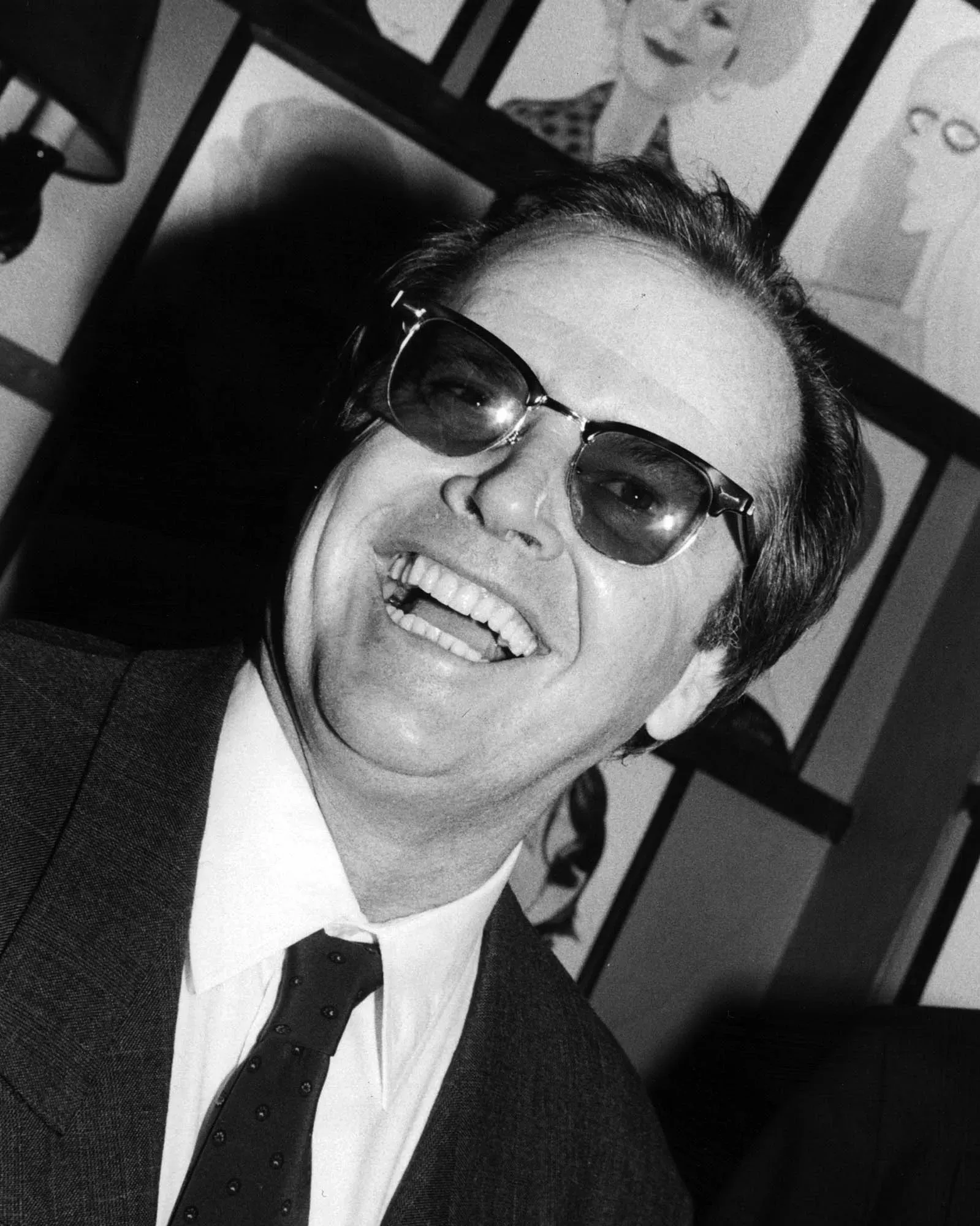
One Flew Over the Cuckoo’s Nest: The Role That Locked In Greatness
If one performance sealed Nicholson’s place in the pantheon, it was Randle McMurphy in One Flew Over the Cuckoo’s Nest. The Academy’s 1976 records show Nicholson winning Best Actor for the film, which also won Best Picture, Best Actress, Best Director, and Adapted Screenplay.
The performance remains astonishing because it is not simply anarchic. It is strategic, funny, emotionally cunning, and ultimately tragic. McMurphy enters like a force of mockery and motion, but Nicholson gradually reveals vulnerability beneath the swagger. That layering is why the performance has lasted. It is bigger than life, yet painfully human.
This is also where Nicholson’s gift for anti-authoritarian roles reached a kind of mythic concentration. He made resistance entertaining without making it simple.
The Nicholson Smile: Charm as Threat
One of the most remarkable things about Nicholson is that he turned his own face into narrative material. The grin became famous not because it was merely charming, but because it could mean half a dozen things at once.
It could signal:
- amusement
- flirtation
- contempt
- triumph
- danger
- disbelief
That ambiguity gave him an advantage almost no actor can manufacture. He could transform tone without moving very much. The audience did part of the work because his expression already carried cultural memory.
That is one reason why his performances age well. They were never only verbal. They were architectural. He understood how to occupy the frame.
Winning, Losing, and the Oscar Record
Nicholson’s awards record is part of the legend, but it is worth looking at with some clarity. The Academy records show him winning Best Actor for One Flew Over the Cuckoo’s Nest, Best Supporting Actor for Terms of Endearment, and later Best Actor for As Good as It Gets; he was also nominated repeatedly across decades, including for A Few Good Men. The cited ceremony pages here directly confirm the wins for Cuckoo’s Nest and Terms of Endearment, as well as his nomination for A Few Good Men.
That matters because Nicholson was not the kind of actor who burned brightly and vanished. He kept reasserting himself across generations, genres, and changing industrial moods.
Terms of Endearment: Heart Beneath the Swagger
His Oscar-winning turn in Terms of Endearment is a perfect reminder that Nicholson’s range was often underestimated because his persona was so strong. He could play bruised warmth just as effectively as he could play menace. The role allowed him to bring late-life vulnerability and comic self-knowledge into the same performance, which helped make it memorable enough to earn the Academy Award for Supporting Actor in 1984.
A Few Good Men: Command Presence as Event
By the time of A Few Good Men, Nicholson no longer needed much screen time to dominate a film’s memory. The Academy records confirm his Supporting Actor nomination for that role.
This was the late-career Nicholson miracle: he could enter a film already carrying myth, then use that myth as fuel rather than burden. He understood that presence itself could become structure. A scene changed when he appeared in it.
Why Nicholson Felt Bigger Than Stardom
Hollywood has produced many stars, but Nicholson belongs to the smaller category of performers who came to symbolize the medium’s ability to create public myth.
He Was Not Overly Polished
Nicholson never seemed manufactured. Even at his most theatrical, there was a looseness to him, as though the performance might tilt into improvisation or rupture. Audiences trusted that energy because it felt alive.
He Carried the American Contradiction
His best characters often combined liberty and ego, wit and cruelty, intelligence and self-destruction. In that sense, Nicholson became a vehicle for some of the deepest contradictions in modern American masculinity. He was often magnetic precisely because he was never cleanly reassuring.
He Made Adult Cinema Feel Dangerous
This may be the biggest reason his reputation holds. Nicholson belongs to a period when mainstream cinema often assumed adults could handle discomfort, ambivalence, and complicated protagonists. His performances were rarely about being liked. They were about being watched.
That difference is enormous.
The AFI Honor and Institutional Recognition
By the mid-1990s, Nicholson was no longer just a star or award winner. He had become an institution. The American Film Institute awarded him the AFI Life Achievement Award in 1994, and AFI lists that honor among its major career recognitions. AFI also describes the prize as its highest honor for a career in film.
This kind of recognition matters because it signals something beyond popularity. It suggests Nicholson had become part of the official story of American cinema itself. He was not simply successful inside the system. He was one of the figures used to define the system’s highest standards.
Why Younger Generations Still Inherit Nicholson
Every era asks its own question about old screen legends: do they still travel? In Nicholson’s case, the answer is yes, because his image and work still feel legible across generational shifts.
Younger viewers may first encounter him through:
- the institutional chaos of Cuckoo’s Nest
- the precision noir of Chinatown
- the pop-cultural force of Batman
- the courtroom thunder of A Few Good Men
- the emotional sharpness of Terms of Endearment
Even when the surrounding films belong to a different era, Nicholson himself rarely feels trapped in one. His rhythms are specific, but not antique. His performances still read as modern because they are built on emotional intelligence, not trend.
The Last Great Movie Myth
Calling Nicholson “legendary” is easy. The harder and more interesting claim is that he may be one of the last actors to become legendary in the old sense.
That older kind of movie legend was built from several things at once:
- major roles in enduring films
- repeat critical validation
- an unmistakable persona
- tabloid-scale public fascination
- the ability to symbolize an era
Nicholson had all of that. He was not just admired. He was mythologized.
And crucially, the myth was backed by real work. That is why it lasted.
What His 89th Birthday Really Celebrates
An 89th birthday tribute to Jack Nicholson is not just a salute to longevity. It is a celebration of a performer who helped define what cinema could feel like when it trusted danger, contradiction, and adult complexity.
It celebrates an actor who could be hilarious, cutting, romantic, frightening, exhausted, ecstatic, or quietly broken, sometimes within the same scene.
It celebrates an American screen presence who made intelligence look physical.
It celebrates a body of work that still teaches younger actors a hard lesson: charisma is not enough, intensity is not enough, and reputation is not enough. What lasts is the mysterious blend of craft, timing, self-knowledge, and cinematic instinct that turns a performance into memory.
Final Verdict
Happy 89th birthday to Jack Nicholson, not just a star, but one of the last truly mythic figures in American film. Born on April 22, 1937, honored by the AFI with its Life Achievement Award in 1994, and celebrated by the Academy across multiple decades, Nicholson built a career that remains both iconic and artistically durable.
His greatest achievement was not simply that he gave unforgettable performances. It was that he made unpredictability, irony, rebellion, and emotional danger feel central to the movies themselves. He did not just act in great films. He helped define what greatness could look like on screen.
At 89, Jack Nicholson is still more than a film legend.
He is one of the reasons the word legend still means anything in cinema.
FAQ
1. How old is Jack Nicholson today?
Jack Nicholson was born on April 22, 1937, which makes him 89 years old today.
2. What is Jack Nicholson most famous for?
He is most famous for iconic performances in films such as One Flew Over the Cuckoo’s Nest, Chinatown, The Shining, Terms of Endearment, Batman, and A Few Good Men. Britannica highlights several of these as central to his legacy.
3. How many Oscars did Jack Nicholson win?
Jack Nicholson won Oscars for One Flew Over the Cuckoo’s Nest and As Good as It Gets in leading categories, and for Terms of Endearment in supporting actor. The Academy pages cited here confirm the wins for Cuckoo’s Nest and Terms of Endearment directly.
4. Did Jack Nicholson receive the AFI Life Achievement Award?
Yes. The American Film Institute lists Jack Nicholson as the 1994 AFI Life Achievement Award honoree.
5. Why is Jack Nicholson considered such an important actor?
Because he combined major critical success, unforgettable screen presence, long-term cultural impact, and a run of defining performances across several decades.
6. What made Jack Nicholson’s acting style unique?
His acting mixed wit, volatility, intelligence, irony, and emotional danger. He could make a scene funny and threatening at the same time, which gave him a uniquely magnetic presence.
7. Was Jack Nicholson part of New Hollywood?
Yes. His breakthrough in Easy Rider and his major 1970s work placed him firmly within the New Hollywood era of riskier, more character-driven American filmmaking.
8. Why do Jack Nicholson’s performances still hold up?
Because they are rooted in precise craft rather than fashion. His line readings, pauses, body language, and tonal control still feel alive and readable to modern audiences.
9. What are the best Jack Nicholson films to revisit first?
A strong starting list would include Five Easy Pieces, Chinatown, One Flew Over the Cuckoo’s Nest, Terms of Endearment, and A Few Good Men. Britannica and the Academy records underline how central these are to his legacy.
10. Why does Jack Nicholson still feel larger than life?
Because he was not only a star but a symbol of an era when American cinema embraced risk, contradiction, and adult complexity. His image became cultural shorthand, but the performances were always strong enough to support the myth.