The Pine Bluff Variant: The X-Files at Its Most Paranoid
Some The X-Files episodes are remembered for monsters. Some for mythology. Some for mood. “The Pine Bluff Variant” is remembered for something colder: trust collapsing under pressure.
First aired on May 3, 1998, as season 5, episode 18, the episode was written by John Shiban and directed by Rob Bowman. On the surface, it looks like a domestic-terror thriller: Mulder infiltrates a militia-linked group, Scully starts to fear he may have gone rogue, and a biological weapon turns the whole operation into a nightmare. But what makes the episode stick is not just the pathogen or the bank-robbery setup. It is the way the story turns Mulder’s secrecy into genuine menace and makes Scully — and the audience — briefly unsure whose side he is on.
That tension is why “The Pine Bluff Variant” feels so different from a routine “Monster of the Week” episode. It is technically a standalone story, but it plays like a stripped-down espionage film dropped into The X-Files universe. Wikipedia’s summary notes that the episode centers on Mulder working as a mole inside a group connected to domestic terrorism, while Scully begins to wonder if he has become a traitor. The A.V. Club later praised it for telling a story that initially seems almost disconnected from the usual X-Files concerns — until the last-act reveal pulls it back into the show’s deeper obsession with hidden government power and suppressed truth.
A Plot Built on Suspicion
The premise is simple and smart. Mulder goes undercover to get close to Jacob Haley, a militia figure tied to domestic terrorism. Early on, when a chance to catch Haley appears, Mulder lets him escape. From that moment, the episode weaponizes doubt. Scully does not know how deep Mulder’s assignment really goes, and neither do we. The uncertainty is not decorative. It is the engine of the episode.
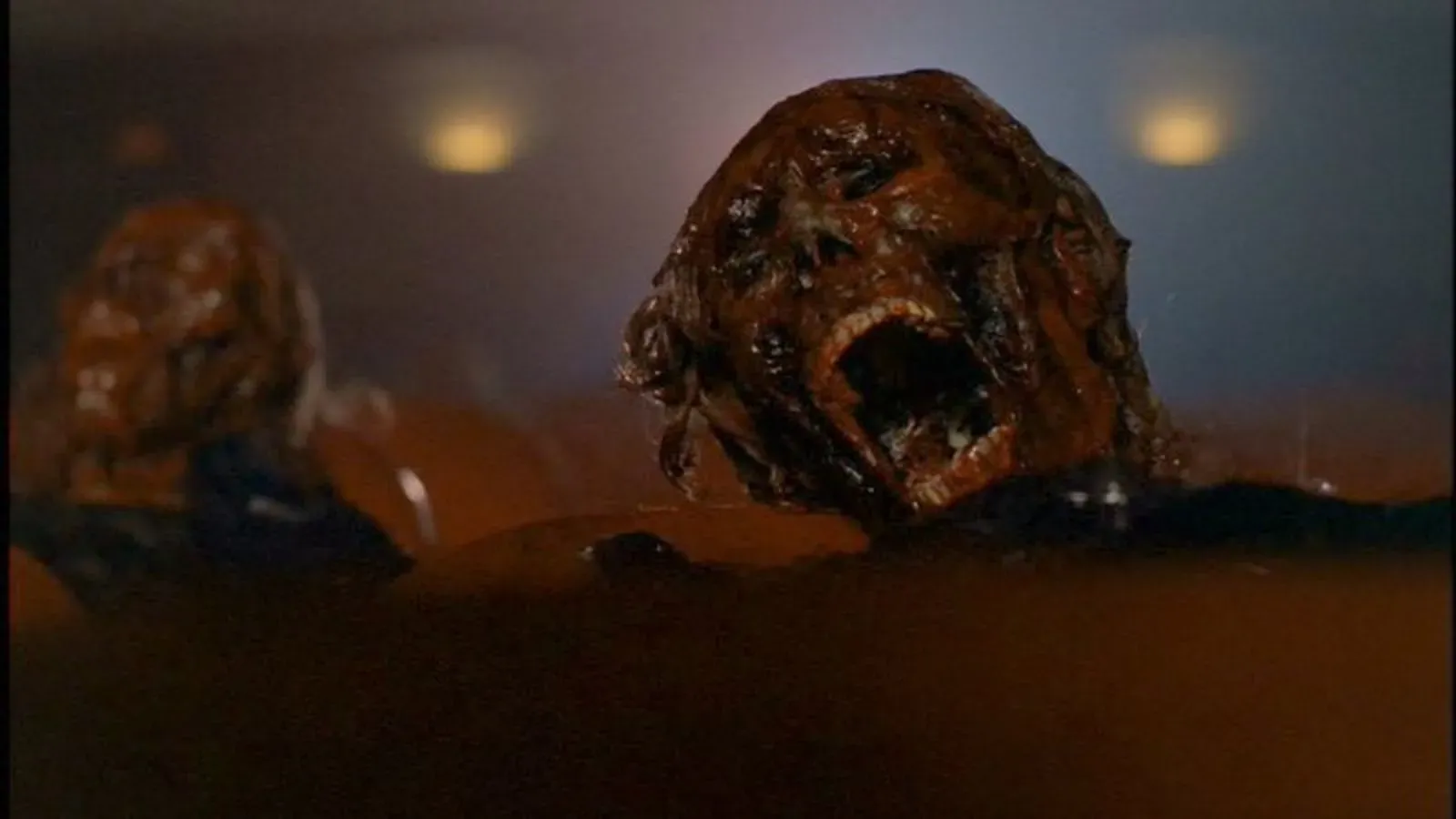
That uncertainty becomes even more effective because the threat is not conventional. The group is tied to a biological weapon that causes rapid degeneration of human flesh, and the deeper the case goes, the more the episode suggests that the real danger may not be the militia alone, but the possibility that the U.S. government itself helped create the pathogen. By the end, the episode’s terror is less “militia violence” than institutional rot — exactly the kind of moral atmosphere The X-Files did better than almost any show of its era.
Mulder as a Different Kind of Hero
One of the best things about “The Pine Bluff Variant” is how it uses Mulder differently. Usually, Mulder is the believer, the obsessive, the intuitive fox chasing impossible truths. Here, he becomes something harder to read: a man forced to disappear inside someone else’s violence.
John Shiban reportedly had wanted to do an undercover Mulder story for much of season five, and that instinct pays off. Wikipedia’s production notes say Shiban liked the idea because season five was already exploring Mulder in a more destabilized place, questioning his beliefs and his sense of mission. That is exactly why the undercover premise works so well here. Mulder is not just hidden from the suspects. He is hidden from Scully, from the FBI’s ordinary moral clarity, and for stretches of the episode, from the audience’s full trust.
That is rare for the series, and it gives David Duchovny one of his more effective low-key performances. He is not grandstanding. He is withholding. He lets silence, ambiguity, and physical tension do the work.
Scully as the Moral Lens
If Mulder is the episode’s disappearing center, Scully is the audience’s stabilizer. She is the one asking the right questions: What exactly is Mulder doing? How far has this operation gone? Who is actually controlling events? Her suspicion grounds the episode, and her mounting alarm gives it emotional shape.
This matters because “The Pine Bluff Variant” could have easily become a clever but emotionally dry thriller. Scully prevents that. Her doubt is not merely procedural. It is personal. If Mulder has crossed a line, then the cost is not only operational failure — it is the breakdown of the partnership that anchors the whole series. That possibility gives the episode its pulse.
A Terror Story for the Late 1990s
Part of what makes the episode feel sharper than average is its timing. According to Wikipedia’s production section, Shiban drew on The Spy Who Came in from the Cold and also wanted to replace Cold War anxieties with a newer “bogeyman”: domestic terrorism. The script also reflected then-current fears about biological weapons. In other words, the episode is very much a late-1990s fear machine, but one filtered through The X-Files’ instinct for mistrust.
That context still helps the episode now. It does not feel dated in a disposable way. It feels like a snapshot of American paranoia at a turning point — after Cold War simplicity, before the post-9/11 security state, in a moment when militia violence, bio-weapons, and covert government behavior could all plausibly collapse into the same story.
Even the title deepens that mood. Wikipedia notes that “The Pine Bluff Variant” references the Pine Bluff Arsenal, a real U.S. military site associated with chemical weapons stockpiles. That is not just trivia. It tells you exactly what kind of fear the episode wants to tap: not fantasy contamination, but state-linked contamination.
Why the Episode Works So Well
What separates this one from a lot of solid-but-forgettable X-Files episodes is execution.
It is tightly structured. It keeps information moving without over-explaining. It allows Mulder’s undercover position to feel dangerous without turning him into an action cliché. And it lets the final twist — that the scheme is less about robbery than mass infection — land with the right amount of dread.
The critical response at the time and afterward reflects that strength. Wikipedia records that the episode drew 18.24 million viewers on its first broadcast and received largely positive reviews. The A.V. Club gave it an A, calling it “an excellent episode” notable for its tension and for the way it seems to drift away from normal X-Files territory before snapping back into it through the ending.
That praise feels justified. “The Pine Bluff Variant” is not showy in the way some fan-favorite episodes are. It does not have the weird theatricality of “Post-Modern Prometheus” or the emotional devastation of the strongest mythology chapters. What it has instead is control. It knows exactly what kind of hour it wants to be.
The Ending: Bleak, Quiet, Effective
One of the best choices in the episode is that it does not end with triumphant closure. Yes, the immediate catastrophe is contained. But the mood is not relief. It is contamination of another kind: the realization that the line between terrorists, handlers, and government interests may be much thinner than anyone wants to admit.
That is the real X-Files move. The pathogen is terrifying, but the episode’s lasting unease comes from the implication that the system is already infected.
Final Verdict
“The Pine Bluff Variant” is one of the strongest late-season X-Files episodes because it trades spectacle for pressure and paranoia. It takes a domestic-terror setup, filters it through Mulder’s undercover isolation and Scully’s distrust, then quietly expands the story into something darker: a thriller about biological fear, state secrecy, and the impossibility of knowing who is really in control. It aired on May 3, 1998, was written by John Shiban, directed by Rob Bowman, and remains one of season five’s smartest standalone hours.
It may not be the flashiest X-Files episode, but it is one of the most disciplined. And because it is so disciplined, it still lands.
FAQ
What season and episode is “The Pine Bluff Variant”?
It is season 5, episode 18 of The X-Files, first aired on May 3, 1998.
Who wrote and directed the episode?
It was written by John Shiban and directed by Rob Bowman.
What is “The Pine Bluff Variant” about?
Mulder goes undercover to infiltrate a militia-linked terrorist group connected to a deadly pathogen, while Scully starts to suspect he may have gone rogue.
Is it a mythology episode?
No. It is generally considered a Monster-of-the-Week/standalone episode, though it still carries the show’s larger themes of secrecy and government mistrust.
Was the episode well received?
Yes. It drew 18.24 million viewers in its original U.S. airing and received largely positive reviews; The A.V. Club later gave it an A.
What inspired the episode?
According to production notes summarized on Wikipedia, John Shiban was influenced by undercover-story ideas, The Spy Who Came in from the Cold, and contemporary fears about domestic terrorism and biological weapons.