
Agricultural Robotics: Lasers, Autonomous Tractors, and Weeds
A machine moving between crop rows and targeting weeds with tiny pulses of light sounds futuristic, but agricultural robotics is already being explored and deployed for specific farm jobs. Computer vision, precision actuators and automated vehicles aim to reduce repetitive labor and sometimes lower
A machine moving between crop rows and targeting weeds with tiny pulses of light sounds futuristic, but agricultural robotics is already being explored and deployed for specific farm jobs. Computer vision, precision actuators and automated vehicles aim to reduce repetitive labor and sometimes lower chemical use. The key question is whether these systems deliver consistent benefits across changing soil, crops and weather—not just during a perfect field demonstration.
How laser weeders identify targets
Cameras capture plants as machinery moves through the field. Computer vision distinguishes crop from weed, then a controlled laser pulse can damage unwanted vegetation at a precise location. Accuracy depends on growth stage, leaf overlap, dust, lighting and how closely weeds resemble crops. Systems need appropriate safeguards for laser operation and bystanders. Reduced herbicide use is a potential outcome, but it must be measured per crop and season rather than assumed for every field.
Autonomous tractors and supervised operation
Some agricultural machines steer established routes or perform tasks with limited operator input. Others require remote supervision, geofenced boundaries or human takeover. Navigation near people, animals, irrigation equipment and unexpected obstacles remains critical. A self-driving tractor is not automatically suited to every property: field shape, slopes, soil conditions and connectivity affect reliability. Clear stop procedures and responsibility for incidents are essential.
What precision agriculture can change
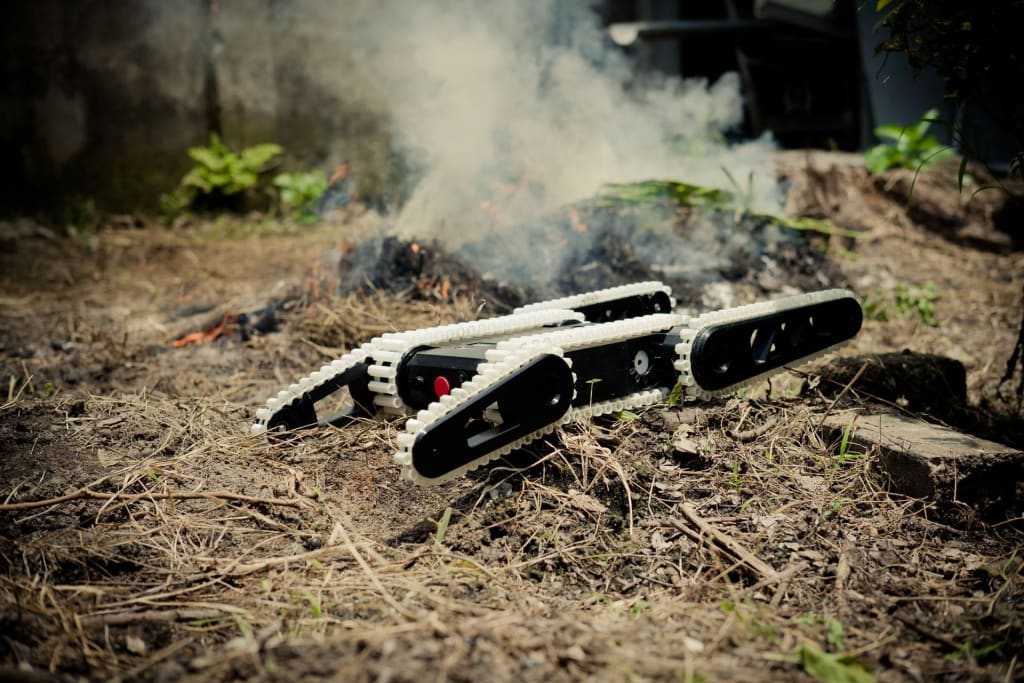
Original Revlox editorial illustration: agricultural robotics.
Targeted spraying, mechanical weeding and careful sensing can reduce unnecessary treatments and provide more information about field conditions. However, a sophisticated robot does not correct poor crop rotation, pest management or soil stewardship by itself. Agronomists still need to interpret data and choose interventions. Automation works best alongside integrated pest management, local knowledge and measurements of yield, input use and environmental impact.
The economics for smaller farmers
High capital costs and maintenance can make large machines difficult for modest farms to justify. Shared ownership, contract services and smaller modular robots may broaden access. Farmers should ask about spare parts, service networks, software subscriptions and whether equipment works without a continuous internet connection. An expensive robot that sits idle during a brief planting or harvest window can be less useful than a simpler tool with dependable support.
Explainer graphic: a closer look at the technology and its limitations.
Measuring the full environmental result
A credible evaluation compares fuel or electricity consumption, chemical inputs, labor needs, soil compaction and actual crop outcomes. Batteries and computing equipment have manufacturing footprints; conventional tractors also have substantial impacts. Robotic methods may complement rather than replace human workers, shifting skills toward maintenance and data interpretation. The most valuable deployments produce resilient food systems and better working conditions—not just fewer people in a field.
The bottom line
Agricultural robotics is becoming a practical tool for selected farming operations. Its lasting impact will depend on crop-specific performance, safety, affordability and environmental benefits that survive independent field testing.
Frequently asked questions
Do laser weeders eliminate herbicides entirely?
Not necessarily. Results depend on weed species, conditions and the wider pest-management strategy.
Are autonomous tractors fully driverless everywhere?
No. Capability and requirements vary; many systems operate under supervision or within defined conditions.
