
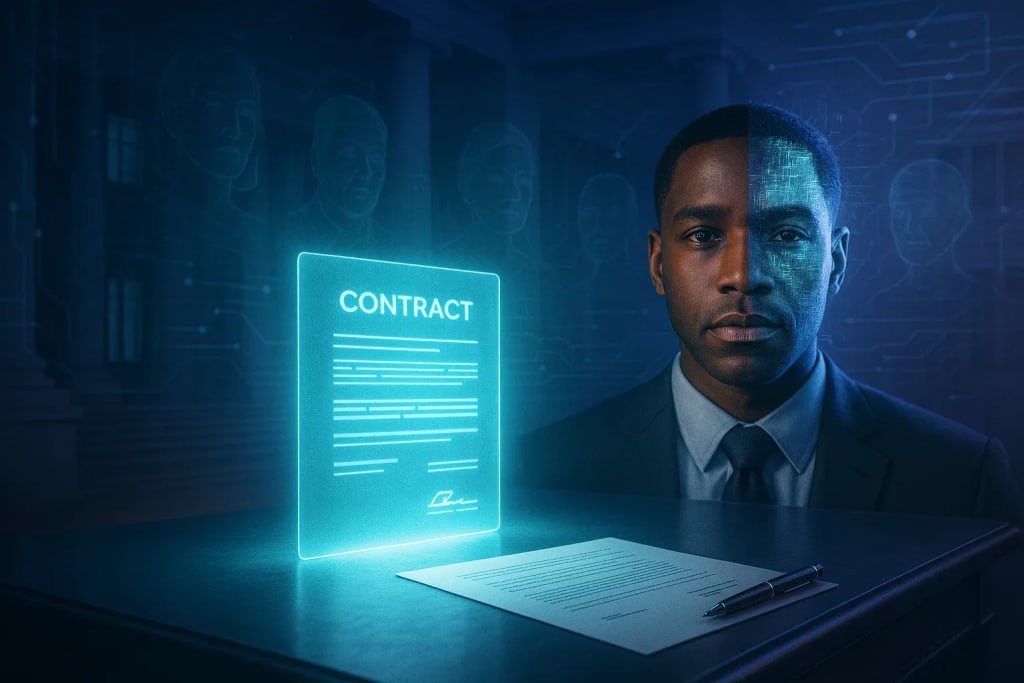
AI Clauses in Hollywood Contracts: 2026 Update
AI Clauses in Hollywood Contracts: Inside the ongoing battle over digital likenesses and synthetic actors. Read a balanced, source-backed magazine analysis.
AI clauses in Hollywood contracts have become one of the entertainment industry's defining labor debates. The central question is deceptively simple: when an actor's face, voice, or performance can be reproduced digitally, who decides what the reproduction is allowed to do? That question touches consent, compensation, creative control, and the future of employment. Contract language matters because a synthetic performance can outlast a production and appear in contexts the original performer never imagined.
Why Digital Likenesses Became a Bargaining Priority
Digital doubles have existed in visual effects for years. What changed is the increasing ability to create convincing new material from recordings, scans, or learned patterns, sometimes with limited participation from the performer. A technology that once mainly corrected a shot may now generate dialogue or actions that were never captured on set. The ethical and contractual risk rises when the resulting asset appears to be a real person's new performance.
For performers, a likeness is not merely a picture. It can carry professional reputation, emotional associations, and future earning potential. Consent to being filmed on one day does not obviously imply consent to every conceivable later use. Actors also worry that broad licenses could weaken opportunities for other performers, including background artists and voice actors.
Studios have legitimate reasons to explore tools for production continuity, accessibility, or special effects. Those aims do not settle who owns the digital asset or whether the original performer should be paid. Collective bargaining provides a process for distinguishing particular uses instead of treating technology as automatically good or bad.
The 2023 Agreement Set an Important Baseline
SAG-AFTRA's 2023 television and theatrical agreement included protections for employment-based digital replicas and other defined categories. The union emphasized informed consent and compensation, alongside provisions governing the creation and use of replicas. Details vary by situation, and readers should consult the actual contract rather than assuming one blanket rule governs all digital content.
The distinction between scanning a performer and using the resulting replica is crucial. Someone may agree to create a digital asset for one production without agreeing to unlimited future performances. Contractual notice and descriptions of intended use help make the scope of consent meaningful. Residuals and compensation rules matter because a replica may substitute for work the performer would otherwise complete.
Writers negotiated related safeguards. Under the Writers Guild of America's 2023 agreement, generative AI is not treated as a writer for covered literary material, and companies must disclose AI-generated material supplied to writers. The agreement also provides boundaries around credits and the use of tools during writing services. These provisions show that Hollywood's AI issue extends beyond images to authorship and professional recognition.
What Changed With the 2026 SAG-AFTRA Deal
SAG-AFTRA's 2026 TV/Theatrical agreements built upon earlier terms, adding or clarifying protections involving digital alterations, foreign-language dubbing, biometric information, and the handling of replicas. The union's published summary also describes protections relating to synthetic performers, including bargaining procedures and commitments favoring human performance. These are negotiated contract rules, not proof that every studio project is legally covered in the same way.
The update matters because artificial intelligence evolves faster than customary deal language. A clause written for a limited scan may become inadequate when tools can reshape vocal delivery, alter a scene's apparent meaning, or create an entire synthetic character. Ongoing negotiation allows workers and employers to respond to emerging uses rather than treating the first agreement as a permanent solution.
Readers should note the difference between an announced tentative agreement and a ratified contract. The union's 2026 information page reports member ratification, so discussion can properly refer to the updated agreement rather than only the earlier negotiating proposal. Specific effective dates and exceptions still require checking the published terms.
Consent Must Be Specific Enough to Matter
Imagine an actor who agrees to have their face scanned for a physically difficult action scene. Later, a producer wants the scan to deliver an entirely new speech for a different project. The performer might regard the second use as a separate creative decision with reputational consequences. A general sentence permitting any future use would not provide the same meaningful choice as a defined request describing the new scene.
Consent also occurs within unequal bargaining conditions. A young actor may feel pressure to accept broad terms to secure employment. Union minimums, separate approvals, and clear descriptions can reduce that pressure, although they cannot eliminate every power imbalance. The value of contractual safeguards lies partly in making rights less dependent on an individual negotiator's leverage.
There are also ethical issues after death. Estates, heirs, audiences, and coworkers may disagree about digitally recreating a deceased performer. Legal rules differ by jurisdiction and contractual context. Even where a recreation is technically permitted, filmmakers still face questions about artistic integrity and what it means to create the appearance of consent from someone no longer able to speak.
Synthetic Performers and the Future of Jobs
A synthetic performer is not always the same as a replica of an identifiable human. Studios may generate a character designed to resemble a person who never existed. This avoids some individual likeness questions while raising others about replacing work, training data, and the representation of people on screen. The impact depends on the role, production method, and labor agreements.
Supporters argue that synthetic characters can make certain projects feasible, reduce hazardous production demands, or expand creative possibilities. Critics worry that the same tools may concentrate control over performances in companies rather than performers. Those arguments can both identify genuine possibilities; the important question is which uses are transparent, fair, and accountable.
The industry will likely develop different standards for de-aging, crowd duplication, animation, dubbing, and fully generated speaking roles. Treating all these techniques as one category creates confusion. Ethical evaluation requires asking what is being reproduced, whose identity is implicated, and whether the new output alters the meaning of an earlier performance.
What Viewers and Creators Should Watch
For viewers, disclosure helps distinguish artistic experimentation from deception. A digitally altered performance may be entirely appropriate in a fantasy film, while passing off invented footage as authentic could mislead audiences. Behind-the-scenes information can also help viewers understand which human artists contributed to the result.
For independent filmmakers, good practice begins before an actor arrives on set. Discuss whether scans or AI tools will be used, document the purpose, protect sensitive files, specify compensation, and provide a clear process for requesting additional permission. Union contracts, applicable laws, and legal counsel should govern actual agreements. A casual model release is not a substitute for professional rights review.
The future of AI clauses is not simply a battle between innovation and tradition. It is a negotiation over who gets to create, control, and benefit from performance. Human dignity is not incompatible with digital tools, but it demands that consent and accountability remain visible as those tools become more powerful.
Why the details of a dubbing clause matter
Dubbing may seem like a narrow technical issue, but translating a performance into another language can substantially affect an actor's expressive identity. A synthetic version of a voice could alter phrasing, accent, or emotional delivery even when the translated words follow the original script. This helps explain why consent and the description of intended uses matter beyond the creation of a facial replica.
Filmmakers also need to consider accessibility and international audiences. Responsible dubbing can make stories available to more people; the ethical question is how to achieve that benefit while respecting performers and voice professionals. There is no need to frame access and labor rights as permanent enemies. Technical options, agreements, and fair compensation can be designed together.
The 2026 bargaining changes show why contract language must keep evolving. New capabilities make previously narrow permissions consequential in unexpected ways. An agreement should be understood through its precise scope, rather than publicity summaries that promise either complete freedom for studios or absolute prohibition of every AI tool.
Frequently Asked Questions
Can a studio use an actor's AI replica without permission?
The answer depends on applicable law, the performer's contract, and the production category. SAG-AFTRA's covered agreements establish consent and other protections for defined uses, with exceptions and details that require review.
What is the difference between a digital replica and a synthetic performer?
A replica represents an identifiable performer; a synthetic performer may be generated without representing a specific real person. Each raises different consent and employment questions.
Are the 2026 Hollywood AI rules already in force?
SAG-AFTRA reports ratification of its 2026 TV/Theatrical agreements. Particular provisions have definitions and effective dates, so creators should consult the applicable agreement rather than assuming universal coverage.


