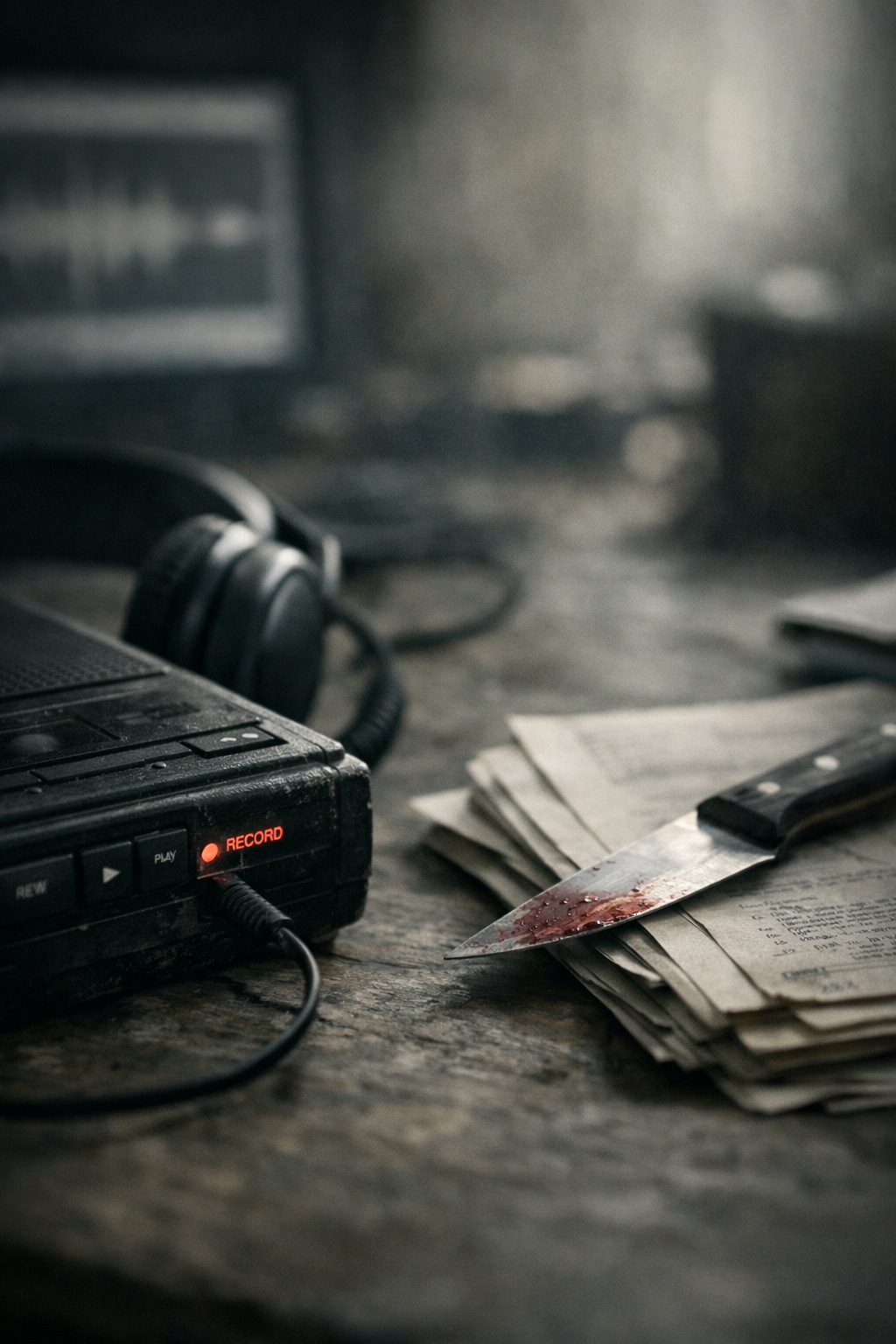
Best True Crime Podcasts to Binge in 2026: The Investigative Series Worth Losing Sleep Over
1) The midnight moment every true crime fan knows
It usually starts innocently. One episode while folding laundry. One more while answering email. Then a host lowers their voice, introduces a missing timestamp, a witness who changed a story, a courtroom detail that never sat right, and suddenly it is well past midnight. You are not just listening anymore. You are following a trail. That is the pull behind the best true crime podcasts 2026 has to offer: they do not merely recount crime. They build a world around uncertainty and dare you to stay inside it.
The genre has been around long enough now to have its own old masters, its own copycats, and its own moral hangovers. Yet in 2026, true crime audio still feels unusually alive. Apple’s U.S. true crime chart shows a striking mix of veteran giants and newer serialized hits, with Crime Junkie, Dateline NBC, Love Trapped, and The Idiot all sitting near the top, while Canada and Australia show similar demand for both familiar brands and fresh investigations.
That matters because listeners are savvier now. They can tell the difference between a podcast that is padding a grim story with mood music and one that is actually reporting. The true crime podcasts to binge in 2026 are not just addictive. The best of them are disciplined, well-built, ethically alert, and impossible to leave halfway through.
2) Why true crime podcasting still owns 2026
True crime has not survived into 2026 by accident. It survived because it changed. The category still rewards the big brands, but it also increasingly favors podcasts that feel closer to documentary reporting than campfire storytelling. On Apple’s U.S. chart, you can see both impulses at work: durable mainstream names like Crime Junkie and Dateline NBC alongside newer, more serialized titles like Love Trapped and The Idiot.
The result is a richer field than the genre had even a few years ago. Today’s strongest shows move beyond simple whodunits. They examine wrongful convictions, internet-fueled investigations, historical mysteries, institutional blindness, and the strange, messy way public narratives form around a crime. The Overturn is built around claims of innocence and the machinery of appeal, while Assume Nothing: What Happened to Mary Glasgow? reopens a decades-old death through memory, family grief, and unresolved doubt.
There is also a format advantage. Audio lets a story breathe in a way television often cannot. A great investigative podcast can spend forty minutes on a discrepancy that a TV segment would reduce to a sentence and a lower-third graphic. That patience is one reason so many of the top investigative podcasts 2026 listeners are talking about feel immersive rather than disposable.
3) What makes a true crime podcast worth binging now?
Not every popular show deserves a weekend of your life. The best binge listens share a few traits, and once you know them, it becomes easier to separate the merely famous from the genuinely absorbing.
The five things the best shows get right
First, narrative momentum. A binge-worthy show understands propulsion. Each episode has to answer one question while opening another. Love Trapped works because it is structured around escalation, moving a personal scandal into a broader internet-age investigation.
Second, reporting depth. The podcasts that stay with you usually involve documents, interviews, court context, or original reporting rather than recap chatter. That is part of what makes Dateline NBC, The Idiot, Lords of Death, and The Overturn so compelling in very different ways.
Third, host credibility. The voice matters. Not because a host needs to sound solemn, but because the tone sets the reader-listener contract. Are they guiding you through evidence, or performing disbelief for effect? A show like Casefile True Crime remains widely trusted in part because of its stripped-down, research-first style.
Fourth, ethical framing. By 2026, the audience has lost patience with podcasts that use victims as props. The strongest entries in the field are noticeably more careful about trauma, family testimony, and the temptation to turn uncertainty into entertainment.
Fifth, audio craft. Pacing, archival tape, interviews, silence, and scene-setting still matter enormously. Podcast Review’s 2026 roundup praised Lords of Death specifically for its cinematic depth, and that phrase gets at something real: great audio can make a file box, a hallway, or an unanswered call feel like a scene you can walk into.
Pro Tip: For a fast weekend binge, choose a serialized investigation with a fixed endpoint. For a longer listening habit, anthology-driven shows like Crime Junkie, Dateline NBC, or Casefile True Crime are easier to dip in and out of without losing the thread.
4) The quick answer: the best true crime podcasts to binge in 2026
For readers who came here wanting the short list first, this is the editorial answer. These are the shows that feel most alive in 2026, either because they are chart-dominant, critically noticed, or simply too well-constructed to ignore.
Crime Junkie remains the safest mainstream recommendation because it is polished, familiar, and still chart-leading in the U.S. true crime category.
Dateline NBC is the veteran option that continues to work because NBC’s reporting machine understands structure, pacing, and case selection.
Love Trapped is one of the biggest newer conversation-starters of 2026, blending internet sleuthing, celebrity-adjacent scandal, and serialized suspense.
The Idiot comes from Serial Productions and The New York Times, and its early 2026 traction suggests it is already one of the year’s major investigative listens.
Lords of Death is the prestige pick for listeners who want atmosphere and reporting in the same package.
Codename Badger adds espionage-adjacent mystery and family deception to the mix, which helps it stand out in an overcrowded field.
The Overturn is for listeners who care less about lurid detail and more about how justice systems fail.
Assume Nothing: What Happened to Mary Glasgow? earns a place because it combines the intimacy of family memory with the unease of a case that refuses to close emotionally.
5) The classics that still work
There is always pressure in articles like this to pretend that the newest show is automatically the most essential. That is rarely true. Sometimes the smartest recommendation is the obvious one.
Crime Junkie still works because it understands convenience. Its episodes are digestible, the storytelling is clean, and the show has the kind of extensive back catalog that turns a casual trial listen into a two-week rabbit hole. Apple’s U.S. chart still has it at No. 1 in true crime, which tells you something simple but important: a huge number of listeners still trust it as the genre’s most frictionless entry point.
Dateline NBC fills a slightly different role. It offers the confidence of a legacy newsroom, the pacing of television-grade reporting, and enough variety that listeners can either binge a single case arc or hop between episodes. In both the United States and Canada, Dateline remains near the top of the category, proof that old-school investigative muscle still has real pull in audio.
Then there is Casefile True Crime, a show that has become almost a shorthand for no-nonsense narration. In Australia, Apple’s 2026 true crime chart places it at No. 1, and that feels right. Casefile is what many listeners turn to when they want dense reporting without banter, sentimentality, or personality overload.
The point is not that these podcasts are “safe” in a boring way. It is that they have become durable because they know exactly what they are. In a genre crowded with overproduction and forced intimacy, that clarity is a strength.
Key Takeaways
- Start with Crime Junkie if you want immediacy and a huge archive.
- Choose Dateline NBC if you trust newsroom reporting and broad case variety.
- Go to Casefile True Crime if you want stripped-down, research-heavy narration.
6) Where the reporting gets teeth
This is the section for listeners who do not just want intrigue. They want rigor. They want the feeling that a podcast is doing real work on the other side of the headphones.
The Idiot is one of the clearest examples. It arrives with the Serial Productions and New York Times pedigree, and Apple’s rankings plus the Associated Press reporting on new shows suggest it has landed with real force in 2026. Even the title is a provocation: is this simply a fool making terrible choices, or something much darker? That ambiguity is catnip for serious listeners.
Lords of Death belongs here too. Podcast Review’s January 2026 write-up singled it out for enigmatic characters, careful production, and a cinematic quality that lingers. Those are not empty compliments. They describe the rare kind of show that feels architected rather than assembled. It has shape, mood, and a sense that the reporting is carrying emotional weight instead of hiding behind it.
Then there is Codename Badger, one of the more unusual entries in this year’s conversation. The Guardian described it as a true-crime investigation into the supposed secret double life of British army major Robbie Mills and the man who surfaced after Mills’ death claiming to be a fellow spy. It is the sort of story that blends family lore, national secrecy, and personal manipulation into something stranger than an ordinary murder chronicle.
Assume Nothing: What Happened to Mary Glasgow? is quieter but equally effective. The Guardian’s recent coverage notes that it revisits the 1991 death of a nursing assistant in a Northern Irish mental hospital, and the BBC Northern Ireland description emphasizes that her family is still searching for answers decades later. That time depth matters. A good investigative podcast is not only about a case. It is about what a case does to the people left standing near it.
These are the top investigative podcasts 2026 listeners should prioritize when they want more than atmosphere. They reward attention. They assume intelligence. They make you feel the labor of trying to know something difficult.
7) The justice-system corner: where true crime gets serious
Some of the most interesting true crime audio in 2026 is not primarily concerned with monsters. It is concerned with institutions. That shift is healthy.
The Overturn, produced with support from the Future Justice Project, focuses on people who maintain they are innocent and are still battling the system from prison or through appeal. The project’s own description notes that roughly 1,500 people contact the Criminal Cases Review Commission each year claiming innocence, while only a tiny percentage are referred back to the courts. That makes the podcast feel less like entertainment and more like an intervention.
The Justice Gap’s March 2026 coverage of The Overturn places it in the wider climate created by public scandals around miscarriages of justice. That is why this strand of podcasting matters so much. The best true crime does not merely ask what happened. It asks who benefited from a version of events becoming official, and who paid the price when it did.
This is also where the genre gains moral seriousness. A podcast about wrongful conviction, evidence failure, or prosecutorial tunnel vision can be just as addictive as a murder mystery, but the engine of suspense is different. You are not chasing a killer. You are watching a system strain to avoid admitting error. That makes for a colder, harder kind of listening, and often a more necessary one.
8) Global binge picks: beyond the usual U.S. feed
One of the easiest mistakes readers make is assuming the entire true crime world looks like the U.S. chart. It does not. The genre has accents, regional obsessions, and very different tonal expectations depending on where you listen.
In India, Apple’s 2026 true crime rankings place The Desi Crime Podcast at No. 1, with Rotten Mango, Crime Junkie, and MrBallen also in the mix. The Desi Crime Podcast’s own Apple description explains its appeal clearly: it focuses on cases from India, Pakistan, Nepal, and other South Asian communities, offering stories that are often undercovered in Western podcast ecosystems.
That regional specificity matters. It changes the social context, the police culture, the media environment, even the assumptions a listener brings to guilt and power. For South Asian listeners in particular, The Desi Crime Podcast is more than a niche recommendation. It is one of the strongest answers to the question of which true crime podcasts to binge when you are tired of hearing the same countries, the same suburbs, and the same televised mythology.
Australia offers another clue. Apple’s true crime chart there places Casefile True Crime at No. 1, ahead of several buzzy newcomers. That says something about taste. Australian true crime listeners often reward restraint, depth, and an almost reportorial neutrality, all traits Casefile has made its signature.
So yes, the U.S. still dominates cultural conversation around podcasts. But the broader map of 2026 listening shows a genre that is more international, more localized, and more interesting than a single chart can capture.
9) Which true crime podcast is right for you?
Not every listener wants the same thing from this genre, and that is where many recommendation lists fail. They pile every show into one basket and call it a day. A better question is: what kind of listener are you?
If you are a beginner, start with Crime Junkie or Dateline NBC. Both are accessible, familiar, and easy to sample without a huge learning curve.
If you want a prestige investigation, go to The Idiot or Lords of Death. These are the shows for listeners who enjoy careful reporting and deliberate structure.
If you want a single-case spiral that will eat a weekend, try Love Trapped. Its setup, online sleuth angle, and episodic escalation make it one of the strongest binge candidates of the year.
If you care about justice-system failures, choose The Overturn first. It is less flashy than some rivals, but more urgent.
If you prefer minimal host personality, Casefile True Crime remains the cleanest recommendation.
If you want global range, especially from a South Asian perspective, put The Desi Crime Podcast in your queue.
If your taste leans toward dark storytelling with a conversational edge, Morbid still has a huge audience and remains high on the U.S. chart, though its tone is looser than the stricter investigative shows on this list.
Pro Tip: If you usually bounce off true crime, skip the chatty shows first. Start with a tightly edited serialized investigation. One strong case, one central mystery, one reason to keep walking around the block after the episode should have ended.
10) A brief note on ethics
No serious article about true crime in 2026 should ignore the genre’s central discomfort: many of these stories belong, first, to victims and families, not to listeners hunting atmosphere.
That tension has shaped the best recent work. You can see it in the reception of more careful, reporting-heavy series and in the way critics are now more likely to praise sensitivity, structure, and restraint than simple shock value. Podcast Review’s 2026 roundup, for example, leaned toward shows that feel thoughtful and fully made rather than casually grisly. The Guardian’s attention to podcasts like The Overturn and Assume Nothing similarly reflects a taste for stories that examine harm without cheapening it.
The best true crime podcasts 2026 offers do not solve the ethical problem entirely. Nothing can. But they do make choices that matter. They spend less time romanticizing perpetrators, more time scrutinizing institutions, and far more care on the people still living with the aftermath. In a genre built on the worst day of someone’s life, that is not a small distinction.
11) Final shortlist: 10 best true crime podcasts to binge in 2026
Here is the distilled list, the one to save, send, or use as your next queue.
- Crime Junkie — Still the mainstream king of easy-entry binge listening.
- Dateline NBC — Dependable, polished, newsroom-grade true crime.
- Love Trapped — The buzzy 2026 serial with internet sleuth energy and real momentum.
- The Idiot — A prestige investigative listen with Serial Productions muscle behind it.
- Lords of Death — Cinematic, unnerving, and carefully built.
- Codename Badger — A strange, elegant investigation into a dead man’s alleged double life.
- The Overturn — Essential listening for anyone interested in wrongful convictions and systemic failure.
- Assume Nothing: What Happened to Mary Glasgow? — Intimate, haunting, and rooted in unresolved family grief.
- The Desi Crime Podcast — The standout regional recommendation, especially for South Asian listeners.
- Casefile True Crime — The lean, serious option for listeners who prefer their mysteries without clutter.
Key Takeaways
- For pure binge value, start with Love Trapped, The Idiot, or Lords of Death.
- For trusted staples, choose Crime Junkie, Dateline NBC, or Casefile True Crime.
- For substance over sensationalism, go straight to The Overturn or Assume Nothing.
12) Final Word
What keeps people coming back to true crime is not only the crime. It is the structure of doubt. A locked room. A missing hour. A witness who says one thing in public and another in private. The best podcasts know that suspense is really about proximity: how close can a story bring you to another person’s fear, error, greed, blindness, or grief before you have to decide what you believe.
That is why the best true crime podcasts 2026 still matter. At their strongest, they are not background noise for chores or commutes. They are acts of narrative pressure. They force messy facts into sequence without pretending that sequence equals justice. Some give you answers. Some give you only a sharper version of the question. The unforgettable ones do something rarer: they leave you listening past the ending, not because the mystery is unsolved, but because the story has made certainty feel less trustworthy than it did before.