Why Forensic Genetic Genealogy Needs Better Explainers
The public appetite for forensic genetic genealogy keeps growing because the stories are irresistible. A decades-old cold case goes quiet for years, sometimes for half a century, and then suddenly a headline appears: investigators identified a suspect or an unknown victim by using distant-family DNA matches and building out a family tree. The technique sounds almost magical when compressed into a short news item. That is exactly the problem. Curiosity is rising faster than understanding, and the gap between the two is now big enough to distort how readers think about evidence, privacy, and what these cases actually prove.
That is why better explainers are now essential. Not because forensic genetic genealogy is too obscure for the public, but because it has become familiar in the worst possible way: widely recognized, constantly referenced, and frequently simplified into phrases like “DNA caught him” or “family genealogy cracked the case.” Those lines are catchy, but they flatten the method. In reality, forensic genetic genealogy—often called FGG or investigative genetic genealogy—is not a single test that spits out a culprit. It is an investigative process that combines DNA analysis with family-history research to generate leads that still require confirmation through conventional evidence and follow-up testing. The U.S. Department of Justice’s policy makes that distinction explicit, treating FGG as a lead-generating method rather than stand-alone proof of identity.
The debate persists because two things are true at once. The method is genuinely powerful, especially in unsolved violent crimes and unidentified-human-remains cases, and the ethical concerns are real, especially around consent, database governance, and the fact that one person’s DNA upload can reveal information about relatives who never agreed to participate. If the public is going to keep encountering coverage of “genetic genealogy cold cases,” then readers need a framework that is analytical rather than breathless. They need to know what FGG is, how it differs from ordinary forensic DNA matching, why it can help, and where the serious privacy questions begin.

What Forensic Genetic Genealogy Actually Is
At its simplest, forensic genetic genealogy is a method for using crime-scene DNA or DNA from unidentified remains to look for relatives in genealogy-style databases, then using those matches to build family trees and narrow the field toward a likely identity. The National Institute of Justice describes it as combining advanced DNA testing with traditional genealogical research, and the 2023 published guidelines similarly define it as a process that uses genetic testing plus genealogy methods to generate investigative leads.
That makes FGG different from the DNA systems most people already know. Traditional forensic DNA comparison in the United States often relies on STR profiles compared against law-enforcement databases such as CODIS. That approach works well when the relevant person is already in the system or when a direct comparison sample exists. FGG is used when that direct route fails. Instead of asking, “Is this exact person already in our database?” it asks, “Does this DNA share detectable ancestry with anyone in genealogy databases, and can investigators reconstruct the family network around those matches?”
That distinction matters because it changes the logic of the search. FGG is not about finding the person immediately. It is about finding relatives, sometimes distant ones, and then working outward and downward through the family tree until a candidate emerges who fits the time, place, sex, age, and case facts. This is why media shorthand can be so misleading. The genealogy stage is often labor-intensive and interpretive. It is not a magic button; it is closer to a structured historical investigation built around genetic clues.
How the Method Works, Step by Step
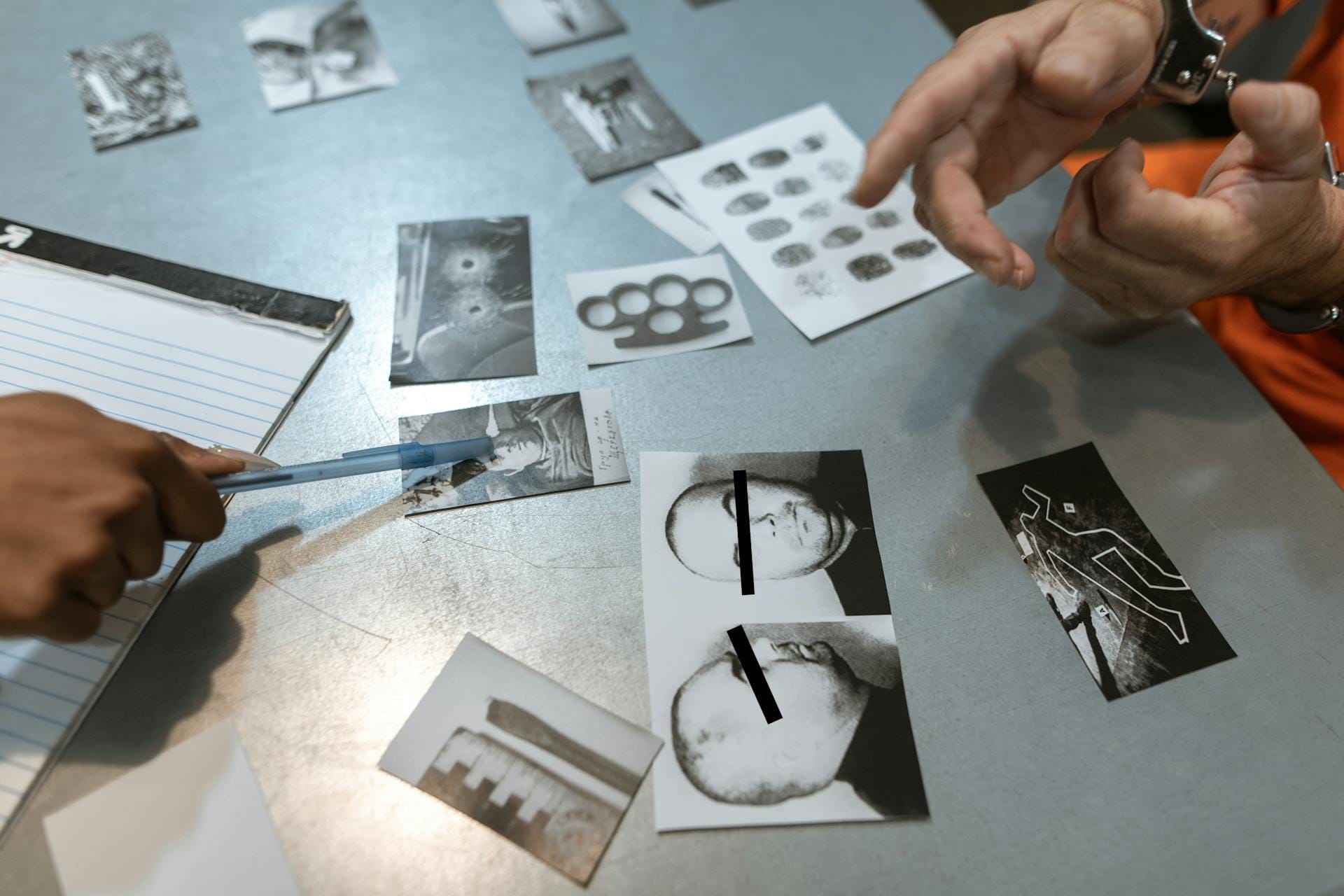
The best way to reduce confusion is to treat FGG like a sequence instead of a miracle.
Step 1: A usable DNA sample is developed
Investigators start with biological evidence from a crime scene or unidentified remains. The sample has to be good enough for the kind of genotyping used in genealogy-style comparison. This can be technically challenging, especially in older cases with degraded material. The DOJ policy and NIJ resources both frame this stage as a specialized scientific process, not a routine swab-and-search operation.
Step 2: The DNA is turned into a genealogy-compatible profile
The profile used for FGG is not the same thing as the more limited STR profile commonly used in standard forensic matching. Instead, the process typically involves testing a much larger set of markers that make relative matching across consumer-style genealogy databases possible. The published FIGG guidelines describe this as a distinct technical workflow designed for genealogy searching rather than ordinary criminal database matching.
Step 3: Investigators search participating genealogy databases

This is the stage that gets the headlines. The forensic profile is uploaded or searched in databases that permit law-enforcement matching under their own rules. Two of the most commonly referenced services are GEDmatch and FamilyTreeDNA, each of which has specific law-enforcement or consent frameworks for investigative matching. GEDmatch offers different privacy settings, including law-enforcement-related options, while FamilyTreeDNA provides a law-enforcement guide and an investigative genetic genealogy matching consent structure.
Step 4: Investigators identify genetic relatives, not the suspect
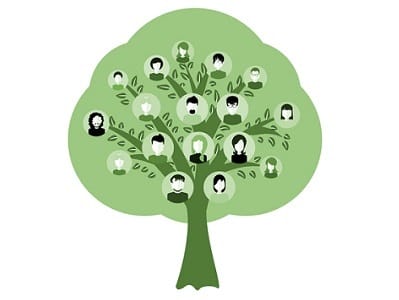
Search results may show people who appear to be relatives of the unknown sample—sometimes close, often distant. Those matches become starting points for family-tree research. This is one of the most important facts the public often misses: a match in FGG is typically not the perpetrator or victim directly. It is often a cousin-level or even more distant relationship that helps genealogists reconstruct the broader lineage.
Step 5: Genealogists build family trees and narrow candidates
At this stage, researchers combine DNA match data with public records, obituaries, census-style records, social history, and ordinary genealogical methods. They look for where branches of family lines intersect and then narrow toward individuals whose age, sex, geography, and opportunity fit the case. The NIJ and published FIGG guidelines both emphasize that genealogy work is central to the method.
Step 6: Law enforcement confirms with traditional evidence
This is the part every explainer should say clearly. FGG generates leads. It does not by itself close the case. Once a likely person is identified, investigators still need to confirm identity through standard methods, often including direct reference DNA, discarded DNA, or other corroborating evidence. The DOJ policy is explicit that forensic genetic genealogy is an investigative lead tool, not sole proof. Legal reporting on early courtroom use of the method made this same point: genealogy may point investigators toward someone, but prosecutions still rely on confirmatory evidence.
Why Readers Keep Getting Confused
The confusion comes from the structure of modern case coverage. News reports are usually written at the moment of breakthrough: suspect arrested, remains identified, family informed, case reopened, charging documents filed. That is the point of maximum attention and minimum patience. So the explanation collapses into something like, “Investigators used forensic genetic genealogy to identify the suspect.” Technically that is not wrong. Practically it leaves out the whole mechanism.
This is also why readers often misunderstand what kind of DNA database is involved. Many assume FGG means police secretly browsing the same kind of official criminal database used for CODIS-style matching. In reality, investigative genetic genealogy usually involves databases built for genealogical comparison, subject to separate terms, participation rules, and consent settings. GEDmatch and FamilyTreeDNA both publicly describe law-enforcement-related matching in their own documentation, but their structures and permissions are not the same thing as a criminal-arrestee database.
A third source of confusion is that many people think the method identifies a person with certainty the moment a relative match appears. That is simply not how it works. Relative matching creates a search space, not a final answer. The family-tree stage can be painstaking, and the final candidate must still be checked against case facts and independently confirmed. Better explainers would make that sequence routine instead of optional.
Why the Method Has Become So Influential
FGG matters because it can do something older forensic workflows often cannot: move an investigation forward even when the exact person is absent from law-enforcement databases. That makes it especially significant for long-unsolved violent crimes and for identifying unknown remains, where no direct database hit exists. DOJ’s policy specifically centers its use on unsolved violent crime and the identification of human remains, and NIJ’s educational materials present it in that same investigative context.
It also matters because many older cold cases were collected in an era when biological evidence existed but the tools for extracting leads from it were weaker. FGG changes that. It takes evidence that once sat inert in storage and turns it into something genealogically searchable. That does not guarantee success, but it changes the odds in ways that have made the method especially visible in media coverage of “cold case DNA” breakthroughs.
This is precisely why public curiosity keeps growing. The method sits at the intersection of three emotionally powerful forces: the popularity of consumer genealogy, the cultural pull of cold-case stories, and the intuition that family history and science together can recover what time buried. Better explainers are needed not because the public is uninterested, but because interest is already here and deserves a more accurate vocabulary.
The Ethical Questions Start Where the Success Stories End
The ethics of forensic genetic genealogy begin with a simple but destabilizing fact: the person who helps solve the case may not be the person investigators were looking for. A distant cousin uploads DNA for family-history reasons, not because they want to become a node in a criminal investigation. Yet their upload may help police reconstruct a lineage that points toward someone else entirely. This is the central privacy tension built into the method. A genetic profile is never purely individual; it is partly familial by nature.
That is why genealogy privacy concerns are not a side issue. They are structural. When someone uploads DNA, they are not only exposing information about themselves. They are revealing patterns that can implicate siblings, cousins, parents, children, and more distant relatives who never consented to participate. Scholarly commentary on investigative genetic genealogy has repeatedly emphasized this family-network problem, and mainstream reporting has highlighted how concerns about private databases intensified after high-profile successes.
Consent is real, but limited
Database operators have tried to address this through consent design. GEDmatch uses privacy choices that can include law-enforcement-related matching settings, and FamilyTreeDNA has a dedicated investigative matching consent framework and law-enforcement guide. Those policies matter. They are better than pretending there is no issue. But they do not dissolve the ethical tension because consent by one user still affects genetic relatives who may never have clicked anything.
Governance matters more than headlines admit
Another reason explainers need improvement is that the database layer is often treated as static when it is not. Ownership structures, terms of service, opt-in or opt-out rules, and internal controls all matter enormously. Wired’s reporting on newer nonprofit efforts to build dedicated crime-solving databases underscores how uneasy many people remain about using genealogy platforms that were not originally built for law-enforcement purposes.
That concern is not abstract. Public trust depends not just on the technique itself, but on who runs the databases, what rules they use, what users are told, and how misuse is prevented. Better explainers should routinely include this governance layer instead of treating the database as a neutral black box.
The Fairness Question: Who Gets Searched, and for What?
The DOJ’s interim policy was an attempt to create guardrails by limiting when federal investigators should use FGG, focusing on unsolved violent crimes and the identification of human remains, while also requiring approvals, documentation, and confirmatory testing. Those guardrails matter because one of the public’s biggest fears is mission creep—the possibility that a method introduced for extreme cases gradually expands into ordinary policing.
This is where future case coverage often needs more context. When readers see a headline about investigative genetic genealogy being used, they should immediately ask: Was this a homicide, sexual assault, unidentified remains case, or something else? What policy rules applied? Was the result merely a lead, or was it later confirmed with direct DNA? Those are the questions that turn a vague “genealogy solved it” narrative into a real understanding of how the method was used.
There is also a representational fairness issue. Databases are shaped by who chooses to test and upload. That means the reach and usefulness of FGG can vary across populations. Better explainers do not need to overpromise precision here, but they should remind readers that any genealogy-based system is only as broad, skewed, or limited as the database ecology behind it. The National Academies workshop material on FIGG places repeated emphasis on implementation considerations, limitations, and case-dependent realities rather than presenting the method as universally uniform.
What Readers Should Understand When a New Case Hits the News
If future coverage is going to make sense, readers need a simple mental checklist.
First: FGG is not ordinary forensic DNA matching. It is a relative-matching and family-tree method.
Second: a genealogy hit is not the same as proof. It points investigators toward a family network and eventually a candidate. Confirmation still has to happen separately.
Third: privacy concerns are not exaggerated just because the target is a violent offender. The ethical question arises because relatives who never opted in can still be implicated by someone else’s upload.
Fourth: database rules matter. The same method can feel very different depending on whether the platform is opt-in, opt-out, nonprofit, commercial, or operating under evolving ownership and policy structures.
Fifth: the strongest ethical defense of FGG is narrow use with strong oversight, especially in serious violent crime and unidentified-remains cases. The strongest critique is that genetic privacy is familial and partial consent is not full consent. Both arguments deserve to be understood before the next headline arrives.
Why Better Explainers Matter Now
The method is no longer niche. It has crossed into mainstream crime reporting, true-crime culture, court discussion, and public policy. Once a technology reaches that level of visibility, poor explanation becomes a civic problem. Readers start absorbing distorted assumptions: that the method is foolproof, that databases are all the same, that any genealogical match equals guilt, or that privacy concerns belong only to people with something to hide. None of those assumptions is sound.
Good explainers do something better. They slow the story down just enough to preserve the method’s real shape. They separate lead generation from proof. They distinguish a genealogy database from a criminal database. They explain why cold cases benefit. And they treat ethics as part of the technology rather than as an add-on paragraph at the end.
That is the level of explanation readers now need. Not because forensic genetic genealogy is too confusing to grasp, but because it is too important to leave half-explained.
Final Verdict
Forensic genetic genealogy needs better explainers because the method has become culturally famous faster than it has become publicly understood. It is a powerful investigative tool that can generate leads in violent cold cases and unidentified-remains cases by finding relatives in genealogy databases and building family trees outward from those matches. But it is not a magical DNA shortcut, and it is not ethically simple. It depends on database rules, partial forms of consent, and a family-based privacy logic that ordinary crime coverage still tends to understate.
The public does not need less coverage of FGG. It needs clearer coverage. The next time a headline says a cold case was solved through “investigative genetic genealogy,” readers should be able to parse the phrase without mystery: this was a relative-matching lead, built through genealogy, narrowed through family-tree work, and confirmed through additional investigation. Once that baseline becomes normal, the ethical debate can get sharper, the reporting can get smarter, and the public can follow future cases without confusion.
FAQ
1. What is forensic genetic genealogy in simple terms?
It is a method that uses DNA from a crime scene or unknown remains to find relatives in genealogy-style databases, then uses family-tree research to generate investigative leads.
2. Is forensic genetic genealogy the same as CODIS matching?
No. Traditional forensic DNA matching often uses STR profiles against law-enforcement databases, while FGG usually uses broader genealogy-style genetic data to look for relatives in genealogy databases.
3. Does an FGG match prove guilt?
No. FGG is a lead-generating method. Investigators still need confirmatory DNA testing and other evidence before identification can be treated as proof.
4. Why is FGG used in cold cases?
Because it can help investigators when ordinary direct database matching fails, especially in unsolved violent crimes and unidentified-remains cases.
5. What databases are commonly discussed in FGG coverage?
GEDmatch and FamilyTreeDNA are two of the most commonly referenced genealogy platforms with public law-enforcement-related policies or guides.
6. Why are genealogy privacy concerns such a big issue?
Because one person’s uploaded DNA can reveal information about relatives who never consented, making genetic privacy partly familial rather than purely individual.
7. Do users have to consent to law-enforcement matching?
Some platforms use explicit privacy settings or matching consent structures, but the ethical debate continues because user consent does not fully cover affected relatives.
8. What is the strongest ethical argument in favor of FGG?
That narrow, regulated use in serious violent crime and unidentified-remains cases can generate leads in cases that might otherwise remain unsolved.
9. What is the strongest ethical argument against it?
That it extends police reach through family relationships and database participation in ways that make meaningful consent incomplete.
10. What should readers look for in future FGG case coverage?
They should ask whether the genealogy result was a lead or a confirmation, what database framework was used, what policy rules applied, and what additional evidence ultimately supported the case.