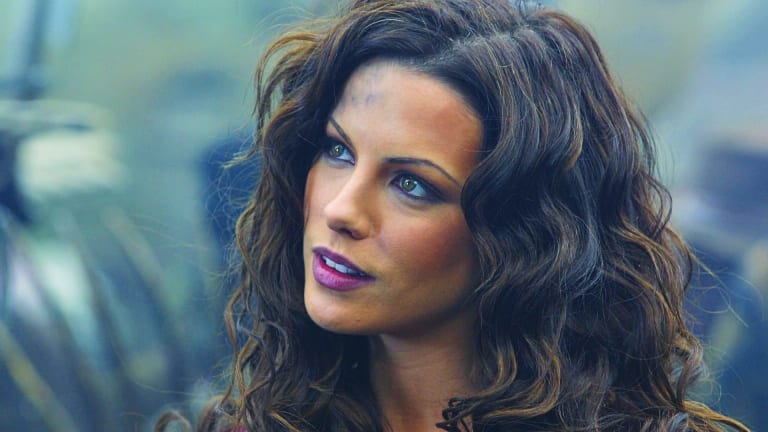
Avril Lavigne at 42: The Pop-Punk Icon Who Defined an Era
A loose necktie.
A white tank top.
Heavy black eyeliner.
Baggy trousers.
A skateboard.
And a voice that sounded as if it had absolutely no interest in fitting neatly into the polished pop world surrounding it.
When Avril Lavigne arrived in 2002, she did not simply introduce herself with a successful debut single.
She seemed to arrive with an entire identity already formed.
More than two decades later, that identity remains instantly recognizable.
Avril Lavigne turned 42 on September 27, 2026.
Born on September 27, 1984, in Belleville, Ontario, and raised in nearby Napanee, the Canadian singer went from a small-town teenager to one of the defining pop-rock stars of the early 2000s. Canada's Walk of Fame credits her with more than 50 million albums sold worldwide, while the Recording Academy lists eight Grammy nominations across her career.
But numbers explain only part of why Avril still matters.
She arrived during an era dominated by highly polished pop stars and boy bands and offered teenagers something deliberately rougher around the edges.
She wore ties incorrectly.
She played guitar.
She sang about complicated relationships, rejection, alienation and refusing to behave the way somebody else expected.
She could deliver an emotional ballad like “I'm with You” and immediately turn around with the adolescent storytelling of “Sk8er Boi.”
Then she kept evolving.
Under My Skin became darker.
The Best Damn Thing became louder and brighter.
Goodbye Lullaby became more reflective.
Head Above Water emerged after a difficult health battle.
Love Sux brought her unapologetically back toward pop-punk.
Through all of those versions, she remained unmistakably Avril.
At 42, her earliest songs no longer belong only to the teenagers who heard them when they were new.
They have become part of the permanent soundtrack of the 2000s.
 Imrul
Imrul
Avril Lavigne Was Only 17 When Everything Changed
It is easy to forget just how young Avril was when Let Go arrived.
She was 17 years old.
Before that, she had grown up singing in church and performing around Ontario. By her mid-teens, she had attracted professional attention, eventually signing a recording contract and moving toward the career that would transform her life.
The first album arrived on June 4, 2002.
Its title was Let Go.
The music industry would spend years trying to categorize exactly what Avril was.
Pop?
Pop-rock?
Pop-punk?
Alternative pop?
Teen pop?
Avril herself often resisted overly narrow labels.
But what mattered to listeners was simpler.
She did not sound like everyone else.
And she definitely did not look like everyone else.

“Complicated” Was the Perfect Introduction
Her debut single, “Complicated,” contained almost everything that would initially define Avril's appeal.
The song was catchy enough for mainstream pop radio.
The guitars gave it a rock edge.
The lyrics sounded conversational rather than theatrical.
And the central complaint was immediately understandable:
Why do people behave differently just to impress everyone around them?
That frustration connected.
“Complicated” climbed to No. 2 on the Billboard Hot 100, while also reaching No. 1 on Billboard's Pop Airplay chart.
The song also earned Grammy nominations, including Song of the Year and Best Female Pop Vocal Performance.
For a teenage artist releasing her first major single, that was an extraordinary beginning.
But she was just getting started.
Then “Sk8er Boi” Turned Avril Into a Cultural Symbol
“He was a boy. She was a girl.”
You barely need the rest.
“Sk8er Boi” became one of those songs whose opening instantly transports listeners to a specific era.
The song tells a simple teenage story.
A girl rejects a boy because her friends disapprove of him.
Years later, that supposedly unsuitable skater has become successful, while she realizes what she dismissed.
It is adolescent.
Melodramatic.
Catchy.
And nearly impossible to separate from the early 2000s.
More importantly, the song strengthened Avril's emerging visual identity.
The skater aesthetic was not merely album packaging.
It became part of youth fashion.
Tank tops.
Loose trousers.
Wristbands.
Striped ties worn over T-shirts.
Black eyeliner.
Converse and skate shoes.
AllMusic notes that her early image deliberately clashed with the highly polished pop surrounding her and even helped inspire a fashion craze centered on her tank tops and neckties.
Millions of teenagers did not simply listen to Avril.
They copied her.
 Imrul
Imrul
Let Go Was Much More Than Two Singles
The danger with enormously successful debut singles is that they can overshadow the album behind them.
Let Go survived that problem.
Alongside “Complicated” and “Sk8er Boi” came “I'm with You,” one of Avril's most enduring ballads.
Where “Sk8er Boi” was confident and energetic, “I'm with You” was lonely.
Its atmosphere was almost cinematic.
A young person searching for connection.
Standing outside emotionally and literally.
Unsure where she belongs.
The song earned additional Grammy recognition, including another Song of the Year nomination.
Then there was “Losing Grip,” showing an angrier, heavier side that hinted at where Avril might go next.
The Recording Academy later described Let Go as one of the albums central to the 2002 explosion that pushed pop-punk and related guitar-driven music deeper into the mainstream.
Avril did not invent pop-punk.
Green Day, Blink-182, the Offspring, Sum 41 and many others had already built enormous audiences.
What she did was occupy a space within mainstream pop that few teenage women were being allowed to occupy so visibly.
That mattered.
She Didn't Look Like the Pop-Star Template of 2002
The contrast was impossible to miss.
Early-2000s mainstream music placed enormous visual emphasis on glamour, choreography and carefully controlled celebrity presentation.
Avril arrived looking as though she might have walked directly out of the audience.
That was partly why it worked.
She offered a different model of teenage femininity.
Not anti-feminine.
Not uninterested in fashion.
Simply unwilling to conform to one accepted version of what a young female pop star was supposed to look like.
Billboard Canada later described her white tank top, necktie and brash attitude as part of an influential punk-inspired vision of girlhood that stood apart from much of the female pop imagery surrounding her at the time.
The look was copied endlessly.
Eventually, Avril herself moved beyond it.
The cultural memory never did.
Under My Skin Showed She Wasn't Going to Repeat Let Go
After a debut that successful, the safest strategy would have been obvious.
Make Let Go 2.
Avril went darker instead.
Under My Skin arrived in 2004.
The bright skate-park energy receded.
The guitars became heavier.
The atmosphere became moodier.
The songwriting leaned further into anger, insecurity and emotional fallout.
The era produced songs including:
- “Don't Tell Me”
- “My Happy Ending”
- “Nobody's Home”
- “He Wasn't”
- “Fall to Pieces”
“My Happy Ending” became particularly enduring.
Despite the title, there is nothing particularly happy about it.
The song captures the bitterness of watching a relationship collapse while realizing that the future you imagined with someone is disappearing too.
It became another perfect Avril combination:
big chorus,
guitar-driven production,
simple language,
emotional directness.
 Imrul
Imrul
“Nobody's Home” Revealed Another Side of Her Writing
“Nobody's Home” remains one of the more serious songs associated with Avril's early career.
Instead of playful rebellion or romantic frustration, it focuses on isolation and emotional collapse.
The perspective is sympathetic rather than glamorous.
The person at the center of the song is lost.
Unable to return home emotionally.
Unable to find a way forward.
It demonstrated that Avril's appeal was not dependent entirely on attitude.
She could make vulnerability just as recognizable.
That balance became important.
For every loud single, there was usually a quieter song reminding listeners that the rebellion often came from somewhere.
Then Avril Decided to Have More Fun
If Under My Skin was darker, The Best Damn Thing swung dramatically in the opposite direction.
Released in 2007, the album was louder, brighter and deliberately bratty.
The clearest example was “Girlfriend.”
“Hey, hey, you, you…”
Again, only a few words are needed.
The song became Avril's first Billboard Hot 100 No. 1, one of the biggest singles of her career.
Everything about it was designed for impact.
Chanting.
Crunching guitars.
Cheerleader energy.
Bright visuals.
A deliberately obnoxious level of confidence.
If the emotional Avril of “I'm with You” was searching for connection, the Avril of “Girlfriend” had no intention of waiting politely for anything.

“Girlfriend” Also Arrived at the Perfect Internet Moment
By 2007, online video was becoming a fundamental part of music culture.
YouTube was still young.
Artists were beginning to understand that music videos could now travel differently from the MTV era.
“Girlfriend” became historically significant in that transition.
Canada's Walk of Fame credits its video as the first music video to reach 100 million views on YouTube.
That achievement now sounds almost quaint in an era when videos can accumulate billions of views.
At the time, it represented something enormous.
Avril had broken through during the MTV and CD era.
Now she was becoming part of the YouTube era too.
That ability to cross technological generations would help keep her catalog alive long after the original releases.
Her Career Didn't Stop With the 2000s
Nostalgia sometimes compresses an artist into their first few albums.
Avril continued recording long after “Girlfriend.”
Her studio discography expanded through:
Goodbye Lullaby in 2011.
Avril Lavigne in 2013.
Head Above Water in 2019.
Love Sux in 2022.
AllMusic's discography records seven studio albums spanning 20 years.
Each belongs to a different period of her life.
And some of those periods were much harder than the carefree image associated with her earliest work might suggest.
Goodbye Lullaby Was More Reflective
Released in 2011, Goodbye Lullaby moved toward a more introspective sound.
The album included “What the Hell,” which retained the mischievous pop energy listeners expected, but much of the record leaned more heavily into relationships, separation and emotional maturity.
By this point, Avril was no longer the teenager who had arrived with Let Go.
Her audience was getting older with her.
That created an interesting challenge.
How do you remain recognizable without pretending you are permanently 17?
Avril's career has often involved negotiating that tension.
The rebellious identity remained.
Its emotional context changed.
 Imrul
Imrul
The Self-Titled Album Let Her Experiment Again
Her fifth studio album, simply titled Avril Lavigne, arrived in 2013.
It included “Here's to Never Growing Up,” perhaps the most direct expression of the nostalgia that would increasingly surround her career.
The title feels even more appropriate now.
Avril's earliest listeners actually did grow up.
Many became parents.
Many left the clothes and skateboards behind.
Then “Complicated” comes on somewhere and suddenly they remember exactly what 2002 felt like.
That is one of the unusual powers of pop music.
Songs become memory storage.
Avril has a catalog full of those triggers.
A Serious Health Battle Changed the Story
During the middle of the 2010s, Avril largely disappeared from public view.
She later revealed that she had been diagnosed with Lyme disease.
The illness became a major interruption in both her life and career.
AllMusic notes that she spent several years largely outside the spotlight while recovering.
Her eventual return produced one of the most personal songs of her career.
“Head Above Water.”
The title was not metaphor chosen merely for dramatic effect.
Avril has explained that the song emerged from the experience of feeling intensely ill and fighting to recover.
The accompanying album arrived in 2019.
For listeners who had grown up seeing her as almost permanently youthful and defiant, Head Above Water presented something different.
Survival.
Love Sux Brought Pop-Punk Avril Back
Then, in 2022, something interesting happened.
Pop-punk was having another mainstream moment.
A younger generation had embraced distorted guitars, emotional songwriting and early-2000s aesthetics.
And Avril Lavigne—one of the artists most associated with that earlier era—returned directly to the sound.
Love Sux, her seventh studio album, arrived in February 2022.
It featured collaborations connected with contemporary pop-punk, including Travis Barker and Mark Hoppus. Canada's Walk of Fame notes that the album became her sixth Top 10 entry on the Billboard 200.
Songs such as “Bite Me” did not sound like an artist desperately trying to escape her younger self.
They sounded like someone comfortable reclaiming it.
That distinction helped the album work.
 Imrul
Imrul
Avril's Influence Became Easier to See Once a New Generation Arrived
Influence is difficult to measure while it is happening.
Then enough time passes and patterns emerge.
By the early 2020s, guitar-driven pop had returned strongly among younger artists.
Olivia Rodrigo was one of the most visible examples, blending huge pop melodies with alternative and pop-punk influences.
The Recording Academy has explicitly placed Avril among the major artists associated with the pop-punk lineage that helped shape the environment for younger artists.
That does not mean Avril single-handedly created modern pop-punk.
She did not.
But her impact was particularly important for young women.
She demonstrated, on an enormous mainstream scale, that a teenage female artist could center guitars, attitude, messy emotions and alternative styling without being pushed completely outside pop music.
That example was visible.
Visibility matters.
The Fashion Influence Was Almost as Big as the Music
Try describing early-2000s Avril without mentioning clothing.
It is nearly impossible.
The necktie became iconic.
So did the eyeliner.
The striped wristbands.
Loose trousers.
Tank tops.
Skate shoes.
Studded accessories.
The visual identity worked because it appeared easy to reproduce.
A fan did not need couture.
They needed a tie.
That accessibility strengthened the connection between Avril and her audience.
Her look felt less like celebrity costume and more like something teenagers could reconstruct from their bedroom floor.
Billboard Canada later credited that visual identity with helping define a generation's memory of early-2000s alternative girlhood.

She Became a Pop-Punk Icon Even While Debates About the Label Continued
Music fans love genre arguments.
Was Avril really punk?
Was she pop-punk?
Pop-rock?
Mainstream alternative?
Those debates have followed her almost from the beginning.
They are also slightly beside the point.
Nobody needs to claim Avril invented punk rock to acknowledge her importance to pop-punk's mainstream visibility.
The Recording Academy describes her as one of the primary artists driving the 2000s pop-punk explosion and, decades later, one of the genre's defining figures.
Her music occupied a bridge.
Pop audiences could enter.
Rock guitars remained central.
Teenagers who might never have discovered underground punk scenes suddenly had an accessible route toward guitar-driven music.
Some stopped at Avril.
Others kept exploring.
Cultural influence often works that way.
Her Awards Tell Only Part of the Story
Avril has received eight Grammy nominations but has not won a Grammy.
Her nominations include:
Best New Artist.
Song of the Year for “Complicated.”
Song of the Year for “I'm with You.”
Best Pop Vocal Album for Let Go.
Pop and rock vocal nominations for several early singles.
In Canada, her recognition has been extensive as well.
Billboard Canada reported that by 2024 she had collected 10 Juno Awards.
She received a star on the Hollywood Walk of Fame in 2022.
She joined Canada's Walk of Fame in 2023.
And in 2024, she was appointed a Member of the Order of Canada. The Governor General's citation specifically recognized her record sales, her role in paving the way for female-driven punk-rock music and her charitable work involving serious illness, disability, Lyme disease and Special Olympics.
For the teenager who once wore a tie over a tank top, the establishment eventually came calling.
More Than 50 Million Albums Sold
The scale of Avril's commercial career is easy to underestimate because much of it began before streaming.
Canada's Governor General describes her as one of the best-selling female artists of all time and credits her with more than 50 million albums sold worldwide.
Those sales span an era when fans physically bought albums.
CDs.
Record stores.
Booklets.
Posters.
Music television.
Then downloads.
Then YouTube.
Then streaming.
Avril's career crossed each stage.
That is part of why her audience now spans generations.
Some fans first heard “Complicated” on the radio.
Others discovered it through YouTube years later.
Some encountered Avril through TikTok nostalgia before realizing those songs were older than they were.
The music survived the format changes.
 Imrul
Imrul
Her 2024 Greatest Hits Era Proved the Nostalgia Was Enormous
In 2024, Avril released her first dedicated Greatest Hits collection, bringing together 20 songs spanning more than two decades.
The collection was accompanied by the Greatest Hits Tour.
For an artist whose career had long been divided into different stylistic eras, the tour demonstrated how naturally the catalog now sits together.
“Complicated.”
“Sk8er Boi.”
“I'm with You.”
“My Happy Ending.”
“Girlfriend.”
“What the Hell.”
“Here's to Never Growing Up.”
“Head Above Water.”
“Bite Me.”
Songs released many years apart now function as one continuous story.
In 2025, She Looked Back With Simple Plan
The nostalgia became even more explicit with “Young & Dumb,” Avril's 2025 collaboration with fellow Canadian pop-punk veterans Simple Plan.
The Recording Academy described the song as a look back at the two acts' role in the early-2000s pop-punk explosion, complete with references to the fashion and lifestyle associated with that period.
It was nostalgia performed by the people who had actually lived the era.
But importantly, Avril's career has not become entirely retrospective.
Avril Was Still Releasing Music in 2026
In April 2026, Avril released a recording of “Ironic,” the Alanis Morissette classic, connected with the film Mile End Kicks.
Apple Music lists the single with an April 15, 2026 release date.
There is something fitting about the choice.
One Canadian female rock-pop star from the 1990s interpreted by another who became one of the defining Canadian artists of the next decade.
It is also a reminder that Avril's story has not ended simply because her earliest work has entered nostalgia territory.
At 42, she remains an active recording artist.
Why Avril's Earliest Songs Still Work
Production trends age.
Clothes age.
Music videos definitely age.
But certain emotional ideas do not.
People still know someone who acts fake around other people.
That is “Complicated.”
Teenagers still feel misunderstood.
That is half of Let Go.
People still fall for someone who does not want them.
Still lose relationships.
Still feel alone.
Still want to rebel against expectations.
Still occasionally want to shout a chorus at maximum volume.
Avril's best early songs were built around simple emotional premises.
That simplicity gives them longevity.
“Complicated” Doesn't Require You to Be 17
This may be the secret.
A teenager hears “Complicated” and thinks about classmates.
An adult may hear it and think about relationships, workplaces or social media.
The context changes.
The basic frustration remains.
Why are you pretending to be someone else?
Similarly, “I'm with You” does not belong exclusively to adolescence.
Loneliness does not disappear because someone turns 30 or 40.
“My Happy Ending” does not expire when listeners stop attending high school.
The songs grew older because the audience discovered they could carry them forward.
Avril Became a Gateway Artist
For many young listeners, Avril was not necessarily the final destination.
She was the beginning.
Someone hears Avril.
Then discovers Blink-182.
Paramore.
Green Day.
Sum 41.
Maybe later goes backward into older punk and alternative rock.
That gateway function has cultural significance.
Mainstream artists often introduce audiences to sounds they would not otherwise seek.
Avril brought guitar-heavy pop into bedrooms where more aggressive rock might never have appeared.
That does not make her underground.
It makes her influential in a different way.
Her Image Also Gave Girls Permission to Be Messy
Early-2000s celebrity culture could be unforgiving.
Young women were frequently expected to occupy narrow categories.
Sexy.
Sweet.
Elegant.
Rebellious—but only in a controlled way.
Avril's image felt different because it was intentionally imperfect.
The tie was crooked.
The hair looked casual.
The clothing was often oversized.
The expressions could be annoyed rather than constantly cheerful.
For countless teenagers, that was liberating.
You did not necessarily need to transform yourself into somebody polished.
You could show up as yourself.
Even if "yourself" included too much eyeliner.
She Also Survived Being Frozen in Nostalgia
There is a trap for artists who become symbols of one decade.
People stop allowing them to age.
They want the clothes.
The haircut.
The exact old songs.
The old personality.
Avril has had to exist alongside a 17-year-old version of herself who never gets older because she remains permanently preserved in the “Complicated” video.
That cannot be easy.
But instead of disowning the past, she increasingly seems to have embraced it.
The Greatest Hits era celebrated it.
“Love Sux” revisited the sound.
“Young & Dumb” joked about it.
That is probably healthier than spending decades trying to escape what made people love you in the first place.
The Girl From Napanee Became Part of Canadian Music History
The scale of that journey is remarkable.
A teenager from Ontario arrives in 2002.
Within months, millions of people know her name.
Within a few years, her visual style is being copied internationally.
Two decades later, she has sold tens of millions of albums, received major national honors and entered both the Hollywood and Canadian walks of fame.
The Governor General's Order of Canada citation now formally describes her as an artist who helped pave the way for female-driven punk-rock music.
History has a funny way of turning rebellion into institution.
Happy 42nd Birthday, Avril Lavigne
Avril Lavigne turned 42 on September 27, 2026.
Twenty-four years have passed since Let Go.
That teenage debut now belongs to music history.
But play the opening chords of “Complicated” and it rarely feels historical.
Play “Sk8er Boi” at the right party and people who have not thought about skate culture in twenty years suddenly remember every word.
“My Happy Ending” still sounds enormous.
“Girlfriend” still demands shouting.
“I'm with You” still lands on lonely nights.
That is the real achievement.
Not simply selling millions of records.
Not simply collecting awards.
Not simply becoming famous at 17.
It is making songs that survive the version of the world that created them.
Avril's neckties became nostalgia.
Her eyeliner became an early-2000s visual shorthand.
But her catalog kept traveling forward.
A new generation discovered pop-punk.
The original fans came back.
And somewhere along the way, the teenage outsider from Napanee became one of the defining music stars of her era.
Happy 42nd birthday, Avril Lavigne.
Still complicated.
Still unmistakable.
And still the pop-punk princess for the generation that never really stopped listening.