

Jacob Elordi’s Cerulean Charm: Why the “Soft Masculine” Aesthetic Is the Hottest Thing on the Men’s Red Carpet Right Now
There was a time when men’s red-carpet dressing seemed trapped in a narrow loop of black tuxedos, hard shoulders, and a kind of sterile confidence that mistook sameness for sophistication. That era has not vanished entirely, but it is no longer the whole story. In 2026, the most magnetic men on the carpet are not necessarily the ones dressed like old-school alpha myths. They are the ones embracing drape, color, softness, loosened proportion, interesting accessories, and a more emotionally intelligent kind of glamour. Jacob Elordi has become one of the clearest faces of that shift. His recent blue-heavy tailoring run, including the cerulean look that fashion outlets singled out around The Devil Wears Prada 2 premiere week, makes the case beautifully: the new masculine ideal is less armored, more fluid, and far more alluring.
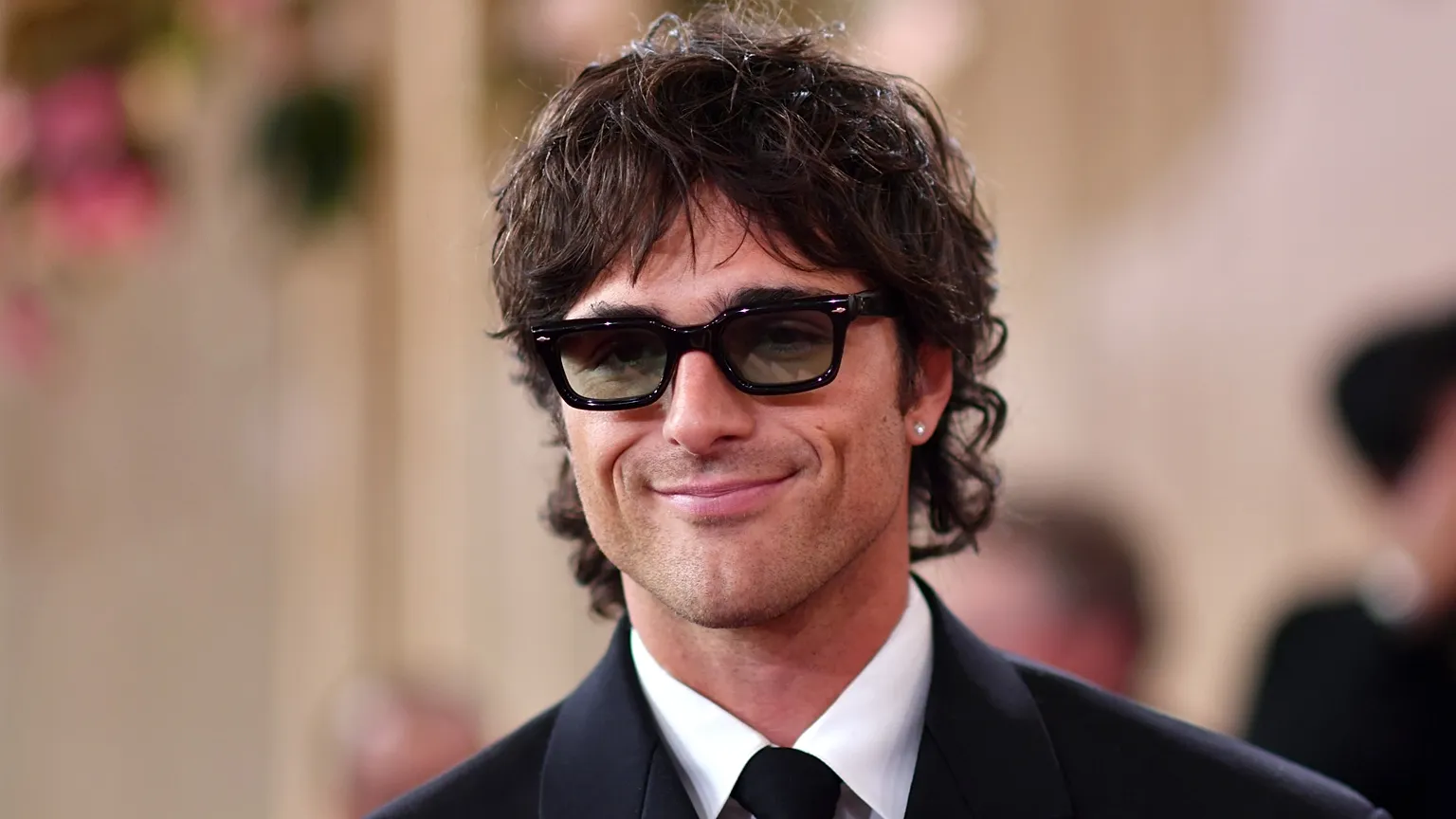
The phrase “soft masculine” can sound vague until someone wears it convincingly. On Elordi, it becomes precise. It means double-breasted tailoring that still breathes. It means cool blue tones instead of default black. It means accessories that feel a little louche, a little cinematic, a little knowing. It means tinted sunglasses, leather ties, generous trousers, easy posture, and the confidence to let elegance do the seduction. Town & Country noted that Elordi arrived at the 2026 Golden Globes in Bottega Veneta with retro tinted glasses and Cartier jewelry, while Who What Wear highlighted his growing habit of pairing navy or blue tailoring with a subtly glossy leather tie. Those details are not random flourishes. They are the visual grammar of a softer, more modern red-carpet masculinity.
And then there is cerulean.
That word carries its own mythology, especially in a fashion culture still haunted—in the best way—by The Devil Wears Prada. Around the sequel’s New York premiere, AOL and Yahoo’s style coverage explicitly framed Elordi’s look through that color story, calling out that he “looks wildly good in cerulean.” Whether one reads the shade as true cerulean, cobalt-leaning blue, or a stylized editorial use of the term, the important point is that the fashion press itself is reading Elordi through color, mood, and softness rather than brute formality. That alone tells you how much men’s red-carpet language has changed.
Why Jacob Elordi Feels So Important to This Menswear Shift
Elordi is not the only man dressing well right now, but he is one of the most revealing case studies because he combines several things the current menswear moment finds irresistible. He has leading-man scale and old-Hollywood bone structure, but he rarely styles himself like a rigid throwback matinee idol. Instead, his red-carpet image tends to land somewhere between classic and undone: broad lapels, roomy trousers, relaxed stance, sunglasses that introduce mystery, and tailoring that suggests strength without stiffness. When Red Carpet Fashion Awards covered his February 2026 Wuthering Heights Sydney premiere look, it noted yet another Bottega Veneta suit in cool blue tones, subtle pinstripes, and a double-breasted silhouette. That phrase—“yet another”—is telling. Blue has become part of his visual signature.
He also benefits from timing. Harper’s Bazaar’s spring 2026 menswear coverage argued that at the men’s shows, a “gentler, more sensitive approach to dress” had triumphed over greed-is-good suiting and hard-power posturing, while L’Officiel USA summarized the season with a simple phrase: men’s tailoring “lets loose,” embracing relaxed suits, breezy shirts, and a softer tone. Elordi looks like he understood that shift before some trend reports fully caught up with it. His recent tailoring does not reject structure; it softens the emotional effect of structure. That is a subtler, smarter move.
Sharp Magazine’s 2026 Golden Globes trend report sharpened the point even further, noting that the best-dressed men are not just recycling louche tailoring or standard double-breasted jackets, but elevating good looks through styling, tasteful drape, and accessories. That description could almost function as an Elordi style thesis. His appeal on the carpet is rarely about one shocking garment. It is about the complete atmosphere. He dresses like someone who understands that masculinity can be edited, styled, and romanticized without losing force.
Cerulean Is Doing More Than Looking Pretty
Blue has always been a safe color for menswear, but cerulean—or at least cerulean-adjacent fashion blue—is not safe in the boring sense. It is emotionally loaded. It suggests clarity, coolness, youth, sky, elegance, and just enough fantasy to lift a look out of standard formalwear. Vogue’s recent men’s trend coverage also points to a menswear season increasingly open to experimentation, from mint tones and cinched silhouettes to ballet flats and buttoned-up blazers, while its spring 2026 trend refresher argued that the men’s shows are no longer built around one narrow image of masculine dress. Elordi’s embrace of rich blues sits comfortably inside that wider permission structure.
But on Elordi, the blue reads as something more specific than trend participation. It becomes mood. His cool-toned tailoring doesn’t scream. It shimmers quietly. It implies sensitivity without fragility and polish without corporate severity. If black tuxedos often project authority through refusal, cerulean projects confidence through invitation. It asks the eye to come closer. It softens the whole proposition of male glamour.
That is part of why the color feels so effective right now. In celebrity menswear, black can easily drift into default mode. Cerulean, cobalt, and navy-with-lift signal intention. Around The Devil Wears Prada 2 premiere week, the fashion press explicitly linked Elordi to cerulean, and around the Wuthering Heights Sydney premiere, Red Carpet Fashion Awards described him as getting the “cool tones and blue memo.” In other words, blue is no longer incidental in his wardrobe. It is part of the story.
The New Heat Is in Softness, Not Hardness
The biggest misunderstanding in celebrity style is that sexy always has to arrive through aggression. That idea has distorted menswear for years. It encouraged a red-carpet formula built on dominance cues: hyper-structured jackets, hyper-serious monochrome, hyper-controlled silhouettes, and an emotional flatness marketed as masculine confidence. The “soft masculine” aesthetic challenges that formula without making the wearer look weak. In fact, it often makes him look stronger, because he appears more self-possessed.
Harper’s Bazaar put it bluntly when describing the spring 2026 menswear mood: “softboys are cooler than titans.” The article framed the season as a victory for softer silhouettes, fluid styling, and a sweeter alternative to traditional power dressing. That is not just runway theory. It explains why Elordi’s current red-carpet presence lands so powerfully. He does not look like he is trying to dominate the frame by force. He looks like he already belongs to it.
Soft masculinity, at this level, is not about erasing masculinity. It is about widening it. A man can still wear a suit, still look broad-shouldered, still project stature, and still allow romance, tenderness, or beauty into the equation. Blue helps. So do relaxed trousers. So do unusual accessories. So does the willingness to let a leather tie, a tinted lens, or a slightly looser drape carry some of the emotional charge. Elordi’s wardrobe shows how seduction can move away from macho insistence and toward aesthetic intelligence.
Bottega Veneta and the Luxury of Quiet Drama
It is not accidental that Bottega Veneta keeps appearing in this conversation. Town & Country identified Elordi’s Golden Globes suit as Bottega Veneta, and Red Carpet Fashion Awards did the same for his Sydney Wuthering Heights premiere. Who What Wear also tied his leather-tie habit to Bottega styling. That recurring label relationship matters because Bottega is one of the houses most fluent in contemporary quiet drama. It knows how to make tailoring feel rich, minimal, and slightly off-center all at once.
Quiet drama is exactly the right phrase for Elordi’s style. He is not dressing like a peacock in the old maximalist sense. He is dressing like a man who understands that subtle deviations are often sexier than loud gestures. A retro tinted lens changes the whole emotional temperature of a suit. A leather tie adds texture and a whisper of kink without collapsing into gimmick. A blue double-breasted jacket with strong proportions and relaxed energy turns standard tailoring into something cinematic. These choices do not compete with one another. They conspire.
That is where the soft masculine aesthetic gets really hot. It stops looking like a “trend” and starts looking like personality.
Why Accessories Matter More Than Ever
Sharp Magazine’s Golden Globes report is especially useful here because it argues that the difference between a good suit and a great suit lies in how everything around it is worn. Accessories, it says, ruled the carpet. That observation matters because men’s red-carpet fashion used to treat accessories as secondary at best. A watch, maybe. A pocket square if someone was feeling adventurous. Now the accessory often carries the emotional subtext.
Elordi’s tinted glasses are a perfect example. Town & Country noted that they appeared to be part of a broader menswear trend on the Golden Globes carpet. On him, though, they do more than signal trend awareness. They add opacity. They create distance. They make a suit feel less corporate and more movie-star. That one gesture shifts the aesthetic from handsome to mythic.
The leather tie works similarly. Who What Wear described his version as black with a subtle shine, paired with navy-blue tailoring and black woven shoes. That tie is important precisely because it is not loud. It is a controlled disturbance in the look. It toughens the softness just enough. It keeps the outfit from drifting into prettiness while allowing the overall mood to remain smooth and open. In a softer masculine wardrobe, that kind of tension is everything.
The Red Carpet Is Finally Catching Up to the Runway
One of the most interesting things about menswear in 2026 is how directly red-carpet dressing now mirrors runway conversations. Vogue’s coverage of spring and fall 2026 menswear points to blazers buttoned higher, cinched waists, ballet-flat experimentation, softer colors, and a broader willingness to play with shape and styling. L’Officiel’s menswear write-up describes tailoring going nonchalant. Harper’s Bazaar describes gentleness and fluidity overtaking older hard-power tropes. These are not isolated editor fantasies. They are becoming visible in public celebrity dressing.
Elordi matters because he translates that runway shift into a version legible to a mass audience. He is not arriving in the most extreme possible form of fashion experimentation. He is making the softer turn feel wearable, elegant, and aspirational. That is often how real style change happens. Not through the wildest look on the runway, but through a public figure who absorbs the mood and renders it seductive.
That is why his cerulean charm feels larger than one outfit. It signals a red-carpet recalibration. Men no longer have to choose between looking “serious” and looking stylish. They can look soft, stylish, and serious all at once.
Why “Soft Masculine” Reads So Strongly on Jacob Elordi
Elordi’s physicality helps, of course. He is tall enough that relaxed tailoring reads deliberate rather than sloppy, and handsome enough that unusual styling never has to beg for attention. But many beautiful men still dress badly. What makes Elordi interesting is that he seems willing to let his clothes introduce ambiguity.
That ambiguity is sexy.
He can look classic and slightly louche at the same time. Romantic and remote. Elegant and a little dangerous. Blue suits him because blue supports that ambiguity. It is gentler than black but cooler than beige. It allows feeling into the image without sacrificing poise. His recurring use of it—whether at the Golden Globes, the Wuthering Heights Sydney premiere, or the cerulean-coded Devil Wears Prada 2 moment—builds a kind of emotional continuity in his public wardrobe.
And because he often pairs softness with one hard detail—a sharp lapel, a leather tie, a retro lens, a heavier shoe—the overall look never dissolves into sweetness. It stays adult. It stays magnetic. That balance is difficult to achieve, and it is why his red-carpet presence currently feels more modern than the old-school tuxedo purists and more enduring than the novelty dressers.
From “Power Dressing” to “Soft Power Dressing”
Fashion language around men is changing. For years, “power dressing” for men meant severity: dark colors, strict tailoring, visible control. But the 2026 trend conversation suggests a different model is emerging. Even when Vogue discusses sharper tailoring, it places that alongside experimentation and color. Even when Sharp talks about well-tailored suits, it emphasizes drape and accessories. Even when L’Officiel summarizes the season, it reaches for “nonchalant” rather than “commanding.” The throughline is clear: power no longer has to look hard.
Elordi is exemplary here because he dresses like he understands soft power intuitively. He is not rejecting elegance. He is making elegance more sensual. The result is hotter because it feels less defensive. A rigid suit can look impressive, but it often keeps the viewer at arm’s length. Elordi’s softer tailoring invites the eye in. It suggests a man comfortable enough in his own presence to let beauty be part of his image.
That, in 2026, is the real red-carpet flex.
Why Men’s Fashion Needed This
There is also a broader cultural reason this aesthetic is catching fire. Audiences are tired of one-note masculinity. They are tired of the tech-bro flattening of style, the hyper-luxury sameness, and the idea that men’s glamour must always apologize for itself. Harper’s Bazaar’s “softboys” framing is useful precisely because it captures a mood: men are being given permission to look thoughtful, pretty, emotionally textured, and still fully compelling.
Red carpets are where that permission becomes visible. When a man as watched as Jacob Elordi leans into color, drape, accessories, and mood, he helps normalize a more expansive masculine image. He tells other men that they do not need to harden themselves visually to be desirable. He tells fashion houses that there is appetite for something gentler. He tells the red carpet that romance belongs there too.
And because he does it through luxury tailoring instead of costume, the effect lands with credibility. It does not feel like rebellion for its own sake. It feels like evolution.
The Cerulean Effect
Cerulean deserves one last moment here, because it functions almost like a symbol for the whole shift. In the fashion imagination, cerulean is never just blue. It is cultured blue. It is referenced blue. It is style-world blue. To call Elordi’s look cerulean, as recent coverage did, is to place him inside a more self-aware fashion conversation. He is not just wearing a colored suit; he is participating in a coded language of taste, memory, and editorial wit.
That matters because the “soft masculine” aesthetic is not merely about being gentle. It is about being sophisticated enough to understand fashion’s references without becoming enslaved to them. Elordi’s current style has that quality. It is handsome, yes, but also fluent. Relaxed, but considered. Soft, but never vague.
In a landscape where many men still approach the carpet like a dress code obligation, that fluency feels thrilling.
Final Verdict
Jacob Elordi’s recent blue-toned tailoring run—especially the cerulean-coded look highlighted around The Devil Wears Prada 2 premiere week—helps explain why the soft masculine aesthetic is currently the hottest thing in men’s red-carpet fashion. The appeal is not about abandoning tailoring. It is about loosening it, tinting it, accessorizing it, and letting it carry emotion. Runway and trend coverage across 2026 points in the same direction: softer silhouettes, relaxed styling, thoughtful accessories, color experimentation, and a gentler approach to masculine dress are defining the moment.
Elordi stands at the center of that shift because he makes it look neither timid nor try-hard. In Bottega Veneta suits, retro shades, leather ties, and those cool blue tones, he offers a version of male glamour that feels contemporary, cinematic, and deeply self-assured. The old red-carpet fantasy was a hard man in a hard suit. The new one is softer, smarter, and far more interesting.
That is Jacob Elordi’s cerulean charm. It does not shout. It seduces.


