Jenna Ortega’s Gothic Glamour: How She Evolved From “Scream Queen” to a Global Icon of Dark, Sultry Fashion
Jenna Ortega’s rise in fashion has not been a random celebrity style glow-up. It has been a tightly observed, cleverly edited transformation in which genre fame, beauty experimentation, brand alignment, and red-carpet daring all fused into a coherent image. The actress who first became widely associated with horror through projects like Scream X and Wednesday now occupies a different kind of cultural space: not merely a young star with a recognizable aesthetic, but a genuine fashion reference point whose dark glamour is legible from Paris to Seoul to Sundance. By late 2025, Vogue had named Ortega one of its 55 best-dressed people of the year, citing her role in the goth resurgence through dramatic silhouettes, strange textures, monochromatic palettes, bleached brows, and smudgy glam.

What makes Ortega so compelling is that her image never feels like a costume trapped inside one character. The gothic current is real, but it keeps evolving. Sometimes it arrives as reptilian couture, sometimes as Victorian romance, sometimes as punk severity, and sometimes as something unexpectedly muted and architectural. That range is the difference between a themed dresser and a fashion icon. During the Wednesday season two cycle and into 2026, Ortega moved from straightforward horror-adjacent dressing into something more sophisticated: a global dark-glam identity built around risk, silhouette, texture, and an increasingly precise command of beauty language.
Her evolution also happened at exactly the right moment. Fashion has been swinging away from bland polish and toward mood, character, and clothes with narrative charge. Ortega thrives in that environment because she dresses as if a look should do more than flatter. It should haunt a little. It should imply a backstory. It should create atmosphere around the body. Whether she is wearing Ashi Studio in London, Dilara Fındıkoğlu at the Golden Globes, or Mugler at Sundance, she consistently turns the red carpet into a scene rather than a stop-and-repeat obligation.
The “Scream Queen” Foundation Was Never a Limitation
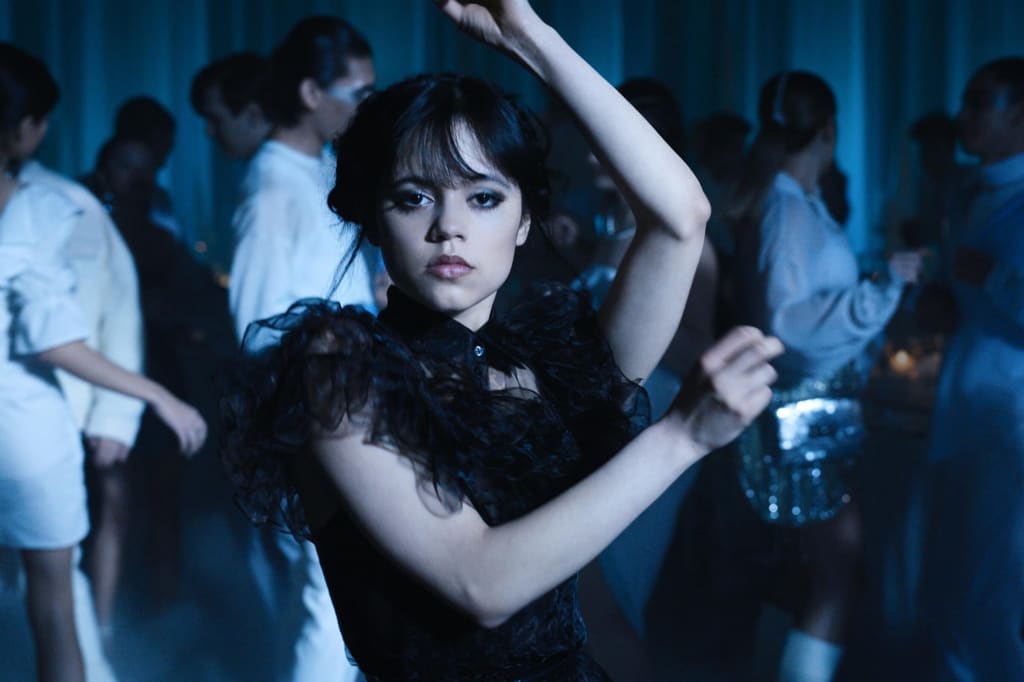
Ortega’s fashion power works partly because her screen persona gave her a powerful visual vocabulary early. Horror fame can trap actresses inside one-note styling, but in Ortega’s case it gave her a starting mythology: darkness, danger, irony, and youth sharpened by intelligence. Instead of resisting that, she used it. The key was refusing to translate “dark” into repetitive black dresses or obvious goth clichés. She expanded it into a much richer spectrum: latex that looked like shed skin, corsetry that suggested armor, bleached brows that made her face feel editorially alien, and silhouettes that played with Victorian, punk, and fetish-coded references without slipping into parody.
The Wednesday season two London premiere in July 2025 remains one of the clearest inflection points. Ortega wore an Ashi Studio Fall 2025 couture gown that Vogue described as a full goth-glam commitment, while Elle emphasized the dress’s eerie, mature, subtly macabre elegance rather than literal character cosplay. WWD similarly highlighted the look’s reptilian, semi-sheer quality. Taken together, those readings show what Ortega had figured out: if she was going to be linked forever to Wednesday Addams and scream-queen energy, the smartest move was not to dilute the darkness but to make it fashion.
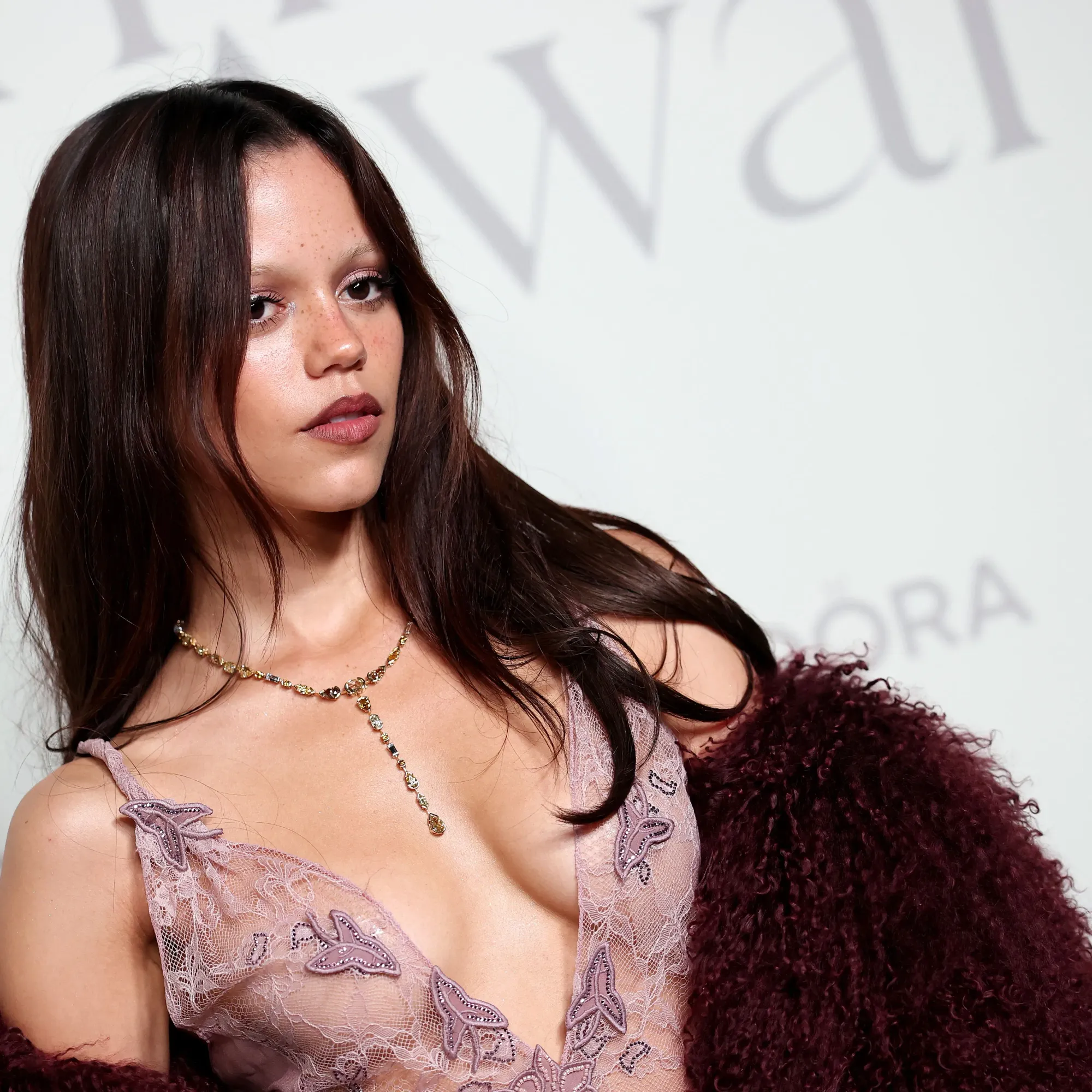
That strategy gave her something many young stars lack: visual authorship. Plenty of actresses have a “phase.” Ortega built a language. You could see it in the choice of strange textures, the fondness for body-conscious but unsettling silhouettes, the refusal of bright, easy prettiness, and the repeated use of makeup that made her look less sweet and more cinematic. Her beauty team pushed this further with bleached brows and sharper sculpting, helping her face move from ingénue softness into something more graphic and memorable.
Goth Glam Became Global When She Learned to Vary the Formula
A true icon cannot repeat herself too obviously. Ortega’s greatest style strength is variation within control. During the Wednesday season two press tour, she did not stay in one lane. In Seoul, for instance, Harper’s Bazaar noted that she put a surreal twist on gothic dressing in Simone Rocha, adding vivid green into her otherwise somber fashion world. People covered another Seoul appearance in black patent Dilara Fındıkoğlu, showing just how far she could push the moodier end of her wardrobe without losing polish. Those shifts mattered because they kept the dark glamour alive without making it predictable.
Then came the quieter surprises. At Sundance in January 2026, Ortega stepped away from the obvious gothic codes in a nude-toned Mugler look from the Spring 2026 ready-to-wear collection. Vogue called it a lightening-up of her gothic glam, while Red Carpet Fashion Awards noted the move away from the expected darker palette. But this was not a rejection of her identity. It was proof that she understood something deeper: gothic glamour is not only about black. It is about tension, control, sharpness, and an atmosphere of unease. Mugler, with its stiff collar, curved shoulders, and cinched waist, still delivered that. It just did so in beige instead of black.
That kind of flexibility is how an aesthetic becomes international rather than niche. Ortega’s image now travels because it is not limited to one color story or one era reference. She can do Victorian ruffles, reptilian latex, couture decay, military beading, punk tailoring, or minimalist Mugler severity and still look unmistakably like herself. Fashion editors love this because it creates continuity without boredom. Audiences love it because they can recognize the mood before they identify the label.
The 2026 Golden Globes Proved She Could Make Gothic Glam Mainstream Luxury
If the Wednesday premiere gave Ortega a fashion mythology, the 2026 Golden Globes gave her mainstream luxury confirmation. At the ceremony, she wore a black Dilara Fındıkoğlu Spring/Summer 2026 look with side cutouts, beaded fringe cap sleeves, and a high-necked silhouette that merged military structure with gothic seduction. Harper’s Bazaar framed it as “beaded gothic glamour,” while Vogue used it as part of a larger argument that boudoir and naked-dressing codes were evolving in 2026 rather than disappearing.
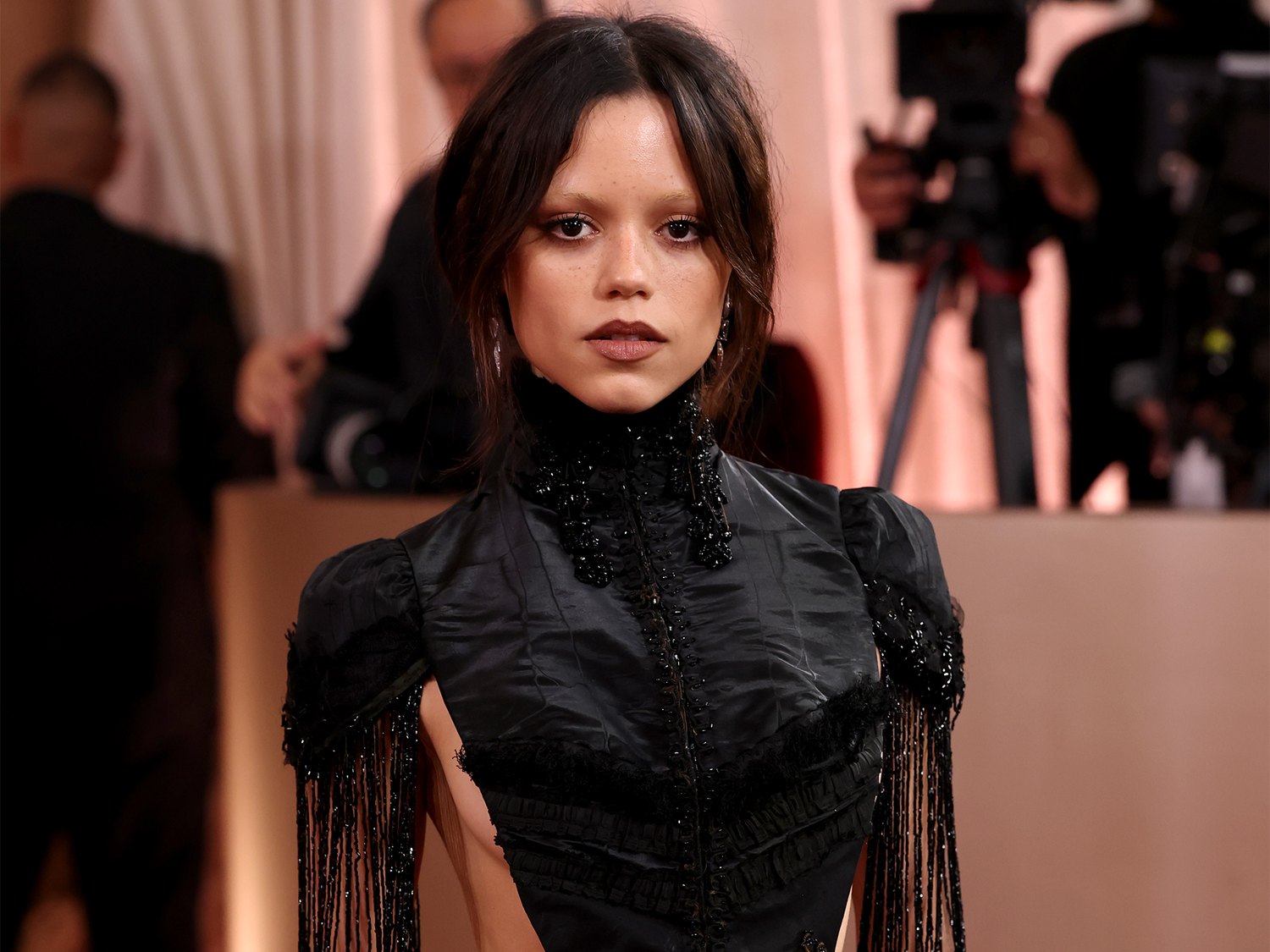
The brilliance of that look was how little it depended on the old red-carpet formula. It was not the usual sheer-naked strategy, nor the usual ingénue sparkle. It gave viewers structure, embellishment, asymmetry, darkness, and selective exposure all at once. In editorial terms, it was brand-safe heat. The high neck created discipline; the fringe and cutouts added movement and temptation; the overall black palette kept the mood severe. It was exactly the sort of fashion proposition Ortega now excels at—sensual, but through silhouette and contrast rather than conventional bombshell messaging.
This moment also mattered because awards-season dressing is often where celebrity images get normalized. A star can be adventurous at a themed premiere, but the Globes still function as a mainstream glamour test. Ortega passed that test without softening her identity. She did not sand off the edges. She refined them. That is the difference between being a cult style favorite and becoming a global fashion figure.
Dior Helped Turn the Aesthetic Into a Worldwide Luxury Brand
No modern fashion ascent becomes truly global without major house backing, and Ortega’s Dior relationship has been crucial. WWD reported in May 2025 that she was named Dior’s international makeup ambassador and was already also a Dior jewelry ambassador. Vogue later covered Dior Beauty events featuring Ortega as campaign face, while Dior’s own beauty materials cast her as a red-carpet force capable of switching between “femme fatale” and spirited star. Those details matter because they show luxury fashion did not merely notice Ortega’s aesthetic—it institutionalized it.
This partnership makes perfect sense. Dior has long traded in romance, severity, femininity, and cinematic beauty. Ortega brings those ideas a younger, darker voltage. She is not a pastel Dior fantasy. She is Dior filtered through noir, punk intelligence, and a generation more comfortable with ambiguity. That contrast makes her incredibly valuable to the brand and just as useful to the fashion narrative around her. It places her gothic glamour inside the language of French luxury rather than leaving it in alternative-culture margins.
It also allows Ortega to move beyond pure clothing into beauty icon status. InStyle described her as a Dior Beauty ambassador and noted how her getting-ready process, musical references, and taste all reinforce an image that is cool, controlled, and slightly off-center. That is important because dark glamour is not sustained by gowns alone. It lives in the face: the brow choice, the lip tone, the eyeliner, the skin finish, the refusal to over-prettify. Ortega’s beauty language is now as recognizable as her wardrobe.
Bleached Brows, Smudged Eyes, and the Beauty of Looking Slightly Haunted
Beauty is where Ortega’s transformation from actress to icon becomes most obvious. Her face has become a canvas for disruption. Bleached brows, in particular, changed the way the public reads her. They made her features look stranger, sharper, and more editorially unstable, which is exactly why they worked so well alongside darker couture. At the Wednesday season two London premiere, Vogue explicitly noted the bleached brows and described the beauty mood as “a bit alien, a bit goth, but still beauty.” People and Harper’s Bazaar pointed to the same logic across later appearances: the glam was dark, but never careless.
This is one of Ortega’s greatest strengths. Many stars can wear gothic clothing, but their beauty styling remains too safe, which breaks the illusion. Ortega commits. Yet she commits with refinement. Her looks are not messy-Halloween dark. They are expensive dark. The skin still looks intentional. The lip still has strategy. The hair may nod to disorder, but it is shaped disorder. That is how “sultry” enters the picture without ever tipping into caricature. It is not about maximal overt sexuality. It is about the erotic charge of precision, mystery, and suggestion.
Seen through a fashion-photography lens, Ortega’s beauty works because it holds tension. Picture it at f/1.8: a blurred background, wet or sleek hair framing the face, bleached brows making the eyes feel larger and more ominous, a lip that looks bitten rather than sugary, and a dress textured enough to create shadow. She rarely looks like she is trying to be adorable. She looks like she is controlling the atmosphere. That is a much more durable kind of glamour.
She Became an Icon When the Industry Stopped Treating Her Style as a Gimmick
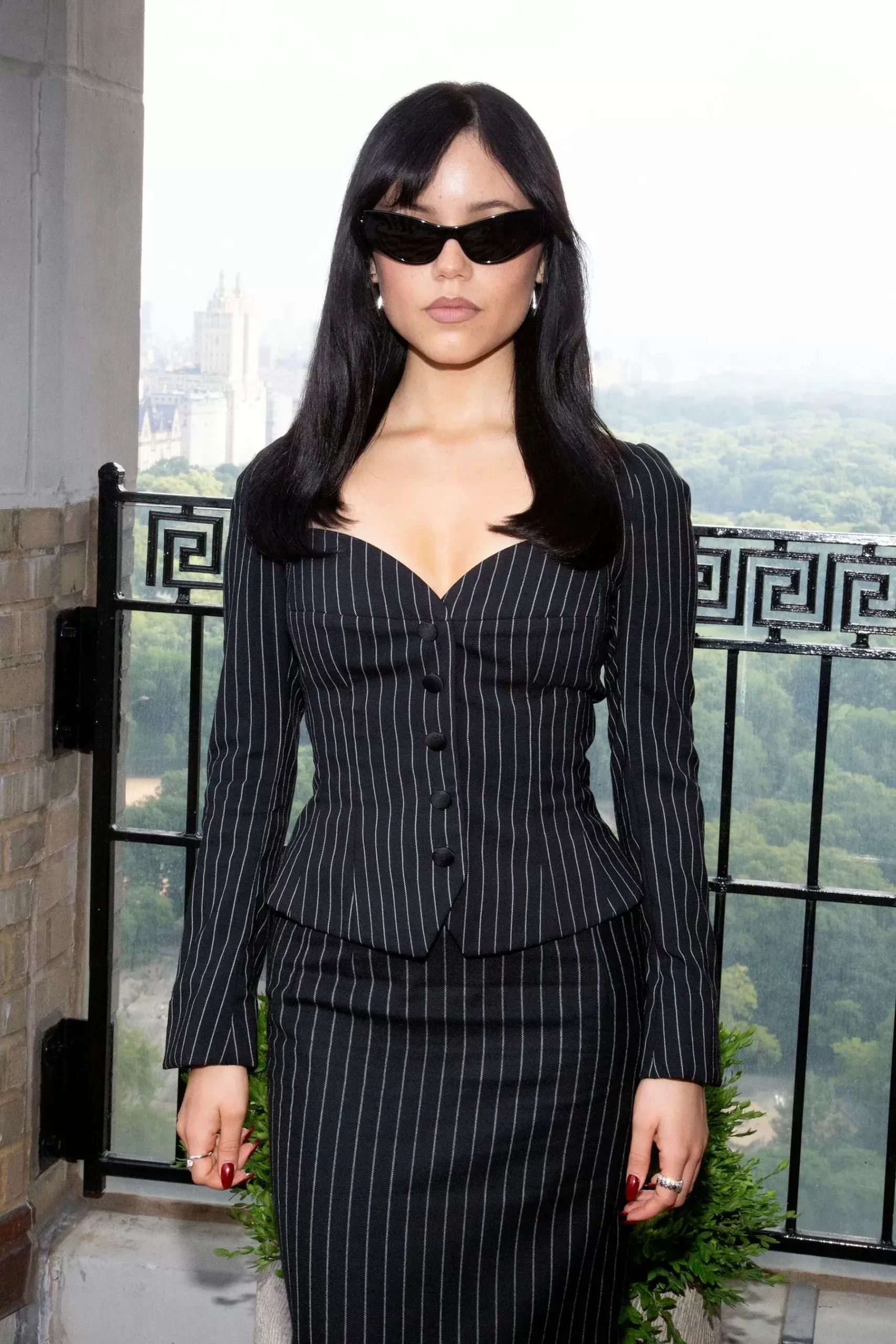
One of the clearest signs of Ortega’s ascent is that fashion coverage increasingly discusses her as a style authority, not just a well-dressed actor on a themed press tour. Harper’s Bazaar called her the ultimate red-carpet risk-taker in 2025. Vogue included her among the year’s best dressed. WWD repeatedly covered individual looks across film premieres and fashion events. These are not the signals of a passing novelty. They are the infrastructure of icon status.
What changed is that the industry began to see consistency where it once might have seen gimmick. Early in her ascent, Ortega’s darker looks could have been dismissed as Wednesday spillover. By late 2025 and early 2026, that was no longer credible. The wardrobe had become too varied, too smart, too technically accomplished. Whether she was in Ashi Studio, Ann Demeulemeester, Simone Rocha, Dilara Fındıkoğlu, Mugler, Fendi, or Dior-adjacent beauty worlds, the through line held. She was building something.
That is what global icons do. They make the same emotional proposition across very different fashion choices. In Ortega’s case, the proposition is this: darkness can be elegant, youth can be severe, and femininity can be sharp without losing sensuality. That proposition has broad appeal because it offers women an alternative to the soft-focus celebrity template. It says you can be glamorous without being agreeable-looking. You can be alluring without being obvious.
Why Her Fashion Feels Dark, Sultry, and Still Extremely Modern
The word “gothic” can accidentally make Ortega’s style sound backward-looking, but the truth is that her glamour is deeply modern. She mixes old references with contemporary body language. There are Victorian echoes, yes, and noir echoes, and hints of punk and horror. But the final image is very much now: sharpened by social media literacy, luxury branding, and a generation that is fluent in irony while still craving beauty.
Her fashion also works because it is textural. This is a subtle point, but an important one. Ortega’s best looks are rarely only about silhouette. They are about surfaces that seem alive: latex that looks like skin, sequins that read like armor, tulle that feels haunted, leather that hardens the body, beadwork that turns movement into flicker. Texture is what makes dark fashion feel luxurious instead of flat. She and her styling team understand that instinctively.
And then there is posture. Ortega does not wear these clothes apologetically. She wears them with the stillness of someone who knows the image is already doing enough. That restraint is a huge part of her appeal. The darker the look, the more crucial restraint becomes. Otherwise it collapses into performance. Ortega avoids that collapse by underplaying the clothes just enough. The result is a cool, controlled sensuality that reads as both young and unexpectedly authoritative.
The Final Shift: From Actress With a Look to Fashion Symbol
The most telling thing about Jenna Ortega’s fashion story is that she is now referenced not only for what she wears, but for what she represents. She represents a goth resurgence. She represents risk-taking on the red carpet. She represents a dark-feminine alternative to bland celebrity prettiness. She represents the possibility that a horror-linked star can become a luxury fashion symbol without abandoning the very strangeness that made her compelling in the first place.
That is a rare arc. Many actresses become more polished as they become more famous, but fewer become more distinct. Ortega has become more distinct. Her style has matured not by flattening out its weirdness, but by refining it. The result is a global image with real editorial force—gothic, yes, but not cartoonish; sultry, yes, but not cheap; fashion-forward, yes, but anchored in identity rather than novelty.
Final Verdict
Jenna Ortega’s transition from scream queen to global dark-fashion icon happened because she understood the smartest move was not to outrun the darkness, but to elevate it. The Ashi Studio reptilian gown, the surreal Simone Rocha detour, the severe Dilara Fındıkoğlu Globes look, the pared-back Mugler at Sundance, and her growing Dior ambassadorship all show the same evolution: she has turned gothic codes into a luxury language the world can read.
What started as genre adjacency is now full image authorship. Jenna Ortega no longer looks like an actress borrowing darkness from a role. She looks like a woman who made darkness chic, intelligent, and globally aspirational. That is why her gothic glamour matters. It is not just a signature. It is a fashion worldview.