
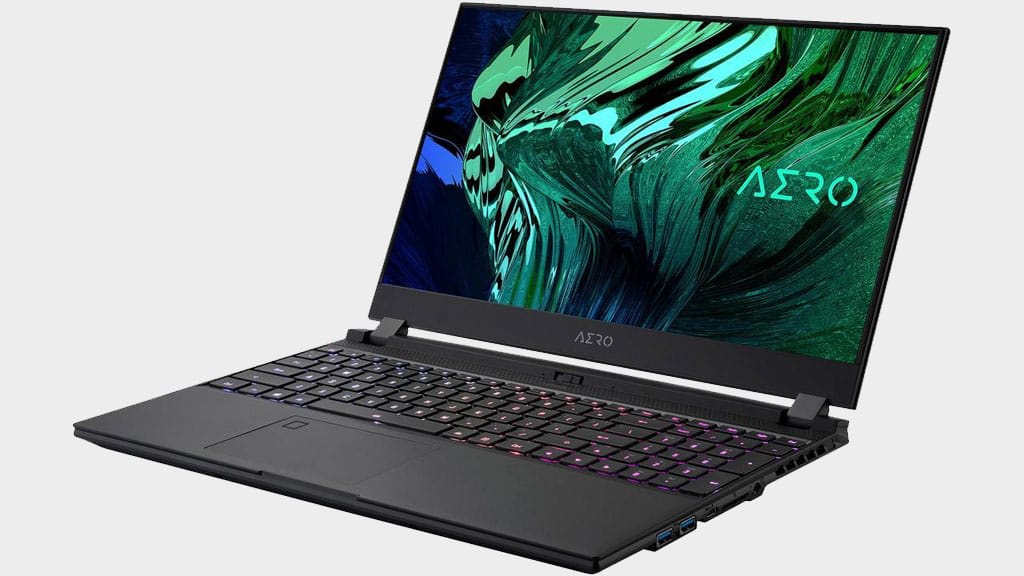
OLED Gaming Laptops: The Future of Play
Gaming laptops used to be judged by one question: how much power can they pack into a portable machine?
For years, that meant chasing better graphics cards, faster processors, more RAM, bigger cooling systems, and higher refresh-rate displays. The screen mattered, of course, but mostly as a spec sheet number: 144Hz, 165Hz, 240Hz, 360Hz. Competitive players cared about speed. Creative users cared about color. Everyone else accepted whatever panel came with the machine.
That era is changing.
In 2026, the screen has become one of the main reasons to buy a gaming laptop. Not just any screen, either. The future of premium portable gaming is increasingly built around one display technology: OLED.
OLED gaming laptops are no longer rare luxury experiments. They are becoming the visual standard for high-end gaming notebooks, and they are pushing into more accessible performance machines as well. Brands like ASUS ROG, Razer, Lenovo, Alienware, MSI, HP OMEN, and others are treating OLED not as a gimmick, but as a defining feature for the next generation of gaming laptops.
The reason is simple: OLED makes games look alive.
An OLED panel can deliver deep blacks, high contrast, fast pixel response, vivid color, and HDR impact that traditional LCD screens struggle to match. In dark horror games, shadows feel truly black. In neon cyberpunk cities, lights glow with intensity. In open-world adventures, sunsets look richer. In competitive shooters, motion can feel cleaner because OLED pixels respond extremely quickly. In story-driven games, cinematic scenes feel more immersive.
Current laptop lineups show how fast the shift is happening. ASUS lists its 2026 ROG Zephyrus G16 with up to a 16-inch 2.5K 240Hz ROG Nebula OLED display and up to an NVIDIA GeForce RTX 5090 Laptop GPU. Razer’s 2026 Blade 16 review coverage highlights a premium 16-inch OLED display alongside RTX 50-series graphics and ultra-thin design. PC Gamer’s latest gaming-laptop deal roundup also shows premium OLED 240Hz panels appearing across higher-end RTX 50-series laptops, while some more affordable RTX 5070 systems now include OLED screens below the old ultra-premium price tier.
That is the big story: OLED is not only for luxury showpieces anymore.
It is becoming part of what gamers expect from a serious laptop.
Why OLED Matters for Gaming
OLED stands for Organic Light-Emitting Diode. Unlike traditional LCD panels, which require a backlight, OLED pixels emit their own light. That means each pixel can turn on, dim, or switch off independently.
This creates the signature OLED advantage: true black.
On an LCD screen, black areas are still lit by a backlight. Even with good local dimming, some glow or blooming can remain. On OLED, a black pixel can simply turn off. The result is deeper contrast, more dramatic lighting, and a more cinematic image.
For gaming, this matters more than many people realize.
A dark cave in an RPG becomes more atmospheric. A horror game becomes more frightening because black corners look genuinely dark. A space game feels deeper because stars appear against real darkness. A night race feels more intense because headlights and reflections pop. A fantasy world feels more magical because fire, spells, and glowing effects stand out sharply.
OLED does not just make games prettier.
It changes the mood.
In visual storytelling, contrast is emotion. OLED gives game worlds stronger emotional range.
The End of Washed-Out Laptop Screens
Older gaming laptops often had a problem: they were powerful, but the screens looked ordinary.
A laptop could run the latest AAA game at high settings, but if the display had weak contrast, poor black levels, limited color, or dull brightness, the experience still felt compromised. Gamers often connected external monitors to get the full visual quality their hardware could produce.
OLED changes that.
A good OLED laptop display can make the built-in screen feel premium enough for serious gaming, movies, editing, and everyday use. That matters because a laptop is supposed to be portable. If users need an external monitor to enjoy the machine properly, the portable experience is incomplete.
The new generation of OLED gaming laptops solves that problem. They offer screens that feel worthy of the GPU inside.
TechRadar’s 2026 gaming laptop coverage praised OLED gaming displays for making games look incredible, especially when paired with 240Hz refresh rates for fast, responsive play. ASUS’s 2026 ROG laptop guide also positions 2.5K 240Hz OLED panels as key features for enthusiast gamers and creative professionals who need both visual quality and high-end performance.
That dual appeal is important. OLED gaming laptops are not only for gamers. They are also for streamers, video editors, designers, photographers, and creators who want one machine that can play hard and work beautifully.
Speed: OLED’s Hidden Competitive Advantage
Many people think OLED is only about color and contrast. But for gaming, OLED’s response time is just as important.
Pixel response time refers to how quickly a pixel can change from one state to another. Slower response times can create ghosting, smearing, or motion blur, especially in fast-moving games. OLED pixels are naturally very fast, often much faster than typical LCD pixels.
That means fast motion can look cleaner.
In competitive games like shooters, racing games, fighting games, and battle royales, clean motion matters. A 240Hz OLED panel can feel extremely responsive because it combines high refresh rate with fast pixel transitions.
This does not automatically make every OLED laptop better for esports than every high-refresh LCD. Some LCD gaming laptops still offer extremely high refresh rates, such as 360Hz or even dual-mode panels. Tom’s Hardware’s 2026 list highlights laptops like the Razer Blade 18 with an IPS dual-mode display that can switch between high-resolution 240Hz and lower-resolution 440Hz modes.
That means competitive players still have choices. If your only goal is maximum frames and the absolute highest refresh rate, a specialized LCD panel may still make sense. But for most gamers, OLED offers a more complete balance: speed, contrast, color, and immersion.
It is not just fast.
It is fast and beautiful.
HDR Gaming Finally Makes Sense on Laptops
HDR, or High Dynamic Range, promises brighter highlights, deeper shadows, and more realistic contrast. On many older laptop LCDs, HDR was more of a checkbox than a truly transformative feature. Limited brightness, poor dimming, and weak contrast often made HDR underwhelming.
OLED gives HDR a stronger foundation because of pixel-level control. Bright highlights can stand out against true black areas, creating a more dramatic image. Explosions, neon signs, magical effects, headlights, sunlight through clouds, and reflections all look more convincing.
This is especially powerful in cinematic games.
Think of a dark corridor lit by a single flashlight. A rainy city street with glowing billboards. A fantasy battlefield under burning skies. A spaceship cockpit floating through deep space. A horror scene where the only visible detail is a dim light at the end of a hallway.
OLED makes those moments hit harder.
For gamers who care about atmosphere, HDR OLED is one of the most exciting laptop upgrades of the decade.
OLED and the Rise of Cinematic Gaming
Gaming has become more cinematic than ever.
Modern games are full of detailed environments, film-like lighting, motion capture, complex facial animation, dynamic weather, ray tracing, and carefully directed cutscenes. The line between playing a game and watching an interactive film continues to blur.
OLED is perfectly suited to this direction.
The technology makes cinematic games feel more premium because it enhances the qualities developers already work hard to create: contrast, mood, shadow, color, and lighting. A great OLED screen lets players see more of the artistic intent behind the game.
This is why OLED matters beyond raw performance. A powerful GPU can generate beautiful visuals, but the display decides how much of that beauty reaches your eyes.
A game can have excellent lighting, but a weak screen can flatten it.
A game can have rich colors, but a dull panel can mute them.
A game can have deep horror atmosphere, but poor black levels can ruin the darkness.
OLED brings the final image closer to what the game wants to be.
The Perfect Match for RTX 50-Series Laptops
The current wave of OLED gaming laptops is arriving alongside powerful new GPUs. RTX 50-series gaming laptops are showing up across premium and mid-high segments, and many are paired with OLED panels to create a more balanced gaming experience.
That pairing makes sense.
A high-end GPU can push modern games at high settings, higher resolutions, and smoother frame rates. An OLED panel makes the result look more dramatic and polished. The GPU creates the image. The OLED sells the image.
PC Gamer’s May 2026 laptop-deal roundup shows this pairing clearly, highlighting RTX 5070, 5070 Ti, and 5080 laptops with OLED and high-refresh panels, including premium 240Hz OLED models in the $1,500+ range and some RTX 5070 OLED systems under $1,500.
That is a major shift. OLED is no longer only reserved for the most expensive flagship model. It is becoming a feature buyers can realistically consider across more configurations.
For gamers, that means the decision is becoming more interesting. Instead of simply asking, “Which GPU can I afford?” buyers now ask, “Do I want a slightly stronger GPU with a weaker screen, or a balanced GPU with OLED?”
For many people, the OLED screen may deliver the bigger everyday improvement.
OLED vs Mini-LED vs IPS
OLED is not the only premium display option. Mini-LED and high-quality IPS panels still matter.
IPS LCD panels remain common because they are affordable, bright, durable, and available in very high refresh rates. Good IPS panels can be excellent for competitive gaming and general use.
Mini-LED displays use many small backlight zones to improve contrast and HDR. They can get very bright and avoid some OLED burn-in concerns, but they may still show blooming around bright objects on dark backgrounds.
OLED offers true pixel-level black, fast response, excellent contrast, and rich color, but may have concerns around brightness, burn-in, and power use depending on content.
The best choice depends on the player.
If you mostly play competitive esports at extremely high frame rates, a very high-refresh IPS or dual-mode panel may be ideal.
If you play cinematic single-player games, RPGs, horror, adventure, racing, space sims, and story-driven titles, OLED is hard to beat.
If you want very bright HDR in well-lit rooms and worry heavily about burn-in, Mini-LED may be appealing.
But as OLED panels improve in brightness, refresh rate, durability, and software protection, they are becoming the most emotionally satisfying choice for many gamers.
The Burn-In Question
No OLED article is complete without discussing burn-in.
Burn-in happens when static elements displayed for long periods cause uneven pixel wear, leaving faint permanent image retention. In gaming, static HUDs, health bars, mini-maps, taskbars, and desktop icons are common concerns.
This is the main fear people have about OLED laptops.
The good news is that modern OLED devices include many protections: pixel shifting, screen savers, panel refresh cycles, taskbar hiding, dimming, static-image detection, and improved panel materials. Laptop makers also tune software to reduce risk.
The realistic answer is this: burn-in is possible, but most users who vary content, use sensible brightness, let protection features run, and avoid leaving static images on screen for many hours every day should be fine.
However, OLED may not be ideal for everyone.
If you use a laptop eight to twelve hours a day for static work, spreadsheets, coding IDEs, dashboards, or a game with a fixed HUD for thousands of hours, burn-in risk becomes more relevant. If you mostly game, watch video, browse, create, and vary content, OLED is much easier to recommend.
Smart habits help:
Use dark mode.
Hide the taskbar.
Avoid max brightness all day.
Use sleep mode or screen timeout.
Let panel-care features run.
Vary content.
Do not leave static game menus open for hours.
OLED is not fragile glass magic.
But it should be treated with awareness.
Battery Life and OLED
OLED can be efficient or power-hungry depending on content.
Because black pixels turn off, dark content can use less power. Bright white screens, productivity apps, and web pages can use more power because many pixels are lit. This means OLED battery life can vary more than LCD battery life depending on what you do.
Gaming laptops already have limited battery life during gaming because powerful GPUs consume huge amounts of energy. OLED does not change that reality. Serious gaming still usually means plugging in.
But for everyday use, modern OLED laptops can perform surprisingly well if optimized. Tom’s Guide’s 2026 Razer Blade 16 review noted unusually strong productivity battery life for a powerful gaming laptop, reaching nearly 13 hours in their testing, though the machine still ran hot and loud under gaming load.
That shows how far premium gaming laptops have come. OLED does not automatically mean terrible battery life. Design, chip efficiency, panel tuning, battery size, and usage patterns all matter.
Still, gamers should keep expectations realistic.
OLED makes the screen gorgeous.
It does not turn a gaming laptop into an all-day unplugged gaming console.
Heat, Thin Designs, and Real-World Performance
OLED gaming laptops are often premium machines with thin designs, high-end GPUs, and powerful CPUs. That combination creates a challenge: heat.
A thin laptop with an RTX 5080 or 5090-class GPU can look beautiful, but it must manage serious thermal load. Under heavy gaming, fans may get loud, surfaces may become warm, and performance may depend heavily on cooling design.
Razer’s 2026 Blade 16, for example, was praised for its power, portability, OLED display, and design, but reviewers also noted very high pricing and hot, loud operation under load.
This is an important buying lesson. OLED may be the most visible upgrade, but cooling still matters. A gorgeous screen cannot compensate for throttling, uncomfortable heat, or loud fans if the laptop design cannot handle its components.
When choosing an OLED gaming laptop, look beyond the display:
GPU wattage matters.
Cooling design matters.
Fan noise matters.
Chassis thickness matters.
Power modes matter.
Review benchmarks matter.
Two laptops with the same GPU name can perform differently if one has a lower power limit or weaker cooling.
OLED gives you the visual magic.
The cooling system decides how long the magic runs smoothly.
OLED Laptops for Creators Who Game
One reason OLED gaming laptops are becoming so popular is that many gamers are also creators.
They stream, edit videos, design thumbnails, color-grade footage, produce music visuals, make 3D content, edit photos, write, code, and manage social content. A gaming laptop is often their main creative workstation.
OLED is excellent for this hybrid lifestyle because it provides rich color, strong contrast, and premium visual quality. Many OLED laptop panels cover wide color gamuts and offer strong accuracy, making them attractive for creative work.
That is why brands often market OLED gaming laptops to both gamers and creators. ASUS’s 2026 laptop guide explicitly positions 2.5K 240Hz OLED ROG machines as suitable for enthusiast gamers and creative professionals.
This dual use is one of the strongest arguments for OLED. If you only play esports, you may prioritize maximum refresh. If you only edit, you may choose a workstation. But if you game, create, stream, and watch media on one device, OLED becomes extremely compelling.
It makes everything look better.
Not just games.
The 2.5K Sweet Spot
Many OLED gaming laptops now use resolutions around 2560 × 1600 or “2.5K” in a 16:10 aspect ratio.
This is a smart sweet spot.
1080p can look less sharp on larger premium laptop screens. 4K looks beautiful but is harder to drive at high frame rates and can drain more battery. 2.5K offers excellent sharpness while still allowing strong gaming performance with modern GPUs.
The 16:10 aspect ratio is also useful. It gives more vertical space than older 16:9 screens, making the laptop better for browsing, writing, editing, coding, and productivity. For games, the slightly taller image can feel more spacious.
ASUS’s ROG Zephyrus G16 2026 listing shows this modern formula clearly: 16-inch, 2.5K, 16:10, 240Hz OLED.
That combination may become the premium gaming laptop standard:
16 inches.
2.5K.
240Hz.
OLED.
16:10.
Powerful GPU.
Thin but cooled well.
It is the modern balance between beauty, speed, and portability.
OLED Makes Horror Games Better
OLED deserves special praise for horror gaming.
Horror depends on darkness, contrast, uncertainty, and atmosphere. On a weak LCD panel, dark scenes can look grey or washed out. That reduces fear. If the shadows are not truly dark, the unknown becomes less unknown.
OLED restores the darkness.
In horror games, a black hallway becomes genuinely black. A flashlight beam cuts through darkness more convincingly. Candlelight feels warmer. Monsters emerging from shadow become more dramatic. The absence of light becomes a gameplay and emotional tool again.
Games like Alan Wake 2, Resident Evil, Dead Space, Silent Hill, Amnesia, and countless indie horror titles benefit enormously from OLED contrast.
OLED does not only make horror look better.
It makes horror feel more dangerous.
OLED Makes Color-Heavy Games Explode
On the opposite side, OLED is also stunning for colorful games.
Anime-style RPGs, cyberpunk worlds, fantasy MMOs, racing games, platformers, fighting games, and stylized indies all benefit from OLED’s color saturation and contrast. Neon lights, particle effects, spell animations, glowing UI, and richly colored worlds feel more intense.
This is one reason OLED is so popular with players who enjoy visually expressive games rather than only realistic shooters. The screen becomes part of the art direction.
A vibrant OLED laptop can make older games feel refreshed too. Games with strong art design often age better than games chasing realism, and OLED helps that art shine.
For players who value style, OLED is pure pleasure.
The Price Problem
OLED gaming laptops are still more expensive than standard LCD models.
Although prices are improving, OLED usually appears in mid-range to premium configurations. A budget gamer may still get better raw performance per dollar from a non-OLED laptop. This creates a real tradeoff.
Do you buy a cheaper laptop with a strong GPU and acceptable IPS display?
Or do you spend more for OLED and a more premium overall experience?
PC Gamer’s 2026 deal coverage shows that OLED options are moving into more reachable ranges, including some RTX 5070 machines below $1,500, but premium OLED 240Hz models with higher GPUs still sit in expensive territory.
For many buyers, the smart move is balance. Do not sacrifice too much GPU power for OLED if you play demanding games. But do not ignore the screen either. A laptop is not upgradeable in the same way a desktop monitor is; the built-in display is part of the machine’s identity.
A slightly weaker GPU with a much better OLED screen may feel better every day than a stronger GPU paired with a dull panel.
The best gaming laptop is not the one with the biggest number.
It is the one where performance, display, cooling, and price make sense together.
OLED and Cloud Gaming
OLED laptops also pair beautifully with cloud gaming.
Cloud gaming does not always require the strongest GPU because the game runs remotely. But the display still matters. If you are streaming games through services like GeForce NOW, Xbox Cloud Gaming, or other platforms, an OLED laptop can make the streamed image look more cinematic, assuming your internet connection and stream quality are good.
This creates an interesting future. Some users may buy OLED laptops not only for local GPU gaming, but for a mix of local play, cloud streaming, productivity, and media.
A beautiful screen has value regardless of where the frames are rendered.
As cloud gaming improves, OLED laptops may become premium play-anywhere screens as much as traditional gaming machines.
OLED, AI PCs, and the Next Gaming Laptop Identity
Gaming laptops are also becoming AI PCs. New CPUs and GPUs include AI acceleration for creative workflows, upscaling, noise removal, video effects, local AI tools, and game-enhancing features.
The future laptop will not be defined by one spec. It will be a combination:
OLED display.
High-refresh panel.
RTX-class GPU.
AI acceleration.
Efficient CPU.
Fast SSD.
Better cooling.
Creator-friendly screen.
Gaming performance.
Portable design.
This is why OLED matters. In a world where laptops are expected to do everything, the screen becomes the interface for all of it. AI tools may edit video, generate assets, enhance streams, or upscale games, but OLED is what makes the result visually satisfying.
The future of play is not only about faster chips.
It is about better sensory experience.
Should You Buy an OLED Gaming Laptop Now?
For many gamers, yes—especially if you value visual quality, cinematic games, HDR, media watching, and creative work.
An OLED gaming laptop makes sense if:
You play story-driven, open-world, horror, RPG, racing, adventure, or visually rich games.
You watch movies and shows on your laptop.
You do creative work like photo editing or video editing.
You want a premium screen that feels special every day.
You are okay using sensible burn-in prevention habits.
You want one laptop for work, play, and entertainment.
You may want to think twice if:
You mostly play esports and only care about maximum refresh rate.
You use static desktop apps all day at high brightness.
You leave the same game HUD on screen for thousands of hours.
You are on a tight budget and need maximum GPU performance per dollar.
You are extremely worried about burn-in.
The good news is that options are expanding. You no longer have to be a luxury buyer to consider OLED, though the best OLED gaming laptops are still premium.
What to Look for Before Buying
Before buying an OLED gaming laptop, check these key areas.
Look at the refresh rate. For gaming, 120Hz is decent, 165Hz is good, and 240Hz is excellent for many players.
Check the resolution. 2.5K or 2560 × 1600 is a great balance for 16-inch laptops.
Check GPU wattage, not just GPU name. An RTX 5070 at a higher power limit may perform differently from the same GPU at a lower limit.
Read thermal reviews. Thin laptops can look amazing but may run hot or loud.
Check OLED protection features. Pixel shift, panel refresh, auto-dimming, and screen-care tools matter.
Consider warranty coverage. Some brands may offer burn-in protection; others may not.
Check ports. HDMI, USB-C, USB-A, Ethernet or dongle options, and charging flexibility can matter.
Think about weight. OLED laptops can be slim, but high-end gaming machines still vary greatly.
Check battery life for non-gaming use. Gaming on battery is limited, but productivity battery life still matters.
A great OLED laptop is not just a screen.
It is a complete system.
The Future: OLED Becomes Normal
The future of OLED gaming laptops is clear: OLED will keep moving downward from luxury flagships into broader price tiers.
Refresh rates will rise. Brightness will improve. Burn-in protection will get better. Tandem OLED and other panel advances may improve durability and efficiency. More brands will offer OLED options across 14-inch, 15-inch, 16-inch, and 18-inch gaming laptops.
Eventually, the question may change from “Should I pay extra for OLED?” to “Why does this premium gaming laptop still use LCD?”
That does not mean LCD will disappear. It will remain important for budget systems, ultra-high-refresh esports laptops, and Mini-LED alternatives. But OLED is becoming the emotional default for premium play.
Gamers have always wanted worlds that feel more real, more cinematic, more intense, and more beautiful.
OLED delivers that immediately.
The first time you play a dark, colorful, HDR-rich game on a great OLED laptop, it is hard to go back.
Final Verdict
OLED gaming laptops represent the future of play because they improve the part of gaming players actually look at every second: the screen. Better GPUs and CPUs matter, but a stunning display transforms the experience immediately. OLED brings true blacks, rich contrast, vivid color, fast response times, and a cinematic quality that makes games feel more immersive.
The 2026 market shows OLED moving from rare luxury to serious mainstream momentum. ASUS’s ROG Zephyrus G16 offers up to a 2.5K 240Hz OLED panel, Razer’s Blade 16 pairs premium OLED with RTX 50-series power, and current gaming-laptop deals show OLED appearing across more performance tiers than before.
OLED is not perfect. Burn-in awareness, pricing, battery behavior, heat, and laptop cooling still matter. Competitive esports players may still prefer ultra-high-refresh LCD options in some cases. But for most gamers who want a richer, more beautiful, more cinematic portable experience, OLED is the upgrade that makes gaming feel new again.
The future of gaming laptops is not only thinner, faster, and more powerful.
It is darker where it should be dark.
Brighter where it should shine.
And more alive every time the game begins.
