From Expelled Island to Global Powerhouse: What Singapore Got Right After 1965
On August 9, 1965, Singapore did not celebrate independence in the way many nations do. There was no victorious war, no triumphant liberation parade, and no easy national myth of heroic separation. Instead, Singapore became independent because it was separated from Malaysia after deep political and economic disagreements, and the moment was so painful that Prime Minister Lee Kuan Yew broke down in tears during a televised press conference that day.
That image still carries enormous emotional force. Here was a leader weeping on camera, not because a dream had finally come true, but because the future looked frighteningly uncertain. Singapore was a small island with no significant natural resources, a tiny domestic market, serious unemployment pressures, communal tensions, and a strategic dependence on outside supply lines, including water from Johor in Malaysia. Even Singapore’s post-separation water arrangements had to be guaranteed in the 1965 Separation Agreement, underlining how vulnerable the new country was at birth.
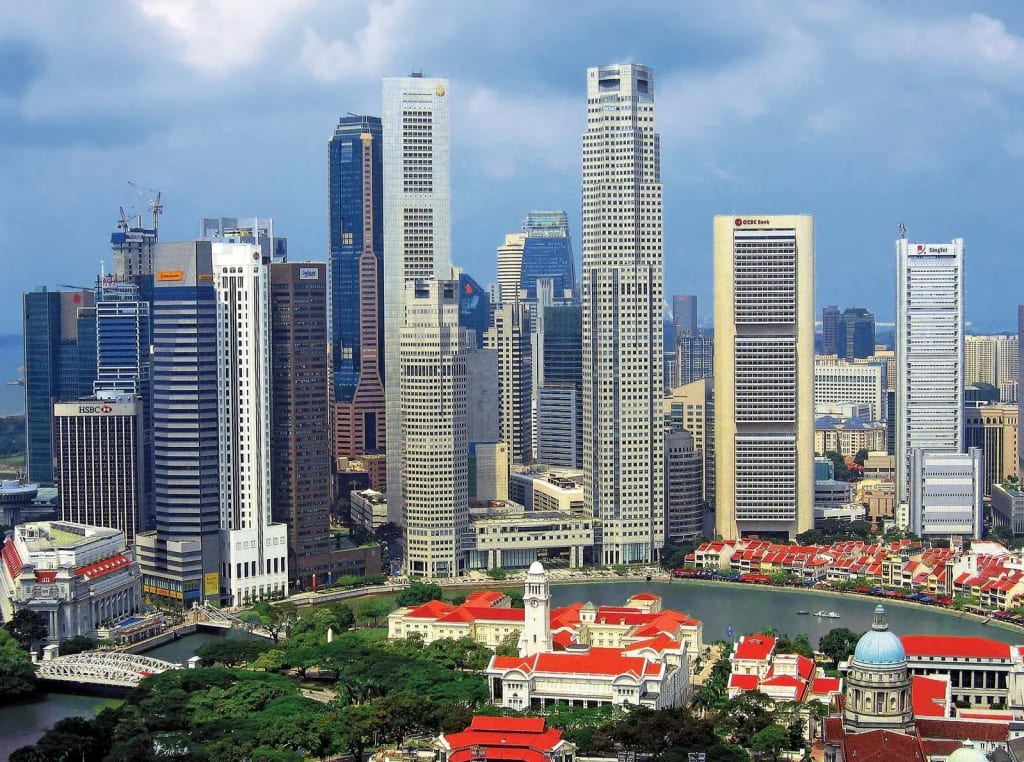
And yet, the country endured. More than that, it transformed itself. Today, Singapore is one of the world’s richest countries by GDP per capita, with the IMF’s 2026 data placing it among the global leaders. Malaysia, by contrast, is a far larger and more diversified economy in absolute terms, but on a per-person income basis it remains far below Singapore. That means the viral claim that “Singapore is the world’s 8th richest while Malaysia is 77th” may reflect one particular ranking method, but it is too blunt and potentially misleading without context. The stronger, more accurate statement is this: Singapore became dramatically wealthier per person than Malaysia after separation, despite starting with fewer natural advantages.
That is what makes Singapore’s story so compelling. It is not a fairy tale about instant success. It is a harder story about leadership, institutions, trade, discipline, survival, and the ability of a small state to build strength without relying on natural wealth.
The Day Singapore Was Pushed Into Independence
The common emotional framing is broadly true: Singapore did not leave Malaysia in a mood of triumph. The separation happened because relations between the governments in Kuala Lumpur and Singapore had broken down over politics, economics, and communal tensions. Singapore’s National Library Board states plainly that the split was the result of deep political and economic differences between the ruling parties on both sides.
That is why Lee Kuan Yew’s tears mattered so much. They were not just personal emotion. They reflected the fact that the separation was not the ideal outcome he had originally fought for. He had believed in a larger merger project with Malaya, Sabah, and Sarawak, and when that collapsed, Singapore was suddenly forced to stand alone in conditions that looked precarious at best. Time later described the moment as one where Singapore was effectively cast off from Malaysia, and initially the event brought more anguish than celebration.
This is an important correction to the simplified inspirational version of the story. Singapore’s rise did not begin from a clean slate chosen freely and confidently. It began from strategic shock.
The Harsh Reality in 1965
To understand why the transformation feels so extraordinary, you have to remember what Singapore actually looked like then.
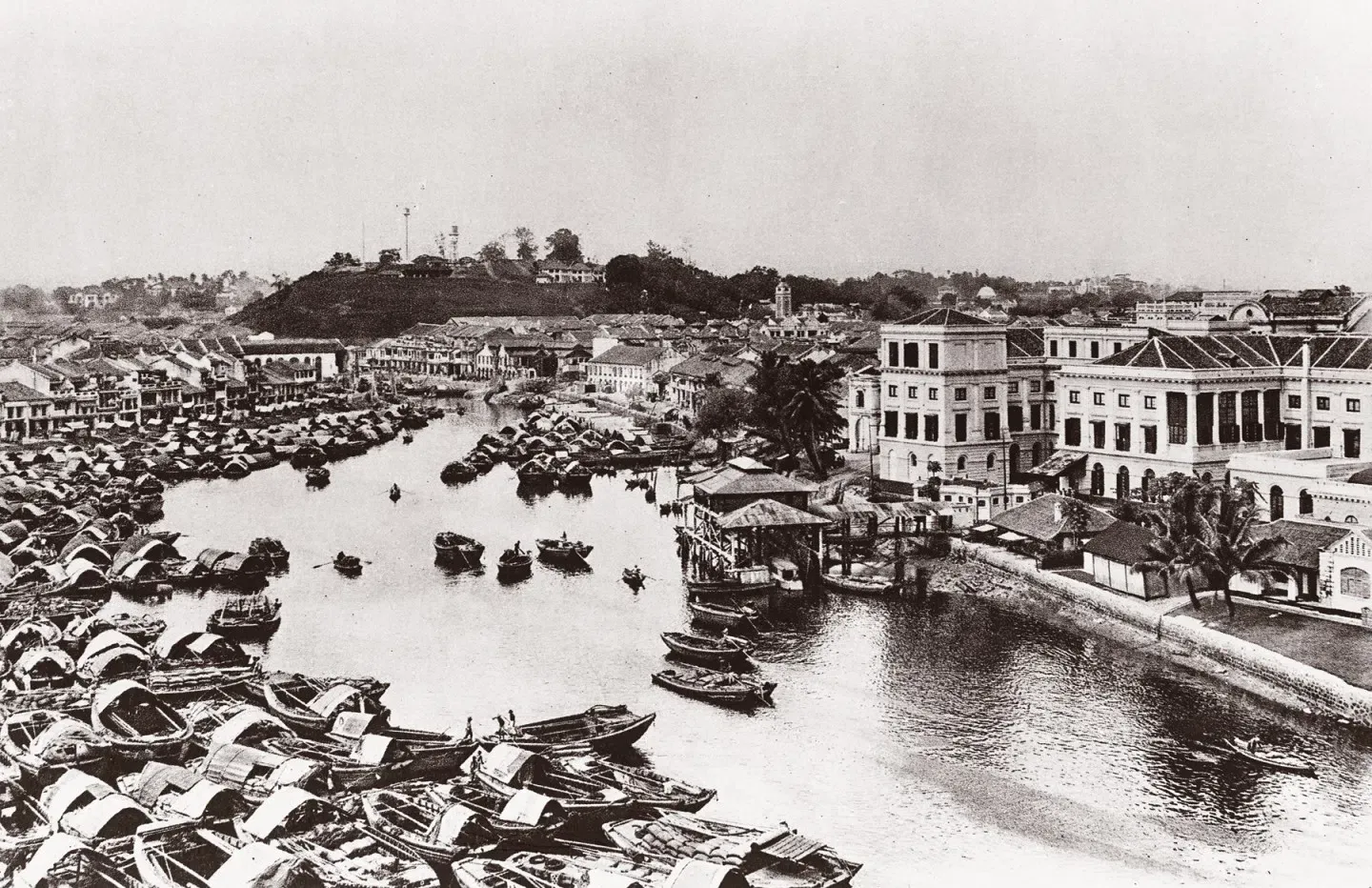
It was not a polished financial center. It was a vulnerable post-colonial city-state with major structural weaknesses. Official and development-oriented sources repeatedly stress that Singapore had no natural resources and faced an uncertain future immediately after separation. The Ministry of Foreign Affairs still highlights how critical the Malaysia-Singapore water agreements were to survival, while international analyses of Singapore’s development note that the island’s starting conditions included poverty, unemployment, and deep uncertainty.
This matters because it eliminates the lazy explanation that Singapore merely got rich by sitting on oil, gas, or mineral wealth. It did not. It had to build prosperity through different means:
- trade
- port strategy
- industrial policy
- housing
- education
- anti-corruption enforcement
- international investment attraction
- long-term state capacity
That is a completely different development model from resource extraction.
What Lee Kuan Yew Actually Did Right
It is easy to reduce Singapore’s rise to one emotional sentence: “Lee Kuan Yew was determined.” That is partly true, but it is far too vague.
Plenty of leaders are determined. What matters is where determination is applied.
Lee Kuan Yew and his government were not simply passionate. They were institution-builders. They focused on creating a state that was more competent, cleaner, and more disciplined than many outsiders thought possible. Singapore’s anti-corruption agency, CPIB, states that the political will to eradicate corruption was established under Lee Kuan Yew after the PAP came to power in 1959, with the explicit aim of building an incorruptible and meritocratic government.
That point is crucial. Singapore did not rise on willpower alone. It rose on governance.
1. He Treated Corruption as a Development Issue
Many countries talk about corruption as a moral problem. Lee’s Singapore treated it as an existential economic problem. If investors could not trust the system, if state officials could be bought, and if public institutions leaked credibility, then a small country with no natural resources would remain weak.
Singapore’s anti-corruption framework was therefore not a side reform. It was part of the country’s survival model. CPIB’s own materials make clear that the government moved decisively to stamp out corruption and build a clean state.
2. He Built Around Meritocracy and Administrative Discipline
Singapore’s model also relied heavily on the idea that competence had to be rewarded, especially in the civil service and state machinery. That did not make the system perfect, and critics have long debated the costs and tradeoffs of Singapore’s political model. But it did help create something rare in the post-colonial world: a bureaucracy that outsiders often viewed as highly effective and comparatively clean.
3. He Chose Openness, Not Retreat
Instead of responding to separation by becoming defensive and inward-looking, Singapore leaned into trade, global connectivity, shipping, manufacturing, and later finance and advanced services. Time’s retrospective on Singapore’s rise emphasizes its open economy and success in attracting multinational companies. That was not inevitable. It was a strategic decision.
4. He Understood That Human Capital Would Matter More Than Minerals
Without natural resources, Singapore had to invest in people. That meant schools, skills, workforce development, and public order. World Bank-linked material on Singapore’s development points to the country’s emphasis on workforce development and long-term capability-building as part of its economic rise.
Why Singapore Succeeded Without Natural Wealth
The most important truth in Singapore’s story is this: resource scarcity forced strategic clarity.
Countries with oil or gas can sometimes delay reform because natural wealth covers political and institutional weakness for a while. Singapore did not have that luxury. It had to build competitiveness deliberately.
That meant:
- making itself useful to the world
- becoming efficient enough to attract capital
- remaining stable enough to win trust
- improving infrastructure fast
- keeping the state credible
In many ways, being poor in natural resources forced Singapore to become rich in something else: reliability.
That is one of the most underappreciated parts of the story. Investors, companies, and trading partners do not only seek cheap labor or raw materials. They also seek predictability, efficiency, security, legal clarity, and low corruption. Singapore made itself extremely strong in those areas.
The Difference Between Singapore and the Viral Myth
The viral version of this story is emotionally powerful, but it usually oversimplifies in three ways.
Myth 1: Singapore Became Rich Through Sheer Willpower Alone
No. Leadership mattered enormously, but so did policy design, global trade flows, institutions, port geography, Cold War realities, industrial strategy, and disciplined administration.
Myth 2: Malaysia “Failed” While Singapore “Won”
That framing is too crude. Malaysia remains a significant economy with a much larger landmass, population, and resource base. The more accurate comparison is that Singapore massively outperformed on per-capita wealth and governance efficiency, especially given its lack of natural resources.
Myth 3: This Was a Simple Good-Leader Story
It was not simple. Lee Kuan Yew remains admired by many for state-building, anti-corruption efforts, and national transformation, but he is also criticized by others for the authoritarian side of Singapore’s political culture. A serious article has to acknowledge both the achievement and the debate. Time’s obituary and retrospectives do exactly that, describing both the country’s extraordinary success and the criticism of its paternalistic, tightly controlled political order.
What the Tears Really Meant
That televised breakdown is still one of the most powerful political images in modern Asia because it collapses two truths into one scene.
Truth one: Singapore looked fragile.
Truth two: its leadership still believed survival was possible.
That emotional combination matters. Many leaders project certainty because uncertainty makes them look weak. Lee Kuan Yew’s tears did the opposite. They showed that he fully understood the danger. That may be one reason the moment still resonates so strongly: it was not fake triumph. It was visible fear followed by resolve.
And in hindsight, that resolve proved historically consequential.
Why This Story Still Matters Today
Singapore’s rise still matters because it challenges a very common excuse in national development discourse: “We cannot succeed because we lack resources.”
Singapore does not prove that every country can copy its model exactly. Geography, scale, political culture, regional context, and historical timing all matter. But it does destroy the idea that natural resource weakness automatically means long-term failure.
It also teaches a harder lesson about leadership.
Real leadership is not merely motivational speech. It is institution-building under pressure. It is choosing long-term state capacity over short-term applause. It is understanding that a nation cannot be strong if its public system is corrupt, unreliable, or directionless.
That is why Singapore’s story continues to attract readers worldwide. It is not just about wealth. It is about what disciplined governance can do when excuses run out.
The Real Lesson
The viral lesson says: “With the right leadership and determination, you can build an empire from zero.”
That is catchy, but the better lesson is more grounded:
A country can overcome severe structural weakness if it combines honest administration, strategic openness, institutional discipline, anti-corruption enforcement, and long-term investment in people.
That is less romantic.
It is also more useful.
Because nations are not transformed by inspiration alone. They are transformed by repeatable systems.
And that is what Singapore built.
Final Verdict
Singapore’s 1965 separation from Malaysia was not a glorious, uncomplicated independence story. It was a moment of shock, uncertainty, and fear. Lee Kuan Yew’s tears were real, and so were the country’s vulnerabilities: no major natural resources, dependence on imported water, and a deeply uncertain future.
What followed, however, was one of the most remarkable state-building stories of the modern era. Singapore did not become wealthy because of oil, gas, or easy luck. It became wealthy because it built a clean and credible state, embraced openness, invested in human capital, and treated governance as a survival tool rather than a slogan. Today it stands among the world’s richest countries by GDP per capita, a result that would have looked implausible to many observers in 1965.
So yes, the emotional takeaway survives the fact-check:
Circumstances do matter.
But leadership matters too.
And when leadership is disciplined enough to turn fear into institutions, even a small island with almost nothing can change its destiny.
FAQ
1. Was Singapore forced out of Malaysia in 1965?
Singapore became independent on August 9, 1965, after separation from Malaysia caused by deep political and economic differences between the two sides.
2. Why was Lee Kuan Yew crying on television?
Lee Kuan Yew became emotional during a televised press conference announcing separation because the split was painful and the future looked highly uncertain for the new country.
3. Did Singapore really have no natural resources?
Yes, Singapore is widely described by official and development sources as a small island state with no significant natural resources, which made its post-1965 prospects especially uncertain.
4. Was Singapore dependent on Malaysia for water?
Yes. Water arrangements with Johor were important enough to be guaranteed in the 1965 Separation Agreement between Malaysia and Singapore.
5. Is Singapore really one of the richest countries in the world today?
Yes. By GDP per capita, IMF 2026 data places Singapore among the world’s richest economies.
6. Is it accurate to say Malaysia is the 77th richest country?
That exact ranking depends on the metric and source, so it is safer to say this: Singapore is far richer than Malaysia on a per-capita basis, even though Malaysia remains a much larger economy in overall size and population.
7. What role did anti-corruption play in Singapore’s success?
A major one. Singapore’s anti-corruption agency says the political will to eradicate corruption was firmly established under Lee Kuan Yew, with the goal of building an incorruptible and meritocratic government.
8. Did Singapore succeed only because of Lee Kuan Yew’s personality?
No. His leadership was crucial, but Singapore’s success also depended on institutions, trade strategy, workforce development, anti-corruption enforcement, and long-term governance choices.
9. Is Singapore’s development model easy for other countries to copy?
Not exactly. Singapore’s size, location, history, and political structure are highly specific. But its emphasis on clean governance, strategic openness, and human capital remains widely studied.
10. What is the biggest lesson from Singapore’s rise?
The strongest lesson is that resource poverty does not automatically mean national failure if a country builds honest institutions, invests in people, and stays strategically disciplined over time.