Sam Neill’s Cancer-Free Update Is Wonderful News—But the Real Story Is Even More Remarkable
Sam Neill has given fans the kind of update that feels almost too beautiful for a news cycle usually crowded with heartbreak: he is cancer-free.
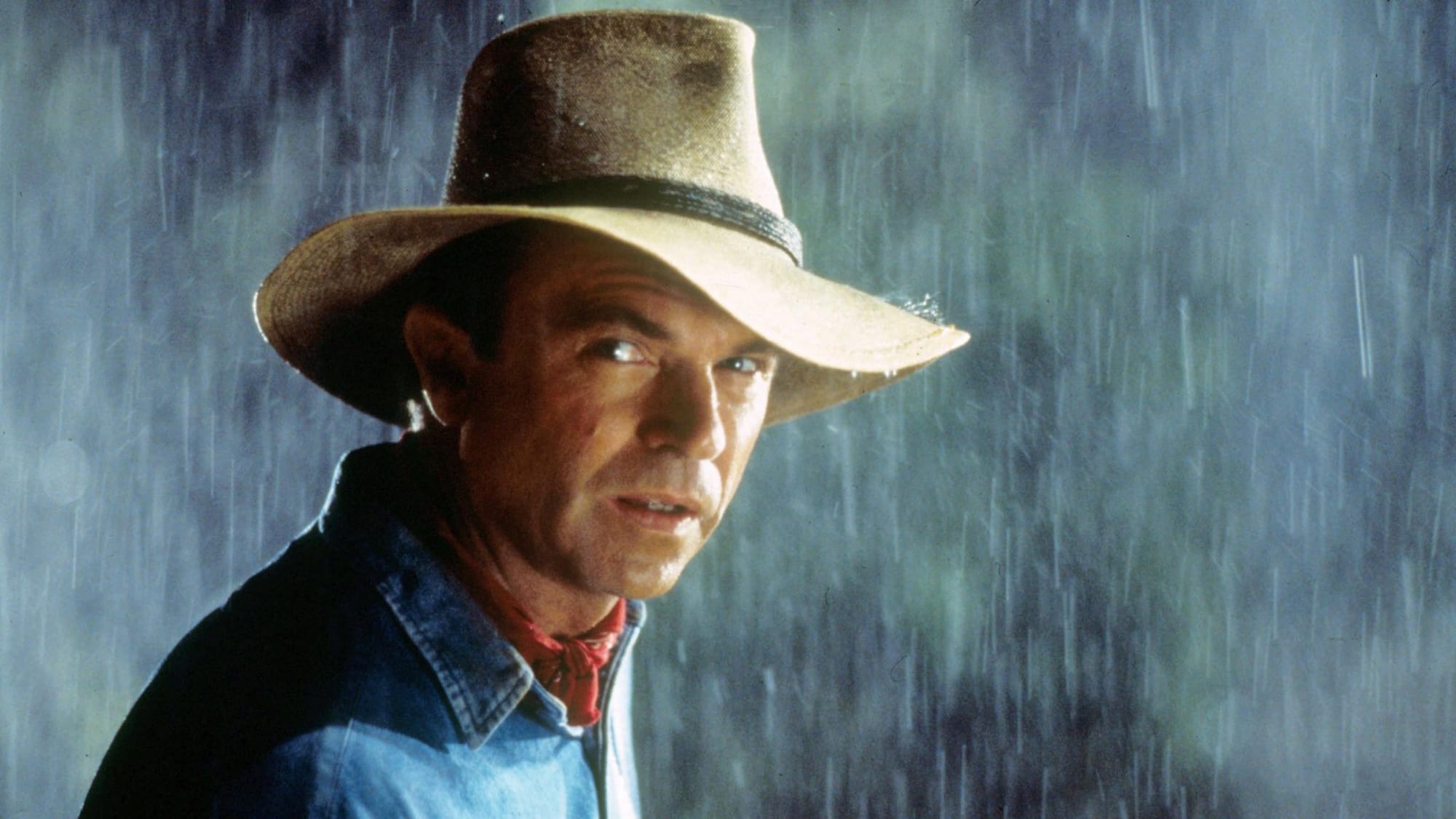
For millions of people around the world, Sam Neill is more than a familiar actor. He is Dr. Alan Grant from Jurassic Park, the calm, intelligent, slightly reluctant hero who looked at dinosaurs with awe and gave cinema one of its most enduring faces of wonder. He is also the elegant, dryly funny, deeply human performer behind decades of unforgettable work in The Piano, Dead Calm, Peaky Blinders, Hunt for the Wilderpeople, The Tudors, Possession, Sweet Country, and many more.
So when Neill shared that he had been battling a rare blood cancer, the news landed with a strange emotional force. It felt personal even to people who had never met him. This was not just another celebrity health headline. This was Sam Neill — warm, witty, graceful, beloved — facing something brutal.
Now, the latest update is extraordinary. Neill has said that recent scans show no cancer in his body after undergoing CAR T-cell therapy, a cutting-edge treatment he turned to after chemotherapy stopped working. He had been diagnosed with angioimmunoblastic T-cell lymphoma, a rare type of non-Hodgkin lymphoma, and had been living with the disease for years.
But the real story is even bigger than one man’s recovery.
It is a story about scientific courage. About what happens when medicine reaches the point where a patient’s own immune cells can be re-engineered to fight disease. About access, inequality, hope, survival, and the strange emotional strength of a man who never wanted his illness to define him.
Sam Neill’s cancer-free update is wonderful news.
But what makes it remarkable is how he got there — and what he wants the world to understand now.
A Diagnosis That Changed Everything
Sam Neill first publicly revealed his cancer diagnosis in his 2023 memoir, Did I Ever Tell You This? He had been diagnosed in 2022 with stage-three angioimmunoblastic T-cell lymphoma, a rare blood cancer. According to recent reports, he noticed symptoms while promoting Jurassic World Dominion, including lumps on his neck, and later began treatment.
For anyone, a cancer diagnosis is terrifying. For an actor whose life is built around movement, travel, sets, interviews, scripts, timing, memory, energy, and performance, it can also feel like an interruption of identity. Neill was not only confronting illness. He was confronting the possibility that the life he loved — acting, storytelling, working, laughing with friends, walking through vineyards, returning to sets — could suddenly be pulled away.
He has spoken candidly about chemotherapy, describing it as miserable but initially life-sustaining. The treatment gave him time. It kept him alive. But eventually, the chemotherapy stopped working, leaving him in an alarming situation. In one recent interview, he said he felt “at a loss” and that it looked like he was “on the way out.”
That is the sentence that makes the update hit so hard.
This was not a simple story of treatment, recovery, and a neat happy ending. There was a point where the path looked dark. Conventional treatment had failed. The disease was still there. The options were narrowing.
And then came CAR T-cell therapy.
What Is CAR T-Cell Therapy?
CAR T-cell therapy is one of the most fascinating developments in modern cancer treatment. In simple terms, it uses a patient’s own immune cells — specifically T cells — and modifies them so they can better recognize and attack cancer cells.
The process is complex, but the idea is astonishing. Doctors collect immune cells from the patient, genetically alter or “train” them in a lab to target cancer, multiply them, and then return them to the body. Once inside, these modified cells can identify and attack cancer cells more effectively. Reports on Neill’s recovery describe his treatment as involving genetically modified blood cells designed to target the cancer after chemotherapy stopped working.
For readers outside medicine, the easiest way to understand CAR T-cell therapy is this: it is not simply attacking cancer from the outside. It is helping the body’s own defense system become more precise, more aggressive, and more capable.
That is why Sam Neill’s case feels so emotionally powerful. His recovery was not only about endurance. It was about a new scientific frontier stepping in when older tools were failing.
He has described the result as extraordinary, saying that a recent scan showed no cancer in his body.
There is something deeply moving about that phrase: no cancer in my body.
After years of uncertainty, monthly treatments, fear, fatigue, and the shadow of mortality, those words carry more than medical meaning. They carry oxygen.
Why This Update Matters Beyond Celebrity News
Celebrity health updates often move quickly through the internet. A headline appears, fans react, social media sends love, and then the news cycle moves on. But Sam Neill’s story deserves a slower reading.
The emotional headline is that he is cancer-free.
The deeper headline is that an advanced therapy gave him a chance when chemotherapy stopped working.
The even deeper headline is that not everyone who needs such treatment can access it.
According to The Guardian, Neill’s recovery followed participation in an Australian clinical trial involving CAR T-cell therapy. The same report noted that the treatment is currently available in Australia’s public system only for select conditions and can cost more than A$600,000 privately. Neill has since been campaigning for broader access to CAR T-cell and similar therapies for blood cancer patients, partnering with the Snowdome Foundation.
That changes the shape of the story.
This is not just “famous actor gets better.” This is “famous actor survives because of a breakthrough treatment and now wants more people to have that chance.”
That is why the real story is remarkable. Neill’s update shines a light on the future of cancer care, but also on the painful question of who gets to benefit from that future.
Medical innovation is miraculous only if patients can reach it.
Sam Neill’s Remarkable Attitude Toward Mortality
One of the reasons Sam Neill’s cancer journey has resonated so deeply is the way he talks about life and death. He has never sounded like someone trying to turn illness into a dramatic performance. He has sounded honest, dry, thoughtful, occasionally funny, and deeply grateful.
That is very Sam Neill.
He has previously said that he was not afraid of death but would be “annoyed” by it because he still had things to do. Reports around his latest update describe him as eager to return to work, with Neill saying it was time he did another movie.
That attitude is quietly heroic. Not loud. Not sentimental. Not polished for inspiration posters. Just human.
Cancer often forces people into public narratives they did not choose. They become “fighters,” “survivors,” “warriors,” or “victims.” Some people embrace those terms. Others do not. Neill has seemed more interested in living than in being defined by disease.
That distinction matters.
He did not want his memoir to be remembered only as a cancer book. He wanted it to be a life book. A story of acting, friends, memory, landscapes, strange luck, work, humor, wine, family, and the absurd beauty of being alive.
His cancer-free update feels powerful because it returns him to that larger story.
The Actor Behind the Health Headline
Sam Neill’s career has always been built on subtle authority. He does not need to dominate a scene to hold it. He has a face that can suggest intelligence, restraint, danger, warmth, melancholy, or dry amusement with the smallest shift.
That quiet magnetism made him perfect for Jurassic Park. Dr. Alan Grant was not a superhero. He was a scientist who preferred fossils to children, only to find himself protecting children from living dinosaurs. Neill played him with skepticism, wonder, irritation, courage, and humanity.
But his career is far bigger than dinosaurs.
In The Piano, he gave emotional weight to a story of desire, repression, and colonial unease. In Dead Calm, he helped anchor one of the most tense psychological thrillers of the late 1980s. In Possession, he entered one of cinema’s most disturbing and surreal explorations of marriage, madness, and obsession. In Hunt for the Wilderpeople, he brought gruff tenderness to a film that became beloved for its heart and humor.
Recent coverage of Neill’s career has also noted his work across both major Hollywood films and distinctive director-driven projects, along with upcoming roles including Godzilla x Kong: Supernova and The Twelve: Cape Rock Killer.
That is why fans care so much. Sam Neill is not simply a celebrity. He is part of people’s cinematic memory.
His recovery feels like a beloved storyteller getting another chapter.
The Science Story Hidden Inside the Human Story
There is an almost cinematic symmetry in Sam Neill’s update. The actor who helped make audiences believe in resurrected dinosaurs has now become associated with another kind of scientific wonder — not fiction, but medicine.
CAR T-cell therapy is not fantasy. It is not a miracle in the supernatural sense. It is a product of decades of research, clinical trials, laboratory work, patient risk, medical expertise, and technological progress. That makes it more remarkable, not less.
The word “miracle” is often used casually in health stories, but in cases like this, the better word may be breakthrough. A miracle suggests something beyond human understanding. A breakthrough reminds us that people — scientists, doctors, nurses, researchers, trial participants, donors, advocates — worked to make the impossible more possible.
Neill himself has credited scientists and clinicians involved in his recovery and has called for broader access to the treatment.
That is the part of the story that deserves attention. Hope did not arrive as a vague feeling. It arrived through science.
And science, when it works at this level, can feel almost poetic.
Why Access Is the Next Battle
The most sobering part of Sam Neill’s story is that the treatment that helped him is not universally available. Advanced therapies often arrive before healthcare systems can provide them widely. They may be expensive, limited to certain diagnoses, restricted by trial eligibility, or available only in specialized centers.
The Guardian reported that CAR T-cell therapy can cost more than A$600,000 privately in Australia and is currently publicly available only for select conditions. Neill is now advocating for expanded access, particularly for patients with blood cancers.
This is where his celebrity matters.
A famous actor speaking about access can draw attention to a problem many patients face quietly. Medical inequality is not always dramatic in the way films portray suffering. Sometimes it is a form, a waiting list, an eligibility rule, a funding gap, a postcode, an insurance limit, a treatment that exists but remains unreachable.
Neill’s recovery is wonderful. But if the treatment remains too difficult or expensive for many patients to access, the story becomes bittersweet.
A breakthrough should not be a privilege only a few can reach.
Why His Update Feels So Emotional for Fans
Some celebrity health news feels distant. Sam Neill’s does not.
Part of that is because he has aged publicly with grace. He has never seemed manufactured. He has always projected a kind of intelligent warmth — witty, self-aware, slightly rumpled, worldly but not arrogant. Fans see him not only as a star but as a person.
Another reason is that Jurassic Park lives in childhood memory for so many people. For many viewers, Dr. Alan Grant was part of their first experience of cinematic awe. The first time they saw the brachiosaurus. The first time they heard the music swell. The first time dinosaurs felt real.
So when Sam Neill is unwell, it touches something nostalgic. When he gets good news, it feels like a piece of childhood wonder survived too.
But there is also something deeper. Neill’s update speaks to a universal fear: the moment when medicine stops working. Many families know that terror. Many patients understand the emotional cliff edge of hearing that the current treatment is no longer enough.
His recovery gives shape to another possibility.
Not a guarantee. Not a promise. But possibility.
And sometimes possibility is what people need most.
Cancer-Free Does Not Erase the Journey
It is important to say this carefully: being cancer-free is wonderful news, but it does not mean the experience disappears.
Cancer treatment leaves marks. Physical marks. Emotional marks. Time marks. Relationship marks. It changes how people think about the future, about ordinary mornings, about plans, about work, about the body’s reliability.
Neill has spoken in the past about continuing to live with treatment and the strange emotional reality of remission. Earlier reports had noted that he was in remission while still receiving medication, and that he understood the uncertainty of his situation.
That makes this new update even more meaningful. It does not come from someone who had a brief scare. It comes after years of living with the disease, treatment, uncertainty, and the possibility of relapse.
Cancer-free is not just a medical phrase. It is a psychological moment.
It is the body giving back a future.
The Quiet Power of Older Actors Still Wanting to Work
One of the loveliest parts of Sam Neill’s update is his desire to return to acting. At 78, he could easily step back, retreat into privacy, spend time on his vineyard, and let the world remember him through his already impressive body of work.
Instead, he still wants to work.
That matters because it challenges one of culture’s lazy assumptions about aging. Older artists are often treated as if their major chapters are behind them. But for performers like Sam Neill, creativity does not simply expire. It deepens. It becomes stranger, wiser, looser, more textured.
Neill’s desire to do another movie is not just professional ambition. It is life force.
Work, for artists, is not always merely employment. It is identity. It is connection. It is movement. It is a reason to keep learning lines, meeting people, waking early, entering fictional worlds, and making something that outlives the day.
After cancer, that desire can feel even more powerful.
The question becomes not “How long do I have?” but “What can I still make?”
The Beauty of His Survival Story
There is a particular kind of beauty in survival stories that do not pretend suffering is noble. Sam Neill’s story is not beautiful because cancer is beautiful. Cancer is not beautiful. Treatment is not romantic. Fear is not glamorous.
The beauty lies elsewhere.
It lies in honesty. In science. In humor under pressure. In friends. In doctors. In the body responding. In a scan with good news. In an actor saying he is excited. In a man who thought he might be “on the way out” now looking toward the next role.
It lies in the reminder that life can turn.
Not always. Not for everyone. That must be said with respect. Many cancer stories end in grief. Many families do not get the headline they prayed for. That is why Neill’s update should be received with gratitude rather than easy triumphalism.
But when good news comes, it deserves to be celebrated.
And this is very good news.
What Sam Neill’s Story Teaches Us About Hope
Hope is often misunderstood. It is not blind positivity. It is not pretending everything will be fine. It is not forcing people to smile through pain.
Real hope is tougher than that.
Hope is continuing when the first treatment fails. Hope is entering a clinical trial. Hope is trusting science while knowing there are no guarantees. Hope is letting doctors try something new. Hope is still wanting to act, write, laugh, travel, and live.
Sam Neill’s story shows hope as an active thing. Not sentimental. Not passive. Active.
He did not recover because of optimism alone. He recovered because of treatment, expertise, research, access, and the extraordinary possibilities of modern immunotherapy. But his attitude — his refusal to let cancer become the entire story — gives the medical facts emotional weight.
Hope did not cure him by itself.
But hope helped him stay available to the future.
The Real Story Is Larger Than Sam Neill
The real story is Sam Neill, yes.
But it is also the unnamed patients hoping for access to the same kind of treatment. It is the clinicians who administer complex therapies. It is the researchers who spend years building tools that may one day save lives. It is the public health question of whether advanced medicine can become available beyond those with money, proximity, or trial access.
It is also the story of how cancer treatment is changing.
For decades, cancer has often been associated in public imagination with surgery, chemotherapy, and radiation. Those remain hugely important. But therapies like CAR T-cell treatment show how much the field is expanding. The immune system itself is becoming part of the treatment story in increasingly sophisticated ways.
Neill’s update gives mainstream audiences a doorway into that conversation.
A celebrity headline becomes a lesson in medical progress.
Why This Is One of the Most Uplifting Celebrity Stories of 2026
In a culture that often turns celebrity news into scandal, spectacle, gossip, or outrage, Sam Neill’s cancer-free update feels refreshingly human. It is not about drama. It is about relief.
A beloved actor is alive. A treatment worked. A scan was clear. A man who feared time was running out now wants to make another film. That is simple, but it is powerful.
It also arrives with purpose. Neill is not only celebrating privately. He is using the moment to advocate for broader access to CAR T-cell therapy and similar treatments.
That turns good news into public meaning.
The best celebrity stories are not the ones that make us envy fame. They are the ones that remind us of shared humanity. Illness, fear, gratitude, aging, science, family, work, and the desire to live — these are not celebrity experiences. They are human experiences.
Sam Neill just happens to be someone millions of people already love.
Final Verdict: A Clear Scan, a Second Chance, and a Bigger Mission
Sam Neill’s cancer-free update is wonderful news. There is no need to make that complicated. Fans are right to celebrate. After years of treatment for a rare blood cancer, after chemotherapy stopped working, and after a frightening period when things looked bleak, Neill has said that scans show no cancer in his body.
But the real story is even more remarkable because it points beyond one man.
It points to the promise of CAR T-cell therapy. It points to the importance of clinical trials. It points to the scientists and doctors changing what may be possible for blood cancer patients. It points to the urgent need for broader access so that life-saving innovation does not remain out of reach for too many people.
And it points, beautifully, back to Sam Neill himself: an actor of elegance, wit, intelligence, and warmth who has faced mortality without letting it steal his appetite for life.
He is cancer-free.
He wants to work again.
He is advocating for others.
That is not just a health update.
That is a second act.
FAQ: Sam Neill’s Cancer-Free Update
Is Sam Neill cancer-free now?
Yes. Sam Neill has said that a recent scan showed no cancer in his body after treatment with CAR T-cell therapy. Reports describe him as cancer-free following years of treatment for a rare blood cancer.
What type of cancer did Sam Neill have?
Sam Neill was diagnosed with angioimmunoblastic T-cell lymphoma, a rare type of non-Hodgkin lymphoma. Reports have described it as stage-three blood cancer.
When was Sam Neill diagnosed with cancer?
Neill was diagnosed in 2022 and later revealed the diagnosis publicly in his 2023 memoir Did I Ever Tell You This?.
What treatment helped Sam Neill become cancer-free?
After chemotherapy stopped working, Neill underwent CAR T-cell therapy, an advanced immunotherapy that modifies a patient’s immune cells to help them target cancer.
What is CAR T-cell therapy?
CAR T-cell therapy is a treatment in which a patient’s T cells are collected, modified in a lab to recognize cancer cells, multiplied, and returned to the body so they can attack the disease more effectively.
Why is Sam Neill advocating for CAR T-cell access?
Neill is calling for broader access because CAR T-cell and similar therapies can be extremely expensive and are not publicly available for all conditions. The Guardian reported that private treatment can cost more than A$600,000 in Australia.
Did chemotherapy work for Sam Neill?
Chemotherapy initially helped keep him alive, but Neill later said it stopped working, leaving him in a serious situation before he turned to CAR T-cell therapy.
Is Sam Neill returning to acting?
Neill has expressed interest in returning to work, reportedly saying it is time he did another movie. Recent coverage has also connected him with upcoming projects.
Why did Sam Neill’s cancer update affect fans so strongly?
Fans have a deep emotional connection to Neill through films like Jurassic Park, The Piano, Dead Calm, and Hunt for the Wilderpeople. His recovery feels personal because he has been part of global cinema memory for decades.
What is the biggest lesson from Sam Neill’s recovery story?
The biggest lesson is that medical progress can change lives, but access matters. Neill’s recovery highlights both the promise of advanced cancer treatment and the need to make such therapies available to more patients.