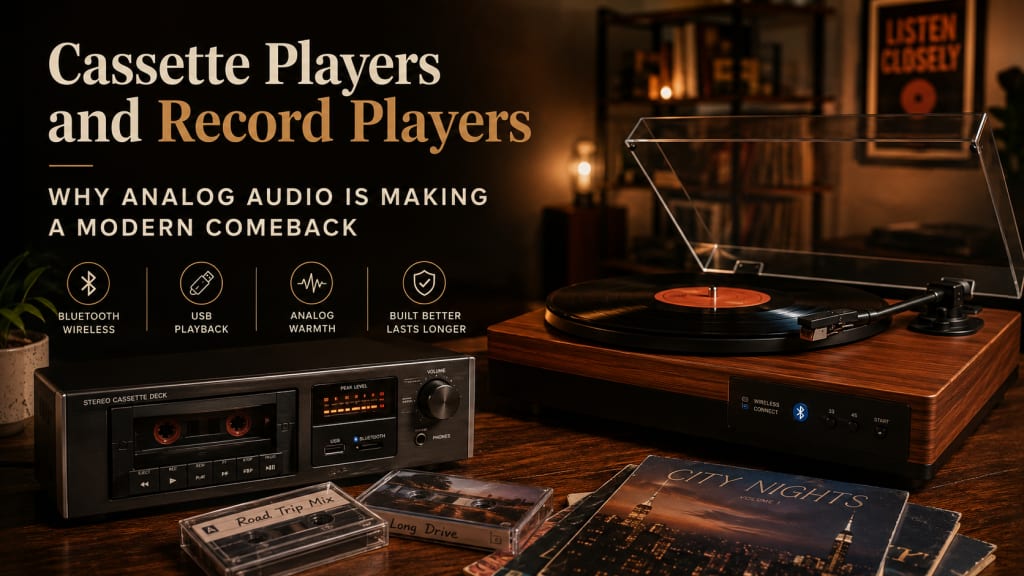
Cassette Players and Record Players: Why Analog Audio Is Making a Modern Comeback
For years, music seemed to be moving in only one direction: digital, instant, invisible, and everywhere. Streaming platforms placed millions of songs inside a phone. Playlists replaced albums. Bluetooth speakers replaced stereo systems. Music became easier to access than ever before.
And yet, something unexpected happened.
People started buying records again.
Then cassettes came back too.
Not at the same scale as streaming, of course. Streaming still dominates how most people listen to music. But the return of cassette players and record players is no longer just a small nostalgic hobby. It has become a visible cultural shift. Vinyl records are now a serious physical music format again, and cassette tapes, while still niche, are attracting collectors, indie artists, Gen Z listeners, retro-tech fans, and people who simply want music to feel tangible again.
This is the analog revival.
It is not only about old technology. It is about the emotional experience of music. It is about touching an album, reading liner notes, flipping a record, pressing play on a cassette, hearing mechanical movement, and slowing down in a world where everything is designed to be skipped.
Modern cassette players and record players are not just copies of the past. Many now include Bluetooth, USB-C charging, rechargeable batteries, built-in speakers, headphone outputs, USB recording, wireless speaker support, automatic tonearms, app integration, and stylish compact designs. The result is a new category of retro audio devices that combine old-school charm with modern convenience.
The comeback is not driven by pure sound quality alone. Vinyl can sound warm and rich, but it can also crackle. Cassettes can sound charming, but they are not technically superior to high-resolution digital audio. The real appeal is deeper: analog audio feels personal.
It turns listening into a ritual.
What Is the Analog Audio Revival?
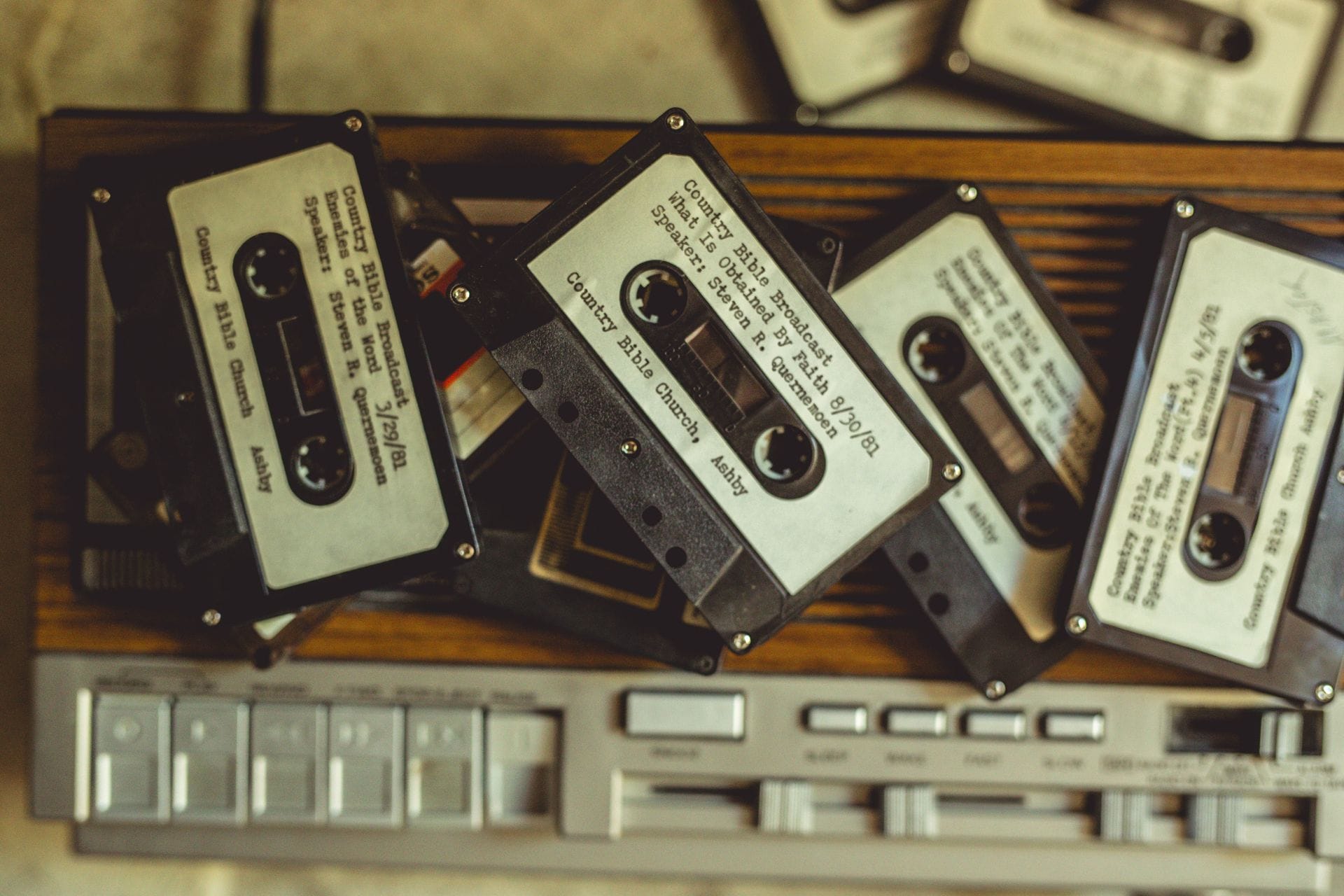
The analog audio revival refers to the renewed interest in older physical music formats and playback devices, especially vinyl records, record players, cassette tapes, and cassette players.
This revival includes several overlapping trends:
People buying vinyl albums again
Artists releasing albums on cassette
Collectors restoring vintage turntables
New brands making modern cassette players
Bluetooth turntables becoming common
Portable record players gaining popularity
Retro boomboxes returning with modern features
Physical media becoming fashionable again
Younger listeners discovering non-digital music formats
Older listeners reconnecting with childhood music memories
The analog revival is not a rejection of digital music. Most vinyl and cassette buyers still use Spotify, Apple Music, YouTube Music, or other streaming platforms. Instead, analog listening offers something streaming does not: ownership, presence, texture, and emotional attachment.
A streamed song is convenient.
A record feels like an object.
A cassette feels like a memory.
That difference matters.
Why Record Players Came Back First
Vinyl records led the analog comeback because they offer the strongest combination of sound, design, collectibility, and cultural prestige.
A vinyl record is large, visual, and tactile. Album art looks beautiful at 12 inches. Special editions, colored vinyl, gatefold sleeves, lyric inserts, posters, and limited pressings make records feel collectible. Fans can display them on shelves, photograph them for social media, and build a personal music archive.
Record players also have a strong visual appeal. A spinning record looks alive. The tonearm lowers. The needle touches the groove. The music begins with a tiny physical action. That moment feels different from tapping a screen.
Vinyl’s revival has now become measurable. In the United States, vinyl has led physical music formats for several years, and 2025 continued that pattern, with vinyl selling tens of millions of units and generating more physical-format revenue than CDs.
This growth shows that vinyl is no longer just a retro novelty. It has become a modern lifestyle product.
Why Cassettes Are Returning Too
Cassettes are having a smaller but fascinating comeback.
Unlike vinyl, cassettes are not returning because they offer superior sound. Cassette sound can be warm, compressed, hissy, imperfect, and fragile. For some listeners, that is exactly the charm.
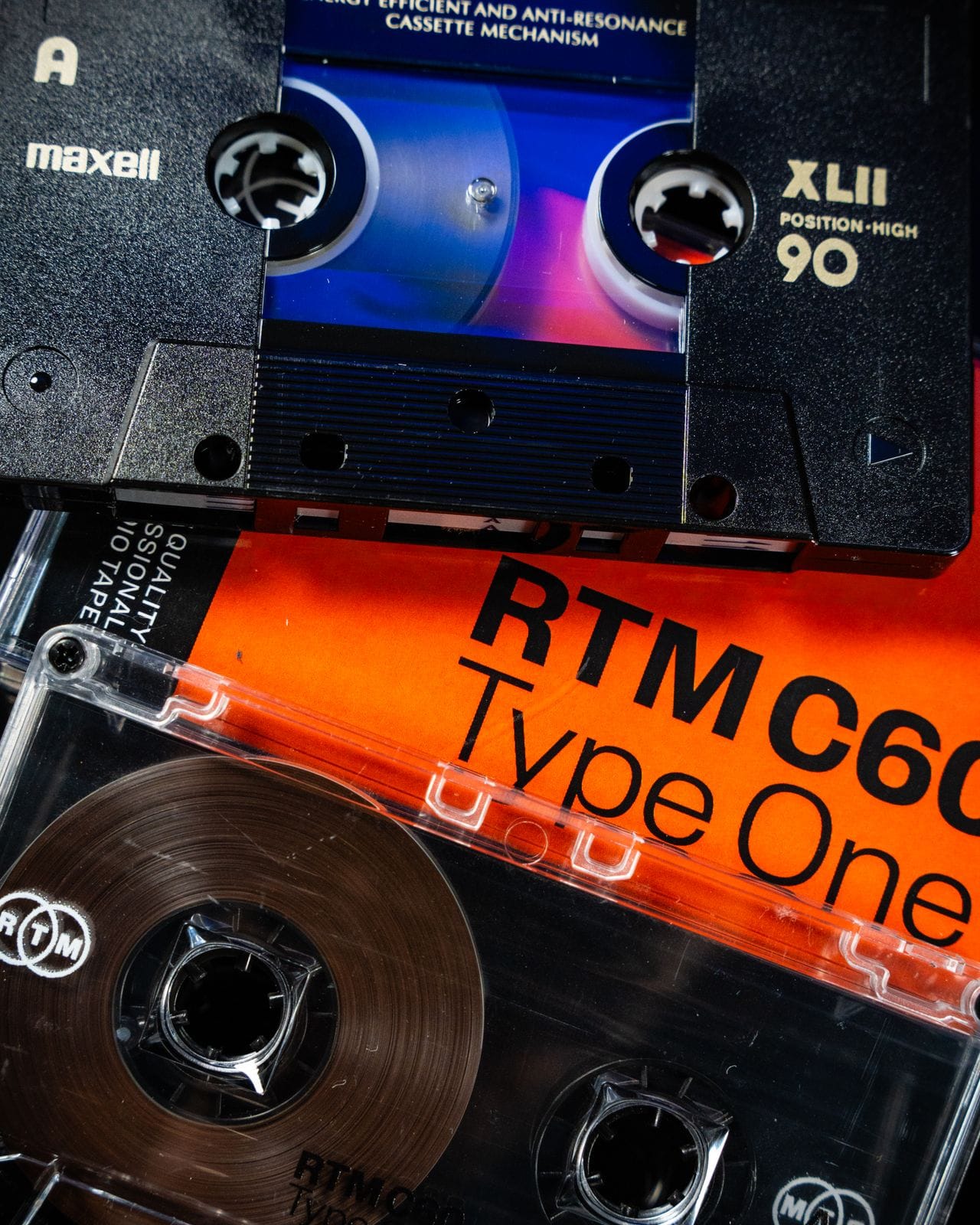
Cassettes are portable. They are small. They feel handmade. They are associated with mixtapes, old cars, bedroom stereos, Walkmans, boomboxes, underground music scenes, and personal recording. For many people, cassettes feel more intimate than records.
Indie bands, punk artists, experimental musicians, and nostalgic pop acts have helped bring cassettes back as collectible releases. Cassettes are cheaper to produce than vinyl, easier to ship, and visually fun. They can come in colorful shells, transparent cases, hand-numbered editions, and DIY packaging.
For Gen Z, cassettes are not necessarily childhood nostalgia. They are a discovery. They represent an alternative to frictionless digital culture. They feel weird, physical, and authentic.
For older listeners, cassettes bring back memories of recording songs from the radio, making mixtapes for friends, rewinding with a pencil, carrying a Walkman, or listening to albums in a car.
That emotional range gives cassettes a unique place in the analog revival.
Why People Want Physical Music Again
The return of cassette players and record players reflects a bigger cultural mood. People are surrounded by digital convenience, but many feel disconnected from the things they consume.
Streaming is efficient, but it can make music feel disposable. A listener can skip songs instantly, jump between albums, and let an algorithm choose the next track. This is convenient, but it can reduce attention.
Physical music changes the relationship.
When you play a record, you choose an album. You remove it from the sleeve. You place it on the platter. You clean it. You lower the needle. You listen in order.
When you play a cassette, you insert the tape. You press play. You wait. You flip sides. You hear the machine.
These small actions create commitment.
Physical music asks the listener to participate.
That participation is one of the biggest reasons analog audio feels meaningful. It slows the listener down. It makes music less like background noise and more like an event.
Modern Upgrades: The New Retro Audio Formula
Today’s retro audio devices are not purely vintage. Many are hybrids.
Modern record players may include:
Bluetooth output
Bluetooth input
Built-in speakers
USB recording
Automatic start and stop
Preamp built in
Multiple speed settings
Headphone output
Compact suitcase design
App-based setup
Wireless speaker compatibility
Modern cassette players may include:
Bluetooth headphone support
USB-C charging
Rechargeable batteries
Recording function
MicroSD or USB recording
Modern headphone support
Built-in microphones
Compact aluminum bodies
Improved portability
Retro visual design
These features make analog audio easier for modern users. A beginner does not need a full hi-fi system to start listening to vinyl. A cassette fan does not need to hunt for a working 1980s Walkman. A student can buy a compact Bluetooth turntable for a bedroom. A collector can digitize old tapes through USB.
This hybrid approach is the key to the revival. People want nostalgia, but they also want convenience.
Bluetooth Record Players: Vinyl Meets Wireless Listening
Bluetooth record players are one of the clearest examples of old and new audio merging.
Traditional audiophiles may prefer wired systems because wired connections usually offer better sound quality and less compression. But Bluetooth turntables solve a practical problem: not everyone has space for a full stereo setup.
A Bluetooth turntable can connect wirelessly to headphones, soundbars, portable speakers, or powered speakers. This makes vinyl more accessible to people living in apartments, dorm rooms, shared homes, or smaller spaces.
For beginners, Bluetooth record players remove intimidation. You do not need to understand amplifiers, receivers, phono stages, speaker wire, and cartridge upgrades before listening. You can buy a record player, pair it with a speaker, and start.
This convenience has helped introduce vinyl to a new generation.
The tradeoff is that Bluetooth may reduce some of the pure analog signal path. If the record player converts the signal to digital for wireless transmission, the sound is no longer fully analog by the time it reaches the speaker. But many listeners are fine with that. For them, the experience of playing records matters more than strict audiophile purity.
USB Turntables: Saving Old Records in Digital Form
USB record players are popular because they let users digitize vinyl records. This is useful for collectors who own rare albums, old family records, or music that is not available on streaming platforms.
A USB turntable can connect to a computer and record the audio into software. The user can then save the music as digital files.
This feature matters because vinyl records can wear out over time. Digitizing them allows people to preserve rare recordings while still enjoying the physical format.
USB turntables are also useful for DJs, archivists, podcasters, and music fans who want to sample or document records.
Again, this shows how the analog revival is not anti-digital. Many people want both: the physical object and the digital backup.
Built-In Speakers: Convenience Over Perfection
Many beginner record players include built-in speakers. These are common in suitcase-style turntables and compact lifestyle models.
Built-in speakers are convenient. They make the device self-contained. You do not need external speakers or cables. You can place the record player on a desk, shelf, or table and start listening.
However, built-in speakers usually do not provide the best sound quality. They may lack bass, stereo separation, volume, and clarity. Some cheaper turntables may also have tonearms that are not ideal for long-term record care.
For casual listeners, built-in speakers may be enough. For people who want better sound, a turntable with external powered speakers is usually a stronger choice.
The key is matching the product to the user.
A beginner who wants aesthetic charm may enjoy a built-in speaker model.
A serious listener should consider a better turntable and separate speakers.
Modern Cassette Players With Bluetooth and USB-C
Cassette players are also getting modern upgrades.
New portable cassette players often include Bluetooth support, allowing users to listen through wireless headphones or speakers. Some use USB-C charging instead of disposable batteries. Others include recording features, rechargeable batteries, metal bodies, or modern headphone outputs.
This is a major shift from old cassette players, which depended on AA batteries, wired headphones, and mechanical controls only.
The modern cassette player is not trying to beat a smartphone in sound quality. It is offering a different emotional experience: the charm of tape with fewer daily inconveniences.
A cassette player with Bluetooth and USB-C feels like a bridge between eras. You can play a tape from the 1980s or a new indie cassette release, then charge the device with the same cable you use for modern electronics.
That small convenience makes the format more practical.
Retro Boomboxes Are Back Too
Boomboxes are another part of the analog revival. New retro boomboxes often include cassette playback, Bluetooth streaming, AM/FM radio, CD playback, USB recording, SD card support, and portable power options.
This makes them multi-format nostalgia machines.
A modern boombox might let you:
Play a cassette
Record to tape
Stream from your phone
Listen to radio
Play CDs
Record to USB
Use batteries outdoors
Adjust bass and treble
Display track information
The appeal is obvious. A boombox is not only an audio device. It is a cultural object. It represents street music, bedrooms, block parties, mixtapes, school memories, and 1980s design.
Modern retro boomboxes are especially attractive to people who want one device that can handle multiple formats without building a full stereo system.
Why Analog Audio Feels More Emotional
Analog formats often feel emotional because they carry physical traces.
A record may have scratches from years of use.
A cassette may have handwritten labels.
A tape may include someone’s voice.
A sleeve may smell like an old room.
A used record may contain a previous owner’s name.
A mixtape may preserve a relationship, a road trip, or a moment in time.
Digital music is clean, but physical music is personal.
This is one reason analog audio has survived. People are not only buying sound. They are buying memory, identity, and ritual.
The imperfections matter too. Vinyl crackle, tape hiss, mechanical clicks, and side changes remind listeners that music is happening through an object. Those sounds can feel warm because they make the experience human.
Perfect digital silence can sometimes feel cold. Analog imperfection can feel alive.
Gen Z and the Analog Revival
One of the most interesting parts of the analog revival is the role of younger listeners.
Many Gen Z music fans did not grow up using cassettes or records as everyday formats. For them, analog audio is not simply nostalgia. It is novelty, aesthetic identity, and resistance to digital overload.
Vinyl records and cassettes fit into several youth trends:
Bedroom aesthetics
TikTok collecting culture
Indie music scenes
DIY art
Slow living
Anti-algorithm listening
Retro fashion
Physical media collecting
Artist fandom
Limited-edition merchandise
For young fans, owning a record or cassette can feel like supporting an artist more directly than streaming. It also gives them something to display, photograph, trade, or treasure.
A vinyl record is not just music. It is decor, identity, fandom, and ritual.
A cassette is not just a tape. It is a small object that says, “I like things that feel real.”
Artists and Labels Are Fueling the Comeback
Artists and record labels have played a major role in the analog revival.
Major artists release vinyl variants, limited pressings, colored records, deluxe editions, and collectible packaging. Fans buy them not only to listen but to own a piece of the album era.
Indie artists use cassettes because they are affordable and visually interesting. A small band can release a cassette run without the high manufacturing costs and long wait times often associated with vinyl pressing.
This has made physical media part of fan culture again.
For artists, physical releases can create stronger emotional connections with fans. A stream is invisible, but a record on a shelf keeps the artist present in someone’s home.
For fans, buying physical music feels more meaningful than saving a song to a playlist.
The Sound Debate: Is Analog Actually Better?
The analog revival often triggers a debate: does vinyl sound better than digital? Do cassettes sound good at all?
The honest answer is: it depends.
Vinyl can sound excellent when played on a good system with a clean record, good cartridge, proper setup, and quality speakers. Many listeners describe vinyl as warm, full, and natural.
But vinyl can also sound noisy, distorted, or weak on cheap equipment. Records can warp, scratch, collect dust, and wear out.
Cassettes have more limitations. They generally have more hiss, narrower frequency response, and more mechanical instability than high-quality digital audio. However, good cassette decks and well-recorded tapes can sound surprisingly enjoyable. The compressed, textured sound can be part of the appeal.
Digital audio is technically cleaner, more convenient, and more consistent. High-resolution digital files can outperform analog formats in many measurable ways.
But music enjoyment is not only measurement. It is experience.
Analog audio wins when the listener values ritual, texture, physical ownership, and emotional presence.
Digital wins when the listener values convenience, portability, precision, and unlimited access.
Many people enjoy both.
Record Players vs Turntables: What Is the Difference?
People often use “record player” and “turntable” interchangeably, but there is a slight difference.
A record player is usually a complete device that can play records on its own or with minimal accessories. It may include built-in speakers, amplifier, and preamp.
A turntable is usually the component that spins the record and reads the groove with a tonearm and cartridge. It often needs external speakers, an amplifier, or a phono preamp, unless those features are built in.
For beginners, record players are simple.
For serious audio setups, turntables offer more flexibility and better upgrade options.
A good beginner setup might include a turntable with a built-in preamp plus powered speakers. This keeps things simple while sounding better than most built-in speaker models.
What to Look for in a Modern Record Player
If someone is buying a record player today, they should consider several features.
1. Speed Support
Most records play at 33⅓ or 45 RPM. Some older records use 78 RPM. A good player should support the formats you plan to use.
2. Built-In Preamp
A built-in preamp makes setup easier because you can connect directly to powered speakers or many modern audio systems.
3. Bluetooth
Bluetooth is useful for wireless speakers and headphones, though wired audio may sound better.
4. Replaceable Stylus
A replaceable stylus is important because needles wear out. Avoid models where the stylus or cartridge cannot be serviced easily.
5. Adjustable Tracking Force
This helps protect records and improve sound quality. Many better turntables allow adjustment.
6. Automatic or Manual Operation
Automatic turntables start and stop playback for you. Manual turntables require more involvement. Beginners may prefer automatic models.
7. External Speaker Support
Even if a model has built-in speakers, external speaker output gives room to upgrade later.
8. Build Quality
A stable platter, solid tonearm, and vibration control help improve sound and protect records.
What to Look for in a Modern Cassette Player
Buying a cassette player is a little different because the format is more fragile and the market is smaller.
Look for:
Reliable playback
Good headphone output
Bluetooth if needed
USB-C charging
Rechargeable battery
Recording function if desired
Metal or sturdy body
Stable tape transport
Easy controls
Support for normal Type I tapes
Good return policy
Cassette players are mechanical devices. Quality matters. Cheap models may have speed instability, weak motors, poor sound, or fragile buttons.
Vintage players can be excellent, but they may need repair. Belts dry out. Motors age. Capacitors fail. Heads need cleaning. If buying vintage, check whether the unit has been serviced.
Vintage vs Modern: Which Should You Buy?
Both vintage and modern devices have advantages.
Vintage record players and cassette decks may offer excellent build quality, repairability, and authentic sound. Many older Japanese turntables, cassette decks, and Walkmans were built extremely well. Restored vintage gear can be beautiful and durable.
But vintage equipment can also require maintenance. Belts, cartridges, capacitors, motors, and heads may need service. Buying vintage without knowledge can be risky.
Modern devices offer convenience. They may include Bluetooth, USB-C, warranties, easy setup, and compact design. But some modern budget models are built more for style than performance.
The best choice depends on the user.
Choose vintage if you enjoy restoration, better mechanical quality, and classic design.
Choose modern if you want convenience, warranty, portability, and simple setup.
The Role of Design and Home Decor
Analog audio has also returned because it looks good.
A record player on a wooden shelf, a crate of vinyl, a retro cassette deck, or a boombox in a room can instantly create atmosphere. These devices are not hidden like streaming apps. They become part of interior design.
Brands understand this. Modern turntables and cassette players often come in colors, wood finishes, transparent shells, aluminum bodies, pastel tones, or minimalist shapes. They are designed for bedrooms, studios, cafes, dorm rooms, and living rooms.
This visual appeal matters in the age of Instagram, TikTok, and Pinterest. People like objects that photograph well. Vinyl and cassettes are highly photogenic.
The analog revival is partly an audio trend, partly a design trend, and partly a lifestyle trend.
Sustainability Questions Around Physical Media
The analog revival also raises sustainability questions.
Vinyl records are made from PVC, a plastic with environmental concerns. Manufacturing, packaging, shipping, and collectible variants can increase waste. Cassette tapes also use plastic shells, magnetic tape, and packaging.
At the same time, physical media can last for decades if cared for properly. A record bought once can be played for generations. A well-maintained turntable can be repaired rather than replaced.
The sustainability picture is mixed.
More eco-conscious options may include:
Buying used records and tapes
Supporting recycled vinyl initiatives
Avoiding unnecessary variant collecting
Repairing old equipment
Buying durable devices
Sharing or trading physical media
Choosing local record shops
Taking care of albums properly
The analog revival is most sustainable when it values longevity over disposable collecting.
Why Streaming Fatigue Helps Analog Audio
Streaming fatigue is real for many listeners.
People are tired of endless choice.
They are tired of algorithmic recommendations.
They are tired of songs disappearing from platforms.
They are tired of subscription costs.
They are tired of passive listening.
They are tired of feeling like they own nothing.
Physical media offers a response. When you buy a record or cassette, you own that copy. It cannot be removed from your shelf because a license expired. You can lend it, sell it, display it, gift it, or keep it for decades.
This sense of ownership is emotionally powerful.
In an age where movies, music, books, and software are increasingly rented through subscriptions, physical media feels stable. It gives people back control.
Analog Audio as a Slow Listening Movement
Analog audio encourages slow listening.
With streaming, it is easy to listen to 20 seconds of a song and skip. With vinyl, skipping is possible but less convenient. The format encourages listening to full albums. It restores the idea of Side A and Side B, track order, and artist intention.
Cassettes encourage even more patience. Fast-forwarding and rewinding take time. You cannot instantly jump to any track. This limitation becomes part of the experience.
Limitations can be valuable.
They create attention.
They reduce decision fatigue.
They make music feel less disposable.
This is one reason analog audio appeals to people looking for calm. It turns music into a ritual instead of a feed.
Common Problems With Record Players
New vinyl listeners should know a few common issues.
Skipping
Skipping can happen because of dust, scratches, warped records, poor tonearm setup, or unstable surfaces.
Distortion
Distortion may come from a worn stylus, dirty record, poor speakers, or bad cartridge alignment.
Crackle and Pops
Some surface noise is normal, but excessive crackle may mean dust, static, scratches, or pressing defects.
Speed Problems
If music sounds too slow or too fast, the belt, motor, or speed setting may be the issue.
Record Wear
Cheap or poorly adjusted players can damage records over time. A good stylus and correct tracking force matter.
Vinyl is rewarding, but it requires care.
Common Problems With Cassette Players
Cassette players also need maintenance.
Common issues include:
Tape hiss
Wow and flutter
Eating tapes
Weak playback
Dirty heads
Worn belts
Battery drain
Uneven speed
Muffled sound
Sticky old tapes
Cleaning the tape head and capstan can improve sound. Replacing belts may revive old units. Storing tapes away from heat and magnets helps preserve them.
Cassette listening is charming partly because it is mechanical, but mechanical devices need attention.
How to Start an Analog Audio Collection
Starting does not have to be expensive.
For vinyl, begin with a reliable entry-level turntable and decent powered speakers. Buy a few albums you truly love. Avoid buying too many records just for aesthetics. Learn how to clean and store them.
For cassettes, start with a working modern player or serviced vintage unit. Buy a few new cassette releases or used tapes in good condition. Learn how to inspect tapes before playing them.
Basic tips:
Buy music you will actually play.
Store records vertically.
Keep records away from heat.
Clean records before playback.
Replace worn styluses.
Store cassettes in cases.
Keep tapes away from magnets.
Do not leave tapes in hot cars.
Support local record shops.
Buy used when possible.
Analog audio is more enjoyable when the collection grows slowly and personally.
The Future of Cassette Players and Record Players
The analog revival is likely to continue, but not equally across all formats.
Vinyl has become a stable physical music market. It has strong artist support, collector demand, retail infrastructure, and cultural prestige.
Cassettes will likely remain more niche, but their niche is meaningful. They are popular in indie scenes, retro culture, DIY music, and collector communities. Modern cassette players with Bluetooth and USB-C may help keep the format accessible.
Record players will continue evolving with hybrid features. Expect more Bluetooth models, better entry-level turntables, stylish designs, wireless speaker integration, automatic operation, and USB digitization.
Cassette players may see more portable designs, better battery life, Bluetooth support, recording functions, and premium builds.
The future is not a full return to the past. It is a remix.
Why Analog Audio Will Not Replace Streaming
It is important to be realistic. Cassette players and record players will not replace streaming for most people.
Streaming is too convenient. It is perfect for commuting, workouts, discovery, parties, background listening, and instant access.
Analog audio serves a different purpose.
Streaming is for access.
Analog is for connection.
Streaming is fast.
Analog is slow.
Streaming is unlimited.
Analog is curated.
Streaming is invisible.
Analog is physical.
Most modern listeners will use both. They may discover music on streaming, then buy favorite albums on vinyl or cassette. They may stream during the day and play records at night. They may use Bluetooth headphones on the commute and a turntable at home.
The revival is not about choosing one forever. It is about bringing physical meaning back into music.
Final Thoughts: The Analog Revival Is About More Than Nostalgia
Cassette players and record players are back because people want more than convenience. They want music to feel real again.
The analog revival is not just older generations chasing the past. It is also younger listeners searching for a slower, more tactile relationship with sound. It is collectors preserving physical media. It is artists creating beautiful objects. It is technology brands blending retro design with Bluetooth, USB-C, rechargeable batteries, and wireless convenience.
Vinyl records offer ritual, artwork, warmth, and collectibility. Cassettes offer portability, intimacy, imperfection, and DIY charm. Modern devices make both formats easier to enjoy without fully giving up the conveniences of today.
In a world where everything can be streamed, skipped, and forgotten, analog audio asks for attention.
You place the record.
You press play.
You flip the tape.
You listen.
That simple act is why cassette players and record players still matter.
The comeback is not only about sound.
It is about slowing down long enough to hear music again.
Frequently Asked Questions
Why are cassette players and record players coming back?
Cassette players and record players are returning because people want physical music, nostalgia, collectibility, slower listening, and a break from digital streaming culture.
Are vinyl records more popular than cassettes?
Yes. Vinyl is much more popular and commercially stronger than cassettes. Cassettes are growing as a niche format, especially among collectors and indie music fans.
Do modern record players have Bluetooth?
Yes. Many modern record players include Bluetooth output or input, allowing users to connect wireless speakers or stream music through the player’s speakers.
Do modern cassette players have Bluetooth?
Some modern cassette players include Bluetooth headphone support, USB-C charging, rechargeable batteries, and recording features.
Is vinyl sound better than digital?
Vinyl can sound warm and enjoyable, especially on a good system, but high-quality digital audio is often cleaner and more accurate. The appeal of vinyl is partly sound and partly ritual.
Do cassettes sound good?
Cassettes have more hiss and lower fidelity than modern digital formats, but many listeners enjoy their warm, compressed, nostalgic sound.
Should beginners buy a record player with built-in speakers?
Built-in speaker record players are convenient, but separate speakers usually sound better. Beginners who care about sound should consider a turntable with powered speakers.
Are vintage cassette players better than new ones?
Some vintage cassette players are excellent, but they may need repair. New cassette players are easier to buy and may include modern features, though quality varies.
Can I digitize vinyl records?
Yes. USB turntables can connect to a computer and record vinyl playback into digital files.
Can I record on modern cassette players?
Some modern cassette players and boomboxes include recording features, allowing users to make mixtapes or voice recordings.
Is analog audio just nostalgia?
Nostalgia is part of it, but not the whole story. Many younger listeners enjoy analog audio because it feels physical, intentional, aesthetic, and different from streaming.
Will analog audio replace streaming?
No. Streaming will remain dominant, but analog formats offer a complementary experience for fans who value ownership, ritual, and collectibility.