The Mystery of the San Luis Valley: What Is Really Happening?
The San Luis Valley does not need much help feeling mysterious.
It is vast, quiet, and strange in the way only high desert can be strange. Surrounded by mountains, stretched beneath enormous skies, and marked by lonely roads, ranchland, sand dunes, old stories, and sudden weather, the valley already feels like a place where the ordinary world thins out.
Then come the stories.
Cattle found dead with soft tissue removed. Ranchers describing cuts that look too clean. Reports of missing tongues, eyes, reproductive organs, udders, and rectal tissue. Claims of little or no blood. No obvious predator tracks. No signs of struggle. No simple answer.
For decades, the San Luis Valley mystery has lived at the crossroads of ranching reality and American folklore. It is part true crime, part rural legend, part UFO mythology, and part forensic puzzle. And because some cases are described in such unsettling terms—surgical precision, no tracks, no predators, no explanation—the mystery refuses to die.
So what is really happening?
My honest answer: not aliens first, not pure hoax first, and not “just coyotes” in every case. The most realistic explanation is layered. Many cases are almost certainly the result of natural death followed by scavenging and decomposition. Some may involve human interference, copycat behavior, or staged mutilations. A smaller number remain unclear because the evidence was not collected quickly or scientifically enough to prove anything.
That uncertainty is exactly why the legend survives.
What Is the San Luis Valley Mystery?
The San Luis Valley is a large high-altitude basin in southern Colorado, near the New Mexico border. It includes towns such as Alamosa, Monte Vista, Hooper, Crestone, and others. The landscape is open, rural, and visually dramatic, with the Sangre de Cristo Mountains rising to the east and the San Juan Mountains to the west.
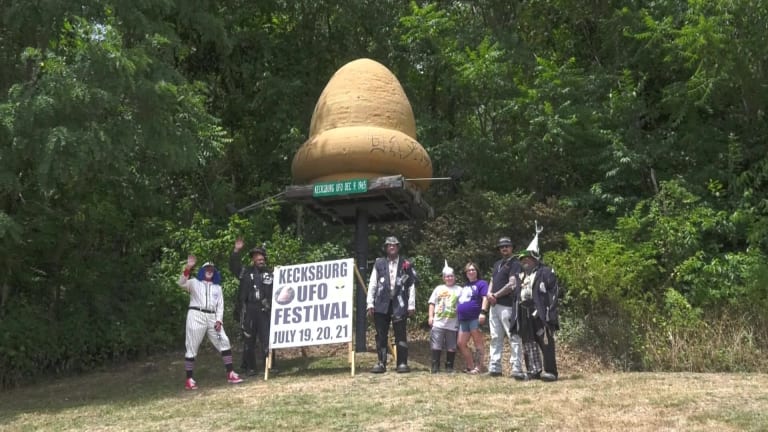
But the valley is not famous only for geography. It has become one of America’s best-known “mystery zones,” associated with UFO sightings, unusual lights, spiritual folklore, and livestock mutilation stories. Colorado Public Radio noted in 2025 that the valley is famous for tales of unexplained livestock mutilations and that the UFO Watchtower near Hooper has become a local tourist attraction connected to those stories.
The mystery usually centers on livestock—especially cattle—found dead under unusual circumstances. In many reports, ranchers or investigators describe missing soft tissue, clean-looking wounds, and an apparent lack of blood or tracks.
That combination is what makes the story so powerful.
A dead animal in ranch country is not unusual. Ranchers understand death. They know predators, disease, weather, accidents, and natural decomposition. What unsettles them is when the death scene seems wrong.
Why the Valley Became Famous
The San Luis Valley’s reputation grew because multiple mystery themes converged in one place.
First, the region has a long association with UFO sightings and strange lights. Second, the 1967 “Snippy” case became one of the earliest widely publicized animal mutilation cases tied to UFO speculation. Third, later waves of cattle mutilation reports across the American West made the valley feel like part of a larger unexplained pattern. History.com notes that livestock mutilation reports have existed for centuries, but the 1970s brought the phenomenon its widest public attention in the United States.
Once a place becomes known for mystery, every new strange event enters that existing story.
That does not mean every report is false. But it does mean the valley has a narrative gravity. Unusual lights, dead animals, missing tissue, government silence, and rancher anxiety all get pulled into the same mythology.
Key Takeaway: The San Luis Valley mystery is not just one event. It is a long-running pattern of reports, interpretations, fears, and folklore built around real livestock losses.
The Snippy Case and the Birth of the Legend
One of the most important cases in the San Luis Valley mystery is the death of the horse commonly known as Snippy.
In 1967, a horse near Alamosa was found dead and allegedly mutilated. Early reports described strange circumstances, and the story quickly spread far beyond Colorado. The case became famous partly because it was one of the first animal mutilation stories widely linked to flying saucers in the press.
The Denver Public Library’s archive page on the case includes historical material identifying the event as a mutilation case in Alamosa County in September 1967.
Over time, Snippy became more than a dead horse. It became a symbol.
For skeptics, Snippy represents how sensational headlines can transform an animal death into mythology. For believers, Snippy represents the beginning of something darker and stranger. For the San Luis Valley, Snippy became part of local identity—so much so that the horse’s skeleton later became connected with UFO tourism in the region. Colorado Public Radio reported that the UFO Watchtower acquired the skeleton in 2021.
That is how mysteries become permanent. They stop being only evidence. They become landmarks.
What Makes These Mutilation Cases So Disturbing?
The disturbing power of cattle mutilation stories comes from the repeated pattern described by ranchers and investigators.
The reports often mention:
- Missing tongues
- Missing eyes or ears
- Removed udders or reproductive organs
- Missing rectal tissue
- Little visible blood
- Cuts that appear clean or precise
- No obvious tracks around the animal
- No clear predator feeding pattern
History.com summarizes the broader phenomenon as unexplained livestock mutilations with theories ranging from predators to UFOs.
The phrase “surgical precision” is especially important. It implies intelligence. It suggests tools, planning, and intention. When people hear that phrase, they naturally reject ordinary explanations.
But this is where the mystery becomes complicated.
What looks surgical to a shocked rancher may not look surgical to a forensic veterinarian. Natural processes can create surprisingly clean edges. Scavengers often target soft, exposed tissue first. Insects, birds, coyotes, and weather can change a carcass quickly, especially if the animal is found days after death.
Still, it would be unfair to dismiss ranchers as foolish. Experienced livestock owners know what ordinary predator kills look like. When they say something feels different, that observation deserves respect—even if it does not automatically prove aliens, cults, or government experiments.
The Rational Explanations
The most grounded explanations fall into three categories: natural scavenging, decomposition, and human activity.
Predators and Scavengers
Official investigations have repeatedly found that many alleged mutilation cases can be explained by predators and scavengers. FBI files include reports from veterinary and livestock officials stating that examined animals showed damage consistent with predator action. In one section, an investigator from the New Mexico Livestock Board reportedly said that in each examined instance, animals had been attacked by predators. The same FBI file records that Kenneth Rommel, who led a federally supported New Mexico investigation, had found carcass damage consistent with predator action and had not received information justifying the belief that animals had been intentionally mutilated by humans.
This does not mean every case is solved. It means many cases that seemed bizarre at first became less mysterious under closer examination.
Scavengers are selective. They often begin with soft, accessible tissue: eyes, lips, tongue, anus, genitals, and udders. These are exactly the parts often reported missing in mutilation cases.
That overlap matters.
Decomposition and Environmental Effects
A carcass changes rapidly after death. Gas buildup, skin tension, drying, freezing, thawing, insect activity, and scavenger feeding can all alter the body. In dry climates, tissue can shrink and split. Edges can appear clean. Blood may pool internally or be consumed by insects and scavengers, making the scene look “bloodless.”
In a place like the San Luis Valley—with cold nights, dry air, open terrain, and scavenger activity—postmortem change can be dramatic.
This is not the glamorous explanation. But it is often the strongest one.
Human Hoaxes, Pranks, and Possible Criminal Acts
Not every case must be natural. Some mutilations may involve humans.
That could include:
- Pranks
- Copycat behavior
- Insurance fraud
- Illegal butchering
- Occult-inspired staging
- Experimental or criminal animal abuse
- Misidentified scavenging after a human-caused death
FBI documents show that investigators and conference participants considered many theories, including pranksters, satanic cults, extraterrestrial visitors, predators, and unknown government agencies.
The important point is not that all these theories were equally supported. They were not. The point is that the phenomenon became so culturally charged that almost every fear of the era was projected onto it.
The Stranger Theories
Now we come to the theories that made the San Luis Valley famous.
UFOs and Non-Human Intelligence
The UFO explanation is the most iconic. It claims that non-human intelligences are taking biological samples from livestock, perhaps for study, genetic research, disease monitoring, or reasons beyond human understanding.
Why does this theory persist?
Because some reports include details that feel hard to explain: no tracks, strange lights, missing blood, clean cuts, and animals found in remote places. The San Luis Valley’s long UFO reputation reinforces that interpretation. CPR’s 2025 article described UFO sightings, local stories, and the UFO Watchtower as part of the valley’s modern identity.
But here is the problem: public evidence does not prove alien involvement. Strange does not automatically mean extraterrestrial. A lack of explanation is not the same as evidence for one specific extraordinary explanation.
Secret Government Testing
Another theory suggests covert government or military programs. Supporters point to helicopters, radiation claims, animal tissue removal, and the secrecy of Cold War-era government activity.
This theory feels more grounded to some people than aliens because governments really do run secret programs. The United States has a long history of classified testing.
But again, suspicion is not proof. Publicly available evidence does not establish a verified government program responsible for San Luis Valley mutilations. FBI records show that “unknown government agency” theories were discussed, but discussion is not confirmation.
Occult Panic and Cultural Fear
In the 1970s and 1980s, fears about satanic cults and ritual sacrifice became part of the cattle mutilation conversation. FBI files show that law-enforcement discussions included the idea of ritual or ceremony, especially when federal jurisdiction might be involved on Indian lands.
But many occult explanations from that era fit the pattern of moral panic: frightening, emotionally powerful, but often weakly supported by evidence.
My Honest Theory: What Is Really Happening?
I think the San Luis Valley mystery is a layered phenomenon, not a single hidden operation.
Here is my best explanation:
Most cases probably begin with ordinary cattle deaths: disease, weather, injury, old age, birthing complications, lightning, poisoning, or predation. After death, scavengers and insects remove soft tissue. Dry air, temperature swings, and decomposition make wounds look cleaner than people expect. By the time the carcass is found, the scene looks unnatural.
Some cases may involve human activity—hoaxes, copycats, cruel individuals, or people deliberately staging scenes because the legend already exists.
A small number of cases may remain unexplained, not because they prove aliens, but because the evidence was incomplete: no immediate necropsy, no controlled scene, no trail cameras, no preserved tissue, no chain of custody, no toxicology, no reliable timeline.
That is the hard truth: many mysteries survive because the first 24 hours of evidence are lost.
Key Takeaway: The strongest explanation is not “nothing happened.” Something did happen. The question is whether the cause is extraordinary—or whether ordinary causes looked extraordinary because the evidence was discovered too late.
Why “No Tracks” May Not Mean No Predator
The “no tracks” claim is one of the most powerful parts of the mystery. It suggests that whatever approached the animal left no physical trace.
But “no tracks” can mean several things:
- The ground was too hard or dry to preserve tracks
- Wind erased light tracks
- Snow or frost changed after the event
- Scavengers approached from multiple directions
- Birds fed from above
- The animal died where it was found, but tissue removal happened later
- Human observers searched after the scene had already changed
Birds are especially important. Ravens, crows, vultures, and other scavenging birds can remove eyes, tongues, and soft tissue without leaving obvious ground tracks. That does not explain every claim, but it weakens the idea that “no tracks” automatically means something impossible happened.
Why “No Blood” May Not Mean the Animal Was Drained
The “no blood” claim is another major mystery element.
But after death, blood does not behave the way people imagine from movies. It can pool inside the body, clot, seep into soil, be consumed by insects, dry, or remain hidden beneath the carcass. If tissue is removed after circulation has stopped, there may be little external bleeding.
So, a “bloodless” scene does not necessarily mean the animal was drained by technology.
It may mean the animal was already dead when scavenging occurred.
That explanation is not as dramatic, but it is biologically plausible.
What Would Actually Solve the Mystery?
If we wanted to seriously solve modern San Luis Valley mutilation cases, we would need a rigorous protocol.
Every fresh case should include:
- Immediate scene isolation
- High-resolution photographs before anything is moved
- Drone imaging of the wider area
- Soil and blood sampling
- Full veterinary necropsy
- Toxicology testing
- Insect activity analysis
- Trail-camera review
- Predator-track survey
- Weather data
- Chain-of-custody documentation
- DNA swabs from wound margins
- Time-of-death estimate
Without that, we are mostly dealing with stories after the fact.
And stories, even sincere ones, are not the same as evidence.
Pro Tip: The San Luis Valley mystery should not be approached as “believers versus skeptics.” It should be approached as a forensic evidence problem. The question is not what sounds exciting. The question is what the physical evidence can prove.
Why the Mystery Still Captivates People
The San Luis Valley mystery survives because it touches several deep human fears at once.
It is about animals dying in ways that feel unnatural. It is about rural people feeling ignored by authorities. It is about the vastness of the sky. It is about distrust of government. It is about the possibility that something unknown moves through the world just beyond proof.
That is why the story is stronger than a simple explanation.
Even if most cases are natural, the emotional truth remains: ranchers found animals in disturbing conditions, and many felt that ordinary answers did not match what they saw.
Mysteries like this live in the gap between lived experience and official explanation.
When that gap stays open long enough, folklore moves in.
Conclusion
The San Luis Valley mystery is one of America’s strangest and most enduring rural legends because it sits on the border between the explainable and the uncanny.
There are real animal deaths. There are real rancher losses. There are real historical investigations. There are real UFO stories attached to the region. And there are real reasons to be skeptical of the most sensational explanations.
So what do I think is really happening?
I think most San Luis Valley cattle mutilation cases are caused by natural death, scavenger activity, decomposition, and environmental effects that can appear shockingly precise. I also think some cases may involve human interference or copycat behavior. And I think a small number remain unresolved because the evidence was never collected quickly or carefully enough to produce a final answer.
Do I think aliens are the best explanation?
No—not based on public evidence.
Do I think ranchers are imagining everything?
Also no.
The truth is probably less cinematic than UFOs but more complicated than “just predators.” The San Luis Valley mystery is a layered blend of biology, landscape, fear, folklore, incomplete evidence, and a few genuinely puzzling details that keep the legend alive.
The valley remains mysterious not because nothing can be explained.
It remains mysterious because not everything has been proven.
Frequently Asked Questions
What is the San Luis Valley mystery?
The San Luis Valley mystery refers to decades of reports involving UFO sightings, strange lights, folklore, and unexplained livestock mutilations in southern Colorado, especially around places like Alamosa and Hooper.
Are cattle mutilations in the San Luis Valley real?
Yes, real livestock deaths have been reported. The debate is over what caused the injuries: natural scavenging, decomposition, human activity, or something more unusual.
What was the Snippy case?
The Snippy case involved a horse found dead near Alamosa in 1967. It became one of the earliest widely publicized animal mutilation cases associated with UFO speculation.
Why do people say the cuts look surgical?
Many reports describe clean-looking tissue removal. However, forensic and veterinary experts have noted that scavengers, insects, drying, and decomposition can sometimes create surprisingly neat-looking wounds after death.
Did the FBI investigate cattle mutilations?
Yes. FBI files show that federal authorities became involved in the late 1970s, especially where possible federal jurisdiction existed on Indian lands. Investigators considered multiple theories, including predators, pranksters, cults, extraterrestrials, and unknown government agencies.
What did official investigations conclude?
Many official and veterinary opinions leaned toward predator and scavenger activity in examined cases. FBI records include statements from officials who found damage consistent with predator action, though not every reported case was fully resolved.
Are UFOs proven to be involved?
No. UFOs are part of the San Luis Valley’s folklore and public identity, but there is no publicly verified evidence proving extraterrestrial involvement in cattle mutilations.
Why is there often no blood at the scene?
If tissue is removed after death, there may be little external bleeding. Blood can also pool internally, clot, dry, seep into soil, or be consumed by insects and scavengers.
Why are there sometimes no tracks?
Hard ground, dry soil, wind, weather, birds, and delayed discovery can all reduce or eliminate visible tracks. “No tracks” is interesting, but it does not automatically prove an impossible cause.
What is the most likely explanation?
The most likely explanation is a combination: natural livestock deaths, scavenger activity, decomposition, occasional human interference, and incomplete investigations. A few cases may remain genuinely unexplained due to poor evidence preservation.