Eva Green at 46: A Birthday Tribute to Beauty, Boldness, and a Fearless Acting Career
Some performers enter a scene and attract attention.
Eva Green changes the atmosphere.
A room appears darker when she enters it. Silence becomes more meaningful. A glance can feel like an invitation, a warning, or the final moment before something dangerous is revealed.
Born in Paris on July 6, 1980, Green celebrated her 46th birthday in 2026 after more than two decades of performances that have made her one of the most distinctive actors of her generation. Her career has moved between intimate European dramas, historical epics, espionage, fantasy, psychological horror, action spectacles, and television Gothicism without ever making her feel predictable.
Her beauty is undeniable, but beauty alone has never explained her power.
Green’s real magnetism comes from contradiction. She can appear elegant and dangerous, reserved and emotionally exposed, severe and tender, commanding and deeply vulnerable. She has repeatedly chosen women who cannot be understood through a single label: queens carrying private devastation, spies caught between duty and love, witches driven by desire, warriors consumed by vengeance, mothers torn between ambition and devotion, and haunted women fighting for ownership of their own souls.
Many actors spend their careers protecting a carefully controlled image.
Eva Green has built hers by repeatedly walking toward risk.
This is a birthday tribute to her beauty, her boldness, her intelligence, and the unforgettable performances that have made her impossible to replace.
A Beauty That Has Never Felt Ordinary
Eva Green possesses the kind of beauty cinema has always loved: striking eyes, expressive features, dark hair, and a presence that appears naturally suited to candlelight, period costumes, dangerous romances, and worlds where nothing is entirely what it seems.
Yet describing her as merely beautiful misses what makes her compelling.
Her beauty is active.
It does not sit passively inside the frame waiting to be admired. She uses it to communicate power, concealment, grief, humor, calculation, and fear. The same face that can appear impossibly composed can become frightened, furious, or emotionally shattered without losing its intensity.
Green understands that beauty can be a dramatic instrument.
As Vesper Lynd, it becomes sophisticated armor.
As Vanessa Ives, it becomes the surface beneath which spiritual warfare is taking place.
As Artemisia, it becomes a weapon sharpened by rage.
As Miss Peregrine, it becomes protective authority.
As Sarah Loreau in Proxima, glamour is stripped away so that exhaustion, ambition, motherhood, and emotional conflict can occupy the screen.
She is beautiful not because the camera photographs her perfectly in every moment, but because she is unafraid to let the camera witness imperfection.
She can appear glamorous without seeming delicate.
She can appear vulnerable without becoming powerless.
She can appear frightening without losing her humanity.
That combination has given her screen presence a timeless quality.
The Difference Between Beauty and Presence
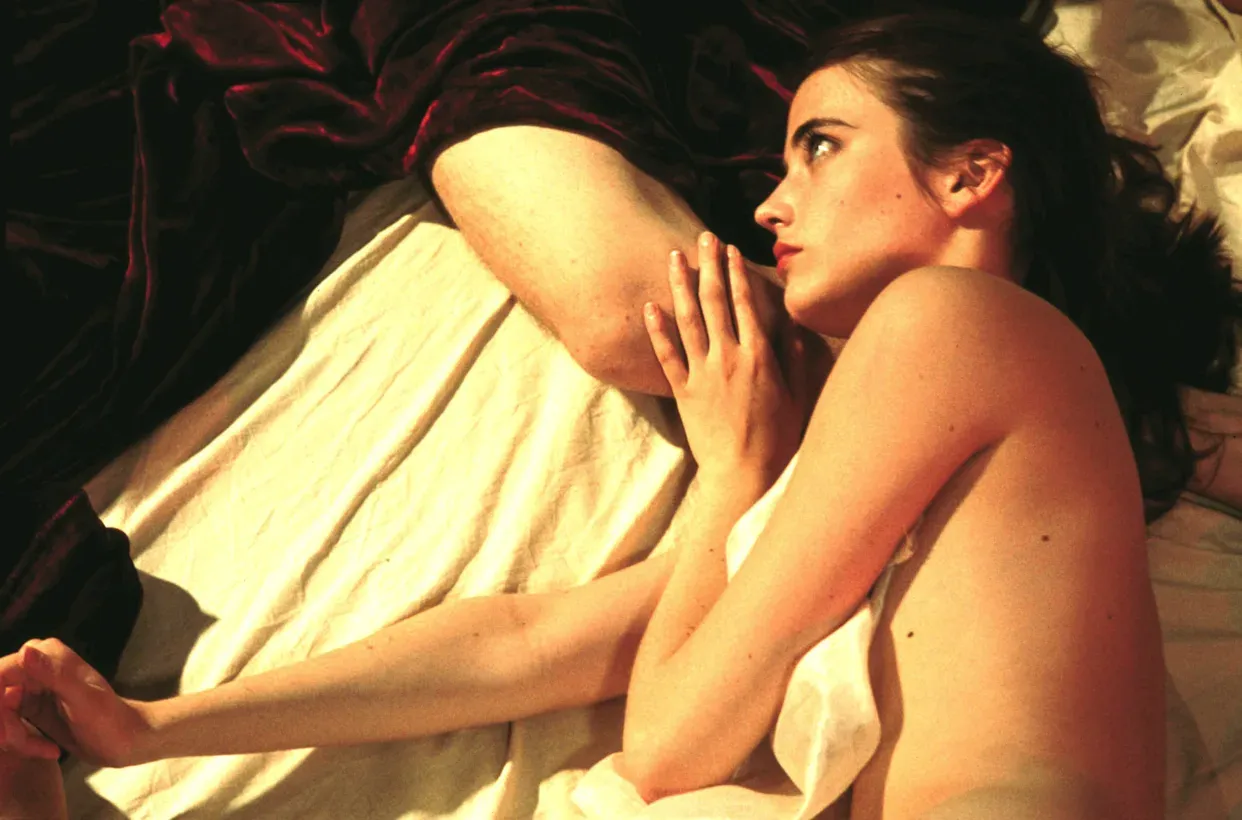
Film history contains many beautiful actors. Far fewer possess genuine presence.
Presence is the feeling that a performer remains important even while standing silently at the edge of a scene. It is the ability to make viewers wonder what a character knows, what she is hiding, and what she may do next.
Green rarely overexplains a character.
Her eyes often communicate before the dialogue does.
A slight pause can reveal hesitation.
A controlled smile can suggest that the other character has underestimated her.
A sudden stillness can feel more dangerous than a raised voice.
Her performances frequently create the impression of a second story taking place beneath the visible one.
The character may be speaking politely while privately collapsing.
She may be flirting while gathering information.
She may appear obedient while planning rebellion.
She may proclaim strength while silently asking whether she can survive another loss.
Green’s beauty attracts attention, but her interiority holds it.
A Quiet Person Drawn to Extreme Characters
One of the fascinating contradictions surrounding Eva Green is the difference between her public personality and many of the women she plays.
In interviews, she often appears thoughtful, self-conscious, modest, and far less intimidating than her screen image suggests. Yet filmmakers repeatedly cast her as women who command armies, challenge legendary heroes, communicate with supernatural beings, and enter rooms as though they already know everyone’s secrets.
Green has acknowledged that she is drawn to challenging roles rather than easy ones. Speaking at the Cannes Film Festival in 2024, she explained that Penny Dreadful demanded extensive preparation and required her to explore emotional extremes across three years of work.
That attraction to difficulty defines her career.
She does not appear interested in playing uncomplicated perfection.
She gravitates toward women with fractures.
Women whose courage coexists with fear.
Women whose beauty may become a trap.
Women who desire power but understand its cost.
Women who are worshipped, judged, feared, misunderstood, or condemned.
Her characters often enter stories carrying an emotional history that the audience must slowly uncover.
The Dreamers: A Fearless Beginning
Green made her feature-film debut in Bernardo Bertolucci’s The Dreamers in 2003.
It was not a cautious entrance into cinema.
The film required emotional exposure, physical confidence, and the willingness to portray a character living within a provocative world of cinema, intimacy, political idealism, performance, and blurred personal boundaries.
Green’s Isabelle is playful, manipulative, vulnerable, theatrical, and difficult to separate from the private universe she has constructed with her brother.
The performance immediately demonstrated qualities that would continue throughout Green’s career.
She was willing to portray desire without apologizing for it.
She could make a character appear mature and childlike within the same scene.
She understood that seduction could hide emotional dependency.
Most importantly, she showed no interest in appearing safe.
The boldness of The Dreamers is sometimes discussed only in relation to its nudity. That reduces both the role and the actor’s work.
Green’s real courage came from emotional commitment.
She played Isabelle without distancing herself from the character’s contradictions. She did not ask the audience to approve of everything Isabelle did. She asked them to recognize the loneliness, imagination, cruelty, and need beneath it.
Her first major film performance announced an actor prepared to expose far more than physical appearance.
Read: Eva Green and The Dreamers: A Bold Debut That Redefined Artistic Boundaries
Kingdom of Heaven: Royalty, Grief, and Lost Complexity
Green entered large-scale historical filmmaking as Sibylla in Ridley Scott’s Kingdom of Heaven.
Sibylla is a queen surrounded by political calculation, religious conflict, dynastic responsibility, and personal tragedy.
Green gives her elegance, but never emptiness.
Even when the character appears composed, the performance suggests a woman being steadily crushed by expectations she cannot escape.
The longer director’s cut gives Sibylla greater emotional and political complexity, allowing the tragedy of her family and position to emerge more clearly.
Green plays royalty without reducing it to posture and costume.
Her Sibylla understands the influence attached to her name, but she also understands how little freedom it provides.
The role established that Green could remain compelling within a vast production filled with battles, armies, monumental landscapes, and historical spectacle.
She did not need to compete with the scale.
She made stillness feel equally large.
Kingdom of Heaven became one of several major productions in a career that has consistently alternated between Hollywood films and independent cinema. The Cannes Film Festival’s career profile highlights this movement between large productions such as Kingdom of Heaven, Casino Royale, 300: Rise of an Empire, and Sin City: A Dame to Kill For and smaller films including Perfect Sense, White Bird in a Blizzard, and Proxima.
Vesper Lynd: The Woman Who Changed James Bond
For many viewers, Eva Green became unforgettable in Casino Royale.
Vesper Lynd could easily have been treated as a glamorous accessory to Daniel Craig’s newly introduced James Bond.
Green refused to let that happen.
From Vesper’s first conversation with Bond, she meets him intellectually rather than simply admiring him. She studies him, challenges his self-image, recognizes his carefully constructed arrogance, and refuses to be impressed merely because he expects her to be.
The official James Bond profile describes Vesper as an intelligent and perceptive Treasury representative responsible for supervising the government funds used in Bond’s high-stakes poker mission. Her relationship with him begins through verbal tension and develops into something emotionally transformative.
Green makes every phase of that relationship believable.
The guarded introduction.
The reluctant professional respect.
The terror after violence enters their private space.
The tenderness that develops when both characters lower their defenses.
The love that gives Bond the possibility of another life.
The betrayal that destroys it.
Vesper is neither an innocent victim nor a simple deceiver. She is intelligent, frightened, compromised, loving, and trapped by forces more powerful than she initially reveals.
Green never allows one truth to cancel another.
Vesper betrays Bond.
She also loves him.
She deceives him.
She also saves him.
She wants freedom.
She no longer believes she deserves it.
The performance gives Casino Royale its emotional weight. Bond’s transformation does not come only from action, violence, or professional experience. It comes from loving Vesper and losing the version of himself that briefly imagined happiness.
Green’s Vesper did not simply accompany a new James Bond.
She helped create him.
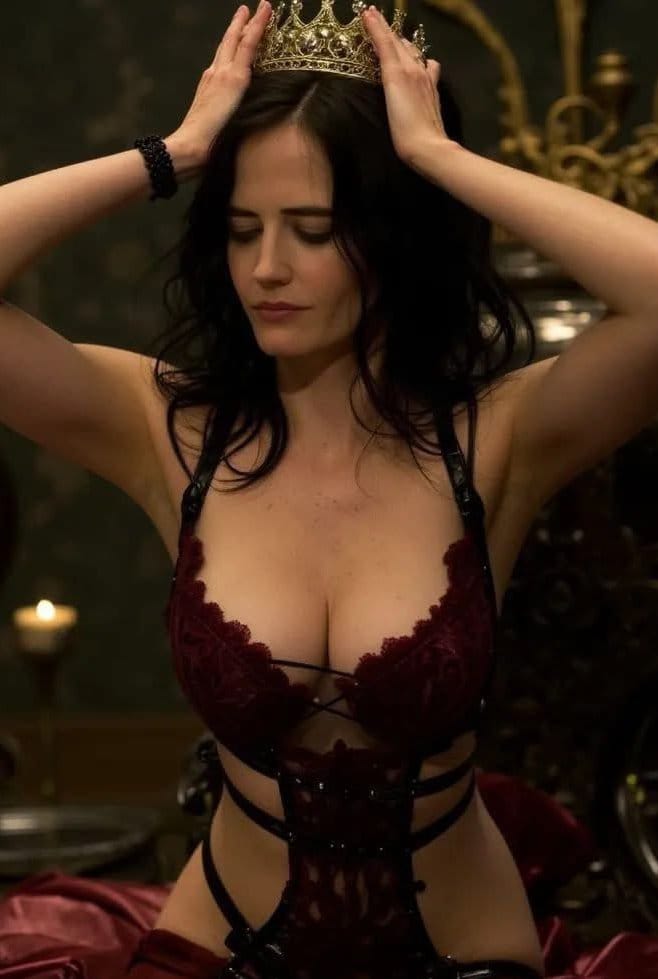
The Train Scene That Defined Vesper
The first extended conversation between Bond and Vesper remains one of the finest character introductions in the franchise.
Two attractive people sit across from each other on a train, but the scene does not depend only on chemistry.
It is a duel.
Vesper analyzes Bond’s clothing, education, temperament, and relationship with authority.
Bond responds by attempting to expose her own history and insecurities.
Each wants to prove that the other can be read.
Each is partly correct.
Green’s delivery is controlled, amused, and slightly defensive. Vesper refuses to be reduced to the beautiful woman sitting opposite the hero.
Her famous introduction—“I’m the money”—captures the confidence of a character who understands exactly how Bond sees the world and intends to disrupt it.
The official 007 site continues to recognize Vesper as one of the franchise’s defining style figures, highlighting the intelligence, elegance, and visual sophistication built into her presentation.
Yet her wardrobe would mean little without Green’s performance.
She makes Vesper’s elegance feel like part of her psychological defense.
Recognition After Casino Royale
Green’s performance brought her major public recognition, including the BAFTA Rising Star Award in 2007.
The award is selected through a public vote and recognizes emerging actors who have demonstrated exceptional ability and captured the imagination of British audiences. BAFTA’s official records list Green as the 2007 winner.
It was a fitting honor.
Vesper Lynd proved that Green could enter one of cinema’s most famous franchises and create a character whose importance extended far beyond the film in which she appeared.
Nearly two decades later, Vesper remains the emotional ghost haunting Daniel Craig’s Bond era.
That longevity belongs as much to Green’s performance as it does to the screenplay.
The Boldness to Play Women Who Are Not Easily Loved
Green’s characters are frequently attractive, but they are not always designed to be likable.
That distinction matters.
She has played women who are:
- Manipulative
- Vengeful
- Sexually assertive
- Morally compromised
- Emotionally unstable
- Politically ambitious
- Violent
- Supernaturally dangerous
- Difficult to forgive
Some performers soften such roles to maintain the audience’s approval.
Green often moves in the opposite direction.
She embraces the character’s sharpest qualities.
She allows cruelty to remain cruel.
She allows desire to appear dangerous.
She allows grief to become ugly.
She allows power to become intoxicating.
Her goal does not seem to be making every character lovable.
It is making her understandable.
That is a far more courageous form of acting.
Perfect Sense: Love at the End of Sensation
In Perfect Sense, Green plays Susan, an epidemiologist living through a mysterious global epidemic that gradually causes people to lose their senses.
The film brings her opposite Ewan McGregor in a romance shaped by fear, physical experience, and the approaching disappearance of the very senses through which people recognize the world.
Green’s performance is quieter than many of her Gothic or fantasy roles.
Susan is intelligent and professionally capable, but emotionally defended.
As the epidemic progresses, connection becomes more urgent because the physical tools of connection are disappearing.
The film demonstrates Green’s ability to work without the armor of royal status, supernatural power, or stylized villainy.
She can be compelling while simply allowing a frightened person to risk love.
Cracks: Charisma Turned Into Control
In Cracks, Green plays Miss G, a teacher at an isolated girls’ boarding school.
At first, Miss G appears glamorous, independent, worldly, and exciting. Her students admire her because she seems to represent everything beyond the restrictive world they inhabit.
Gradually, that admiration becomes disturbing.
Miss G’s stories, confidence, and apparent sophistication conceal insecurity, obsession, and emotional manipulation.
Green uses charisma as part of the threat.
The students—and initially the audience—want to believe in Miss G’s mythology.
The performance reveals how easily beauty and authority can create devotion, and how dangerous that devotion becomes when the admired figure depends upon it.
It is one of Green’s most psychologically unsettling performances because its darkness does not require demons or fantasy.
The monster is the need to be worshipped.
Dark Shadows and the Pleasure of Excess
Tim Burton understood something essential about Eva Green: she can perform heightened material with complete commitment.
As Angelique Bouchard in Dark Shadows, Green embraces theatricality.
Angelique is jealous, sensual, furious, powerful, and unapologetically excessive.
A restrained interpretation would have weakened the character.
Green instead gives her the energy of a woman who has spent centuries refusing to recover from rejection.
The performance is playful without becoming meaningless.
Angelique’s supernatural vengeance grows from humiliation and obsessive desire. Green allows the comedy, cruelty, and sadness to coexist.
Her collaborations with Burton continued through Miss Peregrine’s Home for Peculiar Children and Dumbo, giving her opportunities to occupy fantasy worlds in which elegance and strangeness naturally belong together. Cannes’ official profile notes their three-film collaboration.
Artemisia: Rage as Spectacle
In 300: Rise of an Empire, Green plays Artemisia as though the entire film belongs to her.
The character is a naval commander, strategist, survivor, and agent of vengeance. She enters a hyper-stylized world already operating at maximum intensity and somehow increases it.
Green does not approach Artemisia with embarrassment.
She understands that the role demands grandeur.
Every look is sharp.
Every threat is delivered with absolute conviction.
Every movement suggests that Artemisia has already calculated how the encounter will end.
The performance is bold because it accepts power without requesting permission.
Artemisia is not softened to make her more traditionally sympathetic. Her trauma explains her without excusing everything she becomes.
Green allows her to be magnificent, terrifying, excessive, intelligent, and brutal.
In a genre where women are often positioned beside male warriors, Artemisia becomes the force against which the entire story measures itself.
Ava Lord: The Femme Fatale as a Performance
Green entered Frank Miller’s stylized noir universe as Ava Lord in Sin City: A Dame to Kill For.
Ava is a deliberately constructed femme fatale.
She understands how other people perceive her and uses those perceptions with ruthless precision.
Green plays the role at the exact heightened level the material requires. She does not attempt to turn the graphic-novel world into ordinary realism.
Instead, she makes Ava’s artificiality part of her power.
The character behaves as though every room is a stage, every conversation is manipulation, and every expression has been selected for effect.
It is a performance about performance.
Ava creates versions of herself for whoever is watching.
Green’s own screen intelligence makes the deception enjoyable because the audience can see both the character being presented and the mind controlling it.
Penny Dreadful: The Role Eva Green Was Born to Play
If Vesper Lynd made Eva Green internationally famous, Vanessa Ives revealed the full range of her talent.
In Penny Dreadful, Green found a character capable of containing nearly everything audiences associated with her screen presence:
Beauty.
Mystery.
Faith.
Sexuality.
Intelligence.
Rage.
Spiritual power.
Emotional devastation.
Gothic elegance.
Physical fearlessness.
Vanessa Ives is a clairvoyant and medium living in Victorian London, where characters and ideas from classic Gothic literature collide.
She is pursued by supernatural forces that do not merely want to kill her.
They want her surrender.
Green played Vanessa across all three seasons of the original series, building a woman whose external composure concealed constant spiritual and psychological conflict. Her performance earned a 2016 Golden Globe nomination for Best Actress in a Television Series – Drama.
Vanessa became the bleeding heart of the series.
Without her, Penny Dreadful might have remained an elegant collection of literary monsters.
Through her, it became a story about guilt, bodily autonomy, trauma, temptation, faith, loneliness, and the exhausting struggle to remain oneself.
Fearlessness Without Vanity
Vanessa Ives required Green to abandon every form of protective vanity.
She appeared possessed, terrified, exhausted, disheveled, violent, humiliated, spiritually broken, and physically overwhelmed.
She changed voices.
She contorted her body.
She moved between refined stillness and terrifying loss of control.
She delivered elaborate Gothic dialogue with complete emotional sincerity.
A less committed performance could have made the material feel excessive.
Green made it feel true.
Her boldness did not come from trying to shock the audience.
It came from refusing to stand outside Vanessa’s suffering.
She entered it completely.
That commitment is why the séances, possessions, confrontations, therapy sessions, and moments of quiet grief remain so powerful.
Green never asks viewers to admire how difficult the performance must have been.
She makes them worry about Vanessa.
Vanessa Ives and the Art of Controlled Fire
Vanessa’s defining quality may be control.
Her dark clothing, precise speech, severe posture, and careful manners suggest someone holding herself together through discipline.
Green makes the audience feel the pressure beneath that discipline.
Vanessa appears to be containing:
- Desire she has been taught to fear
- Anger she has been punished for expressing
- Spiritual power others want to possess
- Guilt she cannot release
- Loneliness she refuses to confess
- Trauma that returns through the body
- Faith that survives alongside doubt
The character’s stillness therefore never feels empty.
It feels combustible.
This is one of Green’s greatest gifts as an actor: she can make restraint feel more dangerous than movement.
Proxima: Strength Without Spectacle
Alice Winocour’s Proxima gave Green one of her most grounded and emotionally mature roles.
She plays Sarah, an astronaut preparing for a demanding space mission while facing separation from her young daughter.
The conflict is not presented as a simple choice between career and motherhood.
Sarah is dedicated to her work.
She has trained for the mission.
She has earned her place.
She also loves her daughter and feels the emotional cost of leaving.
Green performs the role without Gothic mystery or theatrical villainy.
Her power comes from physical exhaustion, concentration, guilt, determination, and small emotional fractures.
The performance earned her a nomination for Best Actress at the 2020 César Awards.
Proxima is essential to understanding Green’s range.
It proves that the qualities people associate with her—intensity, mystery, emotional danger—do not depend on fantasy settings.
She can communicate just as much through an exhausted mother sitting quietly with her child as through a possessed woman confronting the Devil.
Why Proxima Matters in Her Career
Actors with distinctive screen images can become trapped by them.
Green could easily have spent her career playing only witches, queens, spies, villains, and Gothic heroines.
Proxima shows her resisting that limitation.
Sarah is extraordinary because of her profession, but emotionally she is recognizably human.
She worries.
She becomes frustrated.
She pushes her body.
She fears disappointing her child.
She refuses the assumption that ambition makes her less loving.
Green gives the character dignity without turning her into a symbol of effortless empowerment.
Strength has a cost.
Preparation hurts.
Love does not remove conflict.
Achievement does not silence guilt.
This is acting without decorative darkness, and Green remains just as magnetic.
A Career Between Blockbusters and Independent Cinema
One of the most admirable aspects of Eva Green’s career is her refusal to choose only one path.
She has appeared in major productions capable of reaching enormous international audiences.
She has also continued accepting smaller and more unusual projects.
Her filmography moves between:
- The Dreamers
- Kingdom of Heaven
- Casino Royale
- Cracks
- Perfect Sense
- Dark Shadows
- 300: Rise of an Empire
- Sin City: A Dame to Kill For
- Penny Dreadful
- Miss Peregrine’s Home for Peculiar Children
- Dumbo
- Proxima
- The Luminaries
- Nocebo
- Liaison
- The Three Musketeers
That movement has prevented her career from becoming too polished or predictable.
Cannes invited Green to serve on the Feature Film Jury at the 77th Festival in 2024, recognizing a career that had moved confidently between international studio films, independent cinema, television, and French-language productions.
Returning to French and European Productions
Although Green became internationally known through English-language cinema, her European work has remained important.
Proxima gave her a role rooted in contemporary French filmmaking.
The Three Musketeers films returned her to grand historical drama as Milady, one of literature’s most famous agents of intrigue.
Milady is an ideal Eva Green character: intelligent, dangerous, emotionally guarded, politically useful to powerful men, and impossible to reduce to a simple villain.
Green’s career has always benefited from cultural movement.
She can occupy British Gothic television, American franchise cinema, French drama, and European co-productions without appearing like a visitor.
Her voice, physical precision, and classical screen presence adapt naturally to different cinematic traditions.
Liaison and the Mature Espionage Heroine
In the Apple TV+ thriller Liaison, Green stars alongside Vincent Cassel in a story combining political conspiracy, cyberattacks, espionage, and a relationship shaped by past mistakes.
Apple described the series as a contemporary thriller in which political intrigue intersects with a passionate and enduring personal history.
The role allows Green to revisit espionage from a more mature perspective.
She is no longer the young Treasury representative entering Bond’s world.
She is an experienced woman carrying professional authority and emotional history of her own.
That progression reflects the strength of Green’s career.
She has not become less interesting with age.
Her characters have gained more history, more responsibility, and more contradictions.
Boldness Is More Than Nudity or Provocation
Eva Green is often described as a bold actress.
That description is accurate, but it should be properly understood.
Boldness is not simply agreeing to provocative imagery.
It is not merely appearing in dark stories or playing sexually confident women.
Green’s boldness lies in her willingness to risk being misunderstood.
She plays characters who may repel viewers.
She commits fully to stylized dialogue.
She allows emotional states to become physically extreme.
She accepts roles in which beauty is complicated by fear, corruption, age, exhaustion, or violence.
She enters genre material without treating it as inferior.
She refuses to apologize for theatricality.
She can be quiet when a film expects stars to demand attention.
She can become enormous when restraint would be dishonest.
Most importantly, she does not appear afraid of ugliness.
Her characters can behave terribly.
They can fail.
They can lose dignity.
They can be defeated.
They can desire the wrong person.
They can become the source of their own suffering.
That is artistic courage.
She Has Never Treated Genre as a Limitation
Fantasy, horror, comic-book cinema, and supernatural television are sometimes treated as less serious than realistic drama.
Green’s career challenges that distinction.
She approaches a witch, medium, immortal manipulator, fantasy guardian, or vengeful warrior with the same emotional seriousness another actor might bring to a conventional prestige drama.
She understands that impossible circumstances still require recognizable feelings.
A demon may be fictional.
Fear of surrender is real.
A magical curse may be fictional.
Obsession is real.
An immortal femme fatale may be fictional.
The desire to control how others perceive us is real.
Green’s performances work because she locates the human emotion inside the heightened concept.
Her Voice Is One of Her Greatest Instruments
Eva Green’s voice is immediately recognizable.
It can sound low, precise, intimate, amused, severe, or almost ceremonial.
She rarely rushes dialogue.
She allows words to arrive with intention.
In Casino Royale, her voice gives Vesper intellectual authority.
In Penny Dreadful, it can sound like prayer, command, confession, or possession.
In 300: Rise of an Empire, it turns threats into declarations of war.
In quieter roles, the same voice can reveal fatigue and uncertainty.
Her multilingual career adds another dimension. She can perform across French and English-language productions while maintaining a distinctive identity.
The voice contributes to her timeless quality.
She can sound contemporary, yet entirely natural inside a nineteenth-century drawing room or ancient royal court.
The Power of Her Eyes
Discussion of Eva Green’s eyes can easily become superficial, but they are central to her acting.
She uses focus with remarkable precision.
A direct gaze can establish dominance.
A lowered gaze can reveal calculation rather than submission.
A sudden widening can communicate supernatural terror.
A distant look can suggest that the character has mentally left the room long before her body follows.
Green’s eyes often tell the audience when a character’s spoken words are false.
They also reveal emotional changes before the character is prepared to acknowledge them.
Vesper begins loving Bond before she can safely admit it.
Vanessa senses danger before others understand it exists.
Sarah in Proxima feels separation approaching before the mission begins.
Green’s face does not simply display beauty.
It carries narrative information.
The Elegance of Stillness
Modern screen acting often rewards speed, constant dialogue, and visible reaction.
Green is unusually comfortable with stillness.
She can hold a frame without filling it with unnecessary movement.
That stillness gives directors room to create tension around her.
Other characters begin projecting assumptions onto the silence.
They may read it as weakness.
They may mistake it for agreement.
They may become uncomfortable and reveal more than they intended.
Green’s stillness is rarely passive.
It feels like observation.
She appears to be gathering information until she decides what the scene requires.
When she finally moves or speaks, the change carries weight.
Why Directors Return to Her
Green has worked repeatedly with filmmakers such as Tim Burton because she fits worlds that require sincerity and imagination at the same time.
She can wear an extraordinary costume without allowing the costume to perform for her.
She can stand inside elaborate production design and remain the most interesting object in the frame.
She understands visual storytelling.
Some actors appear separated from fantasy environments, as though they know everything around them was constructed for a movie.
Green appears to belong there.
A Gothic mansion, naval battlefield, enchanted school, royal palace, or shadowed Victorian street becomes more believable when she enters it.
Yet she also brings enough inner life to prevent the imagery from consuming the character.
The Women She Plays Own Their Desire
Green’s characters are often sensual, but their sexuality is rarely presented as simple availability.
They desire.
They choose.
They manipulate.
They become frightened by their own needs.
They sometimes use attraction as power.
They sometimes discover that attraction has made them vulnerable.
This distinction is important.
Green’s characters are not merely desired by the story’s men.
They possess interior appetites of their own.
Vesper wants love but fears its consequences.
Vanessa experiences desire as both human connection and spiritual danger.
Angelique allows rejection to define centuries of vengeance.
Artemisia combines sexuality, dominance, and violence without becoming subordinate to a male hero.
Green brings agency even to characters whose circumstances attempt to deny it.
Her Characters Are Rarely Saved by Beauty
Traditional cinema often treats female beauty as a form of protection.
Eva Green’s films repeatedly do the opposite.
Beauty may attract danger.
It may conceal suffering.
It may become a commodity others attempt to possess.
It may give a woman temporary influence without granting real freedom.
Vesper’s beauty cannot free her from coercion.
Vanessa’s beauty cannot protect her soul.
Sibylla’s beauty cannot rescue her from political duty and family tragedy.
Sarah’s beauty is irrelevant to the physical demands of becoming an astronaut.
Green’s work repeatedly asks viewers to look beyond the face they first notice.
She Makes Darkness Feel Emotional, Not Decorative
Eva Green is closely associated with dark roles, but darkness alone would become repetitive.
Her best performances work because the darkness always has an emotional source.
Vanessa’s darkness grows from guilt, trauma, desire, faith, and supernatural persecution.
Vesper’s secrecy grows from coercion and love.
Miss G’s manipulation grows from insecurity and fantasy.
Angelique’s vengeance grows from rejection.
Artemisia’s brutality grows from violence inflicted upon her and the identity she builds from survival.
Green refuses to let darkness exist only as style.
There is always a wound beneath it.
That wound does not excuse everything the character does.
It makes the performance feel alive.
Her Beauty Has Matured With Her Career
On her 46th birthday, Eva Green remains as visually compelling as ever, but the nature of that beauty has deepened.
The industry frequently treats women’s youth as their most valuable quality.
Green’s career offers a more interesting argument.
Experience adds presence.
Age adds history to the face.
Restraint becomes more powerful when the audience senses everything the character has survived.
Her later roles can carry the memory of the fearless young actor from The Dreamers, the tragic sophistication of Vesper Lynd, and the spiritual intensity of Vanessa Ives without repeating any of them.
She does not need to recreate her younger image.
Her authority now comes from having lived through the roles that built it.
Why Eva Green Inspires Such Devoted Fans
Eva Green’s following is not based only on fame.
Fans respond to the sense that she offers something increasingly rare.
She is recognizable without being repetitive.
Glamorous without seeming manufactured.
Private without becoming emotionally distant on screen.
Serious without lacking humor.
Bold without appearing desperate for attention.
She has also remained somewhat mysterious in an era when celebrities are expected to share every detail of themselves.
That distance allows the work to remain central.
Audiences know the characters more intimately than they know the actor.
For someone whose performances depend so heavily on mystery, that feels appropriate.
A Career Defined by Refusal
Eva Green’s career can be understood through the things she has refused to do.
She has refused to become merely “the beautiful woman.”
She has refused to avoid genre cinema.
She has refused to make difficult women easier for audiences.
She has refused to treat vulnerability as weakness.
She has refused to choose only blockbusters or only independent films.
She has refused to hide behind elegance when a role requires emotional devastation.
She has refused to act as though boldness belongs only to youth.
Every important Green performance contains some form of resistance.
Vesper resists Bond’s assumptions.
Vanessa resists possession.
Sibylla resists becoming only a political instrument.
Sarah resists the belief that motherhood and ambition cannot occupy the same woman.
Milady resists simple moral categorization.
Perhaps that is why Green’s characters remain memorable even when the films around them are uneven.
She gives them an inner rebellion.
Her Greatest Performance
Choosing Eva Green’s best performance is difficult because different roles reveal different strengths.
Vesper Lynd may be her most culturally influential.
Vanessa Ives may be her most complete.
Sarah in Proxima may be her most restrained and grounded.
Isabelle in The Dreamers may be her most fearless beginning.
Artemisia may be her most gloriously commanding.
Sibylla may be her most quietly tragic.
There is no wrong answer.
Yet Vanessa Ives remains the role that appears to contain the entire Eva Green screen persona.
The elegance.
The danger.
The haunted eyes.
The religious conflict.
The sensuality.
The rage.
The tenderness.
The physical commitment.
The refusal to surrender.
Green herself has described Penny Dreadful as especially demanding because of the extreme states she explored over its three-year run.
Vanessa feels less like a role Green performed than a role through which every part of her talent became visible.
More Than a Muse
Eva Green is sometimes described in language associated with muses, Gothic icons, or timeless beauties.
Those descriptions are flattering, but incomplete.
A muse inspires someone else’s art.
Green creates.
Her choices, voice, physical control, emotional commitment, and interpretation determine how these women exist.
Vesper Lynd is not unforgettable merely because she was well written.
Vanessa Ives is not powerful merely because the costumes and dialogue were beautiful.
Artemisia does not dominate her film merely because the camera frames her dramatically.
Green supplies the intelligence connecting every element.
She is not a decoration inside another person’s vision.
She is one of the artists making that vision possible.
A Birthday Wish for Eva Green
On her birthday, Eva Green deserves to be celebrated not only for how extraordinary she looks on screen, but for everything she has been willing to reveal through that image.
For the fear beneath Vesper Lynd’s composure.
For the grief beneath Sibylla’s crown.
For the loneliness beneath Miss G’s charisma.
For the fury driving Artemisia’s armies.
For the spiritual exhaustion inside Vanessa Ives.
For the love and guilt carried by Sarah in Proxima.
For every role in which she has made beauty more complicated, darkness more human, and boldness more meaningful.
May the next chapter of her career bring characters worthy of the full range she has repeatedly demonstrated.
Women with history.
Women with contradictions.
Women allowed to be powerful without becoming invulnerable.
Women allowed to age without becoming invisible.
Women whose beauty is recognized but never treated as the most interesting thing about them.
Cinema has many stars.
Eva Green remains something rarer.
An atmosphere.
A mystery.
A performer who can stand perfectly still and make the audience feel that an entire hidden world has just opened behind her eyes.
Happy birthday, Eva Green.
Thank you for the elegance.
Thank you for the darkness.
Thank you for the fearlessness.
And thank you for never choosing the easy role when a more dangerous one was waiting.
Final Tribute
Eva Green’s career is a reminder that great screen beauty becomes truly unforgettable only when it is joined by courage.
Her beauty brought immediate attention.
Her intelligence gave the characters depth.
Her boldness made them dangerous.
Her vulnerability made them human.
Her commitment made them last.
She has portrayed queens, spies, witches, warriors, astronauts, teachers, mothers, supernatural guardians, manipulators, and women standing at the edge of emotional destruction.
Through all of them, she has retained an identity entirely her own.
Dark but never empty.
Elegant but never fragile.
Sensual but never passive.
Bold but never careless.
Mysterious but never emotionally absent.
At 46, Eva Green is not simply one of modern cinema’s most beautiful performers.
She is one of its most distinctive.
And her greatest roles may still be ahead of her.
Frequently Asked Questions About Eva Green
When is Eva Green’s birthday?
Eva Green was born on July 6, 1980, in Paris, France.
How old is Eva Green in 2026?
Eva Green turned 46 on July 6, 2026.
What was Eva Green’s first feature film?
Her feature-film debut was Bernardo Bertolucci’s The Dreamers, released in 2003.
What role made Eva Green internationally famous?
Her performance as Vesper Lynd opposite Daniel Craig in Casino Royale brought her major international recognition.
Did Eva Green win a BAFTA?
Yes. She won the publicly voted BAFTA Rising Star Award in 2007.
Who did Eva Green play in Casino Royale?
She played Vesper Lynd, the Treasury representative assigned to supervise the government funds used by James Bond during his poker mission.
Why is Vesper Lynd considered one of the best Bond characters?
Vesper is intelligent, emotionally complex, morally compromised, and central to Bond’s transformation. Green gives the character enough depth to remain important throughout Daniel Craig’s era.
Who is Vanessa Ives?
Vanessa Ives is the clairvoyant and spiritual medium played by Green in the Gothic horror series Penny Dreadful.
Was Eva Green nominated for a Golden Globe?
Yes. She received a 2016 Golden Globe nomination for her performance as Vanessa Ives in Penny Dreadful.
What is widely considered Eva Green’s best performance?
Many fans and critics choose Vanessa Ives in Penny Dreadful, while Vesper Lynd in Casino Royale and Sarah in Proxima are also among her most acclaimed roles.
Was Eva Green nominated for a César Award?
Yes. She was nominated for Best Actress for Proxima at the 2020 César Awards.
What makes Eva Green a bold actress?
Her boldness comes from choosing complex and morally difficult characters, committing fully to intense physical and emotional material, and refusing to protect her image when a role requires vulnerability or ugliness.
Why is Eva Green associated with Gothic roles?
Her expressive features, distinctive voice, emotional intensity, and ability to combine elegance with darkness make her especially effective in Gothic and supernatural stories.
Has Eva Green worked with Tim Burton?
Yes. She appeared in Dark Shadows, Miss Peregrine’s Home for Peculiar Children, and Dumbo.
Who did Eva Green play in 300: Rise of an Empire?
She played Artemisia, the vengeful and formidable naval commander opposing the Greek forces.
What role did Eva Green play in Proxima?
She played Sarah, an astronaut preparing for a space mission while confronting the emotional cost of leaving her daughter.
Did Eva Green serve on the Cannes Film Festival jury?
Yes. She was a member of the Feature Film Jury at the 77th Cannes Film Festival in 2024.
What makes Eva Green’s beauty distinctive?
Her beauty is closely connected to expression and presence. She uses her gaze, voice, stillness, and physical control to communicate intelligence, danger, vulnerability, and emotional conflict.
Is Eva Green only known for fantasy and horror?
No. Although she is celebrated for Gothic and fantasy roles, she has also worked in romance, historical drama, espionage, contemporary drama, psychological thrillers, and independent cinema.
What is Eva Green’s most iconic television role?
Vanessa Ives in Penny Dreadful remains her defining television performance.
What is Eva Green’s greatest strength as an actor?
Her greatest strength may be her ability to hold contradictory qualities simultaneously. Her characters can be powerful and frightened, sensual and guarded, elegant and emotionally devastated.
Why do audiences remain fascinated by Eva Green?
She combines beauty, privacy, unpredictability, artistic risk, and emotional intensity. Her performances leave enough mystery for viewers to continue thinking about the characters after the story ends.
What is your favorite Eva Green performance?
For many, the answer will always be Vanessa Ives. Others may choose Vesper Lynd, Sibylla, Artemisia, Sarah in Proxima, Isabelle in The Dreamers, or another unforgettable woman from Green’s fearless career.