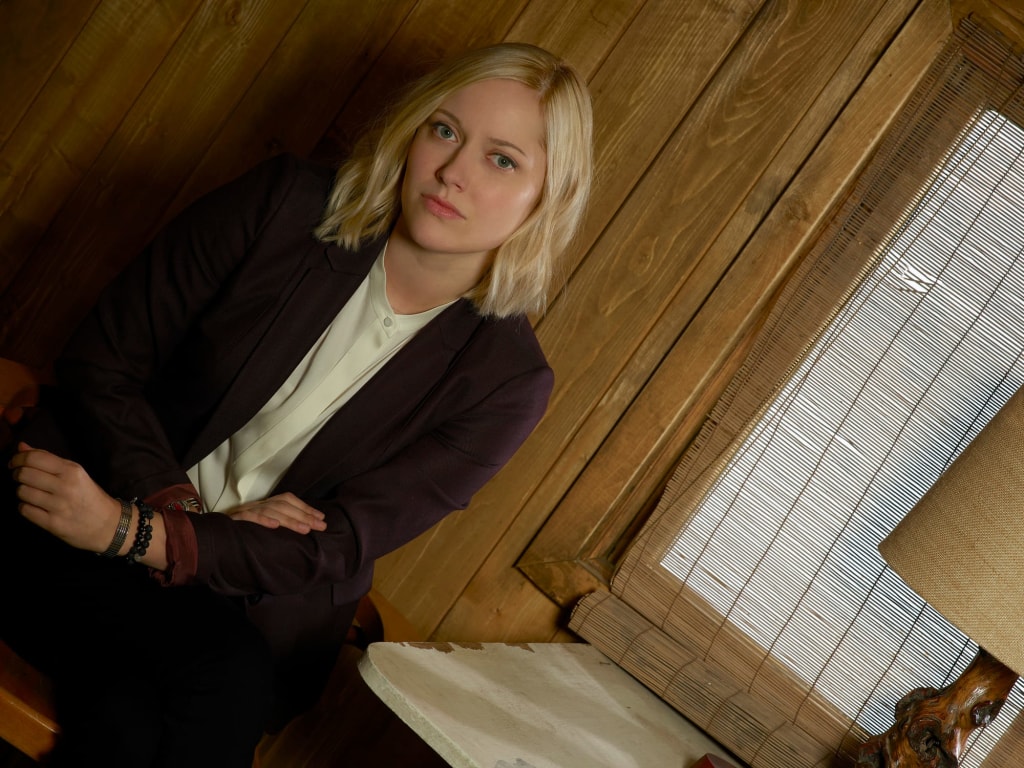
Happy 41st Birthday, Georgina Haig: Celebrating a Career of Talent, Grace, and Reinvention
Happy 41st birthday to Georgina Haig, the Australian actress whose memorable performances have taken audiences through futuristic resistance movements, enchanted kingdoms, legal battles, psychological mysteries, and chilling supernatural stories.
Born on August 3, 1985, Haig celebrated her 41st birthday in 2026. From her breakthrough role as Henrietta “Etta” Bishop in Fringe to her widely recognized portrayal of Queen Elsa in Once Upon a Time, she has built a career defined by emotional intelligence, versatility, and a willingness to explore very different genres. More recently, she has expanded her creative identity as a writer and director, proving that her most exciting chapters may still be ahead.
Celebrating Georgina Haig at 41
A birthday tribute to Georgina Haig is also an opportunity to appreciate the shape of her career.
She has never depended on only one kind of character. Instead, she has moved between science fiction, fantasy, crime drama, comedy, horror, romance, and psychological suspense. Her performances often share an important quality: even when the surrounding story is extraordinary, she makes the character’s emotional experience feel believable.
That ability has helped her connect with several generations of viewers.
Some audiences discovered her through Australian television and independent cinema. Science-fiction fans remember her from Fringe. Fantasy viewers associate her with the live-action television interpretation of Elsa. Others recognize her from Limitless, Reckless, Snowpiercer, Archive 81, Secret Bridesmaids’ Business, Back to the Rafters, or Late Night with the Devil.
Her career is not simply a collection of familiar titles. It reflects an actor consistently willing to step into new worlds, accept different creative challenges, and resist being confined to one screen identity.
At 41, Haig can celebrate more than longevity. She can celebrate evolution.
From Melbourne to a Life in Storytelling
Georgina Haig was born in Melbourne, Victoria, Australia, into a creative family. Her father, Russell Hagg, worked as a screenwriter and filmmaker, while her mother, Gillian Haig, is a fine artist. That background placed visual art and storytelling close to her life from an early age.
She later trained at the Western Australian Academy of Performing Arts, commonly known as WAAPA. The institution has developed many respected Australian performers, and Haig’s training provided a strong foundation for the range of screen work that followed.
After graduating, she began building experience through Australian television, short films, independent features, and comedy productions. Her early credits included Underbelly, The Elephant Princess, Wasted on the Young, Road Train, Rescue: Special Ops, and Dance Academy.
These projects gave her room to work in different tones rather than establishing her as only a dramatic or comedic performer.
That early variety mattered. It taught her how to adjust to productions with different rhythms, audiences, and storytelling expectations. Children’s fantasy requires a different energy from crime drama. A contained thriller demands something different from a broad comedy. Haig developed within that variety instead of waiting for one narrowly defined breakthrough.
Her work in Australian productions also introduced the qualities that would later become central to her international roles: composure, emotional precision, and an ability to suggest that a character is thinking far more than she is saying.
Fringe and the Role That Expanded Her International Audience
For many viewers, Georgina Haig’s international breakthrough came through Fringe.
The acclaimed science-fiction series was known for its ambitious mythology, alternate realities, emotional family storylines, and increasingly complex ideas about time. Joining a series with such a devoted audience was not a simple assignment, especially when the character carried a significant connection to two of its central figures.
 Imrul
Imrul
Haig played Henrietta “Etta” Bishop, the daughter of Peter Bishop and Olivia Dunham.
Because of the show’s time shifts, dystopian future, and complicated chronology, Etta’s introduction carried both narrative importance and emotional weight. She was not merely a new supporting character. She represented the future of a relationship viewers had followed for years.
Haig needed to make that connection feel convincing without relying on a conventional family history shown on screen.
Her performance combined strength with restrained vulnerability. Etta had grown up within a dangerous future controlled by the Observers, so toughness was essential to her survival. Yet Haig also allowed viewers to see the emotional cost beneath that strength.
The character could be determined, disciplined, and capable while still carrying the pain of separation and a deep need for connection.
That balance helped Etta feel like a natural part of the Fringe universe. Haig did not simply imitate the mannerisms of the characters’ established parents. She created someone who plausibly carried elements of both while remaining an individual shaped by her own harsh circumstances.
Haig’s work on Fringe raised her profile beyond Australia and demonstrated that she could enter an established genre series without being overwhelmed by its mythology. Her official biography describes the role as the beginning of her international career after a self-taped audition from Sydney helped her secure the part.
 Imrul
Imrul
Why Etta Bishop Remains Memorable
Etta Bishop appeared during one of the most emotionally intense periods of Fringe.
She represented hope, consequence, and lost time all at once. For Peter and Olivia, she was both the daughter they loved and a reminder of the years stolen from their family. For viewers, she became a bridge between the characters they already knew and the frightening future they were trying to change.
Haig played those emotional contradictions with control.
She avoided turning Etta into a simple symbol of tragedy. The character had agency, leadership abilities, anger, courage, and a fully formed sense of duty. This made her important not only because of who her parents were, but because of the person she had become.
The performance remains one of the clearest examples of Haig’s ability to make genre material emotionally accessible. Science fiction may create the circumstances, but human connection gives those circumstances meaning.
Becoming Elsa in Once Upon a Time
Georgina Haig accepted one of the most visible challenges of her career when she joined Once Upon a Time as Queen Elsa.
The casting arrived during a period of extraordinary global enthusiasm for Disney’s Frozen. Elsa had quickly become one of the company’s most recognizable characters, and audiences already had strong expectations about her appearance, personality, relationships, and emotional journey.
ABC confirmed Haig’s casting in July 2014, with Elizabeth Lail joining as Anna and Scott Michael Foster appearing as Kristoff. The characters became part of the fourth season’s Frozen-inspired storyline.
Playing a live-action version of a recently created animated icon required more than physical resemblance.
Haig had to honor the character viewers recognized while adapting Elsa to the tone and mythology of Once Upon a Time. The series regularly reinterpreted familiar fairy-tale figures, giving them new histories and placing them within the interconnected world of Storybrooke.
Her Elsa needed to feel connected to Frozen without becoming a direct copy of an animated performance.
Haig approached the character with dignity, reserve, and emotional warmth. She captured Elsa’s fear of losing control, her protective love for Anna, and her gradual movement toward trust.
Her performance was especially effective in quieter moments. Rather than presenting Elsa only through magical power or regal appearance, Haig focused on the anxiety and responsibility underneath those qualities.
The result was an interpretation that fit the series while preserving the emotional foundation audiences associated with the character.
The Pressure of Playing a Beloved Character
Taking on Elsa meant entering a conversation much larger than one television role.
The character already mattered deeply to children, families, and adult viewers who connected with themes of isolation, fear, self-acceptance, and sisterhood. Any live-action performance would face immediate comparisons with the animated film.
Haig reportedly moved from audition to production very quickly, adding to the pressure surrounding the role. In interviews from the period, she acknowledged the responsibility of portraying a character that so many people already loved and identified with.
What made her interpretation successful was its sincerity.
She did not play Elsa as an untouchable fantasy figure. Her version remained vulnerable, uncertain, and deeply motivated by her bond with Anna. The elaborate costume and magical abilities created the recognizable image, but Haig’s emotional work created the character.
For many Once Upon a Time fans, her Elsa remains one of the most memorable live-action interpretations of a modern Disney figure.
Showing a Different Side in Reckless
In the same broad period that brought her widespread fantasy recognition, Haig also appeared in the American legal drama Reckless.
She played Lee Anne Marcus, a police officer involved in a scandal that becomes central to the show’s legal and political conflicts. The role placed Haig in a very different environment from Fringe or Once Upon a Time.
There were no alternate timelines or magical kingdoms to support the drama. The tension came from institutions, secrets, power imbalances, public judgment, and the personal consequences of exposing misconduct.
Lee Anne’s story required a performance that could communicate vulnerability without reducing the character to helplessness.
Haig brought seriousness and dignity to the role. She portrayed someone caught within a system that could damage her professionally and personally, yet who still had to make difficult decisions about truth, accountability, and survival.
The performance demonstrated her ability to move from highly stylized genre television into a grounded legal drama without losing intensity.
Piper Baird and the Fast-Moving World of Limitless
Haig later appeared in Limitless as Piper Baird, a character closely connected to the experimental drug NZT and the dangerous organizations surrounding it.
The series mixed crime-solving, science fiction, conspiracy, action, and humor. Its tone could change quickly, which meant its performers needed to move between genuine danger and energetic entertainment.
Piper was intelligent, resourceful, guarded, and capable of surviving in a world where knowledge could be as dangerous as any weapon.
Haig gave the character a strong presence without making her emotionally inaccessible. Piper could challenge the lead character, Brian Finch, while also revealing the personal experiences behind her mistrust.
The role allowed Haig to return to science-fiction storytelling while playing someone very different from Etta Bishop. Etta was shaped by resistance and family loss; Piper was shaped by secrets, scientific exploitation, and the need to remain ahead of powerful enemies.
The contrast showed that Haig’s effectiveness in genre television was not tied to one performance style.
A Career Built Across Genres
One of the strongest features of Georgina Haig’s career is the breadth of her work.
She has appeared in large American television productions, Australian dramas, miniseries, independent films, horror projects, comedies, and short films. Her verified credits span titles including The Sapphires, The Mule, Childhood’s End, The Crossing, Secret Bridesmaids’ Business, Snowpiercer, Archive 81, Back to the Rafters, NCIS: Sydney, and Late Night with the Devil.
Each project asks something different from a performer.
In The Crossing, she played Dr. Sophie Forbin within a mystery involving refugees arriving from a future version of America.
In Secret Bridesmaids’ Business, she portrayed Olivia Cotterill in a story driven by friendship, betrayal, secrets, and escalating danger.
In Snowpiercer, she entered a frozen dystopian world divided by class, survival, and political conflict.
In Archive 81, she appeared as Iris Vos within a supernatural mystery structured around recordings, hidden histories, and occult forces.
In Back to the Rafters, she joined a familiar Australian family drama with a warm, character-focused tone.
These roles show a performer comfortable with both intimate relationships and expansive concepts. Haig can work within complicated mythology, but she does not rely on spectacle. Her performances remain centered on what the character fears, wants, hides, or cannot yet express.
Entering Psychological Horror With Archive 81
Netflix’s Archive 81 gave Haig another opportunity to work within unsettling genre material.
She played Iris Vos, a figure connected to the historical secrets behind the series’ supernatural mystery. The show used archival recordings, fragmented timelines, cult activity, and psychological dread to create an atmosphere in which information was gradually revealed.
Haig’s presence suited that environment.
She has a screen quality that can appear open and composed while still suggesting uncertainty underneath. In mystery and horror, that ambiguity is especially valuable because audiences are constantly evaluating what a character knows and whether they can be trusted.
Archive 81 did not require the overt heroism of Fringe or the fairy-tale emotion of Once Upon a Time. It called for an eerie restraint that allowed the mystery to remain intact.
Haig adapted accordingly, adding another distinct genre performance to her career.
Late Night With the Devil and a Modern Horror Success
Haig also appeared as Madeleine Piper in Late Night with the Devil, the acclaimed horror film built around a supposedly recovered broadcast from a 1970s late-night television program.
The movie blended supernatural horror, period detail, satire, and found-footage presentation. Its unusual structure required the cast to perform within the recognizable rhythm of live television while gradually allowing that controlled format to collapse.
Haig’s role contributed to the film’s convincing recreation of the era and its exploration of paranormal entertainment.
Late Night with the Devil became one of her most widely noticed recent film credits and received strong critical attention. Rotten Tomatoes lists it as her highest-rated title on its filmography page, reflecting the positive response the film received from critics represented on the platform.
The project also illustrates Haig’s continued interest in stories that take creative risks.
Rather than staying within conventional dramatic roles, she has repeatedly entered productions with distinctive structures, unusual worlds, or challenging tonal combinations.
The Transition From Actor to Filmmaker
Perhaps the most exciting development in Georgina Haig’s career is her movement behind the camera.
Acting remains a central part of her work, but she has also begun writing and directing her own short films. This expansion gives her greater control over the stories being told, the tone of the production, and the perspective through which audiences experience the characters.
Her short film Ashes marked an important step in that direction.
Haig wrote and directed the dark comedy about grief, lateness, family bonds, and the unexpected ways the dead continue to influence those they leave behind. She also appeared in the film as Frances.
The story drew inspiration from her own experience surrounding her father’s death and forgetting to collect his ashes. Instead of treating grief only through solemn drama, the film used dark comedy to explore loss, memory, guilt, and affection.
Ashes was nominated for the 2024 AACTA Award for Best Short Film. The recognition placed Haig’s filmmaking work before a respected Australian industry audience and demonstrated that her creative voice extended beyond performance.
Why Ashes Represents an Important Creative Step
Directing a film requires a different form of responsibility from acting in one.
An actor concentrates primarily on the truth of a character and the needs of individual scenes. A writer-director must think about the entire structure: pacing, visual language, performance, editing, tone, sound, and the final emotional effect.
With Ashes, Haig worked across several of those responsibilities.
The film’s subject also required a careful tonal balance. Grief can easily become sentimental on screen, while dark comedy can feel insensitive when the underlying loss is not treated honestly.
The premise succeeds because humor and sorrow are not presented as opposites. They exist together, as they often do in real families coping with death.
That perspective suggests a filmmaker interested in emotional complexity rather than simple answers.
It also reveals a willingness to transform personal pain into storytelling without stripping it of awkwardness, absurdity, or warmth.
No Thank You and the Next Stage of Her Filmmaking Journey
Haig continued her work as a writer and director with the 2026 short film No Thank You, in which she also appears as Bronwyn.
The project became part of Tropfest 2026 and received the Chery Acceleration Award, according to the festival’s official results.
This achievement makes her 41st birthday especially meaningful.
She is not only looking back at established television roles. She is entering a stage in which she can develop original stories and shape projects from their earliest ideas through to the finished screen experience.
That creative expansion is often one of the most rewarding stages of a performer’s career.
Years spent working with different directors, writers, crews, genres, and production systems can become a valuable filmmaking education. Haig now has the opportunity to apply those experiences to stories guided by her own perspective.
Her FilmFreeway profile also notes that she has been developing a female-driven horror feature titled The Echoes Fade Not, centered on mysterious events at an elite girls’ boarding school. As a development project, its final form and schedule may change, but it points toward the kind of atmospheric, character-focused storytelling she appears interested in exploring.
What Makes Georgina Haig’s Performances Stand Out?
Georgina Haig’s appeal cannot be reduced to one famous character.
Several qualities appear consistently across her work.
Emotional restraint
Haig rarely needs exaggerated gestures to communicate what a character is experiencing.
She often works through pauses, changes in expression, posture, and vocal control. This restraint is especially effective in stories involving secrets, trauma, uncertainty, or divided loyalties.
Natural intelligence
Many of her characters are observant, capable, and required to process difficult situations quickly.
Haig makes that intelligence feel organic. Her characters do not appear intelligent simply because the dialogue tells viewers they are. They seem to be actively assessing the people and circumstances around them.
Strength without emotional coldness
Haig has frequently played resilient women, but she does not confuse strength with the absence of vulnerability.
Etta Bishop can be a resistance fighter and still long for her family. Elsa can possess immense power and still fear hurting the people she loves. Piper Baird can be resourceful while remaining shaped by mistrust and danger.
That combination gives her performances depth.
 Imrul
Imrul
Adaptability across tones
A performer who works in science fiction, fantasy, legal drama, family drama, comedy, and horror must understand how acting styles change between genres.
Haig adjusts without losing authenticity. She can fit the heightened world of Once Upon a Time, the emotional mythology of Fringe, the conspiratorial energy of Limitless, and the disturbing atmosphere of Archive 81.
Generosity within an ensemble
Many of Haig’s best-known roles exist within ensemble productions.
She understands how to support the wider story rather than competing with it. Her performances respond to the emotional energy of the actors around her, making relationships feel lived-in even when limited screen time is available.
More Than the Actress Who Played Elsa
For casual viewers, Georgina Haig may first be remembered as the actress who played Elsa in Once Upon a Time.
That association is understandable. The role was highly visible, visually distinctive, and connected to one of the most popular animated characters of its era.
Yet her career deserves to be viewed more broadly.
Before Elsa, she had already built substantial experience in Australian productions and reached an international science-fiction audience through Fringe. After Elsa, she continued taking roles across drama, mystery, dystopian fiction, horror, and independent film.
She has also moved from interpreting characters created by others to developing stories as a writer-director.
This progression matters because it demonstrates artistic independence.
A single iconic role can open doors, but it can also create expectations that follow a performer for years. Haig’s choices suggest that she has been more interested in variety than in repeating the same success.
Her filmography is stronger because of that curiosity.
Why Fans Continue to Celebrate Her
Fans respond to Georgina Haig for different reasons.
Some admire the emotional strength she brought to Fringe. Others appreciate the care with which she handled Elsa. Horror audiences may know her best from Archive 81 or Late Night with the Devil, while Australian viewers may connect with her local television and film work.
Across those different audiences, several themes remain consistent:
- She treats genre roles seriously without making them heavy or artificial.
- She brings humanity to characters surrounded by extraordinary circumstances.
- She chooses projects across a wide range of styles.
- She continues developing rather than depending only on earlier successes.
- She has begun creating original work as a filmmaker.
- She maintains an understated screen presence that invites viewers to pay attention.
Her career reflects steady craft rather than constant celebrity spectacle.
That can make each new appearance feel like a welcome rediscovery. Viewers may encounter her in a familiar franchise, a new horror film, an Australian drama, or a festival short and be reminded of the quiet precision she brings to the screen.
A Birthday Wish for Georgina Haig
Happy 41st birthday to Georgina Haig.
May this next year bring meaningful roles, bold directing opportunities, inspired writing, fulfilling collaborations, and the freedom to continue exploring stories that genuinely matter to her.
Her career has already moved through enchanted kingdoms, dystopian futures, courtrooms, conspiracies, haunted histories, complicated families, and deeply personal reflections on grief.
Through it all, she has remained a versatile and thoughtful performer.
Now, as her work behind the camera gains momentum, there is even more reason to look forward to what comes next.
Here is to a wonderful year filled with happiness, creative fulfillment, success, and exciting new possibilities.
Frequently Asked Questions About Georgina Haig
When is Georgina Haig’s birthday?
Georgina Haig was born on August 3, 1985. She celebrated her 41st birthday on August 3, 2026.
How old is Georgina Haig in 2026?
Georgina Haig is 41 years old in 2026. She turned 41 on August 3.
Where was Georgina Haig born?
Georgina Haig was born in Melbourne, Victoria, Australia.
What is Georgina Haig best known for?
She is best known for portraying Henrietta “Etta” Bishop in Fringe and Queen Elsa in Once Upon a Time. She is also recognized for Archive 81, Limitless, Snowpiercer, Secret Bridesmaids’ Business, The Crossing, and Late Night with the Devil.
Who did Georgina Haig play in Fringe?
Georgina Haig played Henrietta “Etta” Bishop, the daughter of Peter Bishop and Olivia Dunham. Her character became important to the show’s future-set storyline and resistance against the Observers.
Did Georgina Haig play Elsa?
Yes. Georgina Haig portrayed Queen Elsa in the fourth season of ABC’s Once Upon a Time. Her live-action interpretation appeared alongside Elizabeth Lail as Anna and Scott Michael Foster as Kristoff.
Who did Georgina Haig play in Limitless?
She played Piper Baird, an intelligent and resourceful character connected to NZT and the conspiracy surrounding the powerful drug.
Was Georgina Haig in Late Night with the Devil?
Yes. Georgina Haig played Madeleine Piper in the supernatural horror film Late Night with the Devil, released as a 2023 production.
Was Georgina Haig in Archive 81?
Yes. She appeared as Iris Vos in Archive 81, the Netflix supernatural mystery series involving archival tapes, hidden histories, and occult activity.
Is Georgina Haig also a director?
Yes. Haig wrote and directed the short film Ashes and later wrote and directed No Thank You. Ashes was nominated for the 2024 AACTA Award for Best Short Film, while No Thank You received recognition at Tropfest 2026.
What is Ashes about?
Ashes is a dark comedy about grief, family, lateness, and the unusual ways a deceased loved one can continue influencing those left behind. The story was inspired by Haig’s personal experience after her father’s death.
What is Georgina Haig working on next?
Her listed recent work includes the 2026 short film No Thank You, which she wrote and directed. She has also been developing the female-driven horror project The Echoes Fade Not, although development details and release plans may change.
Why is Georgina Haig considered a versatile actress?
She has performed across science fiction, fantasy, legal drama, comedy, family drama, psychological mystery, thriller, and horror. Her ability to adjust her performance style while preserving emotional authenticity has allowed her to build a varied international career.
What makes Georgina Haig’s portrayal of Elsa memorable?
Her Elsa balanced royal composure and magical power with fear, tenderness, and devotion to Anna. Rather than relying only on the character’s recognizable appearance, Haig emphasized the emotional vulnerability that made Elsa meaningful to audiences.
What should fans wish Georgina Haig on her 41st birthday?
Fans can wish her happiness, good health, creative fulfillment, memorable acting roles, successful filmmaking opportunities, and another year filled with meaningful stories and rewarding collaborations.