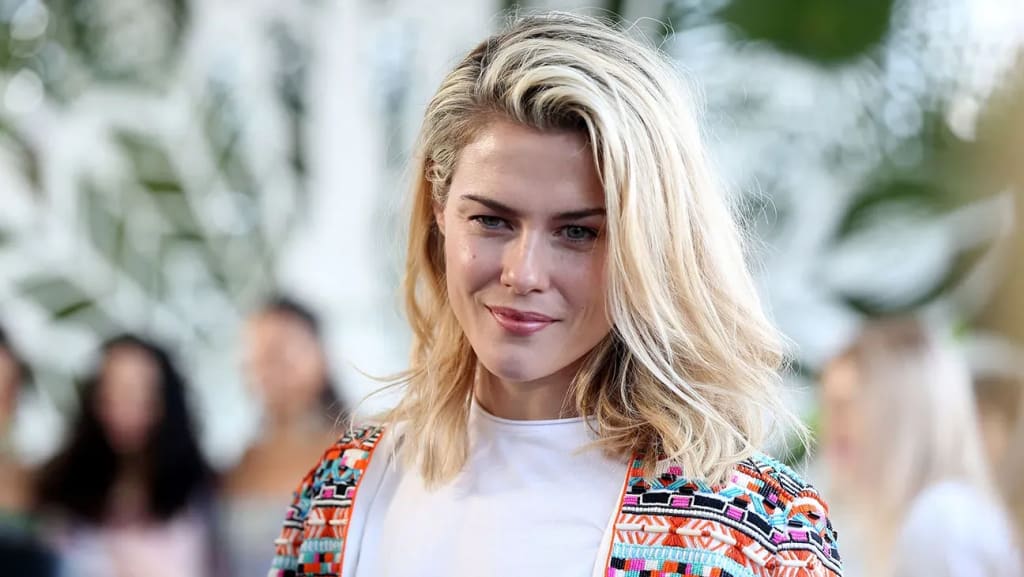
Rachael Taylor Turns 42: Celebrating the Australian Star of Jessica Jones and Transformers
Australian actress Rachael Taylor celebrates her 42nd birthday on July 11, 2026, marking more than two decades since she began building an international career across television, film, horror, action, medical drama, and superhero storytelling.
Born in Launceston, Tasmania, on July 11, 1984, Taylor first attracted attention through Australian television before making the transition to Hollywood. She became familiar to global movie audiences as Maggie Madsen in Michael Bay’s Transformers, but her most substantial and emotionally complex role arrived years later when she was cast as Patricia “Trish” Walker in Marvel’s Jessica Jones.
Across three seasons, Taylor transformed Trish from a successful radio host and fiercely loyal friend into a deeply conflicted vigilante driven by trauma, ambition, insecurity, and an increasingly dangerous desire to become powerful.
Her career also includes prominent roles in HeadLand, Grey’s Anatomy, 666 Park Avenue, Crisis, The Defenders, Charlie’s Angels, The Loft, Shutter, Red Dog, and Finding Steve McQueen.
Taylor has never been defined by one genre.
She has played a technology specialist caught inside an alien invasion, a doctor rebuilding her life, a woman living in a supernatural apartment building, an intelligence analyst confronting a national crisis, and one of Marvel television’s most complicated supporting characters.
On her birthday, her career deserves recognition not only for its most recognizable titles but for the emotional intelligence and resilience she has brought to characters who are often fighting to reclaim control of their lives.
 Imrul
Imrul
How Old Is Rachael Taylor in 2026?
Rachael Taylor was born on July 11, 1984.
She turns 42 years old on July 11, 2026.
Her full name is Rachael May Taylor, and she was born in Launceston, Tasmania, Australia.
Taylor grew up in Tasmania before moving to Sydney as a young woman to pursue modeling and acting. Biographical profiles describe her beginning as a teenage model before transitioning into commercials and screen work.
Her journey from Tasmania to major American productions reflects the long and often uncertain path many international performers must take before becoming established in Hollywood.
Rachael Taylor Grew Up in Tasmania
Taylor’s Tasmanian background has remained an important part of her public identity.
Launceston is far removed from the scale and pace of Los Angeles or New York, and Taylor’s career required her to leave a familiar environment and enter industries where appearance, accent, nationality, and professional connections could shape opportunities.
She began modeling while still young and competed in regional beauty competitions before moving toward acting. Taylor later relocated to Sydney, where she appeared in advertisements and pursued auditions.
Her early experience as a model may have helped her become comfortable in front of cameras, but acting demanded a different set of skills.
A still image can communicate beauty or attitude in one moment.
A dramatic performance must sustain a character’s psychology across scenes, relationships, conflicts, and changing emotional circumstances.
Taylor’s later work—particularly as Trish Walker—demonstrated how far she developed beyond the visual expectations often placed on former models.
Her Early Screen Career
Taylor’s first significant screen work came during the early 2000s.
One of her earliest credits was the television production The Mystery of Natalie Wood, directed by Peter Bogdanovich. She soon appeared in Australian projects and genre films, gradually building experience before receiving her first major television lead.
Her early credits included:
- The Mystery of Natalie Wood
- McLeod’s Daughters
- Man-Thing
- Hercules
- See No Evil
- HeadLand
These projects placed her inside very different production environments, from Australian drama to comic-book horror and mythological television.
That variety became a pattern throughout her career.
Taylor repeatedly moved between mainstream productions and darker genre material rather than remaining associated with only romance, comedy, or conventional drama.
 Imrul
Imrul
HeadLand Gave Taylor Her First Major Lead Role
Taylor’s first major television breakthrough came through the Australian drama HeadLand.
She played Sasha Forbes in the series, which followed the lives, relationships, and conflicts surrounding a university community in a coastal Australian town.
The role gave Taylor sustained screen time and helped establish her as more than a model transitioning into occasional acting.
Leading or co-leading a television drama requires an actor to maintain continuity across many episodes.
The character must remain recognizable while still changing through:
- Romantic relationships
- Family conflict
- Personal mistakes
- Professional ambition
- Betrayal
- Friendship
- Emotional growth
Although HeadLand did not become a long-running international hit, it was an important professional foundation.
It prepared Taylor for the rhythm of serialized television and helped introduce her to Australian audiences before Hollywood productions expanded her visibility.
Transformers Made Rachael Taylor Internationally Recognizable
Taylor received her largest early global exposure through Michael Bay’s Transformers in 2007.
She played Maggie Madsen, a highly intelligent signals analyst recruited to help investigate a mysterious cyberattack connected to the arrival of the Decepticons.
The film became one of the defining blockbusters of the late 2000s and launched a commercially enormous franchise.
For Taylor, the role meant appearing alongside performers including:
- Shia LaBeouf
- Megan Fox
- Josh Duhamel
- Tyrese Gibson
- Jon Voight
- Anthony Anderson
Maggie was not a soldier or traditional action hero.
Her importance came from recognizing that the attack on the American defense system was unlike an ordinary human cyber operation.
She understood the pattern before many senior officials accepted the scale of the threat.
That made her one of the film’s key problem-solvers.
 Imrul
Imrul
Why Maggie Madsen Remains Memorable
Maggie’s role in Transformers was relatively contained, but she made a strong impression because Taylor portrayed her as intelligent, determined, and unwilling to be dismissed.
The character was surrounded by military officials and government authorities, yet she continued defending her analysis even when doing so placed her career at risk.
She also worked effectively with Anthony Anderson’s character, Glen Whitmann, creating some of the film’s lighter moments while helping advance the technological side of the plot.
Maggie represented a kind of action-movie character who contributes through expertise rather than physical combat.
Her value was based on:
- Pattern recognition
- Technical knowledge
- Independent judgment
- Courage under institutional pressure
- Willingness to challenge authority
Although Taylor did not return for the later Transformers sequels, the first film remains one of the projects most closely associated with her name.
Shutter Brought Her Into Psychological Horror
In 2008, Taylor starred opposite Joshua Jackson in the supernatural horror film Shutter.
The movie, an American remake of the Thai film of the same name, followed a newly married couple who begin noticing ghostly figures in photographs after a disturbing accident.
Taylor played Jane Shaw, a woman who gradually realizes that the supernatural events surrounding her marriage are connected to hidden actions from her husband’s past.
The role required her to shift from uncertainty to fear, suspicion, investigation, and betrayal.
Horror often depends heavily on the actor’s ability to make an unbelievable situation feel emotionally immediate.
If the character appears unconvinced by their own fear, the audience will not feel it either.
Taylor’s performance helped ground the movie’s paranormal premise through Jane’s growing recognition that the person she trusts may be concealing something terrible.
Her Film Career Expanded Across Different Genres
After Transformers and Shutter, Taylor continued building a varied filmography.
Her projects included:
- Bottle Shock
- Cedar Boys
- Splinterheads
- Red Dog
- The Darkest Hour
- Any Questions for Ben?
- The Loft
- Gold
- Finding Steve McQueen
The films ranged from science fiction and crime thrillers to romantic comedy and Australian drama.
This diversity helped prevent Taylor from becoming permanently typecast as either a blockbuster supporting actress or a horror heroine.
Her career shows the reality of working actors who move between film, network television, cable, and streaming rather than following one uninterrupted path toward conventional movie stardom.
 Imrul
Imrul
Red Dog Connected Her With an Australian Classic
Taylor appeared in Red Dog, the widely loved Australian film inspired by the story of a wandering dog who became associated with communities across Western Australia’s Pilbara region.
The film became an important domestic success and holds a special place in modern Australian popular culture.
Appearing in Red Dog gave Taylor a connection to a project very different from Hollywood spectacle.
The film’s appeal came from community, loyalty, landscape, humor, and emotional attachment rather than visual effects or franchise mythology.
For an actress whose career had become increasingly international, the role also maintained a meaningful connection to Australian cinema.
Charlie’s Angels Gave Her a Network Television Lead
Taylor returned to major American television in the 2011 revival of Charlie’s Angels.
She played Abby Sampson, one of three women working for the mysterious Charlie Townsend.
The series attempted to update the classic property for a new generation, combining action, crime investigation, glamour, and personal redemption.
The cast also included Minka Kelly and Annie Ilonzeh.
The show was cancelled after a short run, but the role demonstrated that Taylor was being considered for major network leads rather than only supporting parts.
A cancellation can create the misleading impression that the performers failed.
Television success depends on many factors beyond acting, including:
- Scheduling
- Marketing
- Network expectations
- Audience habits
- Competition
- Writing
- Tone
- Production cost
- Critical reception
For Taylor, the project became another step toward stronger and more complex television work.
Grey’s Anatomy Introduced Dr. Lucy Fields
Taylor joined Grey’s Anatomy as Dr. Lucy Fields, an obstetrician and maternal-fetal medicine specialist.
Lucy became romantically involved with Alex Karev, played by Justin Chambers, while also navigating professional competition and hospital politics.
The role placed Taylor in one of television’s most established medical dramas.
Characters joining Grey’s Anatomy must enter a world with years of existing relationships, history, and audience loyalty.
Lucy needed to feel credible as both a skilled physician and a potential romantic partner for a major character.
Taylor portrayed her as confident, ambitious, and capable of challenging Alex rather than simply existing to support his storyline.
The character’s professional choices ultimately created conflict between them, illustrating how ambition and intimacy can become difficult to separate inside a competitive workplace.
666 Park Avenue Returned Her to Supernatural Television
In 2012, Taylor starred in ABC’s supernatural drama 666 Park Avenue.
She played Jane Van Veen, one half of a young couple hired to manage a luxurious Manhattan apartment building called the Drake.
The building’s elegant appearance concealed supernatural forces, dangerous bargains, secrets, and the influence of its mysterious owner.
Taylor starred opposite Dave Annable, Terry O’Quinn, and Vanessa Williams.
Jane began as an optimistic architect entering what appeared to be an extraordinary professional opportunity.
She gradually became more suspicious as the building’s history and impossible events began affecting her reality.
The role allowed Taylor to combine several qualities already visible in Shutter:
- Curiosity
- Fear
- Determination
- Skepticism
- Investigation
- Emotional isolation
The show was cancelled after one season, but it developed a following among viewers who appreciated atmospheric supernatural mysteries.
Crisis Cast Her Inside a Political Conspiracy
Taylor appeared in NBC’s conspiracy thriller Crisis as FBI Special Agent Susie Dunn.
The series began with the kidnapping of students from an elite Washington, D.C., school attended by children of powerful political and business figures.
The crime quickly expanded into a national conspiracy involving parents, government officials, intelligence operations, and hidden motives.
Taylor’s character was professionally responsible for investigating the crisis while also discovering deeply personal connections to the case.
This type of role suits her particular strengths.
She often plays women who appear controlled and authoritative but are forced to continue working while carrying emotional information that could destabilize them.
Susie Dunn had to remain analytical under extraordinary pressure.
Taylor made the conflict between professional duty and personal fear central to the performance.
Jessica Jones Became the Most Important Role of Her Career
In 2015, Taylor joined Marvel’s Jessica Jones as Trish Walker.
The series starred Krysten Ritter as Jessica Jones, a private investigator with superhuman strength who lives with trauma caused by the mind-controlling villain Kilgrave.
Trish is Jessica’s adoptive sister, closest friend, emotional anchor, and eventually one of the most complicated forces in her life.
Taylor appeared throughout all three seasons of Jessica Jones and also took part in the wider Marvel television world through The Defenders and a voice appearance connected to Luke Cage.
Trish began as a successful radio personality who used her public platform to discuss injustice.
She had fame, financial security, and social influence.
Beneath that success was a history of childhood exploitation, abuse, addiction, control, and an intense need to prove that she could protect herself and others.
Trish Walker Was More Than Jessica’s Best Friend
It would have been easy for Trish to function only as Jessica’s supportive friend.
Instead, the series gave her an increasingly independent and disturbing psychological journey.
Trish loved Jessica deeply.
She also envied her abilities.
That combination created tension from the beginning.
Jessica regarded her powers as a burden connected to violence and trauma.
Trish viewed power as an opportunity to prevent helplessness.
She had spent much of her life being controlled by:
- Her mother
- The entertainment industry
- Abusive adults
- Addiction
- Public expectations
- Her own fear
Becoming powerful seemed to offer a way out.
The tragedy of Trish Walker is that her desire to help people gradually became inseparable from her need to feel exceptional.
The Friendship Between Jessica and Trish Was the Heart of the Series
Taylor described the relationship between Jessica and Trish as the emotional heartbeat of Jessica Jones.
She emphasized that the friendship was loving but imperfect, shaped by shared trauma and capable of becoming dark, complicated, and messy.
That complexity separated their relationship from many conventional television friendships.
Trish repeatedly protected Jessica, but she also violated Jessica’s trust.
Jessica depended on Trish, but she sometimes dismissed her fears and ambitions.
They behaved like sisters who knew exactly how to comfort and wound each other.
Their connection contained:
- Loyalty
- Jealousy
- Protection
- Resentment
- Shared history
- Dependence
- Forgiveness
- Betrayal
Taylor and Ritter made the relationship believable because affection remained visible even during severe conflict.
The audience understood that these women could hurt each other precisely because they mattered so much to one another.
Trish Walker’s Childhood Fame Shaped Her Adult Life
Within the series, Trish had been a child television star known as Patsy.
Her mother, Dorothy Walker, controlled her career and appearance while exposing her to a harmful entertainment environment.
The cheerful public image of “Patsy” concealed abuse, exploitation, substance misuse, and pressure to remain commercially appealing.
As an adult, Trish reinvented herself as a respected radio host.
However, the need for attention and approval never disappeared completely.
Her desire to become a hero was not motivated only by justice.
It was also connected to:
- A need for control
- Fear of vulnerability
- A desire to be admired for something meaningful
- Shame about her past
- Competition with Jessica
- The belief that ordinary human limits made her inadequate
Taylor resisted making Trish simply likable.
She argued that relatability mattered more than conventional likability, especially for complex female characters.
That principle became essential as Trish made increasingly destructive decisions.
Season Two Took Trish Into Darker Territory
The second season of Jessica Jones explored Trish’s trauma, ambition, and substance dependency in greater depth.
She became addicted to a combat-enhancing inhaler and increasingly obsessed with gaining the ability to act as a hero.
Her behavior became more reckless as she convinced herself that dangerous decisions were justified by a larger purpose.
Taylor portrayed Trish’s dependency not as an isolated plot device but as part of a longer pattern.
Trish had previously survived addiction and remained vulnerable to the emotional conditions that could reactivate it:
- Pressure
- Fear
- Shame
- Powerlessness
- The desire to perform
- The need to feel useful
The series also revisited abuse from her years as a young performer.
Taylor praised the show for addressing difficult realities affecting women and for presenting trauma as something that does not resolve cleanly.
Trish Walker’s Transformation Into Hellcat
In Marvel Comics, Patsy Walker eventually becomes the superhero Hellcat.
The television series took a darker route toward that identity.
By the third season, Trish had developed enhanced reflexes, agility, balance, and physical abilities.
She created a masked vigilante identity and began targeting people she believed deserved punishment.
At first, her actions appeared to fulfill the heroic ambition she had carried for years.
However, Trish’s moral certainty became increasingly dangerous.
She began deciding that she had the authority to judge, punish, and eventually kill.
Her belief that she was protecting people allowed her to ignore the damage she was causing.
Taylor described Trish’s evolution as a confrontation with the difference between wanting to be heroic and actually possessing the judgment required to use power responsibly. The third season pushed the character beyond uncomplicated redemption and into genuine tragedy.
Why Trish Walker Became So Divisive
Many viewers loved Trish during the first season but became frustrated or angry with her later actions.
That reaction was understandable and partly intentional.
Trish’s journey asks whether a person’s trauma excuses the harm they cause.
It also questions the cultural appeal of vigilantism.
Audiences often cheer when fictional heroes act outside the law, particularly when institutions fail to deliver justice.
Trish forces that fantasy into uncomfortable territory.
What happens when the vigilante:
- Misjudges someone
- Becomes addicted to power
- Treats anger as moral clarity
- Refuses accountability
- Believes good intentions justify violence
- Stops recognizing their own corruption
Taylor did not soften Trish simply to preserve audience affection.
She committed to a character whose need to become extraordinary ultimately damaged the relationship she valued most.
That willingness made Trish one of the Marvel-Netflix era’s most psychologically ambitious supporting characters.
Trish Walker and Jessica Jones Represented Two Responses to Trauma
Jessica and Trish survived different forms of abuse, and they responded in opposite ways.
Jessica withdrew.
She used alcohol, sarcasm, isolation, and emotional avoidance to keep others at a distance.
Trish moved outward.
She pursued public influence, physical training, professional success, and eventually superhuman power.
Jessica feared becoming more involved.
Trish feared not being involved enough.
Jessica did not want to be treated as a hero.
Trish desperately wanted to earn that identity.
Neither response was simple or healthy.
The series’ emotional strength came from allowing both women to remain damaged, intelligent, loving, selfish, courageous, and inconsistent.
Taylor’s performance ensured that even Trish’s worst decisions emerged from recognizable emotional needs.
The Defenders Expanded Her Marvel Presence
Taylor appeared as Trish Walker in The Defenders, the crossover miniseries that brought together Jessica Jones, Daredevil, Luke Cage, and Iron Fist.
Trish remained closely connected to Jessica’s emotional world while the larger story dealt with the Hand and a threat affecting New York City.
Her role in the crossover reinforced that she was not merely a character confined to one isolated production.
She belonged to the interconnected Marvel television universe developed during the Netflix era.
Although Trish did not become Hellcat in the traditional superhero-costume sense, Taylor’s performance created a distinctive live-action interpretation that many viewers still hope could return.
Could Rachael Taylor Return as Trish Walker?
No return has been officially confirmed.
Interest in the former Marvel-Netflix characters has increased as actors and story elements from that era have been integrated into newer Marvel Studios productions.
Krysten Ritter has publicly expressed openness to playing Jessica Jones again, but enthusiasm from an actor does not confirm a project or cast list.
Trish’s story ended with her being taken into custody after finally recognizing that she had become one of the dangerous people she once believed she was fighting.
That ending leaves several possible future directions:
- Imprisonment on the Raft
- Rehabilitation
- A reluctant government assignment
- A redemption arc
- Conflict with Jessica
- A more comic-accurate Hellcat identity
- A tragic return to vigilantism
Any comeback would need to acknowledge the seriousness of her actions.
Simply presenting Trish as a conventional hero would erase the moral consequences that made her final season meaningful.
The Loft Showed Taylor in an Ensemble Thriller
Taylor appeared in The Loft, a mystery thriller centered on a group of men who secretly share an apartment used for extramarital affairs.
Their arrangement collapses when a dead woman is discovered inside the property.
The film relies on mistrust, shifting timelines, hidden relationships, and characters who repeatedly conceal their true motives.
Taylor’s role placed her inside a story where almost every relationship was affected by deception.
The ensemble format required each performer to reveal enough information to sustain suspicion without resolving the mystery too early.
It was another example of Taylor’s continued attraction to thrillers involving psychologically compromised people rather than straightforward heroes.
Finding Steve McQueen Brought Her Into a Crime Romance
Taylor later appeared in Finding Steve McQueen, a crime drama inspired by a real bank robbery.
The film combined heist storytelling with romance, memory, and the consequences of living under a concealed identity.
Taylor played Molly Murphy, whose relationship with the central character becomes affected by secrets from his criminal past.
The role emphasized quieter emotional material than her superhero and supernatural work.
Instead of fighting aliens or confronting paranormal forces, she played a woman discovering that the person she loves has built their relationship around incomplete truth.
Taylor’s performance helped ground the historical crime story in personal betrayal and emotional uncertainty.
What Makes Rachael Taylor’s Acting Style Distinctive?
Taylor often portrays women attempting to maintain control while their emotional or physical environment becomes increasingly unstable.
Her characters are frequently:
- Intelligent
- Professionally capable
- Visibly self-possessed
- Emotionally guarded
- Ambitious
- Vulnerable to hidden trauma
- Forced to question people they trust
She is particularly effective when a character’s confidence begins to fracture.
Rather than transforming instantly from calm to emotional, Taylor often reveals distress through smaller changes:
- A pause before answering
- Tightened posture
- Watchful eye movement
- Controlled anger
- A sudden loss of verbal certainty
- An effort to remain composed after trust has been broken
This style worked especially well for Trish Walker.
Trish spent much of her life performing versions of herself for an audience.
Taylor understood that even the character’s honesty could contain an element of performance.
Taylor’s Career Has Often Explored Ambition
Many of Taylor’s characters want more than their current position allows.
Maggie Madsen wants senior officials to respect her analysis.
Lucy Fields pursues professional advancement.
Jane Van Veen enters the Drake through architectural ambition and the hope of building a new life.
Susie Dunn carries the responsibility of a major investigation.
Trish Walker wants to move beyond commentary and become someone capable of taking direct action.
Ambition is not portrayed as inherently wrong.
The danger appears when ambition becomes tied to identity so completely that failure feels like personal annihilation.
Trish is the clearest example.
Her desire to help others becomes destructive because she cannot accept being ordinary.
Taylor’s performance made that desire painful rather than merely arrogant.
She Has Moved Between Australian and American Storytelling
Taylor’s career bridges two entertainment industries.
Her early Australian work established her foundation, while American film and television provided wider international exposure.
This movement required adaptability.
Australian productions often operate with different rhythms, budgets, cultural references, and performance traditions from large American studio projects.
Taylor has worked successfully inside:
- Australian serial drama
- Hollywood blockbuster filmmaking
- Network medical television
- Supernatural horror
- Streaming superhero drama
- Crime thrillers
- Independent film
That range reflects more than genre flexibility.
It shows an ability to adjust to different production cultures and storytelling expectations.
Rachael Taylor’s Career Is More Than Transformers and Jessica Jones
The two titles dominate public recognition for understandable reasons.
Transformers introduced her to a massive global film audience.
Jessica Jones gave her the richest character journey of her career.
But reducing her résumé to Maggie Madsen and Trish Walker overlooks years of substantial television work.
She has played lead or major recurring characters in:
- HeadLand
- Charlie’s Angels
- Grey’s Anatomy
- 666 Park Avenue
- Crisis
- Jessica Jones
She has also appeared in a wide range of films, from Australian favorites to horror remakes and crime dramas.
Her career illustrates how actors can build longevity through range even without appearing in a new blockbuster every year.
Why Trish Walker May Remain Her Defining Performance
Maggie Madsen may be her most recognizable film character, but Trish Walker gave Taylor far more emotional and narrative territory.
Over three seasons, Trish changed dramatically.
She was:
- A survivor of childhood exploitation
- A celebrity trying to redefine herself
- A supportive sister
- A public advocate
- A recovering addict
- A jealous observer of superhuman power
- A determined trainee
- A vigilante
- A killer
- A woman finally forced to recognize what she had become
Few supporting characters in superhero television receive such a complete deterioration.
Taylor made that descent gradual enough to remain believable.
The audience could identify the emotional logic behind each step even when disagreeing with the decision.
That is a greater acting challenge than portraying a character who remains consistently heroic.
Her Performance Helped Redefine Patsy Walker
In Marvel Comics, Patsy Walker has an unusual history.
She began as the star of teenage romantic-comedy comics before being integrated into Marvel’s superhero world as Hellcat.
The television adaptation transformed that publishing history into Trish’s background as a former child star.
This was a clever way to preserve the idea of “Patsy” while making it emotionally relevant to a darker modern drama.
Taylor’s Trish became very different from the more colorful comic-book Hellcat.
She was less playful, more traumatized, and morally unstable.
Yet the adaptation retained several core elements:
- The desire to become heroic
- Physical training
- A public identity
- A history shaped by performance
- A close connection to superheroes
- The eventual adoption of a vigilante role
Taylor helped create a version of Patsy Walker specifically suited to the psychological world of Jessica Jones.
Why Her Characters Often Feel Strong Without Becoming Invulnerable
Taylor’s characters are frequently described as strong women.
The phrase can become shallow when it refers only to physical confidence or the absence of visible emotion.
Taylor’s best performances show that strength and vulnerability are not opposites.
Jane Van Veen is strong because she continues investigating while afraid.
Susie Dunn remains capable while facing personal stakes inside a national emergency.
Maggie Madsen challenges powerful officials despite the risk to her career.
Trish Walker’s tragedy comes partly from misunderstanding strength as the elimination of vulnerability.
Taylor’s work repeatedly suggests that people become dangerous when they believe emotional pain must be defeated through control rather than understood.
Celebrating an International Australian Career
Taylor belongs to a long tradition of Australian performers who moved from domestic productions into international film and television.
Her path was not built around one sudden awards-season breakthrough.
It developed through:
- Modeling
- Commercials
- Australian television
- Horror films
- Supporting movie roles
- Network leads
- Cancelled series
- Recurring characters
- Streaming success
That career path may appear less glamorous than instant fame, but it demonstrates endurance.
Actors must continue auditioning, adapting, relocating, and rebuilding momentum between projects.
Taylor’s longevity reflects the ability to remain professionally relevant across changing phases of the entertainment industry.
What Could Come Next for Rachael Taylor?
Taylor has not announced a return to Trish Walker or a major new franchise role as of her 42nd birthday.
Her existing work suggests she would be well suited to:
- Psychological thrillers
- Prestige crime dramas
- Australian limited series
- Political conspiracies
- Supernatural mysteries
- Character-driven independent films
- A mature return to the Marvel universe
- Roles behind the camera as a producer or creator
A future project that combines the intelligence of Maggie Madsen, the moral complexity of Trish Walker, and the atmosphere of her horror work could make especially strong use of her range.
She has already demonstrated that she can carry stories about women whose public confidence conceals unresolved emotional conflict.
Final Thoughts
Rachael Taylor turns 42 on July 11, 2026, celebrating a career that stretches from Tasmania to some of the most recognizable film and television properties of the twenty-first century.
She first built her reputation through Australian productions such as HeadLand before gaining worldwide attention as Maggie Madsen in Transformers. She later expanded her résumé through Grey’s Anatomy, Charlie’s Angels, 666 Park Avenue, Crisis, The Loft, and numerous other projects.
Her defining achievement remains Trish Walker in Jessica Jones.
Across three seasons, Taylor portrayed friendship, trauma, addiction, ambition, jealousy, heroism, and moral collapse with unusual commitment.
She allowed Trish to become difficult.
She did not ask the audience to approve of every choice.
Instead, she made viewers understand how a woman who desperately wanted to protect people could gradually become someone from whom others needed protection.
That transformation represents the kind of complex character journey superhero television does not always provide.
From Australian drama to Hollywood spectacle and Marvel’s darker streets, Rachael Taylor has built a career based on adaptability, intelligence, and an ability to reveal emotional instability beneath apparent control.
Happy birthday to an actress whose most memorable performances prove that compelling characters do not need to be perfect, easily forgiven, or conventionally heroic.
Sometimes they simply need to feel human.
Frequently Asked Questions
When is Rachael Taylor’s birthday?
Rachael Taylor’s birthday is July 11.
How old is Rachael Taylor in 2026?
She turns 42 years old on July 11, 2026.
When was Rachael Taylor born?
She was born on July 11, 1984.
Where was Rachael Taylor born?
She was born in Launceston, Tasmania, Australia.
Is Rachael Taylor Australian?
Yes. She is an Australian actress and former model.
What is Rachael Taylor best known for?
She is best known for playing Maggie Madsen in Transformers and Trish Walker in Marvel’s Jessica Jones.
Who did Rachael Taylor play in Transformers?
She played Maggie Madsen, a signals analyst who helps investigate the Decepticons’ cyberattack.
Did Rachael Taylor appear in the Transformers sequels?
No. Maggie Madsen did not return in the subsequent films.
Who did Rachael Taylor play in Jessica Jones?
She played Patricia “Trish” Walker, Jessica Jones’s adoptive sister, closest friend, radio host, and eventual vigilante.
Is Trish Walker the Marvel character Hellcat?
Yes. Patsy Walker becomes Hellcat in Marvel Comics. The television series developed a darker and less traditional version of that transformation.
How many seasons of Jessica Jones featured Rachael Taylor?
She appeared throughout all three seasons, from 2015 to 2019.
Was Rachael Taylor in The Defenders?
Yes. She reprised her role as Trish Walker in Marvel’s The Defenders.
Was Rachael Taylor in Luke Cage?
Her character was heard in a voice appearance connected to a Luke Cage episode.
Why did Trish Walker become a vigilante?
Trish was driven by trauma, a desire to protect others, jealousy of Jessica’s powers, fear of helplessness, and a need to prove that she could become extraordinary.
Did Trish Walker become a villain?
The series presents her as a tragic vigilante whose actions become increasingly violent and unjustifiable. She does not begin as a conventional villain, but she eventually becomes dangerous.
Did Trish Walker kill people?
Yes. Her belief that she had the right to punish dangerous individuals eventually led her to kill.
What happened to Trish at the end of Jessica Jones?
She was captured and taken into custody after realizing that her actions had made her one of the people she previously considered evil.
Could Rachael Taylor return to Marvel?
A return is possible in theory, but no official project featuring Taylor as Trish Walker has been announced.
Has Krysten Ritter discussed returning as Jessica Jones?
Yes. Ritter has publicly expressed openness to returning, but no statement alone confirms a revival or Taylor’s involvement.
Was Rachael Taylor in Grey’s Anatomy?
Yes. She played Dr. Lucy Fields, an obstetrician and maternal-fetal medicine specialist.
Was Lucy Fields involved with Alex Karev?
Yes. Lucy and Alex developed a romantic relationship complicated by professional ambition and career decisions.
Was Rachael Taylor in Charlie’s Angels?
Yes. She played Abby Sampson in the 2011 television revival.
Was Rachael Taylor in 666 Park Avenue?
Yes. She starred as Jane Van Veen, the co-manager of a supernatural Manhattan apartment building.
Was Rachael Taylor in Crisis?
Yes. She played FBI Special Agent Susie Dunn.
Was Rachael Taylor in Shutter?
Yes. She starred as Jane Shaw in the 2008 supernatural horror film.
Was Rachael Taylor in Red Dog?
Yes. She appeared in the successful Australian film.
What was Rachael Taylor’s first major television role?
Her first leading television role was Sasha Forbes in the Australian series HeadLand.
Did Rachael Taylor begin as a model?
Yes. She modeled as a teenager before pursuing acting professionally.
At what age did Rachael Taylor begin acting?
Profiles commonly report that she began acting professionally during her teenage years, around age 16.
What was Rachael Taylor’s first screen role?
One of her earliest credited screen appearances was in the television production The Mystery of Natalie Wood.
Was Rachael Taylor in The Loft?
Yes. She appeared in the mystery thriller alongside an ensemble cast.
Was Rachael Taylor in Finding Steve McQueen?
Yes. She played Molly Murphy in the crime drama inspired by a real robbery.
Why is Trish Walker considered a complex character?
Trish combines loyalty, trauma, addiction, ambition, jealousy, courage, and moral certainty. Her desire to become heroic gradually leads her to justify harmful actions.
What did Rachael Taylor say about likability?
Taylor argued that relatability was more important than likability when portraying complicated female characters such as Trish Walker.
What did Taylor say about Jessica and Trish’s friendship?
She described their imperfect, loving, and trauma-shaped relationship as the emotional heartbeat of Jessica Jones.
Did Rachael Taylor sing “I Want Your Cray Cray”?
Taylor performed the fictional pop song associated with Trish Walker’s child-star past alongside Kandi Marks for Jessica Jones.
Is Rachael Taylor still acting?
Taylor remains professionally associated with acting, although future projects should be treated as unconfirmed unless announced by her representatives, a studio, or a production company.
What should new Rachael Taylor fans watch first?
For her most complex performance, begin with Jessica Jones. For blockbuster action, watch Transformers. Horror fans may prefer Shutter or 666 Park Avenue, while viewers interested in Australian cinema can explore Red Dog and HeadLand.
What is Rachael Taylor’s most important role?
Maggie Madsen made her internationally recognizable, but Trish Walker gave her the deepest and most sustained character arc of her career.
Why does Rachael Taylor remain memorable?
She combines elegance and screen confidence with an ability to portray fear, ambition, trauma, and moral conflict beneath a controlled exterior.