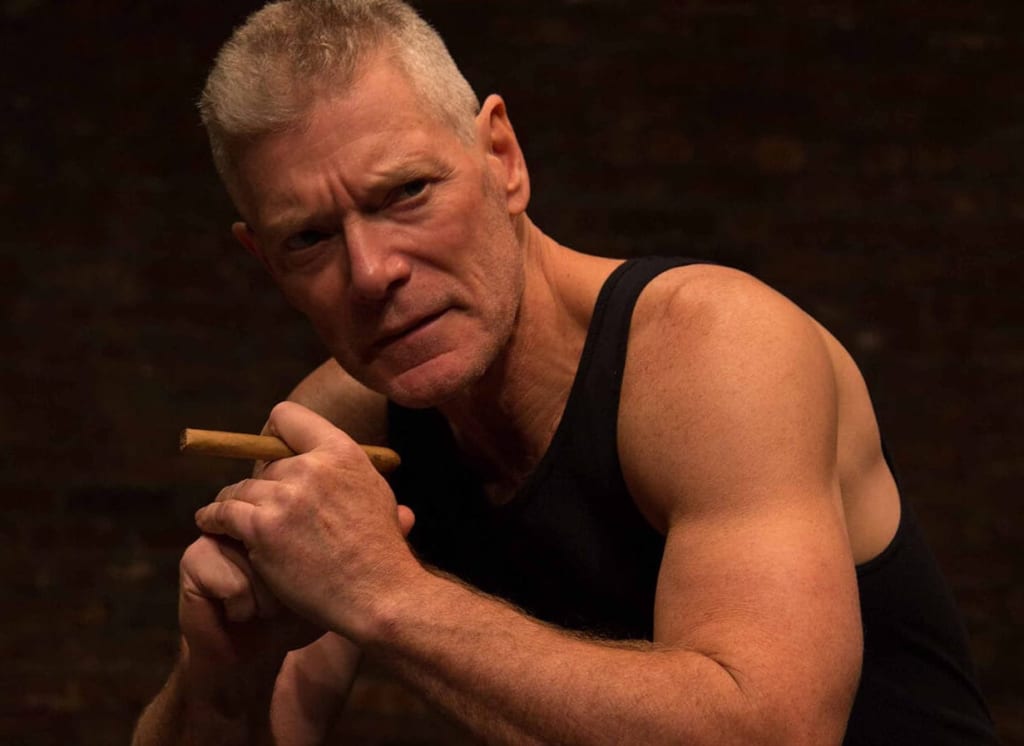
Stephen Lang Turns 74: Celebrating the Commanding Star of Avatar and Don’t Breathe
Stephen Lang celebrates his 74th birthday on July 11, 2026, marking more than four decades of memorable work across film, television, and theatre.
Born in New York City on July 11, 1952, Lang has built a remarkable career playing military commanders, historical figures, hardened survivors, violent antagonists, and emotionally conflicted men. He is best known globally as Colonel Miles Quaritch in James Cameron’s Avatar films, but his résumé reaches far beyond Pandora.
Lang delivered unforgettable performances in Gettysburg, Tombstone, Gods and Generals, Manhunter, Last Exit to Brooklyn, Public Enemies, Terra Nova, and the Don’t Breathe films. He is also an accomplished stage actor whose Broadway work earned him a Tony Award nomination for The Speed of Darkness.
His characters frequently appear physically intimidating, disciplined, and difficult to defeat. Yet Lang’s performances endure because he rarely presents strength as something simple. Behind the hard expressions and controlled voices are often fear, obsession, grief, wounded pride, or a belief system collapsing under pressure.
At 74, Stephen Lang remains one of Hollywood’s most dependable character actors—a performer capable of dominating a scene through force while still suggesting a complicated inner life beneath the surface.
 Imrul
Imrul
How Old Is Stephen Lang in 2026?
Stephen Lang was born on July 11, 1952.
He turns 74 years old on July 11, 2026.
Lang was born in New York City and later attended Swarthmore College, where he studied English literature. His education in language, drama, and storytelling helped prepare him for a career that would begin primarily in theatre before expanding into film and television.
Although younger audiences may associate him immediately with Avatar, Lang had already spent decades establishing himself as a respected performer before James Cameron cast him as Quaritch.
Stephen Lang Was a Stage Actor Before Becoming a Hollywood Villain
Lang’s career was built through theatre.
Long before digital performance capture transformed him into a towering blue soldier, he developed his craft through live performance, where an actor must sustain a character without editing, close-ups, or repeated takes.
His stage credits include productions of:
- Death of a Salesman
- A Few Good Men
- The Speed of Darkness
- Hamlet
- Defiance
- The Guys
- The Farnsworth Invention
- Beyond Glory
His performance in The Speed of Darkness earned him a Tony Award nomination for Best Featured Actor in a Play.
Theatre helps explain several qualities that define Lang’s screen work.
He possesses:
- A powerful speaking voice
- Precise physical control
- Strong command of posture
- The ability to communicate authority immediately
- Comfort with lengthy dialogue
- An instinct for making larger-than-life characters feel human
Even in highly visual films, Lang performs like an actor who understands that a character’s voice and body must tell the same story.
 Imrul
Imrul
Beyond Glory Showed the Full Range of His Talent
One of Lang’s most personal and ambitious stage projects was Beyond Glory, a one-man play based on accounts of Medal of Honor recipients.
Lang portrayed multiple military figures, shifting among different voices, ages, backgrounds, physical conditions, and emotional experiences.
The production required him to represent combat veterans without reducing them to simplistic images of heroism.
The stories addressed:
- Courage
- Survival
- Fear
- Duty
- Trauma
- Memory
- Sacrifice
- The emotional consequences of war
Beyond Glory received nominations for major theatre honors, including Drama Desk and Outer Critics Circle recognition for Lang’s solo performance.
The project also revealed the seriousness with which he approaches military characters.
Lang has played many soldiers, but he does not treat uniforms as automatic symbols of nobility or villainy. His best performances explore what institutions, orders, violence, and personal history do to the people inside them.
 Imrul
Imrul
His Early Film Career Included Manhunter
Lang appeared in Michael Mann’s 1986 psychological thriller Manhunter, the first screen adaptation to feature the character Hannibal Lecter.
He played journalist Freddy Lounds, an intrusive tabloid reporter who becomes dangerously involved in the investigation of serial killer Francis Dollarhyde.
The role was memorable because Lang made Lounds irritating, ambitious, vulnerable, and ultimately tragic.
The character’s professional aggression initially encourages the audience to dislike him. However, when he becomes a victim, the film forces viewers to confront the humanity beneath his unpleasant behavior.
Lang’s performance demonstrated early in his film career that he could make a supporting character unforgettable without requiring extensive screen time.
Last Exit to Brooklyn Displayed His Dramatic Fearlessness
In Last Exit to Brooklyn, Lang played Harry Black, a deeply conflicted union worker living within a brutal and repressive social environment.
The role required emotional exposure very different from the military authority figures for which he later became famous.
Harry struggles with identity, desire, shame, violence, and the pressure to conform to expectations of masculinity.
Lang’s performance is painful because he portrays a man who cannot reconcile his inner life with the identity society demands from him.
The film’s world is harsh, and Harry becomes both a victim and participant in that harshness.
The role helped establish Lang as an actor willing to portray psychologically difficult characters rather than protect his image through conventional heroism.
 Imrul
Imrul
Gettysburg Made Him Unforgettable as George Pickett
One of Lang’s most admired performances came in the 1993 historical epic Gettysburg.
He played Confederate Major General George Pickett, whose name became permanently associated with Pickett’s Charge—the disastrous assault on the final day of the Battle of Gettysburg.
Lang portrayed Pickett as energetic, theatrical, proud, loyal, and eager to prove himself.
That enthusiasm makes the outcome more devastating.
Pickett enters the battle believing in glory, duty, and personal honor. He leaves emotionally shattered after watching his division suffer catastrophic losses.
Lang’s performance captures the transformation from confidence to disbelief.
His Pickett is not merely a historical figure delivering military dialogue. He is a man whose romantic image of war collapses before him.
The role remains highly regarded among Civil War film enthusiasts and helped establish Lang as one of the most convincing actors in American historical drama.
He Returned to Civil War History in Gods and Generals
Lang later appeared in Gods and Generals, a prequel to Gettysburg, but he did not return as George Pickett.
Instead, he portrayed Confederate General Thomas “Stonewall” Jackson.
Playing two famous officers within related films presented an unusual challenge.
Lang needed to create characters with completely different temperaments.
His Pickett was expressive, flamboyant, and hungry for recognition.
His Jackson was restrained, religious, disciplined, and inwardly intense.
Lang approached Jackson as a man whose military certainty was deeply connected to faith.
The performance required him to portray conviction without making the character emotionally transparent.
Although Gods and Generals received divided reactions, Lang’s commitment to Jackson demonstrated his ability to distinguish historical personalities rather than relying on one familiar military persona.
 Imrul
Imrul
Tombstone Gave Him a Very Different Western Character
In Tombstone, Lang played Ike Clanton, a member of the outlaw group known as the Cowboys.
Unlike the disciplined soldiers he often portrays, Ike is loud, unstable, frightened, boastful, and frequently overwhelmed by the violence he helps create.
The character is dangerous but not courageous.
He threatens others when surrounded by allies and often panics when confronted directly.
Lang’s performance adds nervous energy to a film filled with controlled gunfighters.
Kurt Russell’s Wyatt Earp and Val Kilmer’s Doc Holliday possess a dangerous stillness. Ike Clanton survives through noise, desperation, and opportunism.
The role demonstrates Lang’s range because it reverses many qualities audiences later associated with him.
Instead of commanding others, Ike loses control.
Instead of inspiring fear through confidence, he becomes frightening through unpredictability.
Public Enemies Continued His Historical Crime Work
Lang appeared in Michael Mann’s Public Enemies as Charles Winstead, one of the law-enforcement officers involved in the pursuit of John Dillinger.
The film reunited Lang with the director who had cast him in Manhunter more than two decades earlier.
Winstead is remembered historically as the agent who reportedly fired the fatal shot during the confrontation outside Chicago’s Biograph Theater.
Lang played him with professionalism rather than exaggerated triumph.
The performance suited the film’s morally subdued approach to crime and law enforcement.
Dillinger’s death is not portrayed as a simple heroic victory. It is the conclusion of a pursuit shaped by violence, institutional pressure, and changing methods of federal policing.
Avatar Transformed Stephen Lang Into a Global Star
Stephen Lang reached his largest worldwide audience through James Cameron’s Avatar in 2009.
He played Colonel Miles Quaritch, the head of security for the human operation on Pandora.
Quaritch is a career military man who views Pandora primarily as a hostile environment to be controlled.
He distrusts the Na’vi, treats ecological resistance as an obstacle, and responds to cultural complexity through force.
The official Avatar cast identifies Lang as Colonel Quaritch alongside Sam Worthington, Zoe Saldaña, Sigourney Weaver, Michelle Rodriguez, and Giovanni Ribisi.
Quaritch became one of modern science fiction’s most recognizable antagonists because Lang gave him more than physical intimidation.
He made the character:
- Charismatic
- Strategically intelligent
- Disciplined
- Brutal
- Darkly humorous
- Convinced of his own necessity
Quaritch does not think of himself as a villain.
He believes he is the only person willing to do what survival and corporate objectives require.
That certainty makes him more dangerous.
Why Colonel Quaritch Became So Memorable
Many blockbuster villains depend on visual spectacle or supernatural power.
Quaritch’s threat comes initially from human qualities.
He understands command structures.
He knows how to motivate soldiers.
He recognizes fear and uses it.
He responds to injury with increased determination rather than hesitation.
His physical condition reflects discipline rather than fantasy.
Even his facial scars become part of his identity: evidence that Pandora has already tried and failed to destroy him.
Lang’s voice is essential to the performance.
Quaritch speaks with directness, sarcasm, and certainty. He rarely appears to search for words because he has already decided how the world works.
That vocal confidence allows him to dominate scenes even when surrounded by machines, aircraft, explosions, and digital environments.
Quaritch Returned in Avatar: The Way of Water
Although the human Quaritch died at the end of the first film, Lang returned in Avatar: The Way of Water.
The sequel introduced a Recombinant version of the character: a Na’vi-like body containing the memories and personality of the original Quaritch recorded before his death.
This allowed Lang to continue the role while transforming it.
The official Avatar material describes him as returning in a Recom version of Colonel Quaritch.
The new body gives Quaritch:
- Greater strength
- Improved speed
- The ability to survive Pandora’s atmosphere
- A physical resemblance to the people he once dehumanized
- A new relationship with his own identity
The sequel asks a fascinating question:
Is the Recombinant truly Quaritch, or is he a copy carrying another man’s memories?
Lang plays the character as though he refuses to dwell on that philosophical problem.
Yet traces of uncertainty emerge through his relationship with Spider, the biological son of the original human Quaritch.
The Relationship Between Quaritch and Spider Added Emotional Complexity
Spider gives Quaritch something he did not possess in the first Avatar: a relationship he cannot reduce entirely to military objectives.
At first, he treats the young man as a source of information.
Over time, their connection becomes more complicated.
Quaritch protects Spider in certain moments, attempts to gain his trust, and begins responding to him with something resembling paternal concern.
This does not redeem the character.
He remains violent and committed to pursuing Jake Sully.
But the relationship creates conflict between his mission and a personal attachment he does not fully understand.
Lang avoids making Quaritch suddenly tender.
Instead, he shows emotion through hesitation, altered priorities, protective instincts, and frustration.
The character appears more disturbed by affection than by physical danger.
Avatar: Fire and Ash Continued Quaritch’s Story
Lang returned again as Quaritch in Avatar: Fire and Ash, released on December 19, 2025.
The official film page lists him among the returning cast alongside Sam Worthington, Zoe Saldaña, Sigourney Weaver, Oona Chaplin, Cliff Curtis, and others.
Before release, Lang described Quaritch and Spider as reconnecting through necessity while warning that alliances between enemies always carry the possibility of betrayal.
The continuation allowed Quaritch to develop beyond the relatively straightforward military antagonist introduced in 2009.
His conflicts now involve:
- His inherited memories
- His Recombinant body
- His hatred of Jake Sully
- His relationship with Spider
- His growing familiarity with Pandora
- His uncertain place between human and Na’vi identities
Lang’s willingness to return repeatedly has helped make Quaritch one of the central continuing figures of the franchise rather than a disposable first-film villain.
Performance Capture Required a Different Kind of Acting
The later Avatar films required Lang to perform Quaritch through performance-capture technology.
This process records the actor’s movement, facial expressions, voice, and interaction with other performers before digital artists transform the performance into the final character.
Some viewers mistakenly assume that digitally created characters are produced primarily by computers.
The technology cannot replace the actor’s emotional choices.
Lang still needed to determine:
- How Quaritch stands
- How he reacts
- Where he looks
- How quickly he moves
- When he hides emotion
- How his new body changes his physical confidence
- How he interacts with Spider
- How violence affects his thinking
His theatre training likely helped because performance capture requires imagination.
The actor works in a technical environment without always seeing the complete world, costume, lighting, or creature that audiences will eventually experience.
Don’t Breathe Introduced Another Iconic Stephen Lang Villain
In 2016, Lang starred in Fede Álvarez’s horror thriller Don’t Breathe as Norman Nordstrom, commonly known as the Blind Man.
The premise initially appears simple.
Three young burglars enter the home of a blind military veteran, believing he will be an easy target.
They quickly discover that he is physically powerful, highly trained, familiar with every part of the house, and capable of hunting them in darkness.
Lang’s performance transformed the character into one of modern horror’s most memorable antagonists.
The Blind Man is frightening because the film reverses expectations.
His disability does not make him powerless.
Inside his own home, it gives him an advantage because he knows how to move and fight without relying on sight.
The Blind Man Was More Disturbing Than a Conventional Monster
The most frightening part of Norman Nordstrom is not his physical ability.
It is the moral horror hidden inside his house.
The film gradually reveals that he is not merely a victim defending himself from intruders.
He has committed terrible acts and created a private system of punishment based on grief and entitlement.
Lang communicates much of the character through:
- Breathing
- Head movement
- Listening
- Sudden physical action
- Controlled silence
- Explosive anger
Because the character speaks relatively little, his body becomes the primary source of information.
Lang makes the audience aware that Nordstrom is constantly evaluating sound, distance, movement, and threat.
The role demonstrates how effectively he can dominate a film without lengthy dialogue or visible eye contact.
Don’t Breathe 2 Shifted the Character’s Position
Lang returned in Don’t Breathe 2, which placed Norman in a more central and partially protective role.
The sequel follows him as he raises and protects a young girl from violent attackers.
This created controversy because the first film had established him as a deeply abusive criminal.
The sequel did not erase his past, but it positioned him against people who were even more immediately threatening.
Lang approached the role as a damaged man attempting to act protectively without becoming morally innocent.
The film raises uncomfortable questions:
- Can a person who committed unforgivable acts still protect someone?
- Does performing one good act create redemption?
- Can love exist alongside control?
- Is sacrifice meaningful when it comes from a terrible person?
Lang’s performance prevents easy answers.
Norman may behave heroically in specific moments, but the audience cannot forget what he has done.
Terra Nova Made Him a Science-Fiction Commander Before Avatar’s Sequels
Lang starred in the television series Terra Nova as Commander Nathaniel Taylor.
The series followed humans from a damaged future who travelled through time to establish a colony in the prehistoric past.
Taylor was responsible for leading and protecting the settlement.
At first glance, the role seemed similar to Quaritch because both men were physically imposing military commanders operating in dangerous alien-like environments.
The differences were important.
Taylor’s authority was directed toward preserving a community rather than exploiting one.
He could be secretive and severe, but he was also capable of loyalty, sacrifice, and genuine leadership.
The series gave Lang the opportunity to play a commander who carried many of Quaritch’s strengths without sharing his moral emptiness.
Although Terra Nova lasted only one season, Taylor became one of its most memorable characters.
Into the Badlands Used His Presence Effectively
Lang appeared in Into the Badlands as Waldo, a former warrior and mentor navigating a violent feudal world.
Waldo uses a wheelchair but remains politically intelligent, dangerous, and influential.
The role again allowed Lang to challenge assumptions about physical power.
The character’s body no longer functions as it once did, but experience and strategy make him formidable.
Waldo understands how warriors think because he once lived by the same rules.
He can manipulate alliances, identify weaknesses, and guide others without needing to dominate every confrontation physically.
The performance fits a recurring pattern in Lang’s career: men forced to reconsider identity when the strength or institution that once defined them changes.
Stephen Lang Often Plays Military Men—but They Are Not All the Same
Lang’s career contains enough military characters that viewers may assume he repeats one role.
A closer look reveals significant differences.
Miles Quaritch
Quaritch sees force as the most reliable solution and treats cultural difference as hostility.
George Pickett
Pickett is theatrical, proud, emotionally expressive, and devastated by the destruction of his men.
Stonewall Jackson
Jackson is restrained, devout, disciplined, and convinced that military service follows divine purpose.
Nathaniel Taylor
Taylor is authoritarian but oriented toward protecting a community.
The Blind Man
Norman is a veteran whose training remains after his moral world has collapsed.
The Beyond Glory Veterans
The stage production presents soldiers as individuals shaped by fear, duty, sacrifice, and memory rather than one military archetype.
Lang understands that a uniform is only the beginning of a character.
The important questions are what the person believes, whom they serve, what they fear, and what remains after the fighting ends.
His Voice Has Become One of His Most Powerful Tools
Stephen Lang possesses a voice immediately suited to authority.
It is controlled, textured, and capable of moving between calm command and explosive aggression.
However, volume alone does not create intimidation.
Lang often lowers his voice during dangerous scenes, forcing others—and the audience—to listen more carefully.
He uses rhythm to suggest how a character thinks.
Quaritch speaks in clipped statements that sound like orders even during conversation.
Pickett uses more expressive and romantic language.
The Blind Man’s limited speech makes every word feel deliberate.
His stage background taught him how breath, pause, projection, and silence can define a personality before physical action begins.
Physical Discipline Has Supported His Action Roles
Lang has continued performing physically demanding roles well beyond the age when many actors leave action cinema behind.
He has maintained practices associated with movement and fitness, including martial arts and yoga.
His physical presence is not simply the result of muscular appearance.
He understands how trained characters move.
A soldier should not handle a weapon like an inexperienced civilian.
A fighter should appear balanced before striking.
A commander’s stillness should communicate that others are expected to move first.
Lang’s physical discipline allows directors to build action scenes around him without making his characters appear unrealistically young.
Age becomes part of their danger.
They are threatening because experience has made their movements efficient.
He Excels at Playing Men Who Refuse to Disappear
Many of Lang’s characters share a refusal to accept defeat.
Quaritch returns in another body after death.
The Blind Man survives injuries that would stop most people.
Historical officers continue through chaos because duty has consumed personal identity.
This persistence creates an almost mythic quality.
Lang’s characters often seem like men who have survived long enough to believe survival proves they are right.
That belief can make them heroic, tragic, or monstrous.
The actor’s face communicates accumulated history.
Scars, age, and physical wear do not weaken his screen presence. They make his characters appear tested.
Why Stephen Lang Is More Than a Villain Actor
Lang is frequently celebrated for villains because he performs threat so effectively.
Yet describing him only as a villain actor overlooks the emotional range of his career.
He has portrayed:
- Fathers
- Veterans
- Historical leaders
- Journalists
- Mentors
- Law-enforcement officers
- Survivors
- Damaged working-class men
- Characters caught between guilt and duty
Even his antagonists are rarely empty.
Quaritch has discipline and charisma.
The Blind Man has grief and self-deception.
Ike Clanton has fear beneath his aggression.
Lang does not need audiences to forgive these characters.
He needs viewers to understand how they became capable of what they do.
What Makes Stephen Lang’s Acting Style Distinctive?
Lang’s performances are defined by concentration.
He rarely appears casual accidentally.
Even when a character is sitting quietly, there is a sense that he is watching, judging, or preparing.
Several qualities recur in his work:
Commanding Posture
He uses the way a character stands to establish authority before speaking.
Vocal Precision
Every pause and shift in volume has purpose.
Emotional Containment
His characters often hide emotion until pressure forces it through.
Sudden Violence
Because he can remain controlled for long periods, explosive movement becomes more shocking.
Moral Certainty
Many of his characters believe strongly in their own logic, even when it is destructive.
Vulnerability Through Small Details
He often reveals pain through hesitation, a change in breathing, or a brief loss of control rather than a large emotional speech.
This style works particularly well in thrillers, war dramas, westerns, and science fiction.
Stephen Lang’s Career Demonstrates the Importance of Character Actors
Character actors may not always receive the same publicity as conventional leading stars, but they often give a film its identity.
Lang can enter a story and immediately make its world feel more dangerous, historical, disciplined, or emotionally serious.
His presence tells an audience that the character has lived before the film began.
That sense of history is difficult to manufacture.
It comes from decades of experience across different forms of performance.
Lang has been:
- A Broadway actor
- A film antagonist
- A television lead
- A historical performer
- A solo stage storyteller
- A motion-capture actor
- A horror icon
- A science-fiction franchise figure
Few performers move among those categories while maintaining such a recognizable presence.
His Longevity Is Part of His Achievement
Stephen Lang’s international fame increased significantly after he was already in his fifties.
Avatar premiered when he was 57.
Don’t Breathe arrived when he was 64.
The later Avatar sequels expanded Quaritch’s role while Lang was in his seventies.
His career challenges the idea that an actor’s most important opportunities must arrive early.
Experience helped make these roles possible.
A younger actor might have supplied physical strength.
Lang brought the authority of someone who appeared to have spent decades commanding rooms, surviving conflict, and refusing compromise.
His later success is not a reinvention disconnected from his past.
It is the result of stage training, supporting performances, historical work, and years of professional discipline.
What Could Come Next for Stephen Lang?
At 74, Lang remains strongly associated with the continuing Avatar saga.
Quaritch’s Recombinant existence allows the character to keep evolving through future stories, particularly as his connection with Spider and Pandora becomes more complicated.
Lang is also well suited to future roles involving:
- Military history
- Psychological thrillers
- Westerns
- Horror
- Voice acting
- Prestige television
- One-person stage performances
- Mentors with morally complicated histories
- Older antagonists whose experience is their greatest weapon
His career suggests that age will not automatically push him toward passive background roles.
Directors continue using his maturity as a source of strength, danger, and dramatic authority.
Why Fans Continue to Respond to Stephen Lang
Audiences recognize authenticity in his performances.
Lang does not appear to be pretending that a character is powerful.
He builds power through behavior.
He understands that authority comes from expectation: a commander appears commanding because he assumes others will obey.
He also understands that fear is more compelling when a dangerous character remains controlled.
His most memorable figures do not need to shout constantly.
The audience believes violence is possible even when nothing is happening.
At the same time, Lang can reveal the personal cost of that control.
Pickett’s devastation, Quaritch’s conflicted bond with Spider, and Norman Nordstrom’s damaged grief show different forms of emotional collapse beneath disciplined surfaces.
Final Thoughts
Stephen Lang turns 74 on July 11, 2026, celebrating a career that has moved confidently from Broadway stages to Civil War battlefields, western towns, haunted houses, prehistoric colonies, and the forests and oceans of Pandora.
Born in New York City in 1952, he established himself first as a serious theatre performer and earned a Tony Award nomination for The Speed of Darkness.
His major screen roles include:
- Freddy Lounds in Manhunter
- Harry Black in Last Exit to Brooklyn
- George Pickett in Gettysburg
- Ike Clanton in Tombstone
- Stonewall Jackson in Gods and Generals
- Charles Winstead in Public Enemies
- Commander Nathaniel Taylor in Terra Nova
- Norman Nordstrom in Don’t Breathe
- Colonel Miles Quaritch in the Avatar franchise
Quaritch made him internationally recognizable.
The Blind Man turned him into a modern horror icon.
His theatre work, however, reveals the foundation beneath both performances: control of language, body, rhythm, and emotional transformation.
Stephen Lang has spent decades portraying men who appear impossible to move.
What makes his work memorable is the way he reveals what moves them internally—pride, duty, grief, fear, loyalty, obsession, or the need to survive.
At 74, he remains a rare performer whose age has increased rather than diminished his power onscreen.
Happy birthday to an actor whose voice, physical presence, and commitment have made him unforgettable across nearly every medium in which he has worked.
Frequently Asked Questions
When is Stephen Lang’s birthday?
Stephen Lang’s birthday is July 11.
How old is Stephen Lang in 2026?
He turns 74 years old on July 11, 2026.
When was Stephen Lang born?
He was born on July 11, 1952.
Where was Stephen Lang born?
He was born in New York City.
What is Stephen Lang best known for?
He is best known for playing Colonel Miles Quaritch in James Cameron’s Avatar franchise and Norman Nordstrom in the Don’t Breathe films.
Who does Stephen Lang play in Avatar?
He plays Colonel Miles Quaritch, the military commander who leads human security operations against the Na’vi.
Did Quaritch die in the first Avatar?
The original human Quaritch died at the end of the first film.
How did Stephen Lang return in Avatar: The Way of Water?
He returned as a Recombinant containing Quaritch’s recorded memories and personality inside a Na’vi-like body.
Is the Recombinant Quaritch the same person?
The character possesses the original Quaritch’s memories up to the recording point, but the films raise questions about whether he is truly the same individual or a copied consciousness.
Was Stephen Lang in Avatar: Fire and Ash?
Yes. He returned as Quaritch in Avatar: Fire and Ash, released on December 19, 2025.
What is Quaritch’s relationship with Spider?
Spider is the biological son of the original human Quaritch. Their relationship develops from coercion and necessity into a complicated bond involving hostility, curiosity, and paternal attachment.
Will Stephen Lang appear in future Avatar movies?
Quaritch remains central to the continuing saga, but specific future appearances should be confirmed through official casting announcements.
Who does Stephen Lang play in Don’t Breathe?
He plays Norman Nordstrom, a blind military veteran whose home is targeted by young burglars.
Is the Blind Man a villain?
Yes. Although he initially appears to be a vulnerable victim defending his home, the first film reveals that he has committed serious and disturbing crimes.
Was Stephen Lang in Don’t Breathe 2?
Yes. He returned as Norman Nordstrom in the sequel.
Is the Blind Man redeemed in Don’t Breathe 2?
The sequel gives him protective and sacrificial actions, but it does not erase the crimes established in the first film.
Who did Stephen Lang play in Gettysburg?
He played Confederate General George Pickett.
Who did Stephen Lang play in Gods and Generals?
He played Confederate General Thomas “Stonewall” Jackson.
Why did he not play George Pickett again?
The filmmakers cast Lang as Stonewall Jackson in the prequel, giving him a different central historical role.
Was Stephen Lang in Tombstone?
Yes. He played Ike Clanton.
Was Stephen Lang in Manhunter?
Yes. He played tabloid journalist Freddy Lounds.
Was Stephen Lang in Public Enemies?
Yes. He played law-enforcement officer Charles Winstead.
Was Stephen Lang in Terra Nova?
Yes. He starred as Commander Nathaniel Taylor, leader of the prehistoric colony.
Was Stephen Lang in Into the Badlands?
Yes. He played Waldo, a former fighter and politically experienced mentor.
Did Stephen Lang begin his career in theatre?
Yes. Theatre has remained a major part of his career.
Was Stephen Lang nominated for a Tony Award?
Yes. He received a Tony nomination for Best Featured Actor in a Play for The Speed of Darkness.
What is Beyond Glory?
Beyond Glory is a one-man stage work in which Lang portrays several Medal of Honor recipients and recounts their wartime experiences.
Did Beyond Glory receive award nominations?
Yes. Lang received Drama Desk and Outer Critics Circle nominations for his solo performance.
Did Stephen Lang attend college?
Yes. He attended Swarthmore College and studied English literature.
Is Stephen Lang a martial artist?
He has trained in Kyokushin karate and has also practiced yoga.
Is Stephen Lang married?
He has been married to Kristina Watson since 1980.
Does Stephen Lang have children?
Yes. He and his wife have four children.
Is Lucy Lang related to Stephen Lang?
Yes. Lucy Lang is his daughter.
Who was Stephen Lang’s father?
His father was Eugene Lang, a businessman, philanthropist, and founder of the “I Have a Dream” Foundation.
Why does Stephen Lang play so many military characters?
His voice, posture, physical discipline, and stage training make him convincing in positions of authority. However, his military characters differ significantly in personality and morality.
Is Stephen Lang only a villain actor?
No. He has played heroes, mentors, historical figures, law-enforcement officers, fathers, veterans, and morally complicated protagonists as well as villains.
What makes Stephen Lang’s acting distinctive?
He combines commanding physical presence, vocal control, restrained emotion, sudden intensity, and the ability to suggest a detailed personal history.
How old was Stephen Lang in the first Avatar?
He was 57 when Avatar was released in December 2009.
How old was Stephen Lang in Don’t Breathe?
He was 64 when the film was released in 2016.
What was Stephen Lang’s breakthrough role?
His career developed gradually. Last Exit to Brooklyn and Gettysburg established his dramatic reputation, while Avatar made him globally recognizable.
What is Stephen Lang’s most famous performance?
Colonel Miles Quaritch is his most internationally famous role, although many fans consider George Pickett or the Blind Man equally important performances.
Why is Stephen Lang still popular?
His combination of theatre training, screen authority, physical commitment, and emotional complexity allows him to remain compelling in action, horror, historical drama, and science fiction.
What should new Stephen Lang fans watch first?
A strong introduction would include:
- Avatar
- Don’t Breathe
- Gettysburg
- Tombstone
- Manhunter
- Last Exit to Brooklyn
- Avatar: The Way of Water
- Beyond Glory
What is Stephen Lang’s latest major franchise role?
His latest major franchise appearance is Colonel Miles Quaritch in Avatar: Fire and Ash.
What is Stephen Lang’s legacy?
His legacy is that of a versatile stage and screen actor who transformed imposing physical presence into deeply controlled performances across theatre, historical drama, horror, westerns, television, and blockbuster science fiction.