Unplugged Intimacy: The Surprising Benefits of a Phone-Free Evening With Your Partner
A couple can spend an entire evening in the same room without truly being together.
One person scrolls through social media while the other answers work messages. A notification interrupts a story. A short video becomes another, then another. The television plays in the background while both partners glance repeatedly at separate screens.
Nothing dramatic has happened.
No one has argued.
Yet the evening ends with a strange sense that very little connection occurred.
Smartphones are not inherently harmful to relationships. They help couples communicate across distance, share photographs, coordinate daily life, send affection, manage emergencies, and maintain contact during busy days.
The problem begins when a tool designed to connect people repeatedly competes with the person sitting beside them.
A phone-free evening is a deliberately protected period during which partners place their phones aside and give their attention to each other, their shared environment, or a chosen activity.
It does not require rejecting technology completely.
It does not need to last all night.
It is simply an experiment in undivided presence.
For many couples, that small change can produce surprisingly meaningful benefits:
- Deeper conversation
- More affectionate attention
- Less comparison and mental noise
- Improved emotional responsiveness
- Greater awareness of each other
- More room for playfulness
- A calmer transition toward sleep
- Reduced conflict over distracted behavior
The purpose is not to prove that phones are bad.
It is to discover what becomes possible when they stop interrupting the relationship for a few hours.
What Is a Phone-Free Evening?
A phone-free evening is an agreed period during which both partners avoid unnecessary phone use.
The arrangement may last:
- Thirty minutes
- One meal
- A full date
- The final hour before sleep
- An entire evening
- A regular weekly night
Phones may be:
- Switched off
- Put on silent
- Placed in another room
- Stored inside a drawer or basket
- Set to emergency-only mode
- Used only for music or one agreed purpose
The definition should fit the couple’s real responsibilities.
Parents, caregivers, doctors, on-call workers, and people managing emergencies may need to remain reachable.
A practical phone-free evening does not require becoming irresponsible. It requires distinguishing necessary access from habitual checking.
Why Phones Are So Difficult to Ignore
Smartphones combine many rewarding and urgent experiences in one object.
A single device may contain:
- Messages from loved ones
- Work communication
- News
- Entertainment
- Social approval
- Shopping
- Games
- Photographs
- Financial alerts
- Dating history
- Family responsibilities
- Endless novelty
The phone therefore carries the possibility that something new, important, amusing, or validating may appear at any moment.
Even when no notification arrives, people may check automatically.
This habit is not always a conscious choice.
The hand moves toward the phone during:
- Silence
- Boredom
- Emotional discomfort
- Waiting
- A pause in conversation
- A difficult subject
- The beginning of tiredness
A phone-free evening makes these automatic movements visible.
At first, partners may reach toward an empty pocket without thinking.
That moment reveals how deeply checking has become connected to ordinary transitions.
What Is Phubbing?
The word phubbing combines “phone” and “snubbing.”
It describes ignoring or partially ignoring someone in favor of a phone.
Partner phubbing may include:
- Looking at a phone while the other person speaks
- Checking notifications during dinner
- Scrolling in bed while a partner seeks conversation
- Interrupting shared activities to answer nonurgent messages
- Keeping the phone visibly ready throughout a date
- Repeatedly dividing attention between the partner and screen
The behavior may appear minor.
Yet a growing body of research associates partner phubbing with poorer relationship outcomes, including reduced satisfaction, intimacy, perceived responsiveness, and emotional closeness, along with increased conflict and jealousy. A 2025 meta-analysis concluded that partner phubbing was negatively connected with several measures of romantic relationship quality.
This does not prove that every phone glance damages love.
Much of the available research is correlational, meaning it cannot always determine whether phone distraction causes dissatisfaction, whether dissatisfied partners retreat into their phones, or whether both processes reinforce each other.
The practical message remains valuable:
Repeatedly directing attention away from a partner may communicate something even when no insult is intended.
It can say:
“Something elsewhere may be more important than this moment with you.”
Benefit 1: Your Partner Feels More Fully Seen
Attention is one of the clearest forms of relational recognition.
When someone looks up, listens, remembers details, and responds thoughtfully, the other person feels that their experience matters.
When attention is repeatedly interrupted, a conversation may begin to feel emotionally incomplete.
Imagine telling your partner about a difficult day while they glance down every few seconds.
They may hear every word.
They may even give accurate advice.
But their divided attention can still make the interaction feel less caring.
A phone-free evening removes the visible competition.
It allows each partner to communicate:
“You do not have to compete with an entire digital world for me right now.”
This feeling of being seen is not superficial.
It supports emotional safety, trust, and the willingness to share more honestly.
Benefit 2: Conversations Have Time to Become Deeper
Many meaningful conversations do not begin meaningfully.
They start with:
- Something funny that happened
- A small complaint
- A memory
- A casual question
- A moment of silence
- A minor observation
When attention remains present, the conversation may gradually move toward:
- Fear
- Hope
- Loneliness
- Ambition
- Attraction
- Regret
- Relationship needs
- Future plans
Phones can interrupt this progression before it develops.
A notification arrives during the pause when someone is deciding whether to say something vulnerable.
The moment closes.
The conversation returns to the safe surface.
Phone-free time protects the quiet spaces in which deeper disclosure often begins.
It allows people to finish thoughts rather than compressing them into the short intervals between alerts.
Benefit 3: You Practise Real Listening
Listening is not simply remaining silent until the other person stops speaking.
It involves:
- Noticing tone
- Watching expression
- Remembering details
- Asking relevant questions
- Recognizing emotion
- Responding rather than redirecting
- Allowing pauses
- Resisting the urge to solve everything immediately
A phone encourages fragmented listening.
Even a brief glance may cause someone to miss:
- A change in voice
- A hesitation
- A joke
- A facial reaction
- The emotional meaning behind the words
Without devices, partners may become more aware of how much communication happens outside the literal sentence.
This can improve both everyday companionship and difficult conversations.
Benefit 4: It May Increase Perceived Partner Responsiveness
Perceived partner responsiveness refers to feeling that a partner understands, values, and cares about one’s needs and inner experience.
It is a central component of intimacy.
Recent research involving young adults found that the association between partner phubbing and poorer relationship quality was connected partly with reduced perceived partner responsiveness. In other words, phone-focused behavior may matter because it can make the other person feel less understood and cared for.
A phone-free evening creates more opportunities to demonstrate responsiveness through simple actions:
- Maintaining eye contact
- Following up on an earlier concern
- Asking what kind of support is needed
- Noticing tiredness
- Offering affection
- Laughing together
- Allowing the partner’s mood to influence the pace of the evening
The phone does not need to disappear permanently.
It simply stops being the third presence in every interaction.
 Imrul
Imrul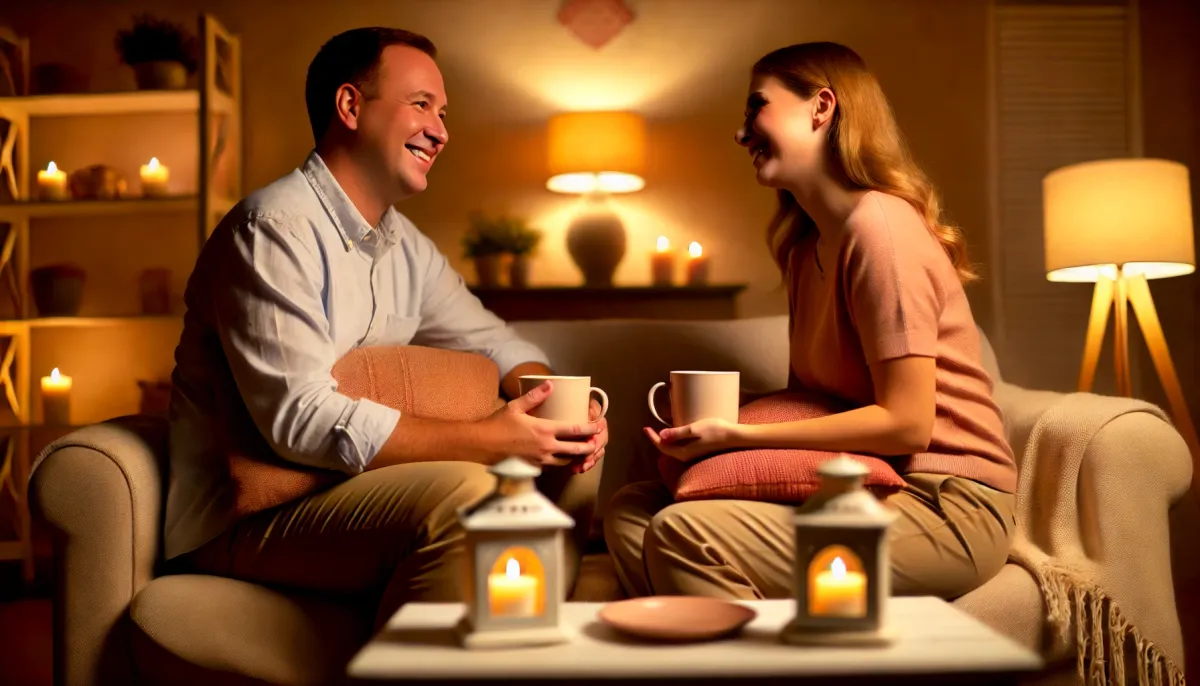
Benefit 5: Affection Becomes Less Distracted
Romantic connection often depends on small moments rather than dramatic gestures.
These may include:
- Sitting close
- Holding hands
- Leaning against one another
- Sharing a drink
- A lingering hug
- Catching each other’s eyes
- Dancing for one song
- Talking in bed
Phones physically occupy the hands and visually occupy the eyes.
They can make affection feel secondary or interrupted.
When the devices are removed, partners may naturally turn toward each other more often.
This does not guarantee physical intimacy, nor should a phone-free evening create an expectation of sex.
Its benefit is simpler:
Affection has room to appear without needing to overcome constant distraction.
Benefit 6: Boredom Can Become Playfulness
People often reach for phones at the first sign of boredom.
Yet boredom can be productive inside a relationship.
When no ready-made entertainment is available, couples may begin to:
- Joke
- Tell stories
- Play a game
- Cook together
- Go for a walk
- Invent plans
- Browse old photographs
- Ask unusual questions
- Dance
- Sit quietly
A few initially awkward minutes may develop into something more personal than another evening of parallel scrolling.
Phones deliver effortless novelty.
Playfulness requires two people to create novelty together.
That shared creation can strengthen a couple’s sense of identity.
Benefit 7: It Reduces Social Comparison
Social media exposes people to polished fragments of other lives.
During one short session, someone may see:
- Luxury holidays
- Elaborate proposals
- Perfectly decorated homes
- Attractive bodies
- Expensive gifts
- Public declarations of love
- Couples who appear constantly happy
Even when users understand that these images are selective, comparison may influence mood.
A quiet evening at home can suddenly feel insufficient.
A normal partner may appear less romantic than a carefully edited stranger.
Phone-free time reduces this stream of comparison and returns attention to the relationship as it actually exists.
The couple can ask:
- What do we enjoy?
- What kind of romance suits us?
- What feels meaningful within our budget and energy?
- What do we value when no one else is watching?
Intimacy becomes more authentic when it is not designed for an invisible audience.
Benefit 8: It Can Reduce Jealousy Triggers
Phones contain enormous amounts of ambiguous social information.
A partner may notice:
- A new follower
- A name appearing in notifications
- A liked photograph
- An old message
- A delayed reply
- Online activity without a response
- A social event they were not invited to
Some concerns may be legitimate and deserve honest discussion.
Others arise from incomplete context.
A phone-free evening cannot solve trust problems, but it can create temporary relief from the continuous monitoring that fuels suspicion.
It also gives couples a better setting for discussing digital boundaries calmly.
Those boundaries may include:
- Whether phones are private
- What counts as inappropriate messaging
- How former partners are handled
- Whether location sharing is voluntary
- How social media affects the relationship
- When work messages should stop
The goal is not secrecy.
It is preventing digital evidence from becoming the primary language through which partners interpret each other.
Benefit 9: Meals Become More Relational
Eating together is one of the simplest forms of shared ritual.
Yet phones can turn a meal into two separate experiences happening at the same table.
One person may scroll while chewing.
The other answers messages between sentences.
The meal becomes functional rather than relational.
A phone-free dinner encourages partners to notice:
- The food
- Each other’s expressions
- The pace of conversation
- The atmosphere
- The simple fact of sharing time
The meal does not need to be expensive or homemade.
Even takeaway can feel intentional when both people are mentally present.
Benefit 10: You May Feel Less Mentally Crowded
A smartphone allows hundreds of unrelated concerns to enter one evening.
Within minutes, a person may encounter:
- A work problem
- Political news
- A family argument
- An upsetting video
- A sale
- A friend’s crisis
- A financial alert
- A stranger’s opinion
The nervous system receives all of this while the body remains physically at home.
A phone-free evening narrows the emotional field.
For a limited period, partners do not need to process everyone else’s urgency.
They can focus on:
- The room
- The meal
- The conversation
- The relationship
- Rest
This reduction in mental crowding may make it easier to shift from public demands toward private life.
Benefit 11: It Creates a Clearer Boundary Around Work
Remote work and constant connectivity have weakened the separation between professional and personal time.
A message arriving after dinner may pull someone immediately back into:
- Deadlines
- Performance anxiety
- Workplace conflict
- Problem-solving
- Tomorrow’s responsibilities
Even when the message takes only one minute to answer, the mind may remain at work much longer.
A phone-free evening creates a boundary:
Work will continue tomorrow.
The relationship receives this period now.
This boundary can be especially important when one or both partners work from home and no physical commute marks the end of the working day.
Benefit 12: It Can Support Better Sleep Habits
Evening phone use may delay bedtime through scrolling, messaging, work, and entertainment. Light, stimulation, and notifications can also interfere with the transition toward sleep.
The CDC recommends turning off electronic devices at least 30 minutes before bedtime as part of healthier sleep habits. It also recommends keeping the bedroom quiet, relaxing, and comfortably cool.
A phone-free final hour may help couples:
- Go to bed closer to the intended time
- Reduce late-night work
- Avoid upsetting content
- Dim the environment
- Talk quietly
- Read
- Develop a calmer routine
Better sleep can indirectly support relationships.
Exhaustion often reduces patience, emotional regulation, playfulness, and desire.
Removing phones does not cure insomnia, but it may remove one common barrier to winding down.
Benefit 13: Bed Becomes a Place for Rest and Connection Again
Many people use their phones in bed for:
- News
- Work
- Shopping
- Videos
- Social media
- Arguments
- Games
The bed then becomes associated with alertness and endless input.
A phone-free evening, especially when phones remain outside the bedroom, can restore a clearer association between bed and:
- Sleep
- Affection
- Conversation
- Quiet
- Physical comfort
Partners may discover that they speak more openly in the final minutes before sleep when neither person is facing a screen.
Benefit 14: It Reveals Avoidance Patterns
Phones can become socially acceptable escape routes.
Someone may reach for a device when:
- A conversation becomes emotional
- Silence feels uncomfortable
- They fear conflict
- They feel rejected
- They do not know how to respond
- They want to avoid household tension
Without the phone, those patterns become more visible.
This can feel uncomfortable.
A phone-free evening may reveal that the device was not the only problem.
The couple may discover:
- They struggle to speak without discussing logistics.
- One person feels chronically unheard.
- There is unresolved resentment.
- Silence between them feels tense.
- They have forgotten how to relax together.
- One partner uses the phone to regulate anxiety.
These discoveries should not be treated as failure.
They are information.
A device-free evening can expose the areas where the relationship needs more care.
Benefit 15: It Creates Shared Memory
People remember emotionally distinctive experiences.
An evening of ordinary scrolling often blends into every other evening.
A phone-free night may contain:
- An unexpected conversation
- A badly cooked meal
- A card game
- A walk after dark
- Laughter
- A new plan
- A moment of honesty
- Comfortable silence
These moments become part of the couple’s shared story.
The evening feels longer not because time changes, but because more of it is consciously experienced.
Are Phones Always Bad for Couples?
No.
Technology can support relationships in many ways.
Couples use phones to:
- Stay connected during separation
- Share affection
- Coordinate responsibilities
- Send photographs
- Maintain long-distance relationships
- Access support
- Plan dates
- Share music
- Manage health and safety
Pew Research found that technology can be both a source of closeness and a source of conflict or distraction for couples. In one survey, a quarter of cellphone owners in serious relationships said their partner had been distracted by a phone while they were alone together.
The realistic goal is not elimination.
It is intentional use.
A healthy relationship with technology asks:
“Is this device supporting the moment or replacing it?”
What a Phone-Free Evening Cannot Fix
Putting phones away will not automatically solve:
- Betrayal
- Contempt
- Coercion
- Chronic dishonesty
- Emotional abuse
- Serious incompatibility
- Untreated addiction
- Deep resentment
- Persistent communication breakdown
The evening may make these problems easier to notice.
It cannot repair them without accountability, communication, and possibly professional support.
Phone-free time works best as a supportive ritual, not as a substitute for addressing serious issues.
How to Plan a Phone-Free Evening
Step 1: Make It a Shared Experiment
Do not announce:
“You are always on your phone, so tonight I am taking it away.”
That approach creates defensiveness and control.
Try:
“I feel like our evenings disappear into our screens. Could we try one phone-free evening and see how it feels?”
The goal should be mutual connection, not punishment.
Step 2: Define What “Phone-Free” Means
Agree on the practical rules.
Questions to discuss include:
- How long will it last?
- Are emergency calls allowed?
- Can one phone play music?
- Do we need to be reachable for children or relatives?
- Are smartwatches included?
- Will television or laptops also be avoided?
- Where will the phones be placed?
Clarity prevents one partner from imagining complete disconnection while the other continues checking messages through a watch.
Step 3: Notify Important People When Necessary
Parents, caregivers, and on-call professionals may need a plan.
You might:
- Allow calls from selected emergency contacts
- Use emergency bypass settings
- Tell family you will be unavailable for two hours
- Keep one device audible in another room
- Set a clear end time
The ritual should create peace, not fear that an emergency will be missed.
Step 4: Put the Phones Out of Reach
A phone face-down on the table remains psychologically present.
Place devices:
- In another room
- Inside a drawer
- In a basket near the entrance
- On a charger away from the activity
- In a timed lockbox, when both partners freely agree
Physical distance reduces automatic checking.
Step 5: Choose a Loose Activity
An empty evening may feel awkward initially.
Plan one simple anchor.
Options include:
- Cooking
- A walk
- Cards
- A puzzle
- A home tasting
- A bath or spa evening
- Looking through photographs
- Listening to an album
- A question jar
- Reading aloud
- Planning a trip
- Sharing dessert
The activity should create interaction without over-scheduling every minute.
Step 6: Avoid Turning It Into a Relationship Summit
A phone-free evening does not need to become three hours of intense emotional processing.
Begin lightly.
Talk, laugh, cook, or sit together.
Deeper conversation may emerge naturally.
If an important conflict needs resolution, choose a suitable time rather than ambushing your partner under the label of intimacy.
Step 7: End With a Brief Check-In
Ask:
- What did you enjoy?
- What felt uncomfortable?
- Did you miss your phone?
- Did the evening feel different?
- Would you try it again?
- What should we change next time?
The purpose is learning, not proving that one partner was right.
15 Phone-Free Evening Ideas
1. Cook a New Recipe Together
Choose something unfamiliar enough to require cooperation but simple enough to remain enjoyable.
2. Take a Night Walk
Leave the phones behind when safe, or carry one emergency device that remains unused.
3. Play a Card or Board Game
Friendly competition can restore playfulness.
4. Create a Dessert Tasting
Compare several inexpensive chocolates, fruits, pastries, or ice creams.
5. Listen to One Album From Beginning to End
Take turns choosing music and explain why it matters.
6. Exchange Relationship Questions
Ask about memories, dreams, affection, and future plans.
7. Recreate an Early Date
Return to an old meal, song, film, or memory.
8. Create a Home Spa
Use warm towels, comfortable lighting, tea, and consensual massage.
9. Look Through Old Photographs
Choose physical albums or print several images in advance.
10. Build a Shared Vision Board
Use magazines, paper, pens, and printed images rather than digital apps.
11. Read to Each Other
Choose poetry, a short story, humorous writing, or a favorite chapter.
12. Have a Living-Room Picnic
Move dinner to the floor, balcony, or another unusual place.
13. Write Short Love Letters
Describe one quality you admire and one hope for the relationship.
14. Plan a Low-Cost Date
Use paper and conversation to choose the next outing.
15. Do Nothing for Ten Minutes
Sit together without music, screens, or a task.
Notice what happens after the urge to fill the silence passes.
Conversation Prompts for a Phone-Free Evening
Use one or two, not the entire list.
- What has been occupying your mind lately?
- When did you feel closest to me this week?
- What is one thing we do well as a couple?
- What kind of evening helps you feel most relaxed?
- What have you been excited to tell me?
- What part of our routine should we change?
- What do you miss from the beginning of our relationship?
- What new experience should we try?
- When do you feel most appreciated by me?
- What is one small thing I could do this week to support you?
- What made you laugh recently?
- What do you hope our life feels like next year?
- Which memory of us would you relive?
- What kind of affection have you been needing?
- What should we protect from becoming too routine?
What to Do When the Evening Feels Awkward
The first phone-free evening may not feel romantic.
You may notice:
- Restlessness
- Silence
- The urge to check notifications
- Difficulty choosing a topic
- Irritation
- Tiredness
- The realization that you rely heavily on digital entertainment
Do not panic.
The discomfort may reflect habit rather than incompatibility.
Start with a structured activity.
Avoid staring at each other while demanding instant intimacy.
Connection may return through:
- Shared movement
- A simple game
- Food
- Music
- Humor
- A practical project
It may take several attempts before the ritual feels natural.
What If One Partner Does Not Want to Participate?
Resistance may come from several places.
The phone may be used for:
- Work
- Anxiety management
- Social support
- Entertainment
- Habit
- Avoiding conflict
- Caregiving responsibilities
Do not force the issue.
Ask:
“What would make this manageable?”
Possible compromises include:
- Starting with 20 minutes
- Keeping emergency calls available
- Choosing one meal rather than a full evening
- Allowing music
- Scheduling the experiment in advance
- Selecting an activity the reluctant partner enjoys
A relationship ritual cannot build closeness when one person experiences it as control.
What If Work Requires Constant Availability?
Not every job allows full disconnection.
Try a reduced-distraction version:
- Allow calls but disable social-media notifications.
- Check work once at a scheduled time.
- Keep the device in another room at full volume for emergencies.
- Use a separate work phone that remains untouched unless it rings.
- Choose the least demanding evening of the week.
The goal is not perfection.
It is creating more uninterrupted attention than usual.
What If You Have Children?
Parents can adapt the ritual by:
- Keeping emergency calls enabled
- Starting after bedtime
- Using a landline for urgent contact
- Telling caregivers how to reach them
- Keeping one phone nearby but face-down and silent
- Trying a 30-minute period rather than an entire night
Children may also participate in a family screen-free meal before the couple continues with private time.
Is a Phone-Free Evening a Digital Detox?
The phrase digital detox usually refers to intentionally reducing or stopping technology use for a period.
A phone-free evening can be considered a small digital detox, but the term may make the practice sound more extreme than necessary.
The goal is not to purify the relationship from technology.
It is to develop choice.
A person should be able to use a phone intentionally and also put it down intentionally.
When the second option feels impossible, the habit deserves attention.
How Often Should Couples Have a Phone-Free Evening?
There is no universal requirement.
Possible schedules include:
- Once a week
- Twice a month
- One meal each day
- The first hour after work
- The final 30 minutes before sleep
- Every date night
- One weekend afternoon each month
Consistency may matter more than length.
A reliable 30-minute ritual can be more beneficial than an ambitious full evening attempted once and then abandoned.
A Beginner-Friendly 60-Minute Plan
Minutes 0–10: Transition
Place phones away, change the lighting, prepare drinks, and settle.
Minutes 10–25: Shared Activity
Cook, walk, or eat together.
Minutes 25–40: Conversation
Choose one or two prompts.
Minutes 40–50: Affection or Quiet
Hold hands, cuddle, listen to music, or sit together without expectation.
Minutes 50–60: Close the Evening
Discuss what felt good and whether you want to repeat the experiment.
A Full Phone-Free Date Night Plan
Before the Evening
- Finish urgent messages.
- Notify necessary contacts.
- Choose food.
- Prepare music offline when needed.
- Place phones away.
First Hour
Share dinner or cook together.
Second Hour
Choose a playful activity such as cards, tasting, music, or a walk.
Final Hour
Move toward quieter conversation, affection, reading, or rest.
End without immediately returning to separate screens when possible.
Common Phone-Free Evening Mistakes
Mistake 1: Using It as Punishment
The goal is connection, not proving that your partner has a problem.
Mistake 2: Expecting Instant Romance
Removing phones creates space. It does not automatically fill that space with chemistry.
Mistake 3: Replacing Phones With Television
A film can be a shared activity, but passive viewing may not provide the interaction you hoped to create.
Mistake 4: Ignoring Emergency Responsibilities
Adapt the rules realistically.
Mistake 5: Creating a Test
Do not measure love by whether your partner appears perfectly entertained without technology.
Mistake 6: Forcing Deep Disclosure
Honesty should be invited, not extracted.
Mistake 7: Checking Secretly
Hidden phone use undermines the shared agreement more than openly renegotiating it.
Mistake 8: Making One Partner Plan Everything
Alternate responsibility or decide together.
Mistake 9: Becoming Judgmental About Technology
Phones can support real relationships. The aim is balance, not superiority.
Mistake 10: Returning to the Phone Immediately After Every Silence
Allow some quiet to remain.
Signs the Ritual Is Helping
You may notice:
- Longer conversations
- More eye contact
- Increased laughter
- Earlier bedtime
- Less conflict over phones
- More affectionate touch
- Greater awareness of each other’s mood
- A calmer evening atmosphere
- More shared ideas and plans
- Reduced impulse to check constantly
The benefit may also be subtle.
You may simply finish the evening feeling that you were genuinely together.
When Phone Use May Signal a Deeper Problem
Consider further discussion when phone behavior repeatedly involves:
- Hiding screens
- Secret accounts
- Monitoring a partner
- Demanding passwords
- Ignoring agreed boundaries
- Using the phone to avoid every difficult conversation
- Anger when asked to pause
- Interference with sleep, work, parenting, or safety
- Constant use despite serious relationship conflict
The issue may involve habit, anxiety, work stress, compulsive use, trust problems, or controlling behavior.
A phone-free evening alone may not be enough.
Couples therapy or individual professional support may be appropriate when the pattern causes significant distress and cannot be discussed safely.
Final Thoughts
A phone-free evening is a small act of relational rebellion against a culture of constant availability.
It says that not every notification deserves immediate access.
Not every message needs to enter dinner.
Not every public event needs to interrupt a private one.
Research on partner phubbing increasingly connects phone distraction with reduced relationship satisfaction, intimacy, responsiveness, and emotional closeness, although the direction of cause and effect can be complex.
The benefits of unplugging are not mysterious.
Phones occupy the eyes, hands, attention, and emotional bandwidth.
Removing them temporarily gives those resources back to the room.
Partners may listen more carefully.
They may notice each other’s expressions.
They may laugh, become bored, speak honestly, sit quietly, or rediscover forms of affection that had been crowded out by habit.
The evening may also expose distance.
That is not necessarily a reason to abandon the experiment.
It may be the first time the distance has been visible without digital noise covering it.
A phone-free evening does not need candles, expensive food, or a perfectly romantic plan.
It may involve reheated dinner and a tired conversation.
Its value lies in the message beneath the ritual:
“For this limited period, I am not merely near you. I am available to you.”
That availability is increasingly rare.
It is also one of the simplest forms of intimacy.
Frequently Asked Questions
What is a phone-free evening?
It is an agreed period when partners avoid unnecessary phone use and focus on each other or a shared activity.
How long should a phone-free evening last?
It can last from 20 or 30 minutes to an entire evening.
Do phones need to be switched off completely?
No. They can remain available for emergencies while unnecessary notifications and checking are restricted.
What is phubbing?
Phubbing means ignoring or partially ignoring someone in favor of a phone.
Is partner phubbing associated with lower relationship satisfaction?
Yes. Research and a recent meta-analysis have linked partner phubbing with poorer relationship satisfaction, intimacy, responsiveness, and emotional closeness.
Does phubbing definitely cause relationship problems?
Not always. Many studies are correlational, so relationship dissatisfaction may also increase phone use. The two patterns may reinforce each other.
Can a single phone glance damage a relationship?
Ordinary brief use is unlikely to define a relationship. The repeated pattern and emotional meaning matter more.
Why does phone distraction feel hurtful?
It may communicate that the conversation or partner is less important than whatever is happening on the screen.
Can phone-free time improve communication?
It can provide longer, less interrupted opportunities for listening and conversation.
Can it improve intimacy?
It may support emotional and affectionate closeness by creating focused attention and reducing distraction.
Does phone-free intimacy always mean physical intimacy?
No. Intimacy may involve conversation, affection, laughter, trust, or comfortable silence.
Should a phone-free evening lead to sex?
No. The ritual should never create an expectation or obligation.
Can phone-free time improve sleep?
Reducing device use before bed may support healthier sleep routines. The CDC recommends switching off electronic devices at least 30 minutes before bedtime.
Is blue light the only problem?
No. Content, emotional stimulation, notifications, work, and delayed bedtime also matter.
Can phones be used for music during the evening?
Yes, when both partners agree and the device is not used for other distractions.
Does watching television count as phone-free time?
Technically yes, but it may not provide the focused interaction couples are seeking.
Should smartwatches also be removed?
Consider disabling unnecessary alerts because a watch can recreate the same interruptions.
What should couples do during a phone-free evening?
They can cook, walk, play games, listen to music, share dessert, ask questions, read, or simply sit together.
What is the easiest activity for beginners?
A phone-free meal or 20-minute walk is usually manageable.
What if the evening feels boring?
Boredom is normal at first. Choose a structured activity and allow time for the habit of checking to weaken.
What if conversation feels awkward?
Use cards, a question jar, cooking, or another shared task to reduce pressure.
What are good conversation questions?
Ask about recent feelings, shared memories, future plans, appreciation, stress, and desired forms of connection.
Should couples discuss relationship problems during the evening?
They may, but the ritual should not become an unexpected confrontation.
Can a phone-free evening fix a struggling relationship?
It may improve attention but cannot resolve serious conflict, betrayal, abuse, or incompatibility on its own.
How often should couples unplug together?
Choose a realistic schedule, such as one meal a day, one hour a week, or two evenings a month.
Is once a month enough?
It may still be meaningful. Regularity is more important than following one ideal frequency.
What if one partner refuses?
Ask what concerns them and consider a shorter or more flexible version. Do not impose the ritual as punishment.
What if someone needs the phone for work?
Allow emergency calls, use scheduled checks, or choose a period when work demands are lower.
Can parents have a phone-free evening?
Yes. They can keep emergency contacts enabled or begin after children are asleep.
What if a caregiver needs to remain reachable?
Keep one device available for selected contacts while avoiding unrelated use.
Where should phones be placed?
Another room, a drawer, a basket, or a charger away from the shared activity.
Is placing a phone face-down enough?
It helps, but the device may remain mentally and visually present.
Should partners use a phone lockbox?
Only when both freely agree. It should not be used to control another adult.
Is a phone-free evening a digital detox?
It can be viewed as a small digital detox, although its main purpose is intentional connection.
Are smartphones harmful to all relationships?
No. They can support communication, affection, safety, and long-distance connection.
What did Pew Research find about phones and couples?
Pew found that technology can support closeness while also creating distraction and conflict. One survey found that one-quarter of cellphone owners in serious relationships felt their partner was distracted by their phone while they were alone together.
Can phones create jealousy?
Yes. Notifications, online activity, likes, former partners, and ambiguous messages may trigger insecurity or conflict.
Should couples share phone passwords?
That is a personal boundary. No one should be pressured to surrender digital privacy as proof of love.
Can phone-free time reduce jealousy?
It may reduce immediate digital triggers, but underlying trust concerns still need discussion.
Why is eye contact important?
Eye contact helps communicate attention, emotion, warmth, and responsiveness.
Can phones affect active listening?
Yes. Divided attention can make it easier to miss tone, expression, and emotional detail.
What is perceived partner responsiveness?
It is the feeling that a partner understands, values, and cares about your experience.
How is phubbing related to responsiveness?
Research suggests partner phubbing may reduce relationship quality partly by making people feel that their partner is less responsive.
What if both partners enjoy scrolling together?
Shared digital activities can be connecting. The question is whether they are chosen together or replacing desired interaction.
Can gaming together count as quality time?
Yes, when it feels collaborative and satisfying to both partners.
Is checking the phone during silence always rude?
No. The meaning depends on context and shared expectations. Repeated automatic checking may still prevent deeper connection.
Can phones be used to avoid conflict?
Yes. Some people retreat into devices when emotional discomfort appears.
What should couples do if unplugging reveals tension?
Treat it as useful information and discuss the underlying distance calmly.
What is a good one-hour phone-free plan?
Spend 15 minutes settling, 25 minutes on a shared activity, 15 minutes talking, and five minutes reflecting.
Can couples start with only ten minutes?
Yes. A short, successful ritual can be expanded later.
Should restaurants ban phones during dates?
Couples can create their own agreement without relying on restaurant rules.
Is photographing food or the date acceptable?
Yes, when both agree. Take the photograph and then put the phone away.
What if one partner secretly checks?
Discuss why the agreement was difficult rather than immediately turning it into a moral failure.
Can phone-free evenings become another obligation?
Yes. Keep them flexible and enjoyable rather than measuring relationship success through perfect participation.
What is the most important rule?
The practice should be mutual, realistic, and focused on connection rather than control.
What is the simplest way to begin?
Put both phones in another room during one meal and give each other complete attention until the meal ends.