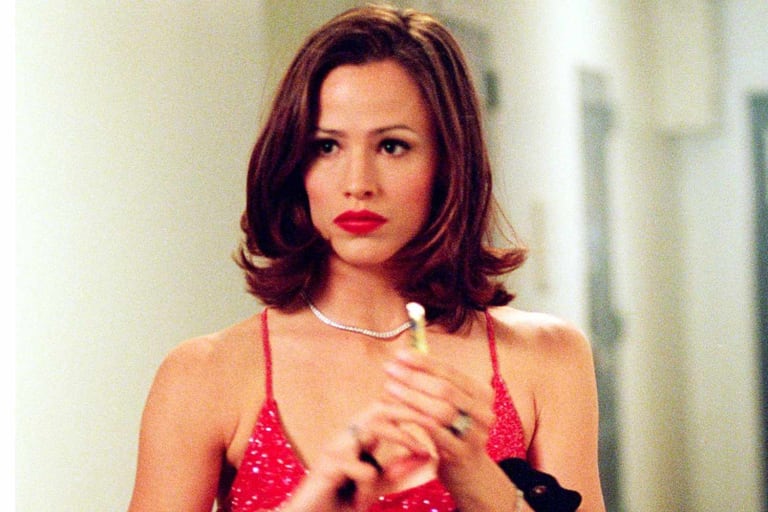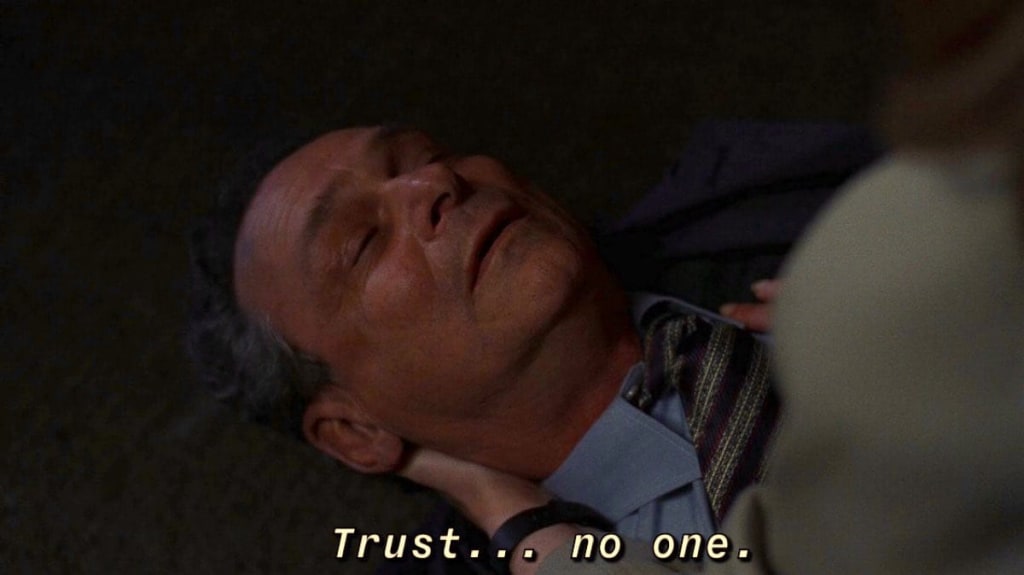
Trust No One—But Not Everything: What The X-Files Got Right, and Wrong, About Conspiracy Theories
When The X-Files premiered in 1993, it arrived at exactly the right moment to turn American distrust into weekly entertainment. The show followed FBI agents Fox Mulder and Dana Scully through monsters, abductions, cover-ups, and a sprawling secret-state mythology, but its most enduring subject was never aliens alone. It was paranoia—the fear that powerful institutions know more than they admit, hide more than they confess, and act with impunity behind official language. The series ran from 1993 to 2002, then returned in 2016 and 2018, becoming one of television’s great cultural touchstones of suspicion.
That is why the question of what The X-Files got right and wrong about conspiracy theories still matters. The show was not merely a product of 1990s pop culture. It helped shape a modern style of thinking about secrecy, truth, and authority. It taught viewers that official narratives might be incomplete, that evidence might be buried, and that the line between “crazy theory” and “buried fact” was less stable than polite society pretended. But it also dramatized conspiracy in ways that now look both thrilling and dangerous: omnipotent cabals, nearly perfect cover-ups, lone truth-seekers, and a world where intuition often outruns evidence.
The real answer, then, is complicated. The X-Files got something important right: public distrust of powerful institutions did not come from nowhere. It grew out of documented abuses, covert programs, political scandals, and a long record of officials lying, spying, experimenting, and obstructing. But the show also got something important wrong: it often turned distrust into a grand unifying style, where disparate abuses and uncertainties merged into one elegant meta-plot. Real conspiracies are usually uglier, more fragmented, more bureaucratic, and less all-powerful than television makes them look.
Why The X-Files Felt So True
One reason The X-Files hit so hard in the 1990s is that it inherited a very real American history of institutional betrayal. This was a country that had already lived through Watergate, where a burglary and its cover-up reached the Nixon White House and ended in a presidential resignation. The National Archives summarizes the scandal as a break-in at Democratic National Committee offices that exposed abuses reaching the highest levels of the administration. That was not a conspiracy theory. It was a conspiracy.
The series also emerged in the long shadow of the Church Committee, the 1975 Senate investigation into intelligence abuses. The Senate’s own history page says the committee identified “a wide range of intelligence abuses” by agencies including the CIA, FBI, NSA, and IRS. Those findings mattered culturally because they publicly confirmed what had once sounded paranoid: parts of the U.S. national-security state really had surveilled, infiltrated, manipulated, and abused citizens in secret.
That background helps explain why Mulder’s worldview did not feel purely delusional. Programs like COINTELPRO were real. The FBI’s own Vault says COINTELPRO began in 1956 to disrupt the Communist Party and later expanded into operations targeting other political organizations. The Church Committee’s condemnation was severe, concluding that many COINTELPRO techniques would be intolerable in a democratic society and that the program aimed at preventing the exercise of First Amendment rights.
Other examples were just as corrosive. MKUltra, now documented in CIA records and later Senate investigation materials, involved covert mind-control and drug experimentation. The CIA Reading Room and Senate materials both acknowledge MKUltra as a real covert program tied to chemical and behavioral experimentation. Likewise, the Tuskegee syphilis study was not some fringe rumor; the CDC states that from 1932 to 1972, U.S. public health officials studied untreated syphilis in Black men without proper informed consent and continued even after penicillin became the standard treatment.
Seen in that light, The X-Files was not inventing distrust out of thin air. It was dramatizing a country whose institutions had repeatedly earned suspicion. The show’s mood—“trust no one,” question authority, assume concealment—felt plausible because history had supplied enough receipts to make paranoia emotionally legible. That is one of the main things the show got right.
What the Show Understood About Conspiracy Culture
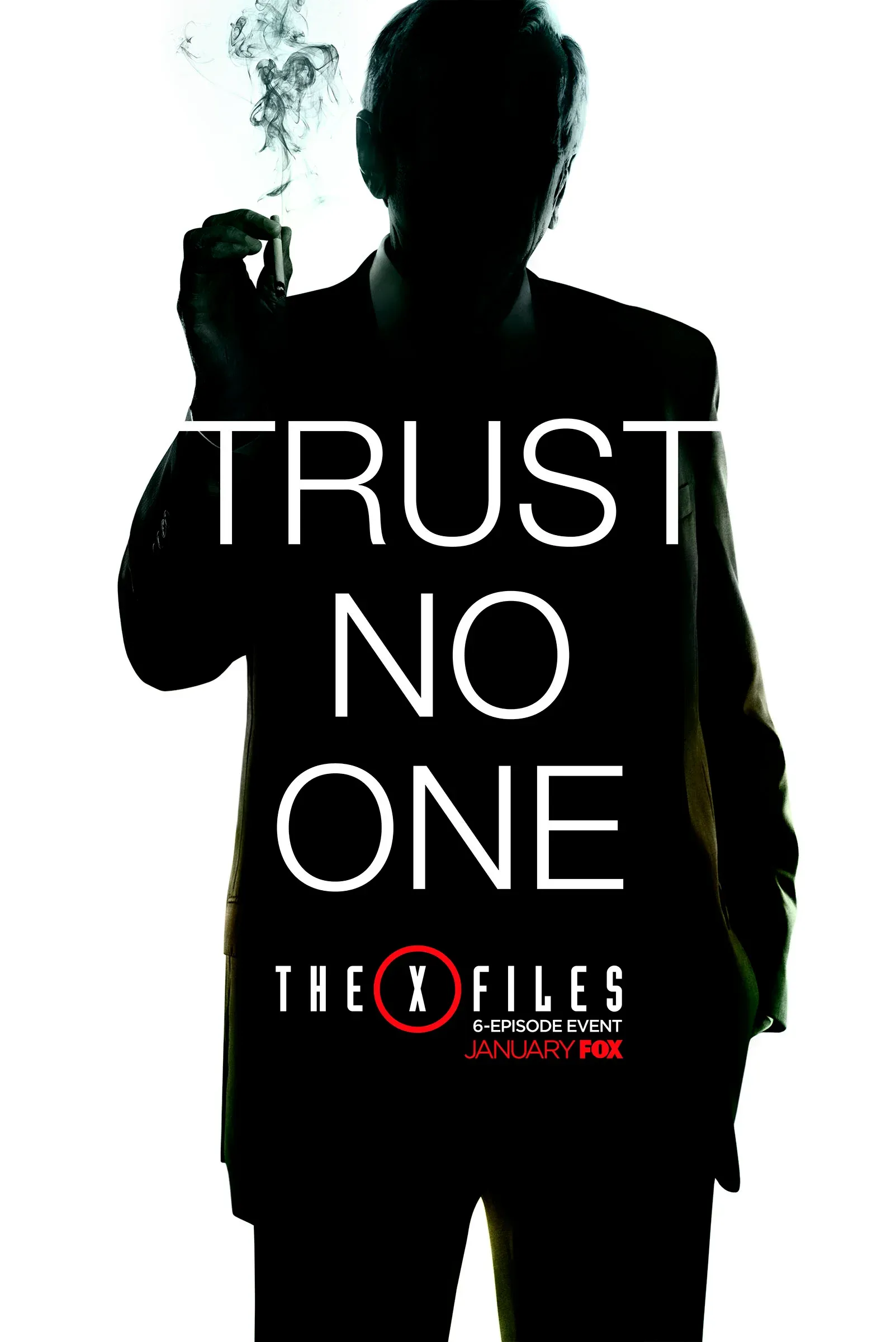
At its best, The X-Files understood that conspiracy culture is rarely just about bizarre claims. It is about epistemic mood—a way of feeling about the world when official stories seem too neat, institutions too insulated, and power too opaque. Academic work on the show’s legacy repeatedly notes that The X-Files was built on themes of “truth,” distrust, revisionist history, and the belief that those in power are lying. That mood has only grown more recognizable in later decades.
The show also understood something more subtle: conspiracy thinking is emotionally appealing because it gives chaos a shape. Instead of saying the world is unstable, indifferent, and full of accidental cruelty, conspiracy narratives say someone is doing this. That is psychologically powerful. A major review in Current Directions in Psychological Science says people are more likely to turn to conspiracy theories when they feel anxious, powerless, or uncertain. Theories of hidden control can restore a feeling of explanation, even if the explanation itself is false.
Read More: The X-Files (1993–2018): Where Paranormal Mysteries Meet Conspiracies
Mulder embodied exactly that temptation, though in noble form. He was not simply gullible. He was a pattern-seeker who believed that official denials usually meant something was there. In a world with real Watergates, real covert programs, and real institutional lies, that stance could look less like madness and more like vigilance. The show understood that one can become conspiratorial not because one rejects evidence, but because history teaches that evidence is often hidden, destroyed, or classified.
What It Got Right About Real-Life Conspiracies We Cannot Ignore
One of the series’ lasting strengths is that it never fully let viewers relax into the idea that government secrecy was mere fantasy. In retrospect, some of its recurring anxieties now look more prophetic than absurd.
Take surveillance. The X-Files was saturated with tapped lines, concealed recordings, informants, secret files, and watchers in the walls. At the time, that could feel like post-Watergate atmosphere. After Edward Snowden’s 2013 disclosures, it looked less exaggerated. The U.S. Privacy and Civil Liberties Oversight Board’s report on the NSA’s Section 215 telephone records program described a system of bulk telephony metadata collection, and the Obama Review Group’s report acknowledged the intense controversy and reform pressure surrounding U.S. intelligence practices after those disclosures.
The show also got right the fact that real conspiracies are often not science-fictional master plans but state secrecy plus institutional self-protection. Watergate involved burglary and cover-up. COINTELPRO involved infiltration and disruption. MKUltra involved covert research and destroyed records. Tuskegee involved racist exploitation masked as medical study. None of these cases required extraterrestrials or shape-shifters. They required bureaucracies convinced that secrecy and control justified almost anything.
That is where The X-Files was genuinely smart. It sensed that the deepest American fear was not “the weird thing exists.” It was “the weird thing exists and the people in charge know.” That suspicion, however melodramatically framed, rested on a real historical pattern.
Where The X-Files Got Conspiracy Theories Wrong
But the show also got major things wrong—wrong not as entertainment, but as a model of how conspiracy actually works.
The biggest distortion was the single hidden master narrative. In The X-Files, disparate mysteries often collapse into one super-conspiracy with astonishing continuity and reach. Real conspiracies rarely behave that way. They are usually fragmented, compartmentalized, internally contradictory, and often incompetent. Watergate unraveled because it was sloppy. COINTELPRO was broad but not omniscient. MKUltra included destroyed records and incomplete archives. Real abuses are dangerous, but they are not usually elegant.
The show also blurred an important line between healthy skepticism and totalized distrust. Mulder’s instinct was often to assume that institutions lie and anomalies matter. As television, that is fantastic. As a civic habit, it can curdle. Research on conspiracy beliefs consistently finds links with anxiety, powerlessness, and intuitive thinking, while more recent reviews warn that conspiracy beliefs can worsen distrust and intergroup hostility. The APA also notes that misinformation and disinformation damage public health, democracy, and social trust.
That matters because The X-Files came from a media environment where conspiracy was often thrilling but still somewhat bounded by narrative form. Today, conspiracy culture spreads through social media, algorithmic recommendation, pseudo-documentary video, and self-sealing online communities. In that ecosystem, “trust no one” is much riskier than it sounded in 1995. Chris Carter himself has acknowledged that today’s environment is unusually fertile for conspiracy theories and collective distrust, and later commentary on the series has noted how much harder that mood is to navigate now.
The Show’s Most Important Mistake: It Made Intuition Look Enough
Another thing The X-Files got wrong was epistemological style. Mulder was often right for reasons that would not survive ordinary standards of proof. He intuited patterns, trusted fringe witnesses, pursued hunches, and then the show often rewarded him with confirmation. That worked beautifully as drama because it made him heroic. But in real life, intuition plus distrust is not a reliable method. It is one reason conspiracy thinking spreads so easily.
Psychological research shows that exposure to misinformation increases the odds of believing it, and conspiracy beliefs can become self-sealing: debunking is sometimes reframed as part of the cover-up. The Douglas review specifically notes that some conspiracy theories imply that people who try to debunk them may themselves be part of the conspiracy. That is not just bad logic; it is a trapdoor out of shared reality.
This is where the show’s elegance becomes dangerous if translated too literally into civic life. In fiction, the lonely truth-seeker can be right against the world. In reality, that posture can easily become a style of permanent epistemic rebellion, where suspicion itself becomes evidence. The X-Files understood how seductive that feels. It did less well at showing how corrosive it can become.
Why the Show Still Matters
Even with those distortions, The X-Files remains worth taking seriously because it captured a real transition in American culture: from post-Watergate skepticism to a generalized suspicion of institutions. Scholarly work on the show’s legacy argues that its focus on distrust, conspiracy, and cynical reinterpretations of history still resonates in the post-financial-crisis and post-2016 political landscape. It did not invent that landscape, but it helped teach audiences how to feel inside it.
That is why the best way to read the series now is not as a guide to truth, but as a guide to mood. It was brilliant at rendering the sensation that something is off, that authorities may be withholding, that modern life contains hidden systems beyond ordinary sight. On that front, it remains one of the sharpest television dramas ever made. But if we ask it to teach us how to distinguish evidence-based suspicion from fever-dream conspiracism, it becomes much shakier.
The Real Lesson
The real lesson of The X-Files is not that conspiracies are everywhere. It is that trust must be earned, not presumed—and that history gives us plenty of reasons to scrutinize powerful institutions. Watergate, COINTELPRO, MKUltra, Tuskegee, and the later surveillance revelations all prove that secrecy plus power can produce real abuses. Those are not fringe fantasies. They are documented history.
But the second lesson is just as important: not every anomaly is a plot, not every secrecy claim is equal, and not every distrust instinct deserves elevation into worldview. Real conspiracies should make us more serious about evidence, oversight, accountability, and transparency—not more in love with omnipotent hidden-master stories that explain everything and prove nothing. Research on conspiracy beliefs makes that distinction urgent, because conspiratorial framing can deepen anxiety, polarize groups, and weaken shared standards of proof.
Final Verdict
The X-Files got the emotional truth of conspiracy culture astonishingly right. It understood that public distrust often grows out of real secrecy, real abuse, and real institutional deception. In a country that had already lived through Watergate, COINTELPRO, MKUltra, Tuskegee, and later would reckon with mass-surveillance disclosures, Mulder’s suspicion did not emerge from nowhere. It emerged from history.
What the show got wrong was the shape of conspiracy itself. It turned systemic abuse into grand narrative elegance, made lone intuition look more reliable than it is, and helped romanticize a style of distrust that today can feed misinformation as easily as it once fueled smart television. That is why the series remains so relevant: it sits exactly on the line between justified skepticism and seductive overreach. The truth may be out there, but The X-Files also reminds us—perhaps more than it intended—how badly people can lose their way while looking for it.
FAQ
Was The X-Files based on real conspiracies?
Not directly in a documentary sense, but the show’s paranoid mood drew strength from real U.S. scandals and abuses such as Watergate, COINTELPRO, MKUltra, and later-revealed surveillance programs.
What did
The X-Files get right about conspiracy theories?
It got right that institutional distrust often has a historical basis. Governments and intelligence agencies have committed real abuses in secret, and that history helps explain why conspiracy thinking can feel emotionally plausible.
What did the show get wrong?
It often portrayed conspiracy as one vast, nearly omnipotent hidden order, whereas real conspiracies are usually messier, more fragmented, and less all-controlling than fiction suggests.
Why is The X-Files still relevant now?
Because many of its themes—distrust of institutions, fear of surveillance, contested truth, and suspicion of official narratives—still shape public life today.
Are conspiracy theories always irrational?
No. Some suspicions have been vindicated by history. But belief in conspiracy theories as a general worldview is associated with anxiety, uncertainty, and patterns of overgeneralized distrust.