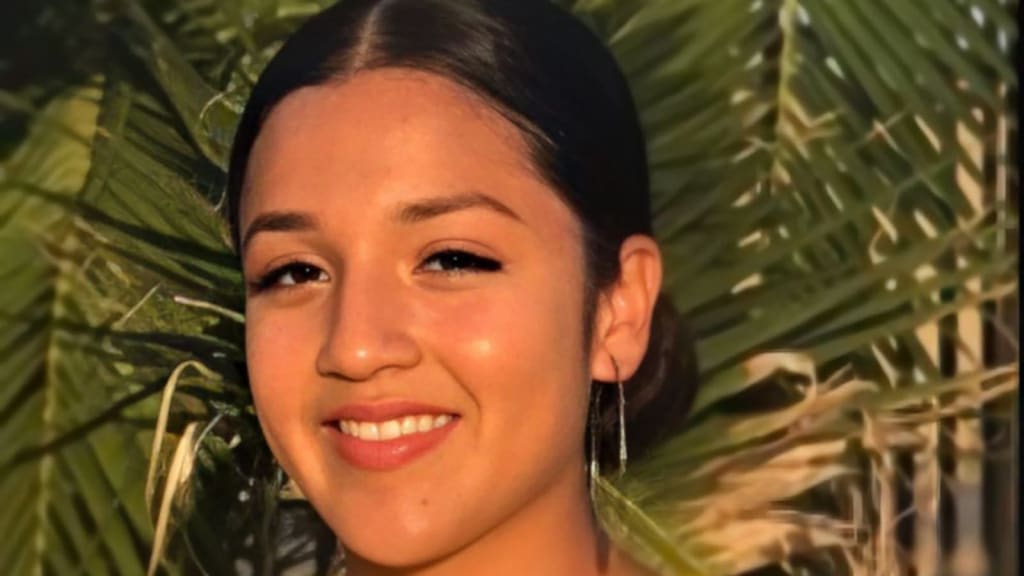
The Disappearance of Vanessa Guillén: The Case That Exposed Military Cover-Ups
On April 22, 2020, 20-year-old U.S. Army Specialist Vanessa Guillén went to work at Fort Hood, Texas.
Then she disappeared.
Her car keys, barracks-room key, identification card and wallet were reportedly left behind near the armory where she had been working. Her family immediately suspected something was wrong. They also began telling the public something deeply troubling: Vanessa had previously spoken about being sexually harassed in the Army and was afraid to formally report it.
For more than two months, her family demanded answers while soldiers, law enforcement officers and volunteers searched for her.
On June 30, human remains were discovered near the Leon River, miles from the installation.
Investigators eventually concluded that fellow soldier Specialist Aaron Robinson had killed Guillén inside an armory before moving her body off post and enlisting his girlfriend, Cecily Aguilar, to help conceal and destroy the evidence. Robinson died by suicide when police attempted to apprehend him. Aguilar later pleaded guilty and received the maximum 30-year federal sentence for her role after the murder.
But the Vanessa Guillén case did not end with identifying a killer.
The investigation triggered an extraordinary examination of Fort Hood that found serious failures in the Army's sexual-harassment prevention system, criminal investigations, missing-soldier procedures, leadership culture and response to crime. An independent review concluded that sexual harassment and assault were significantly underreported and that Fort Hood's command climate had become permissive toward those behaviors.
That distinction is essential.
There is no official finding that Army leaders secretly conspired to murder Vanessa Guillén or deliberately concealed her killing.
What the case did expose was something more complex: an institution in which soldiers often lacked confidence that misconduct would be handled properly, information failures created the appearance of concealment, leaders missed warning signs, and systems supposedly designed to protect troops were not functioning as intended.
In that sense, Vanessa Guillén did not merely become the victim at the center of a murder investigation.
Her disappearance became the case that forced the U.S. Army to investigate itself.
Who Was Vanessa Guillén?
Vanessa Guillén was born in Houston, Texas, and grew up in a Mexican-American family.
She joined the Army while still very young and was assigned to the 3rd Cavalry Regiment at Fort Hood. She worked as a small-arms repairer, a job that placed her around weapons-maintenance facilities and armories.
By April 2020, Guillén was a specialist and only 20 years old.
Her family later described her as athletic, ambitious and proud of serving her country.
That image became increasingly difficult to reconcile with what they said she had told them privately.
According to her family, Vanessa had complained about sexual harassment at Fort Hood but was reluctant to formally report what was happening because she feared retaliation and believed complaints could create consequences for her military career.
For weeks after her disappearance, those claims were disputed, questioned or treated as unverified.
Then the Army investigated.
And discovered that at least part of what Vanessa had reportedly been saying was true.
April 22, 2020: Vanessa Goes Missing
Guillén was last seen on the morning of April 22 around her unit area at Fort Hood.
Army records say her leaders contacted her family that evening while trying to determine where she might be. She was formally reported missing to law enforcement on April 23 after checks of the barracks, unit areas and attempts to contact her by phone failed.
Her disappearance was immediately strange.
This was not simply a soldier who had packed belongings, driven away and stopped answering messages.
Her personal property remained behind.
Her family insisted she would not voluntarily vanish.
The Army began searching the installation, while Army Criminal Investigation Command, commonly called CID, opened an investigation.
But as the days became weeks, frustration grew.
Vanessa was still missing.
Her family believed they were not receiving enough information.
And the longer the case remained unresolved, the more suspicion shifted toward Fort Hood itself.
The Search Became a National Story
Initially, Vanessa Guillén was one missing soldier among thousands of missing-person cases across the United States.
Her family refused to let her become a statistic.
Relatives traveled repeatedly to Fort Hood.
They held press conferences.
They spoke publicly about her alleged harassment.
They demanded outside attention.
Politicians and advocacy organizations joined them.
Social media transformed the case.
The question “Where is Vanessa?” spread far beyond Texas.
The case resonated particularly strongly among women in the military, veterans and Latina service members who began sharing their own experiences of harassment, assault, retaliation and fear of reporting misconduct.
Public pressure increasingly focused on one central question:
If Vanessa had been afraid to report harassment before she disappeared, what did that say about the institution that was supposed to protect her?
The Family Suspected More Than a Missing-Person Case
Vanessa's family quickly rejected the possibility that she had voluntarily disappeared.
They also became openly skeptical of the Army.
At a June 23 press conference, accusations were made that military officials were withholding information and covering something up. An Army legal analysis later acknowledged how such allegations rapidly filled an information vacuum while Fort Hood struggled to communicate effectively about an active investigation.
This is where the phrase “military cover-up” became inseparable from the Vanessa Guillén story.
But it is important to separate three different questions:
- Did Army leaders intentionally conceal Vanessa's murder?
- Did Fort Hood mishandle aspects of the disappearance and its communication with the public?
- Did the Army have deeper cultural and institutional problems that made soldiers distrust reporting systems?
The evidence is strongest on the second and third questions.
The first has never been officially established.
That distinction makes the real findings no less serious.
 Imrul
Imrul
The Investigation Turns Toward Aaron Robinson
As investigators reconstructed Vanessa's final hours, attention eventually focused on Specialist Aaron David Robinson.
Robinson was another soldier stationed at Fort Hood.
Investigators determined that he had been working near Guillén around the time she disappeared.
The eventual federal criminal complaint against Cecily Aguilar described what prosecutors believed happened next.
According to the complaint, Robinson told Aguilar that he had killed a female soldier by striking her in the head with a hammer while on Fort Hood on April 22. He then transported the woman's body away from the installation to a remote area in Bell County.
The woman was Vanessa Guillén.
Because Robinson died before he could be tried, there was never a murder trial in which prosecutors had to establish his guilt beyond a reasonable doubt before a jury.
That fact matters.
The official account rests on the criminal investigation, physical evidence, witness evidence and statements attributed to Robinson through Aguilar rather than a completed murder prosecution against Robinson himself.
The Body Was Removed From Fort Hood
According to prosecutors, after killing Guillén, Robinson moved her body away from the installation.
He then contacted Cecily Aguilar.
Aguilar was a civilian living in nearby Killeen and was Robinson's girlfriend.
She was also married to another soldier.
Federal authorities said Robinson asked Aguilar to help him dispose of Guillén's remains.
Aguilar later admitted in federal court that she assisted Robinson in altering, destroying, mutilating and concealing Vanessa's body with the purpose of preventing Robinson from being charged and prosecuted. She also admitted destroying information from Robinson's Google account and making false statements to investigators.
The disposal effort helped keep the crime hidden for more than two months.
Meanwhile, Vanessa's family continued searching.
June 30: Human Remains Are Found
On June 30, 2020, remains were discovered near the Leon River in Bell County.
Fort Hood's own account states that military search efforts had continued on land, from the air and on water until the remains were found by local law enforcement.
The discovery transformed the investigation.
Investigators were no longer searching primarily for a missing soldier.
They were investigating a homicide.
At approximately the same time, authorities moved toward Aaron Robinson.
Before investigators could interrogate him in custody, Robinson escaped from Fort Hood.
Law enforcement officers located him in Killeen.
When police confronted him in the early hours of July 1, Robinson shot and killed himself, according to federal authorities.
The man investigators believed had killed Vanessa would never face trial.
That left Cecily Aguilar as the only surviving defendant directly connected to the disposal of Vanessa's body.
The Murderer’s Death Created an Information Vacuum
Robinson's suicide had enormous consequences.
A murder trial could have answered questions publicly.
Prosecutors could have presented a motive.
Witnesses could have testified.
Defense lawyers could have challenged the government's evidence.
Investigators could have explained the timeline in open court.
Instead, the suspected killer was dead.
That left critical questions unresolved, including the exact motive for Guillén's killing.
Various explanations have circulated publicly over the years, but no murder motive was ever adjudicated at a trial of Robinson.
That vacuum created fertile ground for rumor.
Was Vanessa killed because she knew about Robinson's relationship with Aguilar?
Was the murder connected to harassment?
Was someone else involved?
Was evidence being hidden?
Could the killing have been prevented?
The absence of a courtroom answer made every unexplained detail feel more suspicious.
 Imrul
Imrul
Was Aaron Robinson the Man Who Sexually Harassed Vanessa?
One of the most important misconceptions about the case concerns sexual harassment.
Vanessa was sexually harassed while serving at Fort Hood.
The Army eventually confirmed that.
But investigators did not conclude that Aaron Robinson was the person who sexually harassed her.
The 2021 Army investigation found that Guillén had informally reported two incidents of sexual harassment involving a supervisor. In both cases, the supervisor to whom she reported the conduct failed to properly report or address her allegation.
Army officials separately said investigators found no evidence that Robinson had sexually harassed Guillén.
That means two disturbing stories overlapped without necessarily being causally connected.
Vanessa experienced sexual harassment.
And Vanessa was murdered by a fellow soldier.
But the Army's investigations did not establish that the confirmed harassment caused her murder.
That distinction is essential to an accurate account.
The Army Initially Failed to Confirm What Vanessa’s Family Had Been Saying
For Vanessa's family, the eventual findings were devastating.
They had spent months telling the public that she had discussed sexual harassment.
The Army investigation later substantiated that she had indeed been sexually harassed on two occasions and had spoken about it informally.
The problem was not simply that a harassment incident had occurred.
The reporting mechanism failed.
Her supervisor did not elevate the allegations as required.
That finding gave enormous weight to the family's broader criticism.
Vanessa had feared the system.
Then, when she tried to raise concerns informally, the system still failed to properly act.
Fort Hood Had a Bigger Problem Than One Murder
By the summer of 2020, Vanessa's case had become part of a disturbing sequence of events at Fort Hood.
There were other deaths.
Other missing soldiers.
Other reports of violence.
Concerns about sexual assault and harassment were growing.
The national attention surrounding Vanessa forced Army Secretary Ryan McCarthy to commission an independent examination of Fort Hood's command climate and culture.
The five-member Fort Hood Independent Review Committee was composed of civilians with backgrounds in law enforcement, military affairs, organizational leadership and investigations.
The review was broader than the murder itself.
Its mission was essentially to ask:
What was wrong with Fort Hood?
The answer was damning.
The Fort Hood Independent Review Found Nine Major Problems
The independent review produced a 136-page report containing nine major findings and 70 recommendations.
Among its conclusions were that Fort Hood's Sexual Harassment/Assault Response and Prevention program—known as SHARP—was not working effectively.
The committee found strong evidence that sexual harassment and sexual assault were significantly underreported.
It concluded that the Army's SHARP structure itself was flawed.
It found that Fort Hood's CID office suffered from inefficiencies affecting its ability to perform its mission.
It found that military adjudication processes weakened soldiers' confidence in the harassment and assault reporting system.
It also found that Fort Hood was too reactive toward crime instead of proactively identifying risks.
Most significantly, the review concluded that the command climate had become permissive toward sexual harassment and sexual assault.
This was no longer a grieving family accusing the Army of having a problem.
This was an Army-commissioned independent committee documenting one.
Sexual Assault and Harassment Were Significantly Underreported
One finding went directly to the heart of the Vanessa Guillén story.
Soldiers were not reporting misconduct.
Why?
Fear.
Distrust.
Concern about retaliation.
Lack of confidence that leaders would respond properly.
Concerns about career consequences.
The independent review found strong evidence that sexual assault and sexual harassment at Fort Hood were significantly underreported. It also documented pervasive mistrust surrounding the SHARP process.
That finding made Vanessa's reported reluctance to formally complain far more significant.
Her fear was not evidence of an unusual personal reaction.
It fit a broader pattern.
The reporting system could technically exist on paper while soldiers still believed using it was dangerous.
That is an institutional failure even when every policy manual appears complete.
Fort Hood’s SHARP Program Was Described as Structurally Flawed
The Army had created SHARP to prevent sexual harassment and assault and provide reporting and support systems for victims.
At Fort Hood, the independent committee concluded that the program was structurally flawed.
Part of the problem involved how closely SHARP personnel and processes were tied to the command structure.
If soldiers feared commanders could affect their careers, assignments and reputations, asking them to trust a reporting process embedded within that same hierarchy created an obvious conflict of confidence.
The review eventually helped drive reforms that moved important sexual-misconduct functions away from traditional command structures and increased independent oversight.
That change would become one of Vanessa Guillén's most important legacies.
Army Investigators Were Overworked and Understaffed
The scandal also exposed weaknesses inside Army Criminal Investigation Command.
The Fort Hood review found inefficiencies within the local CID office.
A later Government Accountability Office examination noted that Fort Hood special agents had been understaffed and overassigned, producing inefficiencies and delays, especially in complicated cases involving soldier deaths.
This matters because competent investigations depend on resources.
An investigator can have excellent training and still fail if carrying an unreasonable caseload.
A forensic lead that waits too long can disappear.
A witness's memory changes.
Digital evidence can become harder to retrieve.
A delay in recognizing that someone is involuntarily missing can cost critical hours.
The Guillén case helped expose that military investigative failures were not necessarily about one incompetent agent.
Some were structural.
Missing Soldiers Were Too Easily Viewed Through an AWOL Lens
One of the most consequential reforms involved how the Army responds when a soldier disappears.
Military organizations naturally deal with unauthorized absences.
Soldiers sometimes fail to report for duty voluntarily.
That creates a dangerous assumption:
A missing soldier may simply be absent without leave.
But what happens when the soldier has been abducted, injured or killed?
After the Guillén investigation, the Army changed its policy governing missing personnel.
Army Directive 2020-16 established a clearer framework for determining whether a soldier should be classified as absent-unknown, AWOL or “duty status—whereabouts unknown,” along with procedures commanders were expected to follow.
The idea was simple but important.
A soldier who cannot be located should not automatically be treated as a disciplinary problem before commanders have considered whether something may have happened to them.
Why the First 24 Hours Matter
Missing-person investigations are extremely time-sensitive.
Phones move.
Vehicles move.
Surveillance footage can be overwritten.
Witnesses forget details.
Suspects change stories.
Physical evidence disappears.
The Army's own post-Guillén reform documents explicitly acknowledged that no policy could guarantee finding every missing soldier within the critical first 24 hours, but changes were designed to improve the speed and consistency of military responses.
Vanessa's case therefore changed more than sexual-harassment policy.
It changed how commanders were expected to think when a soldier simply vanished.
The Army’s Communication Failure Fueled Cover-Up Allegations
One of the least discussed but most important findings concerned public communication.
Fort Hood had an active criminal investigation underway.
Investigators could not simply reveal every lead.
They had to protect witnesses, preserve evidence and avoid alerting suspects.
But silence has consequences.
The independent review found that Fort Hood's public affairs operation struggled to effectively communicate during the disappearance. An Army legal analysis later described how the resulting information vacuum allowed speculation and accusations to dominate social media.
This helps explain why the case became synonymous with “cover-up.”
When an institution says little and a family believes it is not receiving answers, silence can look indistinguishable from concealment.
That does not prove a conspiracy.
But it demonstrates why transparency is operationally important during a crisis.
Was There Actually a Military Cover-Up?
The most responsible answer is more complicated than either “yes” or “no.”
There is no public official finding that senior Army leaders conspired to conceal Vanessa Guillén's murder.
Investigators ultimately identified Robinson, pursued him, charged Aguilar and conducted multiple internal and independent reviews.
But the Army itself later confirmed substantial failures that help explain why accusations of a cover-up gained credibility.
Those failures included:
- A permissive climate toward sexual harassment and assault
- Significant underreporting
- Lack of confidence in SHARP
- Failure to properly handle Vanessa's informal harassment reports
- Investigative inefficiencies
- Weak crime-prevention practices
- Deficient missing-soldier procedures
- Leadership failures
- Poor crisis communication
The phrase “cover-up” is therefore most defensible when describing the culture of silence and institutional opacity surrounding misconduct—not as a proven claim that Army commanders secretly plotted to hide Vanessa's killing.
The truth documented by the Army was serious enough without inventing a conspiracy.
Fourteen Fort Hood Leaders Were Relieved or Suspended
When the independent review was released in December 2020, the Army did something extraordinary.
Senior leaders were held accountable.
The Secretary of the Army directed the relief or suspension of 14 Fort Hood leaders, ranging from senior commanders down through lower levels of leadership. Army historical records describe those personnel actions as a direct response to the independent review's findings.
That scale of accountability demonstrated how seriously the Army viewed the findings.
The institution was effectively acknowledging that the failures were not isolated to one individual.
Leadership culture mattered.
Command responsibility mattered.
Systems mattered.
A Later Investigation Expanded the Accountability
The independent committee had examined Fort Hood broadly.
A separate Army Regulation 15-6 investigation examined leadership decisions connected more specifically to Vanessa Guillén, her disappearance, her harassment complaints, unit accountability and related issues.
That investigation concluded in April 2021.
Among its findings was confirmation that Vanessa had informally reported sexual harassment twice and that the complaints had not been appropriately elevated.
Subsequent disciplinary action affected additional leaders, with Army professional publications describing 21 leaders as ultimately facing relief or disciplinary consequences connected with the failures surrounding the case.
The message was unmistakable.
Commanders could no longer defend themselves simply by saying they personally had not committed the underlying offense.
Leadership could be held accountable for the environment in which misconduct flourished.
Cecily Aguilar Became the Only Surviving Defendant
With Robinson dead, federal prosecutors focused on Aguilar.
The government alleged that she helped Robinson conceal Vanessa's body after the killing and repeatedly lied during the investigation.
In November 2022, Aguilar pleaded guilty to:
- One count of accessory to murder after the fact
- Three counts of making false statements or representations
She also admitted deleting or altering information associated with Robinson's Google account.
Because Robinson had died before prosecution, Aguilar's case became the only federal courtroom proceeding capable of establishing criminal responsibility connected directly to the aftermath of the murder.
Aguilar Received the Maximum Sentence
On August 14, 2023, a federal judge sentenced Cecily Aguilar to 30 years in prison.
That was the maximum available sentence.
The Justice Department said Aguilar had assisted Robinson in destroying and concealing evidence—the body of Vanessa Guillén—to prevent him from being prosecuted. Prosecutors also documented four materially false statements she made to federal investigators.
For the Guillén family, the sentence represented one form of accountability.
But it could not provide the one thing a murder trial against Robinson might have delivered:
A complete public explanation of why Vanessa was killed.
Vanessa’s Death Became a Rallying Cry for Military Women
As the case gained national attention, servicewomen and veterans began publicly sharing their own experiences.
The effect became comparable to a military-focused MeToo movement.
Stories surfaced about harassment.
Sexual assault.
Command retaliation.
Career damage.
Being discouraged from filing reports.
Being treated as a problem after reporting misconduct.
Fear of being ostracized within tightly knit units.
The Vanessa Guillén case became powerful because it represented a question larger than one murder:
What happens when a service member believes reporting misconduct is more dangerous to her career than remaining silent?
The Fort Hood review validated that this fear was not imaginary.
Its findings described substantial underreporting and widespread mistrust of the system.
“I Am Vanessa Guillén” Became a Movement
Vanessa's name became a symbol.
Women began using the phrase “I Am Vanessa Guillén” while describing their experiences with sexual harassment and assault in military settings.
The movement translated individual testimony into political pressure.
Lawmakers introduced legislation bearing Vanessa's name aimed at fundamentally changing how the military investigates and prosecutes sexual misconduct.
Not every proposal became law exactly as originally written.
But significant portions of the reform agenda ultimately became part of broader military-justice changes enacted through the fiscal year 2022 National Defense Authorization Act. Army legal publications explicitly identify the Guillén case as a major impetus behind those reforms.
Vanessa's legacy was therefore no longer limited to Fort Hood.
It reached federal law.
Sexual Harassment Became a Punishable Military Offense
In January 2022, an executive order amended the military justice framework to make sexual harassment a punishable offense under the Uniform Code of Military Justice.
Army professional guidance describes this as part of the broader transformation that followed the Guillén case and subsequent independent reviews.
That change matters.
Before reform, sexual harassment could be addressed through regulations and other military disciplinary mechanisms.
Creating a specifically punishable offense gave the conduct clearer legal significance.
The symbolic message was equally important:
Sexual harassment was not merely a workplace problem.
It could become military misconduct subject to criminal consequences.
Serious Sexual Misconduct Cases Began Moving Outside the Chain of Command
Perhaps the most transformative reform involved prosecution.
For decades, military commanders held enormous authority over whether criminal charges within their units would proceed to court-martial.
Critics argued that this structure created conflicts of interest in sexual-assault cases.
A commander might know the accused.
The accused might be considered valuable to the unit.
The victim might be junior in rank.
Career incentives could influence perceptions.
Even when commanders acted appropriately, victims might reasonably question whether the system was independent.
The 2022 National Defense Authorization Act created Offices of Special Trial Counsel, transferring major prosecutorial decisions for covered serious offenses away from ordinary commanders and into an independent legal structure.
That is a profound institutional change.
The Office of Special Trial Counsel Changed Military Justice
The Army's Office of Special Trial Counsel assumed responsibility for covered offenses committed on or after December 28, 2023.
Its prosecutors—not ordinary commanders—make key decisions regarding whether many serious offenses should proceed to court-martial.
Covered offenses include crimes such as:
- Murder
- Rape
- Sexual assault
- Domestic violence
- Other designated serious crimes
Sexual harassment later entered the special-trial-counsel system as a covered offense beginning in fiscal year 2025.
The Army describes the reform as one of the most significant transformations of military justice since creation of the Uniform Code of Military Justice in 1950.
Vanessa Guillén's case helped create the political momentum that made it possible.
Army CID Was Restructured
The Fort Hood investigation also transformed Army criminal investigations.
The independent review had identified serious concerns about CID organization and performance.
The Army subsequently restructured the agency.
In 2021, Special Agent Gregory Ford became the first civilian director of the U.S. Army Criminal Investigation Division under the new structure.
Moving toward civilian leadership was significant.
Military criminal investigators sometimes investigate senior personnel and institutions within the same military hierarchy in which they serve.
Greater professional independence was intended to reduce potential command influence and strengthen investigative expertise.
Once again, a reform originating in the Fort Hood scandal spread across the Army.
The Army Eventually Addressed All 70 Fort Hood Recommendations
The Fort Hood Independent Review Committee produced 70 recommendations.
By October 2022, the Army reported that its People First Task Force had addressed all 70. Sixty-six had been implemented Army-wide by that stage, with other recommendations handled through related Defense Department initiatives or longer-term reforms.
Changes touched multiple areas:
- SHARP organization
- Criminal investigations
- Missing-soldier procedures
- Command climate
- Leadership accountability
- Victim services
- Case tracking
- Crime prevention
- Public communication
- Military justice
This scale demonstrates why Vanessa Guillén's murder became one of the most consequential military personnel scandals of the modern era.
Few individual cases have produced such broad institutional change.
Reform Does Not Mean the Problem Disappeared
Policy changes are easier than cultural changes.
An organization can rewrite regulations overnight.
It cannot instantly make every soldier trust the reporting system.
The Army itself has continued acknowledging that sexual harassment and assault remain serious challenges.
A 2024 Army program discussion looking back at the post-Guillén investigations said reviewers found a significant gap between the prevalence of sexual misconduct and what soldiers actually report, alongside persistent lack of trust, workforce deficiencies and barriers to care.
Even Army professional analysis published in 2025 argued that the system remained imperfect despite meaningful reforms associated with Vanessa's case.
Legislation can create an independent prosecutor.
It cannot automatically create confidence.
Trust has to be earned case by case.
Fort Hood Was Renamed—Then Renamed Again
Readers researching Vanessa's case may encounter three different names for the same installation.
At the time of her disappearance and murder in 2020, it was Fort Hood.
In May 2023, the base became Fort Cavazos, honoring Gen. Richard E. Cavazos, a highly decorated Korean and Vietnam War veteran who later commanded III Corps.
Then, in June 2025, the installation was redesignated Fort Hood again—this time honoring World War I hero Col. Robert B. Hood rather than Confederate Gen. John Bell Hood.
As of 2026, Fort Hood is therefore once again the installation's official name.
Historical documents from 2023 through mid-2025 may refer to Fort Cavazos.
They are discussing the same Central Texas military post.
Why the Case Became Bigger Than a Murder
America has experienced many horrific murders.
Few transform federal institutions.
Vanessa Guillén's case did because several stories collided at once.
A young soldier vanished from one of America's largest military installations.
Her family said she had feared reporting sexual harassment.
The Army struggled to find her.
The suspected killer was another soldier.
He killed himself before arrest.
An accomplice admitted helping conceal the body.
The family publicly accused the Army of withholding information.
Then the Army's own investigation found that Vanessa actually had been sexually harassed.
An independent committee subsequently uncovered major failures across Fort Hood.
At that point, the question was no longer simply:
Who killed Vanessa?
It became:
What kind of institution had surrounded her before she died?
The Difference Between a Conspiracy and an Institutional Failure
True-crime coverage often prefers conspiracies.
They have villains.
They have secret meetings.
They have deliberate plans.
Institutional failure is less cinematic.
It can be more dangerous.
Nobody needs to order a cover-up when people already believe reporting misconduct will destroy their careers.
Nobody needs to explicitly silence victims when organizational culture teaches them to remain quiet.
Nobody needs to deliberately sabotage investigations if investigators are understaffed and overwhelmed.
Nobody needs to hide a missing soldier if procedures encourage leaders to initially see absence through a disciplinary lens.
Nobody needs to coordinate misinformation when the institution communicates so poorly that rumor becomes more believable than official statements.
That is the deeper lesson of the Vanessa Guillén case.
Systems can fail catastrophically without every person inside them consciously agreeing to make them fail.
Vanessa’s Family Changed the Outcome
The institutional reforms did not emerge spontaneously.
Vanessa's family forced attention onto the case.
They continued appearing publicly.
They demanded meetings.
They challenged military statements.
They brought political leaders into the conversation.
They insisted that harassment remain part of the investigation.
Without that pressure, Vanessa's death might still have resulted in a criminal investigation.
It is far less certain that it would have triggered an Army-wide examination of sexual harassment, criminal investigations and command culture.
The Fort Hood Independent Review itself states that concerns raised by Guillén's family, Congress and Hispanic advocacy organizations helped prompt the Secretary of the Army to order the investigation.
That is an extraordinary example of a military family forcing one of the world's largest institutions to examine itself.
What the Army Ultimately Admitted
The official findings deserve to be stated plainly.
The Army acknowledged that Vanessa Guillén had been sexually harassed.
It acknowledged that her informal reports were not handled properly.
It acknowledged that the Fort Hood SHARP program was ineffective.
It acknowledged strong evidence of widespread underreporting.
It acknowledged that soldiers lacked confidence in the system.
It acknowledged investigative inefficiencies.
It acknowledged problems in missing-soldier procedures.
It acknowledged failures in crime prevention.
It acknowledged a permissive command climate toward sexual harassment and assault.
It disciplined leaders.
It changed policy.
It restructured CID.
It supported a redesigned prosecution system.
Those admissions are more significant than many unproven theories surrounding the case.
What the Investigations Did Not Prove
Accuracy requires equal attention to what was not established.
The investigations did not prove that Aaron Robinson sexually harassed Vanessa Guillén.
They did not establish in a murder trial exactly why Robinson killed her.
They did not prove that senior Army commanders ordered her murder.
They did not establish a coordinated conspiracy among Fort Hood leadership to conceal her death.
They did not demonstrate that Vanessa's confirmed sexual harassment directly caused her killing.
These distinctions matter because exaggerating the evidence weakens the genuine scandal.
Vanessa's case does not require conspiracy theories to be disturbing.
The documented failures are disturbing enough.
Vanessa Guillén’s Real Legacy
A young specialist entered the Army expecting the institution to protect its own.
Instead, she became the name attached to one of the most significant military accountability movements in modern American history.
Her case influenced:
- Military sexual-harassment law
- Independent prosecution of serious crimes
- SHARP restructuring
- Army CID reform
- Missing-soldier protocols
- Leadership accountability
- Victim advocacy
- Command-climate policy
- Congressional scrutiny of military justice
The Army's own professional publications describe the Guillén murder as a catalyst for sweeping changes in how sexual harassment and assault are investigated and prosecuted.
That is an enormous institutional legacy for a 20-year-old soldier who should have had decades of life ahead of her.
The Most Important Question Was Never Just “Who Killed Vanessa?”
Investigators ultimately answered much of the criminal question.
The evidence pointed to Aaron Robinson.
Cecily Aguilar admitted helping him conceal the crime.
She received 30 years in federal prison.
But the larger question Vanessa's family forced America to confront was different:
Would soldiers trust the Army if something happened to them?
The Fort Hood review suggested that, for many soldiers at the time, the answer was no.
That was the real crisis.
An Army can replace commanders.
It can restructure investigative agencies.
It can rewrite regulations.
It can establish independent prosecutors.
But an institution built on trust cannot function properly if the people inside it believe silence is safer than asking for help.
Vanessa Guillén's disappearance exposed that gap.
Her family refused to let it remain hidden.
And the consequences changed the U.S. military.
Frequently Asked Questions About Vanessa Guillén
When did Vanessa Guillén disappear?
Vanessa Guillén disappeared from Fort Hood, Texas, on April 22, 2020.
Her unit began searching for her after she could not be located, and she was formally reported missing to law enforcement on April 23.
How old was Vanessa Guillén when she died?
Vanessa Guillén was 20 years old when she was killed in April 2020.
She was serving as a specialist in the U.S. Army's 3rd Cavalry Regiment at Fort Hood.
Who killed Vanessa Guillén?
Army Specialist Aaron Robinson was identified by investigators as the person responsible for killing Vanessa Guillén.
According to the federal complaint against Cecily Aguilar, Robinson told Aguilar that he killed a female soldier by striking her in the head with a hammer on Fort Hood and subsequently transported her body away from the installation.
Because Robinson died before trial, he was never convicted of Vanessa's murder in court.
Where was Vanessa Guillén killed?
Investigators concluded that Vanessa was killed inside an armory at Fort Hood on April 22, 2020.
Her body was later transported away from the installation to a remote area in Bell County.
Where were Vanessa Guillén’s remains found?
Her remains were discovered near the Leon River in Bell County, Texas, on June 30, 2020, after more than two months of searching.
What happened to Aaron Robinson?
Aaron Robinson fled as authorities moved to apprehend him.
Police located him in Killeen, Texas, on July 1, 2020. According to federal authorities, Robinson shot and killed himself when confronted by law enforcement.
Who is Cecily Aguilar?
Cecily Aguilar was Aaron Robinson's girlfriend at the time of Vanessa Guillén's murder.
Federal prosecutors said she helped Robinson destroy and conceal Vanessa's body and later lied to investigators.
Was Cecily Aguilar convicted?
Aguilar pleaded guilty in November 2022 to one count of accessory to murder after the fact and three counts of making false statements or representations.
She was sentenced in August 2023 to 30 years in federal prison, the maximum sentence available.
Was Vanessa Guillén sexually harassed?
Yes.
A U.S. Army investigation completed in 2021 found that Guillén had been sexually harassed on two occasions and had informally reported the incidents.
The investigation also found that her supervisor failed to properly report those allegations.
Did Aaron Robinson sexually harass Vanessa Guillén?
The Army said investigators found no evidence that Robinson sexually harassed Guillén.
The confirmed harassment involved another individual and was not officially found to be connected to her murder.
Why did Aaron Robinson kill Vanessa Guillén?
The exact motive was never established through a murder trial because Robinson died before he could be prosecuted.
Various theories have circulated publicly, but no definitive motive was adjudicated in court.
Did the Army cover up Vanessa Guillén’s murder?
No official investigation concluded that Army leaders participated in a coordinated conspiracy to conceal Vanessa's murder.
However, independent and internal Army reviews uncovered major institutional failures involving sexual-harassment reporting, command climate, CID operations, missing-soldier procedures, crime prevention and public communication.
Those failures help explain why allegations of a cover-up became so widespread.
What did the Fort Hood Independent Review find?
The review identified nine major findings and issued 70 recommendations.
Among its conclusions were that sexual harassment and assault were significantly underreported, Fort Hood's SHARP program was ineffective, CID suffered from operational inefficiencies, crime prevention was too reactive and the command climate had become permissive toward sexual harassment and sexual assault.
How many Fort Hood leaders were punished?
In December 2020, the Army ordered the relief or suspension of 14 leaders following the Fort Hood Independent Review.
Later accountability actions connected with a separate Army investigation expanded the number of leaders facing discipline or administrative consequences.
What is the SHARP program?
SHARP stands for Sexual Harassment/Assault Response and Prevention.
It is the Army program responsible for preventing and responding to sexual harassment and sexual assault, supporting victims and overseeing related reporting procedures.
The Fort Hood Independent Review found major structural and trust problems with the program, leading to extensive reforms.
How did Vanessa Guillén’s death change missing-soldier procedures?
The Army issued new policy establishing clearer procedures for determining whether missing personnel should be categorized as absent-unknown, AWOL or duty status—whereabouts unknown.
The changes were designed to ensure commanders consider potential involuntary disappearance or foul play instead of treating every unexplained absence primarily as misconduct.
What is the I Am Vanessa Guillén Act?
Legislation bearing Vanessa's name was introduced to reform military handling of sexual harassment and assault.
Important elements of the reform movement later became law through broader military-justice legislation, including changes associated with prosecuting sexual misconduct outside the normal chain of command and criminalizing sexual harassment under military law.
Is sexual harassment a crime under military law?
Sexual harassment became a specifically punishable offense under the Uniform Code of Military Justice following reforms implemented after the Fort Hood scandal and broader Defense Department reviews.
An executive order implementing the change was signed in January 2022.
Can military commanders still decide whether sexual-assault cases are prosecuted?
For covered serious offenses, major prosecutorial decisions have shifted away from ordinary commanders to independent Offices of Special Trial Counsel.
The Army's Office of Special Trial Counsel assumed authority over covered offenses committed on or after December 28, 2023.
What does the Office of Special Trial Counsel do?
The Office of Special Trial Counsel consists of specialized military prosecutors who independently make key decisions about prosecuting covered serious offenses.
Its authority includes crimes such as murder, rape, sexual assault and domestic violence, with sexual harassment becoming a covered offense beginning in fiscal year 2025.
Did Vanessa Guillén’s case lead to changes in Army CID?
Yes.
The Fort Hood review criticized CID inefficiencies and contributed to a major restructuring of Army Criminal Investigation Division.
In 2021, Gregory Ford became the first civilian director of the reorganized Army CID.
Why was Fort Hood renamed Fort Cavazos?
The installation became Fort Cavazos in May 2023 as part of a congressionally mandated effort to remove names honoring Confederate figures.
It was renamed for Gen. Richard E. Cavazos, a highly decorated U.S. Army officer.
Why is Fort Cavazos called Fort Hood again?
The Army redesignated the installation Fort Hood in June 2025.
The current name honors World War I Distinguished Service Cross recipient Col. Robert B. Hood rather than Confederate Gen. John Bell Hood.
What is Fort Hood called today?
As of 2026, the installation is officially named Fort Hood.
Documents from 2023 through part of 2025 may refer to it as Fort Cavazos, while documents from the time of Vanessa Guillén's 2020 disappearance use Fort Hood.
Why did Vanessa Guillén’s case become so important?
The case forced national attention onto sexual harassment, retaliation fears, command accountability, military criminal investigations and the treatment of missing soldiers.
Independent reviews subsequently confirmed systemic problems at Fort Hood and triggered reforms that extended across the U.S. Army.
What is the biggest misconception about the Vanessa Guillén case?
The biggest misconception is that investigators proved Vanessa was murdered because she was reporting sexual harassment.
The Army confirmed that she had experienced sexual harassment, but it did not find evidence that her suspected killer, Aaron Robinson, was the person who harassed her or that the confirmed harassment caused her murder.
What is Vanessa Guillén’s lasting legacy?
Vanessa Guillén's legacy reaches far beyond the prosecution connected with her death.
Her case helped trigger changes to Army sexual-harassment programs, military criminal investigations, missing-soldier procedures, leadership accountability and the prosecution of serious military offenses outside the ordinary chain of command.
The most consequential revelation was not proof of a secret military conspiracy.
It was proof that an institution could possess policies against harassment, assault and retaliation while many of the people those policies were meant to protect still did not trust them.
Vanessa had reportedly been afraid to speak.
After her death, her family refused to be.
That refusal forced the Army to listen.