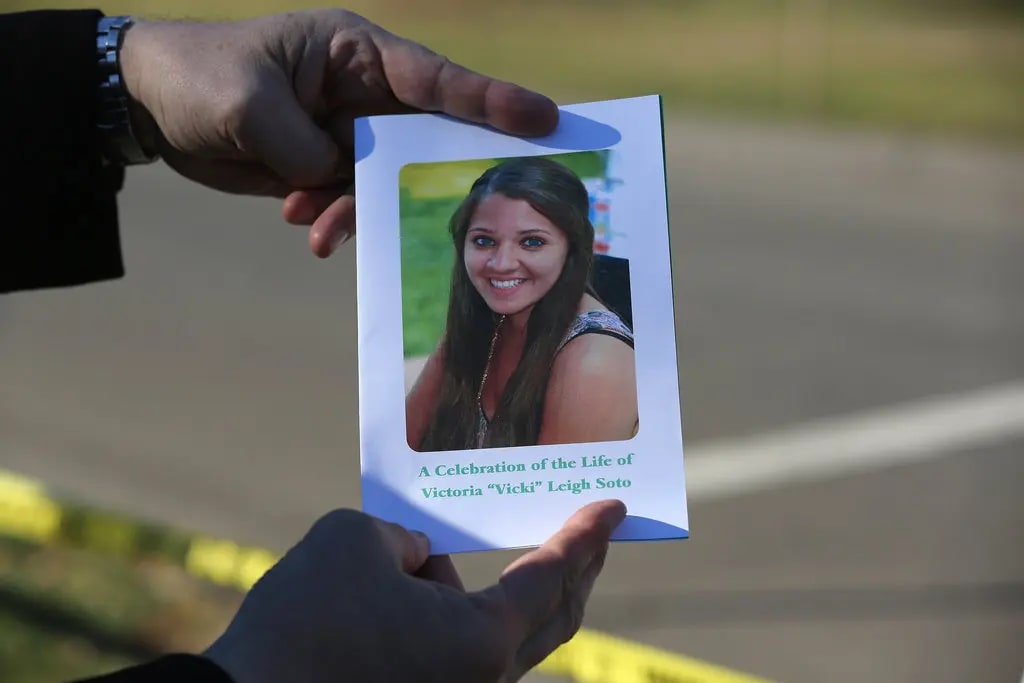
Victoria Leigh Soto: The Sandy Hook Hero Whose Name America Must Never Forget
On December 14, 2012, a quiet school morning in Newtown, Connecticut, became one of the darkest days in modern American history.
Children were in class. Teachers were doing what teachers do every day: explaining lessons, calming little worries, preparing young minds for a future that still looked wide open. Sandy Hook Elementary School was not supposed to become a symbol of national grief. It was supposed to be a place of crayons, reading circles, lunchboxes, small backpacks, and innocent laughter.
Then a gunman entered the building.
The attacker, 20-year-old Adam Lanza, had already killed his mother at their home before driving to Sandy Hook Elementary School. Inside the school, he murdered 20 children, all between six and seven years old, and six adult staff members before killing himself as first responders arrived.
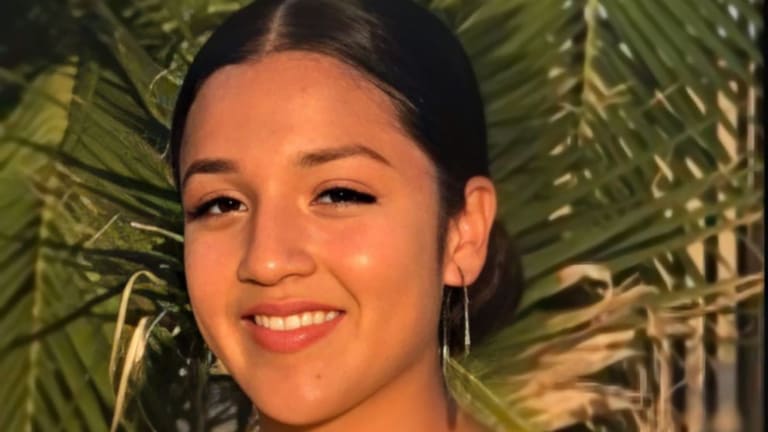
Among those adults was a 27-year-old first-grade teacher named Victoria Leigh Soto.
Her name deserves to be remembered not as a footnote in a tragedy, but as the name of a woman who faced terror and chose love.
The Teacher Who Stood Between Evil and Her Students
Victoria Leigh Soto, often called Vicki by those who knew her, was born on November 4, 1985. She was young, warm, dedicated, and deeply committed to teaching. At Sandy Hook Elementary, she taught first grade—the age when children are still learning how to read fluently, how to tie their shoes properly, how to raise their hands, how to trust the adults around them.
That trust became sacred in the final minutes of her life.
When gunfire erupted inside the school, Soto did what no teacher should ever have to do. She hid her students. Reports from the time stated that she placed children in closets, cabinets, and hidden areas of the classroom. When the gunman entered and asked where the children were, Soto reportedly told him they were not there. Some accounts say she said they were in the gym.
It was a lie told for the purest reason possible.
A lie to save children.
The gunman shot her. Victoria Soto died in her classroom. She was only 27 years old. But some of the children she protected survived because, in that unbearable moment, their teacher refused to surrender them to violence.
A Name That Should Be Spoken With Honor
There are names history should never allow us to forget.
Victoria Leigh Soto is one of them.
Not because she wanted fame. Not because she stood on a battlefield in uniform. Not because she gave a speech, led a movement, or wrote a manifesto.
She was a teacher.
And when horror walked through her classroom door, she became a shield.
The word “hero” is often used too casually. We use it for celebrities, athletes, influencers, billionaires, and people who simply do their jobs well. But true heroism is different. True heroism appears when someone has every reason to save themselves and instead chooses to protect others.
Victoria Soto had seconds to decide.
She chose the children.
That is heroism in its clearest form.
Sandy Hook Was Not Just a Tragedy. It Was a National Wound.
The Sandy Hook Elementary School shooting shook the United States because of the age of the victims and the innocence of the place. Schools are supposed to be among the safest spaces in a society. They are where parents send children with the unspoken belief that the world outside may be complicated, but inside those walls, their sons and daughters will be protected.
Sandy Hook shattered that belief.
The victims included 20 first-grade children and six educators. Their names became part of America’s painful memory. Families were broken. A town was permanently changed. A country mourned. And once again, the United States entered its familiar cycle: grief, outrage, political debate, promises, resistance, and then another headline.
For many outside America, the recurring nature of school shootings is difficult to understand. For many inside America, it is impossible to accept but painfully familiar. Sandy Hook became a defining symbol in the national conversation on gun violence, school safety, mental health, and the political paralysis surrounding firearms.
But behind every policy debate, there are human beings.
Behind every statistic, there is a classroom.
Behind every headline, there is a parent who never got to hold their child again.
The Problem With Remembering Only the Killer
One of the great failures of media culture is how often the attacker’s name becomes more widely known than the names of those who tried to stop the damage.
The killer becomes the subject of documentaries, timelines, psychological profiles, and endless internet speculation. People study his background, his behavior, his weapons, his motives. Some of that may be necessary for prevention. But it can also create a dangerous imbalance.
The murderer should not be the center of memory.
The victims should be.
The protectors should be.
The teachers, the children, the families, the survivors, and the community should be.
That is why Victoria Leigh Soto’s name matters. She represents the moral opposite of the violence that entered Sandy Hook that morning. Where the attacker brought death, she offered protection. Where he brought cruelty, she offered courage. Where he destroyed innocence, she tried to preserve it.
Her name is not simply part of Sandy Hook history.
Her name is a reminder of what love looks like under impossible pressure.
A Teacher’s Duty Was Never Supposed to Include This
There is something deeply wrong with any society where teachers must think about how to hide children from gunfire.
Teachers are trained to educate. They are trained to help children read, count, explore, ask questions, and build confidence. They are not soldiers. They are not bodyguards. They are not emergency combat responders.
Yet in Sandy Hook, teachers and staff members became the first line of defense.
Victoria Soto was not alone in her bravery. Other educators at Sandy Hook also acted with extraordinary courage. Principal Dawn Hochsprung and school psychologist Mary Sherlach moved toward danger. Teachers and staff hid children, locked doors, kept students quiet, and made split-second choices that saved lives.
But Soto’s story remains especially haunting because of its simplicity.
She hid her students.
She faced the gunman.
She died.
The children behind her lived.
It is the kind of story that breaks the heart because it shows both the worst and the best of humanity in the same room.
Mental Health, Violence, and the Danger of Simplistic Explanations
After tragedies like Sandy Hook, people often search for one explanation. Mental illness. Guns. Parenting. Isolation. Security failure. Culture. Media. Politics.
The truth is usually more complicated.
Reports following Sandy Hook documented that Adam Lanza had significant developmental and mental health issues, including neurodevelopmental concerns, but experts have repeatedly warned against using mental illness as a simple explanation for mass violence. Most people with mental health conditions are not violent. Many are far more likely to be vulnerable than dangerous.
What made Sandy Hook possible was not one factor alone. It was a devastating combination of personal deterioration, access to deadly weapons, warning signs, isolation, and systemic failure. The official Connecticut Office of the Child Advocate report examined the case in depth and emphasized broader lessons around prevention, systems of care, education, and intervention.
That distinction matters.
If society reduces every mass shooting to “mental illness,” it avoids harder questions about access to weapons, community responsibility, threat recognition, and prevention. If society reduces it only to guns, it may miss warning signs in behavior and care systems. Real prevention requires honesty from every angle.
But one truth is unavoidable: children should not be the price of political inaction.
The Legacy of Sandy Hook Promise
In the years after Sandy Hook, some families of victims turned grief into prevention work. One major example is Sandy Hook Promise, an organization co-founded by parents who lost children in the shooting. Its programs teach students and communities to recognize warning signs of violence, social isolation, self-harm, bullying, and threats—and to speak up before tragedy happens.
The organization’s “Say Something” program and anonymous reporting system have reached students across the United States and have received hundreds of thousands of tips related to possible violence, self-harm, bullying, and other dangers.
This is the kind of legacy that matters.
Not empty thoughts and prayers.
Not temporary outrage.
Not a few days of hashtags.
But systems that may stop another child from dying.
Sandy Hook’s grief cannot be undone. But if its memory helps prevent even one future tragedy, then memory becomes action.
Why Victoria Soto Still Matters Today
More than thirteen years have passed since Sandy Hook. The 14th anniversary will come on December 14, 2026. Yet Victoria Soto’s story remains painfully relevant because school shootings have not disappeared from American life.
Her courage still matters because teachers still practice lockdown drills.
Her sacrifice still matters because parents still send children to school with silent fears.
Her name still matters because modern attention spans are short, but moral memory must be long.
We remember Victoria Soto because forgetting her would be another kind of loss.
We remember her because she reminds us that ordinary people are capable of extraordinary courage.
We remember her because children lived due to her final act.
And we remember her because a society that forgets its protectors becomes too comfortable with its tragedies.
The Image of a Classroom That Never Leaves
It is difficult to think about Sandy Hook without imagining the classroom.
Small chairs. Children’s artwork. Reading books. Bright colors on the walls. A place designed to make young children feel safe.
Then the sound of gunfire.
Then a teacher moving quickly, hiding children wherever she could.
Then a question from the gunman.
Then her answer.
Then silence.
That image is almost unbearable. But perhaps it should be unbearable. Some memories should hurt because they remind us what must never become normal.
When people say school shootings are “part of life,” they are surrendering to moral failure.
They are not part of life.
They are a sign of a society refusing to protect life properly.
Victoria Soto did her part. She did more than anyone could have asked of her. The question is whether the systems around children have done theirs.
Not Just a Victim, But a Guardian
Victoria Leigh Soto was murdered at Sandy Hook Elementary School.
But she should not be remembered only as a victim.
She was a daughter. A sister. A friend. A teacher. A young woman with dreams, relationships, ordinary joys, and a future stolen from her.
She was also a guardian.
In her final moments, she did not become frozen by fear. She did not abandon the children. She did not choose herself.
She stood between them and death.
That is why her name should be said with reverence.
Victoria Leigh Soto.
A teacher.
A protector.
A hero.
A woman who turned her classroom into a shelter and her own body into a shield.
Final Reflection: Say Her Name
The Sandy Hook tragedy belongs to American history, but Victoria Soto’s bravery belongs to humanity.
Her story crosses borders because courage is a universal language. Any parent, anywhere in the world, can understand what she did. Any teacher can feel the weight of that choice. Any decent human being can recognize the moral beauty of a person who gave everything to protect children.
So yes, remember the date: December 14, 2012.
Remember Sandy Hook Elementary.
Remember the 20 children and six educators who were killed.
But also remember the name that deserves to be spoken again and again:
Victoria Leigh Soto.
Because heroes should not disappear into history.
Because children survived behind her.
Because love, in its bravest form, sometimes looks like a young teacher standing in a classroom doorway and refusing to give up her students.