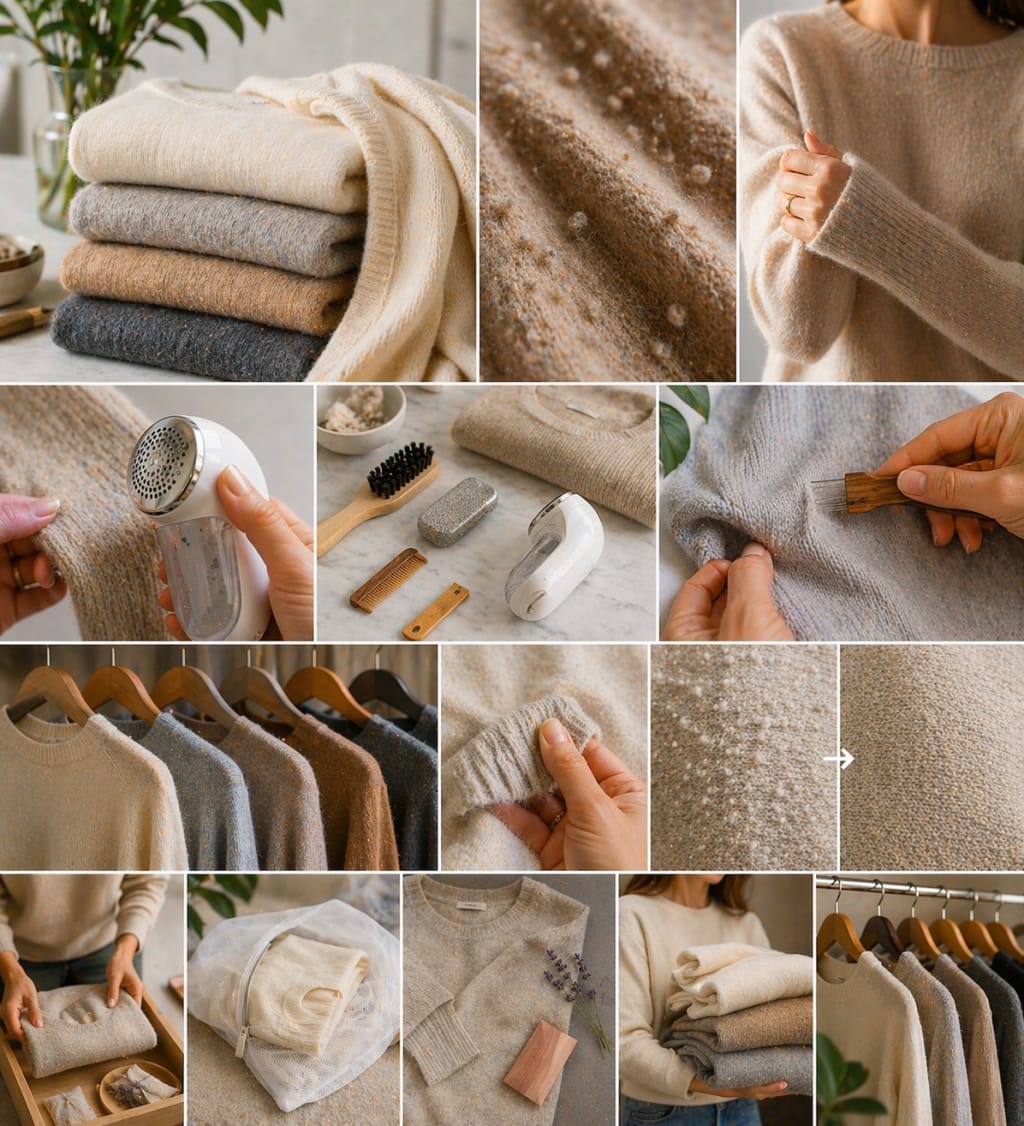
Cashmere Pilling 101: Prevent Fuzz and Fix Sweaters
Cashmere pilling is normal. Even very good cashmere can pill because pilling is mostly a friction problem, not automatic proof that your sweater is low quality. Soft fibers loosen, rub together, and form little bobbles, especially in high-contact areas.
The good news is that pilling is manageable. The best approach is a mix of prevention and gentle maintenance: reduce rubbing, wash carefully, dry flat, store properly, and remove pills before they build up.
Why cashmere pills in the first place
Pilling happens when loose surface fibers twist together into small balls. Friction is the main cause, so the spots that rub most usually pill first: underarms, sleeves, elbows, belly, sides, and anywhere a bag strap or desk edge keeps scraping the knit.
That is also why a brand-new cashmere sweater can pill quickly in the beginning. Cashmere is a soft knit, and soft knits are especially prone to fuzzing and pilling. Over time, careful de-pilling and gentle washing can help the surface look smoother.
Does pilling mean the sweater is bad?
Not necessarily. Vogue notes that even high-quality cashmere can pill, and Good Housekeeping says the same thing directly. What matters more is how the sweater behaves over time and how well it recovers after gentle care.
A sweater that pills a little in friction zones but still feels dense, soft, and stable is very different from a sweater that keeps shedding, thinning, or losing shape everywhere. That second problem points more toward weak construction or rough care than normal surface pilling. This is an inference from how pilling and fabric wear are described in the cited garment-care guidance.
How to prevent cashmere fuzz and pilling
The best prevention tip is simple: reduce friction. Woolmark says to minimize abrasion during wear, and Vogue specifically calls out purse straps, rubbing, machine washing, and dryer heat as major contributors.
That means a few habits help a lot:
- avoid wearing the same sweater for hard-friction activities every day
- be mindful of crossbody bags, rough coats, desk edges, and seat belts
- turn the sweater inside out before washing
- skip fabric softener
- avoid tumble drying unless the care label explicitly allows it.
Wash cashmere gently
Always check the care label first. The FTC requires care labels to give at least one safe cleaning method, so that label should override guesswork.
For washable cashmere, cool water and a gentle wool wash are the safest default. The Spruce recommends cool water, a gentle wool detergent, and hand washing as the best method, with machine washing possible on delicate if you use a mesh bag and cold water.
If you machine wash, keep the cycle gentle, use cold water, and use the lowest final spin you can. If you hand wash, soak gently rather than scrubbing or wringing. Rough agitation weakens fibers and makes pilling worse.
Dry it the right way
Heat is one of the fastest ways to make cashmere sad. The Spruce says high heat can shrink cashmere and that flat drying helps prevent stretching. Good Housekeeping also warns against hanging wet cashmere or leaving it near direct heat.
The safest drying routine is:
- gently press out excess water, never wring
- roll the sweater in a towel to remove moisture
- lay it flat to dry
- reshape it while damp
- keep it away from direct sun and hot air.
Store cashmere folded, not hanging
Cashmere stretches more easily than many woven fabrics, so long-term hanging is not ideal. Good Housekeeping says dry cashmere is best kept in a drawer, and The Spruce says folding sweaters is the best way to prevent shoulder stretching.
A simple rule: fold clean, fully dry sweaters and give them space. If you must hang one briefly, use a thick hanger and fold it over the bottom bar instead of hanging it from the shoulders. That second point comes from The Spruce’s sweater-storage guidance.
How to fix a pilled cashmere sweater
The safest reliable tools are:
- a cashmere or sweater comb
- a fabric shaver
- your fingers for a few isolated pills.
Woolmark recommends gently removing pills by hand when there are only a few, using a comb very carefully, or using a small fabric shaver. Good Housekeeping recommends running a fabric shaver lightly over dry, unwrinkled cashmere while holding the fabric taut.
Cashmere comb vs fabric shaver
A cashmere comb is usually the gentler first choice for light to moderate pilling. It gives you more control, especially on softer knits. Woolmark explicitly says a comb can be used, but gently and carefully.
A fabric shaver is faster and better when the sweater has broader fuzzing or more pills. Good Housekeeping and Martha Stewart both support fabric shavers as an effective way to remove pills, as long as you use a light hand and keep the fabric flat and taut.
The safest de-pilling method step by step
Lay the sweater on a flat surface. Make sure it is dry and smooth. Hold the area taut with one hand. Then use short, gentle passes with a comb or fabric shaver. Do not grind into the fabric, and do not rush. Clear the comb or shaver often so you are not dragging lint back over the knit. This method is based on the handling advice from Good Housekeeping, Woolmark, and Vogue.
If you only have a few pills, you can pick them off by hand. For a quick emergency fix, Vogue says a soft clean toothbrush can gently loosen pills on fuzzy knits if you brush in one direction.
What not to do
Do not attack cashmere with aggressive pressure, high heat, or careless washing. Avoid hot water, rough cycles, overloaded washing machines, and hot dryers. Avoid hanging it wet. Avoid cutting random pills off with regular scissors unless it is truly one isolated pill and you are extremely careful.
Also, do not ignore the care label. The label is there for a reason, and the FTC care-label rule is exactly why it should be your first reference point before washing or drying.
Steamer or iron?
For cashmere, a garment steamer is usually the better choice. Good Housekeeping says to use a steamer instead of an iron because direct heat and pressure can flatten cashmere’s loft and reduce its fluffy softness.
So if your sweater looks creased after drying, steam it lightly rather than pressing it hard. That keeps the knit looking soft instead of crushed.
A simple cashmere routine that works
Wash cashmere only when it actually needs it, use cool water and wool detergent, dry it flat, fold it for storage, and de-pill lightly whenever you notice fuzz starting. The Spruce notes that less washing generally extends the life of cashmere, and Woolmark recommends removing pills routinely before they build up.
That combination is what keeps sweaters looking expensive: not perfection, just consistent gentle maintenance.
Final thoughts
Cashmere pilling is normal, fixable, and not a reason to give up on a sweater you love. Most of the battle is friction control and gentle care: fewer rough interactions, cooler washing, flatter drying, folded storage, and calm de-pilling with the right tool.
The best mindset is this: do not wait until the sweater looks wrecked. Remove pills early, handle the knit gently, and cashmere will usually keep looking much better for much longer.