The Parasite That May Be Living Inside More Than a Billion People
A tiny white worm may be living inside hundreds of millions of people around the world—and many of them will never know.
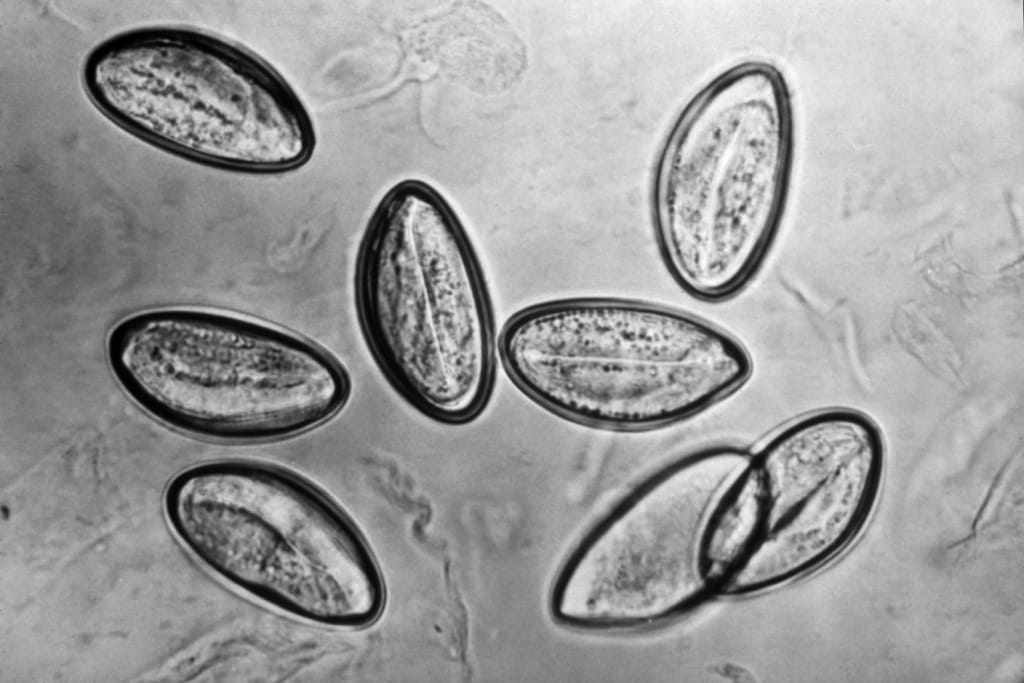
The parasite is Enterobius vermicularis, commonly known as the pinworm or threadworm. It lives primarily in the human intestine, spreads easily between people, and has developed a reproductive strategy closely connected to the host’s sleep.
At night, while an infected person is resting, a mature female worm travels out of the intestine through the anus. It then deposits thousands of microscopic eggs on the surrounding skin. Within hours, those eggs can become infectious.
The process may cause intense itching, disturbed sleep, or irritated skin. But many infected people experience no recognizable symptoms at all. The worm can reproduce and spread through a household without producing dramatic illness, fever, or obvious digestive problems. The Centers for Disease Control and Prevention states that most people with pinworm infection have no symptoms or signs.
Claims that “one billion people are infected right now” require some caution. A widely cited medical review described global infection estimates exceeding one billion people, but that figure was explicitly characterized as a rough estimate rather than a real-time worldwide count. Other publications have suggested substantially lower totals, illustrating how difficult pinworm prevalence is to measure.
What is clear is that pinworm is extraordinarily widespread.
It occurs worldwide, affects people across economic and geographic boundaries, and is especially common among children, caregivers, household contacts, and people living in group settings. In the United States, the CDC describes it as the country’s most common worm infection.
Its success does not depend on causing severe disease.
It depends on being difficult to notice, easy to transmit, and remarkably effective at returning after treatment.
What Is a Pinworm?
A pinworm is a small parasitic roundworm that infects humans.
Its scientific name is Enterobius vermicularis, while the resulting infection may be called enterobiasis, oxyuriasis, pinworm infection, or threadworm infection.
Adult pinworms are thin, white, and thread-like. The CDC compares the average worm’s length to the size of a staple, while other medical references describe adult females as approximately 6 to 13 millimeters long.
The worms usually inhabit the lower part of the small intestine and the beginning of the large intestine, particularly around the ileum, cecum, and appendix region.
Unlike some parasites that require soil, mosquitoes, livestock, freshwater snails, or multiple animal hosts, pinworms can complete their life cycle entirely within human communities.
They are adapted specifically to humans.
People do not usually acquire them from dogs, cats, or other household pets. The CDC states that humans cannot give pinworms to their pets or acquire the infection from them.
The parasite’s entire survival strategy depends on one human swallowing microscopic eggs that originated from another infected human—or from the same infected person through reinfection.
The “One Billion People” Claim Explained
The statement that more than one billion people carry pinworms appears in medical literature, but it should not be presented as though public-health agencies are currently counting one billion confirmed active infections.
A 2019 review in the medical journal Deutsches Ärzteblatt International noted that rough estimates placed worldwide infection at more than one billion people. The review emphasized pinworm’s global distribution and its presence even in industrialized, temperate countries.
However, global estimates vary dramatically.
Another study cited an estimated 200 million infections worldwide. Meanwhile, a systematic review and meta-analysis published in 2023 estimated that approximately 12.9% of young children included in studies conducted over the previous two decades were infected. The researchers also reported extremely high variation between the studies, meaning prevalence differed greatly by location and population.
Several factors make accurate global counting difficult:
- Most infected people do not seek medical care.
- Many infections cause no symptoms.
- Pinworms are not reliably detected through routine stool testing.
- Prevalence studies often focus on children rather than entire populations.
- Testing procedures differ between countries and studies.
- Repeat infection is common.
- Many regions have little recent surveillance data.
The most accurate conclusion is therefore not that exactly one billion people are infected at this moment.
It is that pinworm is among humanity’s most widespread parasitic infections, and the true number of infected people is difficult to measure because so many cases remain unnoticed.
The Nighttime Reproductive Strategy
The most remarkable part of the pinworm life cycle occurs after the host falls asleep.
Adult worms live and mate inside the intestine. After mating, the male typically dies. The fertilized female becomes filled with eggs and eventually begins moving toward the rectum.
At night, the female exits through the anus and crawls across the skin around it. She then releases her eggs onto the perianal skin. Under favorable conditions, larvae develop inside those eggs and make them infectious within approximately four to six hours.
This corrects a common misunderstanding.
The worm generally does not lay its eggs inside the intestine while the host sleeps. The adult lives in the intestine, but the female usually leaves it to deposit eggs on the skin surrounding the anus.
The movement of the female and the sticky material surrounding the eggs can cause severe itching.
Because this process occurs at night, itching is often strongest during sleep or shortly after the infected person goes to bed.
The person may scratch without fully waking.
Eggs can then become trapped beneath the fingernails.
From there, they can reach the mouth, food, toys, taps, bedding, towels, clothing, desks, bathroom surfaces, or other people.
The entire cycle can continue without the host ever seeing an adult worm.
How a Pinworm Infection Begins
A new infection generally begins when someone swallows microscopic pinworm eggs.
The eggs may reach the mouth through contaminated fingers, objects, food, clothing, or household surfaces. Rarely, airborne eggs may be inhaled and then swallowed.
Once swallowed, the eggs hatch in the small intestine.
The larvae then move toward the lower intestine, where they mature into adult worms. Medical references estimate that the process from swallowing eggs to the development of mature, egg-producing females takes roughly one to two months.
The adult worms mate.
A fertilized female later travels out at night and deposits another generation of eggs.
Those eggs may then infect:
- The original host again
- A sibling
- A parent
- A caregiver
- A classmate
- A roommate
- Another person touching the same contaminated surface
This cycle is known for producing repeated infections.
Medication may kill the worms already inside the intestine, but it does not necessarily destroy eggs scattered through the surrounding environment. A person can therefore complete treatment and become infected again from eggs remaining beneath fingernails, on bedding, or elsewhere in the home.
Why the Parasite Waits Until Night
Scientists do not interpret the worm’s behavior as conscious planning. It is an evolved biological rhythm that improves the parasite’s chances of reproducing and spreading.
Night offers several advantages.
The host is relatively still, allowing the female to move more easily onto the surrounding skin. Body warmth and local conditions help the eggs develop. Nighttime itching can also trigger unconscious scratching, transferring eggs to the fingers and beneath the nails.
The eggs are deposited when the person is likely to remain in contact with nightwear, sheets, pillows, and nearby surfaces for several hours.
By morning, infectious eggs may already be present on:
- The skin
- Underwear
- Pajamas
- Bedsheets
- Fingernails
- Towels
- Bathroom surfaces
A person may then wake, touch household objects, prepare food, care for children, or put their fingers near their mouth.
The parasite’s nighttime behavior therefore connects reproduction directly to human routines.
How Can So Many People Have No Symptoms?
Pinworm does not usually invade organs, consume large amounts of blood, or cause the severe nutrient loss associated with some other intestinal worms.
For many people, the number of worms is small and the body’s reaction is limited.
The infection may remain completely unnoticed.
The CDC states that most infected people have no symptoms. When symptoms occur, the most typical complaint is itching around the anus, particularly at night.
Some people may experience mild itching but never connect it to a parasite.
Others may assume the discomfort comes from:
- Sweating
- Skin irritation
- Soap or laundry products
- Hemorrhoids
- Poor sleep
- Tight clothing
- Another dermatological condition
Children may not have the vocabulary or confidence to explain the location of the itching. They may simply become restless, irritable, distracted, or tired.
An asymptomatic infection is advantageous for the parasite.
A host who does not feel ill continues attending school, sharing bedrooms, handling food, caring for family members, and interacting with others.
The worm spreads without forcing the host to withdraw from normal life.
Common Symptoms of Pinworm Infection
When symptoms do develop, nighttime itching is the classic sign.
Possible symptoms include:
Intense Itching Around the Anus
The movement of female worms and the presence of eggs can irritate the surrounding skin.
The itching is usually worse at night.
Restless or Interrupted Sleep
The host may wake repeatedly, scratch while asleep, or experience poor-quality sleep without understanding the cause.
Irritability
Sleep disruption can produce mood changes, poor concentration, and irritability, especially in children.
Red or Damaged Skin
Repeated scratching may cause redness, swelling, small wounds, or secondary bacterial skin infection.
Abdominal Discomfort
Some infected people report stomach pain, although this is less specific and may have many other causes.
Vaginal or Vulvar Irritation
Occasionally, a female worm may move into the genital area, causing irritation or inflammation. The CDC notes that involvement of the female genital tract can occur, although more serious complications are rare.
Visible Worms
Small white worms may sometimes be seen around the anus, on underwear, in bedding, or occasionally in stool. They are often compared to short pieces of white thread.
The absence of visible worms does not rule out infection.
Why Children Are Infected So Easily
Pinworm can infect anyone, but it is especially common among preschool- and school-aged children.
Children often spend time in close physical contact, share toys and surfaces, place fingers or objects near their mouths, and may not wash their hands thoroughly.
Nail biting, thumb sucking, and scratching further increase the chance that eggs will reach the mouth.
Schools and childcare settings offer the parasite an ideal environment:
- Many children use the same toilets.
- Toys and learning materials are shared.
- Children sit close together.
- Hand hygiene may be inconsistent.
- Infected children may have no symptoms.
- Eggs are too small to see without magnification.
- Reinfection can occur repeatedly.
A global meta-analysis of studies involving young children estimated a pooled prevalence of 12.9%, although the rate varied widely between locations.
Once one child is infected, household members can also become exposed through shared bedding, bathrooms, laundry, towels, or close contact.
This is why public-health guidance frequently focuses on treating or managing the household rather than only the person with obvious symptoms.
Why Pinworm Is Not Necessarily a Sign of Poor Hygiene
Pinworm infection is often surrounded by shame.
Parents may fear that a diagnosis suggests their home is dirty or that they have failed to care for their children properly.
That interpretation is misleading.
Good hygiene lowers transmission risk, but pinworm eggs spread so easily that infection can occur in clean homes, schools, institutions, and families across all social and economic groups. The parasite is common even in wealthy, industrialized countries.
A child can touch one contaminated surface, place a finger near the mouth, and begin the cycle.
An infected person may have no symptoms and unknowingly spread eggs.
The infection should be approached as a common biological problem, not a moral judgment.
Shame may actually make control more difficult by discouraging families from discussing symptoms, seeking advice, or informing close contacts who may also need treatment.
How Long Can Pinworm Eggs Survive?
Pinworm eggs are microscopic but resilient.
The CDC states that they can survive for approximately two to three weeks on objects that have not been properly cleaned.
Potentially contaminated items include:
- Underwear
- Pajamas
- Bedsheets
- Towels
- Washcloths
- Toys
- Toilet seats
- Bathroom fixtures
- Door handles
- Food-preparation surfaces
- Carpets
- Furniture
The eggs can adhere strongly to fingers and fingernails.
They may also become airborne when contaminated bedding or clothing is shaken, although inhalation is considered a less common route of transmission.
This environmental survival helps explain why pinworm often returns shortly after treatment.
The worms may be dead, but the next generation can remain in the home.
The Reinfection Loop
Pinworm’s greatest advantage may be its ability to reinfect the same person repeatedly.
The loop can happen as follows:
- A female worm lays eggs at night.
- The eggs cause itching.
- The infected person scratches.
- Eggs collect beneath the fingernails.
- The person touches the mouth or food.
- The eggs are swallowed.
- New worms mature in the intestine.
- Female worms emerge and lay more eggs.
This is called autoinfection because the original host contributes to restarting the infection.
There is also person-to-person reinfection.
One household member completes treatment but acquires new eggs from another infected person who had no symptoms and was never treated.
This is why the CDC recommends simultaneous treatment of the infected person, household members, and caregivers in many situations.
The problem is not usually that the medicine “failed.”
The environment or another person may have restarted the cycle.
How Pinworm Is Diagnosed
Pinworm diagnosis differs from the diagnosis of many other intestinal parasites.
A standard stool sample is often not the most useful test because female worms usually deposit their eggs on the skin outside the anus rather than releasing large numbers into stool. The CDC notes that stool, urine, and similar samples generally do not contain enough worms or eggs for reliable detection.
The most common method is called the tape test.
How the Tape Test Works
Clear adhesive tape is pressed against the skin surrounding the anus.
The best time is immediately after waking, before the person:
- Bathes
- Uses the toilet
- Changes clothes
- Wipes the area
The tape is then examined under a microscope for pinworm eggs.
The CDC recommends collecting samples on three consecutive mornings because eggs may not be deposited every night.
A healthcare professional may provide specific instructions, a glass slide, specimen container, or commercial collection device.
Another method is to look for adult worms around the anus two to three hours after the person has fallen asleep. Worms may also appear on underwear or bedding during that period.
There is no routine blood test for pinworm infection.
How Pinworm Is Treated
Pinworm infection is generally treatable.
The CDC lists three commonly used medications:
- Mebendazole
- Pyrantel pamoate
- Albendazole
Treatment commonly involves one dose followed by a second dose two weeks later. The second dose is important because the medicines kill worms but do not reliably kill the eggs. Newly hatched worms may therefore survive the first treatment and mature later.
The appropriate drug and dose can depend on the person’s age, country, medical history, pregnancy status, and available formulations.
Parents should not guess the dose for a young child or assume that every over-the-counter worm treatment is suitable for every age group.
Pregnant or breastfeeding individuals and caregivers of children under two should seek professional guidance before treatment because safety recommendations vary by medication and circumstance.
Treatment often works well.
The harder challenge is preventing immediate reinfection.
Why the Whole Household May Need Attention
A symptomatic child may not be the only infected person in the home.
A sibling may carry the parasite without itching. A parent may have mild symptoms and dismiss them. A caregiver may have picked up eggs while handling laundry or helping with toileting.
If only one person is treated, another household member may return eggs to shared surfaces.
The CDC therefore advises treating infected people, their caretakers, and household members simultaneously in order to reduce repeated transmission.
Local medical guidance may differ, especially for very young children, pregnant people, or those with other health conditions.
Household-wide management should therefore be coordinated with a pharmacist or healthcare professional rather than handled through improvised dosing.
Hygiene Measures That Break the Cycle
Medication targets the worms.
Hygiene targets the eggs.
Both may be necessary to interrupt the infection cycle.
The CDC identifies handwashing with soap and warm water as the most important preventive measure. Household members should pay particular attention to handwashing after using the toilet, changing diapers, handling contaminated laundry, and before preparing or eating food.
Other recommended steps include:
Bathe in the Morning
Morning bathing helps remove eggs deposited overnight.
A shower is generally preferable to a shared bath because bathwater may spread eggs to other parts of the body or another child.
Change Underwear and Nightwear
Fresh underwear and sleepwear reduce continued contact with eggs left during the night.
Keep Fingernails Short and Clean
Short nails make it more difficult for eggs to remain trapped underneath them.
Nail biting and finger sucking should be discouraged.
Avoid Scratching
This is difficult when itching is severe, but reducing scratching limits the movement of eggs to the hands.
Wash Bedding, Towels, and Clothing
Frequently wash items used by the infected person in hot water and dry them with heat.
The CDC advises avoiding shaking bedding and clothing because this may scatter eggs into the air and surrounding environment.
Clean Shared Surfaces
Bathroom fixtures, toilet seats, door handles, toys, and frequently touched objects should receive regular attention.
Continue Measures After Treatment
The CDC recommends that everyone in the household follow prevention measures for two weeks after the final treatment dose because eggs can survive in the environment and repeat infections are common.
Extreme cleaning or unsafe chemicals are unnecessary.
The goal is consistent hand hygiene, sensible laundering, morning bathing, and careful management of commonly touched items.
Can Pinworm Eggs Float Through the Air?
Pinworm eggs can become airborne when contaminated clothing, towels, or bedding are shaken.
A person may rarely inhale microscopic eggs, which can later be swallowed. Both the CDC and medication guidance acknowledge this as a possible route, although hand-to-mouth transmission remains the main concern.
This is why contaminated bedding should be handled carefully rather than vigorously shaken before washing.
The possibility of airborne eggs does not mean pinworms spread through the air like influenza or measles.
Ordinary breathing near an infected person is not considered the main transmission route.
Close contact with contaminated hands, surfaces, clothing, and bedding is far more important.
Can Pets Spread Pinworms?
No.
Human pinworms are adapted to human hosts.
The CDC states that people cannot get pinworm infection from their pets and cannot transmit human pinworms to them.
Dogs and cats can carry other parasites, but those are biologically different infections.
Treating a household pet for human pinworm is therefore unnecessary and potentially harmful unless a veterinarian has diagnosed a separate animal parasite.
Can Swimming Pools Spread Pinworms?
Transmission through swimming pools is considered extremely unlikely.
The CDC specifically notes that acquiring pinworm infection from a swimming pool is very unlikely.
Shared towels, changing areas, fingers, clothing, or contaminated surfaces may be more realistic concerns than the pool water itself.
Are Pinworms Dangerous?
For most people, pinworm infection is unpleasant rather than dangerous.
Symptoms are often mild, and treatment is usually effective.
However, the infection should not be completely dismissed.
Persistent itching can cause:
- Significant sleep disruption
- Irritability
- Difficulty concentrating
- Skin damage
- Secondary bacterial infection
Migration into the female genital tract can occasionally cause inflammation. Rare associations with more serious abdominal or pelvic conditions have been reported, although these complications are unusual.
Symptoms such as severe abdominal pain, unexplained weight loss, persistent vomiting, fever, blood in stool, or prolonged diarrhea should not automatically be blamed on pinworm.
Those symptoms may indicate another condition and warrant medical evaluation.
Why Routine Deworming Is Not the Same as Pinworm Control
Pinworms are sometimes confused with soil-transmitted worms such as hookworm, whipworm, or Ascaris.
The transmission pattern is different.
Pinworm spreads mainly through microscopic eggs passed between humans and household environments. It does not require development in soil in the same way as several major tropical helminths.
This distinction matters because a community deworming campaign designed for soil-transmitted worms may not completely solve household pinworm transmission.
Even after medication, pinworm eggs can remain in bedding, clothing, and the immediate environment.
Successful control therefore depends heavily on repeated treatment where appropriate and temporary household hygiene measures.
Why Pinworm Is So Evolutionarily Successful
Pinworm does not need to overpower the human body.
It needs to remain unnoticed long enough to reproduce.
Several characteristics make it exceptionally successful:
It Often Causes No Symptoms
People continue normal activities and unknowingly spread eggs.
Its Eggs Become Infectious Quickly
Eggs deposited at night may become capable of causing infection within hours.
Its Eggs Survive Outside the Body
They can remain infectious on objects for approximately two to three weeks.
It Exploits Human Touch
Hands connect the body, food, mouth, clothing, bedding, toys, and shared surfaces.
It Targets Group Living
Families, schools, childcare centers, and institutions create repeated opportunities for transmission.
It Encourages Scratching
The itching it causes helps move eggs beneath the fingernails.
Medication Does Not Kill the Eggs
Without a second dose and preventive measures, newly hatched worms may restart the cycle.
The parasite’s success comes from repetition rather than destruction.
It survives because it usually does not make the host severely ill.
Frequently Asked Questions
Is it true that one billion people have pinworms?
A medical review cited rough worldwide estimates exceeding one billion infections, but there is no precise real-time global count. Other estimates are lower, and prevalence varies greatly by population and location. The figure should be understood as an indication of how widespread pinworm may be, not as an exact current total.
Do pinworms lay eggs inside the intestine?
Adult pinworms live mainly in the intestine, but fertilized females usually exit through the anus at night and deposit eggs on the surrounding skin.
Why do pinworms come out at night?
Their nocturnal migration allows females to deposit eggs while the host is still. Nighttime itching and scratching can then help spread eggs to fingers, bedding, and other surfaces.
Can someone have pinworms without knowing?
Yes. Most infected people have no symptoms or signs.
What is the most common symptom?
Persistent itching around the anus, especially at night, is the classic symptom.
Can adults get pinworms?
Yes. Anyone can become infected. Adults living with children, caregivers, household contacts, and people in institutional environments face increased exposure.
Can pinworms be seen?
Adult worms may appear as small, thin, white threads around the anus, on underwear, bedding, or occasionally in stool. Their eggs are microscopic and cannot normally be seen without magnification.
Is a stool test useful for pinworm?
Routine stool tests often miss pinworm because eggs are generally deposited around the anus. The tape test is the more common diagnostic method.
When should the tape test be performed?
It should usually be performed first thing in the morning, before bathing, using the toilet, changing clothes, or cleaning the area. The CDC recommends repeating it on three consecutive mornings.
Can pinworms disappear without treatment?
Some mild infections may eventually resolve, but reinfection is common. Anyone who suspects pinworm should seek advice from a healthcare professional or pharmacist rather than relying on symptoms alone.
Why is a second medicine dose needed?
Pinworm medicines kill worms but do not reliably kill eggs. A second dose two weeks later targets worms that hatched after the first dose.
Should every household member be treated?
The CDC recommends simultaneous treatment of the infected person, household members, and caregivers to reduce reinfection. Medication suitability should still be checked for young children, pregnant people, and anyone with relevant medical conditions.
Can pinworms come from dogs or cats?
No. Human pinworms are not transmitted by household pets.
Does having pinworms mean someone is dirty?
No. The infection spreads easily and occurs across different social and economic settings. Hygiene can reduce transmission, but infection is not proof that a person or family is unclean.
Can pinworms cause serious illness?
Serious complications are uncommon. The main problems are itching, disturbed sleep, irritated skin, and repeated infection. Genital-tract irritation and other complications can occur rarely.
When should medical advice be sought?
Medical advice is appropriate when pinworm is suspected, symptoms persist after treatment, the patient is pregnant, breastfeeding, very young, or medically vulnerable, or when symptoms are severe or unusual.
Final Thoughts
Pinworm is not terrifying because it is large, aggressive, or usually deadly.
It is remarkable because it can be present without announcing itself.
A person may eat normally, work normally, attend school, care for a family, and sleep each night without knowing that a small parasite is completing its life cycle inside and around the human body.
While the host sleeps, a female worm may leave the intestine and place thousands of microscopic eggs on the surrounding skin.
By morning, those eggs may be infectious.
They can move from skin to fingers, from fingers to objects, from objects to another person, and from that person’s hands to the mouth.
No dramatic illness is required.
No visible outbreak is required.
The parasite succeeds through ordinary human contact.
The claim that more than one billion people are infected comes from rough estimates and should not be mistaken for a confirmed live count. But the uncertainty itself reveals why pinworm is so difficult to measure: most infections remain mild, private, undiagnosed, or entirely invisible.
It is one of the most common human worm infections not because it overwhelms us, but because it quietly fits into the routines of daily life.
And in evolutionary terms, invisibility may be its greatest strength.