Happy 28th Birthday, Maya Hawke: Celebrating a Fearlessly Original Artist
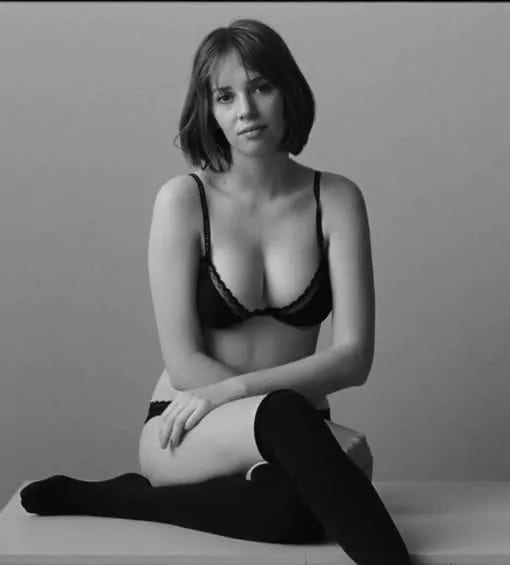
Happy 28th birthday to Maya Hawke—an actress, singer, songwriter, and storyteller whose intelligence, vulnerability, humor, and unmistakable creative spirit have made her one of the most distinctive artists of her generation.
Born in New York City on July 8, 1998, Hawke initially entered the public imagination as an actor. Her breakthrough performance as Robin Buckley in Stranger Things made her recognizable around the world, but she has steadily demonstrated that no single character, genre, or artistic form can contain her.
She can deliver frantic comedy without losing emotional sincerity.
She can play a calculating outsider, a nervous teenager, a literary heroine, or an animated embodiment of anxiety.
Away from the screen, she transforms intimate thoughts into lyrically rich folk-pop songs that often feel closer to private letters than conventional celebrity music.
Her appeal comes partly from contradiction.
Hawke can appear confident and uncertain, playful and melancholy, contemporary and strangely timeless. She possesses the natural charisma required for mainstream entertainment while maintaining the curiosity of an independent artist still searching for new ways to express herself.
At 28, she has completed her journey through Hawkins, released four studio albums, worked with major filmmakers, voiced one of Pixar’s most memorable modern characters, and begun another promising television chapter.
Yet her career still feels as though it is only beginning.
Maya Hawke at 28
Maya Ray Thurman Hawke was born on July 8, 1998, in New York City.
Her career so far has included:
- A screen debut as Jo March in the BBC adaptation of Little Women
- Worldwide recognition as Robin Buckley in Stranger Things
- A leading role as Eleanor in Do Revenge
- An ensemble appearance in Wes Anderson’s Asteroid City
- A voice performance as Anxiety in Pixar’s Inside Out 2
- Roles in films including Once Upon a Time in Hollywood, Maestro, Human Capital, Wildcat, and The Kill Room
- Four studio albums exploring folk, pop, poetry, love, identity, and artistic uncertainty
- A forthcoming leading role in Netflix’s adaptation of The God of the Woods
Hawke grew up in an artistic family as the daughter of actors Uma Thurman and Ethan Hawke. However, her most interesting work has emerged from her determination to build an identity that is recognizably her own rather than reproduce either parent’s career.
An Artist Raised Around Stories

Being surrounded by actors, writers, filmmakers, and musicians gave Hawke early access to artistic conversation.
It did not eliminate uncertainty.
She has spoken openly about dyslexia, education, artistic ambition, and the discomfort that can accompany being publicly evaluated. She attended Juilliard before leaving after receiving the opportunity to play Jo March in the BBC’s 2017 adaptation of Little Women.
Jo was an appropriate beginning.
Louisa May Alcott’s heroine is independent, literary, stubborn, creative, and resistant to the narrow path society expects her to follow. Hawke brought youthful intensity to the character, establishing qualities that would later reappear throughout her career.
Even in her earliest work, she seemed drawn to women who think too quickly, feel too intensely, and do not fit comfortably inside their surroundings.
That instinct would lead directly to the role that changed everything.
Robin Buckley Changed Her Career
Maya Hawke joined Stranger Things in its third season as Robin Buckley, an intelligent and sarcastic teenager working beside Steve Harrington at the Scoops Ahoy ice cream shop in Starcourt Mall.
Robin could easily have been introduced as a temporary comic sidekick.
She quickly became essential.
Her rapid speech, dry humor, language skills, intelligence, and impatience with Steve’s romantic confidence gave the season a fresh rhythm. Hawke and Joe Keery developed an immediate comic chemistry that initially appeared capable of turning into a conventional romance.
The series chose something much more meaningful.
After Robin and Steve survive interrogation by Russian operatives, she reveals that she had never been attracted to him. The girl she watched during school was not looking at Robin but at Steve—the boy beside her.
The confession changes their relationship without ending it.
Steve listens.
Robin trusts him.
Their friendship becomes one of the most affectionate and emotionally healthy relationships in the series.
Netflix’s official character history describes Robin as entering the story through Scoops Ahoy, helping uncover the secret laboratory beneath Starcourt and eventually sharing the truth about her feelings with Steve.
Why Robin Became a Fan Favorite
Robin worked because Hawke did not play her as effortlessly cool.
She was intelligent but frequently overwhelmed.
Confident in some situations and painfully uncertain in others.
Capable of solving a complicated code while becoming almost unable to speak normally around someone she liked.
Her nervousness felt specific rather than generic.
Hawke allowed words to spill out of Robin as though her mind had moved several steps ahead and her mouth was desperately attempting to catch up. The performance made her awkwardness charming without turning it into a joke at her expense.
Robin also changed the emotional structure of the show.
She became a character whose heroism did not depend on physical strength or supernatural ability. Her contributions came through observation, translation, memory, empathy, and the willingness to act despite fear.
She entered the story selling ice cream in a sailor uniform.
She left it as a central member of the group fighting to save Hawkins.

Robin and Steve’s Friendship
The friendship between Robin and Steve became especially meaningful because it rejected the expectation that emotional intimacy between a young man and woman must become romantic.
Steve initially imagines Robin as another possible love interest.
After she tells him the truth, he does not abandon her or treat her differently. Their bond becomes stronger.
They tease one another.
Protect one another.
Offer terrible romantic advice.
Share fears they cannot easily discuss with others.
Hawke and Keery create the energy of siblings who chose each other.
Their conversations are funny because both characters understand precisely how to irritate the other. Their serious scenes work because the comedy has established genuine trust.
Robin never exists to reward Steve’s development.
Steve never exists merely to protect her.
They become equals connected by shared danger, loneliness, and affection.
Giving Robin Vulnerability
Robin’s intelligence does not protect her from fear.
She understands the social danger of being openly queer in the conservative environment of 1980s Hawkins. Her uncertainty around romance is therefore not ordinary teenage nervousness alone.
Rejection could expose her.
Honesty could place her safety and reputation at risk.
Hawke communicates this tension without allowing it to consume the entire character. Robin remains funny, adventurous, impatient, and capable of joy.
Her identity matters deeply without becoming the only subject she is permitted to embody.
In the final season, Robin’s experience also allows her to connect with Will Byers, offering him understanding shaped by her own journey. Netflix’s official coverage highlighted the growing bond between Robin and Will and the way her personal history helps her speak to fears he has struggled to express.
Farewell to Hawkins
The fifth and final season of Stranger Things arrived in three parts, beginning on November 26, 2025, and concluding on December 31 in the United States, with the finale becoming available on January 1, 2026, in many international regions.
For Hawke, it marked the end of the role that transformed her career.
Robin entered the series when it was already a global phenomenon. Becoming beloved within an established ensemble is not easy, particularly when viewers have already formed strong attachments to the original characters.
Hawke did not imitate the show’s existing energy.
She brought something new.
Robin’s arrival expanded the emotional and comic possibilities of Stranger Things. She became inseparable from its later identity and one of the defining additions in the show’s history.
Although Hawke’s career will continue far beyond Hawkins, Robin Buckley will always hold a special place in it.
For many viewers, Robin was the first time they encountered Maya Hawke.
For others, she was the first character who made them feel recognized.
Eleanor in Do Revenge
Hawke displayed a sharper and more dangerous form of humor as Eleanor Levetan in Netflix’s 2022 dark comedy Do Revenge.
The movie pairs Eleanor with Drea Torres, played by Camila Mendes. Both girls have been socially harmed and agree to take revenge on each other’s enemies, believing the arrangement will prevent anyone from tracing the schemes back to them.
Eleanor initially appears shy, wounded, and socially uncomfortable.
That impression gradually becomes more complicated.
Hawke turns the character’s vulnerability into part of a carefully controlled performance. Beneath Eleanor’s apparent awkwardness is anger, intelligence, resentment, and a talent for manipulation.
Netflix described the film as a dark, Strangers on a Train-inspired comedy in which Drea and Eleanor secretly target one another’s tormentors.
The role demonstrated that Hawke could play deception as convincingly as sincerity.
The Two Sides of Eleanor
Eleanor works because the audience can believe both versions of her.
The nervous outsider feels authentic.
The calculating strategist also feels authentic.
Hawke does not reveal the second character by completely discarding the first. She suggests that Eleanor’s pain and manipulation have grown from the same place.
This creates a performance that remains funny while becoming increasingly unsettling.
The role also gave Hawke room to participate in a heightened, stylized form of teen comedy filled with elaborate costumes, social cruelty, romantic confusion, and revenge plots.
Her chemistry with Camila Mendes carries the film.
Their relationship shifts between partnership, friendship, rivalry, betrayal, and a strange form of mutual recognition. Director Jennifer Kaytin Robinson described the emotional bond between the actresses as central to the movie’s success.
Asteroid City and Ensemble Acting
In 2023, Hawke joined the enormous cast of Wes Anderson’s Asteroid City.
The film brought together performers including Jason Schwartzman, Scarlett Johansson, Tom Hanks, Jeffrey Wright, Bryan Cranston, Steve Carell, Adrien Brody, and several others. Hawke played June Douglas, a young religious leader accompanying a group of students to a desert astronomy event.
The film premiered at the Cannes Film Festival before its theatrical release.
Working within Anderson’s precise visual and verbal style requires discipline.
Dialogue has a particular rhythm.
Movement must fit carefully composed frames.
Emotion is often expressed indirectly through pauses, posture, and unexpectedly formal language.
Hawke’s theatrical instincts suited that world.
She did not attempt to dominate the ensemble. She contributed to its larger pattern, demonstrating the ability to adjust her performance to a director with an exceptionally distinctive cinematic language.
Working Across Mainstream and Independent Cinema
Hawke’s film choices have rarely followed one predictable direction.
She appeared briefly in Quentin Tarantino’s Once Upon a Time in Hollywood.
She worked with her father in Wildcat, a film inspired by the life and imagination of writer Flannery O’Connor.
She played Jamie Bernstein in Bradley Cooper’s Leonard Bernstein drama Maestro.
She appeared alongside her mother, Uma Thurman, in The Kill Room.
She has moved between streaming comedies, prestige dramas, independent films, ensemble projects, animation, horror, and large-scale franchise entertainment.
This variety suggests that she is less interested in maintaining one marketable screen identity than in experiencing different creative environments.
Some actors carefully protect a particular image.
Hawke appears more attracted to experimentation.
Becoming Anxiety in Inside Out 2
One of Hawke’s most recognizable performances required no physical appearance at all.
She voiced Anxiety in Pixar’s Inside Out 2, joining the emotions inside Riley’s mind as the character entered adolescence.
Disney described Anxiety as one of the new emotions introduced alongside the returning voices of Joy, Sadness, Anger, Fear, and Disgust.
Anxiety arrives believing she is necessary.
Her goal is to protect Riley from future humiliation, rejection, and failure by anticipating everything that could go wrong.
The problem is that protection becomes control.
Anxiety creates plans within plans, attempts to manufacture the perfect identity, and gradually overwhelms Riley with impossible expectations.
Hawke’s voice gives the character tremendous speed.
She sounds helpful, apologetic, excited, terrified, and completely convinced that disaster will occur unless she remains in charge.
Making Anxiety Sympathetic
Anxiety could have been portrayed as an obvious villain.
Hawke makes her frightened rather than malicious.
The character genuinely believes she is helping Riley.
Her harmful actions emerge from care distorted by fear.
That emotional understanding allows the film to explore anxiety without suggesting that anxious feelings are shameful or useless. Some anticipation helps people prepare for the future. The danger arrives when imagined possibilities become more powerful than present reality.
Hawke’s performance captures that contradiction beautifully.
Anxiety is exhausting because she never stops thinking.
She is touching because she cannot stop caring.
The role introduced Hawke to younger audiences and demonstrated how much personality she could communicate through voice alone.
Music Is Not a Side Project
For Maya Hawke, music has never felt like a branding exercise attached to an acting career.
Her songs are too personal, literary, uncertain, and emotionally exposed for that.
She began releasing music in 2019 and has since developed a substantial catalogue shaped by folk traditions, poetic storytelling, conversational lyrics, and understated arrangements.
Her albums include:
- Blush in 2020
- Moss in 2022
- Chaos Angel in 2024
- Maitreya Corso in 2026
Her fourth album, Maitreya Corso, was released on May 1, 2026, following the single “Devil You Know.” It was created with collaborators including Christian Lee Hutson, Benjamin Lazar Davis, and producer Jonathan Low.
Blush: Finding Her Musical Voice
Hawke’s debut album, Blush, introduced a musical personality quieter and more intimate than the energetic character many viewers knew from Stranger Things.
The songs leaned toward folk-pop and singer-songwriter traditions.
Her voice did not attempt technical grandeur.
Its power came from closeness.
She sang as though the listener had been allowed into a private space where memories, relationships, and unfinished thoughts could be examined without complete resolution.
That intimacy would become central to her musical identity.
Her songs often feel observed rather than announced.
She notices small gestures, contradictions, embarrassment, longing, and the distance between what people say and what they actually feel.
Moss and Emotional Growth
Moss expanded that identity.
The album explored desire, self-perception, family, affection, fear, and the confusing transition into adulthood.
Its writing reflected someone attempting to understand herself while knowing that public attention would turn those attempts into material for interpretation.
Hawke’s musical influences include confessional and literary songwriters, but her work does not simply recreate an earlier folk era.
The conversational phrasing, self-awareness, and emotional uncertainty belong to a younger generation accustomed to living privately and publicly at the same time.
The songs ask how a person can remain sincere while knowing she is being watched.
Chaos Angel
With Chaos Angel, Hawke developed a broader and more ambitious sound while preserving the vulnerability of her earlier albums.
The title itself describes a tension visible throughout her work.
Order and disorder.
Grace and embarrassment.
Love and self-sabotage.
Hope and the expectation that something will go wrong.
Hawke does not present adulthood as the moment uncertainty disappears.
She treats maturity as learning how to live beside uncertainty without allowing it to make every decision.
The album strengthened her position as a serious songwriter rather than an actor occasionally releasing music.
Maitreya Corso and a New Chapter
Released shortly before her 28th birthday, Maitreya Corso became Hawke’s fourth studio album.
Its songs explore identity, artistic ambition, love, imperfection, and the struggle to protect creativity from external pressure. Reviews noted the album’s literary influences and its movement toward a more grounded sense of self-acceptance.
Hawke has described releasing personal music as emotionally difficult because promoting autobiographical songs can feel like being asked to advertise a private diary.
That discomfort reveals something important about her work.
The vulnerability is not effortless.
She chooses it despite fear.
She has said that completing and releasing the album brought relief, even though exposing personal writing to public interpretation remained painful.
Her Voice as a Songwriter
Hawke’s songs do not attempt to separate confidence from insecurity.
She writes from within contradictions.
She can be grateful and resentful.
Romantic and suspicious.
Ambitious and embarrassed by ambition.
Hungry for connection while frightened of being completely understood.
This emotional complexity links her music with her acting.
Robin talks too quickly because silence leaves room for fear.
Eleanor hides pain behind strategy.
Anxiety attempts to control the future because uncertainty feels unbearable.
Hawke’s songs often explore similar instincts without fictional protection.
The characters disappear, leaving the artist alone with the question.
Acting and Music Feed Each Other
Hawke’s dual career is not divided into two unrelated identities.
Her acting has a musical quality.
She pays close attention to rhythm, breath, interruption, repetition, and the sound of language.
Her music has a dramatic quality.
Songs contain characters, scenes, emotional reversals, hidden motivations, and lines that reveal more than the narrator initially intends.
Acting allows her to disappear into another person.
Songwriting asks her to reveal herself.
Moving between those forms may help prevent either from becoming too comfortable.
When acting becomes too public, music offers intimacy.
When music becomes too exposing, acting offers transformation.
Building an Identity Beyond Her Family Name
Maya Hawke has never been able to enter a room without people recognizing her family connections.
Her parents are among the most familiar actors of their generation.
That background created opportunity, but it also created constant comparison.
Hawke has responded by acknowledging the advantages of her upbringing while continuing to do the only thing capable of giving her career independent meaning: producing work.
Her artistic identity is now recognizable on its own.
Robin Buckley does not feel like an imitation of either parent.
Her music does not sound designed to reproduce their public personas.
Her combination of humor, literary curiosity, emotional honesty, and restless speech belongs specifically to her.
Family may explain where her artistic life began.
It cannot fully explain where she has taken it.
Natural Charisma Without Conventional Polish
Hawke’s screen presence does not depend on appearing perfectly composed.
She is often most magnetic when a character is struggling to maintain control.
A sentence becomes too long.
A confession arrives at the wrong moment.
Confidence collapses into awkward laughter.
A plan reveals the fear beneath it.
She allows imperfections to remain visible.
That quality makes her performances feel alive.
Audiences do not watch her characters merely deliver prepared dialogue. They appear to think, regret, reconsider, and redirect themselves while speaking.
This spontaneity is carefully crafted, but it rarely feels mechanical.
Humor as a Form of Vulnerability
Hawke’s comedy frequently emerges from discomfort.
Robin jokes because sincerity feels dangerous.
Eleanor uses wit as both defense and attack.
Anxiety speaks rapidly because slowing down might force her to confront the emotional consequences of her actions.
Hawke understands that funny people are not always relaxed.
Sometimes humor is created by someone trying desperately to survive a situation without revealing how frightened they are.
Her performances allow comedy and sadness to occupy the same moment.
The audience laughs while recognizing the wound underneath.
Why Maya Hawke Connects With Her Generation
Hawke’s characters frequently embody pressures familiar to younger viewers.
The fear of being misunderstood.
The need to construct an acceptable identity.
The discomfort of public self-presentation.
The desire to appear confident while privately anticipating failure.
The difficulty of separating genuine ambition from the demand to remain productive and visible.
Her music addresses similar tensions directly.
She does not pretend to have solved them.
That absence of certainty creates trust.
Hawke does not present herself as an artist who has completed the journey toward self-understanding.
She invites listeners and viewers to accompany her while she continues figuring things out.
A Style That Feels Both Modern and Timeless
Hawke possesses an unusual relationship with time.
She can fit naturally into the stylized 1980s setting of Stranger Things, the literary nineteenth-century world of Little Women, Wes Anderson’s theatrical interpretation of the 1950s, or contemporary youth culture in Do Revenge.
Her music often carries echoes of older folk traditions while remaining unmistakably connected to modern emotional language.
This flexibility allows her to feel both nostalgic and new.
She does not appear trapped within one era.
She carries traces of several.
The God of the Woods
As Hawke turns 28, she has already begun filming her next major television role.
Netflix’s adaptation of Liz Moore’s bestselling novel The God of the Woods started production in upstate New York in 2026. Hawke stars alongside Kerry Condon and plays Judy Luptack, an ambitious young investigator examining the disappearance of a girl from a summer camp connected to a wealthy and secretive family.
The role appears well suited to the next stage of her career.
Judy is not a teenager or an eccentric sidekick.
She is an investigator attempting to establish herself within an environment that may underestimate her.
The project offers mystery, class tension, family secrets, and a more mature form of dramatic responsibility.
After years spent helping solve supernatural crimes in Hawkins, Hawke is moving toward a mystery grounded in human behavior.
Life After Stranger Things
Leaving a culturally dominant series creates both opportunity and risk.
The recognition attached to Robin will remain useful, but Hawke must continue demonstrating that audiences will follow her beyond the role.
Her career has already prepared for that transition.
She did not wait until Stranger Things ended to begin experimenting.
She recorded albums.
Worked in independent cinema.
Joined unusual ensemble productions.
Took voice roles.
Played characters who challenged the warmth audiences associated with Robin.
That variety means the end of the series does not feel like the end of her artistic identity.
It feels like a release into greater possibility.
A Performer Unafraid of Awkwardness
Many actors attempt to remove awkwardness from their performances.
Hawke understands its dramatic value.
Awkwardness reveals desire.
A person becomes awkward because something matters.
Robin becomes awkward because she wants connection.
Eleanor becomes awkward because she is hiding anger and history.
Anxiety becomes awkward because she is trying to prepare for every possible disaster simultaneously.
Hawke does not polish these feelings into conventional glamour.
She allows them to remain uncomfortable.
That honesty is one of her greatest strengths.
Her Fearless Artistic Choices
Fearlessness does not mean Hawke feels no fear.
Her interviews and music suggest the opposite.
She appears acutely aware of criticism, exposure, expectation, and the difficulty of being judged.
Her courage comes from continuing anyway.
She accepts roles that could fail.
Writes songs personal enough to hurt when criticized.
Moves between commercial and independent projects.
Refuses to define herself only as an actor or only as a musician.
She does not always choose the safest route toward celebrity.
She chooses the route that appears most artistically interesting.
More Than a “Rising Star”
Maya Hawke is often described as a rising star.
At 28, the phrase is becoming insufficient.
She has completed five seasons within one of the world’s most recognizable television franchises.
She has led a popular dark comedy.
Worked with acclaimed directors.
Contributed a defining voice performance to a major animated film.
Released four albums.
Built an audience willing to follow both her acting and songwriting.
She is no longer waiting to become an artist.
She is deciding what kind of artist she intends to remain.
What Makes Maya Hawke Special?
Talent alone does not explain her appeal.
Many performers possess talent.
Hawke combines it with specificity.
Her voice, timing, emotional rhythms, musical writing, and onscreen nervous energy are immediately recognizable.
She does not vanish into generic competence.
Even within a large ensemble, her presence changes the atmosphere.
She can make a scene feel faster through speech, quieter through vulnerability, or stranger through the sense that her character has noticed something everyone else missed.
That specificity is difficult to manufacture.
It gives her work identity.
A Birthday Wish for Maya Hawke
On her 28th birthday, Maya Hawke has much to celebrate.
She has brought laughter, courage, and emotional honesty to millions of Stranger Things viewers.
She has transformed anxiety into a character children and adults could understand.
She has explored revenge, literature, history, mystery, family, romance, and identity across an increasingly adventurous screen career.
She has written music that gives private uncertainty a public language.
Most importantly, she has continued evolving.
The finest birthday wish for an artist like Hawke is not simply more success.
It is continued freedom.
Freedom to choose unusual roles.
Freedom to write honestly.
Freedom to fail without becoming cautious.
Freedom to move between film, television, music, poetry, theatre, and whatever form attracts her curiosity next.
Final Tribute: Happy Birthday, Maya Hawke
Happy birthday, Maya Hawke.
Thank you for giving Robin Buckley a mind that moves too quickly, a heart that remains open despite fear, and a friendship with Steve that became one of the most beloved relationships in Stranger Things.
Thank you for making Eleanor charming enough that audiences underestimated her.
Thank you for giving Anxiety a voice filled with panic, purpose, humor, and unexpected compassion.
Thank you for treating music as a place for honesty rather than another branch of celebrity.
Thank you for allowing awkwardness, uncertainty, intelligence, and vulnerability to remain visible in your work.
At 28, Maya Hawke has already created characters and songs that people will remember for years.
Yet the most exciting part of her career may be everything that has not happened yet.
The roles not yet chosen.
The lyrics not yet written.
The strange ideas still waiting to become films, albums, performances, and stories.
She has inherited an artistic legacy, but she has not allowed inheritance to become identity.
She has built a creative world that sounds, moves, and feels like her own.
Here is to another year of bold performances, thoughtful music, unexpected collaborations, personal happiness, and the freedom to remain wonderfully difficult to categorize.
Happy 28th birthday, Maya Hawke. May the next chapter be your most fearless and beautiful one yet.
Frequently Asked Questions About Maya Hawke
When is Maya Hawke’s birthday?
Maya Hawke was born on July 8, 1998.
How old is Maya Hawke in 2026?
She turns 28 on July 8, 2026.
Where was Maya Hawke born?
She was born in New York City.
What is Maya Hawke’s full name?
Her full name is Maya Ray Thurman Hawke.
Who are Maya Hawke’s parents?
Her parents are actors Uma Thurman and Ethan Hawke.
What was Maya Hawke’s first major acting role?
She played Jo March in the BBC’s 2017 adaptation of Little Women.
What role made Maya Hawke famous?
She achieved worldwide recognition as Robin Buckley in Stranger Things.
When did Robin Buckley first appear?
Robin was introduced during the third season of Stranger Things.
Who is Robin Buckley?
Robin is an intelligent, sarcastic, fast-talking Hawkins teenager who becomes a close friend of Steve Harrington and an important member of the group fighting the Upside Down.
Why is Robin and Steve’s friendship so popular?
Their relationship develops into a loyal and affectionate friendship rather than a conventional romance, allowing both characters to support each other honestly.
Did Maya Hawke appear in the final season of Stranger Things?
Yes. She returned as Robin Buckley for the fifth and final season, released in late 2025.
Who did Maya Hawke play in Do Revenge?
She played Eleanor Levetan, an apparently shy student whose motivations become increasingly complicated.
Who stars with Maya Hawke in Do Revenge?
Camila Mendes stars opposite her as Drea Torres.
Was Maya Hawke in Asteroid City?
Yes. She played June Douglas in Wes Anderson’s 2023 ensemble film.
Who does Maya Hawke voice in Inside Out 2?
She voices Anxiety.
Why was her performance as Anxiety praised?
She gave the character speed, humor, fear, and sympathy, showing that Anxiety wants to protect Riley even while causing serious emotional harm.
Is Maya Hawke also a singer?
Yes. She is a singer-songwriter with a substantial independent music career.
How many albums has Maya Hawke released?
She has released four studio albums as of July 2026.
What are Maya Hawke’s albums?
Her albums are Blush, Moss, Chaos Angel, and Maitreya Corso.
What is Maya Hawke’s latest album?
Her fourth album, Maitreya Corso, was released in May 2026.
What style of music does Maya Hawke make?
Her work combines folk, indie pop, literary songwriting, intimate vocals, and autobiographical storytelling.
Does Maya Hawke write her own songs?
Yes. Songwriting is central to her music career, often in collaboration with musicians and producers.
Was Maya Hawke in Maestro?
Yes. She played Jamie Bernstein in Bradley Cooper’s film about composer and conductor Leonard Bernstein.
Did Maya Hawke work with her father?
Yes. She appeared in The Good Lord Bird and later worked with Ethan Hawke on Wildcat.
Did Maya Hawke work with her mother?
Yes. She appeared alongside Uma Thurman in The Kill Room.
What is Maya Hawke filming in 2026?
She is starring in Netflix’s adaptation of The God of the Woods.
Who does she play in The God of the Woods?
She plays Judy Luptack, a young investigator examining the disappearance of a girl from a summer camp.
Is The God of the Woods connected to Stranger Things?
No. It is a separate mystery series based on Liz Moore’s novel.
What makes Maya Hawke’s acting distinctive?
Her rapid comic timing, emotional openness, expressive voice, intelligence, and willingness to portray awkwardness make her performances immediately recognizable.
What makes her music personal?
Her lyrics frequently explore love, ambition, insecurity, family, identity, self-doubt, and the emotional cost of sharing private experiences publicly.
Is Maya Hawke only successful because of her famous parents?
Her family background gave her significant advantages and early access to the arts, but her performances, songwriting, four albums, and varied creative choices have established a body of work with its own identity.
Why is Maya Hawke considered versatile?
She has worked across science fiction, comedy, drama, animation, mystery, period storytelling, independent cinema, and music.
What is Maya Hawke best known for?
She remains best known for playing Robin Buckley in Stranger Things, although her roles in Inside Out 2, Do Revenge, and her music have expanded her audience considerably.
What is next for Maya Hawke?
Her immediate acting future includes The God of the Woods, while her fourth album has opened another stage of her work as a singer-songwriter.
Why do fans connect with Maya Hawke?
Her characters and songs frequently express intelligence, uncertainty, awkwardness, humor, and vulnerability without pretending those qualities are contradictions.
What is the best birthday message for Maya Hawke?
Happy 28th birthday to an artist who continues to turn uncertainty into creativity, awkwardness into charm, and personal honesty into unforgettable performances and music.