
Dark Academia Decor: How to Build a Moody, Book-Filled Sanctuary
A dark academia room should feel as though it has been quietly evolving for decades.
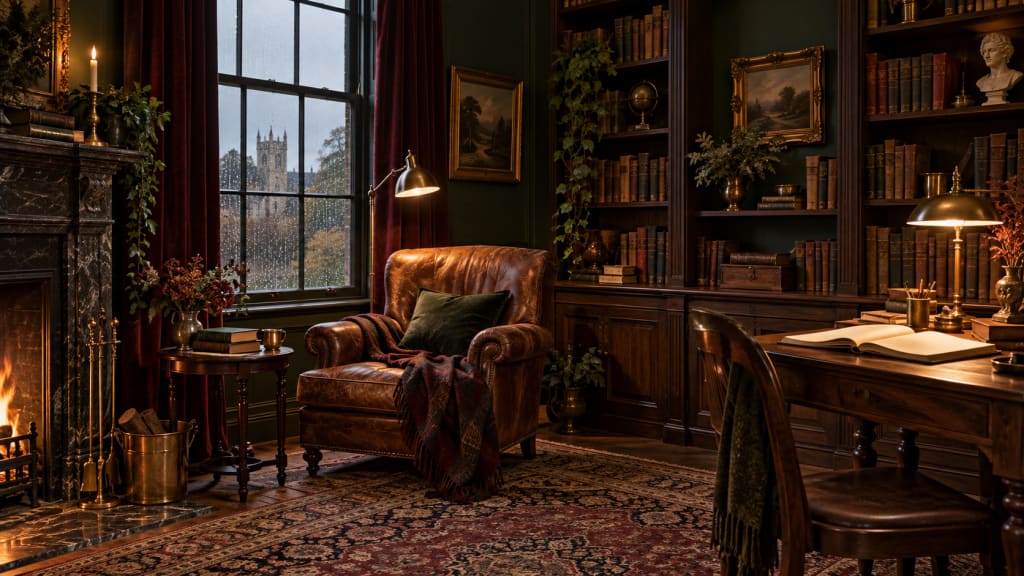
Books gather on deep wooden shelves. A brass lamp casts a warm pool of light across an old desk. Framed portraits, botanical studies, maps, and handwritten notes cover walls painted in forest green, charcoal, oxblood, or midnight blue. Worn leather, heavy curtains, aged metal, patterned rugs, and collected objects make the room feel personal rather than professionally staged.
The goal is not simply to make a room dark.
It is to create an interior that suggests curiosity, scholarship, history, and retreat—a place where reading, writing, listening, thinking, and collecting feel completely natural.
Dark academia became widely recognizable as an internet aesthetic during the early 2020s, particularly through TikTok, Tumblr, Instagram, and Pinterest. Its visual language combines romanticized university life with old libraries, Gothic architecture, classical literature, antique furniture, scholarly clothing, candlelit rooms, and autumnal color palettes. Architectural Digest has described the design trend as a vintage, Gothic-influenced aesthetic built around dark colors, antiques, books, and intimate spaces.
The label may be relatively modern, but the interiors it references are not.
Its visual ancestry includes Gothic Revival architecture, Victorian studies, European libraries, traditional English interiors, neoclassical art, old university buildings, and nineteenth-century collecting culture. The Gothic Revival itself emerged in Britain during the second half of the eighteenth century and expanded through the nineteenth century, reviving medieval architectural forms in both public and domestic design.
That history helps explain why convincing dark academia decor rarely comes from purchasing a collection of matching “dark academia” products.
The strongest rooms feel assembled rather than ordered.
They contain contrast, imperfection, utility, and evidence of an actual life.
What Is Dark Academia Interior Design?
Dark academia interior design is a moody, literary style centered on learning, history, art, and intellectual life.
Its most recognizable ingredients include:
- Dark, saturated colors
- Books and visible reading material
- Aged or dark-stained wood
- Leather, wool, velvet, linen, and tweed
- Brass, bronze, iron, and antique silver
- Classical or historical artwork
- Traditional furniture shapes
- Warm, layered lighting
- Collected objects with scholarly associations
- A sense of age, mystery, and personal history
Common colors include charcoal, black, chocolate brown, burgundy, oxblood, forest green, olive, navy, plum, tobacco, cream, parchment, and muted gold. Design guides consistently identify deep green, burgundy, navy, charcoal, antique wood, vintage furniture, and book-filled displays as central to the style.
However, the aesthetic is not defined by a rigid shopping list.
A room can feel dark academic without containing a leather Chesterfield sofa, floor-to-ceiling library, marble bust, or expensive antique desk.
The atmosphere comes from the relationship between the objects:
- A reading chair positioned beside usable light
- Books that are actually opened
- Furniture with visible age and texture
- Art that reflects genuine interests
- A palette that feels enveloping rather than empty
- Objects arranged as evidence of study rather than random decoration
Dark Academia Is More Than Black Paint
One of the easiest mistakes is assuming that a dark academia room requires painting every surface black.
Black can be effective, but it is only one option.
A successful dark room usually contains tonal variation. Deep walls may be balanced with warm timber, cream paper, aged brass, faded textiles, reflective glass, and carefully positioned light.
Without variation, a dark space can feel flat, cramped, or unfinished.
Consider using:
- Deep green walls with walnut furniture
- Navy walls with cognac leather
- Charcoal walls with burgundy textiles
- Chocolate brown walls with parchment and brass
- Muted plum with dark oak
- Warm cream walls with dark bookcases and heavy fabrics
Dark academia can also be created in a rental with white or beige walls. Large bookcases, framed art, dark textiles, warm lamps, and substantial furniture can carry the aesthetic without permanent painting.
The room needs depth more than darkness.
Dark Academia Versus Gothic Decor
Dark academia and Gothic decor overlap, but they are not identical.
Gothic interiors may emphasize:
- Pointed arches
- Religious or medieval imagery
- Dramatic black finishes
- Carved ornament
- Gargoyles
- Stained-glass effects
- Highly theatrical forms
Dark academia is usually more domestic and scholarly.
Its primary reference point is the library, study, laboratory, lecture room, archive, artist’s studio, or old university office.
A Gothic room may feel like a castle chamber.
A dark academia room should feel like someone is about to return and continue reading.
Dark Academia Versus Light Academia
Light academia draws from many of the same themes but uses a brighter, softer palette.
It often includes:
- Cream and ivory
- Pale oak
- Light linen
- Soft yellow
- Dusty pink
- Sage
- Sunlit rooms
- Classical art
- Delicate vintage furniture
Dark academia uses richer color, heavier materials, lower lighting, and greater visual density. Better Homes & Gardens describes light academia as brighter and more cheerful, while dark academia relies on dramatic colors, aged wood, leather, vintage objects, and intimate lighting.
People who love the intellectual theme but live in a very small or dark apartment can combine the two. Keep the walls lighter, then introduce dark furniture, framed prints, antique-style lighting, and deeper textiles.
Begin With the Room’s Purpose
Before selecting paint or searching for antiques, decide what the room must allow you to do.
A beautiful room that is uncomfortable for reading or impossible to work in becomes a stage set.
Your dark academia sanctuary may need to function as:
- A home office
- A personal library
- A reading room
- A bedroom
- A writing space
- A music room
- A study corner
- A living room
- A combined office and guest room
Write down the three activities that matter most.
For example:
- Read comfortably for an hour.
- Work at a computer without glare.
- Store and access 300 books.
Those requirements should guide the layout.
A practical reading room needs:
- Supportive seating
- A nearby lamp
- Space for a drink or notebook
- Accessible shelves
- Comfortable temperature
- A place to charge devices discreetly
A home office needs:
- A desk of suitable height
- An ergonomic chair
- Useful task lighting
- Cable management
- Storage
- Video-call considerations
- Enough visual calm to concentrate
The atmosphere should support the activity, not compete with it.
Choose a Moody Color Palette
The palette establishes the room’s emotional temperature.
Forest Green
Forest green is one of the most adaptable dark academia colors.
It works naturally with:
- Walnut
- Mahogany
- Cognac leather
- Burgundy
- Brass
- Cream
- Botanical prints
It feels scholarly without becoming completely black and often changes beautifully throughout the day.
Charcoal
Charcoal is softer than pure black and allows wood grain, books, and artwork to stand out.
Use a warm charcoal rather than a cold blue-gray when you want the room to feel inviting.
Navy
Navy provides darkness while maintaining visible color.
It pairs especially well with:
- Brown leather
- Gold frames
- Red rugs
- Dark wood
- Cream paper
- Green glass lamps
Burgundy and Oxblood
These shades create a dramatic library atmosphere.
They work well on:
- One accent wall
- Curtains
- Upholstery
- Rugs
- Painted shelving
- Lampshades
A full burgundy room can be beautiful, but it requires careful lighting to avoid feeling muddy.
Chocolate and Tobacco Brown
Brown has returned as a serious interior color because it adds warmth and works naturally with timber, leather, parchment, and antique metal.
A brown room can feel softer and more lived-in than a black one.
Cream and Parchment
Dark academia still needs light values.
Cream, bone, parchment, old paper, and muted beige can appear through:
- Book pages
- Lampshades
- Ceilings
- Art mats
- Curtains
- Upholstery
- Plaster walls
These lighter areas keep the room visually readable.
Use the 60–30–10 Approach Loosely
A simple way to control the palette is:
- Around 60% dominant background color
- Around 30% secondary material or color
- Around 10% accent
For example:
- 60% deep green walls and shelving
- 30% dark wood and brown leather
- 10% burgundy, brass, and cream
This does not need to be mathematically exact.
It simply prevents every dark shade from competing equally.
Paint the Ceiling—or Leave It Light?
Painting the ceiling the same deep color as the walls can create a cocoon-like effect.
It works especially well when:
- The room has high ceilings
- There is good natural light
- The room is intended for evening use
- You want an immersive atmosphere
Keeping the ceiling lighter may be better when:
- The ceiling is low
- The room receives little daylight
- The space is very small
- The room must double as a bright work area
- You want the furniture to carry most of the mood
Another option is to use a ceiling color one or two shades lighter than the walls.
This preserves depth without creating a sharp white boundary.
Add Architectural Character
Dark academia interiors often suggest old architecture even when the home is new.
You can introduce that feeling through:
- Picture-frame molding
- Chair rails
- Applied wall panels
- Crown molding
- Ceiling medallions
- Arched mirrors
- Bookcase trim
- Traditional door hardware
- Decorative corbels
- Faux beams
For renters, removable molding, peel-and-stick wallpaper, freestanding bookcases, and oversized framed art can create architectural weight without permanent changes.
Avoid adding every historical detail at once.
One strong architectural gesture usually looks more convincing than several inexpensive imitations competing for attention.
Make Books the Center of the Room
Books are not optional accessories in a genuinely book-filled dark academia room.
They are the visual and functional heart of the space.
However, you do not need shelves filled with matching leather-bound classics.
A more believable collection contains:
- Novels
- Poetry
- Essays
- Art books
- History
- Science
- Philosophy
- Travel writing
- Reference books
- Old magazines
- Notebooks
- Personal favorites
- Unread books awaiting attention
A room filled with books selected only for spine color can appear decorative but emotionally empty.
Use books that reflect actual curiosity.
How to Arrange the Shelves
A working library does not need to be styled like a retail display.
Useful arrangements include:
By Subject
Best for finding books quickly.
Alphabetically
Practical for large fiction or author collections.
By Size
Visually calm and helpful for supporting books correctly.
Mixed Functional Arrangement
Organize frequently used books logically and style less frequently used shelves more freely.
Horizontal and Vertical Groupings
A few horizontal stacks create rhythm, but avoid building unstable towers.
Conservation guidance recommends supporting books upright, grouping similar sizes together, and limiting unnecessary stacking.
Leave some breathing room.
A completely packed bookcase can feel impressive, but a little negative space allows room for growth and prevents the collection from becoming visually exhausting.
Protect the Books From Sun and Moisture
The dark academia aesthetic naturally favors low light, which can be beneficial for preserving books.
Direct sunlight and strong light can fade covers, discolor paper, and accelerate deterioration. The Library of Congress and New York Public Library recommend keeping books away from direct or intense light and maintaining a stable, relatively cool, clean environment.
Avoid placing valuable books:
- Directly against a sunny window
- Beside a radiator
- Under an air-conditioning vent
- In a damp basement
- In an extremely hot attic
- Against a wall with condensation or water damage
Libraries commonly recommend relatively stable humidity around 35% to 50% for personal book collections. Excess moisture encourages mold, while very dry conditions can make paper and leather brittle.
The EPA recommends keeping household relative humidity below 60% and ideally between 30% and 50% to discourage mold.
A small hygrometer can be especially useful in humid climates.
Choose Furniture That Looks Collected
Dark academia furniture should feel substantial, useful, and slightly storied.
Suitable pieces include:
- Wooden writing desks
- Secretary desks
- Library tables
- Leather armchairs
- Upholstered reading chairs
- Wooden side tables
- Glass-fronted cabinets
- Vintage filing cabinets
- Small chests
- Book carts
- Display cabinets
- Traditional dining chairs used as desk chairs
Not every piece needs to be antique.
A room filled entirely with reproductions marketed as “vintage” can feel artificial. Mixing periods often creates a more convincing result.
For example:
- A modern ergonomic desk chair behind an old wooden desk
- A contemporary sofa covered with wool and velvet cushions
- New shelving painted to resemble built-ins
- An antique side table beside a modern reading lamp
- A simple bed paired with vintage art and heavy curtains
The objective is continuity, not historical reenactment.
Prioritize Comfort
Dark academia photographs often show beautiful but unforgiving wooden chairs.
Those may be suitable for decoration but not for four hours of work.
For a practical sanctuary, consider:
- Seat depth
- Back support
- Desk height
- Arm position
- Reading posture
- Lighting angle
- Space to change position
A leather chair can look ideal but become hot in warm climates.
Velvet can appear luxurious but collect dust and pet hair.
Dark wood can be beautiful but make a small room feel crowded when every piece is large.
Choose the version of the aesthetic that supports your climate, body, household, and routines.
Build the Room Around Layered Lighting
Lighting determines whether dark academia feels atmospheric or simply dim.
A single ceiling light rarely creates the desired mood.
Use several layers.
Ambient Lighting
This provides general illumination.
Examples:
- A dimmable chandelier
- A shaded ceiling fixture
- Wall sconces
- A floor lamp that casts light upward
- Indirect LED lighting hidden above shelving
Task Lighting
This helps you work, read, or write.
Examples:
- A banker’s lamp
- An adjustable desk lamp
- A library lamp
- A swing-arm wall light
- A focused reading lamp beside a chair
Accent Lighting
This creates atmosphere and highlights objects.
Examples:
- Picture lights
- Shelf lights
- Small lamps on bookcases
- Lights inside glass cabinets
- A lamp illuminating a sculpture or plant
Warm light generally works best with dark wood, leather, and aged metal.
However, the work surface must still be bright enough to prevent strain. Mood lighting should surround the activity, while task lighting should illuminate it clearly.
Use Candles Carefully
Candles are strongly associated with dark academia imagery, but rooms filled with books, curtains, loose paper, and dried flowers contain many combustible materials.
The National Fire Protection Association states that candles are open flames capable of igniting nearby objects. US fire-safety guidance recommends keeping candles at least 12 inches from anything that can burn, using stable holders, extinguishing them before leaving, and avoiding lit candles in sleeping areas.
For everyday ambience, consider:
- High-quality flameless candles
- Rechargeable table lamps
- Warm LED taper candles
- Low-wattage lamps behind amber glass
- Flickering LED bulbs used sparingly
Real candles can be reserved for supervised occasions on clear, stable surfaces.
Do not place flames directly below shelves or beside book stacks.
Select the Right Textiles
Textiles prevent a dark room from feeling hard or echoing.
Useful materials include:
- Wool
- Velvet
- Linen
- Cotton
- Tweed
- Tartan
- Herringbone
- Damask
- Persian-style patterns
- Faded florals
- Leather
Introduce them through:
- Curtains
- Rugs
- Cushions
- Throws
- Upholstery
- Lampshades
- Table coverings
- Bed linen
A patterned rug is especially effective because it brings together multiple dark tones while adding warmth underfoot.
Look for palettes containing combinations of:
- Burgundy and navy
- Olive and brown
- Rust and cream
- Plum and charcoal
- Black and faded red
- Green and muted gold
The pattern should look softened rather than sharply digital when possible.
Curtains Create Instant Atmosphere
Long curtains add height, softness, and drama.
Suitable options include:
- Velvet
- Heavy cotton
- Linen blends
- Dark plaid
- Muted floral patterns
- Deep solid colors
In a small room, avoid making curtains excessively heavy if they block the only natural light.
A practical combination is:
- Light-filtering inner curtain
- Darker outer curtain
- A rod mounted slightly above and wider than the window
This allows the room to feel dramatic when closed and functional during the day.
Curtains or blinds can also help protect books and prints from direct sunlight.
Choose Art That Suggests Intellectual Life
Dark academia walls often contain dense, salon-style arrangements.
Possible subjects include:
- Oil portraits
- Landscapes
- Architectural drawings
- Classical sculpture studies
- Botanical illustrations
- Anatomical diagrams
- Maps
- Sheet music
- Historical photographs
- Astronomy charts
- Insects and natural-history prints
- Calligraphy
- Museum postcards
- Personal sketches
Your interests should determine the collection.
Someone fascinated by medicine might use anatomical studies.
A musician may frame scores and concert programs.
A traveler may display maps and old tickets.
A developer or engineer could use technical diagrams, patents, vintage computer illustrations, or mechanical drawings.
The room becomes more convincing when the “academic” material reflects a real subject.
How to Build a Gallery Wall
Start by placing the largest piece first.
Build around it using different sizes while repeating one or two unifying elements:
- Similar frame colors
- Consistent spacing
- Shared subject matter
- Repeated gold or black accents
- Common mat colors
Frames do not need to match exactly.
A combination of:
- Dark wood
- Aged gold
- Black
- Bronze
- Antique silver
often looks more collected than an identical set.
Arrange the composition on the floor before hanging it.
Use removable picture strips where appropriate in rental homes, while respecting weight limits.
Add Scholarly Objects Without Creating Clutter
Dark academia decor often includes objects associated with study and discovery.
Examples include:
- Globes
- Magnifying glasses
- Brass rulers
- Bookends
- Ink bottles
- Fountain pens
- Wooden boxes
- Clocks
- Typewriters
- Cameras
- Scientific models
- Specimen displays
- Ceramic busts
- Chess sets
- Telescopes
- Music stands
- Record players
- Letter trays
- Old keys
- Stoneware
- Small sculptures
Use restraint.
One genuine vintage microscope can create more character than twenty mass-produced “mysterious” objects.
Objects should appear to have a relationship with the owner.
Ask:
- Do I use this?
- Does it connect to an interest?
- Does it have personal history?
- Is it visually strong enough to deserve space?
- Does the room need another object?
A sanctuary can be layered without becoming chaotic.
Use Plants to Soften the Darkness
Plants introduce life and organic shape among books, wood, and framed art.
Suitable options depend on the available light.
Possible choices include:
- Pothos
- Philodendron
- Snake plant
- ZZ plant
- Ferns where humidity and light permit
- Ivy
- Rubber plant
- Small palms
- Dried branches
- Pressed botanicals
Avoid placing moisture-loving plants directly beside valuable books.
Water carefully and use saucers.
A leaking pot can damage shelving, floors, and entire rows of books before the problem is noticed.
Artificial plants can work in extremely dark areas, but choose realistic foliage and use them sparingly.
Create a Dedicated Reading Nook
Even a large room benefits from one clearly defined reading position.
A useful reading nook contains:
- A supportive chair
- A warm but bright lamp
- A side table
- A throw
- A footstool where space allows
- Nearby books
- A place for tea or coffee
Position the lamp so that it illuminates the page without shining directly into your eyes.
The reading chair should not become a storage area for laundry or bags.
Protecting its purpose makes the room easier to use.
Create Dark Academia Decor in a Small Room
Small rooms can suit dark academia extremely well because the style values intimacy.
The main risk is overcrowding.
Use these principles:
Choose One Dominant Dark Element
This might be:
- One painted wall
- One large bookcase
- Dark curtains
- A large rug
- A dark desk
The remaining surfaces can be lighter.
Use Vertical Space
Tall shelving, stacked art, and high curtains pull the eye upward.
Select Furniture With Visible Legs
Furniture raised from the floor feels less visually heavy.
Add Mirrors Strategically
An arched or antique-style mirror can reflect lamplight and expand the room visually.
Limit Tiny Accessories
Several substantial objects look calmer than dozens of small trinkets.
Keep the Work Surface Clear
A clean desk prevents the room from feeling unusable.
Dark academia works in small rooms when every item earns its space.
Dark Academia for Renters
Renters can build the aesthetic without painting walls or modifying architecture.
Focus on removable and portable elements:
- Freestanding shelves
- Large framed art
- Removable wallpaper
- Tension-rod curtains
- Rugs
- Lamps
- Dark bedding
- Furniture
- Decorative screens
- Fabric wall hangings
- Peel-and-stick molding
- Vintage mirrors
A large dark bookcase against a plain wall creates an architectural effect without permanent installation.
You can also paint the inside back panel of a removable bookcase in deep green, burgundy, or navy.
This introduces color without touching the room itself.
How to Create the Look on a Budget
Dark academia is well suited to secondhand sourcing.
Search:
- Thrift stores
- Charity shops
- Used bookstores
- Estate sales
- Flea markets
- Local marketplace listings
- University surplus sales
- Library sales
- Furniture auctions
- Family storage
Prioritize items that are expensive or difficult to imitate convincingly:
- Solid wood furniture
- A comfortable chair
- A substantial rug
- Good lighting
- Real books
- Strong artwork
Minor scratches and patina often improve the aesthetic.
However, inspect secondhand items for:
- Mold
- Insects
- Structural damage
- Loose joints
- Strong odors
- Water damage
- Unsafe electrical wiring
Old lamps should be checked before regular use.
DIY Dark Academia Projects
Useful low-cost projects include:
- Painting an existing bookcase
- Replacing modern hardware with brass or dark metal
- Framing public-domain artwork
- Aging plain frames with wax or paint
- Covering basic lampshades with suitable fabric
- Adding removable molding
- Staining unfinished wood
- Creating faux built-ins with matching shelves and trim
- Making bookcloth storage boxes
- Framing pressed leaves or handwritten pages
Avoid artificially damaging valuable books or furniture.
The room should look aged, not ruined.
Keep Modern Technology Visually Quiet
A dark academia room can still contain a computer, television, router, and charging equipment.
Rather than pretending technology does not exist, integrate it deliberately.
Use:
- Cable trays
- Dark cables
- Wooden monitor stands
- Closed storage for accessories
- Fabric-covered cable boxes
- A dark desktop background
- Matching desk organizers
- A monitor positioned among shelving
- Framed screens when appropriate
Do not compromise ventilation by hiding electronics inside sealed antique cabinets.
Technology should be visually controlled but still safe and usable.
Anchor Tall Bookcases
Tall shelves filled with books become extremely heavy.
The US Consumer Product Safety Commission recommends anchoring bookcases, dressers, and other large furniture securely to the wall, particularly in homes with children. Heavier objects should be stored on lower shelves.
Use anchoring hardware suitable for:
- The furniture
- The wall type
- The total load
- Local building conditions
Do not assume that a fully loaded bookshelf is stable merely because it feels heavy.
How to Avoid Making the Room Look Like a Halloween Set
Dark academia can easily drift into seasonal Gothic decoration.
The room begins to feel theatrical when it contains too many:
- Plastic skulls
- Fake cobwebs
- Identical faux-antique books
- Artificial potion bottles
- Gothic slogans
- Cheap candelabras
- Random occult symbols
- Mass-produced busts
- Black objects with no tonal variation
To keep it sophisticated:
- Use real materials where possible.
- Choose fewer, larger objects.
- Include warm brown and cream alongside black.
- Mix periods rather than buying a matching set.
- Display personal books and interests.
- Leave some empty space.
- Prioritize functional furniture.
- Use candlelight effects carefully rather than covering every surface with candles.
Restraint helps historical references feel natural.
How to Make Dark Academia Feel Personal
The room should reveal something about the person who uses it.
Include:
- Notes from meaningful projects
- Books with annotations
- Travel photographs
- Family objects
- University memorabilia
- Artwork created by friends
- A musical instrument
- Collections developed over time
- Personal correspondence
- Awards displayed quietly
- Objects related to your profession
A dark academia interior built entirely from trend references may photograph beautifully but feel generic.
Personal evidence gives the room emotional weight.
A Room-by-Room Dark Academia Guide
Dark Academia Home Office
Focus on:
- A serious desk
- Supportive seating
- Strong task lighting
- Shelving within reach
- A restrained background for video calls
- Hidden cables
- Framed maps or technical art
- A comfortable secondary reading chair
Keep the desk surface calmer than the surrounding shelves.
Dark Academia Bedroom
Use:
- Deep bedding
- A wool or patterned rug
- Warm bedside lamps
- Heavy curtains
- Bookshelves away from the bed where possible
- Framed art
- Dark wood
- Cream or parchment accents
Use flameless candles rather than open flames in sleeping areas. Fire-safety authorities specifically advise against lit candles in bedrooms.
Dark Academia Living Room
Build around:
- A comfortable sofa
- A large rug
- Bookcases
- Multiple lamps
- A central table
- Art grouped with intention
- Leather or wood accents
- A reading corner
Do not make every seat face the television.
Arrange at least part of the room for conversation and reading.
Dark Academia Dining Room
Consider:
- A solid wooden table
- Upholstered chairs
- A shaded pendant
- A cabinet filled with books, ceramics, or glassware
- A gallery wall
- Linen napkins
- Deep wall colors
- A vintage rug
The room should still provide enough light to see food comfortably.
Dark Academia Bathroom
Use the aesthetic lightly through:
- Framed botanical prints
- Antique-style mirrors
- Dark towels
- Brass fixtures
- Wood-effect storage
- Amber glass bottles
- Deep green or navy paint
Avoid keeping valuable books or paper in a humid bathroom.
A Simple Seven-Step Transformation Plan
Step 1: Declutter
Remove objects that do not support the room’s purpose or atmosphere.
Step 2: Choose the Palette
Select one dominant dark shade, one wood tone, and one or two accents.
Step 3: Establish the Main Furniture
Position the desk, bed, sofa, or reading chair first.
Step 4: Add Books and Storage
Install shelving safely and organize the collection.
Step 5: Layer the Lighting
Add ambient, task, and accent sources.
Step 6: Introduce Textiles and Art
Use rugs, curtains, cushions, framed prints, and personal objects.
Step 7: Edit
Remove anything that makes the room feel crowded, artificial, or inconvenient.
Live with the room before filling every empty corner.
Frequently Asked Questions
What is dark academia decor?
Dark academia decor is a literary, historically inspired interior style featuring deep colors, books, dark wood, vintage furniture, classical artwork, rich textiles, and warm, atmospheric lighting.
Where did dark academia come from?
The modern label spread through online communities and social media, especially during the early 2020s. Its visual influences are much older and include Gothic Revival architecture, traditional libraries, Victorian interiors, European universities, classical art, and scholarly culture.
What colors are used in dark academia?
Common colors include forest green, charcoal, black, burgundy, oxblood, navy, olive, plum, brown, cream, parchment, and muted gold.
Does a dark academia room have to be black?
No. Deep green, navy, brown, burgundy, charcoal, and even warm cream can create the aesthetic. Materials, books, lighting, and furniture matter as much as wall color.
Can dark academia work in a small room?
Yes. Small rooms naturally create intimacy. Use one major dark element, vertical shelving, layered lighting, mirrors, and a limited number of substantial accessories.
Can renters create dark academia decor?
Yes. Use freestanding shelves, rugs, curtains, lamps, removable wallpaper, framed art, furniture, and portable decorative panels rather than permanent alterations.
Do I need antique furniture?
No. Mix secondhand, vintage, reproduction, and modern pieces. Comfort, function, material quality, and visual harmony are more important than age.
What kind of books should I display?
Display books you genuinely read or want to read. Literature, history, philosophy, science, art, poetry, music, reference books, and personal notebooks all suit the aesthetic.
Can I arrange books by color?
You can, but subject, author, or size organization is usually more practical for a working library. A partially color-coordinated arrangement can be used where appearance matters more than rapid retrieval.
How should old books be stored?
Keep them in a cool, clean, stable environment away from direct sunlight, radiators, vents, leaks, and excessive humidity. Support books properly and dust them regularly.
What humidity is best for books?
Preservation guidance commonly recommends a relatively stable range around 35% to 50%. Household humidity should generally remain below 60% to reduce mold risk.
What lighting works best?
Use layered warm lighting: a general ambient source, a focused desk or reading lamp, and smaller accent lights for shelves and artwork.
Are candles safe around books?
Open flames require significant caution. Keep candles away from paper, curtains, shelves, and other combustible materials, use stable holders, and never leave them unattended. Flameless candles are safer for regular use.
What art suits dark academia?
Portraits, landscapes, botanical studies, maps, classical sculpture, architectural drawings, scientific diagrams, historical photographs, sheet music, and personal sketches all work well.
What fabrics suit the style?
Velvet, wool, tweed, linen, leather, tartan, herringbone, damask, and faded patterned textiles are especially effective.
Is dark academia always maximalist?
No. It can be maximalist, but a restrained version may use one dark wall, a wooden desk, a compact bookshelf, a patterned rug, and several strong pieces of art.
How do I stop dark decor from making the room feel too small?
Maintain lighter accents, use multiple lamps, preserve some natural light, choose furniture with visible legs, add mirrors, and avoid crowding every wall.
Is dark academia going out of style?
Individual social-media trends change, but the underlying ingredients—books, antiques, dark wood, traditional furniture, libraries, and layered interiors—have existed for generations. Architectural Digest has argued that its connection to lasting, collected design may give the aesthetic more durability than many short-lived microtrends.
What is the difference between dark academia and traditional decor?
Traditional decor is broader and may use lighter colors, formal symmetry, and polished furnishings. Dark academia adds a stronger literary identity, darker palette, visual density, and sense of intellectual mystery.
How much does it cost to create a dark academia room?
It can be created gradually at almost any budget. Paint, used books, secondhand furniture, thrifted frames, lamps, curtains, and one good rug can transform a room without a complete renovation.
Final Thoughts
Dark academia is most compelling when it feels inhabited.
The books have been opened.
The chair has softened with use.
The desk contains a half-finished thought.
The framed objects reflect genuine interests.
The lighting invites someone to sit down rather than merely admire the room from the doorway.
That is the difference between a themed interior and a sanctuary.
A themed room copies recognizable symbols.
A sanctuary supports a life.
You do not need a Gothic mansion, private library, enormous budget, or collection of rare first editions. You need a clear purpose, an atmospheric palette, functional lighting, useful furniture, real books, and objects that carry personal meaning.
Start with one corner.
Add a comfortable chair.
Place a lamp where it properly illuminates the page.
Bring several shelves of books within reach.
Introduce dark wood, a patterned textile, and one piece of art that makes you want to look closer.
Let the collection grow slowly.
Dark academia is not at its best when purchased in a weekend.
It becomes convincing through accumulation: a book discovered while traveling, a print found in an old shop, a desk inherited from a relative, a lamp repaired rather than replaced, or a notebook filled over several years.
The mood may be dark, but the room should never feel lifeless.
It should feel warm, curious, intelligent, and slightly mysterious—a place separated from the noise outside, where time slows down and attention returns.
The ideal dark academia sanctuary does not merely look like a library.
It makes you want to stay, open a book, and begin.


