
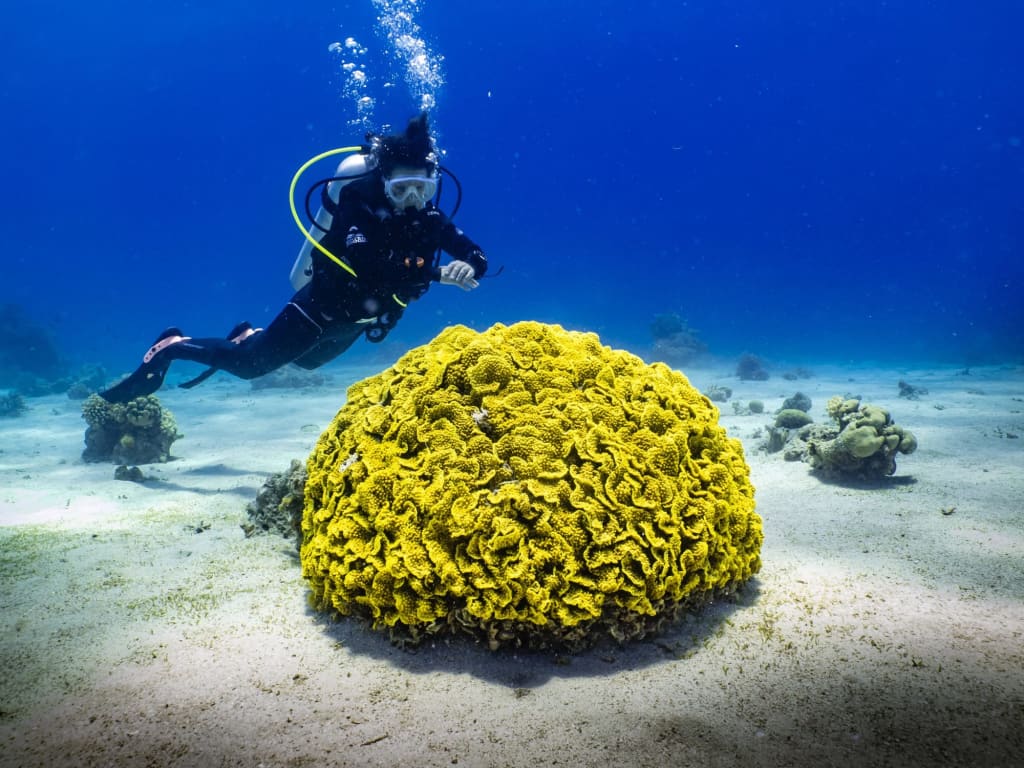
Ocean Acidification and the Promise of Super Corals
Heat-tolerant corals could aid targeted restoration, but ocean warming and altered seawater chemistry remain distinct global threats. This exploration explains the underlying science, what researchers have actually demonstrated, and the questions that remain unanswered.Why seawater chemistry is chan
Heat-tolerant corals could aid targeted restoration, but ocean warming and altered seawater chemistry remain distinct global threats. This exploration explains the underlying science, what researchers have actually demonstrated, and the questions that remain unanswered.
Why seawater chemistry is changing
The ocean absorbs carbon dioxide from the atmosphere. This shifts carbonate chemistry and lowers pH, a process called ocean acidification. The water generally remains alkaline, yet less carbonate availability can complicate skeleton-building for some organisms.
Revlox original editorial science illustration.
Ocean acidification is different from coral bleaching, which typically results from heat stress disrupting the partnership between corals and symbiotic algae. A reef may face both dangers simultaneously.
What happened during global bleaching
NOAA said in June 2026 that the fourth global bleaching event likely concluded in 2025. From 2023 into 2025 about 84% of reef area experienced bleaching-level heat stress, the largest recorded exposure. This figure should not be misread as 84% of the world’s corals dying.
Revlox original editorial science illustration.
Bleaching, survival, reproduction, and long-term recovery are different measurements. Local conditions such as pollution, disease, and repeated heat waves influence whether reefs recover.
Can super corals help?
Some coral populations show unusually strong heat tolerance. Scientists study selective breeding, symbiont partnerships, nurseries, and assisted gene flow to support resilience. These approaches still raise questions about genetic diversity, ecological tradeoffs, and long-term outcomes.
Even exceptionally heat-tolerant corals are not immune to acidification and prolonged warming. Reduced emissions and responsible local protection are essential; restoration cannot substitute for protecting ocean conditions.
Restoring reefs responsibly
Coral nurseries may supply fragments or larvae for carefully selected restoration locations. Scientists should assess genetic diversity, disease risk, water quality, and whether a planted colony can reproduce after several seasons. A successful photo shortly after planting is not evidence of a functioning reef community.
Monitoring should include fish, invertebrates, substrate condition, and local protection measures. Community partnerships can reduce damaging fishing practices and pollution. Even so, warming oceans can overwhelm well-managed projects, making global emissions reductions essential to the long-term success of local work.
Thermal resilience is only one of the properties restoration teams must consider. Corals also need suitable light, water chemistry, habitat stability, and ecological partners. A colony can tolerate short periods of unusual heat yet struggle to reproduce. Credible restoration reports should follow sites over multiple seasons and compare survival against untreated reefs.
Key Takeaways
- Heat-tolerant corals could aid targeted restoration, but ocean warming and altered seawater chemistry remain distinct global threats.
- Promising evidence must be separated from proven clinical or real-world outcomes.
- Independent validation, context, and responsible decisions matter more than sensational claims.
Frequently Asked Questions
Is acidification the same as bleaching?
No. They involve different mechanisms, even though both threaten reefs.
Will super corals survive any temperature?
No. Tolerance has limits and does not remove other environmental threats.
Does reef planting replace emissions reductions?
No. Climate stabilization is essential for the long-term future of reefs.


