Amanda Booth Turns 40: Celebrating Her Career, Advocacy and Powerful Work for Inclusion
American actress, model, mother, and disability-rights advocate Amanda Booth celebrated her 40th birthday on July 14, 2026, marking a milestone in a life that has grown far beyond the traditional boundaries of entertainment and fashion.
Born on July 14, 1986, in Watertown, New York, Booth built a professional career through modeling and acting, appearing in television productions including Community, Hot in Cleveland, Marlon, and The Bold and the Beautiful. Her public identity later expanded in a deeply personal direction after the birth of her son Micah, who has Down syndrome and autism.
Today, Booth is widely recognized not only for her work in front of cameras but also for using fashion, storytelling, public speaking, and social media to challenge assumptions about disability.
She has worked with organizations supporting people with Down syndrome and their families, advocated for accurate prenatal information, promoted authentic representation, and encouraged industries to see disabled people as full participants in culture rather than occasional symbols of inspiration.
Her story is therefore not simply one of an actress becoming an activist.
It is the story of a woman whose understanding of beauty, success, motherhood, and visibility evolved—and whose professional platform became a means of creating space for others.
How Old Is Amanda Booth in 2026?
Amanda Booth was born on July 14, 1986.
She turned 40 years old on July 14, 2026. Public biographies identify her birthplace as Watertown, New York, where she was born on a military base before spending much of her childhood on the East Coast.
Booth has described coming from a working family rather than an entertainment-industry background. Her father worked in a factory, while her mother worked as a secretary. Her path into modeling and acting was therefore not the continuation of an established Hollywood family tradition.
She had to build that path for herself.
 Imrul
Imrul
Dreaming of Modeling and Acting
Booth has spoken publicly about dreaming of becoming a model and actress from a young age.
Those ambitions required confidence, persistence, and the ability to tolerate rejection—qualities demanded by both industries.
Modeling is often presented to the public as a glamorous profession. Behind the finished campaigns, however, it involves:
- Auditions and castings
- Long periods of waiting
- Constant visual evaluation
- Travel
- Physical demands
- Unpredictable employment
- Competition for limited opportunities
- Pressure to fit narrow standards
Acting adds another form of vulnerability.
A performer must repeatedly present an interpretation of a character while accepting that hiring decisions may depend on factors beyond talent, including age, appearance, chemistry, scheduling, market trends, and the preferences of producers.
Booth gradually built experience in both fields, appearing in commercial work, print campaigns, television, and other visual media.
Her comfort in front of a camera became one of the foundations of her public career.
Amanda Booth’s Acting Career
Booth’s television résumé includes appearances across comedy, soap opera, and network entertainment.
Her credits include:
- Community
- Hot in Cleveland
- Marlon
- The Bold and the Beautiful
- Other guest and supporting television work
These roles may not all have been large, but they placed her inside several very different production environments.
A performer moving between these shows must adapt quickly.
A single-camera comedy such as Community operates differently from a multi-camera sitcom or daytime soap. Each requires different timing, physicality, rehearsal expectations, and performance scale.
Appearing in Community
NBC’s Community became one of the most inventive television comedies of its era.
Set largely at the fictional Greendale Community College, the show regularly moved beyond conventional sitcom storytelling through parody, animation, action-movie homages, alternate timelines, documentary episodes, and elaborate genre experiments.
Appearing within that world meant entering a series known for:
- Rapid dialogue
- Visual jokes
- Meta-humor
- Pop-culture references
- Ensemble chemistry
- Sudden shifts in tone
Even supporting performers contributed to the feeling that Greendale was populated by unusual, memorable people.
For Booth, the credit became part of a résumé showing that she could work inside a highly stylized comedy environment.
Hot in Cleveland
Booth also appeared in Hot in Cleveland, the TV Land comedy starring Valerie Bertinelli, Jane Leeves, Wendie Malick, and Betty White.
The series followed three women from Los Angeles who unexpectedly relocated to Cleveland and discovered a community less obsessed with the youth-focused standards they had experienced in Hollywood.
The show became an important success for TV Land and ran for six seasons from 2010 to 2015.
Its comedy often challenged assumptions about:
- Aging
- Beauty
- Female friendship
- Romance later in life
- Hollywood image culture
- Reinvention
Those themes create an interesting connection with Booth’s later advocacy.
Much of her public work has also questioned narrow definitions of who deserves visibility, admiration, opportunity, and representation.
 Imrul
Imrul
Marlon
Booth’s television work included an appearance in Marlon, the NBC sitcom inspired loosely by comedian Marlon Wayans’s family life.
The series followed a loving but unconventional divorced father attempting to co-parent with his more organized former wife.
The show combined broad comedy with stories about:
- Parenting
- Divorce
- Family loyalty
- Personal growth
- Maintaining connection after relationships change
Working within a sitcom requires a performer to establish a character quickly.
A guest actor may have only a few scenes to create a recognizable personality, support the central storyline, and match the established rhythm of the main cast.
Booth’s experience as a model could create immediate visual confidence, but comedy also requires timing, reaction, and a willingness to appear unguarded.
The Bold and the Beautiful
Booth has also been credited with appearing as a Forrester model on the long-running daytime soap opera The Bold and the Beautiful.
The role naturally connected her acting and modeling careers.
The fictional Forrester Creations fashion house sits at the center of the series, making models, designers, photographers, and fashion events recurring parts of its world.
Daytime television production moves at a demanding pace.
Actors may film substantial amounts of material quickly, with limited rehearsal compared with many prime-time productions.
Even a small part requires discipline, preparation, and awareness of the continuing story around it.
 Imrul
Imrul
Modeling Beyond Conventional Beauty Standards
Booth’s professional relationship with fashion changed after becoming a mother.
She had already experienced an industry built around carefully controlled ideas of beauty, physical perfection, aspiration, and commercial desirability.
The birth of Micah challenged her to reconsider who those ideas include—and who is routinely excluded.
Rather than leaving fashion behind, Booth began using it as a platform for a broader message.
She and Micah appeared together in modeling and public-awareness work, helping show that disability and fashion do not belong in separate cultural worlds.
Fashion shapes how society imagines:
- Beauty
- Confidence
- Independence
- Success
- Desirability
- Belonging
When disabled people are absent, audiences may unconsciously learn that those qualities belong only to nondisabled bodies.
Representation interrupts that message.
Becoming Micah’s Mother
Amanda and her husband, photographer Mike Quinones, became parents to their son Micah, who was born with Down syndrome and was later identified as autistic.
Booth has described how becoming Micah’s mother transformed both her priorities and her public purpose.
The family entered a world involving:
- Medical appointments
- Developmental assessments
- Therapies
- Educational decisions
- Advocacy
- Public misconceptions
- The everyday joys and difficulties of parenting
The diagnosis did not remove Micah’s individuality.
It did, however, reveal how often society describes children like him primarily through limitations, risks, or clinical language.
Booth began speaking publicly because she wanted families to encounter fuller and more truthful stories.
Down Syndrome and Autism
Down syndrome is a genetic condition usually caused by an additional copy of chromosome 21.
It can influence:
- Physical development
- Learning
- Speech
- Muscle tone
- Health needs
- The pace at which certain skills develop
Autism is a developmental condition involving differences in areas such as communication, sensory processing, behavior, interests, and social interaction.
A person can have both Down syndrome and autism.
This dual diagnosis may create needs that are not fully understood when professionals or institutions focus on only one condition.
Booth has used her family’s experience to highlight the importance of seeing Micah as a whole person rather than treating one label as a complete explanation of who he is.
 Imrul
Imrul
Advocacy Rooted in Real Family Life
Booth’s advocacy does not present family life as endlessly inspirational or effortlessly joyful.
Authentic disability advocacy must allow room for:
- Love
- Exhaustion
- Pride
- Frustration
- Administrative difficulty
- Humor
- Uncertainty
- Progress
- Setbacks
- Ordinary family routines
Parents can adore their children while also recognizing failures in healthcare, education, transportation, accessibility, and social support.
Booth’s public work has often emphasized this complexity.
Her message is not that disability should be romanticized.
It is that disabled people deserve dignity, opportunity, accurate information, and full recognition as members of their communities.
Challenging the “Inspirational” Stereotype
Disabled people are frequently presented through one of two limiting narratives.
They may be described as tragic figures defined by hardship.
Alternatively, they may be used as inspirational symbols whose ordinary achievements are praised mainly because they are disabled.
Both approaches can deny full humanity.
A person with Down syndrome should be allowed to be:
- Funny
- Frustrated
- Talented
- Stubborn
- Affectionate
- Independent
- Social
- Private
- Successful
- Still learning
They should not have to inspire strangers in order to deserve inclusion.
Booth’s advocacy frequently centers Micah’s individuality and daily life rather than turning him into an abstract lesson for others.
 Imrul
Imrul
Accurate Prenatal Information
One of Booth’s significant advocacy roles has involved supporting accurate and balanced information for parents receiving prenatal screening or diagnostic results related to Down syndrome.
She became an ambassador for a prenatal testing pamphlet developed through the Global Down Syndrome Foundation and the National Down Syndrome Congress. The resource was created to help families receive concise, current information when making decisions or processing a diagnosis.
This work addresses a sensitive but important problem.
Parents may receive information at a highly emotional moment.
The way healthcare professionals describe Down syndrome can influence how families imagine the future.
Information that focuses only on medical risks may leave out:
- Family relationships
- Education
- Friendships
- Employment
- Community participation
- Individual personality
- Available support
Balanced counseling does not minimize real medical or developmental challenges.
It places those challenges alongside a fuller picture of possible life.
Working With Disability Organizations
Booth has worked with or supported organizations including:
- Global Down Syndrome Foundation
- National Down Syndrome Society
- GiGi’s Playhouse
- The Jonathan Foundation
- National Down Syndrome Congress and related initiatives
Her public biography for the Be Beautiful Be Yourself fashion event notes her work with several such organizations to improve opportunity and representation for people with disabilities.
Different organizations focus on different areas, including:
- Research
- Education
- Family support
- Employment
- Policy
- Healthcare
- Public awareness
- Human rights
- Social inclusion
Booth’s value within this work comes partly from her ability to connect professional media experience with family advocacy.
She understands how images and stories shape public perception.
The Quincy Jones Exceptional Advocacy Award
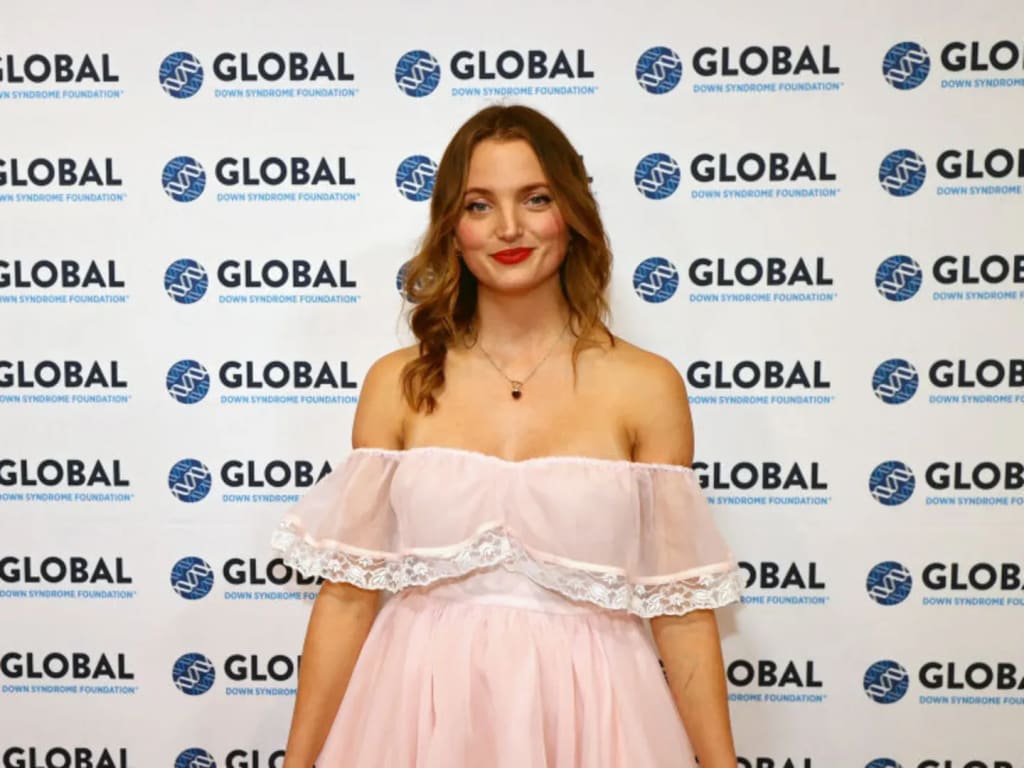
The Global Down Syndrome Foundation selected Booth to receive its Quincy Jones Exceptional Advocacy Award, recognizing her public work on behalf of people with Down syndrome and their families.
The award is connected to the foundation’s Be Beautiful Be Yourself Fashion Show, a major fundraising and awareness event.
Receiving it acknowledged that Booth’s advocacy had moved beyond private family storytelling.
She had become a visible voice within a larger effort to improve:
- Research funding
- Medical care
- Representation
- Family resources
- Social opportunity
- Public understanding
The award also highlighted the importance of parents who use their platforms to amplify the voices and rights of disabled people without attempting to speak over them.
 Imrul
Imrul
Fashion as Advocacy
The Be Beautiful Be Yourself Fashion Show uses fashion to bring people with Down syndrome into a space from which they have historically been excluded.
The event challenges the idea that fashion belongs only to a narrow body type or standard of beauty.
For Booth, this mission connects directly with her modeling background.
She understands the symbolic power of seeing someone:
- Styled professionally
- Photographed confidently
- Walking a runway
- Treated as desirable
- Celebrated publicly
- Included alongside celebrities and industry professionals
These images do not solve structural inequality by themselves.
They can still alter expectations.
A child with Down syndrome seeing someone like themselves in fashion may imagine possibilities that mainstream media rarely presents.
Modeling With Micah
Amanda and Micah’s modeling work has helped introduce disability representation through family-centered campaigns and storytelling.
Their presence together communicates several ideas at once:
- A disabled child belongs in professional imagery.
- Parenthood does not erase a woman’s career identity.
- Beauty does not require sameness.
- Disability is part of ordinary family life.
- Inclusion can be visually joyful without becoming sentimental.
The images also push back against the assumption that disability advocacy must always occur through formal speeches or policy documents.
A photograph can change perception before a viewer reads a single sentence.
The Importance of Authentic Representation
Representation is not only about counting how many disabled people appear in media.
The quality of representation matters.
Authentic inclusion asks:
- Is the disabled person treated as an individual?
- Are they compensated fairly?
- Is the environment accessible?
- Are their communication needs respected?
- Do they have agency?
- Are they present outside charity campaigns?
- Are they shown in ordinary, complex roles?
- Are disabled creators involved in decisions?
Booth’s work contributes to a larger movement asking fashion, entertainment, advertising, and publishing to move from occasional visibility toward lasting inclusion.
 Imrul
Imrul
Advocacy and the Risk of Speaking for Others
Parent advocates occupy a complicated position.
They may possess valuable experience navigating systems on behalf of their children.
At the same time, disabled adults increasingly emphasize the principle:
Nothing about us without us.
This means policies and narratives about disability should include people who live with those disabilities directly.
Strong parent advocacy therefore evolves as children grow.
It moves from speaking entirely on their behalf toward:
- Supporting self-expression
- Respecting privacy
- Encouraging choice
- Amplifying self-advocates
- Recognizing adulthood
- Avoiding the public sharing of every private detail
Booth’s continued work will be most meaningful when centered on Micah’s dignity and growing agency as well as the family’s experience.
Raising Public Awareness Without Erasing Privacy
Social media gives families the ability to reach large audiences.
It also creates difficult questions about children’s privacy.
A parent may share stories to:
- Educate others
- Find community
- Challenge prejudice
- Obtain support
- Celebrate progress
But children cannot always fully understand the long-term consequences of having personal information placed online.
Thoughtful advocacy requires continual reassessment.
Questions include:
- Will this story embarrass the child later?
- Does it involve medical details that should remain private?
- Is the content respectful?
- Is the child being shown as a person or as material?
- Can the child communicate agreement?
- Who benefits from the post?
These questions apply to all family influencers, not only disability advocates.
 Imrul
Imrul
Amanda Booth’s Public Authenticity
One quality repeatedly associated with Booth is authenticity.
That does not mean the public sees every part of her private life.
Authenticity means that the version she presents allows room for complexity.
She can be:
- A professional model
- An actress
- A mother
- An advocate
- A woman with ambitions beyond parenting
- Someone who experiences uncertainty
- Someone still learning
Women are often expected to choose one acceptable public identity.
A mother who speaks intensely about her child may be told she has lost herself.
A mother who continues pursuing fashion or acting may be judged as insufficiently devoted.
Booth’s career resists that false choice.
She can love her son deeply while remaining a creative professional with her own identity.
Motherhood Did Not End Her Career
Entertainment culture often treats motherhood as a threat to a woman’s professional relevance.
Models and actresses may feel pressure to conceal pregnancy, recover visibly at unrealistic speed, or accept that casting opportunities will narrow.
Booth’s public journey demonstrates another possibility.
Motherhood did not end her relationship with fashion and media.
It changed the subjects she cared about and the purpose for which she used her visibility.
Her professional experience became useful in building a public conversation around disability.
 Imrul
Imrul
Beauty Beyond Perfection
The fashion industry has historically promoted a narrow ideal involving:
- Youth
- Thinness
- Symmetry
- Height
- Able-bodied movement
- Conventional facial features
- Carefully controlled presentation
Those standards are cultural choices rather than universal truths.
Disability-inclusive fashion challenges the assumption that beauty depends on physical conformity.
It asks audiences to see:
- Personality
- Expression
- Style
- Confidence
- Joy
- Individuality
Booth’s work sits at the intersection of these conversations.
She knows the traditional beauty industry from within and has used that experience to argue for a broader visual world.
 Imrul
Imrul
Why Inclusion Must Extend Beyond Campaigns
Brands increasingly feature disabled models during awareness months or special campaigns.
That visibility can be positive.
It becomes limited when disabled people disappear from ordinary advertising during the rest of the year.
Real inclusion means disabled people appearing in campaigns for:
- Clothing
- Technology
- Travel
- Food
- Beauty
- Home products
- Entertainment
- Financial services
Their presence should not always require an educational message.
A person with Down syndrome should be allowed to model a jacket simply because the jacket looks good on them.
Disability Advocacy and Healthcare
Families of children with Down syndrome may encounter healthcare needs involving:
- Heart conditions
- Hearing
- Vision
- Thyroid function
- Sleep
- Feeding
- Immune health
- Development
Care improves when clinicians understand the condition without reducing every health concern to it.
This is sometimes called diagnostic overshadowing: symptoms may be attributed too quickly to a disability, allowing unrelated conditions to go untreated.
Advocacy organizations work to improve medical guidelines, provider education, and research.
Public figures like Booth can help direct attention and resources toward those efforts.
 Imrul
Imrul
Education and Opportunity
Children with Down syndrome benefit from educational environments that recognize both support needs and potential.
Inclusion is not achieved merely by placing a child in a general classroom.
Effective education may require:
- Adapted instruction
- Speech and occupational support
- Trained teachers
- Accessible materials
- Peer inclusion
- High but realistic expectations
- Protection from bullying
- Family collaboration
Low expectations can become self-fulfilling.
When adults assume a child cannot learn, lead, work, or communicate meaningfully, opportunities disappear before ability can develop.
Booth’s message of visibility challenges those assumptions at a cultural level.
Employment and Adulthood
Discussions of Down syndrome often focus heavily on babies and young children.
People with Down syndrome grow into teenagers and adults with needs involving:
- Employment
- Housing
- Transportation
- Friendships
- Healthcare
- Relationships
- Personal choice
- Financial support
- Community participation
Advocacy must grow with them.
The ultimate goal is not simply childhood acceptance.
It is a society in which disabled adults can live meaningful lives with appropriate support, autonomy, and respect.
 Imrul
Imrul
Why Amanda Booth’s Story Resonates
Booth’s journey connects with audiences for several reasons.
She Had a Career Before Advocacy
Her public voice grew from an established relationship with modeling and entertainment.
Her Advocacy Is Personal
She speaks from family experience rather than abstract branding.
She Uses Visual Culture
She understands that changing representation can change expectations.
She Acknowledges Multiple Identities
She remains an actress, model, wife, mother, and individual—not only “the mother of a disabled child.”
She Connects Awareness With Action
Her work includes partnerships with organizations, educational materials, public events, and fundraising.
Acting, Modeling and Advocacy Are Connected
At first, Amanda Booth’s career may appear to contain three separate paths:
- Acting
- Modeling
- Disability advocacy
In practice, they reinforce one another.
Acting taught her to communicate emotion and story.
Modeling taught her how images create aspiration.
Motherhood taught her how urgently those stories and images needed to include people like Micah.
Advocacy gave her professional experience a new purpose.
The result is a public career built not only around being seen but around changing who society chooses to see.
What Is Amanda Booth Doing in 2026?
As of 2026, Booth continues to identify publicly as an actor and advocate working between Austin and Los Angeles. Her public profile emphasizes advocacy related to both Down syndrome and autism.
She remains involved in disability-community events, family storytelling, modeling, and public conversations about inclusion.
Recent public material has continued to present her as:
- A model
- An actress
- A mother
- A Down syndrome and autism advocate
- A speaker
- A campaign partner
Any specific future acting role should be treated as confirmed only when announced by Booth, her representatives, or the production involved.
 Imrul
Imrul
A Career Measured Beyond Screen Time
Traditional entertainment profiles measure success through:
- Number of roles
- Awards
- Box-office revenue
- Leading parts
- Fame
Those measures tell only part of Booth’s story.
Her influence also includes:
- Families who felt less alone
- People who received more balanced information
- Brands encouraged to include disabled models
- Audiences who encountered a fuller image of Down syndrome
- Funds and attention directed toward advocacy organizations
- Conversations about autism and dual diagnosis
This impact is harder to count than television episodes.
It may be more enduring.
Essential Lessons From Amanda Booth’s Journey
Visibility Can Become Responsibility
A public platform can serve more than personal promotion.
Small Representation Choices Matter
One campaign image can challenge years of exclusion.
Advocacy Should Be Honest
Families need reality, not tragedy or forced positivity.
Disability Does Not Cancel Beauty
Beauty expands when culture allows more kinds of people to be seen.
Parents Need Accurate Information
Fear grows when diagnosis is presented without context or possibility.
Inclusion Must Continue Into Adulthood
Acceptance in childhood is only the beginning.
Disabled Voices Must Remain Central
Family advocacy should support, not replace, self-advocacy.
Final Thoughts
Amanda Booth celebrated her 40th birthday on July 14, 2026, carrying with her a career that has developed across modeling, television, motherhood, and disability advocacy.
She began with a dream of working in front of cameras.
That dream led to appearances in productions including Community, Hot in Cleveland, Marlon, and The Bold and the Beautiful. It also gave her professional insight into industries that determine who is considered visible, beautiful, marketable, and worthy of attention.
Becoming Micah’s mother changed the direction of that visibility.
His Down syndrome and autism diagnoses introduced the family to communities filled with love and possibility, but also to systems shaped by misinformation, limited expectations, inaccessible opportunities, and narrow representation.
Booth responded by speaking publicly.
She worked with major advocacy organizations, supported accurate prenatal resources, participated in inclusive fashion, and used family storytelling to challenge stereotypes.
Her work earned recognition through the Quincy Jones Exceptional Advocacy Award from the Global Down Syndrome Foundation.
Yet the value of her advocacy extends beyond one award.
She has helped reinforce an essential principle:
People with disabilities do not need to earn visibility by appearing extraordinary.
They belong in fashion, education, workplaces, entertainment, families, and public life because they are already part of society.
Amanda Booth’s story is also about retaining identity through motherhood.
She did not stop being an actress or model when she became an advocate.
She brought those identities together.
At 40, her most meaningful work may lie precisely in that combination: using the tools of image, performance, and storytelling to widen the cultural frame.
Happy 40th birthday to Amanda Booth—a talented actress, accomplished model, devoted mother, and influential advocate whose authenticity has helped many people see disability, beauty, and inclusion with greater honesty.
May the year ahead bring her happiness, creative opportunity, meaningful partnerships, and continued success in building a world where every person has the right to be seen as fully themselves.
Frequently Asked Questions
When is Amanda Booth’s birthday?
Her birthday is July 14.
How old is Amanda Booth in 2026?
She turned 40 years old on July 14, 2026.
When was Amanda Booth born?
She was born on July 14, 1986.
Where was Amanda Booth born?
She was born in Watertown, New York, reportedly on a military base.
What is Amanda Booth known for?
She is known as an actress, model, mother, and advocate for people with Down syndrome and autism.
Which television shows has Amanda Booth appeared in?
Her credits include Community, Hot in Cleveland, Marlon, and The Bold and the Beautiful.
Was Amanda Booth in Community?
Yes. She appeared in the NBC comedy series.
Was Amanda Booth in Hot in Cleveland?
Yes. She appeared in the long-running TV Land sitcom.
Was Amanda Booth in Marlon?
Yes. She has a television credit in the NBC sitcom.
Was Amanda Booth in The Bold and the Beautiful?
Yes. She appeared as a Forrester model.
Did Amanda Booth begin as a model?
Modeling was a major part of her professional career alongside acting.
Did she always want to work in entertainment?
She has publicly described dreaming of becoming a model and actress.
Who is Amanda Booth’s husband?
She is married to photographer Mike Quinones.
Who is Amanda Booth’s son?
Her son is named Micah.
Does Micah have Down syndrome?
Yes.
Is Micah also autistic?
Yes. Booth has publicly described him as having a dual diagnosis of Down syndrome and autism.
What is a dual diagnosis?
It means a person has been identified with two conditions—in Micah’s case, Down syndrome and autism.
What is Down syndrome?
It is a genetic condition, usually caused by an additional copy of chromosome 21, that affects development and may be associated with certain health needs.
What is autism?
Autism is a developmental condition involving differences in communication, sensory processing, interests, behavior, and social interaction.
Can a person have both Down syndrome and autism?
Yes.
Why did Amanda Booth become an advocate?
Her experience raising Micah exposed her to misconceptions, limited representation, and gaps in support affecting disabled people and their families.
Which organizations has Amanda Booth supported?
Her work has been connected with the Global Down Syndrome Foundation, GiGi’s Playhouse, the National Down Syndrome Society, The Jonathan Foundation, and related advocacy initiatives.
What award did Amanda Booth receive?
She received the Quincy Jones Exceptional Advocacy Award from the Global Down Syndrome Foundation.
Why did she receive the award?
It recognized her advocacy, public education, family storytelling, and support for inclusion and representation.
What is the Be Beautiful Be Yourself Fashion Show?
It is a major Global Down Syndrome Foundation event celebrating people with Down syndrome while raising awareness and funding.
Has Amanda modeled with Micah?
Yes. Their family modeling and media work have contributed to broader representation of people with Down syndrome.
Why is disability representation in fashion important?
It challenges narrow beauty standards and allows disabled people to see themselves included in mainstream culture.
Does representation alone create equality?
No. It must be accompanied by accessibility, fair pay, education, healthcare, employment, and meaningful opportunity.
What is prenatal Down syndrome information advocacy?
It involves helping families receive accurate, balanced information following screening or diagnosis.
Was Amanda Booth involved in a prenatal information resource?
Yes. She became an ambassador for a pamphlet connected with the Global Down Syndrome Foundation and National Down Syndrome Congress.
Why is accurate prenatal information important?
Parents may otherwise receive information focused only on medical difficulties, without learning about family life, education, support, and individual potential.
Does balanced information ignore medical challenges?
No. It presents medical realities alongside a fuller understanding of possible life experiences.
What does disability inclusion mean?
It means disabled people are able to participate meaningfully in education, employment, culture, relationships, public spaces, and decision-making.
What does “Nothing about us without us” mean?
It means policies and stories concerning disabled people should include disabled people’s own voices and leadership.
Can parents be disability advocates?
Yes, particularly when they support self-advocacy and respect the dignity and privacy of their children.
Why is child privacy important in family advocacy?
Children may not fully understand the permanent consequences of having medical or personal information shared publicly.
Is Amanda Booth still acting?
She continues to identify publicly as an actor, although specific new roles should be confirmed through official production announcements.
Where is Amanda Booth based?
Her public profile connects her professional activity with Austin and Los Angeles.
Is Amanda Booth active on Instagram?
Yes. Her public profile focuses on acting, family life, Down syndrome, autism, and advocacy.
Is she only known because of advocacy?
No. She had an established modeling and acting career before becoming widely recognized for disability advocacy.
Did motherhood end her modeling career?
No. She continued using modeling and visual storytelling while expanding her public purpose.
How has motherhood changed her career?
It connected her professional experience in media and fashion with a mission to improve disability representation.
What does Amanda Booth advocate for?
Her work emphasizes inclusion, accurate information, opportunity, acceptance, authentic representation, and respect for people with disabilities.
Why does her advocacy resonate with families?
She discusses disability through lived family experience and does not reduce it to either tragedy or forced inspiration.
What is inspiration stereotyping?
It occurs when disabled people are praised merely for ordinary existence or achievements, rather than treated as complex individuals.
Why can that stereotype be harmful?
It may turn disabled people into emotional tools for nondisabled audiences and ignore their rights, preferences, and individuality.
What is authentic representation?
It means portraying disabled people as complete individuals with agency, personality, strengths, flaws, relationships, and ordinary lives.
Should disabled models appear only in awareness campaigns?
No. Genuine inclusion means they should appear throughout mainstream advertising and fashion.
What are some major barriers faced by people with Down syndrome?
Barriers may include low expectations, inaccessible education, employment discrimination, healthcare gaps, social isolation, and insufficient adult services.
Why should advocacy include adulthood?
Children with Down syndrome become adults who need housing, work, healthcare, relationships, transportation, and personal choice.
Is Amanda Booth’s work limited to social media?
No. Her advocacy has included organizational partnerships, public events, modeling, educational resources, campaigns, and speaking.
What makes Amanda Booth’s public image distinctive?
She brings together acting, fashion, motherhood, advocacy, and a willingness to discuss complex family realities.
What is the central lesson of her career?
Visibility becomes most powerful when it is used to create meaningful space and opportunity for others.
What is a suitable birthday message for Amanda Booth?
Happy 40th birthday to Amanda Booth, whose talent, authenticity, motherhood, and advocacy continue to expand public understanding of beauty, disability, and inclusion.