Fiona the Hippo Dies at Cincinnati Zoo After Tragic Hat Accident: Remembering the Beloved Animal Who Inspired Millions
Fiona, the beloved hippopotamus at the Cincinnati Zoo & Botanical Garden whose extraordinary fight for survival captured hearts around the world, has tragically died at the age of nine following an accidental incident involving a visitor's knitted hat.
The Cincinnati Zoo confirmed her death on Thursday, November 19, 2026, bringing an unexpected and devastating end to the life of one of America's most recognizable zoo animals.
According to zoo officials, Fiona swallowed a knitted hat that had accidentally entered her enclosure nearly two weeks earlier.
Despite extensive efforts by veterinarians and animal care specialists to help her pass the foreign object, the hat became trapped deep within her digestive system.
Her condition ultimately deteriorated, and she died following a medical intervention intended to help save her life.
The news devastated zookeepers, veterinarians, visitors, and the millions of people who had followed Fiona's remarkable journey since her premature birth in January 2017.
What makes her death especially heartbreaking is the extraordinary story of how her life began.
Born approximately six weeks premature and weighing just 29 pounds, Fiona was so small and medically fragile that her survival initially seemed uncertain.
But with extraordinary veterinary care, determination, and support from around the world, she survived against overwhelming odds.
She grew into a healthy, playful hippopotamus, becoming a symbol of resilience, joy, and the special connection between humans and wildlife.
Nearly a decade later, the animal who had once inspired millions through her fight to live has left those same admirers mourning her loss.
As Cincinnati remembers its beloved hippo, questions remain about the unusual accident, the medical efforts to save her, and the extraordinary legacy she leaves behind.
What Happened to Fiona the Hippo at Cincinnati Zoo?
Fiona's death followed an accident involving a knitted hat that entered her habitat at the Cincinnati Zoo.
According to zoo officials and subsequent reporting, a visitor had tossed the hat into the air.
A ceiling fan caught it and sent it into the hippopotamus enclosure.
The zoo characterized the incident as accidental.
Unfortunately, Fiona swallowed the object before it could be removed.
At first, the situation presented an extremely difficult veterinary challenge rather than an immediately apparent fatal outcome.
Hippopotamuses have large and anatomically complicated digestive systems.
Foreign objects can become particularly dangerous when they cannot move naturally through the gastrointestinal tract.
The zoo's animal care team closely monitored Fiona and attempted to help her pass the hat.
But despite their efforts, the material remained trapped.

Timeline of Fiona's Final Days
| Date | What Happened |
|---|---|
| Early November 2026 | A knitted hat accidentally entered Fiona's enclosure |
| Following days | Fiona swallowed the hat, prompting veterinary monitoring and treatment |
| November 18, 2026 | Reports described the zoo's continuing efforts to help Fiona pass the object |
| November 19, 2026 | Fiona died following a medical intervention and supportive care |
| November 20, 2026 | The Cincinnati Zoo released findings from her postmortem examination |
| November 20–22, 2026 | The Hippo Cove area remained temporarily closed to give staff space to grieve |
The timeline illustrates how an apparently ordinary object became the cause of an extraordinary medical emergency.
It also explains why Fiona's death came as such a shock.
She had survived serious complications at birth and grown into a thriving adult animal.
Few people anticipated that an accidentally misplaced hat would lead to her death.
How Did a Visitor's Hat End Up Inside Fiona's Habitat?
One of the most unusual aspects of Fiona's death is the sequence of events that placed the hat inside her enclosure.
According to the zoo's explanation reported by CBS News and the Associated Press, a visitor tossed a knitted hat into the air.
The hat came into contact with a ceiling fan.
It was then propelled into the habitat.
The incident was described as an accident, rather than a deliberate attempt to harm Fiona.
That distinction is important.
The available reporting does not establish that the visitor intentionally threw the hat to the hippopotamus or intended for an animal to swallow it.
Nevertheless, the outcome demonstrates how seemingly harmless behavior near animal habitats can create serious risks.
Why Objects in Animal Enclosures Can Be Dangerous
Zoo animals may investigate unfamiliar objects through smell, touch, or their mouths.
Some species naturally explore their surroundings by chewing or manipulating items.
An object that poses little danger to a person may become hazardous if swallowed by an animal.
Clothing, plastic, packaging, toys, coins, and other human-made materials can create different risks depending on the species and circumstances.
Possible consequences include choking, internal injury, digestive obstruction, or complications that require veterinary treatment.
In Fiona's case, the hat passed beyond her stomach but became lodged farther along her intestinal tract.
Its location made treatment especially difficult.
The accident has therefore become a painful reminder that items belonging to visitors must be kept away from animal habitats.
What Did Fiona's Postmortem Examination Reveal?
On November 20, 2026, the Cincinnati Zoo released findings from Fiona's necropsy.
A necropsy is the animal equivalent of a medical autopsy.
It allows veterinarians to examine an animal after death and investigate the circumstances and physical causes involved.
The examination confirmed that the knitted hat had become trapped in the middle of Fiona's small intestine.
According to the zoo's director of animal health, Dr. Mike Wenninger, the object was located approximately:
- 25 feet beyond the final compartment of her stomach.
- 50 feet from the end of her intestines.
This was an extremely difficult location for veterinary intervention.
The hat was too far inside the digestive tract for available endoscopic procedures to reach.
The anatomy and positioning of the intestine also prevented the surgical approaches that might be used for some other animals.

Why the Hat Could Not Be Removed
Veterinarians attempted to locate and reach the foreign object through medical examination and endoscopy.
Endoscopy uses a specialized instrument to examine internal organs and, in some situations, retrieve foreign objects without large surgical incisions.
However, Fiona's digestive anatomy presented major limitations.
The zoo explained that upper and lower gastrointestinal endoscopy could not reach the hat.
Laparoscopic removal was also not feasible because of the object's location and the structure of the surrounding tissues.
Conventional open abdominal surgery would have carried exceptionally serious risks for an animal of Fiona's size and anatomy.
Dr. Wenninger explained that supportive treatment was effectively the only viable approach available.
The necropsy subsequently confirmed the severity of the situation.
The findings help explain why the veterinary team could not simply retrieve the hat after identifying the problem.
How Veterinarians Tried to Save Fiona
The zoo's veterinary team made extensive efforts to help Fiona survive.
The primary challenge was encouraging the swallowed material to move naturally through her digestive system.
Staff closely monitored her health and attempted supportive treatments designed to improve her chances.
According to reporting surrounding her final days, the team even experimented with a vibration plate borrowed from a horse farm.
The idea was to see whether controlled vibrations might help encourage the material to move through her intestinal tract.
These efforts reflected the difficulty of treating a foreign-body obstruction in a very large, anatomically complex animal.

Fiona's Final Medical Procedure
On November 19, the veterinary team attempted further medical assessment and supportive care.
Specialists were unable to locate the hat through ultrasound.
Endoscopic examinations also failed to reach the object.
Fiona ultimately died during recovery following the intervention, according to the zoo's director of animal health.
The official findings connected her death to the unresolved intestinal obstruction.
The outcome was devastating for everyone involved.
In the zoo's announcement, director Dave Jenike expressed the team's shock and emphasized how hard Fiona had fought.
The facility also praised the dedication of the veterinarians and keepers who had cared for her.
There is no evidence in the zoo's statements that staff simply ignored the emergency.
On the contrary, the available information describes sustained veterinary efforts in a situation with extremely limited treatment options.
Why Fiona's Death Has Devastated Millions of People
Fiona was not simply another animal living at a zoological facility.
Since her birth, she had developed an extraordinary relationship with the public.
Her early medical struggles were documented through photographs, videos, and updates shared by the Cincinnati Zoo.
People watched her grow from an extremely fragile newborn into a playful young hippopotamus.
Many viewers developed a lasting emotional attachment to her story.
For children, Fiona was an introduction to wildlife and animal conservation.
For adults, she became a reminder of resilience during difficult circumstances.
For zoo employees, she was an animal they had cared for throughout nearly her entire life.
And for Cincinnati, she became a local celebrity whose popularity extended far beyond Ohio.

A Symbol of Hope
Fiona's story began with uncertainty.
Every improvement in her health was celebrated.
Every milestone became another reason for optimism.
As she learned to feed, swim, walk, and interact with other hippopotamuses, her progress became a shared public experience.
The emotional connection was unusually strong because people had witnessed the challenges she overcame.
Her life represented the possibility of survival despite extraordinary difficulties.
That is why her sudden death has been felt so deeply.
The animal who had once been celebrated for surviving against the odds was lost to an accident no one expected.
Fiona's Incredible Birth in January 2017
Fiona was born on January 24, 2017, at the Cincinnati Zoo & Botanical Garden.
She was approximately six weeks premature.
Her birth weight was just 29 pounds, or about 13 kilograms.
For comparison, newborn Nile hippopotamuses commonly weigh approximately 55 to 120 pounds.
Fiona was therefore far smaller than a typical newborn of her species.
Her premature arrival created immediate medical concerns.
She struggled with basic functions that healthy newborn hippopotamuses generally perform much more easily.
Her early survival required constant attention.
Why Premature Birth Is Especially Dangerous for Hippos
Newborn hippopotamuses depend on their mothers and their own developing physical abilities to survive.
They need to regulate body temperature, feed effectively, move safely, and eventually navigate water.
A severely premature newborn may face problems involving strength, digestion, breathing, and overall development.
Fiona was especially vulnerable because of her extremely low birth weight.
She could not initially rely on the same reserves and capabilities as a healthy full-term calf.
Zoo veterinarians and keepers therefore began an intensive effort to stabilize her condition.
Her progress was uncertain.
But the care team refused to give up.
How Cincinnati Children's Hospital Helped Save Baby Fiona
One of the most remarkable chapters in Fiona's early life involved cooperation between the Cincinnati Zoo and Cincinnati Children's Hospital Medical Center.
As a premature newborn, Fiona needed specialized medical support.
Her small size and fragile condition made certain veterinary procedures particularly difficult.
Medical professionals experienced in treating premature human infants offered assistance.
The collaboration became one of the most memorable aspects of her survival story.
The Challenge of Providing Intravenous Care
Fiona needed fluids and other medical support during her early treatment.
Obtaining reliable intravenous access was challenging.
A team from Cincinnati Children's Hospital assisted the zoo with placing an IV line.
The cooperation demonstrated how expertise from human medicine could sometimes complement veterinary care.
Although hippopotamuses and humans have vastly different anatomy and medical needs, certain clinical techniques can have useful applications across species.
The intervention helped Fiona receive important supportive treatment.
Her condition gradually improved.
A Remarkable Veterinary Success Story
Fiona's eventual recovery was the result of sustained efforts by many people.
Veterinarians monitored her medical condition.
Keepers supported feeding and movement.
Specialists helped address complications.
As she gained strength, Fiona progressed through important developmental milestones.
Her story became a public example of the dedication involved in caring for vulnerable newborn zoo animals.
Years later, the same institution would again find itself relying on extraordinary veterinary efforts.
Unfortunately, this time the outcome would be different.
How Fiona Became an Internet Celebrity
Fiona's rise to international fame occurred during a period when social media was becoming an increasingly important way for zoos to communicate with the public.
The Cincinnati Zoo shared updates about her condition, feeding, swimming, and everyday activities.
The images and videos attracted enormous attention.
People became fascinated by her small size, playful expressions, and remarkable determination.
As she grew stronger, her personality became more visible.
Her underwater movements, interactions with caregivers, and curious behavior frequently delighted viewers.
The Power of Fiona's Story
Many animals become popular online because they appear cute or behave in entertaining ways.
Fiona's popularity had an additional dimension.
People knew her history.
They understood that she had nearly died shortly after birth.
They remembered the medical efforts required to help her survive.
Every playful video therefore carried an underlying story of resilience.
The public was not simply watching a young hippopotamus.
They were watching an animal whose life had once been uncertain become stronger and more independent.
That emotional narrative helped make Fiona a global sensation.

Fiona's Family: Bibi, Fritz and Tucker
Fiona lived with other hippopotamuses at Cincinnati Zoo's Hippo Cove.
Her family relationships were another important part of her public story.
Her mother, Bibi, played a central role in her early life.
Fiona also had a younger half-brother named Fritz, who was born in August 2022.
Another adult male hippopotamus, Tucker, lived in the same social group.
Visitors and online followers enjoyed observing their interactions.
The arrival of Fritz was especially memorable because Fiona had already become such a beloved figure.
How Are the Other Hippos After Fiona's Death?
Following Fiona's death, zoo officials provided an update about the remaining animals.
Christina Gorsuch, the zoo's director of animal care, said that Bibi, Fritz, and Tucker were eating and behaving normally.
She also acknowledged that it was difficult to determine precisely how the animals were experiencing the loss.
This distinction is important.
Animals can respond to changes in social relationships, but humans should be cautious about assigning specific emotions without behavioral evidence.
Zoo staff continued monitoring the group.
The update provided reassurance that Fiona's companions were maintaining their normal routines immediately after her death.
What Is a Nile Hippopotamus?
Fiona belonged to the species Hippopotamus amphibius, commonly known as the common or Nile hippopotamus.
Hippos are among the largest land mammals.
They are native to sub-Saharan Africa and spend much of their lives in or near water.
Despite their enormous size and often amusing appearance, hippopotamuses are powerful wild animals.
Adults can weigh well over a metric ton, with large males frequently weighing substantially more.
They possess strong jaws, prominent teeth, and the ability to move quickly over short distances.
Why Hippos Spend So Much Time in Water
Water helps hippopotamuses regulate their body temperature and protect their skin from prolonged exposure to intense sunlight.
They typically spend significant parts of the day submerged or resting in water.
At night, they often emerge to graze on land.
Their bodies are adapted to a semi-aquatic lifestyle.
Eyes, ears, and nostrils are positioned high on the head, allowing much of the body to remain submerged while the animal monitors its surroundings.
Although they are closely associated with rivers and pools, hippos are also capable of moving considerable distances on land.
Are Hippos Endangered?
The common hippopotamus is classified as Vulnerable on the International Union for Conservation of Nature's Red List.
Major threats include habitat loss and degradation, conflict with humans, and hunting.
In some regions, changing land use and pressure on freshwater habitats create additional challenges.
Zoo conservation and education programs can help increase public awareness of these threats.
Fiona became particularly effective at generating interest in her species because her story reached people who might otherwise have had little knowledge of hippopotamuses.

The Cincinnati Zoo's Hippo Cove and Fiona's Legacy
Hippo Cove is one of the Cincinnati Zoo's well-known animal habitats.
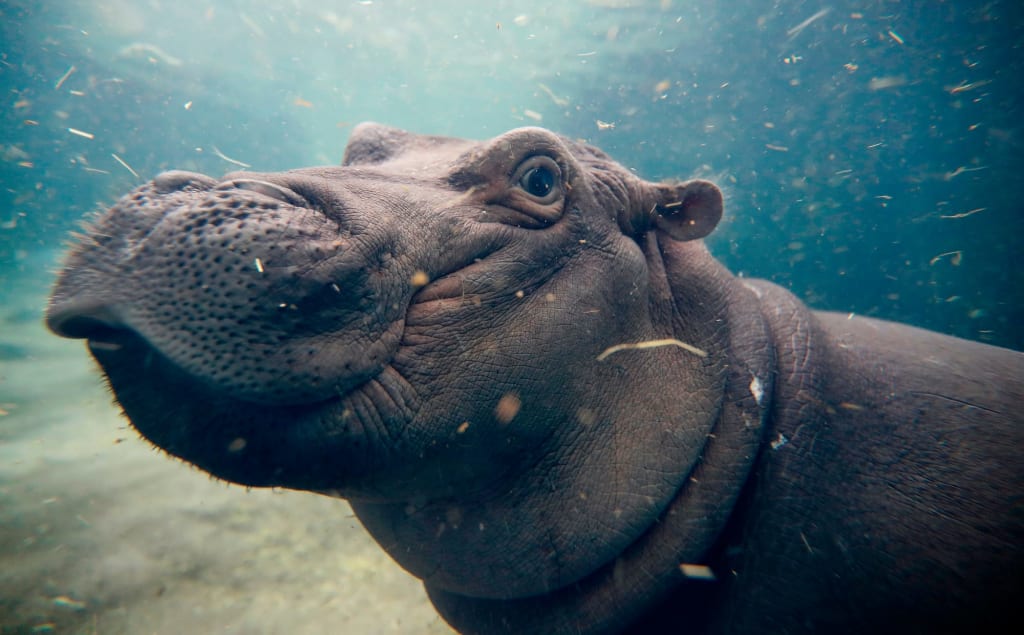
Its design allows visitors to observe hippopotamuses both above and below the water.
This offers an unusually close look at the behavior of an animal often associated with enormous rivers and lakes.
Fiona's popularity transformed the exhibit into a major attraction.
Visitors traveled to Cincinnati specifically hoping to see her.
Some had followed her since infancy.
Others discovered her story through viral videos or television coverage.
Why Hippo Cove Became Special
For many visitors, the exhibit was more than a place to observe wildlife.
It represented a connection to Fiona's extraordinary history.
Children could see the animal they had watched grow online.
Families could learn about hippopotamus behavior and conservation.
The exhibit also provided opportunities for the zoo to explain how animal care and veterinary medicine work.
Fiona helped make those educational messages accessible to people of different ages.
Her absence will fundamentally change the experience for visitors who associated Hippo Cove with her presence.
Following her death, the zoo temporarily closed the area through the weekend to give the animal care team space to grieve.
The remainder of the zoo stayed open.
Cincinnati Mourns: Buildings and Landmarks Light Up Purple
The public response to Fiona's death was immediate and emotional.
Across Cincinnati, buildings, bridges, and other landmarks were illuminated in purple in tribute to the beloved hippopotamus.
The displays reflected the extraordinary connection between Fiona and the city.
Her story had become part of Cincinnati's modern identity.
The loss therefore extended beyond the zoo's employees and regular visitors.
It affected a community that had celebrated her survival for nearly ten years.
Flowers, Cards and Messages From Fans
Visitors also created an informal memorial outside the zoo.
Flowers, cards, drawings, and other tributes were placed near a hippo statue.
Some visitors brought watermelon, one of the foods associated with Fiona's public image and enrichment activities.
The memorial offered families and individuals a place to express their grief.
For younger visitors who had grown up following Fiona, her death may have been their first experience mourning a widely loved animal.
The messages also demonstrated how deeply people had connected with her story.
Tributes From Public Figures and Organizations
Ohio Governor Mike DeWine paid tribute to Fiona and reflected on the joy she brought to visitors.
Cincinnati Mayor Aftab Pureval described her as a symbol of perseverance and happiness for the city.
The Cincinnati Bengals also honored her passing.
These responses showed how unusual Fiona's public impact had become.
Few zoo animals receive recognition from political leaders, professional sports organizations, and residents across an entire metropolitan area.
Fiona had become part of the city's cultural identity.
A Life That Inspired Books, Merchandise and Community Traditions
Fiona's popularity extended well beyond photographs and social media updates.
Her remarkable early survival inspired books, educational materials, and commercial products.
One notable title was Saving Fiona, written by longtime Cincinnati Zoo director Thane Maynard.
The book introduced younger readers to the story of her premature birth and the efforts that helped her survive.
Fiona also inspired a special ice cream flavor from Cincinnati-based Graeter's called Chunky Chunky Hippo.
Other merchandise included clothing, toys, collectibles, and commemorative items.
Why These Tributes Mattered
Fiona's cultural impact helped sustain public interest in the Cincinnati Zoo and its animals.
Her story gave conservation education an emotional connection.
People who bought a Fiona-themed book or shared a video might also become interested in learning about hippopotamus biology, animal welfare, and conservation.
Her popularity therefore had value beyond entertainment.
It helped introduce wildlife education to audiences who might otherwise have overlooked it.
The challenge following her death will be preserving that educational legacy while respectfully acknowledging the grief felt by the people who cared for her.
The Lessons From Fiona's Accidental Death
The circumstances of Fiona's death have raised questions about visitor behavior and the importance of preventing foreign objects from entering animal habitats.
The zoo described the hat's arrival in her enclosure as accidental.
Nevertheless, the incident demonstrates that even ordinary personal belongings can pose serious dangers to wildlife.
Small Objects Can Cause Serious Harm
A knitted hat is not normally considered a dangerous object.
For a large hippopotamus, however, swallowing such material can create a potentially fatal medical problem.
Size alone does not protect an animal from intestinal obstruction.
An object may pass through part of the digestive system before becoming trapped at a location where removal is extremely difficult.
That was precisely the danger Fiona faced.
Why Zoo Visitors Must Follow Safety Rules
Visitors can help protect animals by keeping personal belongings secure and following all posted restrictions.
Important precautions include:
- Never throwing objects into animal habitats.
- Keeping hats, toys, phones, and other belongings secure near barriers.
- Avoiding attempts to feed animals unless specifically permitted by staff.
- Supervising children near enclosures.
- Following instructions from animal care personnel.
- Reporting dropped objects or unusual animal behavior promptly.
These measures may appear simple.
But Fiona's death demonstrates why they matter.
An accidental incident can have consequences far more serious than anyone anticipates.
Why Veterinary Treatment Was So Difficult
Some people have questioned why veterinarians could not surgically remove the hat.
The answer lies partly in the specialized anatomy of hippopotamuses.
A hippopotamus has a complex, multi-chambered stomach and a lengthy gastrointestinal tract.
Its enormous body size presents challenges for anesthesia, imaging, positioning, and surgical access.
An object trapped deep in the intestine may be impossible to reach with ordinary endoscopic equipment.
Major abdominal surgery in a very large animal can also carry substantial risks.
Why Human Medical Solutions Do Not Always Translate to Hippos
In humans and many smaller animals, intestinal foreign bodies can sometimes be removed through endoscopy or surgery.
But treatment depends on the object's location, the patient's condition, and the anatomy involved.
A procedure considered manageable in a smaller animal may be dangerous or technically impossible in a hippopotamus.
According to Cincinnati Zoo veterinarians, the location of Fiona's obstruction made endoscopic retrieval impossible.
The position of the intestine also ruled out feasible laparoscopic removal.
The zoo's postmortem assessment confirmed that the obstruction had been situated beyond the reach of available approaches.
That information is essential to understanding the outcome.
It was not simply a case of choosing not to operate.
The veterinary team considered the options but faced severe anatomical limitations.
Remembering the People Who Cared for Fiona
Fiona's story cannot be separated from the people who cared for her.
From the moment she was born, veterinarians, keepers, animal specialists, and support staff devoted enormous time and attention to her health.
Many followed her development over years.
They helped her survive infancy.
They monitored her growth.
They provided enrichment and routine care.
And they continued watching over her as she became one of the zoo's most recognizable residents.
A Personal Loss for the Animal Care Team
For employees who work closely with animals, the relationships formed through daily care can be profound.
Keepers may spend years learning an animal's routines, preferences, responses, and medical needs.
Fiona's caregivers had watched her progress through almost every stage of life.
Her death was therefore both a professional and personal loss.
In its November 20 statement, the zoo asked the public to respect the staff's need for space.
The institution acknowledged that keepers, veterinarians, volunteers, and other employees were deeply shaken.
Recognizing their grief is an important part of remembering Fiona.
They were the people who helped give her nearly a decade of life despite her difficult beginning.
How Can Fans Honor Fiona's Memory?
Following Fiona's death, the Cincinnati Zoo received messages from people asking how they could express their sympathy.
Some wanted to send flowers or gifts.
Others asked whether they could make donations.
The zoo encouraged supporters to honor Fiona by spreading kindness and joy.
It also established a way for people to make memorial donations supporting care for other animals.
Continuing Fiona's Legacy
Her legacy can be remembered through several meaningful actions.
Learning about hippopotamuses: Fiona introduced millions to a species facing significant conservation challenges.
Supporting responsible wildlife care: Zoos and conservation organizations rely on expertise, resources, and public engagement.
Respecting animal habitats: Her death highlights why visitor safety guidelines must be followed.
Teaching children about conservation: Her story provides an accessible introduction to wildlife biology and animal welfare.
Remembering her life, not only her death: Fiona's nine years were filled with remarkable milestones and moments of joy.
The zoo's message emphasizes that her influence should not be defined exclusively by the tragic circumstances of her passing.
She also deserves to be remembered for everything she overcame and the happiness she brought to others.
Why Fiona Will Remain One of America's Most Famous Zoo Animals
Fiona's life represented a rare combination of veterinary achievement, public fascination, and lasting cultural impact.
She was born under extraordinary circumstances.
Her survival required intensive care.
Her progress unfolded in public through social media.
And she developed a following that extended across generations and national borders.
Unlike many internet-famous animals whose popularity fades quickly, Fiona remained beloved for nearly a decade.
Her milestones continued attracting attention long after her initial recovery.
The arrival of her younger brother, her interactions with other hippos, and her everyday activities all became stories people wanted to follow.
More Than an Internet Celebrity
Fiona's popularity was rooted in a genuine connection to her life story.
She represented resilience because people had seen how close she came to dying as a newborn.
She represented hope because her recovery appeared almost impossible at first.
She represented joy because her videos and photographs regularly brought happiness to viewers.
And she represented conservation because her fame encouraged interest in hippopotamuses and their habitats.
That combination explains why her death has resonated far beyond Cincinnati.
Her story reached people who had never visited the zoo and may never have seen a live hippopotamus.
Yet many felt they knew her.
Frequently Asked Questions About Fiona the Hippo
Did Fiona the hippo die?
Yes. The Cincinnati Zoo & Botanical Garden confirmed that Fiona died on November 19, 2026, at the age of nine.
How did Fiona the hippo die?
Fiona died after swallowing a knitted hat that accidentally entered her enclosure. The object became trapped in her small intestine and caused a serious medical emergency. Veterinary efforts were unsuccessful.
Who threw the hat into Fiona's enclosure?
According to the zoo's explanation, a visitor tossed a knitted hat into the air, and a ceiling fan propelled it into the habitat. The incident was described as accidental. Public reporting has not established an intention to harm Fiona.
How old was Fiona when she died?
Fiona was nine years old. She was born on January 24, 2017, and died on November 19, 2026, approximately two months before her tenth birthday.
Why couldn't veterinarians remove the hat?
The hat was trapped deep in Fiona's small intestine, beyond the reach of available endoscopic procedures. The location and anatomy also made surgical removal infeasible, according to the zoo's veterinary team.
How much did Fiona weigh when she was born?
Fiona weighed only 29 pounds (approximately 13 kilograms) at birth. She was about six weeks premature and substantially smaller than a typical newborn hippopotamus.
Why was Fiona the hippo so famous?
Fiona became an international sensation because she survived an extremely premature birth. The Cincinnati Zoo documented her recovery, growth, and milestones through photographs and videos that attracted millions of followers.
Who are Fiona's family members at Cincinnati Zoo?
Fiona's mother is Bibi. Her younger half-brother is Fritz, born in August 2022. The zoo's hippo group also includes an adult male named Tucker.
Are the other Cincinnati Zoo hippos healthy?
Following Fiona's death, zoo officials reported that Bibi, Fritz, and Tucker were eating and behaving normally. Staff continued monitoring them.
Can fans donate in Fiona's memory?
Yes. The Cincinnati Zoo announced that memorial donations could be made to support care for other animals. The zoo also encouraged supporters to honor Fiona by spreading kindness and joy.
Conclusion: Goodbye, Fiona — The Little Hippo Who Became a Symbol of Hope
The death of Fiona the hippopotamus marks the end of an extraordinary story that began in January 2017 with an uncertain future.
She entered the world six weeks premature.
She weighed only 29 pounds.
Her condition was so fragile that survival was far from guaranteed.
But through remarkable veterinary care, collaboration with medical specialists, and extraordinary dedication from her caregivers, Fiona survived.
She learned to swim.
She grew stronger.
She developed her own personality.
And she became one of the most beloved animals in America.
For nearly ten years, her life inspired millions.
She brought smiles to children watching her videos.
She gave families a reason to visit Cincinnati.
She encouraged interest in wildlife and conservation.
And she demonstrated how much can be achieved through compassionate, specialized animal care.
Her tragic death on November 19, 2026, following the accidental ingestion of a knitted hat, has left a profound sense of loss.
The zoo's veterinary team worked desperately to save her, but the obstruction deep within her intestine proved impossible to overcome.
For her keepers, the loss is deeply personal.
For Cincinnati, it is the loss of a beloved local symbol.
And for people around the world, it is the heartbreaking end of a story they had followed for years.
But Fiona's legacy cannot be measured simply by how her life ended.
She lived nearly a decade longer than many feared she would when she was born.
Those years were filled with care, companionship, playful moments, and an extraordinary connection with the public.
Her story also leaves an important reminder about the responsibility humans share when visiting places where wild animals live.
Even an ordinary object can become dangerous when it enters an animal's habitat.
Protecting wildlife requires attention, respect, and an understanding that seemingly harmless actions may have serious consequences.
As purple lights illuminate Cincinnati and flowers gather outside the zoo, Fiona is being remembered not only for the tragedy of her death but for the remarkable life that came before it.
Fiona was born fighting for survival, grew up inspiring millions, and became a symbol of hope for an entire city.
Her story will continue to be told.
Her photographs and videos will continue to bring smiles.
And her extraordinary journey from a fragile premature calf to a beloved global celebrity will remain part of the Cincinnati Zoo's history.
Rest in peace, Fiona. January 24, 2017 – November 19, 2026.
You were small when your journey began, but the joy you brought into the world was immeasurable.
What is your favorite memory of Fiona the hippo? Share a moment, a photograph, or a message celebrating the remarkable animal who touched so many hearts.
Sources and Further Reading
- Cincinnati Zoo — Beloved Hippo Fiona Has Passed Away — Official death announcement, November 19, 2026.
- Cincinnati Zoo — Outpouring of Love for Fiona the Hippo — November 20 statement, necropsy findings, family updates, and tributes.
- Associated Press — Cincinnati Zoo's Fiona Dies After Swallowing Visitor's Hat — Independent reporting on the accident and death.
- Associated Press — Necropsy Reveals Hat Deep in Fiona's Intestines — Follow-up reporting on the medical findings.
- CBS News — Fiona the Hippo Dies at Cincinnati Zoo — Background on the accident, medical response, and public reaction.
- WVXU — Necropsy Shows Hat Was Stuck in Fiona's Intestines — Local public radio reporting with veterinary explanations.
- ABC News — Fiona the Hippo Dies After Swallowing Hat — Coverage of the zoo's November 19 announcement.
- Cincinnati Zoo & Botanical Garden — Official information on animal care, conservation, and memorial support.
Editorial note: This article reflects confirmed information available through November 21, 2026. The Cincinnati Zoo has described the hat entering Fiona's enclosure as accidental. Medical details are based on the zoo's November 20 necropsy findings and statements from its veterinary team. No deliberate harm by the visitor has been established.