Neil the Seal Returns to Sea—but Tasmania’s One-Tonne Celebrity Is Expected Back
Tasmania’s traffic cones, fences, roads, and blue roadside bollards can relax—for now.
Neil the Seal, the enormous southern elephant seal whose unpredictable adventures have made him an international social media star, appears to have returned to the ocean after spending several weeks ashore near Hobart.
The approximately 1,000-kilogram seal had been resting and completing his annual moult around Seven Mile Beach. During his stay, he attracted hundreds of visitors, blocked roads, pushed through barriers, damaged fences, investigated vehicles, and resumed his famous rivalry with almost anything standing upright.
Wildlife officials said Neil’s return to the sea was natural and expected. He may now begin another extended foraging journey through the Southern Ocean, where elephant seals spend much of their lives hunting beneath the surface.
However, Tasmania should not assume that Neil has disappeared permanently.
Scientists familiar with his movements believe he is likely to return. The five-year-old seal has repeatedly come back to the coastline where he was born, usually hauling out on land twice a year to rest or shed his outer layer of fur and skin. Authorities are already discussing how to manage his next visit safely.
Neil’s departure ends another chaotic chapter—but for Australia’s most famous seal, the next one may not be far away.
Has Neil the Seal Really Returned to the Sea?
Neil was no longer present at his regular resting area near Seven Mile Beach on July 9, 2026, leading Tasmanian wildlife experts to conclude that he had probably returned to the ocean.
Authorities noted that he might have moved to another nearby haul-out location, but the most likely explanation was that his time ashore had ended.
The Tasmanian Department of Natural Resources and Environment described the departure as normal behaviour. Neil had completed the main part of his shore-based visit and appeared ready to resume feeding at sea.
Elephant seals do not remain on beaches throughout the year.
They spend extended periods in the ocean before returning to land for specific stages of their biological cycle, including:
- Resting after long foraging journeys
- Moulting
- Breeding
- Giving birth
- Recovering energy
- Avoiding severe conditions at sea
Neil’s disappearance therefore did not indicate that he had been frightened away, relocated permanently, or lost.
It was part of the same natural cycle that repeatedly brings him back to Tasmania.
Why Was Neil the Seal on Land?
Neil had come ashore primarily to undergo his annual moult.
Southern elephant seals experience what marine scientists sometimes call a catastrophic moult. The term sounds alarming, but it describes a normal process in which the seal sheds its old fur together with the outermost layer of skin.
Unlike many animals that lose hair gradually, elephant seals replace much of this material over a relatively concentrated period.
The process requires them to remain ashore because maintaining and replacing skin is energetically demanding. Cold seawater would draw heat from the increased blood flow near the skin, making the moult more difficult and costly.
During this period, an elephant seal may:
- Spend long hours resting
- Eat little or nothing
- Appear tired or inactive
- Develop patchy or peeling skin
- Move between dry resting places
- React defensively when disturbed
- Seek out objects or surfaces for interaction
Neil’s 2026 haul-out lasted several weeks and was expected to take approximately six weeks. By early July, officials believed he was approaching the end of the process.
His return to the sea suggested that he had replaced enough skin and fur to resume normal marine activity.
Scientists Believe Neil Will Return to Tasmania
Wildlife specialists expect Neil to come back because he has established a repeated pattern of returning to southern Tasmania.
He was born on the Tasman Peninsula in October 2020 and has continued using Tasmanian coastal areas as familiar haul-out locations.
Officials say he generally returns twice each year.
One visit may involve resting after a long ocean journey, while another is associated with his annual moult. The timing can vary, and Neil does not always use the exact same beach or town.
Tasmanian authorities have suggested that he may return as early as October, although wild-animal movements cannot be predicted with the precision of a scheduled event.
Factors influencing his return may include:
- Ocean food availability
- Body condition
- Weather
- Water temperature
- Migration patterns
- Moulting and breeding cycles
- Disturbance at previous haul-out sites
- The availability of safe coastal resting areas
Scientists can identify patterns, but Neil remains a wild seal making his own movements.
His habit of returning to Tasmania is probable—not guaranteed on a specific day or beach.
Who Is Neil the Seal?
 Nick Visser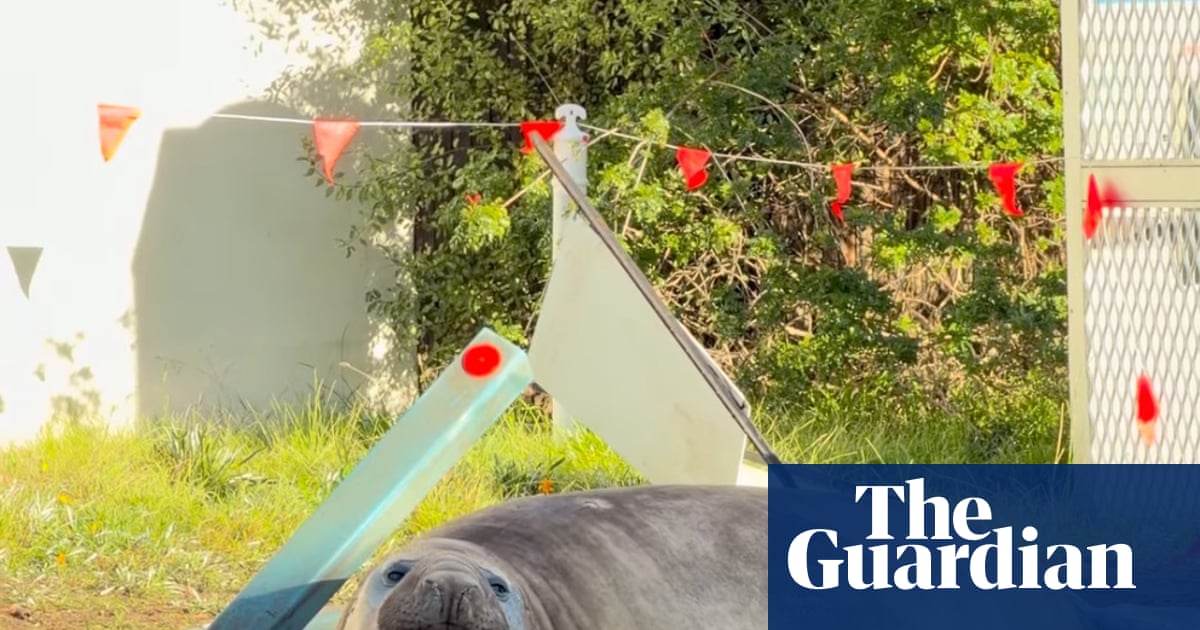
Neil is a male southern elephant seal born in Tasmania in 2020.
He became famous after repeatedly hauling out in populated coastal communities rather than remaining only on remote beaches.
Instead of quietly resting at the water’s edge, Neil has been photographed and filmed:
- Blocking roads
- Sleeping beside vehicles
- Leaning against cars
- Pushing over traffic cones
- Bending roadside bollards
- Damaging fences
- Exploring gardens
- Resting near homes
- Interrupting commuters
- Investigating public infrastructure
His large size, expressive face, apparent confidence, and fascination with human-made objects made him an ideal social media personality.
Videos of Neil have attracted millions of views, while accounts devoted to his adventures have gained audiences larger than Tasmania’s human population.
That popularity has transformed him into an unofficial state celebrity.
It has also created serious problems for wildlife officials trying to protect both Neil and the public.
How Big Is Neil the Seal?
During his latest visit, Neil was estimated to weigh approximately 1,000 kilograms, or one metric tonne.
He is already an imposing animal, but he may still have considerable growing left to do.
Adult male southern elephant seals can become:
- More than four metres long
- Several tonnes in weight
- Much larger than adult females
- Among the heaviest living seals
The largest mature males develop enlarged noses that resemble short trunks, which explains the name “elephant seal.”
These noses help amplify vocal displays used during competition with other males.
At five years old, Neil is approaching adulthood but may not yet have reached his maximum size.
Earlier in his life, his interactions with traffic cones and bollards seemed playful and relatively manageable. At one tonne, the same behaviour can damage vehicles, infrastructure, fences, and people.
As Neil matures, wildlife authorities face a difficult question: how can Tasmania coexist with an increasingly powerful animal that appears unusually comfortable around human environments?
Why Is Neil So Interested in Bollards and Traffic Cones?
Neil has become famous for pushing, leaning against, biting, and body-slamming upright objects.
Wildlife experts believe some of this behaviour may resemble the social play or physical interaction a young male elephant seal would normally experience around other seals.
Neil was born away from a large southern elephant seal colony.
Without many members of his own species nearby, he may direct natural exploratory or play-fighting behaviour toward whatever objects are available.
These may include:
- Traffic cones
- Signposts
- Bollards
- Fences
- Utility boxes
- Vehicles
- Gates
- Barriers
An object that bends, moves, or resists his weight may encourage continued interaction.
People may interpret the behaviour as comedy, but from Neil’s perspective, the object may be an interesting part of his environment or a substitute for another animal.
This is one reason authorities warn against actively playing with him.
Human attention could reinforce the idea that roads, populated areas, and man-made objects are rewarding places to spend time.
Neil Is Not a Pet or Trained Performer
Neil’s social media fame can make him appear familiar and approachable.
He is not.
He is a wild marine predator weighing roughly as much as a small car.
Even when Neil appears calm, sleepy, curious, or playful, he can move more quickly than many observers expect. His body weight alone is capable of causing severe injury.
Southern elephant seals also possess:
- Powerful jaws
- Strong teeth
- Considerable neck and upper-body strength
- Fast short-distance movement
- Defensive instincts
- Unpredictable reactions when crowded
Neil has not been trained to interact safely with people.
He does not understand selfies, traffic rules, property boundaries, or the intentions of strangers approaching him.
A behaviour that looks humorous in a short video may be a warning, defensive reaction, or sign of stress.
Wildlife officials repeatedly remind the public that his popularity does not make him domesticated.
Why Crowds Became a Serious Problem
Neil’s latest shore visit attracted hundreds of people each day.
Some visitors travelled specifically to see him, while social media posts revealing his location contributed to crowd growth.
Reports described buses carrying tourists to areas where Neil was resting.
Visitors sometimes ignored barriers, approached too closely, brought dogs near him, or attempted to capture close photographs. Officials even expressed concern about people bringing small children and babies within dangerous proximity.
These encounters created several risks.
Disturbance During the Moult
Neil needed extended, uninterrupted rest.
Repeated movement, noise, photography, and crowding could force him to use energy unnecessarily during a demanding biological process.
Increased Aggression or Defensive Behaviour
A surrounded seal may perceive people, dogs, or vehicles as threats.
Even a normally tolerant animal can react suddenly when it feels trapped.
Habituation
Every positive or stimulating interaction teaches Neil that humans and populated spaces are worth approaching.
Greater habituation could make future visits more dangerous.
Road Accidents
Crowds gathering near roads can obstruct traffic, encourage unsafe parking, and make it harder for Neil to return to the beach.
Pressure on Authorities
Police, wildlife workers, council staff, and traffic-control teams must devote substantial resources to managing Neil and the people surrounding him.
The central concern is not that Neil deliberately wants to hurt anyone.
It is that a one-tonne wild animal and an excited crowd create an inherently unpredictable combination.
How Far Should People Stay From Neil?
Tasmanian wildlife officials advise people to remain at least 20 metres away from Neil.
Dogs should remain leashed and at least 50 metres from him.
Greater distance may be necessary when:
- Neil is moving
- He raises his head repeatedly
- He opens his mouth
- He vocalises
- He looks directly at observers
- He changes direction toward people
- He is near a road or narrow path
- A clear escape route is unavailable
People should never stand between Neil and the ocean.
A seal trying to return to the water needs an unobstructed path. Blocking that route can make the animal feel trapped and increase the likelihood of a defensive charge.
Observers should also follow all instructions from:
- Wildlife officers
- Police
- Council workers
- Traffic controllers
- Temporary signs and barriers
The 20-metre rule is a minimum safety buffer, not a target for how close someone should attempt to stand.
Why People Should Not Reveal Neil’s Exact Location
Sharing Neil’s live location may feel helpful to fans, but it can produce sudden crowds around an animal that needs peace.
Wildlife authorities and responsible media outlets have increasingly avoided publishing precise information about his resting places.
Location sharing can lead to:
- Traffic congestion
- Unsafe parking
- People trespassing on private property
- Crowds entering fragile coastal areas
- Dogs being brought close to the seal
- Repeated disturbance
- Commercial tours forming around the animal
- Emergency access being blocked
Social media turns wildlife sightings into real-time attractions.
A video that feels harmless when viewed online may send hundreds of people toward a single beach or residential street.
The safest way to appreciate Neil is often through official updates and responsibly recorded footage rather than attempting to find him in person.
Why Was Neil Moved Away From Roads?
During his latest visit, Neil repeatedly entered areas where his safety was threatened by traffic.
Videos showed wildlife staff using boards and long poles to encourage him away from dangerous road spaces.
Some viewers criticised the methods after seeing short clips online.
Authorities explained that their priority was to move a one-tonne animal without using sedation or creating a more dangerous confrontation.
Handling a seal of Neil’s size is extraordinarily difficult.
Workers cannot simply lift him, attach a leash, or transport him like a domestic animal. Sedation carries medical risks, especially when the animal is close to water, overheated, stressed, or in an unsuitable position.
Physical barriers can be used to:
- Redirect movement
- Protect staff
- Block access to traffic
- Encourage the seal toward a safer area
- Avoid direct close contact
- Create a visual boundary
Footage may look uncomfortable, but context matters.
A wildlife intervention should be assessed according to whether it prevents greater danger while minimizing stress and injury—not whether every moment looks gentle on social media.
Could Neil Be Relocated?
Relocating Neil permanently would be difficult and might not solve the problem.
Elephant seals possess strong navigational abilities and may return to familiar coastal regions after being moved.
A relocation would also involve:
- Capturing a one-tonne wild animal
- Sedating or physically containing him
- Transporting him safely
- Selecting an appropriate release location
- Managing the risk of overheating
- Preventing injury to workers
- Ensuring he can reach the ocean
- Monitoring whether he returns
Moving Neil to a remote beach would not guarantee that he remained there.
He may simply swim back toward the areas he already knows.
Officials therefore prefer to manage his natural visits through public distance, temporary barriers, traffic control, and education whenever possible.
Why Were People Worried Neil Could Be Euthanised?
Public concern grew after officials warned that increasingly unsafe interactions could eventually create an impossible management situation.
There was no announcement that Neil was scheduled to be euthanised.
The fear arose from examples elsewhere in the world where large marine animals were killed after persistent crowding and habituation created serious public-safety risks.
Wild animals sometimes pay the price for human behaviour.
When people repeatedly approach, feed, touch, tease, or encourage an animal, it may become increasingly comfortable entering populated areas.
If that animal later injures someone, authorities may face pressure to remove it permanently.
Tasmanian officials have emphasized that keeping Neil wild is the best protection against such an outcome.
The public can help by refusing to:
- Approach him
- Feed him
- Touch him
- Encourage him toward people
- Reveal his live location
- Place objects near him for entertainment
- Bring children or pets close
- Block his path
- Treat him as a tourist attraction
Loving Neil responsibly means accepting that he does not need direct human affection.
Tasmania Is Planning for Neil’s Next Visit
Clarence City Council and Tasmania’s Department of Natural Resources and Environment have been discussing a formal management plan for future visits.
The goal is to reduce confusion and improve coordination before Neil returns.
Possible measures include:
- Designated resting areas
- Temporary exclusion zones
- Safe public viewing points
- Stronger barriers
- Traffic-management plans
- Public education campaigns
- Clear enforcement responsibilities
- Temporary staff increases
- Better coordination among agencies
- Rapid responses when Neil enters populated areas
- Infrastructure designed to discourage road access
Officials have also debated whether existing laws provide clear enough powers to penalize people who disturb protected wildlife.
During the recent visit, many verbal warnings were reportedly issued, but enforcement was complicated by uncertainty about available legal mechanisms.
A structured plan could protect Neil while reducing disruption for residents whose roads, properties, or daily routines are affected.
Why Neil Keeps Returning to Tasmania
Neil’s loyalty to Tasmania is probably connected to a combination of biology, memory, and birthplace familiarity.
Many marine animals return repeatedly to known sites.
A familiar coastline may provide:
- Recognizable geography
- Suitable beaches
- Safe haul-out surfaces
- Access to deep water
- Established navigation cues
- Previous successful resting experiences
Research on southern elephant seal movements suggests that memory and individual experience influence where the animals travel and forage.
They may cover vast distances while still returning to familiar regions.
Neil’s attachment to Tasmania is therefore not necessarily sentimental in the human sense.
It reflects an animal using remembered places that have previously met important biological needs.
Unfortunately, some of those places now overlap with roads, homes, fences, and communities.
How Far Does Neil Travel at Sea?
Neil has previously been fitted with a satellite tracking device that allowed scientists to follow his movements.
Tracking showed that he travelled thousands of kilometres through the Southern Ocean before returning to Tasmania.
A tracking tag is usually attached temporarily to a seal’s fur.
It transmits information such as:
- Location
- Travel direction
- Time spent at sea
- Diving behaviour
- Movement speed
- Foraging areas
The device eventually falls off when the animal moults, which prevents it from remaining permanently attached.
Neil’s ocean journeys reveal a side of his life that social media rarely captures.
On land, he appears slow, awkward, and comically destructive.
At sea, he becomes an efficient deep-diving predator capable of travelling enormous distances through cold and difficult waters.
What Do Southern Elephant Seals Eat?
Southern elephant seals are carnivorous marine hunters.
Their diet can include:
- Squid
- Fish
- Deep-water species
- Cephalopods
- Other available marine prey
They spend long periods diving beneath the surface, often hunting in darkness at considerable depth.
Elephant seals can remain submerged for extended periods and repeat dives throughout the day and night.
Their bodies are adapted for this demanding lifestyle through:
- Large oxygen stores
- High concentrations of oxygen-binding proteins
- The ability to slow heart rate
- Efficient blood distribution
- Thick insulating blubber
- Streamlined bodies
- Exceptional pressure tolerance
The difference between their movement on land and at sea is dramatic.
Onshore, Neil must drag and flex his enormous body across roads and beaches.
In the ocean, that same body becomes streamlined and agile.
Why Elephant Seals Spend So Much Time at Sea
The ocean provides the food elephant seals need to build and maintain their enormous bodies.
A male such as Neil must accumulate substantial energy reserves for:
- Growth
- Moulting
- Migration
- Future competition
- Extended periods without food
- Reproduction
While ashore, elephant seals often fast.
They survive by using stored body fat until they can return to feeding areas.
This is why unnecessary disturbance during a haul-out can matter.
Every extra movement consumes energy that cannot easily be replaced until the animal returns to sea.
Neil may appear inactive or lazy while resting, but conserving energy is part of his survival strategy.
Will Neil Join an Elephant Seal Colony?
Neil’s long-term future remains uncertain.
As he matures, he may seek greater interaction with other southern elephant seals, particularly during breeding periods.
Adult males normally compete for access to females within colonies.
These contests can involve:
- Loud vocal displays
- Posturing
- Physical pushing
- Biting
- Serious combat
- Establishment of dominance
Neil’s current play-fighting with objects may change as he becomes sexually mature and encounters other males.
He could eventually spend more time near established elephant seal populations outside Tasmania.
Alternatively, he may continue returning to the region where he was born.
Scientists cannot know exactly how his behaviour will develop until they observe him over future years.
Is Neil the Only Southern Elephant Seal in Tasmania?
Southern elephant seals are native to the Southern Ocean, but Tasmania does not host the kind of enormous breeding colonies found on remote subantarctic islands.
Individual elephant seals sometimes visit Tasmanian beaches to rest or moult.
Neil is unusual because he:
- Was born in Tasmania
- Returns repeatedly
- Uses populated areas
- Appears interested in human-made objects
- Has become highly habituated to urban environments
- Is individually recognized by the public
His fame can create the impression that he is the only elephant seal visiting Tasmania.
He is not, but few others develop the same visible relationship with roads, communities, and social media.
Why Neil’s Story Matters Beyond Entertainment
Neil’s adventures are funny, but his story raises serious questions about modern relationships between humans and wildlife.
Viral Fame Changes Animal Behaviour
An animal that becomes popular attracts people.
Those people alter the environment around it, even when they believe they are simply watching.
Urban Development Overlaps With Wildlife Habitat
Coastal roads, homes, beaches, tourism facilities, and infrastructure occupy places wild animals may still need.
Public Affection Can Become Harmful
People may crowd an animal precisely because they love it.
Good intentions do not prevent stress or injury.
Wildlife Management Requires Cooperation
Government agencies cannot protect a seal if hundreds of visitors ignore instructions.
Individual Animals Can Build Conservation Awareness
Neil’s popularity gives wildlife experts an opportunity to teach people about southern elephant seals, migration, moulting, marine ecosystems, and responsible observation.
The challenge is turning attention into respect rather than exploitation.
How to Follow Neil Responsibly
Fans can enjoy Neil’s story without searching for his physical location.
Responsible ways to follow him include:
- Watching updates from official wildlife agencies
- Following social media accounts that protect his location
- Avoiding pages encouraging close contact
- Sharing safety messages alongside entertaining videos
- Reporting harassment to authorities
- Supporting marine conservation
- Learning about southern elephant seal biology
- Refusing to reward intrusive content
- Avoiding live-location posts
An entertaining video should never become an invitation for the next crowd.
The best footage is captured from a safe distance without changing the animal’s behaviour.
What to Do if You Encounter Neil
Anyone unexpectedly encountering Neil should remain calm.
Keep Your Distance
Stay at least 20 metres away and move farther back if he becomes alert or changes direction.
Secure Dogs
Keep dogs leashed and at least 50 metres away.
Do Not Block the Water
Leave a wide, clear route between the seal and the ocean.
Remain Quiet
Avoid shouting, sudden movements, horns, flash photography, or attempts to attract his attention.
Do Not Feed Him
Feeding wildlife changes behaviour and encourages future close contact.
Do Not Touch Him
Touching a sleeping seal is dangerous and illegal in many circumstances.
Follow Official Instructions
Move immediately when wildlife officers, police, or council workers request it.
Report Dangerous Situations
In Tasmania, concerns involving seals and other marine mammals can be reported through the Marine Mammal Hotline.
Neil’s Departure Is Good News
For residents, Neil’s return to sea means fewer blocked roads, damaged barriers, crowds, and unexpected encounters with a one-tonne animal.
For Neil, it means he has probably completed an important biological process successfully.
He can now return to the environment where elephant seals are most capable.
At sea, Neil can feed, travel, dive, and continue developing toward adulthood.
His departure should not be treated as a sad ending.
It is evidence that he remains a functioning wild animal following his natural cycle.
Tasmania’s goal should never be to keep him on land for entertainment.
The healthiest outcome is for him to leave when his body tells him to leave—and return only when his natural needs bring him back.
Final Thoughts
Neil the Seal has returned to the ocean after another unforgettable visit to Tasmania.
For several weeks, the one-tonne southern elephant seal rested near Hobart, completed his annual moult, pushed through barriers, interrupted traffic, entertained millions online, and reminded residents that wildlife does not always respect human planning.
His departure was natural and expected.
Scientists believe he will probably return because Tasmania remains part of his established life cycle. He has repeatedly hauled out along the state’s coastline since being born there in 2020, often appearing twice a year.
The next visit could arrive within months.
When it does, Neil will be larger, stronger, and potentially more difficult to manage.
Tasmania now has an opportunity to prepare—not only with fences, signs, and traffic plans, but with a clearer public understanding of what it means to love a wild animal.
Neil does not need hugs, close photographs, food, toys, or crowds.
He needs space.
For now, the traffic cones can stand upright again, the roads can reopen, and the fences can recover.
Somewhere beyond Tasmania’s coastline, Neil is back where a southern elephant seal belongs.
But if his history tells us anything, it is this:
Neil the Seal is almost certainly not finished with Tasmania yet.
Frequently Asked Questions
Has Neil the Seal returned to the sea?
Neil disappeared from his regular resting area near Seven Mile Beach in July 2026. Tasmanian wildlife experts believe he returned to sea, although they noted that he could briefly have moved to another nearby location.
Will Neil the Seal come back?
Scientists believe Neil is likely to return. He has repeatedly come ashore in southern Tasmania and generally returns approximately twice a year to rest or moult.
When will Neil the Seal return?
There is no guaranteed date. Officials have suggested that another visit could occur around October, but wild-animal movements depend on feeding, weather, body condition, and biological cycles.
Where is Neil the Seal now?
Neil is believed to be back at sea. His exact position is not publicly known unless scientists have an active tracking device attached to him.
Where was Neil the Seal resting?
During his latest visit, Neil spent several weeks around Seven Mile Beach and nearby areas in southern Tasmania.
What type of seal is Neil?
Neil is a male southern elephant seal.
How old is Neil the Seal?
Neil was born in October 2020, making him five years old during his 2026 visit.
How much does Neil the Seal weigh?
Neil was estimated to weigh approximately 1,000 kilograms, or one metric tonne, during his latest haul-out.
Will Neil get bigger?
Yes. Adult male southern elephant seals can weigh several tonnes and grow to more than four metres long. Neil may still have substantial growth ahead.
Why did Neil come ashore?
Neil came ashore to rest and complete his annual moult, during which he replaced his fur and the outer layer of his skin.
What is a catastrophic moult?
A catastrophic moult is the concentrated shedding of an elephant seal’s outer skin and fur. Despite the dramatic name, it is a normal annual process.
How long does an elephant seal moult take?
The haul-out and moulting period may last several weeks. Neil’s latest visit was expected to last approximately six weeks.
Why does Neil spend so much time sleeping?
Resting conserves energy while he fasts and completes the energetically expensive moulting process.
Does Neil eat while he is on land?
Elephant seals often eat little or nothing during extended haul-outs. They rely on stored body fat until they return to sea and resume hunting.
What does Neil eat at sea?
Southern elephant seals eat fish, squid, and other marine prey captured during deep dives.
How far does Neil travel?
Tracking from earlier journeys showed that Neil could travel thousands of kilometres through the Southern Ocean.
Why does Neil attack traffic cones and bollards?
Experts believe he may be exploring or play-fighting with objects, possibly because he lacks regular interaction with an elephant seal colony.
Is Neil the Seal dangerous?
Yes. Neil is a one-tonne wild animal capable of moving quickly and causing severe injury through biting, crushing, or defensive movement.
How close can people get to Neil?
People should remain at least 20 metres away. Greater distance is necessary if he is active, alert, moving, or lacks a clear escape route.
How far should dogs stay from Neil?
Dogs should remain leashed and at least 50 metres away.
Can people take selfies with Neil?
People should not approach him for selfies. Close photography can disturb him and place the person in serious danger.
Can people feed Neil?
No. Feeding encourages habituation, changes natural behaviour, and increases future conflict.
Why should people not share Neil’s location?
Publishing his live location can attract large crowds, traffic congestion, dogs, intrusive photography, and disturbance during periods when he needs rest.
Why did wildlife officers push Neil with boards?
Workers used barriers and long objects to redirect him away from traffic while maintaining distance from his teeth and body. Moving an animal of his size safely is difficult, and sedation can carry serious risks.
Was Neil going to be euthanised?
No official plan to euthanise Neil was announced. Concern arose because continuing public interference and dangerous habituation could make his future management more difficult.
Could Neil be relocated?
Relocation is possible in an emergency but would be difficult, risky, and potentially temporary because elephant seals can return to familiar areas.
Why was Neil born in Tasmania?
His mother came ashore on the Tasman Peninsula and gave birth there in October 2020. Neil has continued returning to Tasmanian coastal areas.
Is Neil tagged?
Neil has carried temporary tracking devices. These devices are attached to his fur and fall off when he moults.
Is Neil a pet?
No. Neil is a fully wild southern elephant seal and should never be treated as a domesticated or trained animal.
Why is Neil so famous?
He became famous through videos showing him blocking roads, sleeping near cars, pushing over cones, damaging fences, and interacting with infrastructure around Tasmanian communities.
Is Neil Australia’s only elephant seal?
No. Other southern elephant seals visit Australian and Tasmanian shores, but Neil is unusually well known because of his repeated urban appearances and recognizable behaviour.
What should I do if I see Neil?
Keep at least 20 metres away, secure pets, leave his path to the ocean clear, avoid revealing his location, and follow all instructions from wildlife authorities.
What does Neil’s return to sea mean?
It probably means he completed his moulting period and is ready to resume feeding and travelling in the Southern Ocean.
Why are scientists confident Neil may return?
Neil has repeatedly returned to Tasmania since his birth and follows a pattern of hauling out roughly twice each year. Familiar coastline and biological cycles make another visit likely.
What is the most important thing people can do for Neil?
Give him space. Keeping a safe distance and avoiding direct interaction are the most effective ways to protect both Neil and the public.