
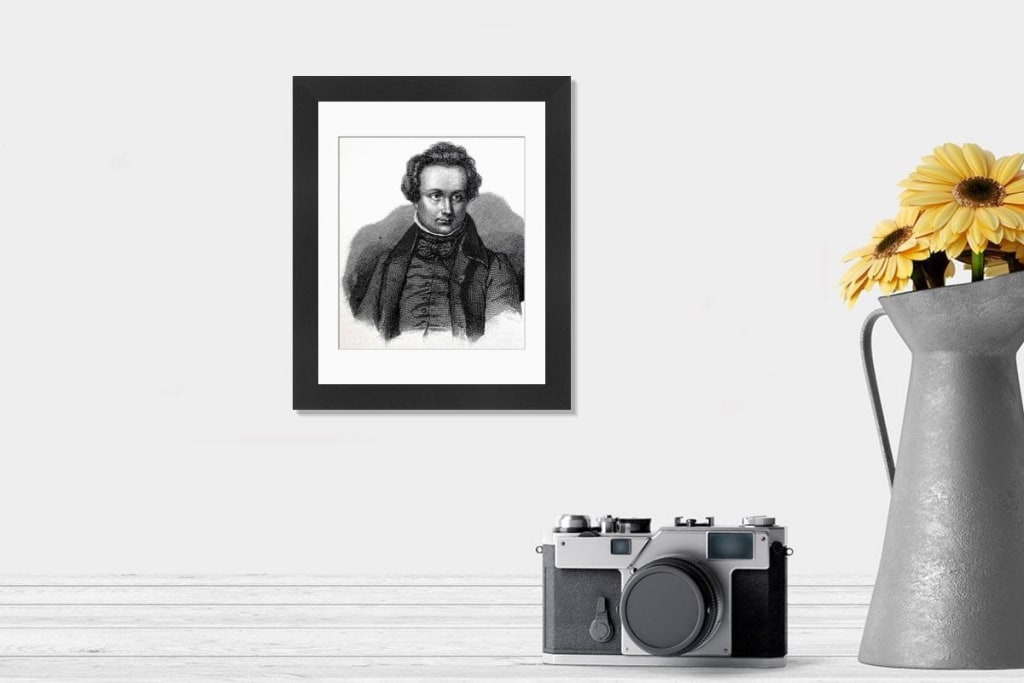
Victor Hugo on Education: Why Ignorance Creates the Strongest Chains
Victor Hugo understood that human beings can be imprisoned without walls.
A person may possess the legal right to speak yet lack the knowledge needed to recognize deception. A population may be allowed to vote yet remain vulnerable to fear, propaganda, prejudice, and manipulation. A revolution may overthrow a ruler without dismantling the ignorance that allowed oppression to flourish.
For Hugo, education was therefore much more than preparation for employment.
It was a form of liberation.
The great French novelist, poet, dramatist, and politician believed that the mind must be illuminated before society can become genuinely free. Schools, books, libraries, theatres, museums, and public debate were not cultural luxuries. They were defences against poverty, authoritarianism, fanaticism, and political submission.
In an address to France’s National Assembly on November 11, 1848, Hugo argued that the nation should multiply schools, lecture halls, libraries, museums, theatres, bookshops, study houses, and places of reading. He then expressed the central principle behind his educational vision: light must be brought into the people’s minds because they are lost through darkness.
That documented statement captures the deeper meaning of many popular quotations associated with Hugo.
He is frequently credited with sayings such as:
“He who opens a school door closes a prison.”
The line is widely attributed to him, although its precise original source remains uncertain. It should therefore be treated as a traditional attribution rather than a securely documented sentence from a known speech or publication.
Hugo’s authentic speeches, however, leave little doubt that he believed in the principle the quotation expresses.
Education could prevent social misery before that misery became crime. Knowledge could weaken the power of those who governed through superstition and fear. Public instruction could give ordinary people the intellectual independence required to participate meaningfully in a republic.
His literature and politics were connected by one conviction:
A society cannot call itself free while large portions of its population remain trapped in ignorance.
Who Was Victor Hugo?
Victor-Marie Hugo was born on February 26, 1802, in Besançon, France.
He became one of the leading figures of French Romanticism and one of the most internationally recognized writers of the nineteenth century.
His best-known works include:
- Notre-Dame de Paris, commonly known in English as The Hunchback of Notre-Dame
- Les Misérables
- The Man Who Laughs
- The Toilers of the Sea
- The Last Day of a Condemned Man
- Hernani
- Ruy Blas
- The Contemplations
- The Legend of the Ages
Hugo was not only a literary figure.
He served as a peer of France, a member of the Constituent and Legislative Assemblies during the Second Republic, and later a senator under the Third Republic. His political positions evolved significantly over time, moving from royalist sympathies in his youth toward republicanism, social reform, freedom of expression, opposition to the death penalty, and resistance to authoritarian government.
His political career was not separate from his writing.
Both were driven by concern for people excluded from power.
What Did Victor Hugo Mean by Intellectual Emancipation?
Intellectual emancipation means gaining the ability to think, question, evaluate, and decide independently.
It is not identical to literacy.
A person may be able to read while remaining unable or unwilling to question authority. Education becomes emancipatory when it develops:
- Critical judgment
- Historical understanding
- Scientific curiosity
- Moral reasoning
- Awareness of rights
- The ability to detect manipulation
- Confidence to challenge inherited prejudice
- Access to alternative viewpoints
- The language needed to express disagreement
Hugo believed ignorance made people vulnerable because it narrowed the world they could imagine.
Someone who has never encountered competing ideas may assume that existing injustice is natural.
Someone who does not understand law may not recognize when rights are violated.
Someone denied history may be persuaded that oppression has no precedent.
Someone deprived of scientific knowledge may be controlled through superstition.
Education does not guarantee wisdom or virtue.
It does, however, expand the tools with which individuals can resist domination.
The Hardest Chains Are Often Mental
Physical chains are visible.
Mental chains are more difficult to recognize because people may learn to treat them as ordinary.
Such chains can include:
- The belief that poverty is a personal defect
- The assumption that authority is always correct
- Fear of unfamiliar cultures or religions
- Acceptance of inherited social rank
- Internalized racism or class prejudice
- Political myths repeated as unquestionable facts
- The belief that education belongs only to elites
- The conviction that social change is impossible
- Shame about speaking, reading, or asking questions
A prison wall clearly announces its purpose.
Ignorance can imprison a person while appearing to describe reality truthfully.
This is why education represented freedom in Hugo’s political imagination.
It allowed people to see the structure around them.
Before oppression can be resisted, it must be recognized.
Hugo’s 1848 Speech on Poverty and Education
One of the clearest statements of Hugo’s educational philosophy appeared during debates in the National Assembly in November 1848.
France was passing through revolutionary turmoil, economic instability, mass poverty, and conflict over the future of the republic.
Hugo argued that reducing public expenditure on cultural and educational institutions would be disastrous. Rather than limiting access to knowledge, the state should greatly expand it.
He called for more:
- Schools
- Academic chairs
- Libraries
- Museums
- Theatres
- Bookshops
- Study centres for children
- Reading centres for adults
His language treated education as a public ecosystem rather than one institution.
A school could teach children.
A library could continue their education throughout adulthood.
A theatre could stimulate moral imagination.
A museum could give citizens access to history and beauty.
A bookshop could circulate ideas.
Hugo concluded that light had to penetrate the mind of the people because darkness was the means through which they were lost.
This was not merely poetic language.
He was making a political argument about national investment.
A state that saves money by weakening education may eventually pay a far greater price through crime, unrest, prejudice, exploitation, and authoritarianism.
Education as Prevention Rather Than Punishment
The famous saying about opening schools and closing prisons survives because it expresses an enduring social principle.
Governments often invest heavily in punishment after social harm occurs.
They build:
- Prisons
- Police units
- Courts
- Surveillance systems
- Detention centres
- Security barriers
These institutions may be necessary in some form.
Hugo’s philosophy asks why societies so often neglect the institutions that reduce harm before it occurs.
Education can help address factors associated with crime and social exclusion by improving:
- Literacy
- Employment opportunities
- Self-confidence
- Conflict resolution
- Civic participation
- Access to social services
- Knowledge of law
- Ability to identify exploitation
- Resistance to extremist recruitment
A school cannot eliminate every crime.
Educated people can still act violently, selfishly, or dishonestly.
But the larger point remains powerful:
Prevention should not receive less political imagination than punishment.
The Relationship Between Ignorance and Poverty
Hugo did not see poverty simply as a shortage of money.
Poverty also denied people access to knowledge, political influence, health, dignity, and social mobility.
A poor child might be forced to work instead of attending school.
An illiterate adult might be unable to understand a contract, challenge an employer, read a ballot, or navigate legal institutions.
Lack of education could therefore preserve poverty across generations.
The relationship formed a cycle:
- Poverty restricted access to education.
- Restricted education limited opportunity.
- Limited opportunity reproduced poverty.
- Poverty increased vulnerability to exploitation.
- Exploitation strengthened the social hierarchy.
Hugo’s answer was not charity alone.
He wanted institutions that gave people the means to participate in society as thinking citizens.
Les Misérables as a Novel of Social Ignorance
Les Misérables, published in 1862, is often remembered through its characters, romances, barricades, songs, and dramatic coincidences.
 Victor Hugo and Norman MacAfee and Charles E. Wilbour and Lee Fahnestock and Isabel Florence Hapgood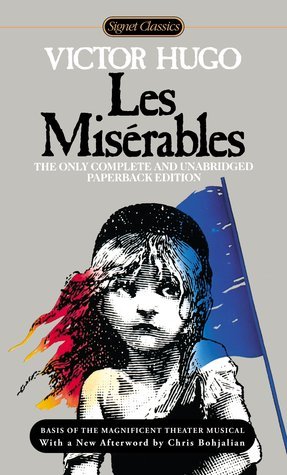
At its core, however, it is an enormous argument about how society creates suffering and then punishes the people shaped by that suffering.
Jean Valjean is imprisoned for stealing bread to feed his sister’s children.
After his release, the stigma of imprisonment prevents him from rebuilding his life.
Fantine is abandoned, impoverished, exploited, and pushed into prostitution while trying to support her daughter.
Cosette begins life in neglect and servitude.
The street child Gavroche survives with courage but without protection.
The Thénardiers exploit almost everyone they encounter.
Inspector Javert is intelligent but mentally imprisoned by an absolute belief in law.
Each character represents a different form of captivity.
Some are confined by poverty.
Some by social class.
Some by gender.
Some by criminal records.
Some by ideology.
Javert is especially important to Hugo’s idea of intellectual freedom.
He can read, reason, investigate, and exercise authority. Yet his mind remains trapped inside a rigid system that divides humanity into lawful and criminal categories.
When Jean Valjean’s mercy contradicts that system, Javert cannot revise his worldview.
His tragedy is therefore not ignorance in the ordinary sense.
It is the inability to think beyond an inherited moral structure.
Knowledge Without Compassion Is Not Enough
Hugo did not treat education as the mere accumulation of information.
A person could be educated and still cruel.
A judge could understand law and apply it without mercy.
A politician could speak eloquently while manipulating the public.
A priest could possess learning while defending hierarchy.
A scientist could use knowledge without considering human consequences.
Hugo’s ideal education therefore included moral development.
The institutions he wanted to multiply were places where people could learn, reflect, and “become better.”
That final element matters.
Knowledge becomes liberating when it strengthens the ability to see other people as fully human.
Education without empathy can create more efficient oppression.
His Opposition to the Falloux Law
In January 1850, Hugo delivered one of his most famous parliamentary speeches during debate over the educational legislation later known as the Falloux Law.
The law expanded the influence of religious authorities within French education and strengthened confessional schooling.
Hugo accepted that religious groups should possess freedom within their own sphere, but he resisted clerical control over public instruction.
His position was summarized through the celebrated formula:
“The Church at home and the State at home.”
The French National Assembly identifies the speech as a major moment in his break with conservative political allies. Hugo defended a public and free school system while opposing the effort of the clerical party to dominate education.
For Hugo, the issue was not simple hostility toward personal faith.
It was institutional power.
Who would control what children were allowed to know?
Who would decide which ideas could be examined?
Could scientific and philosophical inquiry remain free if education was subordinated to religious authority?
Hugo believed public education should protect the developing mind from monopolistic control.
“The Freedom Not to Teach”
During the 1850 debate, Hugo accused the clerical party of using the language of educational freedom to conceal an effort to restrict thought.
He argued that the freedom being demanded was effectively “the freedom not to teach.”
The accusation addressed a recurring political problem.
Powerful institutions often defend control using the language of liberty.
Censorship may be described as moral protection.
Exclusion may be described as parental choice.
Propaganda may be described as tradition.
The suppression of science may be presented as freedom of belief.
Hugo urged citizens to examine what a political phrase permits in practice, not merely how attractive it sounds.
That skill remains central to critical education.
Science, Dogma and the Freedom to Discover
In his speech against clerical control, Hugo invoked historical examples of thinkers and discoverers persecuted or restricted by religious authorities.
He referred to figures associated with astronomy, medicine, philosophy, and exploration, presenting the history of progress as a struggle against institutions that attempted to confine thought within dogma.
Some of his historical examples reflected the rhetoric and assumptions of his era rather than modern historical scholarship.
The broader argument was clear:
Truth cannot be safely determined by an institution that punishes questions.
Scientific knowledge develops because accepted explanations can be tested.
Political knowledge develops because rulers can be criticized.
Moral knowledge develops because inherited customs can be examined.
Education must therefore teach not only answers but also the legitimacy of inquiry.
Why Authoritarianism Fears Education
Authoritarian systems do not necessarily oppose all education.
They may build schools, universities, and training programmes.
What they fear is independent education.
A regime may support technical skills while suppressing:
- Political history
- Independent journalism
- Philosophy
- Literature that encourages empathy
- Debate
- Minority languages
- Critical social science
- Free scientific research
- Discussions of state violence
The goal is to produce capable workers without independent citizens.
Hugo’s educational philosophy challenges that model.
The mind should not merely be trained to perform tasks.
It should become capable of evaluating the system assigning those tasks.
Exile and the Defence of Free Thought
Hugo opposed Louis-Napoléon Bonaparte’s seizure of power in the coup of December 2, 1851.
He subsequently lived in exile for nearly two decades, primarily on the Channel Islands of Jersey and Guernsey.
Exile strengthened his identity as an opponent of authoritarian government.
From outside France, he wrote against Napoleon III, defended republican principles, and addressed political struggles far beyond his own country.
His exile also demonstrated why intellectual freedom matters.
A government may remove a writer physically without silencing the writer’s ideas.
Books cross borders.
Speeches are copied.
Poems become political memory.
Literature can preserve opposition during periods when formal political institutions fail.
Literature as an Alternative School
Hugo did not educate only through parliamentary speeches.
His novels functioned as public classrooms.
They brought readers into contact with:
- Prisoners
- Orphans
- Sex workers
- Revolutionaries
- Disabled people
- Beggars
- Religious figures
- Police officers
- Workers
- Children living on the street
Readers were asked to inhabit lives that polite society often ignored.
This is one of literature’s most important educational functions.
Statistics can reveal how many people suffer.
Stories can help readers imagine what suffering feels like from within.
That emotional knowledge does not replace policy or historical evidence.
It can make indifference more difficult.
Notre-Dame de Paris and Cultural Education
Notre-Dame de Paris, published in 1831, also reflects Hugo’s belief in the educational power of art and history.
The novel helped awaken public concern for the neglected cathedral and for medieval architecture more broadly.
Hugo saw buildings as repositories of collective memory.
Destroying or neglecting them could sever people from their history.
Education therefore included cultural inheritance.
Citizens should be able to encounter:
- Architecture
- Art
- Poetry
- Historical monuments
- Public memory
- National and local traditions
Yet Hugo did not advocate passive worship of the past.
Understanding history should help society judge what deserves preservation and what must be changed.
Education and Universal Suffrage
Hugo also defended universal male suffrage against attempts to restrict voting rights in 1850.
The proposed law imposed residency requirements that removed millions of poorer and more mobile citizens from the electorate. The National Assembly records Hugo’s vigorous opposition to the measure.
Education and voting were linked within his republican vision.
Voting without knowledge could leave citizens vulnerable to manipulation.
Education without political rights could produce informed people who remained powerless.
A functioning republic needed both:
- The right to participate
- The intellectual capacity to participate meaningfully
Education should not be used as a property qualification for democracy.
The state should educate citizens because they already possess political dignity.
Can an Uneducated Population Be Free?
Legally, yes.
A population may be granted constitutional rights regardless of educational attainment.
Practically, freedom becomes fragile when citizens cannot access reliable information or understand the institutions governing them.
An uninformed population may struggle to:
- Compare political claims
- Recognize conflicts of interest
- Understand economic policies
- Detect fabricated evidence
- Challenge discriminatory laws
- Identify historical repetition
- Evaluate scientific risk
- Hold leaders accountable
This does not mean formally educated people always make better political choices.
Degrees do not guarantee independence.
Critical education is different from credentialism.
A person without university training may possess exceptional wisdom and judgment.
A highly qualified person may repeat propaganda uncritically.
The essential freedom lies in access to knowledge and the habit of questioning.
Education and Propaganda in the Digital Age
Hugo wrote before radio, television, social media, search engines, and generative artificial intelligence.
His warning about darkness and manipulation may be even more relevant today.
Modern citizens face an enormous volume of information.
The problem is no longer only scarcity.
It is also:
- Misinformation
- Disinformation
- Deepfakes
- Manipulated images
- False quotations
- Algorithmic amplification
- Conspiracy theories
- Selectively edited videos
- Fabricated experts
- Partisan media ecosystems
A person can possess constant internet access and still remain intellectually confined.
Digital literacy must therefore become part of public education.
People need to learn how to:
- Check sources
- Distinguish reporting from opinion
- Identify original documents
- Compare multiple accounts
- Recognize emotional manipulation
- Understand how algorithms shape attention
- Verify quotations
- Evaluate statistical claims
- Admit uncertainty
The uncertain origin of the famous school-and-prison quotation illustrates the issue perfectly.
The saying may accurately summarize Hugo’s beliefs while still lacking a verified original source.
Critical reading allows us to appreciate the idea without pretending certainty about the wording.
False Quotations and the Authority of Famous Names
Famous thinkers often attract quotations they never wrote.
A statement gains power when associated with Einstein, Gandhi, Orwell, Twain, or Hugo.
The name acts like a certificate of truth.
This process can distort intellectual history.
The responsible approach is to distinguish among:
- Verified quotations from primary sources
- Reliable translations
- Paraphrases
- Traditional attributions
- Statements of uncertain origin
- Clearly fabricated quotations
Hugo did argue that schools and intellectual institutions should be multiplied.
He did argue that darkness within the public mind leads to social destruction.
He did defend free, public education.
These documented positions are powerful enough without relying on uncertain wording.
Education as a Human Right
Hugo spoke in the language of nineteenth-century republican reform rather than modern international human-rights law.
His ideas nonetheless anticipate the principle that education is a right rather than a privilege.
Treating education as a right means access should not depend entirely on:
- Wealth
- Social class
- Gender
- Religion
- Ethnicity
- Disability
- Family status
- Geographic location
A society committed to intellectual freedom must consider not only whether schools exist, but whether students can realistically benefit from them.
Barriers may include:
- Hunger
- Unsafe buildings
- Discrimination
- Lack of transportation
- Child labour
- Inaccessible materials
- Language exclusion
- Digital inequality
- Poorly trained teachers
- Political censorship
Opening a school door means little if children cannot reach it or are not safe once inside.
The Teacher as a Defender of Freedom
Hugo’s philosophy gives teachers an important civic role.
A teacher does more than transfer facts.
A good teacher helps students learn how to:
- Ask better questions
- Explain reasoning
- Encounter disagreement
- Examine evidence
- Revise mistaken beliefs
- Express ideas clearly
- Recognize human dignity
- Imagine alternatives
This work can threaten authoritarian or rigid social systems because it reduces intellectual dependency.
A student taught to reason may eventually question:
- A parent
- A religious authority
- An employer
- A political party
- A national myth
- The teacher
True education must accept that risk.
A system that allows questions only when they confirm approved answers is training obedience, not thought.
Libraries as Democratic Institutions
Hugo explicitly called for more libraries and reading spaces.
Libraries embody intellectual equality in a particularly visible form.
Within a public library, a person may gain access to knowledge that would otherwise be restricted by income.
Libraries provide:
- Books
- Newspapers
- Historical archives
- Digital access
- Research assistance
- Quiet study space
- Community education
- Cultural events
- Information about public services
They also defend privacy.
A citizen may investigate an illness, political idea, legal problem, religious doubt, or personal identity without first obtaining permission from a powerful institution.
In this sense, a library is not only a building containing books.
It is infrastructure for independent thought.
Museums, Theatres and Moral Imagination
Hugo’s list also included museums and theatres.
This reveals how broadly he understood education.
Human beings learn through:
- Facts
- Images
- Performance
- Memory
- Emotion
- Beauty
- Tragedy
- Humour
A theatre can expose an audience to moral conflict.
A museum can challenge national myths by displaying evidence of the past.
A painting can communicate suffering differently from a legal report.
A play can make a political argument through character rather than instruction.
Hugo, one of the great dramatists of Romanticism, understood that imagination is part of citizenship.
People may refuse justice not only because they lack information but because they have never imagined another person’s life.
Education and the Death Penalty
Hugo’s opposition to the death penalty also emerged from his broader view of human development.
In The Last Day of a Condemned Man and later writings, he argued against state execution.
Capital punishment assumes that a human being can be reduced permanently to the worst act committed.
Education begins from the opposite possibility:
People can change.
This does not remove responsibility or guarantee rehabilitation.
It rejects the idea that the state fully understands a person by knowing one crime.
Hugo’s concern for prisoners, children, the poor, and the condemned was united by resistance to social finality.
He refused to accept that one category—criminal, orphan, prostitute, beggar—should become a complete identity.
Legal Revolution Without Mental Revolution
Hugo lived through repeated changes of regime:
- Empire
- Restored monarchy
- Constitutional monarchy
- Republic
- Authoritarian empire
- Republic again
This history taught him that legal transformation alone is unstable.
A constitution may declare equality while citizens preserve prejudice.
A revolution may remove a king while maintaining authoritarian habits.
Universal suffrage may exist while propaganda controls public opinion.
A republic may survive formally while citizens lose trust in reason and truth.
Lasting freedom therefore requires a culture capable of supporting free institutions.
That culture must be taught, discussed, practised, and defended.
Critical Thinking Is Not Cynicism
Encouraging people to question authority does not mean teaching them to distrust everything.
Total cynicism creates its own form of manipulation.
When people believe all institutions lie equally, they may become vulnerable to whoever speaks with the greatest confidence.
Critical thinking involves:
- Proportioning belief to evidence
- Distinguishing uncertainty from falsehood
- Recognizing expertise without treating experts as infallible
- Revising conclusions when facts change
- Understanding context
- Testing competing explanations
The goal is not to destroy trust.
It is to make trust accountable.
Does Education Always Produce Political Freedom?
No.
Highly educated societies can support authoritarianism.
Universities can reproduce class hierarchy.
Schools can teach propaganda.
Literacy can spread hatred as easily as truth.
Scientific knowledge can be used for surveillance, warfare, or exploitation.
Hugo’s educational ideal should therefore not be romanticized into a mechanical formula.
Education promotes freedom only when it includes freedom.
Its institutions must allow:
- Inquiry
- Debate
- Intellectual diversity
- Access to evidence
- Protection from political intimidation
- Respect for human dignity
An authoritarian classroom may increase knowledge while strengthening submission.
The Continuing Relevance of Les Misérables
Les Misérables remains widely read because its questions have not disappeared.
Societies continue to debate:
- Whether poverty is a crime or a policy failure
- Whether punishment can become excessive
- Whether people can change
- Whether law and justice are identical
- Whether children inherit social disadvantage
- Whether revolution produces liberation
- Whether compassion can interrupt cycles of violence
Education helps readers recognize that these are not merely nineteenth-century problems.
The names, institutions, and technologies change.
The struggle over human dignity remains.
Why Hugo’s Vision Still Matters
Modern societies have expanded education dramatically since Hugo’s lifetime.
Yet intellectual emancipation remains incomplete.
Millions of children still lack reliable access to schooling.
Others attend schools without adequate books, teachers, safety, or digital access.
In wealthy countries, students may receive years of formal education without developing strong media literacy or civic understanding.
Meanwhile, political movements across the world continue attempting to control:
- Textbooks
- Libraries
- Historical narratives
- University research
- Journalism
- Art
- Discussions of race, gender, religion, or colonialism
These conflicts confirm Hugo’s central insight.
Education is never politically neutral in its consequences.
It determines who is equipped to interpret the world.
What a Hugo-Inspired Education Policy Would Look Like
A modern policy shaped by Hugo’s principles would invest in more than classroom capacity.
It would support:
Universal Access
Every child would receive quality education regardless of income, identity, disability, or location.
Public Libraries
Communities would maintain free spaces for reading, research, internet access, and lifelong learning.
Arts and Humanities
Literature, history, theatre, philosophy, and art would remain essential rather than decorative.
Scientific Literacy
Students would learn how evidence is produced, challenged, and revised.
Civic Education
Citizens would understand constitutions, rights, elections, public institutions, and democratic responsibilities.
Media Literacy
People would be trained to evaluate digital information, images, algorithms, and sources.
Teacher Independence
Educators would be protected from political intimidation when teaching evidence-based material.
Adult Education
Learning opportunities would continue beyond childhood.
Prison Education
Those already incarcerated would receive meaningful opportunities for study, rehabilitation, and reintegration.
Cultural Access
Museums, theatres, archives, and public events would be available beyond wealthy urban elites.
Education as Light—But Not a Blinding Light
Hugo frequently used the imagery of light and darkness.
Light represented:
- Knowledge
- Justice
- Progress
- Conscience
- Public truth
Darkness represented:
- Ignorance
- Misery
- Oppression
- Fear
- Social abandonment
Modern readers should approach this metaphor carefully.
People described as uneducated are not empty, morally inferior, or without knowledge.
Communities possess practical, cultural, oral, and local forms of understanding that formal institutions may ignore.
Educational liberation should not mean replacing people’s identities with elite assumptions.
It should expand their choices and power.
The light should help people see for themselves, not force them to see only what authorities approve.
Final Thoughts
Victor Hugo believed the liberation of society begins inside the mind.
His documented speeches show that he wanted schools, libraries, museums, theatres, bookshops, study centres, and reading rooms spread throughout society. He argued that knowledge had to penetrate the public mind because darkness was the means by which people were lost.
In 1850, he opposed the growing control of religious authorities over public education and defended the separation of church and state in educational affairs. His speech against the Falloux legislation became a major moment in his political movement away from conservative allies and toward a more openly republican and secular position.
His novels carried the same argument through story.
Les Misérables shows people imprisoned by poverty, stigma, law, ideology, and social indifference.
Notre-Dame de Paris teaches readers to see humanity where society sees deformity and exclusion.
The Last Day of a Condemned Man asks whether the state can defend justice by destroying the possibility of change.
Hugo understood that laws matter.
Revolutions matter.
Elections matter.
But none can guarantee freedom if citizens lack the knowledge, imagination, and critical judgment needed to defend them.
The most powerful chains are often the ones people have been taught not to see.
Education does not break every chain automatically.
It gives people the ability to identify the lock, question who holds the key, and imagine life beyond the prison.
That is why Hugo’s educational vision remains urgent.
A school is not merely a place where children prepare to earn a living.
A library is not merely a room where books are stored.
A theatre is not merely entertainment.
They are places where people encounter ideas that authority cannot completely control.
They are institutions through which a society teaches its citizens not simply to obey the world, but to understand it—and, when necessary, to change it.
Frequently Asked Questions
Who was Victor Hugo?
Victor Hugo was a nineteenth-century French novelist, poet, dramatist, politician, and leading figure of Romanticism.
When was Victor Hugo born?
He was born on February 26, 1802.
When did Victor Hugo die?
He died on May 22, 1885.
What are Victor Hugo’s most famous books?
His most famous novels include Les Misérables and Notre-Dame de Paris, commonly known in English as The Hunchback of Notre-Dame.
Was Victor Hugo involved in politics?
Yes. He served in several French political institutions, including the National Assembly and Senate.
What did Victor Hugo believe about education?
He believed education was essential for social progress, intellectual independence, democracy, and the reduction of poverty and oppression.
Did Victor Hugo say that mental chains are harder to break than physical chains?
That specific wording should be treated as a modern paraphrase of his philosophy rather than a securely documented quotation.
Did Victor Hugo say, “He who opens a school door closes a prison”?
The saying is widely attributed to him, but its exact original source is uncertain. It accurately reflects themes found in his documented speeches, but it should not be presented as fully verified without qualification.
What did Hugo actually say about education?
In an 1848 parliamentary speech, he called for more schools, libraries, museums, theatres, bookshops, study centres, and reading spaces, arguing that light must enter the people’s minds because they are lost through darkness.
Why did Hugo compare education with light?
Light symbolized knowledge, reason, conscience, and social progress, while darkness represented ignorance, poverty, fear, and manipulation.
What was Hugo’s 1848 education speech about?
He opposed reductions in public support for education and culture and argued that France should expand institutions of learning.
What was the Falloux Law?
The Falloux Law of 1850 expanded religious influence within French education and strengthened confessional schooling.
Did Hugo support the Falloux Law?
No. He strongly opposed the clerical influence over public education contained in the proposed legislation.
What did Hugo mean by “The Church at home and the State at home”?
He meant that religious institutions and the state should remain independent within their proper spheres, particularly in relation to public education.
Was Victor Hugo anti-religion?
His position was more complex. He possessed spiritual beliefs but strongly opposed institutional religious control over government, science, and public education.
Why did Hugo value public schools?
He believed public education could give ordinary citizens the intellectual independence required for democracy and social mobility.
Did Hugo support free education?
Yes. His speeches advocated a broad public system capable of making education accessible throughout France.
Why did Hugo mention libraries and museums?
He understood education as a lifelong cultural process involving books, history, art, performance, and public discussion—not only classroom instruction.
How is Les Misérables connected to education?
The novel examines how poverty, exclusion, ignorance, and social stigma limit people’s lives. It encourages readers to understand the human conditions behind crime and suffering.
Is Jean Valjean uneducated?
His story is not primarily about formal schooling, but he represents a person whose possibilities are restricted by poverty, imprisonment, and social exclusion.
How does Javert represent mental imprisonment?
Javert is unable to think beyond his absolute belief that law and justice are identical. When reality contradicts that belief, he cannot adapt.
Did Hugo believe poverty caused crime?
He believed social misery, exclusion, and lack of opportunity contributed strongly to crime and that society shared responsibility for addressing those conditions.
Did Hugo oppose prisons?
He criticized punitive systems and social conditions that produced crime, but his position was broader than simply demanding the abolition of every prison.
Did Victor Hugo oppose the death penalty?
Yes. He became one of the nineteenth century’s most famous literary opponents of capital punishment.
Which Hugo book attacks the death penalty?
The Last Day of a Condemned Man is his most direct fictional argument against execution.
Why was Hugo exiled?
He opposed Louis-Napoléon Bonaparte’s 1851 coup and the authoritarian regime that followed.
How long was Victor Hugo in exile?
He remained outside France for nearly two decades, returning after the fall of Napoleon III in 1870.
Did exile influence his writing?
Yes. During exile he produced major literary and political works, including Les Misérables, while becoming a prominent opponent of authoritarian rule.
What does intellectual emancipation mean?
It means developing the ability to think independently, evaluate evidence, question authority, and resist manipulation.
Is literacy enough for intellectual freedom?
No. Literacy is important, but intellectual freedom also requires critical thinking, access to information, historical knowledge, and the ability to compare ideas.
Can educated people still be manipulated?
Yes. Formal education does not guarantee wisdom or independence. People may possess qualifications while remaining vulnerable to ideology, prejudice, or misinformation.
Why is critical thinking important to democracy?
Citizens need it to evaluate political claims, recognize propaganda, understand public institutions, and hold leaders accountable.
How would Hugo’s ideas apply to social media?
They support teaching media literacy, source verification, historical context, and recognition of emotional or algorithmic manipulation.
Why are false quotations dangerous?
They create false authority and distort intellectual history, even when the ideas expressed appear admirable.
Should uncertain quotations still be shared?
They can be shared if clearly labelled as attributed, paraphrased, or of uncertain origin.
Did Hugo believe literature could educate society?
Yes. His novels were designed not only to entertain but also to expose injustice, encourage empathy, and influence public conscience.
What role did theatre play in Hugo’s philosophy?
Theatre could educate through emotion, conflict, language, and public experience, helping audiences examine society and moral responsibility.
Why are libraries important for freedom?
Libraries give people independent and often free access to knowledge, digital resources, history, culture, and competing ideas.
Can education reduce crime?
Education alone cannot eliminate crime, but it can reduce exclusion, improve opportunity, develop social skills, and strengthen resistance to exploitation.
Does opening schools literally close prisons?
Not automatically. The phrase expresses the preventive idea that investment in education can reduce some of the conditions that contribute to imprisonment.
What is the difference between education and indoctrination?
Education develops the ability to evaluate ideas. Indoctrination demands acceptance of approved conclusions without meaningful questioning.
Did Hugo support universal suffrage?
Yes. He defended universal male suffrage in 1850 against legislation that would have removed millions of poorer citizens from the electorate.
How are education and voting connected?
Political rights are stronger when citizens possess the information and reasoning skills needed to use them independently.
Can legal freedom exist without intellectual freedom?
It can exist formally, but it remains fragile when citizens cannot recognize manipulation, understand their rights, or challenge authority.
What is the central message of Hugo’s philosophy of education?
Knowledge is not merely personal enrichment. It is a public defence against poverty, oppression, prejudice, fanaticism, and political control.
Why does Victor Hugo remain relevant today?
Modern societies still face inequality, censorship, misinformation, imprisonment, political manipulation, and unequal access to education—the same broad forces his work challenged.
What is the best verified Hugo quotation about public education?
One of his clearest documented ideas appears in his 1848 parliamentary speech, where he called for educational and cultural institutions to be multiplied and for light to enter the minds of the people because darkness leads to their destruction.
What is Victor Hugo’s lasting educational legacy?
His legacy is the conviction that schools, books, arts, and free inquiry are essential foundations of human dignity and democratic freedom.


