The Physics of Time: Why Entropy Points Forward
The equations for tiny particles can often run backward, but everyday change strongly favors one direction. This exploration explains the underlying science, what researchers have actually demonstrated, and the questions that remain unanswered.A strange mismatch in physicsFilm two idealized particle
The equations for tiny particles can often run backward, but everyday change strongly favors one direction. This exploration explains the underlying science, what researchers have actually demonstrated, and the questions that remain unanswered.
A strange mismatch in physics
Film two idealized particles colliding and the underlying equations may describe either direction. Film milk mixing into coffee and a reversed clip looks implausible. The difference is called the arrow of time: large-scale systems tend to evolve from comparatively restricted conditions toward far more probable arrangements.
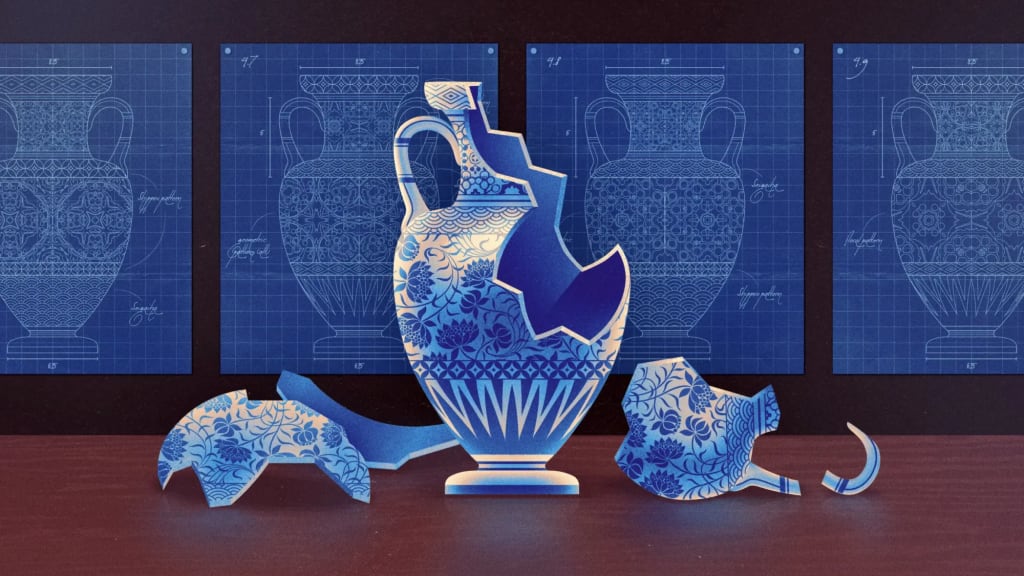
Revlox original editorial science illustration.
Time has several meanings in physics: clocks measure intervals, relativity connects time to spacetime, and thermodynamics explains irreversible changes. These ideas overlap but cannot simply be substituted for one another.
Entropy is statistical
Entropy can be understood through the number of microscopic arrangements compatible with a visible state. A mixed gas can be arranged in many more ways than gas confined to one corner. For an isolated system, higher-entropy arrangements are overwhelmingly more probable.
Revlox original editorial science illustration.
Tiny statistical fluctuations do occur. Yet the odds of a broken egg spontaneously reassembling are unimaginably small. The second law does not say local order cannot increase: refrigerators, plants, and living organisms create local order while transferring entropy to their surroundings.
The unanswered cosmic question
Why the early universe had the low-entropy condition needed for a pronounced arrow remains a deep question. Gravity complicates simple pictures of disorder because a smooth early distribution of matter can be gravitationally special.
Einsteinian time dilation is real and measured, but it does not establish a method for traveling to your own past. The mystery of time remains fascinating precisely because successful theories leave foundational questions open.
A useful thought experiment
Imagine a box divided in half, with gas molecules initially confined to the left side. Remove the divider and the molecules spread out. Nothing in ordinary microscopic equations forbids all the molecules from returning left at a particular instant, but an enormous number of mixed arrangements makes that reversal fantastically improbable.
The story illuminates why everyday reversibility differs from theoretical reversibility. It also helps explain why apparent order can grow locally while total entropy still increases. A forming snowflake or a living cell is not evidence that thermodynamics failed: energy and heat are exchanged with their surroundings.
The distinction also matters when discussing information. Erasing a file or remembering an event requires physical operations that generate heat or other traces. Thermodynamics connects the abstract idea of information with material processes, but it does not resolve every philosophical dispute about human experience of time or whether the universe has a single universal present.
Key Takeaways
- The equations for tiny particles can often run backward, but everyday change strongly favors one direction.
- Promising evidence must be separated from proven clinical or real-world outcomes.
- Independent validation, context, and responsible decisions matter more than sensational claims.
Frequently Asked Questions
Can entropy decrease locally?
Yes, if the surrounding system compensates, consistent with the total second law.
Does relativity permit backward time travel?
Time dilation is established; practical travel into one’s own past is not.
Why does a movie run backward look wrong?
Ordinary irreversible events have vastly more probable forward than reverse macroscopic evolutions.