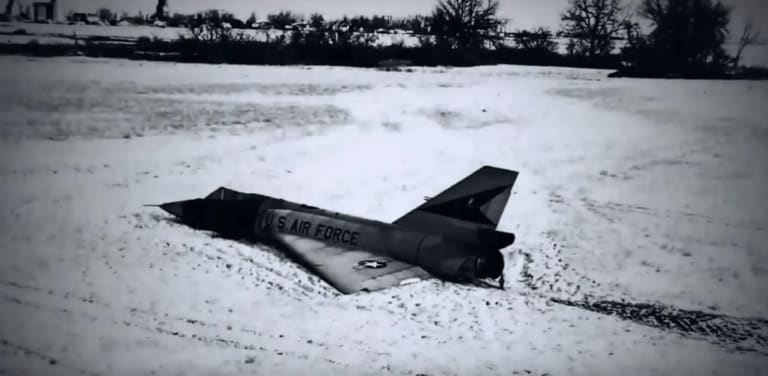
What If Every Human Suddenly Disappeared? Earth's Incredible Future From the First 24 Hours to a Million Years
Imagine waking up tomorrow morning to an impossible reality.
Every human being on Earth has vanished.
All 8 billion-plus people are gone.
No warning. No disease. No nuclear war. No bodies left behind.
Just silence.
Coffee cups remain on kitchen tables. Smartphones continue ringing beside empty beds. Television programs play to empty living rooms. Cars move along highways with nobody behind their steering wheels.
Thousands of aircraft are still traveling through the skies.
Factories continue operating. Power stations generate electricity. Satellites circle Earth, completely unaware that the civilization responsible for launching them has disappeared.
For a brief moment, almost everything appears normal.
But modern civilization is an extraordinarily complicated machine, and that machine depends on constant human attention.
Without engineers, maintenance crews, emergency workers, farmers, doctors, and countless other people keeping its systems running, the world begins changing almost immediately.
What would happen if humans suddenly disappeared?
Within hours, transportation networks would fail. Over the following days, electrical grids would collapse, cities would begin flooding, and millions of domesticated animals would face an uncertain future.
Over decades, abandoned buildings would deteriorate as vegetation spread through streets and neighborhoods.
After centuries, many familiar cities would be profoundly transformed.
And after thousands or even millions of years, the most recognizable evidence of human civilization might no longer be found in our cities at all.
Some traces would remain buried beneath the ground.
Others would survive on the Moon.
And two extraordinary spacecraft carrying recordings of human voices would continue traveling through interstellar space.
This is the scientific story of an Earth without humanity—and what it reveals about the world we have built.
What Happens After Humans Disappear? A Timeline
Before exploring the details, it is important to distinguish between scientific evidence and speculative scenarios.
Humanity has never suddenly disappeared, so scientists cannot establish an exact timetable for every consequence.
However, engineering principles, ecological research, observations of abandoned environments, and studies of Earth's natural processes allow us to make informed projections.
| Time After Disappearance | What Could Happen |
|---|---|
| First seconds | Driverless vehicles crash; aircraft and industrial systems continue temporarily |
| First hours | Major disruptions begin across electrical grids, transport, and communications |
| First 24 hours | Many power networks fail; backup systems begin operating |
| First days | Water pumping, sanitation, refrigeration, and food distribution deteriorate |
| First weeks | Some nuclear sites face increasing cooling challenges; domestic animals struggle |
| First year | Vegetation spreads through neglected landscapes; weather damages structures |
| 10 years | Many buildings suffer serious water damage; wildlife recolonizes some urban areas |
| 50–100 years | Numerous poorly maintained structures become unsafe or collapse |
| Several centuries | Many modern buildings deteriorate; forests and other ecosystems reshape cities |
| 1,000 years | Stone monuments, foundations, and buried infrastructure remain recognizable |
| Thousands of years | Many surface features erode, while geological and archaeological evidence persists |
| 1 million years | Human-made materials and chemical signatures may survive in geological deposits |
| Far future | Spacecraft and other objects beyond Earth may preserve traces of humanity |
These are broad possibilities, not universal deadlines. Local climate, construction materials, geology, and existing infrastructure would determine how rapidly individual places change.
The First 10 Seconds: The World's Transportation Systems Lose Their Drivers
The first moments would be among the most chaotic.
Cars, trucks, buses, motorcycles, and trains would suddenly lose their human operators.
Vehicles traveling at highway speeds would continue moving until friction, obstacles, or automated systems brought them to a stop.
Some would collide with other vehicles.
Others would leave the road.
Modern driver-assistance systems might prevent certain collisions or stop some vehicles safely, but they would not guarantee that every vehicle remained under control.
At airports, aircraft would continue moving along runways. Some would stop automatically; others would face dangerous situations without pilots or ground crews.
What Happens to Airplanes Already Flying?
Thousands of aircraft would still be airborne when humanity vanished.
Many commercial aircraft use autopilot systems capable of maintaining altitude, heading, and selected flight paths.
However, autopilot does not mean an airplane can independently complete every flight, navigate every emergency, and land safely under all circumstances.
Without pilots and air traffic controllers, aircraft would eventually encounter problems involving fuel, programmed flight paths, weather, and landing procedures.
Some might remain airborne for hours.
Others would be much closer to running out of fuel.
Eventually, aircraft unable to land autonomously would descend or crash.
The precise timing would vary enormously.
There would be no single moment when every airplane suddenly fell from the sky.
The First 24 Hours: The Global Electrical Grid Begins to Collapse
Electricity is one of the most important foundations of modern civilization.
Almost everything depends on it.
Communication networks, water pumps, hospitals, factories, food refrigeration, internet infrastructure, railways, and financial systems all require reliable power.
But electricity generation must constantly be balanced with demand.
Grid operators and automated control systems manage this balance.
Without human intervention, the system would become increasingly unstable.
Why Power Stations Cannot Run Forever Without People
Different power plants face different challenges.
Coal-fired stations require continuous fuel handling and equipment supervision.
Gas-powered plants depend on fuel delivery and operating controls.
Nuclear reactors have automatic protective systems but still require cooling and monitoring.
Solar installations generate electricity only when sunlight is available.
Wind turbines depend on suitable winds and functioning equipment.
Hydroelectric plants may continue operating under some conditions, but their output must still be controlled and integrated with electrical networks.
As major generating stations disconnect, disturbances could spread through connected systems.
Automatic protection mechanisms would isolate equipment to prevent further damage.
Large portions of the world could lose electricity within hours or days.
Some independent systems might continue operating longer.
The collapse would be uneven rather than simultaneous.
The Internet Begins Disappearing
The internet would not vanish instantly.
Data centers have backup batteries, generators, and automated systems.
Network equipment might continue operating temporarily.
But these facilities depend on electricity, cooling, fuel, communications links, and maintenance.
As infrastructure fails, more servers and networks would become inaccessible.
The digital information stored on them might remain physically present, but the ability to retrieve it would disappear.
Eventually, the enormous interconnected information network that humans spent decades building would become mostly silent.
The First Two Days: Underground Cities Begin to Flood
One of the most dramatic changes would happen beneath major cities.
Underground transportation systems require constant maintenance and water removal.
New York City's subway is a particularly revealing example.
The Metropolitan Transportation Authority routinely pumps approximately 13 million gallons of water per day from the subway system under typical conditions.
Much of this water enters through groundwater seepage and other sources.
The pumping never truly stops.
What Happens When Subway Pumps Lose Power?
Without electricity or maintenance, many pumps would eventually stop.
Water would accumulate in low-lying tunnels and stations.
Some sections could flood relatively quickly, particularly during heavy rainfall.
Other sections might remain comparatively dry for longer.
The popular claim that the entire New York subway would become submerged within exactly 36 hours is not an established engineering prediction.
Flooding would depend on local elevation, groundwater, precipitation, drainage, pump condition, and whether backup systems continued operating.
Nevertheless, the overall conclusion is reasonable.
Without continuous water management, parts of the subway system would gradually flood.
Similar problems could affect underground infrastructure in London, Tokyo, Paris, and other cities.
Drinking Water and Sewage Systems Would Also Fail
Electricity is essential for many municipal water services.
Pumps maintain pressure, treatment plants remove contaminants, and automated systems help regulate distribution.
Without human operators, water quality and availability would eventually deteriorate.
Wastewater treatment would also cease functioning properly.
Some gravity-fed systems might continue moving water for a time, but the broader infrastructure would increasingly fail.
The hidden systems that make modern cities livable would begin breaking down long before most buildings disappeared.
The First Week: What Happens to Nuclear Power Plants?
Perhaps the most frightening question concerns nuclear facilities.
Would hundreds of nuclear reactors explode if humanity disappeared?
No. Nuclear power plants are not designed to explode like nuclear weapons, and most operating reactors have automatic shutdown systems.
However, shutting down a reactor does not instantly eliminate all the heat generated by radioactive materials.
Even after a chain reaction stops, nuclear fuel continues producing decay heat.
This heat must be managed.
Automatic Shutdown and Emergency Cooling
When a nuclear plant detects serious operating problems, protective systems can automatically shut down the reactor.
Emergency cooling and backup power systems are designed to maintain safety during disruptions.
Diesel generators, batteries, and other backup equipment may provide power when the external electrical grid fails.
But these systems are not guaranteed to function indefinitely without human attention.
Some generators would eventually run out of fuel.
Other systems could fail mechanically.
At facilities where adequate cooling could not be maintained, serious accidents might occur.
What About Spent Nuclear Fuel Pools?
Used nuclear fuel is often stored in deep pools of water.
The water provides cooling and radiation shielding.
If active cooling stops, the water temperature may rise.
Under certain circumstances, prolonged loss of cooling and water inventory could create serious hazards.
But the outcome depends on the age and heat output of the fuel, pool design, water volume, emergency systems, and other site-specific factors.
The idea that every nuclear facility would experience a spent-fuel fire after exactly seven days is incorrect.
Some facilities could face serious problems.
Others might maintain safe conditions much longer.
Older fuel stored in dry casks relies on passive cooling and would behave differently from recently discharged fuel in a storage pool.
The risk is real, but a worldwide nuclear catastrophe occurring on one fixed timetable is not scientifically established.
The First Weeks: Millions of Domestic Animals Face an Uncertain Future
While human infrastructure collapses, animals would confront a world radically different from the one they know.
Domestic animals depend on humans to varying degrees.
Some retain strong survival instincts.
Others have been bred or raised under conditions that make independent survival difficult.
What Happens to Dogs?
Dogs would experience very different outcomes depending on their circumstances.
Animals confined inside locked homes without access to water or food would face immediate danger.
Dogs able to escape might begin scavenging or hunting.
Some could form social groups.
Others would remain solitary.
Over generations, natural selection could favor dogs better adapted to living independently.
But it would be inaccurate to assume that all large dogs would become wolves again.
Dogs and wolves share ancestry, but domesticated dogs would not simply reverse thousands of years of evolution.
Would Cats Survive Better?
Many domestic cats retain hunting abilities.
Cats capable of accessing outdoor environments might survive by capturing small animals.
However, not every cat would thrive.
Survival would depend on experience, local climate, health, available prey, and access to shelter.
Indoor cats trapped inside buildings could face serious difficulties.
What Happens to Farm Animals?
Large-scale agriculture depends on feeding systems, veterinary care, climate control, water supply, and human management.
Animals confined inside industrial farming facilities would be particularly vulnerable.
Some cattle, goats, pigs, and other livestock could survive if they escaped into suitable environments.
But many specialized domestic breeds would struggle without human care.
The sudden disappearance of humanity would therefore be disastrous for countless animals that depend directly on us.
One Month Later: Fires Burn and Nature Begins Moving Into Cities
Without firefighters or emergency services, accidental fires would become far more difficult to control.
Electrical faults, lightning, industrial accidents, and unattended equipment could ignite buildings or vegetation.
Some fires would extinguish naturally after consuming available fuel.
Others could spread across neighborhoods or industrial sites, depending on weather and construction materials.
Over time, the disappearance of active maintenance would become even more important than individual fires.
Roads Begin Breaking Apart
Roads are continuously damaged by water, temperature changes, heavy loads, and weather.
Maintenance crews normally repair cracks before they become more serious.
Without that intervention, moisture would gradually penetrate damaged surfaces.
In colder regions, water freezing inside cracks would expand and contribute to further deterioration.
In warmer climates, intense rainfall, heat, and vegetation could cause different forms of damage.
Grass and other plants would colonize suitable gaps.
Seeds carried by wind, birds, and other animals would settle in abandoned spaces.
The earliest changes might appear modest.
But the process would continue year after year.
One Year After Humanity: The First Signs of a Different Planet
After one year, Earth would still contain recognizable cities, highways, airports, and neighborhoods.
Human civilization would not have physically disappeared.
But its infrastructure would be deeply damaged.
Many buildings would have lost power, heating, cooling, and water services.
Some would have experienced flooding or fire.
Roads would contain cracks and vegetation.
Abandoned gardens and lawns would begin changing as local plants competed for space.
Nature Would Not Reclaim Every Place Equally
A tropical city might experience rapid vegetation growth.
A desert settlement could remain comparatively bare.
A northern city would undergo seasonal cycles of freezing and thawing.
Coastal buildings would face saltwater corrosion and storms.
The pace of change would vary enormously.
Nor would every landscape immediately become a healthy forest.
Some places would remain contaminated by industrial materials.
Others would be dominated by invasive species or agricultural plants that persist without human intervention.
Ecological recovery is complicated.
The absence of people would eliminate many human pressures, but it would not erase the consequences of those pressures overnight.
Ten Years Later: Buildings Become Vulnerable to Water and Decay
After a decade without maintenance, many buildings would show substantial deterioration.
One of their greatest enemies would be water.
A damaged roof allows rain to enter.
Moisture encourages wood decay, corrosion, and mold growth.
Freeze-thaw cycles can damage masonry and concrete.
Plants may grow in cracks and gradually enlarge them.
Buildings designed to remain dry could become particularly vulnerable once windows and roofs fail.
Would Every House Collapse After 50 Years?
No.
The lifespan of an abandoned building depends on its construction, environment, and initial condition.
Some lightweight structures could fail within decades.
Other houses might remain recognizable for a century or longer.
Stone and concrete buildings in dry climates could survive substantially longer than poorly maintained wooden structures in humid regions.
There is no universal 50-year deadline.
But without human care, deterioration would become increasingly widespread.
Many abandoned neighborhoods would eventually be transformed into mixtures of vegetation, rubble, and surviving foundations.
What Would Happen to Wildlife After Humans Disappeared?
The disappearance of humans would eliminate many major pressures on wildlife.
Commercial hunting and fishing would stop.
New roads would no longer be built.
Habitat destruction from agriculture and urban expansion would largely cease.
Noise and artificial lighting would decline dramatically.
Many species could expand into areas that were previously unsuitable because of human activity.
But the results would differ between ecosystems.
What Chernobyl Can Teach Us
The Chernobyl nuclear disaster of 1986 created a large exclusion zone in which human activity was greatly reduced.
Over subsequent decades, researchers documented substantial wildlife populations, including wolves, deer, and other large mammals.
The region became an important natural experiment in understanding wildlife responses to reduced human disturbance.
However, the lesson is not that radiation is harmless.
Scientific studies have identified radiation-related biological effects, and researchers continue debating the extent of long-term consequences for different species.
The more careful conclusion is that reduced human activity can benefit some wildlife populations even in environmentally contaminated areas.
Would the Oceans Recover?
The end of industrial fishing would remove major pressure from many marine populations.
Some fish stocks could recover over years or decades.
Research has shown that protection from fishing can allow substantial recovery of reef fish biomass, although the time required varies.
Marine ecosystems would still face other challenges.
Climate change, ocean acidification, pollution, and habitat damage would not disappear immediately.
Recovery would therefore be uneven.
But an ocean without continued industrial exploitation could eventually become very different from the one we know.
Fifty to One Hundred Years: Bridges and Skyscrapers Begin to Fail
Modern cities contain structures that appear permanent.
Steel bridges, concrete towers, enormous dams, and underground tunnels can survive for decades when properly maintained.
But none is immune to deterioration.
Steel corrodes when exposed to moisture and oxygen.
Reinforced concrete can crack and deteriorate.
Structural joints, drainage systems, and protective coatings need inspection and repair.
Without maintenance, failures would gradually become more likely.
Could Famous Bridges Collapse?
Large bridges depend on complex structural systems.
Corrosion can weaken cables, connections, and supporting components.
Extreme weather and earthquakes would continue occurring.
Some bridges might suffer serious failures within a century.
Others could remain standing substantially longer.
The Golden Gate Bridge and Brooklyn Bridge would not necessarily collapse on the same schedule.
Their futures would depend on local environmental conditions and the progression of structural damage.
What About Skyscrapers?
Modern skyscrapers are designed to withstand extraordinary loads.
But their long-term survival depends partly on protection from water, corrosion, and environmental exposure.
As facades deteriorate and moisture penetrates interiors, structural components could become increasingly vulnerable.
Some tall buildings might remain recognizable for centuries.
Others would deteriorate more rapidly.
Eventually, many urban skylines would become collections of damaged towers, collapsed structures, and vegetation.
Several Centuries Later: Earth's Great Cities Are Transformed
Imagine visiting New York, London, Dubai, or Tokyo after several hundred years without humans.
Some familiar landmarks might still exist.
But the cities would no longer resemble their present forms.
Streets would be obstructed by debris and vegetation.
Many buildings would have collapsed or become partially buried.
Drainage systems would no longer protect low-lying areas.
Rivers and coastlines could gradually reshape abandoned neighborhoods.
What Happens to Coastal Cities?
Cities such as Amsterdam and New Orleans depend on engineered water management systems.
Without maintenance, pumps, levees, barriers, and other infrastructure would eventually deteriorate.
Some areas could experience substantial flooding.
However, the exact outcome would depend on local topography, sea level, sediment movement, and the condition of remaining defenses.
It would be too simplistic to say that every coastal city would become completely submerged.
The broader point is that many inhabited low-lying landscapes exist in their present form partly because humans continuously manage water.
Without that management, their geography would change.
One Thousand Years Later: What Would Remain of Civilization?
After a thousand years, many ordinary homes and commercial buildings would be severely deteriorated or gone.
Yet civilization would still leave substantial physical evidence.
Stone foundations, buried tunnels, roads, archaeological deposits, and large monuments could survive.
The most durable structures would often be those constructed from massive stone or other materials resistant to weathering.
The Great Pyramids of Giza
The Egyptian pyramids have already survived approximately 4,500 years.
Their enormous stone construction gives them extraordinary durability.
Without human intervention, erosion and other environmental processes would continue wearing them down.
But substantial portions could survive for many additional millennia.
The Great Wall of China
Different sections of the Great Wall were constructed using different materials.
Some are made from stone and brick.
Others include rammed earth and other construction methods.
Their preservation would vary substantially.
Some sections would deteriorate rapidly.
Others might remain visible for centuries or longer.
Mount Rushmore
The four presidential faces carved into granite at Mount Rushmore could remain recognizable for an exceptionally long time.
The U.S. National Park Service estimates that granite at the site erodes at approximately one inch every 10,000 years under relevant conditions.
This suggests that major features could persist for extraordinarily long periods.
However, local cracking, weathering, and rockfalls would complicate any attempt to predict the monument's exact lifespan.
What Happens to Satellites and the International Space Station?
Human-made spacecraft would follow very different timelines from structures on Earth.
Satellites in low Earth orbit encounter a thin atmosphere that creates drag.
Without periodic corrections, many gradually lose altitude.
Eventually, they reenter the atmosphere.
But not all satellites orbit at the same height.
Higher-altitude spacecraft can remain in orbit for centuries or much longer.
The International Space Station
The International Space Station requires periodic orbital boosts.
NASA estimates that, depending on solar activity and orbital conditions, the station could naturally reenter Earth's atmosphere within approximately one to two years without reboosts.
Its fate would therefore differ from that of a satellite operating in a much higher orbit.
Some space debris would remain circling Earth long after most human activity on the surface had vanished.
Other spacecraft would continue traveling through the Solar System.
And two of them would carry an extraordinary message from humanity.
Ten Thousand Years and Beyond: Earth's Geological Memory
As centuries become millennia, ordinary surface structures would continue disappearing.
But our civilization has created materials and chemical signatures that could survive for extremely long periods.
These include concrete fragments, manufactured metals, plastics, altered sediments, and radioactive isotopes.
Some would be incorporated into geological deposits.
The Anthropocene and Human-Made Fossils
Scientists have proposed the term Anthropocene to describe the profound influence of human activities on Earth.
Although its formal geological status has been debated, the concept reflects genuine environmental changes caused by civilization.
Researchers use the term technofossils for human-made objects and materials that may persist in the geological record.
Plastics are particularly interesting.
They break down through environmental processes, but fragments can become incorporated into sediments.
Their long-term preservation depends on burial conditions and chemical changes.
It is not possible to guarantee that every plastic object will survive for a million years.
Nevertheless, some artificial materials and their traces could remain identifiable long after recognizable cities have disappeared.
What About the Carbon Dioxide We Released?
Human-generated carbon dioxide would not vanish immediately when emissions stopped.
Natural processes would gradually redistribute and remove excess atmospheric carbon.
Some changes would occur over centuries.
Others could persist for thousands or even tens of thousands of years.
The precise timescale depends on the quantity of carbon released and the processes involved.
Therefore, the idea that Earth's atmosphere would return completely to its pre-industrial condition after exactly 100,000 years is not a universal scientific conclusion.
Humanity's climate influence could remain detectable far into the future.
The Moon: Humanity's Footprints Beyond Earth
Now imagine looking beyond Earth.
On the Moon, the Apollo landing sites would remain.
There would be no rain washing the equipment away.
No flowing rivers.
No plants growing through the lunar surface.
And no ordinary wind-driven erosion like that experienced on Earth.
The Moon does experience micrometeorite impacts and other surface-altering processes.
But those processes are generally much slower than many forms of terrestrial weathering.
How Long Could Apollo Footprints Survive?
For many years, popular descriptions suggested that Apollo footprints might remain for millions of years.
However, NASA research using observations from the Lunar Reconnaissance Orbiter indicated that lunar surface disturbance occurs faster than some earlier models predicted.
The revised findings suggest that astronaut tracks could disappear over tens of thousands of years rather than millions.
That is still an extraordinary amount of time.
Other objects left on the Moon, including equipment and spacecraft components, may survive for different periods depending on their materials and exposure.
Even after Earth's cities have changed beyond recognition, evidence of human exploration could remain visible on another world.
Voyager 1 and Voyager 2: Humanity's Message to the Stars
In 1977, NASA launched two spacecraft that would become among the most extraordinary achievements in human exploration.
Voyager 1 and Voyager 2 traveled past the giant planets and continued outward.
Both eventually crossed the heliopause, the boundary where the Sun's solar-wind influence gives way to the interstellar environment.
They are now traveling through interstellar space.
Strictly speaking, they have not yet left the entire Solar System if its boundary is defined by the distant Oort Cloud.
That journey will require vastly more time.
But their importance extends beyond their scientific instruments.
Each spacecraft carries a remarkable object.
The Voyager Golden Record.
What Is on the Golden Record?
The records were developed as symbolic messages from humanity to any intelligence that might encounter them.
Each gold-plated copper disc contains:
- Greetings in 55 languages.
- Images depicting life and civilization on Earth.
- Natural sounds from the planet.
- Musical selections from different human cultures.
- Scientific information intended to explain humanity's origin.
The project was assembled by a team chaired by astronomer Carl Sagan.
The records were designed as time capsules representing Earth and its inhabitants.
Could the Golden Records Last a Billion Years?
The protective construction and environment of interstellar space create the possibility of extraordinary longevity.
NASA has described the records as potentially surviving for more than a billion years.
That is an estimate rather than a guarantee.
Micrometeorite impacts and other long-term hazards remain possible.
But compared with buildings on Earth, the Voyager spacecraft face an environment with far fewer destructive processes.
Long after their instruments fall silent, they may continue carrying evidence that humanity once existed.
Our civilizations could be gone.
Our monuments could be eroded.
Our languages could have no living speakers.
Yet somewhere between the stars, a small metal disc might still preserve recordings of human voices.
What Would Be the Last Evidence That Humans Ever Existed?
There may be no single definitive answer.
Different kinds of evidence survive under different conditions.
The last recognizable building might not be the last manufactured object.
The last object on Earth's surface might not be the last archaeological trace.
Buried materials and unusual chemical signatures could persist in geological deposits long after surface structures disappear.
The Moon could preserve evidence of human exploration for extraordinary periods.
And spacecraft moving through interstellar space might survive far beyond that.
The most durable traces of civilization may therefore be divided among three places:
Earth's geological record, where fragments and chemical signatures could remain buried.
The Moon and other worlds, where some artifacts would face relatively slow erosion.
Interstellar space, where the Voyager spacecraft may continue traveling for immense spans of time.
There is something remarkable about that possibility.
One of humanity's longest-lasting messages may not be a monument celebrating a powerful ruler or an enormous city.
It may be a collection of greetings, music, pictures, and ordinary sounds representing life on Earth.
Frequently Asked Questions About Earth Without Humans
What would happen if all humans disappeared instantly?
Transportation accidents and failures of essential infrastructure would begin quickly. Electrical grids, communications systems, water services, and industrial facilities would deteriorate over hours, days, and weeks. The exact sequence would vary by location and system.
How long would electricity last without humans?
Many electrical grids could experience major failures within hours or days because power generation and demand require continuous balancing. Some automated or isolated systems could continue operating longer.
Would nuclear power plants explode if humans disappeared?
No, nuclear reactors do not explode like nuclear weapons. Automatic shutdown systems would operate at many facilities, but long-term cooling could become difficult without maintenance and fuel supplies. Some sites might experience serious accidents, while others would remain safe for much longer.
How quickly would nature reclaim cities?
Vegetation could begin colonizing neglected urban spaces within months or years. However, large-scale transformation would take decades to centuries, depending on climate, construction, and local ecology.
Would dogs and cats survive without humans?
Some would survive, especially animals capable of accessing food, water, and shelter independently. Others, particularly pets confined indoors or breeds heavily dependent on human care, would face serious difficulties.
Would the New York subway flood without humans?
Without operating pumps, water would gradually accumulate in vulnerable sections of the subway. The MTA routinely removes millions of gallons daily, but there is no single scientifically established deadline for the entire system to flood.
How long would skyscrapers last without maintenance?
Some structures could deteriorate severely within decades, while others might survive for centuries. Lifespan depends on materials, weather, structural design, corrosion, and local environmental conditions.
Would Earth recover from human-caused climate change?
Some environmental pressures would stop immediately, but excess atmospheric carbon dioxide and accumulated ocean heat would persist. Certain climate changes could continue influencing Earth for thousands of years or longer.
What would be the last human-made object on Earth?
It cannot be predicted precisely. Durable stone structures, buried materials, and geological traces of human activity may survive for exceptionally long periods. Objects outside Earth could last even longer.
Would the Voyager spacecraft outlive human civilization?
Potentially. Voyager 1 and Voyager 2 carry Golden Records designed for extraordinary longevity. Their records could survive for more than a billion years under favorable conditions, although their exact lifespans are uncertain.
Conclusion: Earth Would Continue Without Us, But Our Legacy Might Last Billions of Years
The idea of every human suddenly disappearing is both frightening and strangely fascinating.
Modern civilization appears permanent because its systems surround us every day.
Electricity flows through our homes.
Water arrives through pipes.
Aircraft travel between continents.
Bridges carry millions of vehicles.
Satellites connect people across the planet.
We rarely think about how much continuous work keeps these systems functioning.
But without human intervention, the transformation would begin almost immediately.
Electrical grids would fail.
Cities would gradually lose essential services.
Buildings would deteriorate.
Some animals would struggle, while others would eventually expand into environments they had previously avoided.
Over centuries, forests, rivers, deserts, and coastlines would reshape the landscapes we had altered.
Yet humanity would not disappear from Earth's history as easily as our buildings might.
Our civilization has left chemical signatures, synthetic materials, altered ecosystems, and physical objects that could persist for immense periods.
And beyond our planet, the Voyager spacecraft may continue carrying our story long after the last familiar monument has eroded.
The remarkable truth is that Earth does not require human civilization to continue existing. But much of human civilization requires constant care to keep existing on Earth.
Every repaired bridge, maintained water pipe, functioning power station, and protected building reflects the efforts of people whose work often goes unnoticed.
Our cities are not permanent simply because they are enormous.
They endure because generations of people build, repair, maintain, and improve them.
Perhaps that is the most meaningful lesson of imagining a world without humanity.
The civilization surrounding us is not a finished achievement.
It is an ongoing responsibility.
And somewhere far beyond the planets, two small spacecraft carry a message from a species that learned to imagine its own place in the universe.
A message of voices, music, pictures, and curiosity.
If humanity vanished tomorrow, what one thing would you want to survive for a million years: a monument, a scientific discovery, a piece of music, or a message to whoever might find it?
Sources and Further Reading
- NASA — Voyager Mission Frequently Asked Questions — Voyager's journey into interstellar space and the boundaries of the Solar System.
- NASA — Voyager Golden Record Overview — History, contents, and purpose of humanity's interstellar message.
- NASA — Earth's Moon Hit by Surprising Number of Meteoroids — Research on lunar surface erosion and the longevity of Apollo footprints.
- NASA — International Space Station Transition Plan — Orbital decay, reentry, and the need for periodic reboosts.
- U.S. Nuclear Regulatory Commission — Spent Fuel Storage in Pools and Dry Casks — Scientific and engineering background on nuclear fuel cooling and storage.
- Metropolitan Transportation Authority — Greening Mass Transit — Infrastructure operations and water pumping in New York's transit system.
- Current Biology — Long-Term Census Data Reveal Abundant Wildlife Populations at Chernobyl — Research on wildlife populations following reduced human occupation.
- Nature — Recovery Potential of the World's Coral Reef Fishes — Scientific analysis of marine population recovery following reduced fishing pressure.
- U.S. National Park Service — Mount Rushmore Geological Activity — Granite geology, weathering, and erosion estimates.
- Copernicus Biogeosciences — Assessing the Lifetime of Anthropogenic CO₂ — Long-term persistence of human-generated carbon dioxide.
- Geological Society Research — The Geological Cycle of Plastics — Plastics as potential long-term markers in geological deposits.
- CDC — About Head Lice — Example of an organism critically dependent on human hosts.
Editorial note: This article presents a hypothetical scenario informed by established scientific and engineering principles. Exact timelines for infrastructure collapse, ecological recovery, and material deterioration cannot be determined with certainty. Predictions are identified as possibilities rather than documented future events.