UK Labour vs Tories: The Troubles Bill Showdown
Few issues in British and Northern Irish politics carry as much pain, history, and moral complexity as the legacy of the Troubles.
For more than three decades, Northern Ireland lived through conflict involving republican paramilitaries, loyalist paramilitaries, British security forces, police, intelligence agencies, communities, families, and political movements locked inside a cycle of violence, fear, grief, and retaliation. The 1998 Good Friday Agreement helped end the worst of the conflict, but it did not end the questions left behind.
Who killed whom?
Who ordered it?
Who covered it up?
Who should be prosecuted?
Who should be protected from prosecution?
What do victims’ families deserve more: truth, justice, finality, or all three?
And how can a society move forward when thousands of families still live with unanswered questions?
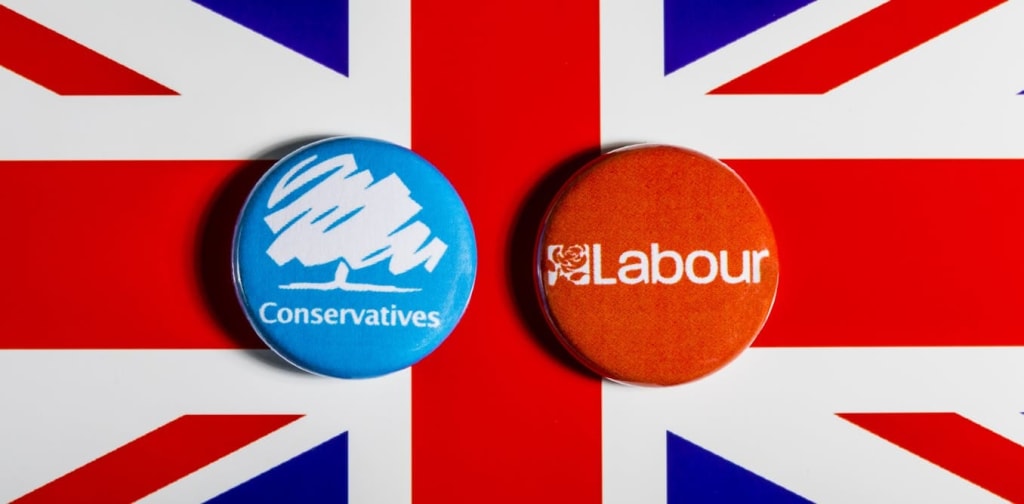
That is the bitter ground beneath the latest political battle between Labour and the Conservatives over the UK Government’s Northern Ireland Troubles Bill. On the surface, this is a legal and parliamentary dispute over legacy legislation. In reality, it is a much deeper showdown over history, memory, state responsibility, veterans, victims, human rights, and the unfinished emotional business of the Troubles.
Labour’s Bill aims to repeal and replace major parts of the controversial Northern Ireland Troubles (Legacy and Reconciliation) Act 2023, introduced by the previous Conservative government. That Act created a new legacy body and offered conditional immunity from prosecution for some Troubles-related offences if people cooperated with information recovery. It was fiercely opposed by victims’ groups, Northern Ireland parties, the Irish Government, and human rights campaigners, who argued it denied justice and protected perpetrators. The Labour Government now says the old Act was wrong, caused pain to victims and survivors, and was found unlawful in key respects by courts. Its replacement Bill would create a reformed Legacy Commission, remove the controversial immunity scheme, and reopen pathways for investigations and civil claims.
The Conservatives, however, have accused Labour of putting veterans who served in Northern Ireland back at risk of repeated investigations and legal uncertainty. In late April 2026, Tory MPs moved to oppose carrying the Troubles Bill into the next parliamentary session, making the dispute a visible Westminster confrontation.
That is why the Troubles Bill has become more than a technical reform.
It is now a political test of how Britain deals with its hardest past.
What Is the Troubles Bill?
The Northern Ireland Troubles Bill is Labour’s attempt to replace the Conservative-era Legacy Act with a new legal framework for dealing with unresolved Troubles-era deaths and serious cases.
The Government introduced the Bill on October 14, 2025, saying it would repeal and replace the Legacy Act 2023 and create a fairer, more transparent system for families seeking answers. The Bill would establish a reformed Legacy Commission, create new information-sharing arrangements with Irish authorities, and introduce safeguards for veterans who served in Northern Ireland.
According to the House of Commons Library, the Bill’s main purpose is to repeal and replace parts of the 2023 Legacy Act, reform and rename the existing Independent Commission for Reconciliation and Information Recovery as the Legacy Commission, and expand its investigative powers. It is also being introduced alongside a remedial order to remove parts of the old Act related to conditional immunity and the ban on new civil cases, after courts found those elements incompatible with human rights obligations.
In plain English, Labour wants to undo the most controversial parts of the Conservative legacy system.
The previous Act tried to close down many existing legal routes and replace them with a truth-recovery process. Labour says that approach failed because it did not have the confidence of victims’ families, Northern Ireland parties, or human rights bodies.
The new Bill is meant to do several things at once:
It removes conditional immunity.
It allows certain stopped inquests to resume.
It gives the legacy body stronger investigative powers.
It aims to comply with human rights law.
It tries to preserve protections for veterans against unfair repeated investigation.
It creates a framework for greater UK-Ireland cooperation.
That sounds orderly on paper.
Politically, it is explosive.
Why the Conservative Legacy Act Was So Controversial
The Conservative Government’s 2023 Legacy Act was created with one stated aim: to draw a line under Troubles-era cases and move Northern Ireland away from endless legal battles.
Supporters argued that many soldiers, police officers, and others were elderly, that evidence had become fragile, and that repeated investigations into events from decades ago were unfair and damaging. The Act created a new legacy body, the ICRIR, and offered conditional immunity to people who gave information about Troubles-related offences.
But victims’ groups and Northern Ireland political parties saw the immunity scheme as an amnesty by another name.
For many families, the idea that someone involved in a killing could avoid prosecution by cooperating with a truth-recovery body was unbearable. They argued that it denied families their day in court, weakened accountability, and placed the state’s desire for closure above victims’ rights.
The courts also became involved. The House of Commons Library notes that parts of the Act, especially the conditional immunity scheme and restrictions on civil cases, were found by the High Court in Northern Ireland and the Court of Appeal to be incompatible with the European Convention on Human Rights as incorporated into UK law.
That legal pressure became part of Labour’s argument for repeal. Labour’s position is that the old law was not only politically rejected, but legally flawed.
The Conservatives see the issue differently. They argue Labour’s repeal risks undoing protections for veterans and returning former soldiers to a system of open-ended legal jeopardy.
So the dispute is not only about one law.
It is about two competing definitions of fairness.
Labour’s Case: Victims Need Truth and Lawful Justice
Labour’s argument is built around legitimacy.
The Government says the Conservative Act failed because it did not command trust. Victims’ families did not trust it. Northern Ireland parties largely rejected it. Human rights concerns persisted. The Irish Government opposed it. Courts found major parts unlawful. From Labour’s perspective, a legacy system cannot work if the people most affected believe it is designed to deny them justice.
The UK Government’s announcement of the Bill said the new legislation would create a system that enables families of victims, including families of those who served in Northern Ireland, to seek answers. It also said the Bill follows consultation with victims and families, civil society, Northern Ireland political parties, and the Armed Forces community.
Northern Ireland Secretary Hilary Benn has framed the Bill as a necessary correction. In an April 2026 statement, the Government said the Troubles Bill had been welcomed by a significant number of victims, families, and representative groups because it would allow cases to move forward sensitively, efficiently, and lawfully. The statement also emphasized that, unlike the 2023 Act, the new Bill does not offer immunity for those who committed serious acts of terrorism.
This is Labour’s moral pitch: legacy cannot be resolved by closing doors on families.
The party wants to position itself as restoring human rights compliance, removing amnesty-like provisions, and creating a more credible investigative body.
But Labour also knows this is politically dangerous. It must avoid looking like it is abandoning veterans. That is why ministers repeatedly stress that the Bill includes safeguards for those who served in Northern Ireland.
The problem is that many veterans’ advocates and Conservative MPs do not believe those safeguards go far enough.
The Tory Case: Veterans Are Being Put Back in Legal Danger
The Conservative opposition to the Troubles Bill focuses heavily on veterans.
For many Tory MPs and veterans’ groups, the central fear is that former soldiers who served during Operation Banner could once again face years of investigations, legal costs, reputational damage, and possible prosecutions over events from decades ago.
This is not a small political concern. Northern Ireland veterans occupy a powerful emotional place in Conservative politics. Many on the right believe soldiers were sent by the state into an extremely difficult security environment and should not be pursued endlessly in old age, especially when many terrorists were released early under the peace process.
That is why the Conservatives voted against carrying over the Troubles Bill into the next parliamentary session in April 2026. Their move was a symbolic attempt to block or slow Labour’s replacement legislation and to show firm opposition to dismantling the Conservative legacy framework.
Veterans’ groups have also raised legal concerns. Reports in late 2025 said the Special Air Service Regimental Association threatened legal action over the Bill, arguing it was deficient and could breach veterans’ human rights. Critics warned the Bill could expose elderly veterans to renewed legal uncertainty.
This is the Conservative political message: Labour is reopening wounds and exposing those who served the country to unfair pursuit.
Labour rejects that charge, saying the Bill includes protections and that the previous immunity system was unlawful and unjust. But the veteran question remains the most emotionally charged part of the Westminster showdown.
The Carry-Over Fight: Why It Mattered
The April 2026 carry-over vote became a key moment because it showed the Troubles Bill had turned into a direct Labour-versus-Tory clash.
A carry-over motion allows a Bill from one parliamentary session to continue into the next instead of falling when Parliament is prorogued. Labour needed the motion to keep the legislation moving after the King’s Speech.
The Conservatives opposed that motion, saying they would vote against carrying over the Bill. Press Association reporting described it as a show of Tory opposition to the proposed law, which would repeal and replace the Legacy Act introduced by the previous Conservative government.
MPs ultimately backed carrying the Bill over, meaning the legislation continued its parliamentary journey. RTE reported that the Commons supported the Bill’s continuation despite Conservative opposition.
This mattered for three reasons.
First, it kept Labour’s repeal-and-replace plan alive.
Second, it showed the Conservatives intend to make legacy legislation a political dividing line.
Third, it signaled to Northern Ireland victims’ groups, veterans’ groups, and the Irish Government that Westminster remains deeply split over how to handle the past.
The carry-over vote was procedural.
The symbolism was much bigger.
The Supreme Court Ruling Complicated the Picture
The legal landscape became even more complex in May 2026 when the UK Government won a Supreme Court appeal related to the Legacy Act.
Reuters reported that the Supreme Court ruled in the Government’s favour in a case concerning whether disapplying the Legacy Act’s immunity provisions breached the post-Brexit Windsor Framework. The Court concluded that claimants’ rights under EU law remained intact and that the Act did not breach the framework in the way argued.
ITV reported that the ruling gave the Government a win on a key legal issue, although the broader controversy over the Legacy Act and Labour’s replacement Bill continued.
This created an awkward political moment.
For Conservatives and veterans’ advocates, the ruling was presented as a victory because it weakened one legal argument against the 2023 Act. The Telegraph described it as a victory for Tories over Northern Ireland veterans legislation.
For Labour, the ruling did not remove the need for reform. The Government had already committed to repeal and replace the Act, and the Supreme Court itself noted that if the Troubles Bill becomes law, the legislative landscape will change significantly, including replacing the ICRIR with a reformed Legacy Commission, repealing the immunity scheme, and allowing certain stopped inquests to resume.
So the Court ruling did not end the debate.
It added another layer to it.
Victims’ Families Remain at the Centre
Behind all the legal and political language are families who have waited decades for answers.
For them, the debate is not abstract. It is personal. It is about fathers, mothers, sons, daughters, siblings, neighbours, friends, and loved ones killed in bombings, shootings, assassinations, collusion cases, security-force operations, paramilitary attacks, and unresolved murders.
Many victims’ families opposed the Conservative Legacy Act because they believed it prioritized closure for the state over justice for families. Campaigners argued that the immunity scheme weakened the possibility of accountability and that shutting down inquests and civil cases denied families vital routes to truth.
The Government says many victims, families, and representative groups have welcomed the Troubles Bill because it removes the immunity scheme and creates a more lawful path for cases to be taken forward.
But not all victims’ campaigners are fully satisfied. Some still worry the replacement system will not go far enough, will centralize too much power in a commission, or will fail to deliver full accountability. Sinn Féin’s John Finucane, whose father Pat Finucane was murdered by loyalist paramilitaries in 1989, warned in April 2026 that the British Government was on a “dangerous path” over Legacy Bill changes.
That criticism matters because it shows Labour cannot assume victims’ groups will automatically accept its replacement. Repealing the Conservative Act is one thing. Building trust in the new system is another.
For many families, the only acceptable test is whether the new law helps uncover truth and accountability.
Not whether Westminster can claim it has solved the issue.
The Irish Government Factor
The Troubles legacy issue is not only a UK domestic matter. It is also deeply tied to the Irish Government and the Good Friday Agreement framework.
The Irish Government strongly opposed the Conservative Legacy Act and previously launched interstate legal action against the UK over it. Labour’s replacement Bill was developed alongside a joint legacy framework with the Irish Government, announced in September 2025 by Northern Ireland Secretary Hilary Benn and Tánaiste Simon Harris. The Government says the Bill will create new information-sharing arrangements with Irish authorities, described as a first that delivers on the spirit and promise of the Good Friday Agreement.
This UK-Ireland dimension is crucial.
Legacy cases often involve cross-border issues, intelligence questions, paramilitary movements, state archives, and families on both sides of the border. Without cooperation between London and Dublin, many investigations become more difficult.
After the Supreme Court ruling in May 2026, Irish Taoiseach Micheál Martin called for continued progress on Northern Ireland legacy law, showing that Dublin remains closely engaged even as legal arguments shift.
For Labour, Irish Government cooperation helps distinguish its approach from the Conservatives. It allows ministers to claim they are restoring partnership and trust.
For Conservatives, that may also be a political vulnerability. Some on the right may see the joint framework as London bending too much to Dublin or nationalist pressure.
That is why the Irish dimension gives the Bill both legitimacy and controversy.
The Human Rights Question
Human rights law sits at the heart of the dispute.
The Conservative Legacy Act’s conditional immunity scheme and restrictions on civil cases were challenged under the European Convention on Human Rights. Courts in Northern Ireland found elements incompatible with the Convention, especially in relation to victims’ rights to effective investigation and access to justice. The House of Commons Library says the remedial order accompanying Labour’s Bill responds to those findings by removing the immunity scheme and the civil-case prohibition.
Labour argues that any legacy system must comply with human rights obligations. Otherwise, it will face legal challenge, lack legitimacy, and fail families again.
Conservatives and veterans’ advocates focus on another side of rights: the rights of elderly veterans not to be subjected to repeated, unfair, or politically motivated legal processes decades after events.
So both sides use rights language.
Victims’ families demand the right to truth, investigation, and justice.
Veterans’ advocates demand the right to fairness, finality, and protection from repeated legal jeopardy.
The political challenge is that both concerns can be sincere.
A credible legacy system must avoid both impunity and persecution.
That is why the problem has remained unresolved for so long.
The Veterans Question Is Morally Difficult
It is easy to turn the veterans debate into slogans, but the issue is genuinely hard.
Thousands of British soldiers served in Northern Ireland during the Troubles. Many were young. Many were placed in dangerous, confusing, and highly pressured situations. Some were killed. Some were injured. Many lived with trauma. Some feel forgotten or scapegoated.
At the same time, there are unresolved cases involving state killings, alleged collusion, excessive force, cover-ups, and failures of accountability. Victims’ families argue that wearing a uniform cannot place someone above the law.
Both truths can exist.
The state has a duty to protect those it sent into conflict from unfair treatment.
The state also has a duty to investigate credible allegations of unlawful killing.
The difficulty is that legacy law must operate in a world where evidence may be old, witnesses may be dead, memories may be unreliable, and political narratives are deeply entrenched. But the age of a case does not erase the grief of a family or the duty to investigate serious wrongdoing.
That is why no legacy law will satisfy everyone.
The best it can do is be lawful, transparent, independent, and trusted enough to function.
Labour says its Bill moves closer to that standard.
The Conservatives say it moves away from fairness for veterans.
Why the Troubles Bill Is Politically Risky for Labour
Labour entered government promising to repeal and replace the Legacy Act. That commitment was welcomed by many in Northern Ireland. But delivering it is much harder than promising it.
The party must manage several audiences at once:
Victims’ families who want truth and justice.
Northern Ireland parties with different legacy priorities.
The Irish Government.
Human rights campaigners.
Veterans’ groups.
Unionist concerns.
Nationalist concerns.
Conservative attacks.
Military families.
The wider British electorate, many of whom have limited knowledge of the Troubles but strong feelings about veterans.
This is politically treacherous territory.
If Labour appears too focused on victims’ rights, Tories can accuse it of abandoning veterans. If it appears too protective of veterans, victims’ groups may accuse it of preserving impunity. If it changes the Bill too much to satisfy one side, it risks losing another.
The issue also touches wider questions about Labour’s identity. Is it the party of human rights and legal compliance? The party of national security? The party of Good Friday Agreement stewardship? The party of veterans’ protection? It must try to be all of them at once.
That is why the Troubles Bill is a serious test of Labour’s governing maturity.
Why the Conservatives Are Fighting Hard
For the Conservatives, opposing Labour’s Troubles Bill serves several political purposes.
First, it defends their own Legacy Act and the argument that the previous government tried to protect veterans from endless legal processes.
Second, it gives the party a clear attack line: Labour is reopening old cases and putting veterans at risk.
Third, it appeals to a core Conservative constituency that strongly supports the Armed Forces.
Fourth, it allows the Tories to present themselves as defenders of those who served the state during the Troubles.
Fifth, it puts Labour in a difficult emotional position, forcing ministers to explain why repealing immunity does not mean persecuting veterans.
That does not mean Tory concerns are purely political. Many Conservative MPs sincerely believe the legal pursuit of elderly veterans is unjust. But politically, the issue is also useful because it creates a sharp moral contrast.
For the Tories, the slogan is simple: protect veterans.
For Labour, the message is more complicated: protect veterans while restoring lawful routes for victims’ families.
In politics, simple messages often travel faster.
Northern Ireland Parties Are Watching Closely
Northern Ireland’s parties have long criticized the Conservative Legacy Act, although their views on legacy differ significantly.
Nationalist parties such as Sinn Féin and the SDLP have generally emphasized victims’ rights, state accountability, and opposition to immunity. Unionist parties have also criticized elements of legacy policy, but often place stronger emphasis on fairness for security-force veterans and concerns about imbalance.
The Government has said Labour’s replacement approach has been welcomed by all main Northern Ireland political parties in relation to removing immunity and restoring human rights compliance.
But that does not mean consensus is guaranteed.
Legacy politics in Northern Ireland is deeply sensitive because every party speaks to communities with different memories of the conflict. One family’s justice campaign may be another community’s accusation of one-sided history. One group’s demand for truth may be another group’s fear of political rewriting.
The new Bill will therefore be judged not only in Westminster, but in Belfast, Dublin, and by families across Northern Ireland.
If the Legacy Commission is seen as fair and independent, it may slowly build trust.
If it is seen as another London-designed mechanism imposed from above, it may fail before it begins.
What Happens to Inquests and Civil Cases?
One of the biggest practical changes under Labour’s approach concerns inquests and civil cases.
The Conservative Legacy Act stopped or restricted many existing legal routes, including certain inquests and civil claims. Labour’s replacement framework would allow some stopped inquests to resume and remove the ban on future legacy civil cases. The Supreme Court judgment summary noted that if the Troubles Bill becomes law, inquests stopped part-heard by the 2023 Act would be able to resume.
For victims’ families, this is extremely important.
Inquests have sometimes been the only formal process through which families could hear evidence, challenge official narratives, and establish facts about killings. Civil cases have also been used to pursue accountability or compensation where criminal prosecutions were unlikely.
For veterans’ groups, reopening these routes can feel like returning to a system of endless legal pursuit.
This is one of the core trade-offs.
Closing legal routes may provide finality for some, but it can deny families answers.
Keeping legal routes open may preserve rights, but it can prolong uncertainty for those under investigation.
The Bill tries to create a structured process through a reformed commission, but whether it balances those interests effectively remains the central question.
The Legacy Commission: Solution or Another Layer?
Labour’s Bill would reform and rename the existing ICRIR as a Legacy Commission with enhanced powers.
The idea is to create a body capable of investigating Troubles-related deaths and serious cases in a way that is more effective, lawful, and trusted than the Conservative model. The House of Commons Library says the Commission would have expanded powers to conduct investigations and inquisitorial proceedings based on public inquiries.
This could be important. A specialized legacy body may be better equipped than ordinary processes to handle old evidence, sensitive intelligence, cross-border cooperation, and families’ needs.
But there are risks.
Victims may fear the Commission is still a substitute for full criminal justice.
Veterans may fear it becomes a mechanism for renewed investigations.
Politicians may try to influence expectations.
Families may be disappointed if the Commission cannot deliver prosecutions.
The public may misunderstand its purpose.
For the Commission to work, it must be independent, properly resourced, transparent, and trusted across communities.
That is a high bar.
Northern Ireland has seen too many legacy promises fail.
The Gerry Adams Compensation Issue
Another politically sensitive strand involves compensation claims connected to unlawful internment.
Keir Starmer previously said the Government would seek ways to prevent Gerry Adams and others from receiving compensation as a result of changes to legacy legislation. This became controversial because repealing parts of the 2023 Act could affect legal routes for people who were interned during the Troubles.
This issue is politically toxic.
For many unionists and Conservatives, the idea of Gerry Adams receiving compensation from the British state is unacceptable.
For legal critics, trying to design legislation around preventing politically embarrassing claims risks undermining principles of equal access to justice.
For Labour, the issue is a trap. The party wants to restore lawful legacy processes but does not want to be accused of enabling payments to controversial republican figures.
This shows how complicated legacy reform becomes. Every legal change can trigger consequences in old cases, compensation claims, political narratives, and media backlash.
There is no clean legislative button.
Every route has consequences.
The Troubles Bill and the Good Friday Agreement
Legacy was always one of the most difficult unfinished parts of the Good Friday Agreement era.
The Agreement created a framework for peace, power-sharing, prisoner releases, consent, constitutional change, and cross-border institutions. But it could not fully resolve the moral and legal aftermath of thousands of killings and injuries.
That is why legacy issues keep returning.
The UK Government says the new Troubles Bill and UK-Ireland information-sharing arrangements aim to deliver on the spirit and promise of the Good Friday Agreement.
That phrase matters because the Agreement was not only about ending violence. It was also about building trust in institutions and balancing different identities, rights, and memories.
A legacy system that one side views as an amnesty and another views as persecution cannot support reconciliation.
A credible system must be seen as more than a political instrument.
That is why the Bill’s success will depend less on Westminster speeches and more on whether families believe it gives them a real chance of truth.
Why “Drawing a Line” Is So Hard
Politicians often speak about drawing a line under the past.
But the phrase can sound cruel to those still waiting for answers.
For families who lost loved ones, the past is not past. It is present every anniversary, every court delay, every unanswered letter, every file withheld, every name never confirmed.
At the same time, societies cannot live forever inside unresolved conflict. There must be some process that helps people move forward.
The question is what kind of line is legitimate.
A line drawn by shutting down investigations is viewed by many victims as denial.
A line drawn after truth, accountability, and proper process may be more acceptable.
The Conservative Act tried to create finality through a truth-recovery and immunity model.
Labour’s Bill tries to create finality through a reformed investigative framework without immunity.
Neither approach can undo the past.
The question is which one can command enough trust to deal with it honestly.
The Political Language Is Too Simple for the Pain
The Westminster debate often reduces the issue to two phrases: victims’ rights and veterans’ protection.
Both matter.
But neither phrase captures the full complexity.
Victims are not one group with one view. Some victims were killed by republicans, some by loyalists, some by state forces, some in disputed or collusion-related circumstances. Some families want prosecution. Some want information. Some want apologies. Some want official acknowledgment. Some want all of those.
Veterans are also not one group with one view. Many served honourably and want protection from unfair treatment. Some also support lawful accountability. Others fear being used as political symbols.
The Troubles Bill debate becomes dangerous when it turns these groups into opposing moral blocks.
A better legacy system would recognise that veterans’ fairness and victims’ rights are not automatically enemies.
The difficulty is designing a law that proves that in practice.
What Comes Next?
As of mid-May 2026, the Bill remains in the parliamentary process, having been carried over into the new session. The UK Parliament’s Bills page lists the Northern Ireland Troubles Bill as a Government Bill originating in the Commons, sponsored by the Northern Ireland Office, with Hilary Benn as the responsible minister.
The next stages will likely involve further scrutiny, amendments, and continuing pressure from multiple sides. The Government has already indicated that substantial amendments may still be brought forward.
The Conservatives will continue pressing the veterans issue. Victims’ campaigners will examine whether the Bill truly restores access to justice. Northern Ireland parties will watch for signs of imbalance. The Irish Government will monitor whether the UK honours the joint framework. Courts may still shape the final legal landscape.
This fight is not over.
In fact, the hardest part may begin after the law passes.
That is when families will ask whether the new system delivers.
Final Verdict
The UK Labour vs Tories Troubles Bill showdown is one of the most sensitive political battles in Westminster because it deals not only with law, but with grief, memory, loyalty, justice, and the unresolved legacy of the Northern Ireland conflict.
Labour says the previous Conservative Legacy Act 2023 was flawed, painful, and legally vulnerable. Its new Northern Ireland Troubles Bill would repeal and replace major parts of that Act, remove the controversial immunity scheme, reform the legacy body into a stronger Legacy Commission, reopen certain legal routes, and create a more human rights-compliant process for victims’ families.
The Conservatives argue Labour is dismantling protections for veterans and exposing former soldiers to renewed legal uncertainty. Their opposition to carrying the Bill over into the next parliamentary session showed that they intend to make this a major political fight.
Both sides claim to be defending fairness. Labour emphasizes victims’ rights, lawful investigations, and repairing trust. The Tories emphasize veterans’ protection, finality, and preventing historical legal pursuit.
The painful truth is that Northern Ireland’s legacy cannot be solved by slogans. A system that denies victims answers will fail. A system that treats veterans unfairly will also fail. The only workable path is one that is independent, lawful, transparent, humane, and honest about the complexity of the past.
The Troubles Bill is Labour’s attempt to build that path.
The Conservative backlash shows how difficult the journey will be.