The Serial Killer the War Helped Create: The Dark Case of Joachim Kroll, the “Ruhr Cannibal”
World War II produced countless horrors — battlefields soaked in blood, cities reduced to rubble, and entire generations fractured by trauma. But among those surviving the wreckage were individuals shaped by darkness in quieter, more personal ways. Few figures illustrate this sinister psychological aftermath more than Joachim Kroll, a German serial killer whose crimes spanned decades and whose mind seemed trapped in the violence of the world he grew up in.
He is remembered today not only as one of Germany’s most disturbing murderers, but as a grim example of how a war’s shadow can stretch far beyond its official end.
A Childhood in Collapse
Joachim Kroll was born in 1933, just as Germany was marching toward war. His early childhood was shaped by poverty, rationing, displacement, and the psychological breakdown of a country collapsing under violence and famine.
When the war finally ended, the Kroll family — like many others — returned to a homeland shattered in every imaginable way: factories destroyed, communities scattered, fathers killed or missing, and a generation of children raised in environments where death and hunger were constant companions.
Kroll was described as intellectually slow, emotionally stunted, and socially isolated — a child who never developed agency, self-worth, or empathy. The brutal conditions of post-war Germany offered little support.
His emotional development froze somewhere between fear, deprivation, and survival instinct — a psychological cocktail that would later manifest in horrific ways.
A Predator in the Ruins
By the 1950s, as Germany rebuilt itself economically, Kroll drifted from job to job, living quietly and invisibly.
He was the kind of man people didn’t notice — small, timid, odd, with vacant mannerisms that made him seem harmless.
But beneath the façade was a predator forged in secrecy.
Kroll eventually began stalking and murdering women and children across the Ruhr region. His crimes were notable for their brutality, and in several cases, cannibalism. He later claimed that consuming flesh helped him “save money on food,” a chilling explanation that reflected his warped relationship with scarcity and survival — a mentality learned during wartime deprivation.
The Longest Manhunt You’ve Never Heard Of
The most disturbing part of Kroll’s story isn’t just the murders — it’s how long he went undetected.
Kroll murdered for over 20 years, during one of the most heavily monitored and rapidly modernizing periods in German history. Despite advances in policing and reconstruction efforts, authorities consistently failed to link his killings. The fragmented nature of post-war bureaucracy, combined with Kroll’s unassuming demeanor, allowed him to disappear into the crowd.
Multiple innocent men were arrested — some even committed suicide after being accused.
It was a catastrophic failure of investigative systems still recovering from wartime restructuring.
Kroll took advantage of chaos.
He hid in plain sight.
A Killer With No Comprehension of Horror
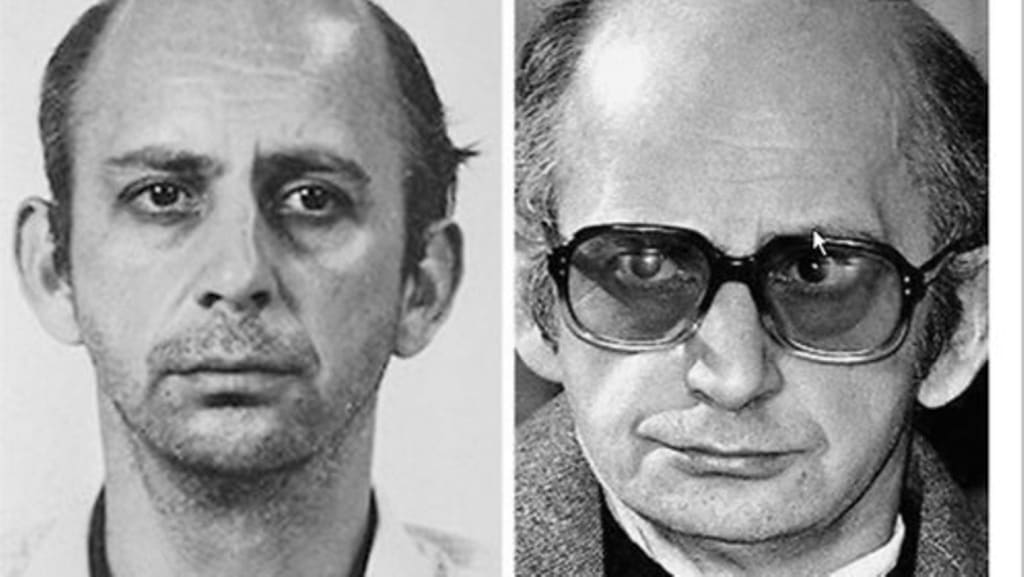
When police finally arrested him in 1976, they found him shockingly calm. He confessed to murders the way one might list groceries. There was no remorse, no recognition of the enormity of his crimes.
Psychologists determined he had the emotional maturity of a child, except his instincts revolved around violence, possession, and hunger.
Interrogators described him as a “void” — not a cunning monster like modern media depictions, but an emotionally frozen man whose mind had never escaped the deprivation and brutal lessons of his youth.
He really seemed to believe he hadn’t done anything unusual.
The War’s Lingering Shadow
Kroll’s story has forced criminologists to ask a difficult question:
Did World War II help create a serial killer?
Not in the sense of direct cause, but through:
chronic childhood starvation
exposure to death as a normalized part of life
the breakdown of family and emotional support systems
disrupted education and social development
the inability of post-war institutions to identify at-risk individuals
Many serial killers are shaped by childhood trauma, but Kroll’s trauma wasn’t hidden in a home — it was embedded in an entire country’s collapse.
He was a product of a broken era, a chilling reminder that the aftermath of war can create long-term psychological casualties invisible to history.
Why Kroll Still Haunts Modern Criminology
Kroll is not remembered like Ted Bundy or Jeffrey Dahmer. He lacked charisma, theatrics, or a public persona. His evil was quieter — methodical, opportunistic, and disturbingly ordinary.
This ordinariness is exactly what makes him so terrifying.
He embodies the fear that horrific violence doesn’t always come from monsters recognizable in the crowd, but from unnoticed individuals shaped by trauma, deprivation, and emotional stagnation.
His crimes forced Germany to reevaluate mental health, policing coordination, and risk assessment models — reforms that have influenced European criminology for decades.
The Serial Killer Born in the Rubble of War
Joachim Kroll died in 1991, but the questions raised by his case endure. He was one of many criminals shaped by the instability of the post-war world — proof that violence doesn’t end when the guns stop firing.
Sometimes the damage festers quietly, emerging decades later in forms society is ill-equipped to predict or understand.
In studying Kroll, historians and psychologists aren’t simply uncovering the story of a killer.
They are tracing the long psychological aftermath of conflict, the invisible wounds carried by nations, and the dark truth that even when a war ends, not all of its victims are dead — and not all of its consequences remain on the battlefield.