Linen Care Guide: Wash, Dry, and De-Wrinkle Properly
Linen lasts a long time when you treat it gently, and the good news is that proper care is not complicated. The basics are simple: follow the care label first, wash in cool or lukewarm water unless the label says otherwise, use a mild detergent, avoid bleach, and keep heat under control when drying and ironing. Linen is durable, but high heat and rough handling can shrink it, weaken fibers, and lock in wrinkles.
Read the care label before you do anything
This matters more than people think. In the U.S., the FTC requires garment care labels to provide at least one safe cleaning method, and those instructions are meant to cover washing, drying, ironing, bleaching, and warnings where needed. So before you guess, check the label. If the label says dry clean only, do not treat it like washable linen just because “linen” sounds sturdy.
How to wash linen properly
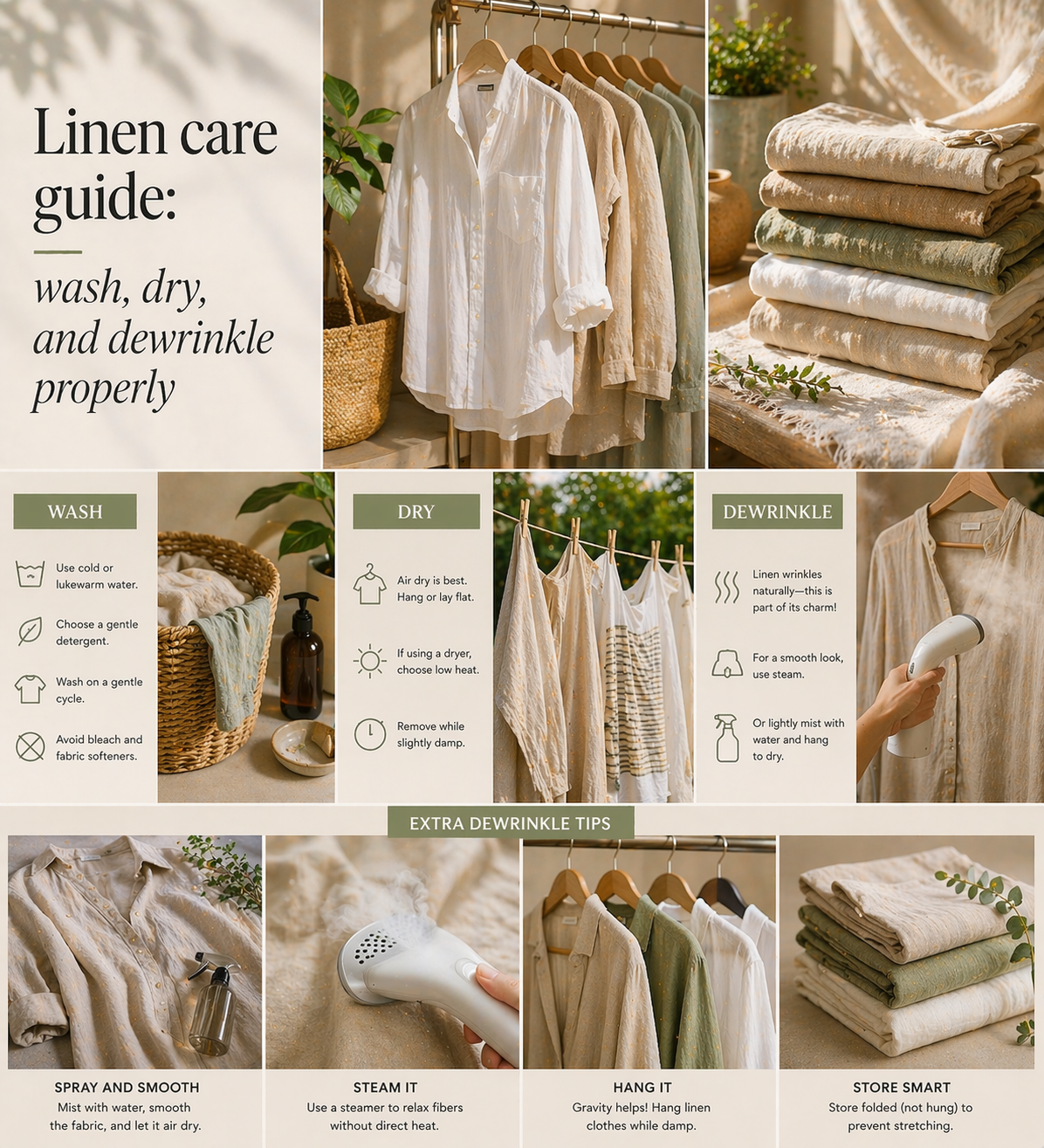
For most washable linen, cold or lukewarm water is the safest choice. Martha Stewart recommends cold water to help preserve the fit and finish, and The Spruce recommends cold or lukewarm water with a mild detergent. Gentle cycles are usually the best option, especially for clothing, because lower agitation means less stress on the fibers and fewer hard-set wrinkles.
Do not overload the machine. Linen needs room to move so it can rinse properly and come out cleaner and less twisted. Turning garments inside out also helps reduce surface wear, especially on darker pieces or items with visible texture.
Use a mild detergent and skip bleach. Both Martha Stewart and The Spruce advise avoiding bleach on linen, and The Spruce also recommends skipping fabric softener. Linen naturally softens over time, so you do not need to force softness with harsher products that can leave residue behind.
For delicate pieces, hand washing can make sense. Good Housekeeping’s hand-washing guide recommends checking the care label, using lukewarm or warm water as directed by the garment label, dissolving detergent in the water first, and rinsing thoroughly. That approach is especially useful for lightweight linen tops, dresses, or items with trims.
How to dry linen without wrecking it
Air drying is usually the safest option because it helps prevent shrinkage and keeps the fabric from getting overworked. The Spruce recommends hang-drying linen clothing when possible, and also notes that hot dryers can shrink linen. If you use a dryer, Good Housekeeping recommends low heat for linen, not high.
The biggest mistake is over-drying. Linen wrinkles more when it gets baked dry and left crumpled. The Spruce recommends removing linen promptly, and its wrinkle-prevention tips also stress shaking garments out right away. For the smoothest result, either air dry fully or tumble on low briefly and remove the item while it is still slightly damp.
A good everyday routine looks like this:
- Wash in cold or lukewarm water on gentle
- Shake the item out as soon as the cycle ends
- Hang dry, or tumble dry low briefly
- Remove while still slightly damp if you plan to iron
How to de-wrinkle linen properly
Linen wrinkles. That is normal. The goal is not to make it behave like polyester. The goal is to relax the wrinkles without scorching or crushing the fabric. For crisp results, ironing works best. Martha Stewart’s 2026 guidance says ironing is best for structured fabrics like linen, while steaming is gentler for more delicate materials.
If you want the smoothest finish, iron linen while it is still slightly damp. The Spruce says that is the best way to iron linen, and it also recommends ironing on the wrong side or using a pressing cloth to avoid shine. Linen responds well to steam and moisture, so a dry garment is always harder to smooth out cleanly.
If you do not want a pressed look, a steamer works well for softer wrinkle release. Steamers are especially useful for shirts, dresses, and relaxed linen pieces where you want the fabric to look easy rather than flat-pressed. Martha Stewart notes that steaming and ironing both remove wrinkles, but structured fabrics like linen usually respond best to ironing when you want a sharper finish.
The best de-wrinkle method by situation
Use an iron when:
- you want a crisp shirt, trouser, or table linen
- the fabric is still slightly damp
- you want the cleanest, flattest result
Use a steamer when:
- the linen is lightweight or unstructured
- you want a softer, more relaxed finish
- you are freshening wrinkles after storage or travel
Use the dryer briefly on low when:
- you only need to loosen wrinkles
- you plan to hang the item right away
- you remove it promptly before wrinkles set again
How to keep linen from getting overly wrinkled
Wrinkle prevention starts in the wash. The Spruce and Martha Stewart both recommend gentle washing, low heat, and quick removal from the machine. Hanging linen clothes instead of folding them tightly also helps prevent deep creases from setting in during storage. The Spruce specifically recommends breathable storage and hanging garments to help avoid extra wrinkling.
It also helps to accept the right kind of wrinkle. Linen is supposed to look relaxed. A few natural creases are part of the fabric’s appeal. The goal is not perfection. The goal is clean, well-kept linen that still looks like linen. That is an inference from the way care sources emphasize gentle handling and wrinkle management rather than total wrinkle elimination.
The fastest linen care routine for real life
If you want the easiest routine that works for most washable linen clothes:
- Check the care label.
- Wash cold or lukewarm on gentle with mild detergent.
- Skip bleach and fabric softener.
- Shake the garment out immediately after washing.
- Hang dry, or tumble dry low briefly.
- Iron while slightly damp, or steam if you want a softer finish.
Final thoughts
Linen is actually low-drama once you understand the rules. Keep the water cool to lukewarm, use a gentle detergent, avoid bleach, go easy on dryer heat, and smooth wrinkles while the fabric still has some moisture in it. Follow the label first, then let linen be what it is: breathable, relaxed, and better-looking when cared for gently instead of aggressively.