The Anatomy of a Perfect Charcuterie Board: Hosting Secrets Revealed
A perfect charcuterie board is more than a tray of meat and cheese. It is a centrepiece, a conversation starter, a hosting shortcut, and one of the easiest ways to make guests feel welcomed before the main meal even begins.
The beauty of a charcuterie board is its flexibility. It can be casual or luxurious, small or dramatic, budget-friendly or gourmet. It can serve as an appetizer, a party snack, a wine-night feature, a holiday table display, or even a complete grazing meal. With the right balance of flavours, textures, colours, and arrangement, a simple board can look like something from a stylish restaurant or magazine spread.
The secret is structure.
Great charcuterie boards may look effortless, but they are usually built with intention. Every element has a purpose: salty meats, creamy cheeses, crunchy crackers, sweet fruits, tangy pickles, rich spreads, fresh herbs, and small decorative touches. When these pieces work together, the board feels generous, beautiful, and easy to enjoy.
This guide breaks down the anatomy of a perfect charcuterie board, step by step. From choosing meats and cheeses to arranging ingredients like a professional host, these hosting secrets will help you create a board that looks impressive, tastes balanced, and disappears quickly.
What Is a Charcuterie Board?
A charcuterie board traditionally refers to a presentation of cured meats. The word “charcuterie” comes from French culinary tradition and originally described prepared meat products such as cured sausages, pâtés, terrines, and preserved meats.
Today, the meaning has expanded.
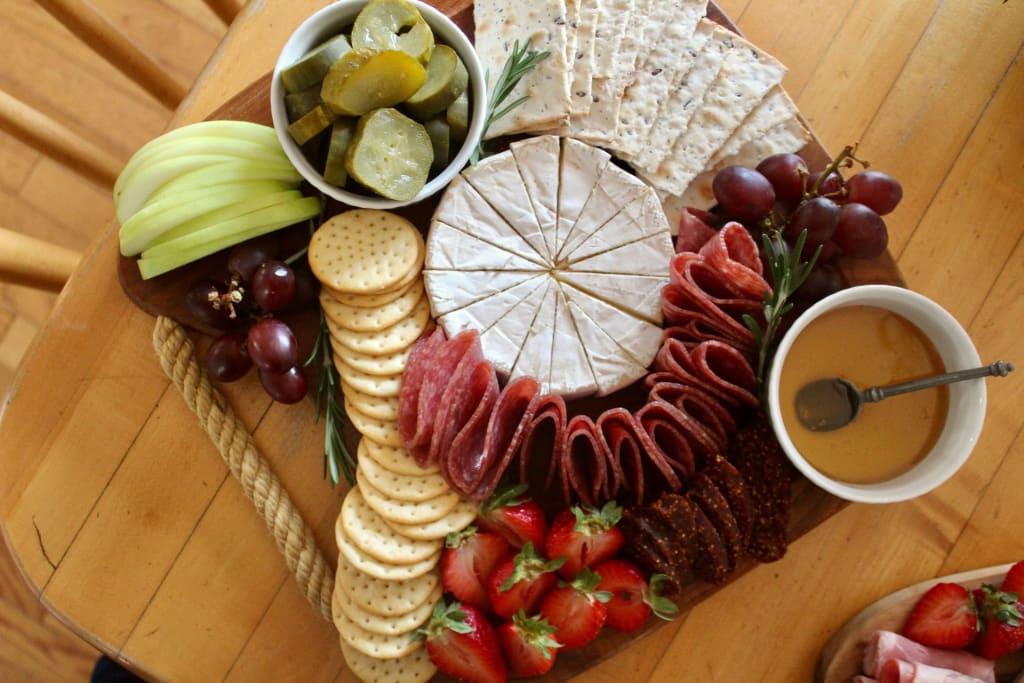
Modern charcuterie boards often include cured meats, cheeses, crackers, bread, fruits, nuts, vegetables, spreads, olives, pickles, chocolates, herbs, and decorative garnishes. Many people use the term to describe any styled grazing board or appetizer board.
A classic charcuterie board usually combines:
- Cured meats
- Cheeses
- Crackers or bread
- Fruits
- Nuts
- Olives or pickles
- Jams or spreads
- Garnishes
The best boards are not random collections of snacks. They are carefully balanced displays that offer variety in flavour, texture, colour, and serving experience.
Why Charcuterie Boards Are Perfect for Hosting
Charcuterie boards have become a favourite for hosts because they solve several entertaining problems at once.
They are easy to prepare in advance, visually impressive, and suitable for many different tastes. Guests can serve themselves, choose what they like, and keep snacking naturally while talking.
A good charcuterie board helps create a relaxed atmosphere. Instead of the host rushing back and forth from the kitchen, the board invites people to gather, graze, and enjoy.
Charcuterie boards work especially well for:
- Dinner parties
- Wine nights
- Holiday gatherings
- Bridal showers
- Birthday parties
- Family celebrations
- Office events
- Picnic dates
- Movie nights
- Game nights
- Outdoor entertaining
They are also highly customizable. You can build a board for meat lovers, vegetarians, kids, brunch guests, dessert lovers, or people who prefer lighter snacks.
The Golden Rule of a Great Charcuterie Board
The golden rule is simple:
Balance every rich, salty, or creamy item with something fresh, crunchy, sweet, acidic, or mild.
Charcuterie meats are usually salty and rich. Cheeses can be creamy, sharp, or fatty. If the board only includes heavy items, it quickly becomes overwhelming.
That is why the supporting ingredients matter so much.
Fresh fruit balances salt. Pickles cut through richness. Crackers provide crunch. Honey softens sharp cheese. Nuts add texture. Herbs add freshness. Jams introduce sweetness and colour.
The goal is not only to fill the board. The goal is to create combinations that guests naturally want to build and taste.
Step 1: Choose the Right Board or Platter
The board itself sets the tone.
You can use a wooden board, marble slab, slate tray, ceramic platter, large cutting board, serving tray, or even parchment paper spread across a table for a grazing table effect.
The best board depends on the occasion and number of guests.
Small Board
Best for two to four people.
A small board works well for date nights, movie nights, or casual drinks. It does not need too many ingredients. A few cheeses, one or two meats, crackers, fruit, and one spread are enough.
Medium Board
Best for four to eight people.
This is the most common size for home entertaining. It allows for more variety without becoming difficult to arrange.
Large Board
Best for eight to fifteen people.
A large board should include repeated ingredients in different areas so guests can access food from multiple sides.
Grazing Table
Best for large gatherings.
Instead of one board, ingredients are arranged across a covered table with bowls, platters, risers, and decorative elements.
Hosting Secret
Choose a board that looks slightly full once arranged. A board with too much empty space can look unfinished. A board packed with ingredients feels abundant and inviting.
Step 2: Start With the Cheese
Cheese is usually the heart of a charcuterie board.
A good board includes a variety of cheeses with different textures and flavours. You do not need ten cheeses. Three to five well-chosen options are usually enough.
A balanced cheese selection includes:
Soft Cheese
Soft cheese adds creaminess and luxury.
Examples include:
- Brie
- Camembert
- Goat cheese
- Burrata
- Cream cheese-based spreads
Soft cheeses pair well with honey, fruit, jam, nuts, and toasted bread.
Semi-Hard Cheese
Semi-hard cheese is easy to slice and popular with most guests.
Examples include:
- Gouda
- Havarti
- Cheddar
- Monterey Jack
- Manchego
These cheeses provide structure and familiar flavour.
Hard Cheese
Hard cheeses add boldness and texture.
Examples include:
- Parmesan
- Aged cheddar
- Pecorino
- Asiago
- Aged Gouda
They can be served in chunks, wedges, or shards.
Blue Cheese
Blue cheese is strong and not loved by everyone, but it adds character.
Examples include:
- Gorgonzola
- Roquefort
- Stilton
- Danish blue
Use a smaller portion and pair it with honey, figs, pears, or nuts.
Hosting Secret
For most boards, choose one soft cheese, one firm cheese, one aged cheese, and one crowd-pleasing cheese. This gives variety without overwhelming guests.
Step 3: Add the Charcuterie Meats
Cured meats bring savoury depth to the board. They also add visual movement when folded, rolled, or layered.
Good meat options include:
Prosciutto
Prosciutto is thin, delicate, salty, and elegant. It can be folded into loose ribbons and placed around cheese or fruit.
Salami
Salami is one of the easiest meats to use. It can be folded into halves, quarters, or shaped into a salami rose for decoration.
Soppressata
Soppressata has a richer, slightly rustic flavour and pairs well with sharp cheeses.
Chorizo
Chorizo adds spice, colour, and bold flavour. It is excellent for guests who enjoy stronger tastes.
Coppa
Coppa is tender, savoury, and beautifully marbled. It works well on more premium boards.
Pepperoni
Pepperoni is familiar, affordable, and popular, especially for casual gatherings.
Hosting Secret
Choose two or three meats with different textures. For example, combine delicate prosciutto, firm salami, and spicy chorizo. This gives guests more pairing options.
Step 4: Add Crackers, Bread, and Crunch
Crackers and bread are essential because they help guests build bites.
They also provide needed crunch and neutral flavour.
Good options include:
- Water crackers
- Whole grain crackers
- Crostini
- Baguette slices
- Breadsticks
- Seed crackers
- Flatbread crisps
- Pretzel crisps
- Rye crackers
Choose at least two types. One should be simple and neutral, while the other can have more flavour or texture.
Hosting Secret
Do not place all crackers in one corner. Scatter small groups around the board so guests can reach them easily from different sides.
Step 5: Include Fresh Fruit
Fresh fruit adds colour, sweetness, and freshness. It also balances the salt and fat from meats and cheeses.
The best fruits for charcuterie boards include:
- Grapes
- Strawberries
- Blueberries
- Blackberries
- Raspberries
- Apple slices
- Pear slices
- Figs
- Orange slices
- Pomegranate seeds
- Melon
- Cherries
Grapes are especially useful because they are easy to serve, beautiful in clusters, and pair well with many cheeses.
Apples and pears are excellent with cheddar, brie, blue cheese, and honey.
Berries add colour and elegance.
Figs create a more luxurious look, especially for holiday or wine-night boards.
Hosting Secret
Use fruit to fill gaps and create colour contrast. Bright fruits make the board look fresh and abundant.
Step 6: Add Dried Fruit
Dried fruit provides concentrated sweetness and chewy texture.
Good dried fruit options include:
- Dried apricots
- Dates
- Figs
- Cranberries
- Raisins
- Mango slices
- Prunes
Dried fruit works especially well with aged cheese, nuts, and salty meats.
Hosting Secret
Dried apricots are one of the best visual ingredients because their bright orange colour adds warmth and contrast.
Step 7: Add Nuts and Seeds
Nuts bring crunch, richness, and visual texture.
Good choices include:
- Almonds
- Walnuts
- Pistachios
- Pecans
- Cashews
- Marcona almonds
- Hazelnuts
- Pumpkin seeds
Nuts pair beautifully with cheese, honey, dried fruit, and wine.
Hosting Secret
If any guest has a nut allergy, avoid nuts entirely or keep them in a clearly separate bowl away from the main board.
Step 8: Add Olives, Pickles, and Acidic Bites
Acidic ingredients are the unsung heroes of charcuterie boards.
They cut through richness and keep the board from feeling too heavy.
Good options include:
- Green olives
- Kalamata olives
- Cornichons
- Pickled onions
- Pickled peppers
- Marinated artichokes
- Roasted red peppers
- Pickled carrots
- Capers
These ingredients add salt, tang, and brightness.
Hosting Secret
Use small bowls for wet ingredients like olives and pickles. This keeps crackers from getting soggy and prevents brine from spreading across the board.
Step 9: Add Spreads, Jams, and Dips
Spreads help guests create better flavour combinations.
A board without spreads can still be good, but a board with the right spreads feels much more complete.
Popular options include:
Honey
Honey is excellent with brie, goat cheese, blue cheese, figs, and walnuts.
Fig Jam
Fig jam pairs beautifully with aged cheeses, prosciutto, and crackers.
Apricot Jam
Apricot jam adds sweetness and colour, especially with goat cheese or cheddar.
Mustard
Whole grain mustard is excellent with salami, ham, cheddar, and pretzels.
Hummus
Hummus works well for Mediterranean-style boards and vegetarian guests.
Olive Tapenade
Tapenade adds salty, savoury depth.
Chutney
Fruit chutneys add sweetness, spice, and acidity.
Hosting Secret
Two spreads are usually enough for a medium board. One sweet and one savoury spread gives good balance.
Step 10: Add Fresh Herbs and Garnishes
Garnishes make the board look polished.
They are not just decoration. Fresh herbs add fragrance, colour, and a natural finishing touch.
Good garnishes include:
- Rosemary sprigs
- Thyme
- Basil
- Mint
- Edible flowers
- Pomegranate seeds
- Lemon slices
- Small seasonal decorations
Rosemary is especially useful for holiday boards because it looks elegant and holds its shape well.
Hosting Secret
Use garnishes at the end, not the beginning. They should fill empty spaces and add freshness without covering the food.
How Much Food Do You Need Per Person?
The right amount depends on whether the board is an appetizer or the main food.
For an Appetizer
Plan roughly:
- 2 ounces cheese per person
- 1 to 2 ounces meat per person
- A small handful of crackers and extras
For a Main Grazing Meal
Plan roughly:
- 3 to 4 ounces cheese per person
- 2 to 3 ounces meat per person
- More bread, crackers, fruits, vegetables, and dips
For a Party With Other Food
You can reduce the quantity because guests will have other options.
Hosting Secret
It is better to slightly overprepare than run out too early. Extra crackers, fruit, and nuts can be held back and refilled as needed.
The Perfect Charcuterie Board Formula
A simple formula for a balanced board is:
3 cheeses + 3 meats + 2 crackers + 2 fruits + 1 nut + 1 pickle/olive + 2 spreads + garnish
For a smaller board, use:
2 cheeses + 1 meat + 1 cracker + 1 fruit + 1 spread
For a larger board, use:
5 cheeses + 4 meats + 3 crackers + 4 fruits + 2 nuts + 3 pickled items + 3 spreads
This formula keeps the board balanced without overthinking every detail.
How to Arrange a Charcuterie Board Like a Professional
A beautiful board is built in layers.
Do not simply place ingredients in straight rows. The best boards have movement, contrast, and abundance.
Step 1: Place Bowls First
Start with bowls for wet or spreadable items.
These may include olives, jam, honey, mustard, hummus, or pickles.
Place them in different areas of the board to create structure.
Step 2: Add Cheeses
Place cheeses around the board, not all together.
Cut some pieces in advance to make serving easier. Leave part of each cheese whole so it still looks generous.
For example:
- Slice half of a cheddar block
- Cut a few wedges from brie
- Break parmesan into chunks
- Crumble a small amount of blue cheese
Step 3: Add Meats
Fold, roll, or layer meats near cheeses they pair well with.
Prosciutto can be loosely folded.
Salami can be folded into quarters.
Chorizo can be layered in a curved line.
Step 4: Add Crackers and Bread
Place crackers in small stacks or flowing lines.
Avoid placing them too early if ingredients are wet.
Step 5: Add Fruit and Vegetables
Use fruit to add colour and fill medium-sized gaps.
Place grapes in clusters, berries in small piles, and sliced fruit near cheese.
Step 6: Fill Small Gaps
Use nuts, dried fruit, small crackers, chocolates, or herbs to fill remaining empty spaces.
Step 7: Finish With Garnish
Add herbs, edible flowers, or seasonal decorations last.
Hosting Secret
The board should look full but not messy. Guests should be able to identify each ingredient and pick it up easily.
The Best Cheese and Meat Pairings
Pairings help guests enjoy the board more.
Here are reliable combinations:
Brie + Prosciutto + Fig Jam
Creamy, salty, and sweet. This is one of the most popular combinations.
Aged Cheddar + Salami + Mustard
Sharp, savoury, and bold. Great for casual gatherings.
Goat Cheese + Honey + Walnuts
Tangy, sweet, and crunchy. Excellent with crackers or crostini.
Manchego + Chorizo + Olives
Rich, salty, and Spanish-inspired.
Blue Cheese + Pear + Honey
Strong, sweet, and elegant.
Gouda + Apple + Almonds
Mild, crunchy, and family-friendly.
Parmesan + Prosciutto + Balsamic Glaze
Salty, nutty, and refined.
Hosting Secret
Place strong cheeses with sweet or fresh ingredients nearby. This makes bold flavours easier to enjoy.
Budget-Friendly Charcuterie Board Ideas
A beautiful board does not have to be expensive.
To save money, choose affordable ingredients that still look appealing.
Budget-friendly options include:
- Cheddar
- Gouda
- Cream cheese spread
- Pepperoni
- Salami
- Grapes
- Apples
- Carrots
- Cucumbers
- Crackers
- Pretzels
- Peanuts or almonds
- Hummus
- Jam
You can also use one premium item, such as brie or prosciutto, and keep the rest simple.
Hosting Secret
Presentation matters as much as price. Even affordable ingredients look impressive when arranged with care.
Luxury Charcuterie Board Ideas
For special occasions, upgrade the ingredients.
Luxury options include:
- Imported cheeses
- Truffle cheese
- Aged parmesan
- Burrata
- Prosciutto di Parma
- Coppa
- Marcona almonds
- Fresh figs
- Honeycomb
- Artisan crackers
- Specialty olives
- Gourmet pâté
- Smoked salmon
- Dark chocolate
A luxury board should feel curated, not overcrowded.
Hosting Secret
Use fewer ingredients but choose higher-quality items. Luxury is about intention, not quantity.
Vegetarian Charcuterie Board Ideas
A vegetarian board can be just as satisfying as a meat-based one.
Use:
- Cheeses
- Hummus
- Nuts
- Fruits
- Crackers
- Roasted vegetables
- Olives
- Pickles
- Stuffed peppers
- Marinated artichokes
- Falafel
- Pita chips
- Dips
- Dark chocolate
For protein, add boiled eggs, chickpea salad, lentil dip, Greek yogurt dip, or roasted chickpeas.
Hosting Secret
Vegetarian boards need bold flavours. Use roasted vegetables, tangy dips, spiced nuts, and pickled items to create depth.
Kid-Friendly Charcuterie Board Ideas
A kid-friendly board should be colourful, simple, and easy to eat.
Good options include:
- Mild cheddar cubes
- Mozzarella sticks
- Turkey slices
- Pepperoni
- Crackers
- Pretzels
- Grapes
- Apple slices
- Strawberries
- Carrot sticks
- Cucumber rounds
- Peanut butter or yogurt dip
- Mini sandwiches
Avoid very strong cheeses, spicy meats, and choking hazards for younger children.
Hosting Secret
Cut ingredients into small, easy-to-grab pieces and use fun shapes when possible.
Breakfast Charcuterie Board
Charcuterie boards are not only for evening parties.
A breakfast board can be perfect for brunch, family mornings, or holiday gatherings.
Include:
- Croissants
- Bagels
- Toast
- Mini pancakes
- Waffles
- Cream cheese
- Butter
- Jam
- Honey
- Fresh fruit
- Boiled eggs
- Smoked salmon
- Yogurt
- Granola
- Nuts
Hosting Secret
Use small bowls for spreads and keep warm items separate until serving.
Dessert Charcuterie Board
A dessert board is ideal for parties, birthdays, date nights, or holiday tables.
Include:
- Chocolate pieces
- Cookies
- Brownie bites
- Strawberries
- Grapes
- Marshmallows
- Caramel dip
- Chocolate sauce
- Pretzels
- Nuts
- Dried fruit
- Mini pastries
Hosting Secret
Balance sweetness with salty or tart ingredients such as pretzels, nuts, berries, or dark chocolate.
Seasonal Charcuterie Board Ideas
Seasonal boards feel thoughtful and fresh.
Spring Board
Use goat cheese, berries, radishes, asparagus, fresh herbs, light crackers, and honey.
Summer Board
Use melon, berries, tomatoes, mozzarella, basil, prosciutto, cucumbers, and chilled dips.
Autumn Board
Use apples, pears, figs, cheddar, walnuts, pumpkin seeds, maple flavours, and warm-toned garnishes.
Winter Board
Use brie, cranberries, rosemary, dark chocolate, nuts, dried fruit, and rich cured meats.
Hosting Secret
Seasonal colours make a board feel naturally beautiful.
Wine Pairings for Charcuterie Boards
Wine can elevate the board, but pairings do not need to be complicated.
Sparkling Wine
Pairs well with salty meats, creamy cheeses, and fried or crunchy items.
Sauvignon Blanc
Pairs well with goat cheese, fresh vegetables, citrus, and lighter boards.
Chardonnay
Pairs well with brie, camembert, nuts, and buttery crackers.
Pinot Noir
Pairs well with salami, mushrooms, soft cheeses, and earthy flavours.
Cabernet Sauvignon
Pairs well with aged cheddar, hard cheeses, and bold meats.
Rosé
Pairs well with summer boards, fruit, prosciutto, and mild cheeses.
Hosting Secret
When unsure, sparkling wine is one of the most versatile choices for charcuterie.
Non-Alcoholic Drink Pairings
A charcuterie board does not require alcohol.
Excellent non-alcoholic pairings include:
- Sparkling water with lemon
- Grape juice
- Apple cider
- Iced tea
- Lemonade
- Herbal iced tea
- Non-alcoholic sparkling wine
- Cranberry spritz
- Ginger beer
- Fruit-infused water
Hosting Secret
Serve drinks in nice glasses, even if they are simple. Presentation makes the experience feel special.
Common Charcuterie Board Mistakes
Even simple boards can go wrong if a few basics are ignored.
Mistake 1: Using Only Salty Foods
Too much salt becomes tiring. Balance meats and cheeses with fruit, honey, vegetables, and fresh ingredients.
Mistake 2: Forgetting Texture
A good board needs creamy, crunchy, chewy, soft, and crisp textures.
Mistake 3: Not Cutting Anything
If everything is left whole, guests may hesitate to start. Slice some cheese and meats to make the board feel approachable.
Mistake 4: Overcrowding Wet Ingredients
Olives, pickles, and jams should usually go in bowls.
Mistake 5: Serving Cheese Too Cold
Cheese tastes better when it has time to soften slightly. Remove it from the fridge before serving, but do not leave it out too long.
Mistake 6: Ignoring Dietary Needs
Ask about allergies or restrictions when possible. Clearly separate vegetarian items if needed.
Mistake 7: Making the Board Too Symmetrical
A board that looks too perfect can feel stiff. Natural clusters and curved lines usually look better.
Hosting Secret
The best boards feel abundant, not rigid.
How to Make a Charcuterie Board Ahead of Time
You can prepare much of the board in advance.
Several hours before serving:
- Slice cheese
- Fold meats
- Wash fruit
- Prepare bowls of olives and spreads
- Cut vegetables
- Arrange non-soggy ingredients
Add crackers, bread, and delicate garnishes closer to serving time so they stay fresh.
If preparing the full board ahead, cover it tightly and refrigerate. Add crackers and herbs right before guests arrive.
Hosting Secret
Keep extra crackers and fruit nearby for refilling. Boards often disappear faster than expected.
Food Safety Tips for Charcuterie Boards
Because charcuterie boards often include meats, cheeses, and perishable items, food safety matters.
Basic tips include:
- Keep refrigerated items cold until serving
- Do not leave perishable foods out too long
- Use clean utensils
- Avoid cross-contamination
- Provide cheese knives or serving spoons
- Keep raw and ready-to-eat foods separate
- Replace items if they have been sitting too long
- Use small portions and refill as needed for long events
For outdoor gatherings, keep the board shaded and avoid leaving dairy or meat in heat.
Hosting Secret
For long parties, create a smaller board first and refill from chilled backup containers.
How to Style a Board for Photos
Charcuterie boards are naturally photogenic, but a few styling tricks make them stand out.
Use colour contrast.
Place pale cheeses near dark fruits.
Add red berries, green herbs, orange apricots, and purple grapes.
Use different shapes.
Fold meats, cube cheese, slice fruit, and scatter nuts.
Create height.
Use small bowls, stacked crackers, grape clusters, and cheese wedges.
Fill gaps.
Empty spaces make a board look unfinished.
Use natural light.
Photos look best near a window or outdoors in soft light.
Hosting Secret
Take photos before guests arrive, while the board is fresh and untouched.
The Perfect Board for a Small Gathering
For four to six people, use:
- Brie
- Aged cheddar
- Gouda
- Prosciutto
- Salami
- Water crackers
- Baguette slices
- Grapes
- Apple slices
- Almonds
- Olives
- Fig jam
- Honey
- Rosemary
This board is balanced, elegant, and not too expensive.
The Perfect Board for a Large Party
For ten to fifteen people, use:
- Brie
- Cheddar
- Manchego
- Goat cheese
- Parmesan
- Prosciutto
- Salami
- Chorizo
- Coppa
- Crackers
- Crostini
- Breadsticks
- Grapes
- Berries
- Apples
- Dried apricots
- Almonds
- Pistachios
- Olives
- Cornichons
- Fig jam
- Mustard
- Honey
- Fresh herbs
Repeat ingredients across the board so guests on different sides can reach everything easily.
How to Build a Themed Charcuterie Board
Themed boards are great for parties.
Italian Board
Use prosciutto, salami, parmesan, mozzarella, olives, tomatoes, basil, breadsticks, pesto, and balsamic glaze.
Mediterranean Board
Use hummus, feta, pita chips, cucumbers, olives, roasted peppers, falafel, grapes, and tzatziki.
French Board
Use brie, camembert, pâté, cornichons, baguette, grapes, fig jam, and mustard.
Spanish Board
Use manchego, chorizo, olives, almonds, quince paste, roasted peppers, and crusty bread.
Holiday Board
Use brie, cheddar, cranberries, rosemary, pomegranate, nuts, dark chocolate, and festive crackers.
Hosting Secret
A theme makes shopping easier and gives the board a more polished identity.
Final Hosting Secrets for a Perfect Charcuterie Board
A great charcuterie board does not require professional training. It requires balance, variety, and thoughtful presentation.
Remember these final rules:
Start with the board size.
Choose three to five cheeses.
Add two to three cured meats.
Include crackers and bread.
Balance salt with fruit.
Balance richness with pickles or olives.
Add crunch with nuts.
Use spreads for flavour.
Fill gaps with small ingredients.
Finish with herbs.
Serve with small knives, spoons, napkins, and plates.
Most importantly, make the board easy to enjoy. Slice some cheese, separate wet items, provide serving tools, and place ingredients in a way that invites guests to start eating.
The perfect charcuterie board is not about perfection. It is about abundance, warmth, and hospitality.
Conclusion
The anatomy of a perfect charcuterie board comes down to harmony. Every item should contribute something: flavour, colour, texture, freshness, richness, or contrast.
Cured meats bring savoury depth. Cheeses add creaminess and character. Crackers and bread provide crunch. Fruits add sweetness. Pickles and olives cut through richness. Nuts add texture. Spreads create memorable pairings. Herbs and garnishes make everything feel finished.
Once you understand this structure, building a beautiful board becomes easy.
Whether you are hosting a holiday party, wine night, family gathering, brunch, picnic, or casual evening with friends, a well-made charcuterie board can instantly elevate the experience.
It looks impressive, tastes delicious, and allows everyone to enjoy food in a relaxed, social way.
That is the real secret behind the perfect charcuterie board: it makes hosting feel effortless while making guests feel cared for.