
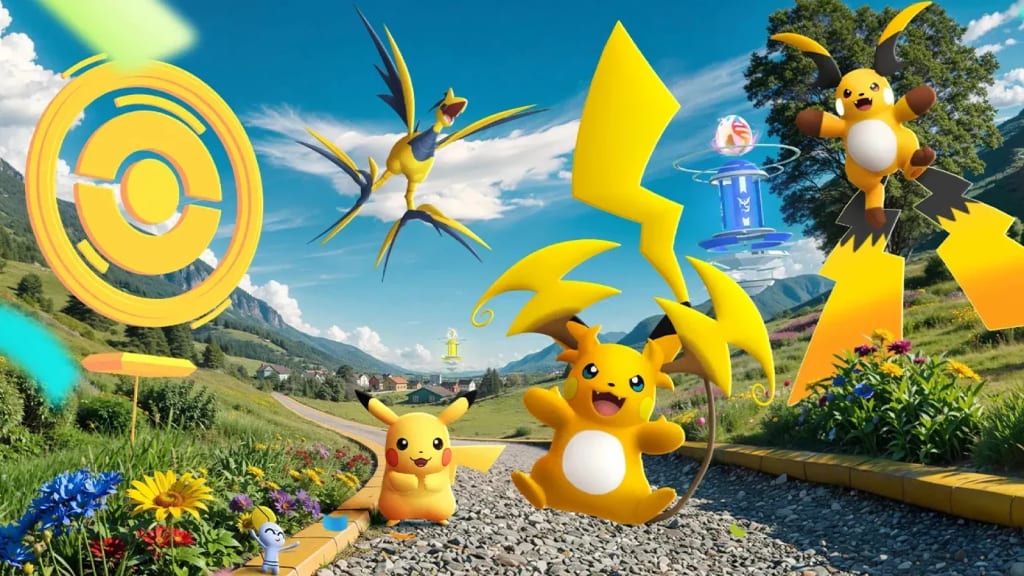
Pokémon GO at 10: The Summer the Whole World Went Outside Together
For a brief, strange, beautiful moment in 2016, the world seemed united by one urgent question:
“Is there a rare Pokémon nearby?”
People who had never spoken before gathered in parks after midnight. Office workers took longer routes home. Parents explored neighborhoods with their children. Strangers shared phone chargers, directions, rumors, and excited warnings that a Charizard, Dragonite, or Snorlax had appeared somewhere down the street.
Ten years later, the claim that Pokémon GO created “the most united the world has ever been” remains an obvious exaggeration.
It also captures something emotionally true.
Pokémon GO did not resolve political divisions, inequality, violence, or conflict. What it briefly accomplished was smaller but still remarkable: it gave millions of people across different generations, cultures, and social groups the same playful reason to step outside.
The original rollout began on July 6, 2016, in Australia, New Zealand, and the United States before expanding across other territories. Within days, public spaces were filled with players staring at maps, spinning PokéStops, choosing teams, and searching for creatures that existed only on their screens but somehow made the physical world feel newly alive.
The summer of 2016 did not simply belong to a popular mobile game.
For a few extraordinary weeks, the world itself felt like the game.
Pokémon GO Launched Ten Years Ago
Pokémon GO officially began its initial release on July 6, 2016.
The first launch territories were Australia, New Zealand, and the United States. Other countries received the game through a staged rollout as Niantic struggled to support the overwhelming demand placed on its servers.
That staggered release explains why people in different regions remember slightly different dates as the beginning of the phenomenon.
Some downloaded it immediately.
Others changed their app-store regions, installed unofficial versions, or waited impatiently while screenshots and videos from other countries filled social media.
By the time Pokémon GO officially reached many territories, the cultural event had already begun.
People understood the basic idea instantly:
- Open the game.
- Walk through the real world.
- Find Pokémon.
- Throw Poké Balls.
- Visit local landmarks.
- Join a team.
- Keep exploring.
No complicated explanation was necessary.
Pokémon had finally escaped the television, trading cards, and handheld consoles.
They were outside.
The Phrase “The World Was United” Became a Shared Memory
Nobody seriously believes Pokémon GO produced literal global unity.
The phrase survives because it describes how the summer felt.
For once, millions of people were looking at their surroundings through the same playful lens.
A fountain was no longer just a fountain. It was a PokéStop.
A neighborhood monument became a Gym.
A quiet park became a gathering place.
A stranger running suddenly down the street might not be escaping danger. They might have heard that a rare Pokémon had spawned two blocks away.
The game gave ordinary public behavior a new shared meaning.
When someone stood near a landmark tapping their phone, other players immediately recognized what they were doing.
That recognition created a temporary community.
People did not need to know each other’s names, politics, occupations, religions, or backgrounds. They needed only to ask:
“What did you catch?”
Pokémon GO Was More Than a Successful App
Popular games existed long before Pokémon GO.
Mobile games had already attracted enormous audiences.
Social media already connected billions of people.
What made Pokémon GO different was that its success became publicly visible.
Most digital entertainment takes place behind screens inside homes, offices, bedrooms, or public transport.
Pokémon GO placed its audience on streets.
Its popularity could be seen in real time:
- Crowds forming around city landmarks
- Groups circling parks
- Players walking while carrying portable batteries
- Families stopping together near PokéStops
- Cars slowing near Gyms
- People suddenly changing direction after checking a map
- Entire crowds reacting when a rare Pokémon disappeared
A television show may be watched by millions without changing the appearance of a city.
Pokémon GO made its audience physically present.
The game did not merely have users.
It produced crowds.
The Numbers Were Extraordinary
Pokémon GO’s growth was almost immediate.
Within approximately one week of the initial release, reports suggested that its US Android activity was approaching or surpassing major established platforms. Its popularity repeatedly overwhelmed servers, leaving players staring at loading screens while demand exceeded expectations.
By September 2016, The Pokémon Company announced that Pokémon GO had exceeded 500 million downloads worldwide and had set an App Store record for downloads during its launch week.
At its early peak, the game reportedly reached approximately 45 million daily users. Even after the initial frenzy declined, it retained tens of millions of regular players.
The official mobile-store listings now describe Pokémon GO as having surpassed one billion downloads worldwide.
Those numbers explain the commercial importance of the game.
They do not fully explain the emotional memory.
What people remember is not a download statistic.
They remember looking up and realizing everyone else was playing too.
Pokémon Had Been Preparing for This Moment for 20 Years
Pokémon GO arrived during the franchise’s twentieth anniversary year.
The original Pokémon games were released in Japan in 1996, followed by animation, trading cards, toys, films, and international game releases that helped create the first major period of worldwide Pokémania.
By 2016, the franchise had several generations of fans.
Children who first encountered Pikachu during the late 1990s were now adults with smartphones, disposable income, jobs, and children of their own.
Pokémon GO reached several audiences simultaneously:
- Longtime fans who had grown up with the original games
- Younger players familiar with newer Pokémon generations
- Parents introducing Pokémon to their children
- Casual users who had never owned a Nintendo system
- People interested in augmented reality
- People who normally did not identify as gamers
- Friends who joined because everyone around them was playing
The concept was both new and deeply familiar.
Players already knew what a Poké Ball did.
They understood the excitement of discovering a rare creature.
They had imagined what it would feel like if Pokémon existed in the real world.
Pokémon GO turned that childhood fantasy into a location-based activity available through a device already carried by millions.
The Technology Felt Like Magic
Pokémon GO was often described as an augmented-reality game because it could display Pokémon through a phone camera as though the creatures were standing in the physical environment.
The game’s most important technological achievement, however, was broader than the camera effect.
It connected:
- GPS location
- Digital maps
- Real-world landmarks
- Mobile internet
- Player movement
- Pokémon encounters
- Shared public locations
Niantic had already experimented with location-based gameplay through Ingress. Pokémon GO combined that experience with one of the world’s most recognizable entertainment properties.
The result made familiar places feel layered with hidden information.
A player could walk through an ordinary street and see a second version of it.
The real map remained visible, but it now contained Pokémon, PokéStops, Gyms, items, and opportunities.
The physical world had become interactive.
The Game Made People Explore Their Own Neighborhoods
Pokémon GO encouraged players to notice places they had previously ignored.
PokéStops were frequently attached to:
- Murals
- Sculptures
- Churches
- Libraries
- Public gardens
- Historic signs
- Community buildings
- Monuments
- Unusual architectural features
- Small local landmarks
Players who had lived in the same neighborhood for years suddenly discovered objects, artwork, and historical markers they had never consciously noticed.
The game transformed routine journeys.
A commute became a catching route.
A walk to the shop became an opportunity to hatch an Egg.
A visit to a park became a search for nests and rare spawns.
Travel writers observed that Pokémon GO encouraged people to behave like tourists in their own cities, leading them toward unfamiliar landmarks and overlooked corners.
The world had not physically changed.
The reason for moving through it had.
Parks Became the Social Centers of Summer 2016
The most powerful Pokémon GO memories are often connected to parks.
Parks offered several advantages:
- Multiple PokéStops
- Open walking routes
- Places to sit
- Safer pedestrian access
- Space for groups
- More chances of encountering other players
- Landmarks suitable for Gyms
- Lure Modules attracting Pokémon
During the launch period, a cluster of active Lure Modules could turn a quiet location into an instant community gathering.
Players arrived alone and found dozens or hundreds of others already present.
Someone would shout the name of a rare Pokémon.
Heads would turn.
A crowd would begin moving.
Information travelled person to person faster than many players could check their own screens.
For a generation increasingly accustomed to online communities, Pokémon GO produced something unusual:
A digital game whose most memorable moments happened face to face.
Strangers Had an Easy Reason to Talk
Starting a conversation with a stranger can feel awkward.
Pokémon GO removed much of that uncertainty.
Players had obvious opening questions:
- “Are you playing Pokémon GO?”
- “What team are you?”
- “Did you catch the Snorlax?”
- “Where did that Pikachu spawn?”
- “Is this Gym taken?”
- “Do you have a charger?”
- “How many Poké Balls do you have left?”
The interaction did not require a formal introduction.
Both people already understood why they were standing in the same place.
That shared purpose created low-pressure social contact.
Players exchanged advice, compared collections, helped newcomers, and warned each other when a rare creature was about to disappear.
Some encounters lasted only a few seconds.
Others became friendships, regular walking groups, raid communities, and relationships.
Research conducted in later years found associations between Pokémon GO participation, increased social interaction, improved mood, and aspects of social functioning, although experiences differed substantially among players.
It Made Exercise Feel Like a Side Effect
Pokémon GO did not usually tell players to begin a formal workout.
It gave them a reason to keep walking.
Players walked to:
- Hatch Eggs
- Find new Pokémon
- Reach PokéStops
- Defend Gyms
- Complete research
- Explore nests
- Collect Candy
- Join community events
The physical activity was connected to curiosity and reward rather than obligation.
Several studies reported increased walking after people began playing, although the size and duration of the effect varied.
One large study involving activity data and search behavior found that engaged players increased their movement by an average of approximately 1,473 steps per day during the study period. The researchers also found increases across different ages, activity levels, body weights, and genders.
Another study found a smaller short-term increase that weakened over time, illustrating that the game was not a permanent exercise solution for everyone.
The broader lesson was still important.
A game could motivate physical movement among people who might not respond to conventional fitness applications.
Players were not walking because a chart told them it was healthy.
They were walking because the next corner might contain a Lapras.
Everyone Understood the Joy of a Rare Spawn
The early version of Pokémon GO was relatively simple.
There were fewer species, fewer systems, and far less information inside the game.
That simplicity made rarity feel powerful.
A common Pidgey or Rattata might receive little attention.
A Dragonite appearing nearby could transform an ordinary evening.
Players would:
- Hear a rumor.
- Check the nearby tracker.
- Begin walking or running.
- Ask other players for directions.
- Reach the location.
- Encounter the Pokémon.
- Throw increasingly desperate Poké Balls.
- Celebrate or experience complete heartbreak.
The creature existed digitally, but the chase was physical.
A successful catch became connected to a real place and moment.
Players remembered where they found their first Pikachu, Snorlax, Lapras, or fully evolved starter.
The memory belonged simultaneously to the game and the real world.
The Imperfect Nearby System Added to the Mystery
The early game’s tracking tools were famously unreliable.
Players often saw nearby Pokémon without receiving sufficiently precise guidance about their locations.
This was frustrating.
It also created exploration.
Communities developed their own methods, maps, online groups, and reports to help locate rare spawns.
Players shouted information across parks.
Messaging groups formed to announce appearances.
Crowdsourced applications emerged to share where Pokémon had been found, reflecting the rapid development of player-created information networks around the game.
Modern players benefit from more structured systems, events, research tasks, raids, and community tools.
The chaotic launch period offered something different.
Nobody fully understood what was happening.
That uncertainty made the world feel more mysterious.
Team Mystic, Team Valor, and Team Instinct Created Playful Rivalry
At Level 5, players selected one of three teams:
- Team Mystic
- Team Valor
- Team Instinct
The choice became part of players’ identities.
Mystic presented itself through analysis and evolution.
Valor emphasized strength and training.
Instinct trusted intuition and the natural abilities of Pokémon.
The teams created immediate social categories.
Friends argued over choices.
Families divided.
Memes flourished.
Players defended Gyms in the name of their team and jokingly treated competing groups as enemies.
The rivalry gave the game structure without usually preventing cooperation.
Mystic, Valor, and Instinct players could still walk together, share information, and celebrate catches.
The division was competitive but playful.
In a world filled with exhausting real disagreements, arguing about whether the blue, red, or yellow bird was best felt refreshingly harmless.
The Memes Were Part of the Experience
Pokémon GO did not remain inside the app.
It spread across the entire internet.
The launch generated jokes about:
- Walking farther than ever before
- Ignoring ordinary responsibilities
- Choosing teams
- Catching Pokémon in inappropriate places
- Empty phone batteries
- Server failures
- Zubats appearing everywhere
- Pidgey and Rattata overwhelming players
- Rare Pokémon causing sudden crowds
- People entering locations they would never normally visit
- Parents rediscovering childhood interests
- Friends disappearing to defend Gyms
The game became a shared language.
Someone did not need to play extensively to understand that Pokémon GO had taken over public life.
News organizations, restaurants, police departments, museums, universities, companies, and government offices referenced the game.
The phenomenon moved too quickly for traditional marketing to control.
Players created the culture themselves.
Businesses Quickly Discovered “Pokénomics”
PokéStops and Gyms could affect real foot traffic.
A café located beside a popular in-game location suddenly had access to players gathering nearby.
Businesses began advertising:
- Charging points
- Discounts for specific teams
- Free Wi-Fi
- Lure Modules
- Pokémon-themed products
- Special offers for players
Museums, shops, restaurants, and other venues experimented with ways to welcome or attract trainers.
Contemporary reporting described the economic effect as “Pokénomics,” with businesses benefiting from the crowds drawn to in-game locations.
This was one of the clearest demonstrations that digital geography could influence physical commerce.
A location’s value was no longer determined only by visibility, transport, or nearby businesses.
Its status inside a game could also matter.
It Was Not Perfect Unity
The nostalgic image of summer 2016 deserves affection.
It also deserves honesty.
Pokémon GO was not equally accessible to everyone.
The experience favored people with:
- Compatible smartphones
- Reliable mobile data
- Safe walking areas
- Free time
- Strong battery life
- Access to cities or landmark-dense neighborhoods
- Physical ability to travel between locations
Rural players often had fewer PokéStops, Gyms, spawns, and nearby participants.
Researchers later found that the game’s geographic design could reproduce existing inequalities, with some communities receiving significantly better access to in-game resources than others.
Players with mobility limitations could also encounter barriers in a game designed around walking and physical access.
The launch occurred at different times across regions.
Some countries waited longer.
Some places received limited official support.
The phrase “the whole world played together” reflects a cultural feeling, not equal participation.
Safety Problems Were Real
Pokémon GO encouraged attention to a phone while moving through real environments.
That created obvious risks.
Reports emerged involving:
- Distracted driving
- Trespassing
- Players entering unsafe areas
- Falls and injuries
- Gatherings that blocked roads or entrances
- People playing in locations requiring greater respect
- Criminals taking advantage of predictable gathering points
The game repeatedly warned players to remain aware of their surroundings.
Responsibility was shared among game design, public education, local conditions, and player behavior.
The summer’s joy should not erase the fact that digital rewards can influence physical movement in dangerous ways.
Pokémon GO demonstrated both the promise and risk of location-based entertainment at an unprecedented scale.
Some Locations Were Inappropriate for Gameplay
Because Pokémon GO used a large database of landmarks, PokéStops and creatures sometimes appeared in places associated with tragedy, remembrance, religion, or medical care.
Museums, memorials, cemeteries, and sensitive sites had to decide how to respond to players.
A location suitable as a historical point on a map was not always suitable as a gaming destination.
This revealed a difficult design problem.
Physical places carry emotional, cultural, and political meaning.
A database may identify a location as interesting without understanding how people should behave there.
Pokémon GO forced technology companies and players to confront the difference between mapping a place and respecting it.
The Launch Was Chaotic, and That Was Part of the Magic
By modern live-service standards, early Pokémon GO lacked many expected features.
At launch, the game did not yet have the later depth of:
- Friend lists
- Trading
- Raid Battles
- Trainer Battles
- Research tasks
- Community Days
- Remote raids
- Routes
- Seasons
- Large numbers of Pokémon generations
- Numerous social and collection systems
Servers failed.
Tracking malfunctioned.
The app froze.
Players lost encounters.
Battery consumption was severe.
Some design choices were barely explained.
Yet the imperfections did not stop the phenomenon.
The lack of structure made the game feel like a discovery being made collectively.
Players were not simply consuming a polished product.
They were figuring out a new kind of public experience together.
Why No Other Game Has Recreated That Summer
Many games have borrowed elements from Pokémon GO.
Other location-based titles have encouraged walking, collecting, battling, exploration, and real-world events.
Some have built loyal communities.
None has fully recreated July 2016.
That moment required a nearly impossible combination:
A Globally Recognized Franchise
Pokémon already had characters people loved and understood.
The Right Generation of Technology
Smartphones, mobile internet, GPS, cameras, and app stores had become widely available enough to support the idea.
A Simple Fantasy
The promise was instantly understandable: Pokémon are hiding in the real world.
Generational Nostalgia
Adults remembered childhood Pokémon experiences while younger players brought their own enthusiasm.
Visible Public Participation
Playing required movement through shared spaces, making popularity self-reinforcing.
Surprise
The scale of the phenomenon was not fully predicted.
People felt they were witnessing something spontaneous rather than attending a carefully scheduled cultural event.
Summer Timing
In many launch territories, warm weather and school holidays made outdoor participation easier.
Shared Simplicity
The game initially revolved around a small number of actions that almost anyone could understand.
Once that combination had occurred, it could never be entirely new again.
The Game Changed Over the Following Decade
Pokémon GO evolved from a simple catching-and-Gym experience into a far more complicated live-service game.
Over ten years, it introduced systems including:
- Raid Battles
- Legendary Pokémon
- Friendship
- Trading
- Gifts
- Trainer Battles
- Research
- Community Days
- Shadow Pokémon
- Mega Evolution
- Routes
- Global events
- Expanded generations
- Additional forms and costumes
- Competitive tournaments
- Remote participation features
Some changes were widely welcomed.
Others produced controversy over pricing, accessibility, monetization, technical problems, and changes to remote play.
The game’s relationship with its community has never been completely peaceful.
That itself demonstrates its longevity.
Players argue because Pokémon GO remains meaningful to them.
The Pandemic Forced Pokémon GO to Change Its Core Idea
A game built around outdoor movement and physical gatherings faced an enormous challenge when the COVID-19 pandemic restricted travel and social contact.
Pokémon GO adapted by making more activities possible from home or at greater distances.
Remote Raid Passes, expanded interaction ranges, adjusted bonuses, and other changes helped players continue participating.
These systems changed expectations.
Some players came to view remote accessibility not as a temporary emergency feature but as an essential improvement for rural players, disabled players, caregivers, people with limited transport, and communities without large local groups.
Later debates over reducing or limiting remote features exposed a tension that remains central to Pokémon GO:
Should the game prioritize its original vision of physical exploration, or should it accommodate the many reasons players cannot always gather in person?
The strongest future version of Pokémon GO may need to do both.
Pokémon GO Is Still Alive Ten Years Later
The launch frenzy did not remain at its 2016 peak.
Few cultural phenomena do.
Yet Pokémon GO did not disappear.
Its official listings report more than one billion downloads, and large events continue attracting players across cities and countries.
The game’s business moved to Scopely after the company completed its acquisition of Niantic’s games business in May 2025. Pokémon GO, Pikmin Bloom, Monster Hunter Now, Campfire, Wayfarer, and hundreds of game-team employees moved as part of the transaction.
That ownership change marked a significant new chapter.
The tenth anniversary is therefore both a celebration and a transition point.
The game that helped define Niantic is now continuing under a different corporate home while retaining the community built over a decade.
Pokémon GO’s 10th Anniversary Celebration
Pokémon GO marked its tenth birthday with an official anniversary event running from July 4 through July 6, 2026.
The celebration included a new Gimmighoul holding a tenth-anniversary coin, themed bonuses, costumed Pokémon, and other commemorative content.
The anniversary celebrations continue through July.
The Road of Legends event runs from July 6 through July 10, leading into Pokémon GO Fest 2026: Global on July 11 and 12.
Official community celebrations are also bringing players together at physical locations in cities across multiple regions.
Ten years later, the central idea remains unchanged:
Go outside.
Find other trainers.
Explore somewhere.
Catch something.
The Game Became a Record of Real Life
Longtime Pokémon GO accounts contain more than digital creatures.
They contain memories.
A Pokémon’s capture information may recall:
- A holiday
- A first date
- A family outing
- A late-night walk
- A community event
- A university campus
- A hospital visit
- A childhood home
- A new city
- A friendship
- A difficult period survived through daily walks
Players may remember exactly where they caught a particular Pokémon even years later.
The game attaches digital collections to physical geography.
A rare Pokémon is not merely an entry in a database.
It can become a souvenir from a real moment.
That relationship between collection and memory helps explain why people continue playing after the initial novelty fades.
The Pokédex becomes a diary.
Pokémon GO Helped Different Generations Play Together
Pokémon has always crossed generations, but Pokémon GO made that connection unusually visible.
Parents who remembered the original 151 played with children who knew hundreds of newer species.
Grandparents joined family walks.
Adults who had stopped playing video games returned because the controls were accessible.
Children explained evolutions and types to parents.
Parents explained why seeing Pikachu on a neighborhood street felt like a childhood dream becoming real.
The game allowed expertise to move in both directions.
Older fans carried nostalgia.
Younger fans carried current knowledge.
Both could still become equally excited by the same encounter.
The Greatest Achievement Was Not Augmented Reality
Pokémon GO is often remembered as the game that brought augmented reality into mainstream public awareness.
That is important.
Its greater achievement was social rather than technical.
It made people believe that going outside might lead to something unexpected.
The world had become increasingly organized through apps designed to reduce uncertainty:
- Maps showed the fastest route.
- Delivery apps removed the need to leave home.
- Streaming services brought entertainment indoors.
- Online shopping replaced visits to stores.
- Social media moved interaction onto screens.
Pokémon GO used similar technology to produce the opposite behavior.
It told people to wander.
It rewarded detours.
It made inefficient movement enjoyable.
It used a screen to push people back into physical space.
Why the Nostalgia Feels So Strong
People are not only nostalgic for the game.
They are nostalgic for the atmosphere surrounding it.
They remember a period before:
- The pandemic
- Years of intensified political division
- Increasing distrust of technology platforms
- Greater anxiety about public gatherings
- The fragmentation of online culture into countless smaller communities
In memory, summer 2016 becomes a simpler place.
Everyone had the same app.
Everyone understood the same jokes.
Everyone seemed to be walking toward the same park.
Reality was more complicated than that, of course.
Nostalgia edits.
It removes server failures, weak signals, inaccessible locations, repetitive spawns, and technical frustration.
What remains is the emotional image:
A warm evening.
A crowd of strangers.
A rumor that something rare has appeared.
Everyone beginning to run.
Was Pokémon GO the Last Great Shared Internet Moment?
The internet has become increasingly fragmented.
People use different platforms, follow different creators, consume personalized feeds, and experience events through algorithms designed around individual preferences.
Pokémon GO briefly pushed against that fragmentation.
The same virtual object appeared at the same physical location for nearby players.
People had to share space.
They could not experience the full phenomenon entirely through a personalized feed.
That may be why the launch feels difficult to reproduce.
It was digital but communal.
Global but local.
Online but physical.
Individual but visible.
The experience belonged to millions, yet each memory was attached to a specific street, park, or neighborhood.
Was the World Really More United?
No game has ever united every person.
Pokémon GO did not reach everyone, and not every player experienced it positively.
Yet unity does not always require complete agreement.
Sometimes it means recognizing the same moment.
During the summer of 2016, millions of people understood why strangers were standing beside a statue at midnight.
They understood why someone had suddenly begun running.
They understood the disappointment of a Pokémon escaping after the final Poké Ball.
They understood the excitement of seeing a silhouette disappear from the nearby list and then finding it in time.
That shared understanding was real.
It may not have changed the world permanently.
For a while, it changed how the world felt.
The Legacy of Summer 2016
Pokémon GO proved several important things.
A mobile game could change public movement.
A digital map could become a social space.
Nostalgia could introduce new technology to a mass audience.
Games could encourage walking without presenting themselves as exercise.
Virtual objects could create real economic activity.
Strangers could form temporary communities around shared discovery.
The launch also exposed serious issues involving safety, accessibility, data, geographic inequality, public-space behavior, and the power of software to direct human movement.
Every future location-based experience exists in the shadow of those lessons.
Pokémon GO was not merely successful.
It became a large-scale experiment in how digital systems can reorganize physical life.
Final Verdict
Ten years ago, Pokémon GO gave millions of people a reason to step outside and look at familiar places differently.
It turned parks into gathering spaces, landmarks into resources, walking into gameplay, and strangers into temporary teammates.
The phrase “the most united the world has ever been” is not historically or literally true.
Emotionally, it makes perfect sense.
The game arrived with the right characters, the right technology, the right simplicity, and the right cultural timing.
It offered an experience anyone nearby could recognize.
For a few unforgettable weeks, age, profession, background, and gaming experience seemed less important than whether someone had found the rare Pokémon everyone was searching for.
The servers broke.
The tracking barely worked.
Phone batteries died.
Rural communities were underserved.
Players sometimes behaved recklessly.
The game was imperfect from the beginning.
But perfection was never the source of the magic.
The magic was looking around and realizing that everyone else could see the hidden world too.
Ten years later, Pokémon GO remains active, evolving, and capable of bringing communities together.
Its greatest moment, however, may always be that first summer.
The summer when the streets became routes.
The parks became meeting places.
The landmarks became PokéStops.
And for one strange, joyful moment, the whole world seemed to be trying to catch them all.
Frequently Asked Questions About Pokémon GO’s 10th Anniversary
When was Pokémon GO released?
Pokémon GO began its initial rollout on July 6, 2016, in Australia, New Zealand, and the United States. It expanded to other countries through a staged release.
Is Pokémon GO officially 10 years old?
Yes. Pokémon GO celebrated its tenth anniversary in July 2026.
Why do some people remember a different Pokémon GO release date?
The game launched gradually across different countries and time zones. Some players also accessed it before its official release in their region.
Who created Pokémon GO?
Pokémon GO was developed by Niantic in collaboration with The Pokémon Company and Nintendo.
What type of game is Pokémon GO?
It is a location-based mobile game that combines GPS, mapping, collecting, exploration, battles, and augmented-reality elements.
Why was Pokémon GO so popular in 2016?
It combined the globally recognized Pokémon franchise with smartphones, real-world exploration, simple controls, nostalgia, social visibility, and the novelty of finding Pokémon in physical locations.
How many times has Pokémon GO been downloaded?
Official app listings state that the game has surpassed one billion downloads worldwide.
How quickly did Pokémon GO reach 500 million downloads?
The Pokémon Company announced that the game had exceeded 500 million downloads by September 2016, only a few months after launch.
How many people played Pokémon GO at its launch peak?
Reports estimated that the game reached approximately 45 million daily users during its early peak.
Why did Pokémon GO make people go outside?
Players needed to walk through real locations to find Pokémon, visit PokéStops, reach Gyms, hatch Eggs, and participate in events.
Did Pokémon GO increase physical activity?
Studies generally found short-term increases in walking among players, although the size and duration of the effect varied.
Did Pokémon GO help people socialize?
Many players reported meeting people through parks, raids, teams, events, and local communities. Research has also associated the game with increased social interaction and some improvements in mood and social functioning.
Why were parks so crowded during summer 2016?
Parks frequently contained several PokéStops and Gyms within walkable areas. Lure Modules and rare Pokémon could attract large numbers of players to the same place.
What were the three Pokémon GO teams?
The original teams were Team Mystic, Team Valor, and Team Instinct.
Which Pokémon GO team was the most popular?
Team Mystic was widely perceived as the largest team during the early years, although team popularity differed by community and location.
Why did phone batteries drain so quickly?
Pokémon GO used GPS, mobile data, the screen, map processing, and sometimes the camera simultaneously, creating heavy battery consumption.
Why were portable battery packs associated with Pokémon GO?
Players often remained outside for hours, and the game drained phones quickly. Portable chargers became essential equipment for dedicated trainers.
Why was the early tracking system controversial?
The nearby system often failed to provide clear or reliable directions, making rare Pokémon difficult to locate.
What is a PokéStop?
A PokéStop is an in-game location connected to a real-world landmark where players can collect items and complete certain activities.
What is a Pokémon GO Gym?
A Gym is a real-world game location where players can battle, join raids, and place Pokémon for team control.
Did Pokémon GO help local businesses?
Some businesses near PokéStops and Gyms reported increased foot traffic and used Lure Modules, discounts, or charging facilities to attract players.
Was Pokémon GO available equally everywhere?
No. Urban areas generally had more PokéStops, Gyms, players, and spawns than rural or underserved communities. Research found that location-based design could reproduce existing geographic inequalities.
Was Pokémon GO dangerous?
The game itself was not inherently dangerous, but distracted movement, driving while playing, trespassing, unsafe locations, and crowd behavior created genuine risks.
Is Pokémon GO still active in 2026?
Yes. The game continues to receive events, updates, new Pokémon, raids, research, social systems, and global celebrations.
Who owns Pokémon GO now?
Pokémon GO became part of Scopely after the company completed its acquisition of Niantic’s games business in May 2025.
Does Niantic still operate Pokémon GO?
The Pokémon GO game team moved to Scopely as part of the acquisition, while Niantic’s separate spatial-technology business continued independently.
What happened during the Pokémon GO 10th Anniversary Party?
The event ran from July 4 through July 6, 2026, and featured anniversary bonuses, themed encounters, and Gimmighoul holding a tenth-anniversary coin.
When is Pokémon GO Fest 2026: Global?
Pokémon GO Fest 2026: Global is scheduled for July 11 and 12, 2026.
Why can’t another game recreate Pokémon GO’s 2016 launch?
The launch combined a globally beloved franchise, new technology, widespread smartphone adoption, simple gameplay, public visibility, generational nostalgia, surprise, and favorable summer timing.
Was Pokémon GO the first augmented-reality game?
No. Augmented-reality and location-based games existed earlier, including Niantic’s Ingress. Pokémon GO was the title that introduced the concept to an enormous mainstream audience.
Did Pokémon GO begin as an April Fools’ joke?
Its concept was partly inspired by a 2014 Google Maps April Fools’ experience that allowed users to search for Pokémon on a map. The idea later developed into a full mobile game.
Why was Pokémon GO culturally important?
It demonstrated that a mobile game could influence physical movement, public gatherings, local commerce, social interaction, and how people perceived real-world locations.
What was the rarest Pokémon during the original launch period?
Rarity differed by region, but Pokémon such as Dragonite, Snorlax, Lapras, Chansey, and certain evolved starters were highly sought after.
Why do people feel nostalgic about Pokémon GO?
They remember the shared excitement, crowded parks, spontaneous conversations, rare hunts, summer atmosphere, and the feeling of discovering a hidden world alongside millions of other people.
Was summer 2016 really a more peaceful time?
Not objectively. The world still faced serious conflict and division. Pokémon GO nostalgia reflects a shared cultural experience rather than an absence of real-world problems.
Why do people call Pokémon GO the most unifying event in history?
The phrase is humorous hyperbole describing how people from different generations and backgrounds temporarily shared the same outdoor activity, language, and excitement.
Is Pokémon GO worth playing in 2026?
Yes, particularly for people who enjoy collecting Pokémon, walking, exploring, participating in community events, completing research, and playing with local or remote friends.
Can new players still start Pokémon GO?
Yes. New players can download the game and begin building their collection, although the number of available systems and Pokémon is much larger than it was in 2016.
What is Pokémon GO’s greatest legacy?
Its greatest legacy is proving that a digital game can bring people into physical spaces, transform ordinary movement into play, and create real communities around virtual discoveries.
