De-Aging Technology: Can Digital Youth Convince?
De-Aging Technology: Can digital youth ever replace the emotional authenticity of real makeup and acting?. A balanced, source-linked REVLOX feature.
De-aging technology makes Hollywood's oldest wish look increasingly plausible: a beloved performer can appear decades younger within a new scene. Digital skin work, face replacement, performance tracking and more traditional makeup now overlap in complicated ways. The results can be remarkable, unsettling or simply distracting.
But the central question is not whether computers can reproduce a younger face in a still image. It is whether the altered image supports a living performance, respects an actor's consent and remains convincing through movement, emotion and light. De-aging is a storytelling decision with human, artistic and financial consequences, not just a new filter.
What digital de-aging really changes
A production may combine makeup, careful lighting, visual-effects retouching, archival reference and digital reconstruction. Sometimes the original actor still performs the entire scene; artists alter parts of the face afterward. Other work may involve stand-ins or more extensive performance capture.
Marketing rarely explains every layer, so viewers should not assume all youthful faces are generated by a single artificial-intelligence system. The technology is best understood as a family of tools with different levels of intervention. Each changes what appears on screen while leaving a question about how much of the visible expression derives from the performer, the editor and the digital team.
The face is more than skin
Age alters movement, posture, eyes, timing and the rhythms through which an actor communicates feeling. A digitally softened face may remain attached to a body that moves with the physical experience of the current performer. Sometimes that contrast deepens a character who is remembering youth; sometimes it distracts audiences because the person appears caught between different ages.
Emotional authenticity depends on how a film frames that contrast. A technically convincing close-up may still feel wrong if dialogue, framing and gesture suggest a younger person who does not seem to inhabit the scene naturally. Technology cannot replace character motivation or dramatic truth.
What makeup artists contribute
Traditional prosthetics and makeup can reshape facial contours, hairlines and texture while providing actors with something tangible to inhabit. Makeup artists also understand continuity, skin behavior under lighting and how physical materials interact with expression. Digital tools can improve or complicate those results.
Rather than celebrating a purely software-based solution, productions should coordinate with makeup departments from early development. This collaboration helps determine which details can be accomplished on set and which will require postproduction. A believable younger appearance is often an achievement of many artisans who deserve acknowledgment, not evidence that one branch of craft has become obsolete.
The uncanny valley in motion
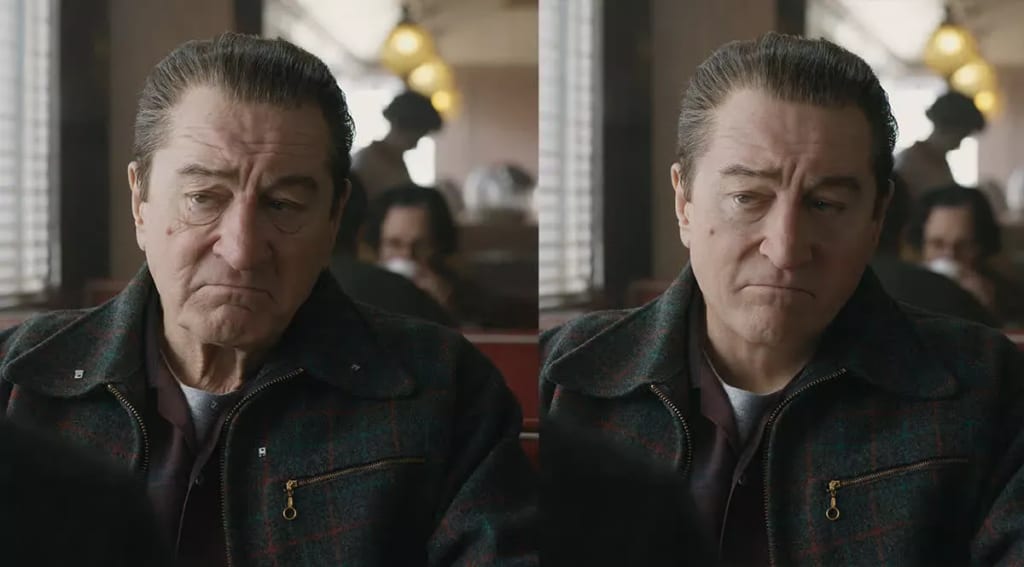
A single publicity photograph may show smooth skin and plausible proportions, yet the illusion becomes more difficult as the character turns, laughs or cries. Viewers are sensitive to minor inconsistencies in eye focus, muscle movement, teeth, hair and how light crosses a face. The so-called uncanny valley describes discomfort that can arise when human likeness is nearly convincing but subtly mismatched.
However, that response is not universal; narrative investment can make audiences overlook imperfect imagery. The director must evaluate the illusion in the complete scene with sound and pacing, rather than judging a short technical demonstration or a polished still frame.
Consent and digital likeness rights
A performance altered for one movie can generate valuable digital materials: face scans, reference photographs and models of an actor's likeness. Contracts should address what is captured, how it is stored, where it can be used and whether future reuse requires fresh permission and compensation. A de-aged scene today should not become automatic authorization to build new performances tomorrow.
These concerns overlap with current union negotiations over synthetic replicas, but digital retouching and a fully generated performance are not identical activities. Responsible production distinguishes them instead of collapsing every visual effect into one broad argument about artificial intelligence.
Budget and storytelling tradeoffs
Complex face work can demand extensive tracking, review and revision across many shots. A filmmaker may spend disproportionate resources on a flashback that communicates information a different scene or actor could convey more clearly. The strongest reason to choose de-aging is narrative necessity: a continuity of performance that creates emotional value beyond novelty.
Alternatives include casting a younger performer, using archival material with permission or designing a scene so the audience does not need an exact facial match. The artistic question should precede the technological one. Asking what the scene must express can spare costly attempts to prove what a software system can do.
Continuity and cinematic memory
Audiences may carry a powerful visual memory of how a performer looked decades ago. That memory is shaped by film stock, hairstyles, lighting, publicity photographs and personal nostalgia. A digitally younger face is compared not to an objective human template but to a remembered screen identity.
The image may need to feel like a period performance rather than an exact biometric reconstruction. This gives filmmakers creative freedom, but it also raises the stakes. If the result is treated as an exact return to a famous face, even small differences may dominate discussion and diminish the emotional scene it was meant to support.
A future without age limits?
De-aging will likely grow more accessible as visual workflows improve, but lower cost will not settle rights or artistic questions. The possibility of maintaining one face across decades can expand historical storytelling while also narrowing casting opportunities for younger actors. Productions will need transparent consent processes, clear labor credit and realistic evaluation of when the effect helps the audience.
The best future is not a screen filled with permanently youthful celebrities. It is a wider storytelling toolkit in which age, memory and identity are handled thoughtfully, with performers retaining meaningful control over how their likeness is used.
Age is part of a character, not merely appearance
The audience recognizes age through the relationship between experience and behavior as much as a face. A character who has lived through several decades may move with caution or speak with the confidence of accumulated knowledge. A flashback version of that person might need different emotional impulses and bodily energy, even when played by the same actor.
Digital retouching does not automatically create these differences. Directors must work with performers to decide how much the younger self should resemble the present one. The technology is strongest when it becomes an unobtrusive support for that acting choice rather than an attempt to deny the passage of time.
The invisible revision process
Complex face effects may be reviewed shot by shot to maintain consistent skin detail, eye movement and likeness across lighting changes. An adjustment that looks convincing in one close-up may conflict with a neighboring shot or alter how an emotion reads. Editors can change the duration of a reaction, adding further work.
This process needs adequate schedules and clear approval authority so artists are not forced through endless versions based on vague feedback. Viewers rarely see this labor, yet its quality determines whether a dramatic scene feels natural. Celebrating a de-aged performance should therefore include acknowledgment of the digital teams who preserved its continuity.
What to ask before the technology is used
A responsible producer can begin with four questions: Is the altered appearance essential to the story? Has the performer agreed to the intended digital use? Is the budget sufficient for convincing results and fair labor?
What happens to scans and likeness data after production? These considerations may lead to a combination of makeup and retouching, a shorter flashback or a different actor. None of those choices implies a failure of ambition.
They demonstrate that technical sophistication works best when its narrative purpose, legal basis and future consequences are understood before cameras begin recording.
Practical lens: how to evaluate the claim
Consider two different flashbacks. In one, the actor needs only a few seconds of recognition; careful lighting or a younger cast member might communicate the memory effectively. In the other, the emotional weight depends on seeing the current performer inhabit a crucial past decision.
De-aging may be worth the complexity there. The comparison demonstrates that the appropriate amount of technical intervention follows story structure, not the existence of a sophisticated tool.
The wider cultural question
Digital youth is compelling when it serves a character's memory or continuity, not when it exists mainly to invite applause for technical achievement. Audiences still respond to feeling, choice and performance. A face can be made younger, but the challenge of making a scene meaningful remains stubbornly human.
Frequently Asked Questions
Is de-aging the same as an AI deepfake?
Not necessarily. De-aging can involve conventional visual effects, makeup and compositing. Synthetic replicas introduce additional questions about generating a performance beyond the original footage.
Can practical makeup replace digital de-aging?
Sometimes, and the strongest results often combine approaches. The choice depends on the shot, performer, budget and artistic aim.
Who owns a digitally younger actor's face?
Rights depend on contracts and applicable law. Productions should negotiate consent, reuse, storage and payment rather than assume a scan is unrestricted material.