14 Years Without Michael Clarke Duncan: Remembering the Gentle Giant Who Made The Green Mile Unforgettable
Fourteen years have passed since Hollywood lost a man whose physical presence could dominate a movie frame before he said a single word.
Then Michael Clarke Duncan would speak.
That extraordinary bass voice would arrive.
And almost immediately, the intimidating first impression could disappear.
On September 3, 2012, Michael Clarke Duncan died in Los Angeles at the age of 54 after failing to recover from a heart attack he had suffered on July 13. His death came when he was still working, still recognizable around the world and still associated with one of the most emotionally powerful performances of the late 1990s.
September 3, 2026 marked 14 years since his death.
Duncan appeared in Armageddon, The Whole Nine Yards, Planet of the Apes, The Scorpion King, Daredevil, Sin City, Talladega Nights and numerous other films.
His unmistakable voice also made him a natural choice for animation.
But one character towers over everything else in his career.
John Coffey.
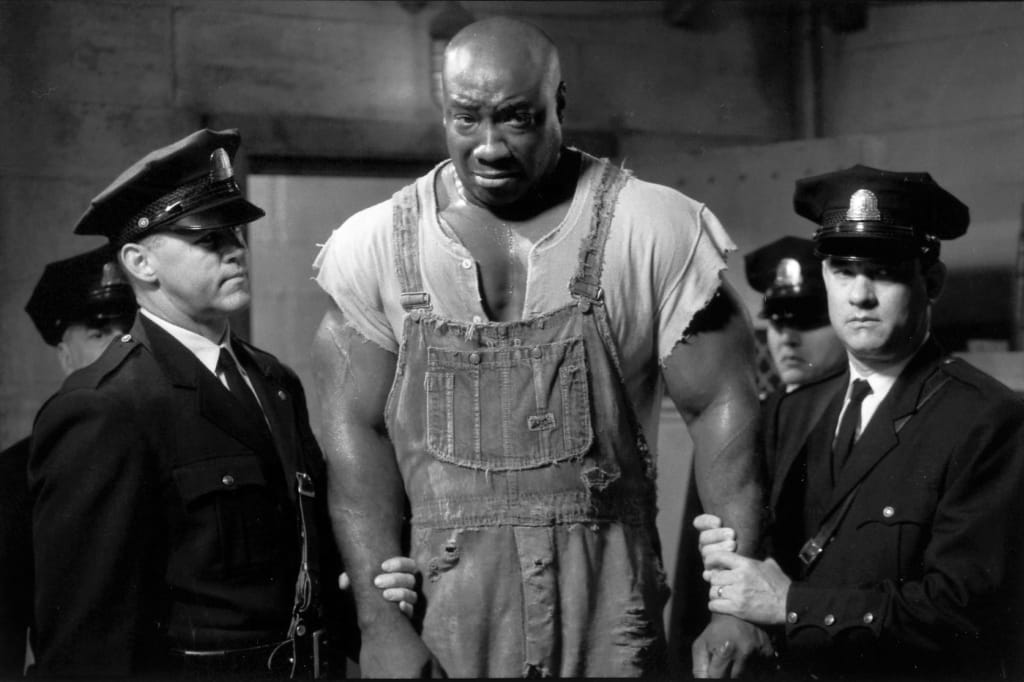
The enormous, frightened, impossibly gentle prisoner at the center of Frank Darabont's The Green Mile.
It was a role that contradicted nearly every assumption Hollywood was prepared to make about Duncan.
He was more than six feet tall.
He weighed more than 300 pounds.
He had previously been hired to protect celebrities because of his size.
Early acting jobs frequently cast him as bouncers, guards or threatening men.
Then The Green Mile asked audiences to look at the same body and see vulnerability.
Duncan delivered a performance so affecting that the Academy nominated him for Best Supporting Actor at the 72nd Academy Awards.
He also received a Golden Globe nomination for the performance.
More importantly, John Coffey ensured that millions of people would never remember Michael Clarke Duncan simply as “the big guy.”
They remembered the tears.
The fear.
The tenderness.
And a voice powerful enough to shake a room that somehow made Coffey seem even more vulnerable.
Michael Clarke Duncan Died on September 3, 2012
Duncan died at Cedars-Sinai Medical Center in Los Angeles.
He had suffered a heart attack on July 13, 2012, and according to representatives for his family, never fully recovered. He died several weeks later on September 3.
He was only 54.
The Guardian's obituary described his death as resulting from complications following the July heart attack.
The news was particularly shocking because Duncan's screen image had always suggested immense physical strength.
He was one of those performers whose size became inseparable from how audiences initially perceived him.
But bodies do not obey movie mythology.
The man who looked indestructible on screen was gone.
He Was Born in Chicago, Far From Hollywood
Michael Clarke Duncan was born on December 10, 1957, in Chicago.
His route to acting was anything but conventional.
Before Hollywood knew his name, Duncan worked ordinary physical jobs.
The Los Angeles Times reported that he had worked digging ditches for a natural-gas company in Chicago.
He talked so frequently about wanting to become an actor that coworkers reportedly gave him a nickname:
“Hollywood Mike.”
At the time, the nickname could easily have been a joke.
Duncan was a large working man in Chicago talking about movie stardom.
There was no obvious path from one life to the other.
He took it anyway.
He Did Not Become a Successful Actor at 20
This is one of the most inspiring parts of Duncan's story.
Hollywood biographies often celebrate people who become famous almost immediately.
Child actors.
Teenage discoveries.
Drama-school graduates who land a breakthrough role at 23.
Duncan's story was different.
He spent years doing other work.
His significant film breakthrough did not arrive until he was around 40.
That fact changes the meaning of his career.
He did not simply stumble into the entertainment industry while young enough to keep trying indefinitely.
He pursued a dream after adulthood had already given him plenty of reasons to choose stability instead.
Duncan eventually left Chicago and remained in Los Angeles, where his physical stature initially provided a different way into entertainment.
Security.
Before Hollywood Cast Him, Hollywood Hired Him as a Bodyguard
Duncan worked security and bodyguard jobs for entertainers.
The Los Angeles Times reported that he protected celebrities including Will Smith and Martin Lawrence, while another Times account noted his work in celebrity security before his acting breakthrough.
It made perfect sense.
Duncan stood around 6-foot-5 and weighed well over 300 pounds during the period when his career took off.
If someone wanted a person whose physical presence could discourage trouble without saying much, Duncan fit the job.
Hollywood initially saw the obvious.
Size.
Strength.
Intimidation.
His acting career would eventually reveal how incomplete that judgment was.
 Imrul
Imrul
His Early Acting Jobs Often Used His Size
Before becoming an Oscar nominee, Duncan was frequently cast in exactly the roles one might expect.
Bouncer.
Bodyguard.
Large intimidating man.
He appeared in films including Bulworth, A Night at the Roxbury and The Players Club in 1998.
There was nothing unusual about the industry's thinking.
Casting directors see a 6-foot-5 man with an enormous physique and an extraordinarily deep voice.
The obvious roles practically cast themselves.
But such casting can become a trap.
Once Hollywood decides what an actor looks like, it can become difficult to convince anyone that he can do something else.
Duncan needed a role that would use his physical appearance while simultaneously overturning everything audiences assumed about it.
That role was coming.
Armageddon Changed His Career
In 1998, Duncan landed the role of Bear in Michael Bay's blockbuster Armageddon.
The movie starred Bruce Willis and followed a team sent into space to prevent an asteroid from destroying Earth.
It became Duncan's first major film role.
For another actor, that alone might have been enough to transform a career.
For Duncan, something equally important happened behind the scenes.
He became friends with Bruce Willis.
That friendship helped put him in the room for the role that would define his life.
Bruce Willis Helped Michael Clarke Duncan Become John Coffey
The story has become one of Hollywood's great examples of one actor recognizing something in another.
While working on Armageddon, Duncan became close with Willis.
According to Duncan's later recollection, Willis read the script for The Green Mile and immediately thought Duncan belonged in the role of John Coffey.
Willis then contacted director Frank Darabont and recommended him.
Duncan recalled Willis essentially telling him:
You are this character.
That phone call did not guarantee anything.
Duncan still had to prove that a relatively inexperienced actor could carry one of the emotional centers of a major studio film.
Frank Darabont had reason to be cautious.
Then Duncan auditioned.
Frank Darabont Could Not Ignore Him
Darabont later recalled that there was something about Duncan he could not dismiss.
The director acknowledged that Duncan's limited acting experience created concern.
Could he handle the emotional complexity of the role?
Could someone whose career had mostly used his imposing physicality deliver something this vulnerable?
The answer became obvious when Duncan was put on film.
Darabont said Duncan proved he was capable of the task.
It is difficult now to imagine The Green Mile without him.
That is usually the strongest sign that casting worked.
John Coffey Was the Opposite of the Character Hollywood Expected Duncan to Play
The Green Mile, released in 1999, was adapted from Stephen King's serial novel and directed by Frank Darabont.
Tom Hanks played Paul Edgecomb, a correctional officer working on death row during the Depression.
Then John Coffey arrives.
Coffey is enormous.
Duncan's physical presence makes his first appearance intimidating almost automatically.
Yet the man inside that body is gentle, frightened and extraordinarily sensitive.
He possesses a supernatural ability to heal.
The tension between what Coffey looks like and who Coffey actually is becomes one of the film's central emotional devices.
Duncan understood that tension personally.
Duncan Said People Were Often Afraid of Him Because of His Appearance
In a 2000 interview with the Los Angeles Times, Duncan explained why he identified so strongly with Coffey.
People could look at Coffey and immediately fear him.
Duncan had experienced similar assumptions.
Because he was so physically large, strangers could perceive danger before knowing anything about his personality.
That gave Duncan something deeper than physical resemblance to bring into the performance.
He understood what it was like to have a body that entered the room before the person did.
Coffey's tragedy partly depends on that misunderstanding.
People see a frightening man.
The audience gradually discovers an extraordinarily gentle one.
Duncan's performance made the contrast believable.
His Tears in The Green Mile Were Real
Duncan's most famous performance required emotional exposure rather than physical dominance.
That was unfamiliar territory.
He later credited acting coach Larry Moss with helping him learn how to reach the emotional state required for the film's crying scenes.
Duncan emphasized that the tears seen on screen were genuinely his.
This is important because John Coffey could easily have become sentimental.
The character is written with enormous emotional weight.
A less controlled performance might have made him feel exaggerated.
Duncan instead gave Coffey a strange combination of innocence, exhaustion and fear.
The performance worked because he did not play Coffey as though Coffey understood how extraordinary he was.
He played him as a man tired of experiencing the cruelty surrounding him.
The Academy Recognized What Duncan Had Done
At the 72nd Academy Awards, honoring films released in 1999, Michael Clarke Duncan was nominated for Actor in a Supporting Role.
His fellow nominees were:
- Michael Caine for The Cider House Rules
- Tom Cruise for Magnolia
- Jude Law for The Talented Mr. Ripley
- Haley Joel Osment for The Sixth Sense
Michael Caine won the award.
But Duncan's nomination was an enormous achievement for an actor whose first major movie role had arrived only shortly before.
The Green Mile itself received four Academy Award nominations, including Best Picture.
Duncan Did Not See the Oscar Nomination as a Consolation Prize
Two years later, Duncan reflected on the recognition and described the nomination as a form of personal validation.
That makes sense given his path.
He had not entered Hollywood through elite acting schools.
He had not spent decades being groomed as a prestige performer.
He had dug ditches.
Worked security.
Played imposing background roles.
Suddenly the film industry was placing him among the best supporting actors of the year.
An Oscar nomination could not guarantee every future role would be equally good.
But it permanently changed what audiences and casting directors knew he could do.
He Also Received a Golden Globe Nomination
Duncan's John Coffey performance earned a Golden Globe nomination for Best Supporting Actor.
The official Golden Globes archive confirms his place among the five nominees for 2000.
The nominations were important because they demonstrated that The Green Mile was not merely commercially successful.
Duncan's acting had become the critical story surrounding the film.
His size may have gotten people's attention.
His vulnerability earned the recognition.
The Green Mile Became Larger Than Awards
Awards are useful historical markers.
They tell us what an industry recognized at a particular moment.
They do not always explain which performances people will still discuss decades later.
John Coffey endured.
Part of that is the movie itself.
Part is Stephen King's character.
Part is Darabont's direction.
Part is Tom Hanks's performance.
But Duncan gives the film its emotional center.
For many viewers, one of the most devastating ideas in The Green Mile is that somebody can possess extraordinary goodness and still be destroyed by the world around him.
Duncan had to make audiences believe in that goodness.
He did.
After The Green Mile, Hollywood Finally Knew His Name
The nomination changed the scale of Duncan's career.
He no longer needed to be “the huge guy from that other movie.”
He was Michael Clarke Duncan.
He followed The Green Mile with an eclectic range of roles that often exploited his size while giving him opportunities to play comedy, villains and larger-than-life characters.
Among them were:
- The Whole Nine Yards
- Planet of the Apes
- The Scorpion King
- Daredevil
- The Island
- Sin City
- Talladega Nights: The Ballad of Ricky Bobby
None displaced John Coffey.
They did demonstrate his range.
The Whole Nine Yards Showed He Could Be Funny
Duncan appeared in the 2000 crime comedy The Whole Nine Yards alongside Bruce Willis and Matthew Perry.
Comedy was an important part of his appeal.
His appearance created expectations of intimidation.
His natural warmth could then undermine those expectations.
The contrast made him useful in comedic roles because audiences often understood the joke before dialogue even began.
A huge man with an intimidating voice could be threatening.
Or he could be charming.
Or ridiculous.
Or gentle.
Duncan learned to use the expectation itself.
The Scorpion King Let Him Become an Action-Fantasy Warrior
In The Scorpion King, Duncan played Balthazar opposite Dwayne Johnson.
This was closer to the kind of role his physique naturally suggested.
Large-scale action.
Fantasy.
Physical authority.
But by that point audiences already knew Duncan was not limited to muscle.
That changed the meaning of such roles.
He was no longer being cast simply because he was physically enormous.
He had become a recognizable character actor with a distinctive screen identity.
Daredevil Made Him the Kingpin
In the 2003 adaptation of Marvel's Daredevil, Duncan played Wilson Fisk, the Kingpin.
The role allowed him to become genuinely menacing.
Rotten Tomatoes later highlighted the performance as part of the versatility he demonstrated after The Green Mile.
His casting also demonstrated how valuable his voice had become.
Duncan did not need to shout constantly to make a character threatening.
His natural vocal register gave even ordinary lines enormous weight.
The same voice that made John Coffey heartbreaking could make Kingpin dangerous.
Sin City Used His Physicality in an Entirely Different Way
Duncan appeared as Manute in Robert Rodriguez and Frank Miller's stylized Sin City.
Again, his size became part of the character.
But by then he had become expert at modifying the meaning attached to his physical presence.
John Coffey was gentle.
Kingpin was controlled menace.
Manute was brutal.
The actor remained recognizable.
The emotional temperature changed completely.
Duncan’s Voice Became a Career of Its Own
Some actors are recognizable from a silhouette.
Duncan was recognizable from a syllable.
His deep bass voice gave him a second career in animation and voice acting.
Rotten Tomatoes notes his voice work in films including Brother Bear and Kung Fu Panda.
Animated work removed the very feature that had initially shaped his entire acting career:
His body.
Only the voice remained.
And it was enough.
That may be one of the clearest demonstrations of how distinctive Duncan really was.
He Voiced Characters Children Knew Without Knowing His Face
For younger viewers, Duncan could be a familiar presence without appearing on screen at all.
His voice roles introduced a different dimension to his career.
The enormous physical actor associated with violent action films and a devastating prison drama could also exist comfortably inside family animation.
This versatility kept him from becoming trapped entirely inside one genre.
It also made his death feel larger than the loss of one kind of performer.
Duncan had worked across:
Drama.
Comedy.
Action.
Fantasy.
Comic-book films.
Animation.
Television.
Yet John Coffey Remained Impossible to Escape
Actors sometimes resent being permanently associated with one character.
There is no indication that Duncan treated John Coffey as a burden.
How could he?
The role had changed his life.
It had proven he could act at a level few people had expected from him.
And the character's emotional qualities resonated with how colleagues frequently described Duncan himself.
The giant with a gentle nature.
It was an obvious comparison.
Perhaps too obvious.
But sometimes casting and personality meet in exactly the right place.
Duncan’s Screen Presence Was Built on Contradiction
This is the key to understanding why he was memorable.
Everything about his appearance suggested force.
His performances were often most interesting when he resisted using it.
A quieter actor with a quiet voice playing John Coffey might have been touching.
Duncan made the gentleness extraordinary because it existed inside such an imposing physical form.
Audiences had been conditioned by decades of filmmaking to read size as danger.
Duncan turned the visual language against itself.
That is acting.
Hollywood Could Easily Have Wasted Him
There is an alternate version of Michael Clarke Duncan's career that is easy to imagine.
He arrives in Los Angeles.
He gets work as a bodyguard.
Casting directors notice him.
For twenty years, he plays:
Bouncer #1.
Prison guard.
Gang enforcer.
Bodyguard.
Heavy.
Villain's assistant.
Then the career ends.
That happens to many actors whose distinctive appearance becomes more important to the industry than their talent.
The Green Mile prevented that version of Duncan's story.
One role allowed everyone to see the contradiction inside the image.
After that, he could never again be only the muscle.
Bruce Willis’s Recommendation Changed More Than One Film
This is why the Bruce Willis connection remains such an important part of the story.
Willis did not merely help a colleague obtain employment.
He recognized a quality that Duncan's résumé did not yet prove.
He saw John Coffey in him.
That kind of recommendation matters enormously in an industry built partly on trust.
Frank Darabont still had to make the final decision.
Duncan still had to give the performance.
But sometimes an entire career changes because one person says:
Look at this guy differently.
Michael Clarke Duncan Was a Late Bloomer by Hollywood Standards
His story still resonates because of timing.
Duncan's major breakthrough came around 40.
By an industry obsessed with youth, that is late.
Yet within roughly a year of Armageddon, he was giving an Oscar-nominated performance opposite Tom Hanks.
That compressed trajectory is almost unbelievable.
Years of dreaming.
Years of ordinary work.
Years on the edge of Hollywood.
Then:
Armageddon.
The Green Mile.
Academy Award nomination.
It is the kind of career path that would sound fabricated in an inspirational film.
Duncan actually lived it.
The Success Never Erased His Working-Class Story
One reason Duncan remained such a compelling public figure was that his path to Hollywood never disappeared from interviews.
He spoke openly about his earlier jobs.
He remembered digging ditches.
He remembered being “Hollywood Mike.”
He understood how improbable his situation had become.
After The Green Mile, Duncan described his career change in almost miraculous terms: only a few years earlier he had been performing manual labor in Chicago, and suddenly he was acting alongside one of Hollywood's biggest stars.
That perspective stayed central to his image.
He Was More Than the “Gentle Giant” Label
After Duncan died, countless headlines described him as a gentle giant.
The phrase was understandable.
It fit John Coffey.
It fit the contrast between his size and reported personality.
But it can also flatten a more complicated actor.
Duncan could be:
Menacing.
Funny.
Loud.
Vulnerable.
Playful.
Villainous.
Warm.
His talent was not simply that he was secretly gentle.
It was that he understood exactly what audiences expected from his appearance and could either satisfy or reverse that expectation.
That is a much more interesting skill.
His Final Years Included Television
Duncan continued acting until shortly before his death.
One of his final television roles was in The Finder, where he played Leo Knox.
The Guardian identified it as his last recurring television role.
The series did not become the defining chapter of his career.
It demonstrated that Duncan was still an active performer rather than someone who had quietly retired before his death.
He was only 54.
There was every reason to imagine more roles were ahead.
That is one of the saddest dimensions of his loss.
His Death Cut Off a Career That Could Have Aged Beautifully
Character actors often become more interesting as they age.
Duncan had already moved beyond the phase when his career depended entirely on physical dominance.
His voice alone could carry roles.
His face had become familiar enough that smaller performances could benefit from years of audience affection.
He could have moved increasingly into:
Mentor roles.
Fathers.
Authority figures.
Voice acting.
Drama.
Comedy.
Television.
There is no way to know what the next twenty years might have contained.
He should have had them.
Fourteen Years Later, The Green Mile Still Introduces New Viewers to Him
Movies become a strange kind of immortality.
Someone born after Michael Clarke Duncan died can watch The Green Mile today without feeling the historical distance.
John Coffey appears.
The performance begins again.
Duncan is alive inside the film exactly as he was in 1999.
His voice has not aged.
His expression has not changed.
The scene does not know the actor is gone.
This is one reason anniversaries involving performers feel unusual.
Fourteen years pass in the real world.
Inside the movie, no time passes at all.
John Coffey Works Because Duncan Never Makes Him Weak
Gentleness is sometimes confused with weakness.
Duncan avoids that entirely.
Coffey is physically powerful.
Supernaturally powerful.
Emotionally vulnerable.
These characteristics coexist.
That matters.
The character does not become sympathetic because he is incapable of defending himself physically.
He becomes sympathetic because his enormous power does not destroy his compassion.
In a genre often obsessed with stronger heroes and bigger weapons, John Coffey's defining quality is almost the opposite.
He feels too much.
The Role Also Forced Audiences to Question Their Own First Impressions
The first visual information suggests one thing.
Huge prisoner.
Death row.
Danger.
Then the film steadily dismantles the assumption.
This works partly because audiences bring their own stereotypes into the theater.
Duncan's performance exposes them.
That makes his casting more than a matter of physical resemblance.
The audience's initial reaction becomes part of the storytelling.
The character asks a simple question without saying it directly:
What did you decide about me before you knew me?
That question gives John Coffey much of his enduring power.
Duncan’s Oscar Nomination Was Historically Important for His Own Career
He did not win.
Michael Caine took the Supporting Actor Oscar that year for The Cider House Rules.
But an Oscar nomination does something permanent.
Every future biography starts mentioning it.
Every trailer can use it.
Every casting conversation changes.
“Former bodyguard Michael Clarke Duncan” becomes:
“Academy Award nominee Michael Clarke Duncan.”
The distinction mattered tremendously for a performer whose résumé had initially been shaped by appearance rather than formal prestige.
The Voice Was as Important as the Body
Descriptions of Duncan almost always mention his size.
They should mention the voice just as quickly.
The depth of his voice created instant authority.
But in The Green Mile, its effectiveness comes from restraint.
Coffey often sounds hesitant.
Childlike.
Tired.
The contrast is powerful.
A voice that could have been used simply to intimidate instead communicates fear.
Duncan understood that raw physical characteristics are not performances.
The choices made with them are.
Michael Clarke Duncan’s Career Was Ultimately About Being Misjudged
There is a thematic line connecting his life and his greatest role.
People saw his body and assumed security.
Casting directors saw his body and assumed bouncer.
Audiences saw John Coffey and assumed danger.
Then another person looked closer.
Bruce Willis saw an actor.
Frank Darabont saw John Coffey.
The Academy saw one of the year's best supporting performances.
Millions of viewers saw tenderness.
Duncan's career changed because people eventually looked beyond the first thing they noticed.
There is something beautifully appropriate about that.
Why Michael Clarke Duncan Is Still Missed
Hollywood has produced many physically imposing actors.
It has produced many actors with distinctive voices.
It has produced many Oscar nominees.
Michael Clarke Duncan's combination was unusual.
He could enter a movie like a force of nature and then become its most emotionally delicate character.
He could make a villain terrifying.
He could make an animated character instantly recognizable.
He could make an audience cry without asking them to forget how powerful he looked.
That contradiction was his signature.
Fourteen years later, it remains difficult to replace.
Frequently Asked Questions About Michael Clarke Duncan
When did Michael Clarke Duncan die?
Michael Clarke Duncan died on September 3, 2012, in Los Angeles.
How long has Michael Clarke Duncan been dead?
September 3, 2026 marked 14 years since his death.
How old was Michael Clarke Duncan when he died?
He was 54 years old.
What caused Michael Clarke Duncan’s death?
Duncan died after complications following a heart attack suffered in July 2012. His representatives said he never fully recovered.
When did Michael Clarke Duncan suffer the heart attack?
He suffered the heart attack on July 13, 2012.
Where did Michael Clarke Duncan die?
He died at Cedars-Sinai Medical Center in Los Angeles.
When was Michael Clarke Duncan born?
He was born on December 10, 1957, in Chicago. His obituary records his lifespan as December 10, 1957, to September 3, 2012.
What was Michael Clarke Duncan best known for?
He was best known for playing John Coffey in the 1999 film The Green Mile.
The performance earned him Academy Award and Golden Globe nominations.
Was Michael Clarke Duncan nominated for an Oscar?
Yes.
He was nominated for Best Supporting Actor for The Green Mile at the 72nd Academy Awards.
Did Michael Clarke Duncan win the Oscar?
No.
Michael Caine won Best Supporting Actor that year for The Cider House Rules.
Was Michael Clarke Duncan nominated for a Golden Globe?
Yes.
He received a 2000 Golden Globe nomination for Best Supporting Actor for The Green Mile.
Who did Michael Clarke Duncan play in The Green Mile?
He played John Coffey, a death-row prisoner with supernatural healing abilities.
Who directed The Green Mile?
Frank Darabont wrote and directed the film, adapting Stephen King's work.
Who starred with Michael Clarke Duncan in The Green Mile?
The cast included Tom Hanks, Michael Jeter, Gary Sinise and Sam Rockwell alongside Duncan.
How many Oscars was The Green Mile nominated for?
The film received four Academy Award nominations, including Best Picture and Michael Clarke Duncan's Supporting Actor nomination.
Did Bruce Willis help Michael Clarke Duncan get The Green Mile?
Yes.
Duncan said Bruce Willis read the script, believed Duncan was ideal for John Coffey and contacted director Frank Darabont to recommend him.
How did Michael Clarke Duncan know Bruce Willis?
They worked together on Armageddon.
Duncan's role in the 1998 film was his first major movie breakthrough.
What did Michael Clarke Duncan do before becoming an actor?
He worked several jobs, including digging ditches for a natural-gas company and providing security.
He later worked as a celebrity bodyguard before establishing himself as an actor.
Which celebrities did Michael Clarke Duncan protect?
Reporting from the Los Angeles Times identifies celebrities including Will Smith and Martin Lawrence among those for whom Duncan provided security.
Why was he called “Hollywood Mike”?
Coworkers reportedly gave him the nickname because he frequently talked about his dream of becoming an actor while still working in Chicago.
How tall was Michael Clarke Duncan?
Contemporary reporting described him as approximately 6 feet 5 inches tall.
How much did Michael Clarke Duncan weigh?
During his breakthrough period, reports commonly placed him above 300 pounds, around 300 to 315 pounds.
Why did his size matter in The Green Mile?
The audience initially perceives John Coffey as physically intimidating.
Duncan then uses gentleness and vulnerability to overturn that first impression, which is central to the character.
Did Michael Clarke Duncan identify personally with John Coffey?
Yes.
Duncan said he understood Coffey because people could be frightened simply by looking at someone of his size without knowing the person underneath.
Were Michael Clarke Duncan’s tears real in The Green Mile?
Duncan said the tears shown during the movie's emotional scenes were genuinely his.
He credited acting coach Larry Moss with helping him access that emotional side of the performance.
What other movies was Michael Clarke Duncan in?
His notable films include:
- Armageddon
- The Whole Nine Yards
- Planet of the Apes
- The Scorpion King
- Daredevil
- The Island
- Sin City
- Talladega Nights: The Ballad of Ricky Bobby
- Kung Fu Panda
Who did Michael Clarke Duncan play in Daredevil?
He played Wilson Fisk, the Kingpin, in the 2003 film.
Was Michael Clarke Duncan in The Scorpion King?
Yes.
He played Balthazar in the 2002 action-fantasy film.
Was Michael Clarke Duncan in Sin City?
Yes.
He played Manute.
Was Michael Clarke Duncan in The Whole Nine Yards?
Yes.
He appeared in the 2000 crime comedy, again sharing the screen with Bruce Willis.
Did Michael Clarke Duncan do voice acting?
Yes.
His distinctive bass voice made him particularly effective in animation.
His voice credits included Brother Bear and Kung Fu Panda, among other projects.
Was Michael Clarke Duncan still acting when he died?
Yes.
His career was still active, and The Finder was among his final television roles.
What was Michael Clarke Duncan’s final recurring TV role?
He played Leo Knox in The Finder.
Why is Michael Clarke Duncan called a “gentle giant”?
The description reflects the contrast between his enormous physical presence and the warmth associated both with his personality and his most famous role, John Coffey.
The phrase is particularly fitting to The Green Mile, though Duncan's acting range extended far beyond gentle characters.
Why is John Coffey still Michael Clarke Duncan’s most famous role?
Because the character allowed Duncan to display emotional range audiences had not previously seen from him.
His physical size initially suggested danger, while his performance revealed tenderness, fear and compassion.
That reversal became the emotional heart of the movie.
What made Michael Clarke Duncan’s voice so distinctive?
He possessed an unusually deep bass voice.
It gave authority to villainous and action roles while also creating a memorable contrast with the vulnerable John Coffey.
Was Michael Clarke Duncan typecast because of his size?
Many of his early roles relied heavily on his imposing appearance.
The Green Mile significantly expanded perceptions of what he could do and led to a broader range of dramatic, comedic and voice roles.
How old was he when he became famous?
Duncan was around 40 when Armageddon gave him his first significant movie breakthrough in 1998.
His Oscar-nominated role in The Green Mile followed the next year.
Why is his career story considered inspiring?
Because he reached major Hollywood success relatively late after years of ordinary jobs and security work.
He went from digging ditches in Chicago to acting opposite major stars and receiving an Academy Award nomination within a remarkably short period.
What is Michael Clarke Duncan’s legacy?
There are careers with more films.
Careers with more awards.
Careers that lasted much longer.
But Duncan achieved something unusually difficult.
He changed the meaning of his own image.
Hollywood first saw a gigantic man and hired him to protect people.
Then it put him in the background as muscle.
Eventually, one role demanded that audiences look past everything his appearance seemed to say.
John Coffey walks onto death row looking frightening.
Michael Clarke Duncan makes him heartbreaking.
That is why the Academy nomination mattered.
That is why The Green Mile still matters.
And that is why, fourteen years after Duncan's death, people still talk about him with an affection that extends far beyond nostalgia for a movie.
His body gave him a way into Hollywood.
His voice made him unforgettable.
But his gentleness made him beloved.
For millions of viewers, Michael Clarke Duncan will always be John Coffey—the enormous man who seemed capable of frightening anyone, yet somehow became one of cinema's most vulnerable souls.
Fourteen years later, the voice is still unmistakable.
The performance still hurts.
And Michael Clarke Duncan is still deeply missed.